
Gene Fine Structure of Gene An imaginary overview





- Slides: 92
Gene: Fine Structure of Gene
An imaginary overview
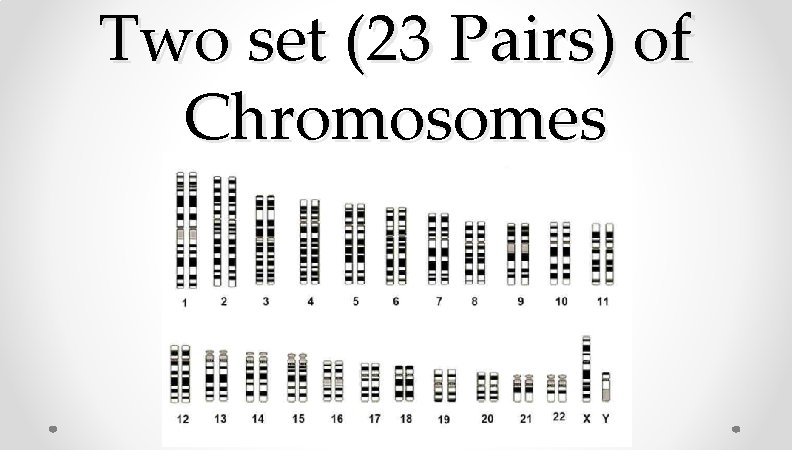
All information of our life is written in two Books
Two set (23 Pairs) of Chromosomes
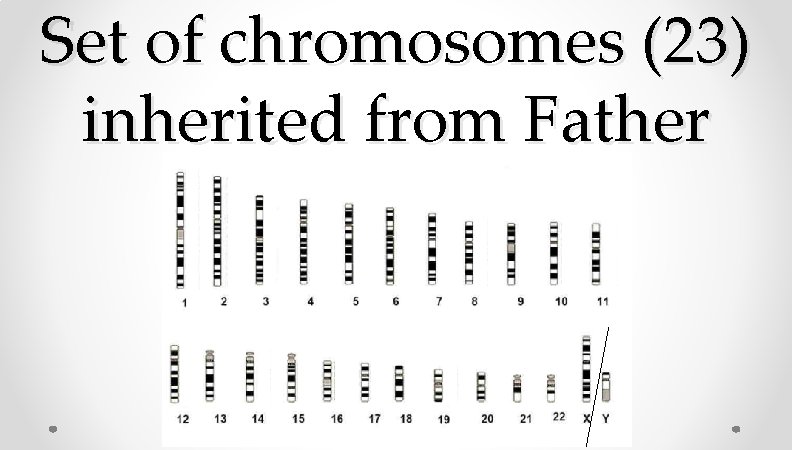
One of these Books of life is written by Father
Set of chromosomes (23) inherited from Father
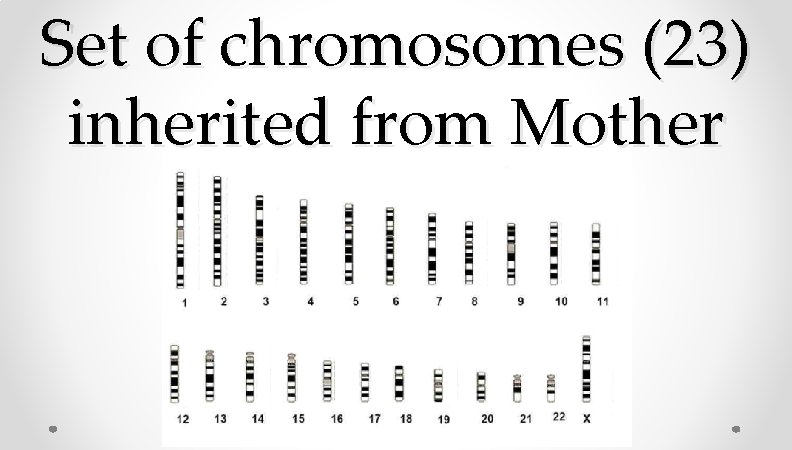
The another Book is written by Mother
Set of chromosomes (23) inherited from Mother
Both of these Books are preserved in a Bookshelf
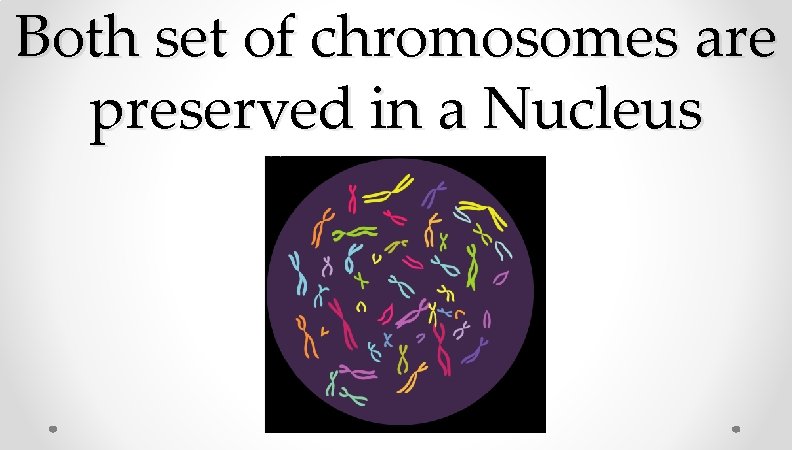
Both set of chromosomes are preserved in a Nucleus
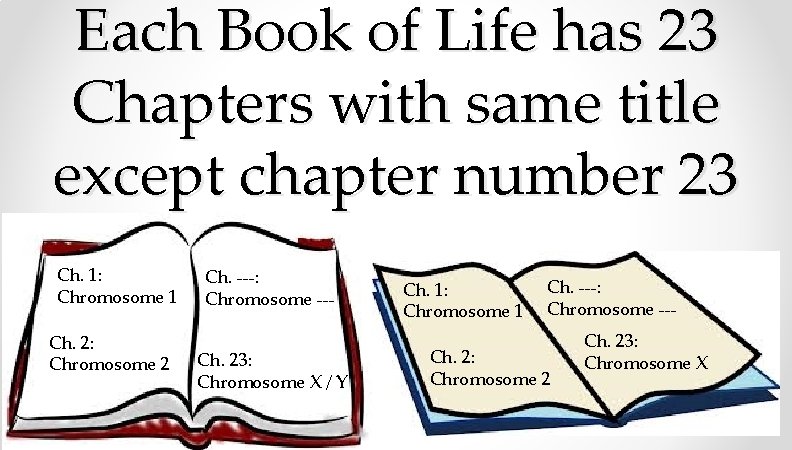
Each Book of Life has 23 Chapters with same title except chapter number 23 Ch. 1: Chromosome 1 Ch. 2: Chromosome 2 Ch. ---: Chromosome --Ch. 23: Chromosome X / Y Ch. 1: Chromosome 1 Ch. ---: Chromosome --- Ch. 2: Chromosome 2 Ch. 23: Chromosome X
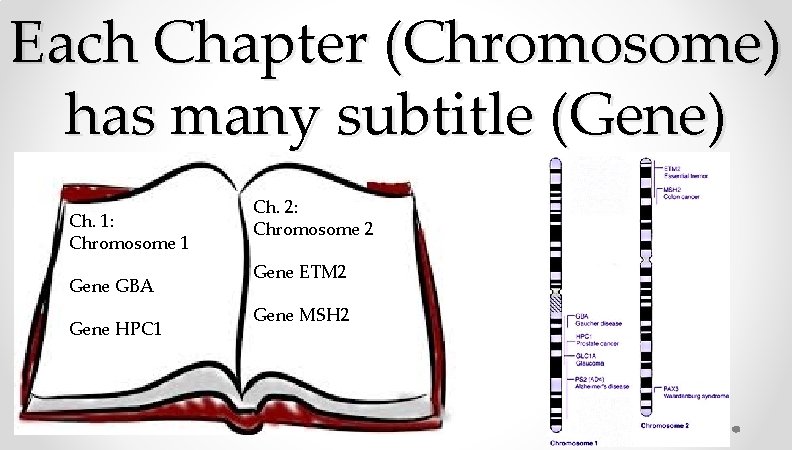
Each Chapter (Chromosome) has many subtitle (Gene) Ch. 1: Chromosome 1 Gene GBA Gene HPC 1 Ch. 2: Chromosome 2 Gene ETM 2 Gene MSH 2
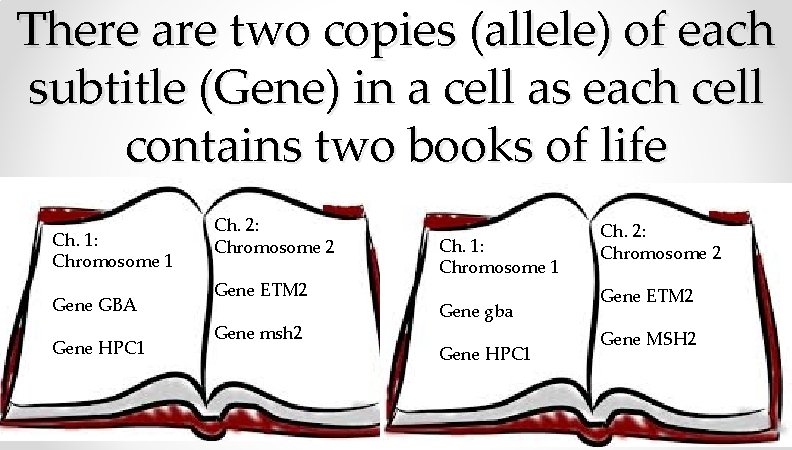
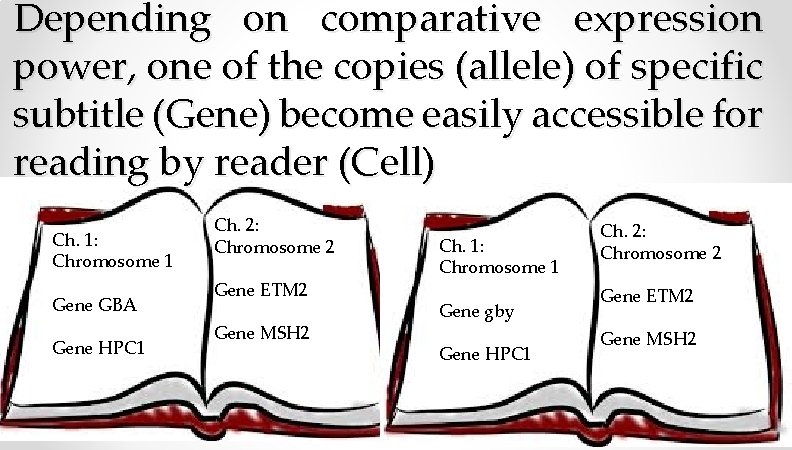
There are two copies (allele) of each subtitle (Gene) in a cell as each cell contains two books of life Ch. 1: Chromosome 1 Gene GBA Gene HPC 1 Ch. 2: Chromosome 2 Gene ETM 2 Gene msh 2 Ch. 1: Chromosome 1 Gene gba Gene HPC 1 Ch. 2: Chromosome 2 Gene ETM 2 Gene MSH 2
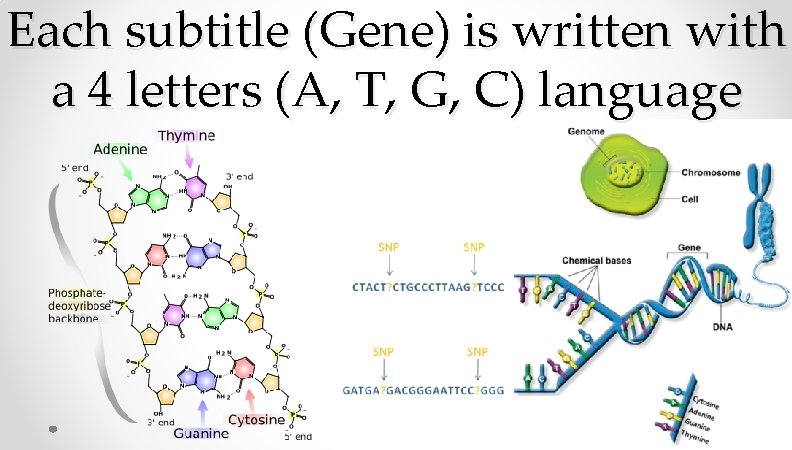
Each subtitle (Gene) is written with a 4 letters (A, T, G, C) language
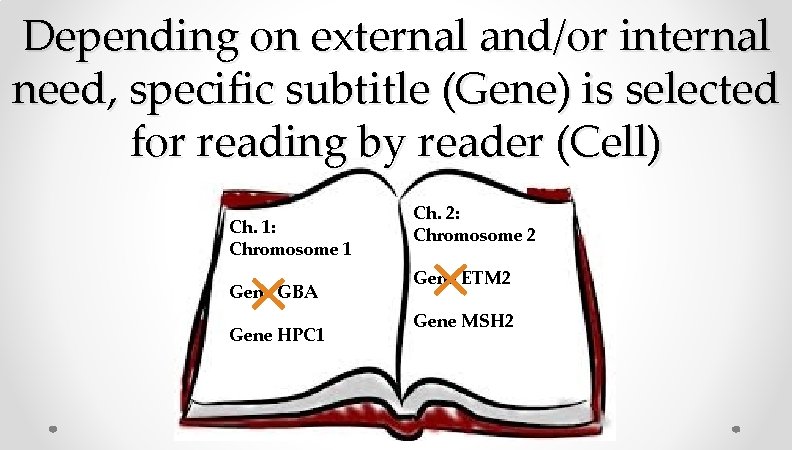
Depending on external and/or internal need, specific subtitle (Gene) is selected for reading by reader (Cell) Ch. 1: Chromosome 1 Gene GBA Gene HPC 1 Ch. 2: Chromosome 2 Gene ETM 2 Gene MSH 2
Depending on comparative expression power, one of the copies (allele) of specific subtitle (Gene) become easily accessible for reading by reader (Cell) Ch. 1: Chromosome 1 Gene GBA Gene HPC 1 Ch. 2: Chromosome 2 Gene ETM 2 Gene MSH 2 Ch. 1: Chromosome 1 Gene gby Gene HPC 1 Ch. 2: Chromosome 2 Gene ETM 2 Gene MSH 2
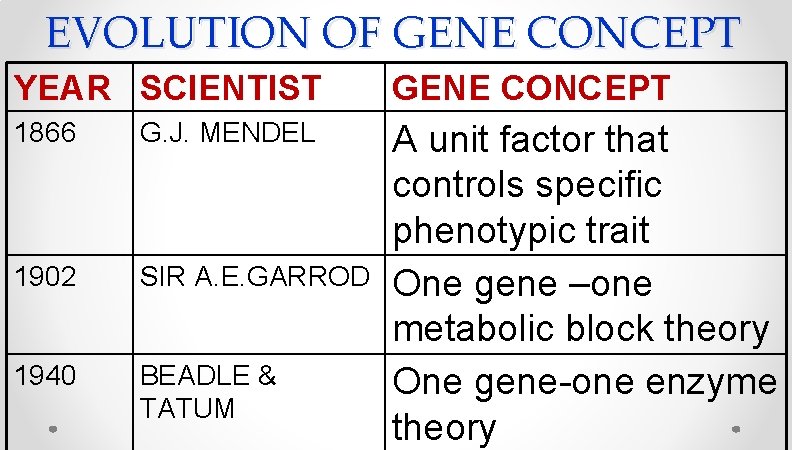
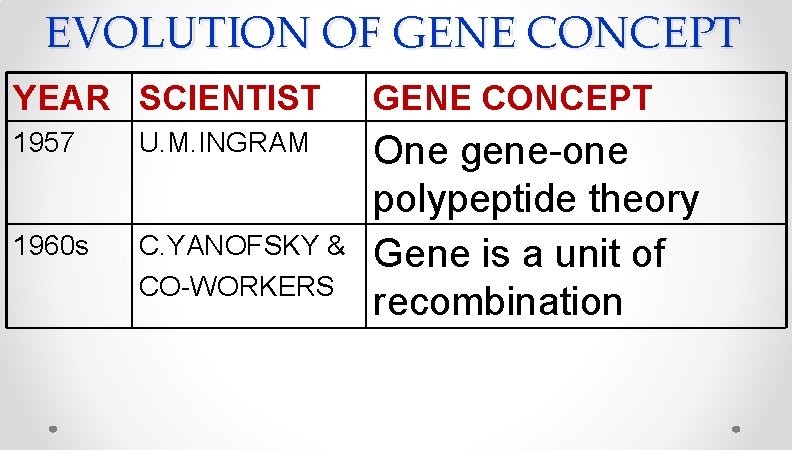
EVOLUTION OF GENE CONCEPT YEAR SCIENTIST GENE CONCEPT 1866 G. J. MENDEL 1902 SIR A. E. GARROD 1940 BEADLE & TATUM A unit factor that controls specific phenotypic trait One gene –one metabolic block theory One gene-one enzyme theory
EVOLUTION OF GENE CONCEPT YEAR SCIENTIST GENE CONCEPT 1957 U. M. INGRAM 1960 s C. YANOFSKY & CO-WORKERS One gene-one polypeptide theory Gene is a unit of recombination
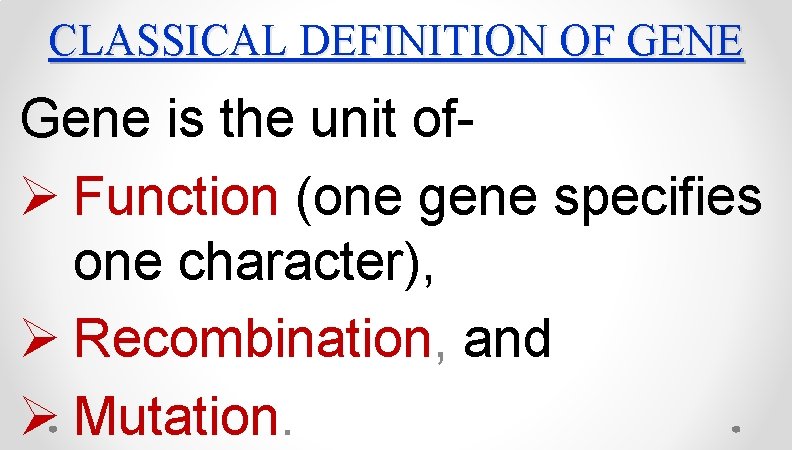
CLASSICAL DEFINITION OF GENE Gene is the unit ofØ Function (one gene specifies one character), Ø Recombination, and Ø Mutation.
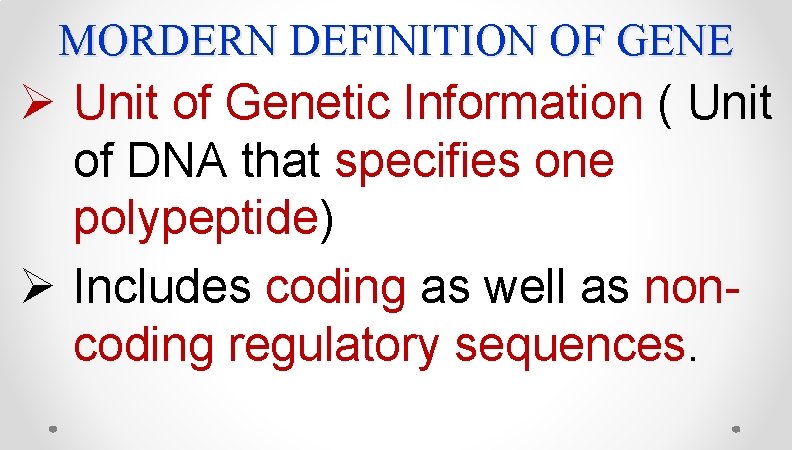
MORDERN DEFINITION OF GENE Ø Unit of Genetic Information ( Unit of DNA that specifies one polypeptide) Ø Includes coding as well as noncoding regulatory sequences.
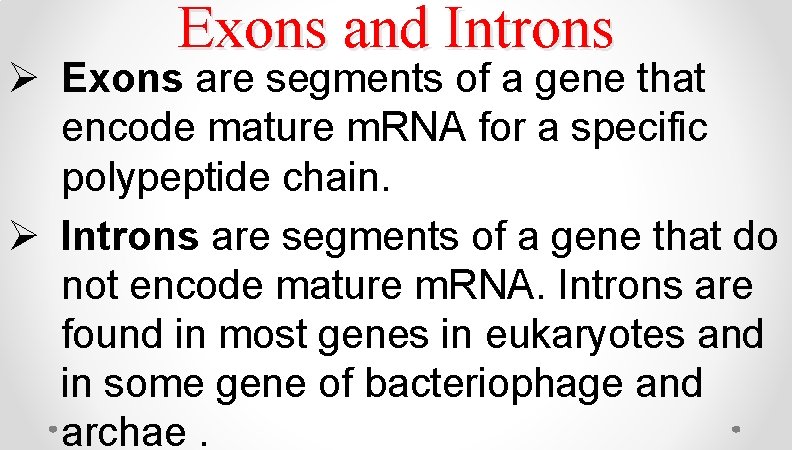
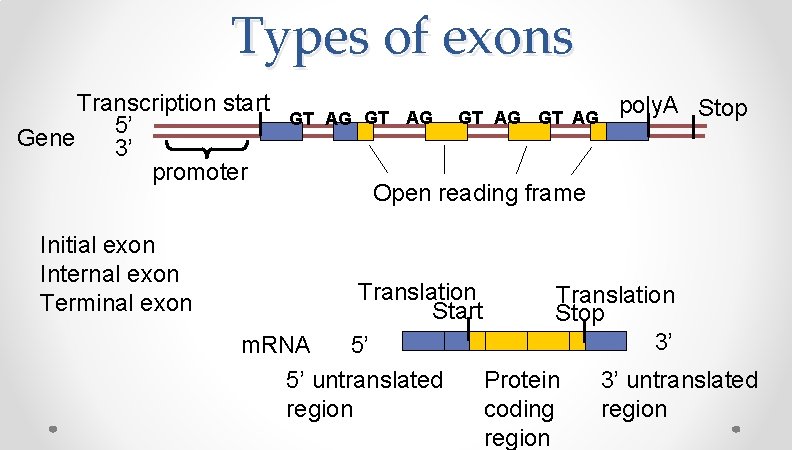
Exons and Introns Ø Exons are segments of a gene that encode mature m. RNA for a specific polypeptide chain. Ø Introns are segments of a gene that do not encode mature m. RNA. Introns are found in most genes in eukaryotes and in some gene of bacteriophage and archae.
An eukaryotic Gene
Types of exons Transcription start 5’ Gene 3’ promoter Initial exon Internal exon Terminal exon GT AG poly. A Stop Open reading frame Translation Start Stop 3’ m. RNA 5’ 5’ untranslated Protein 3’ untranslated region coding region
lac Operon
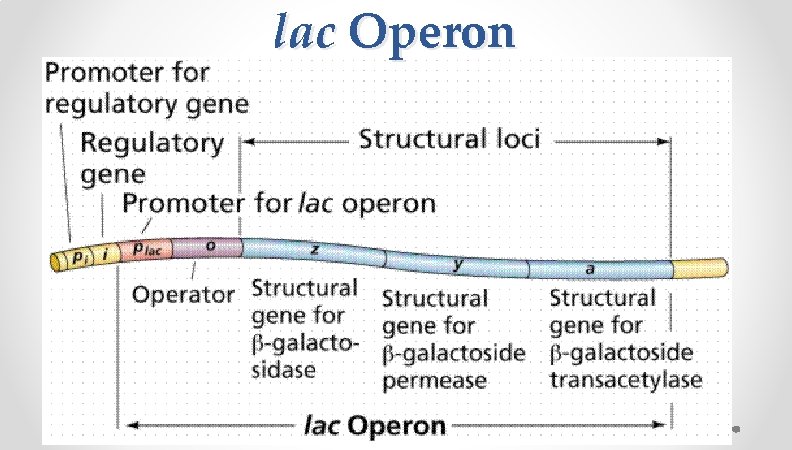
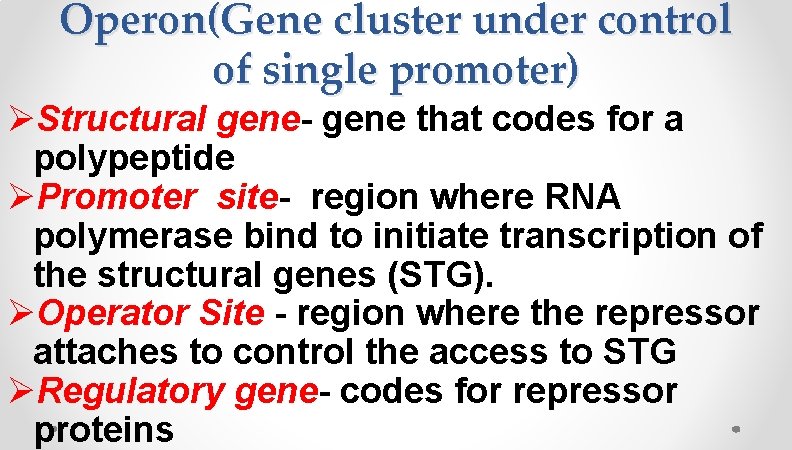
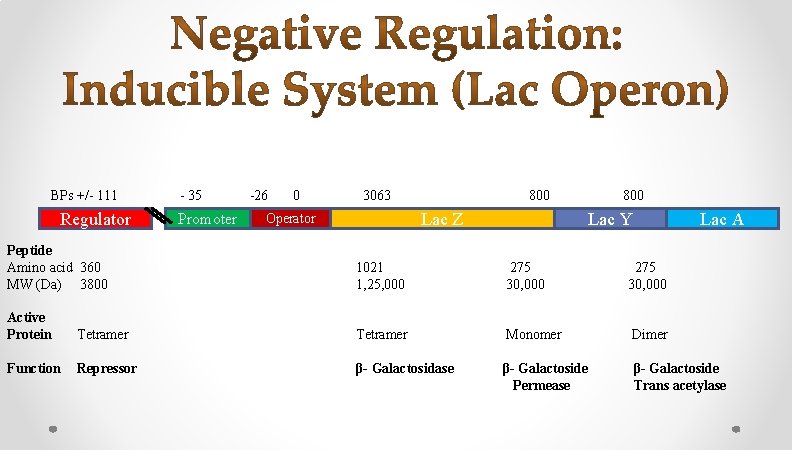
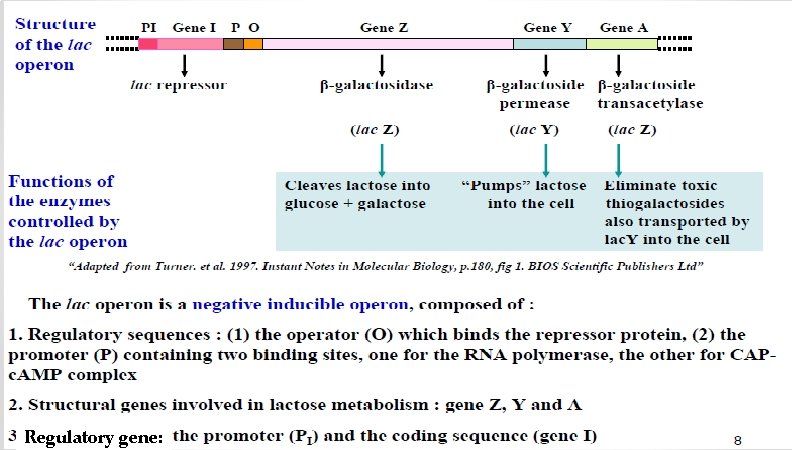
Operon(Gene cluster under control of single promoter) ØStructural gene- gene that codes for a polypeptide ØPromoter site- region where RNA polymerase bind to initiate transcription of the structural genes (STG). ØOperator Site - region where the repressor attaches to control the access to STG ØRegulatory gene- codes for repressor proteins
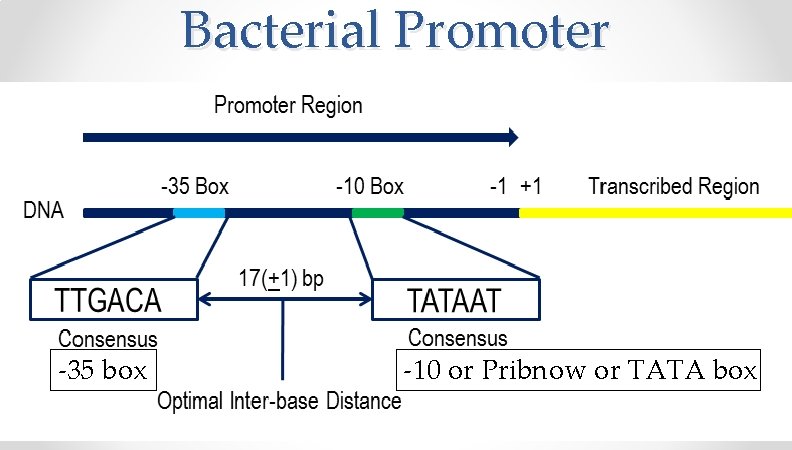
Bacterial Promoter -35 box -10 or Pribnow or TATA box
ESSENTIAL FEATURES OF GENE ØDetermines the physical as well as physiological characters. ØSituated in the chromosome. ØOccupies a specific position known as Locus.
ESSENTIAL FEATURES OF GENE ØArranged in single linear order. ØOccur in functional states called Alleles. ØSome have more than 2 alleles known as Multiple Alleles.
ESSENTIAL FEATURES OF GENE Ø Some may undergo sudden and permanent change in expression called as Mutant Gene (Mutation). Ø May be transferred to its homologous (Cross-over) or nonhomologous counterpart (Translocation).
ESSENTIAL FEATURES OF GENE Ø Can duplicate themselves very accurately (Replication). Ø Synthesizes a particular Protein. Ø Determines the sequence of amino acid in the polypeptide chain
ESSENTIAL FEATURES OF GENE ØAverage size of Prokaryotic gene is 1 kbp and have little diversity ØAverage size of Eukaryotic gene is 16 kbp and have great diversity
SOME TERMS RELATED TO GENE Ø RECON - It is the smallest unit of DNA capable of undergoing Crossing Over & Recombination. Ø MUTON - It is the smallest unit of DNA which can undergo Mutation.
SOME TERMS RELATED TO GENE Ø COMPLON - It is the unit of complementation. Ø CISTRON - The portion of DNA specifying a single polypeptide chain is termed as cistron.
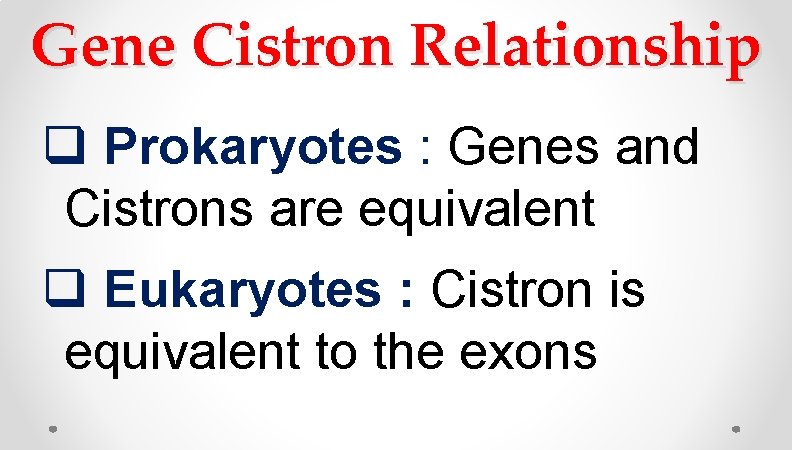
Gene Cistron Relationship q Prokaryotes : Genes and Cistrons are equivalent q Eukaryotes : Cistron is equivalent to the exons
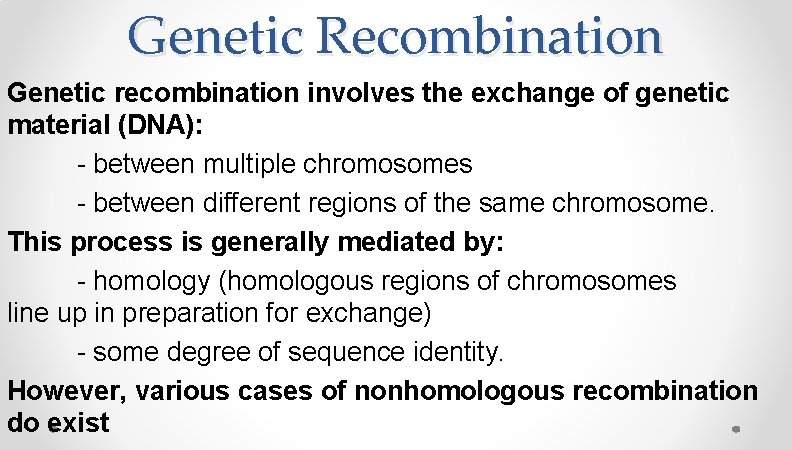
Genetic Recombination Genetic recombination involves the exchange of genetic material (DNA): - between multiple chromosomes - between different regions of the same chromosome. This process is generally mediated by: - homology (homologous regions of chromosomes line up in preparation for exchange) - some degree of sequence identity. However, various cases of nonhomologous recombination do exist
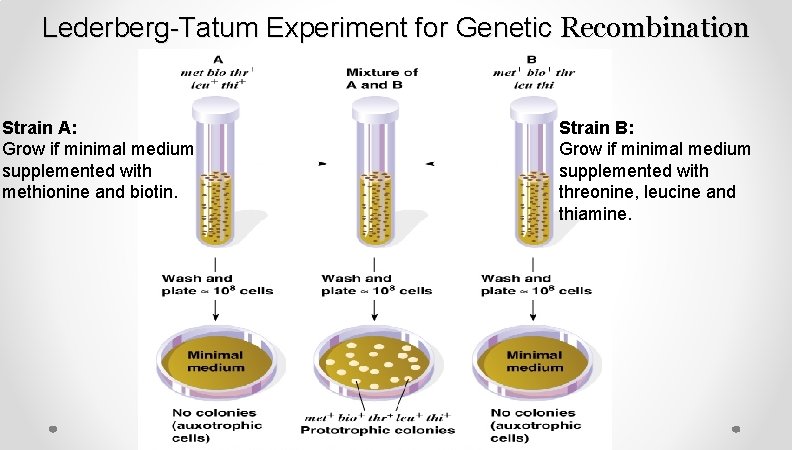
Lederberg-Tatum Experiment for Genetic Recombination Strain A: Grow if minimal medium supplemented with methionine and biotin. Strain B: Grow if minimal medium supplemented with threonine, leucine and thiamine.
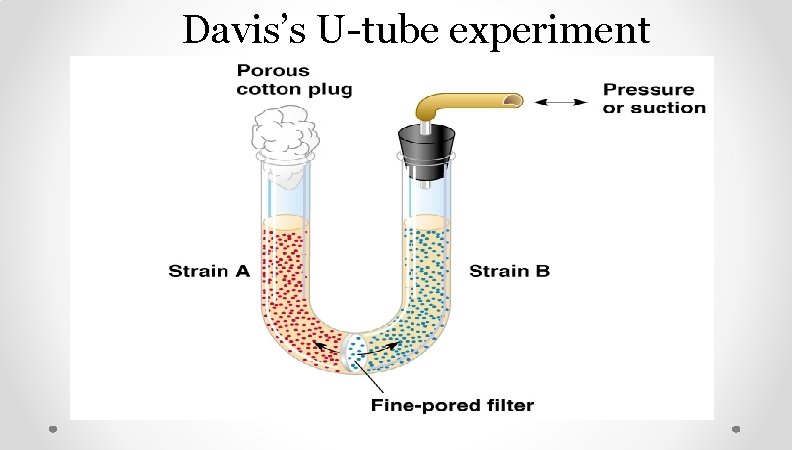
Davis’s U-tube experiment
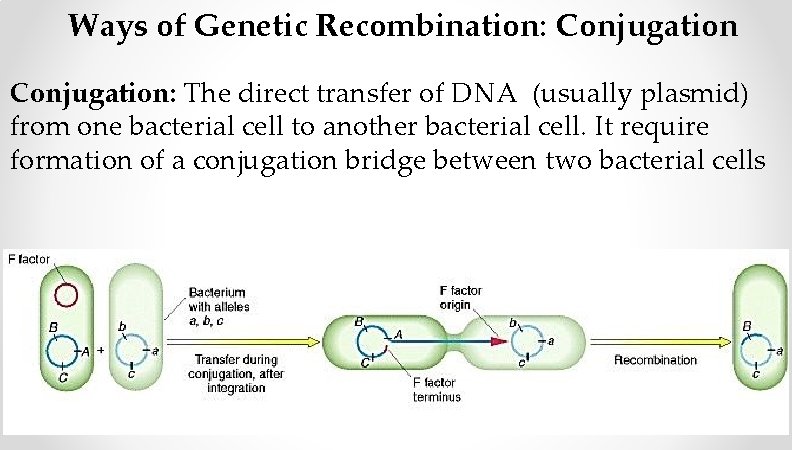
Ways of Genetic Recombination: Conjugation: The direct transfer of DNA (usually plasmid) from one bacterial cell to another bacterial cell. It require formation of a conjugation bridge between two bacterial cells
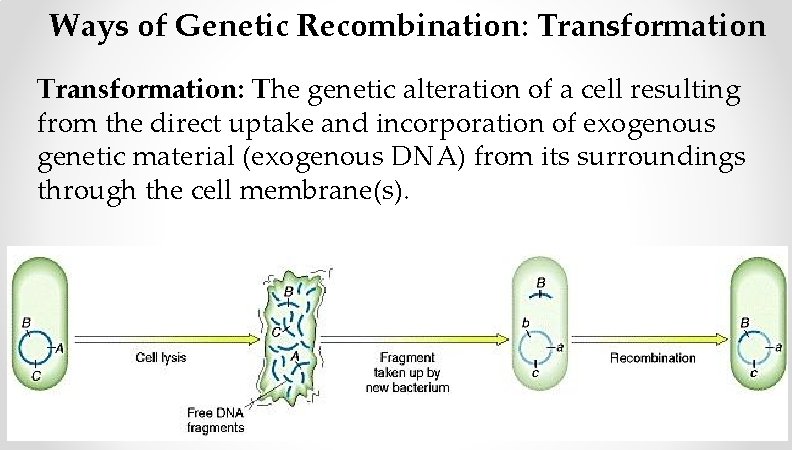
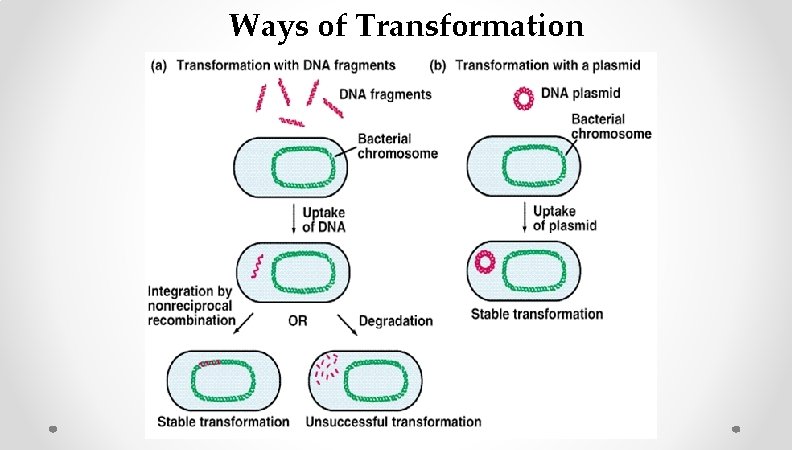
Ways of Genetic Recombination: Transformation: The genetic alteration of a cell resulting from the direct uptake and incorporation of exogenous genetic material (exogenous DNA) from its surroundings through the cell membrane(s).
Ways of Transformation
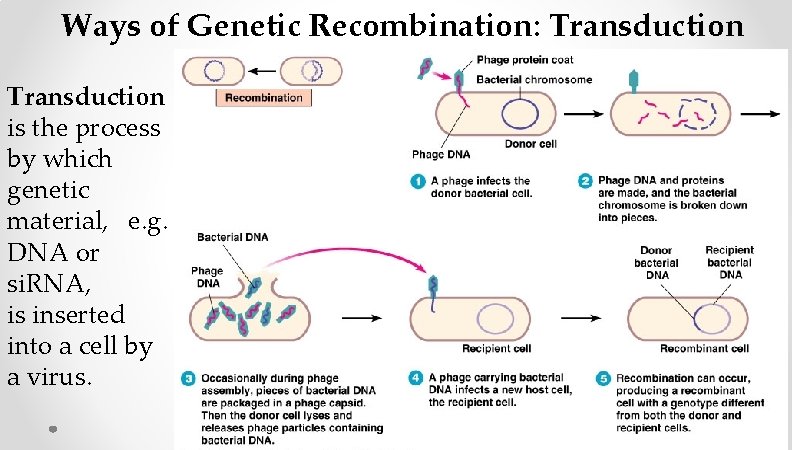
Ways of Genetic Recombination: Transduction is the process by which genetic material, e. g. DNA or si. RNA, is inserted into a cell by a virus.
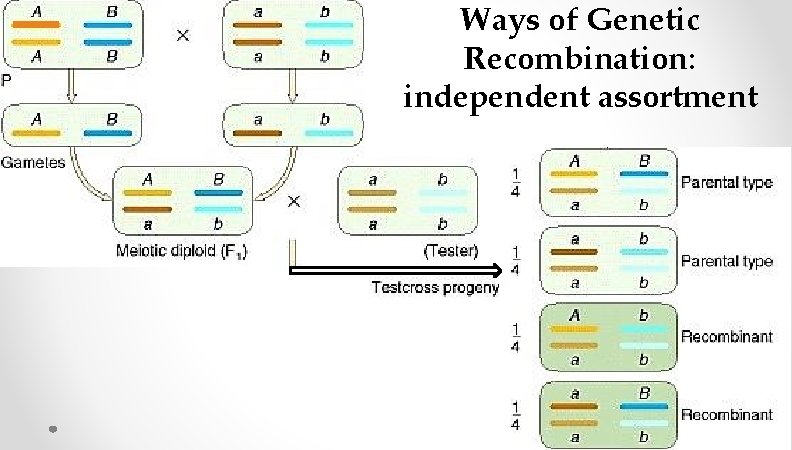
Ways of Genetic Recombination: independent assortment
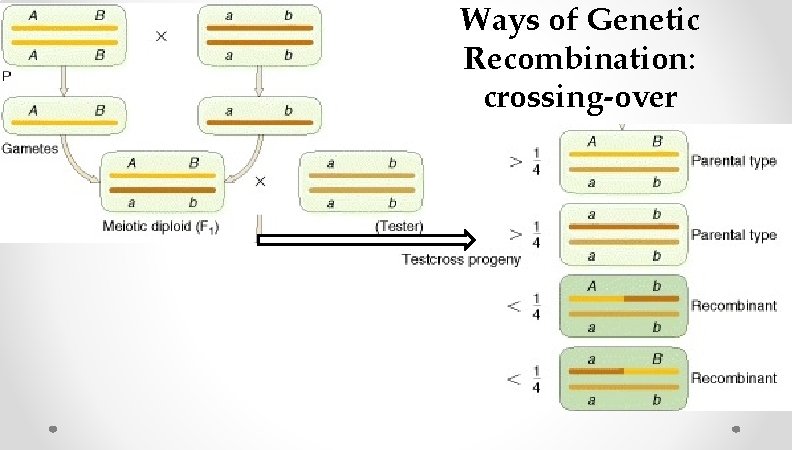
Ways of Genetic Recombination: crossing-over
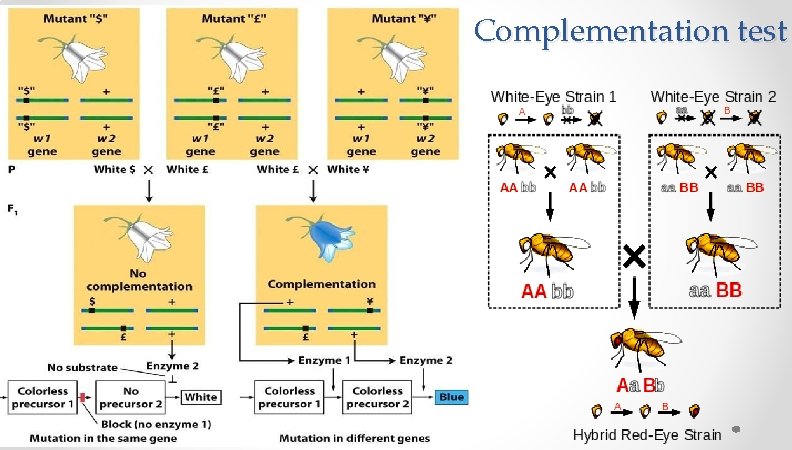
Complementation test q Occasionally, multiple mutations of a single wild type phenotype are observed. q The appropriate genetic question to ask is: Ø whether any of the mutations are in a single gene, or Ø whether each mutations represents one of the several genes (complementation group) necessary for a phenotype to be expressed. q The simplest to distinguish between the two possibilities is the complementation test.
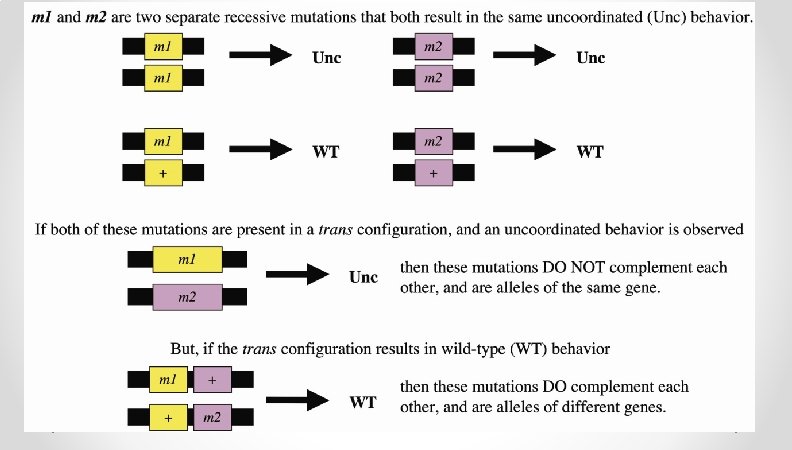
Complementation test q In complementation test, two mutants are crossed, and the F 1 is analyzed. q If two mutants are crossed and F 1 express wild type phenotype, the phenomenon by which F 1 do this is known as Genetic complementation. It indicate that each mutation is in one of two possible genes necessary for the wild type phenotype. q Alternatively, if the F 1 does not express the wild type phenotype, but rather a mutant phenotype, we conclude that both mutations occur in the same gene.
Complementation test
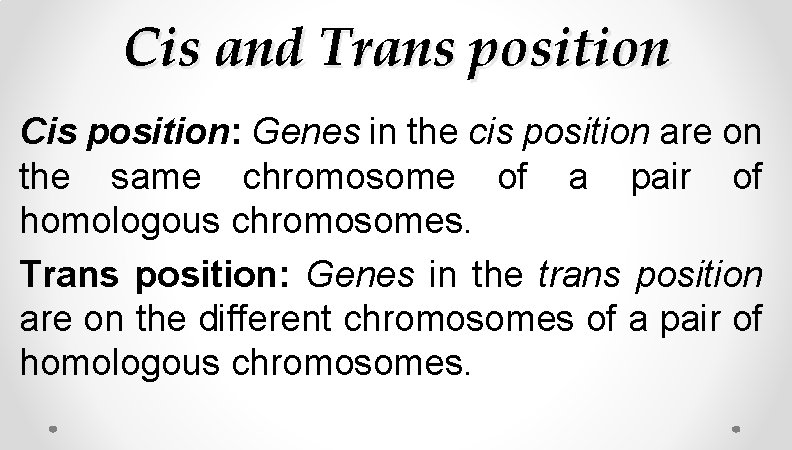
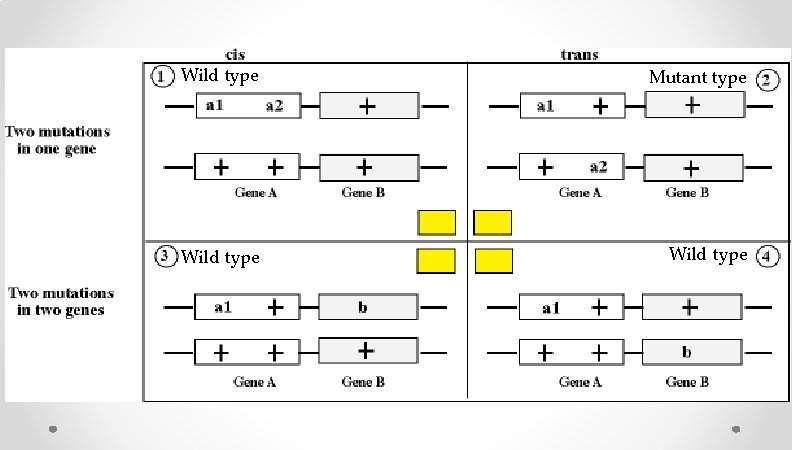
Cis and Trans position Cis position: Genes in the cis position are on the same chromosome of a pair of homologous chromosomes. Trans position: Genes in the trans position are on the different chromosomes of a pair of homologous chromosomes.
Wild type Mutant type Wild type
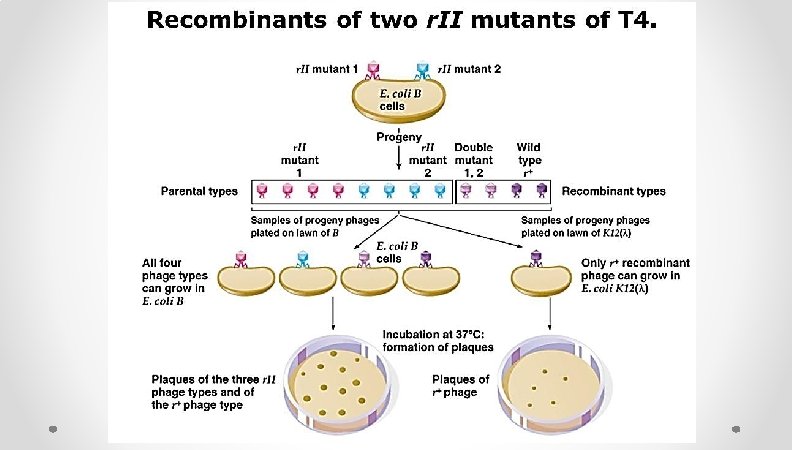
T 4 r. II system v. The T 4 r. II system is an experimental system developed in the 1950 s by Seymour Benzer v. It was developed for studying the substructure of the gene. v. This experimental system is based on genetic crosses of different mutant strains of bacteriophage T 4, v. Bacteriophage T 4 is a virus that infects the bacteria E. coli.
Transposons (Jumping Genes) Transposons or Jumping genes or Movable genes can be defined as small, mobile DNA sequences that: Ø move around chromosomes with no regard for homology and Ø insertion of these elements may produce deletions, inversions, chromosomal fusions and even more complicated rearrangements
Characteristics of Transposable Elements 1. They are found to be DNA sequences that code for enzymes which bring about the insertion of an identical copy of themselves into a new DNA site 2. Transposition events involves both recombination and replication process which frequently generates two daughter copies of the original transposable elements. One copy remains at the parent site while the other appears at the target site (on the host chromosome)
Characteristics of Transposable Elements (cont. ) 3. The insertion of transposable elements invariably disrupts the integrity of their target genes. 4. Since transposable elements carry signals for the initiation of RNA synthesis, they sometimes activate previously dormant genes. 5. A transposable elements is not a replicon, thus, it can not replicate apart from the host chromosome, the way that plasmid and phage can. 6. No homology exists between the transposons and the target site for its insertion. Many transposons can insert at virtually any position in the host chromosome or into a plasmid.
Types of Transposable elements can be classified into several types, but broadly two types: 1. Insertion sequence or simple transposons 2. Composite or complex transposons
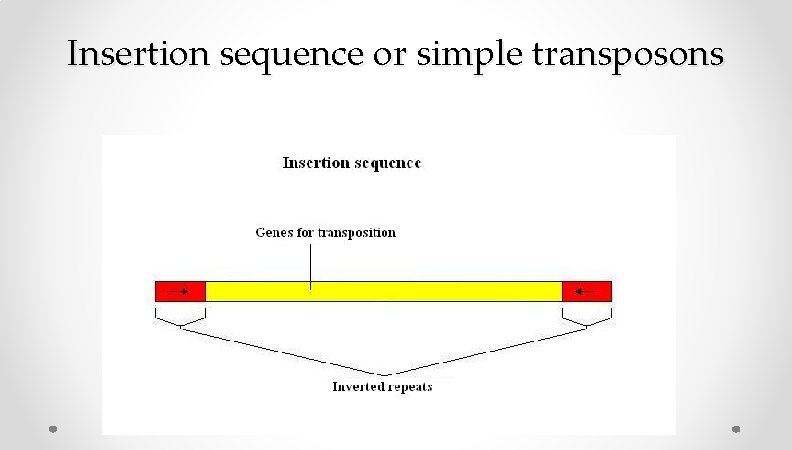
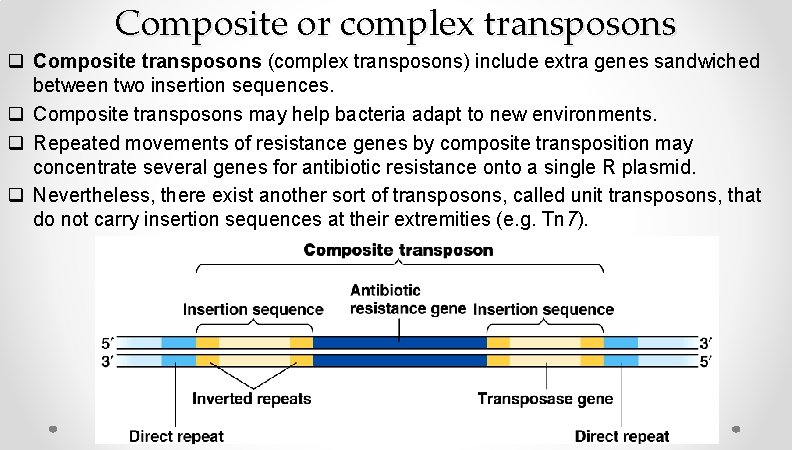
Insertion sequence or simple transposons q An insertion sequence is a short DNA sequence that acts as a simple transposable element. q Insertion sequences have two major characteristics: Ø they are small relative to other transposable elements (generally around 700 to 2500 bp in length) and Ø only code for proteins implicated in the transposition activity q These proteins are usually the transposase which catalyses the enzymatic reaction allowing the IS to move, and also one regulatory protein which either stimulates or inhibits the transposition activity. q The coding region in an insertion sequence is usually flanked by inverted repeats. q In addition to occurring autonomously, insertion sequences may also occur as parts of composite transposons; in a composite transposon, two insertion sequences flank one or more accessory genes, such as an antibiotic resistance gene (e. g. Tn 10, Tn 5).
Insertion sequence or simple transposons
Composite or complex transposons q Composite transposons (complex transposons) include extra genes sandwiched between two insertion sequences. q Composite transposons may help bacteria adapt to new environments. q Repeated movements of resistance genes by composite transposition may concentrate several genes for antibiotic resistance onto a single R plasmid. q Nevertheless, there exist another sort of transposons, called unit transposons, that do not carry insertion sequences at their extremities (e. g. Tn 7).
Genetic Code v The genetic code is a set of rules defining how the fourletter (A, T, G, C) code of DNA is translated into the 20 letter code of amino acids, which are the building blocks of proteins. v The genetic code is a collection of three-letter combinations of nucleotides called codons, each of which corresponds to a specific amino acid or to translational signal.
Genetic Code v The concept of codons was first described by Francis Crick and his colleagues in 1961. v Any altered codon (triplet of DNA nucleotides) that encodes an incorrect amino acid or stop signal, resulting in an altered or non-functioning peptide or protein product is known as missense codon.
Basis for Cryptoanalys q Cryptoanalys is the analysis a secrete code language. q Genetic information is written in DNA. q DNA molecule consists of: ØDeoxyribose sugar (One type; Arrangement diversity not possible) ØPhophate (One type; Arrangement diversity not possible) ØNitrogenous bases (Four types: A, T, G, C; Arrangement diversity possible)
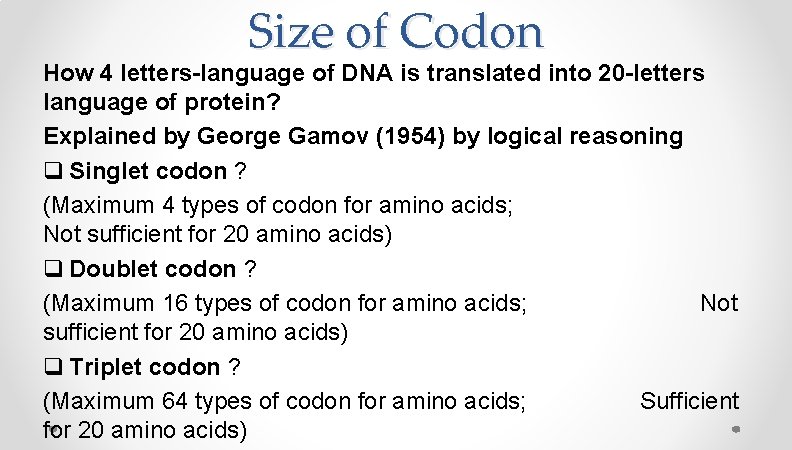
Size of Codon How 4 letters-language of DNA is translated into 20 -letters language of protein? Explained by George Gamov (1954) by logical reasoning q Singlet codon ? (Maximum 4 types of codon for amino acids; Not sufficient for 20 amino acids) q Doublet codon ? (Maximum 16 types of codon for amino acids; Not sufficient for 20 amino acids) q Triplet codon ? (Maximum 64 types of codon for amino acids; Sufficient for 20 amino acids)
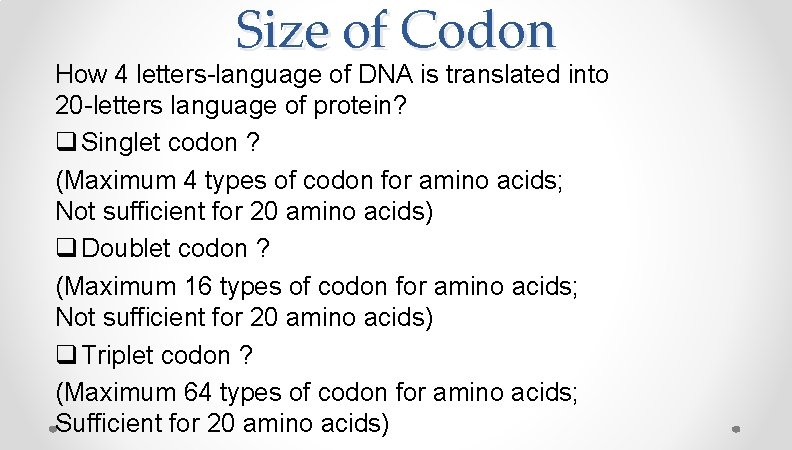
Size of Codon How 4 letters-language of DNA is translated into 20 -letters language of protein? q Singlet codon ? (Maximum 4 types of codon for amino acids; Not sufficient for 20 amino acids) q Doublet codon ? (Maximum 16 types of codon for amino acids; Not sufficient for 20 amino acids) q Triplet codon ? (Maximum 64 types of codon for amino acids; Sufficient for 20 amino acids)
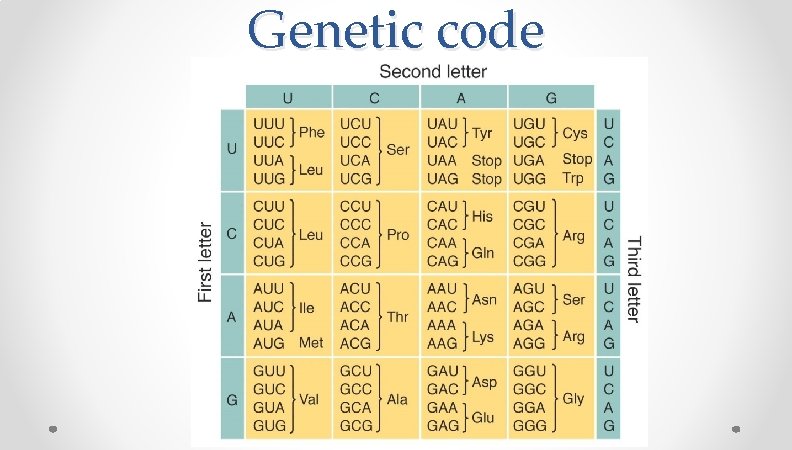
Genetic code
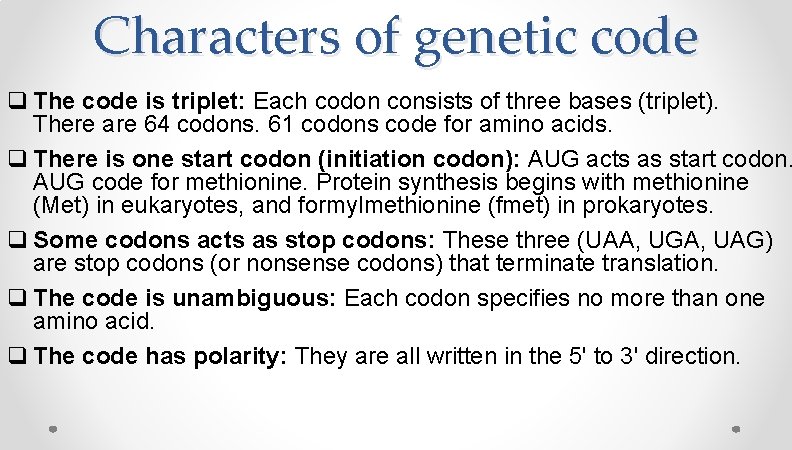
Characters of genetic code q The code is triplet: Each codon consists of three bases (triplet). There are 64 codons. 61 codons code for amino acids. q There is one start codon (initiation codon): AUG acts as start codon. AUG code for methionine. Protein synthesis begins with methionine (Met) in eukaryotes, and formylmethionine (fmet) in prokaryotes. q Some codons acts as stop codons: These three (UAA, UGA, UAG) are stop codons (or nonsense codons) that terminate translation. q The code is unambiguous: Each codon specifies no more than one amino acid. q The code has polarity: They are all written in the 5' to 3' direction.
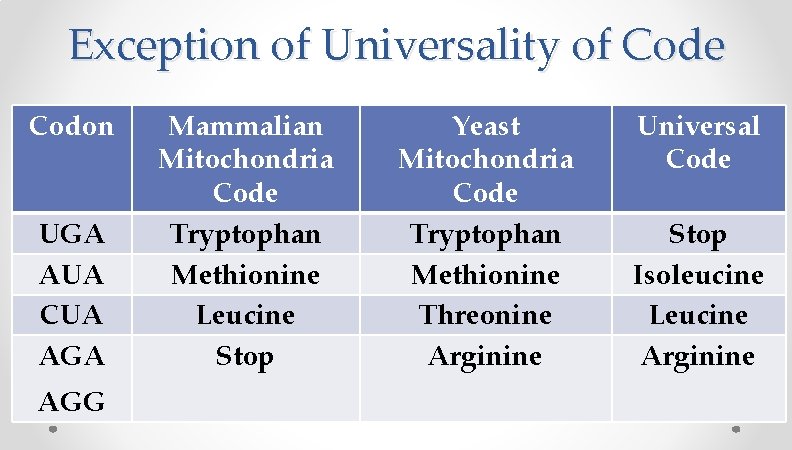
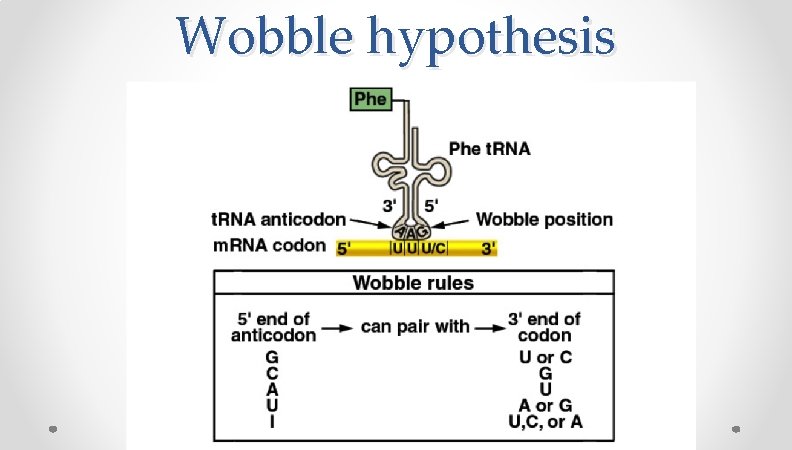
Characters of genetic code q The code is degenerate: More than one codon can specify a single amino acid. Ø All amino acids, except Met and tryptophan (Trp), have more than one codon. Ø For those amino acids having more than one codon, the first two bases in the codon are usually the same. The base in the third position often varies (Wobble hypothesis). q The code is almost universal: (the same in all organisms). Some minor exceptions to this occur in mitochondria and some organisms. q The code is commaless (contiguous): There are no spacers or "commas" between codons on an m. RNA. q The code is non-overlapping: Neighboring codons on a message are non-overlapping.
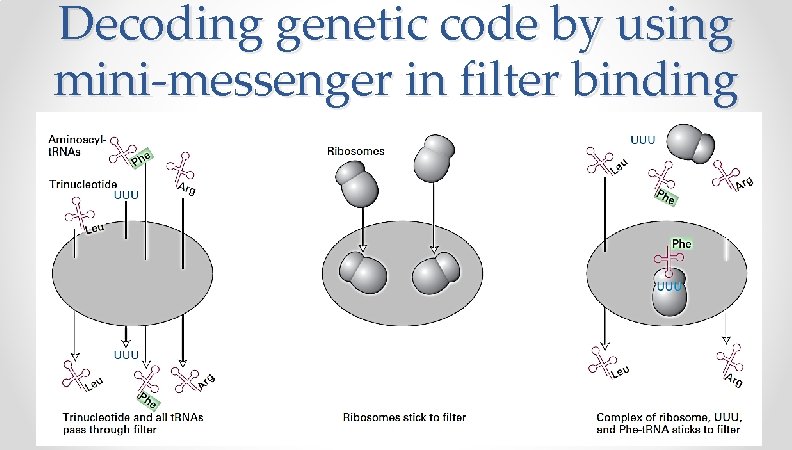
Decoding genetic code by using mini-messenger in filter binding
Exception of Universality of Code Codon UGA AUA CUA AGG Mammalian Mitochondria Code Tryptophan Methionine Leucine Stop Yeast Mitochondria Code Tryptophan Methionine Threonine Arginine Universal Code Stop Isoleucine Leucine Arginine
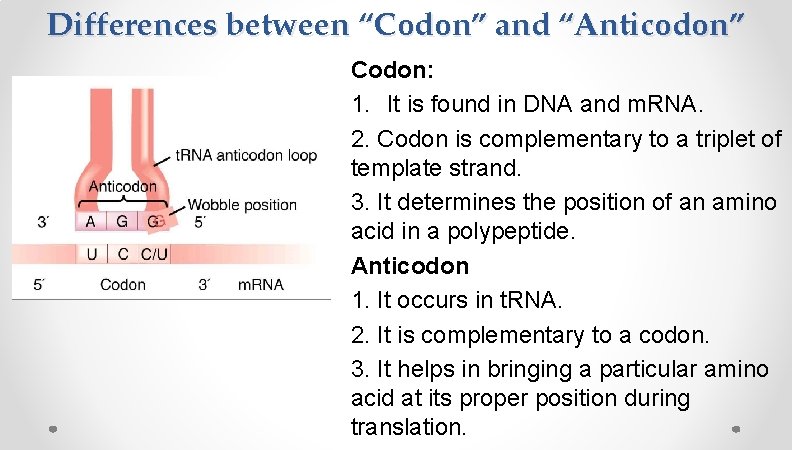
Differences between “Codon” and “Anticodon” Codon: 1. It is found in DNA and m. RNA. 2. Codon is complementary to a triplet of template strand. 3. It determines the position of an amino acid in a polypeptide. Anticodon 1. It occurs in t. RNA. 2. It is complementary to a codon. 3. It helps in bringing a particular amino acid at its proper position during translation.
Wobble hypothesis
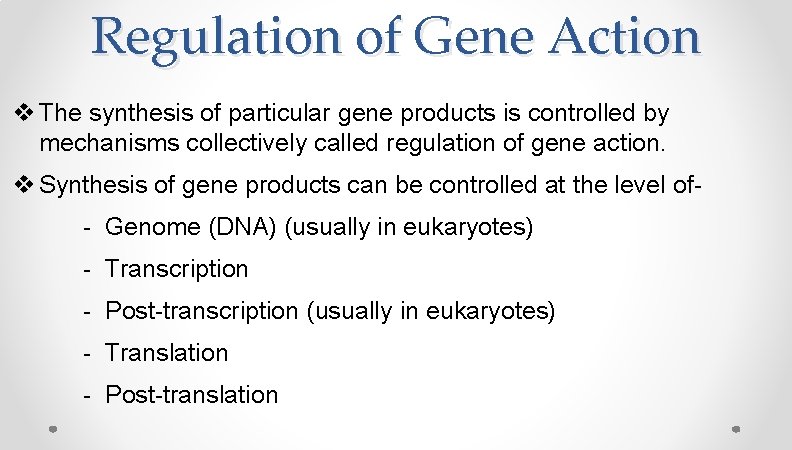
Regulation of Gene Action v The synthesis of particular gene products is controlled by mechanisms collectively called regulation of gene action. v Synthesis of gene products can be controlled at the level of- Genome (DNA) (usually in eukaryotes) - Transcription - Post-transcription (usually in eukaryotes) - Translation - Post-translation
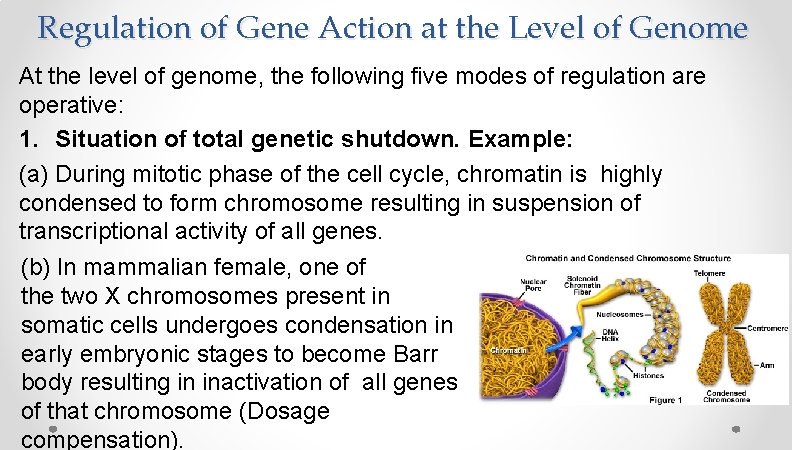
Regulation of Gene Action at the Level of Genome At the level of genome, the following five modes of regulation are operative: 1. Situation of total genetic shutdown. Example: (a) During mitotic phase of the cell cycle, chromatin is highly condensed to form chromosome resulting in suspension of transcriptional activity of all genes. (b) In mammalian female, one of the two X chromosomes present in somatic cells undergoes condensation in early embryonic stages to become Barr body resulting in inactivation of all genes of that chromosome (Dosage compensation).
Regulation of Gene Action at the Level of Genome 2. Evidences for constitutive expression of some genes. Example- Housekeeping genes: In molecular biology, housekeeping genes are typically constitutive genes that are required for the maintenance of basic cellular function, and are expressed in all cells of an organism under normal and pathophysiological conditions. Example: gene for B-actin.
Regulation of Gene Action at the Level of Genome 3. Many genes are expressed only in certain tissue. Example- Smart genes or Luxury genes: These genes are tissue-specific or organ-specific, which means they are not expressed in all cells. They are expressed only in certain type of cell or tissue. They are not constantly expressed, they express only when their function is needed. Examples of luxury genes are genes coding for heat-shock proteins.
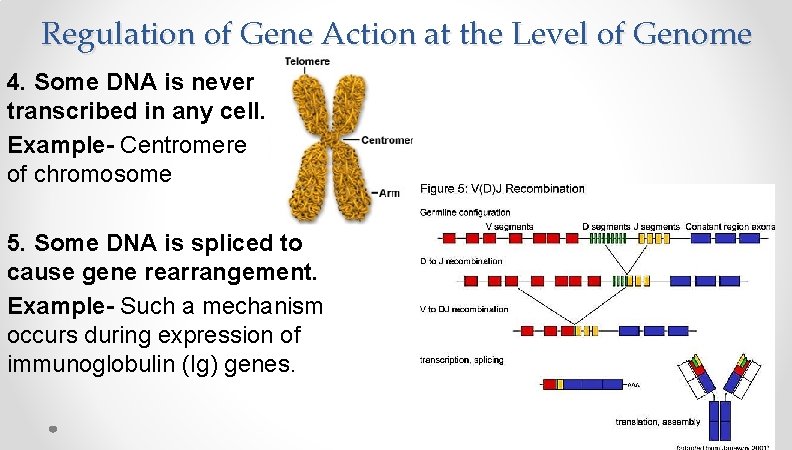
Regulation of Gene Action at the Level of Genome 4. Some DNA is never transcribed in any cell. Example- Centromere of chromosome 5. Some DNA is spliced to cause gene rearrangement. Example- Such a mechanism occurs during expression of immunoglobulin (Ig) genes.
Regulation of Gene Action at the Level of Transcription
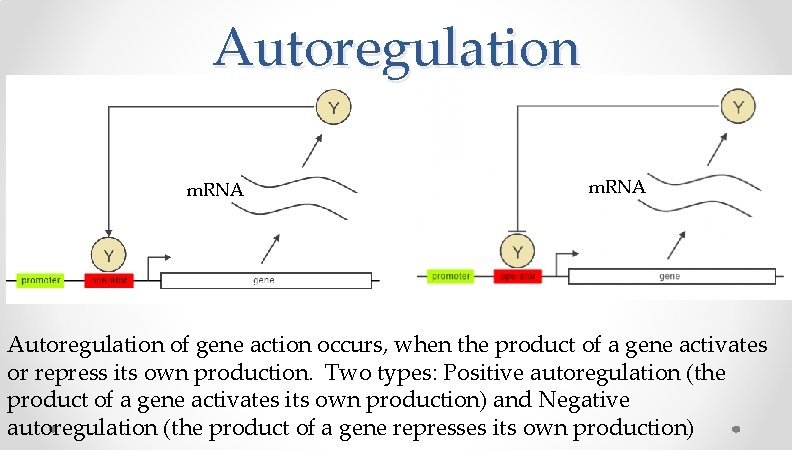
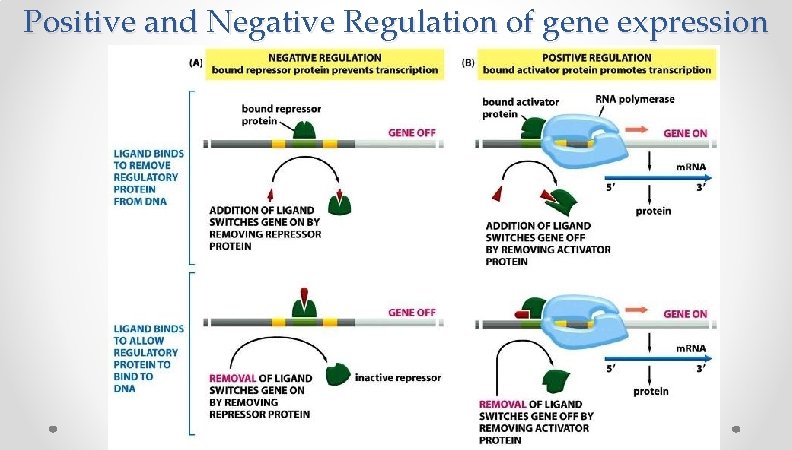
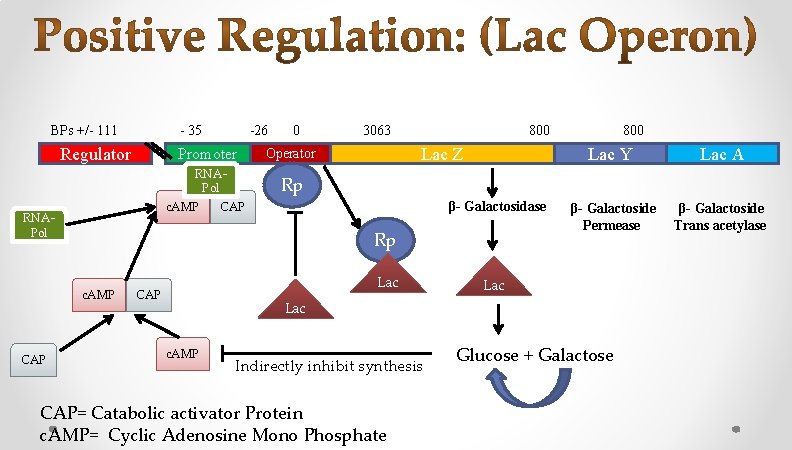
Autoregulation m. RNA Autoregulation of gene action occurs, when the product of a gene activates or repress its own production. Two types: Positive autoregulation (the product of a gene activates its own production) and Negative autoregulation (the product of a gene represses its own production)
Positive and Negative Regulation of gene expression
BPs +/- 111 Regulator - 35 Promoter -26 0 3063 800 Lac Z Operator 800 Lac Y Lac A Peptide Amino acid 360 MW (Da) 3800 1021 1, 25, 000 275 30, 000 Active Protein Tetramer Monomer Dimer Function Repressor β- Galactosidase β- Galactoside Permease β- Galactoside Trans acetylase
Regulatory gene:
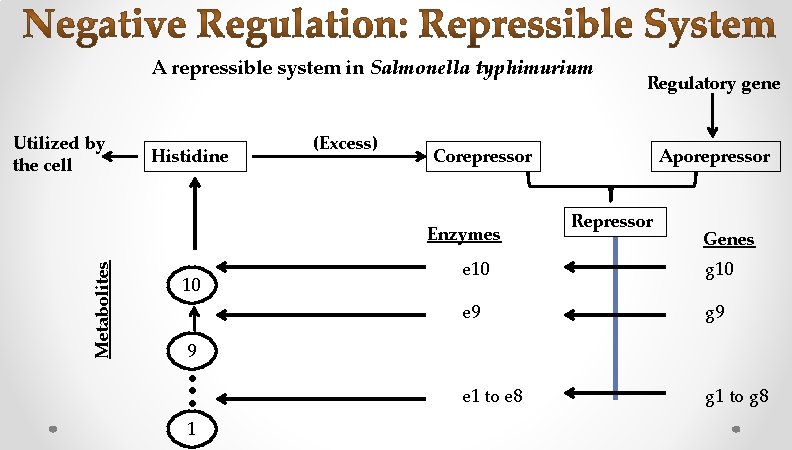
A repressible system in Salmonella typhimurium Utilized by the cell Histidine (Excess) Corepressor Metabolites Enzymes 10 . . . Regulatory gene Aporepressor Repressor Genes e 10 g 10 e 9 g 9 e 1 to e 8 g 1 to g 8 9 1
BPs +/- 111 - 35 Regulator Operator RNAPol Rp 3063 800 Lac Z β- Galactosidase CAP Rp c. AMP CAP 0 Promoter c. AMP RNAPol -26 Lac CAP 800 Lac Y Lac A β- Galactoside Permease β- Galactoside Trans acetylase Lac c. AMP Indirectly inhibit synthesis CAP= Catabolic activator Protein c. AMP= Cyclic Adenosine Mono Phosphate Glucose + Galactose
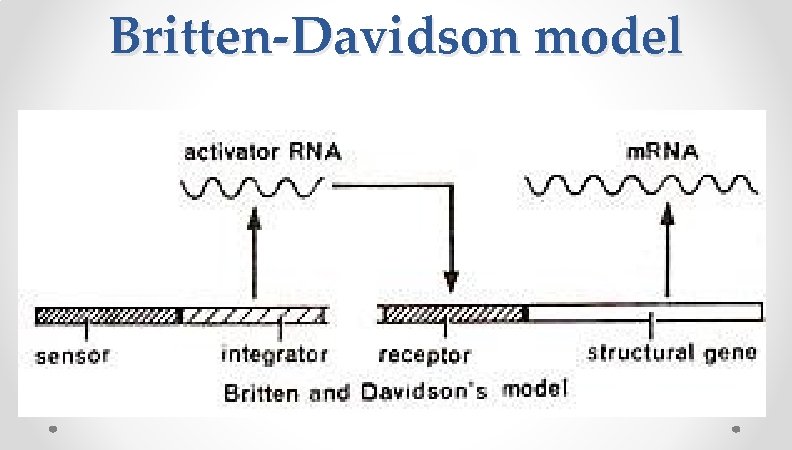
Britten-Davidson model
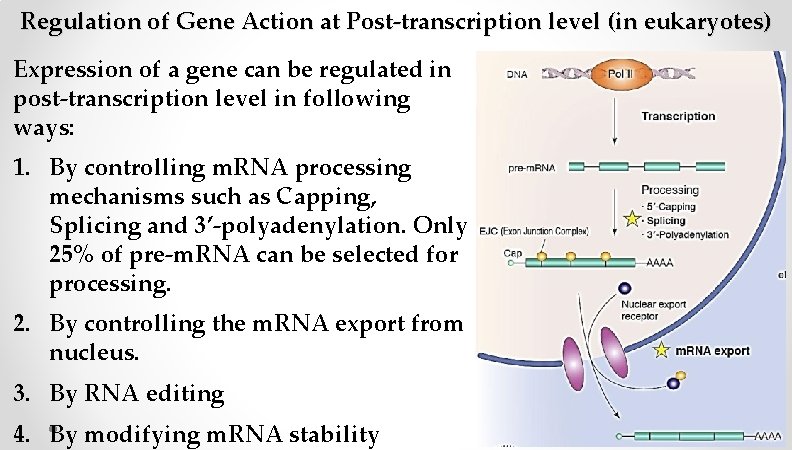
Regulation of Gene Action at Post-transcription level (in eukaryotes) Expression of a gene can be regulated in post-transcription level in following ways: 1. By controlling m. RNA processing mechanisms such as Capping, Splicing and 3’-polyadenylation. Only 25% of pre-m. RNA can be selected for processing. 2. By controlling the m. RNA export from nucleus. 3. By RNA editing 4. By modifying m. RNA stability
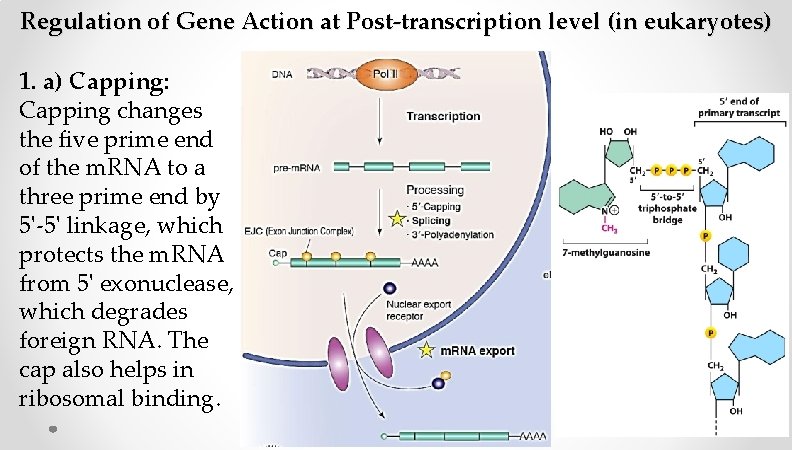
Regulation of Gene Action at Post-transcription level (in eukaryotes) 1. a) Capping: Capping changes the five prime end of the m. RNA to a three prime end by 5'-5' linkage, which protects the m. RNA from 5' exonuclease, which degrades foreign RNA. The cap also helps in ribosomal binding.
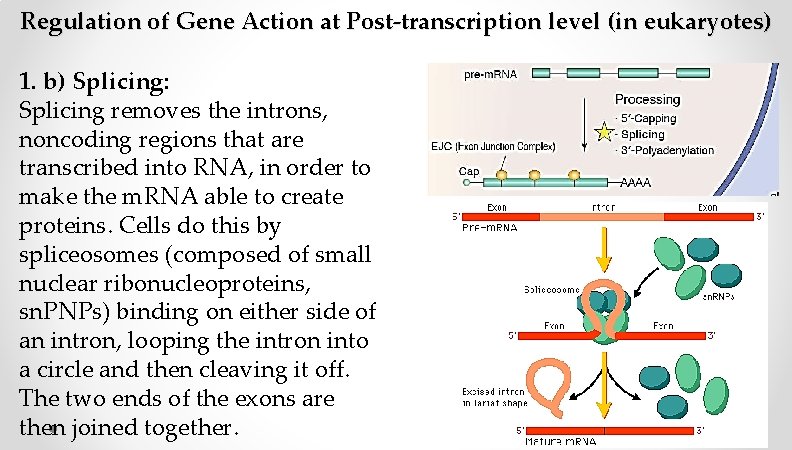
Regulation of Gene Action at Post-transcription level (in eukaryotes) 1. b) Splicing: Splicing removes the introns, noncoding regions that are transcribed into RNA, in order to make the m. RNA able to create proteins. Cells do this by spliceosomes (composed of small nuclear ribonucleoproteins, sn. PNPs) binding on either side of an intron, looping the intron into a circle and then cleaving it off. The two ends of the exons are then joined together.
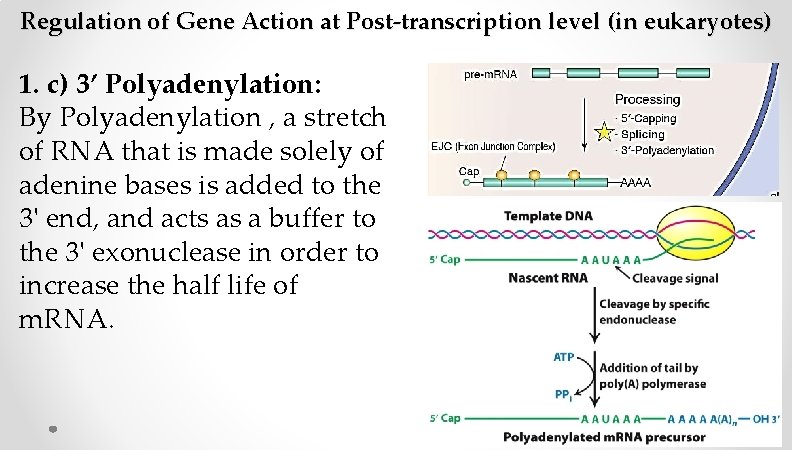
Regulation of Gene Action at Post-transcription level (in eukaryotes) 1. c) 3’ Polyadenylation: By Polyadenylation , a stretch of RNA that is made solely of adenine bases is added to the 3' end, and acts as a buffer to the 3' exonuclease in order to increase the half life of m. RNA.
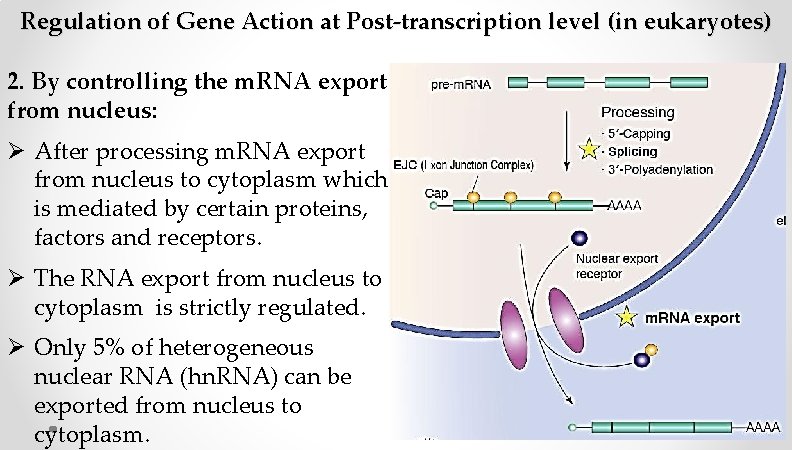
Regulation of Gene Action at Post-transcription level (in eukaryotes) 2. By controlling the m. RNA export from nucleus: Ø After processing m. RNA export from nucleus to cytoplasm which is mediated by certain proteins, factors and receptors. Ø The RNA export from nucleus to cytoplasm is strictly regulated. Ø Only 5% of heterogeneous nuclear RNA (hn. RNA) can be exported from nucleus to cytoplasm.
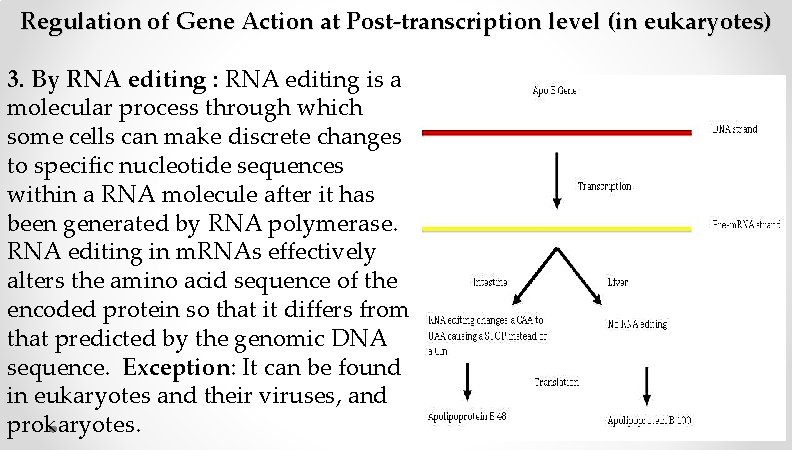
Regulation of Gene Action at Post-transcription level (in eukaryotes) 3. By RNA editing : RNA editing is a molecular process through which some cells can make discrete changes to specific nucleotide sequences within a RNA molecule after it has been generated by RNA polymerase. RNA editing in m. RNAs effectively alters the amino acid sequence of the encoded protein so that it differs from that predicted by the genomic DNA sequence. Exception: It can be found in eukaryotes and their viruses, and prokaryotes.
Regulation of Gene Action at Post-transcription level (in eukaryotes) 4. By modifying m. RNA stability: Ø m. RNA Stability can be manipulated in order to control its half-life. Ø Stable m. RNA can have a half life of up to a day or more which allows for the production of more protein products. Ø Capping, the poly(A) tail has some effect on this stability, as previously stated.
Regulation of Gene Action at Translation level In prokaryote: Ø Life-time of m. RNA is genetically predetermined. But, the life time is correlated with number free ribosomes available at a given moment. Hence, bacteria can modify their protein synthesis by altering their ribosomal contents. Ø Protein synthesis is determined by the location of a gene in a polycistronic m. RNA (polarity gradient). eg. lac Z, lac Y and lac A protein synthesis rate is 1 : 0. 5 : 0. 2 respectively. In eukaryotes: Ø Extension of life-time of m. RNA: Life-time of m. RNA can be increased by masking it with protein particles. eg. Informosomes or masked m. RNA. Ø Regulation of rate of protein synthesis with recruitment factors which apparently interferes with formation of the ribosomes-m. RNA complex.
Regulation of Gene Action at Post-translation level Ø Some proteins are altered after synthesis, usually by partial degradation or trimming, to form active form of protein. Ø For example, central section of the proinsulin molecules is removed by the enzymatic action to yield the active protein, insulin.