
GENE EXPRESSION TRANSCRIPTION TRANSLATION AND MUTATIONS HOW DOES
- Slides: 22
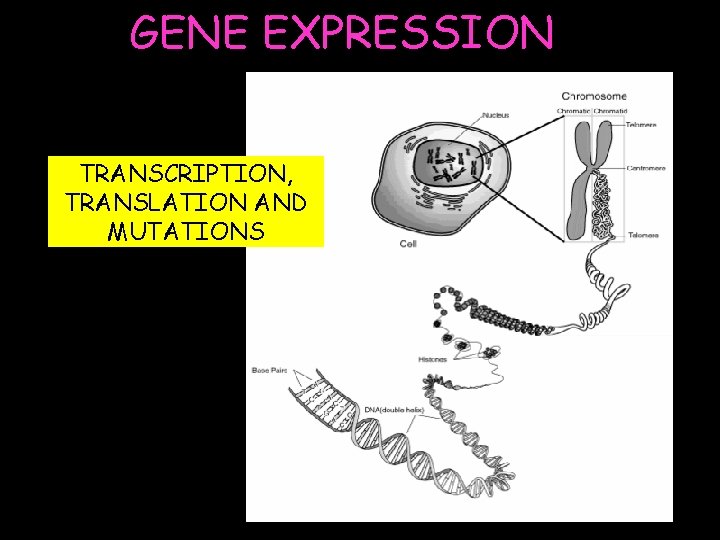
GENE EXPRESSION TRANSCRIPTION, TRANSLATION AND MUTATIONS
HOW DOES DNA, AS A GENE, GET EXPRESSED? • DNA codes for specific proteins to be made • proteins are assembled from amino acids • amino acids are selected based on the genetic code
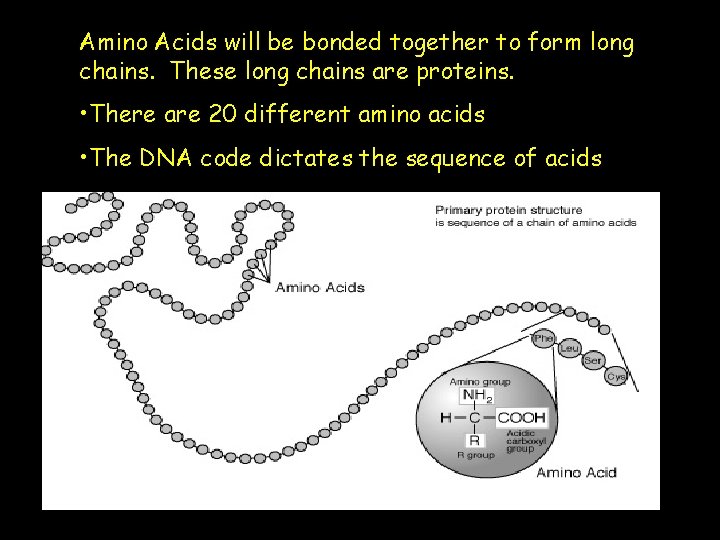
Amino Acids will be bonded together to form long chains. These long chains are proteins. • There are 20 different amino acids • The DNA code dictates the sequence of acids
DNA to Proteins • The process of making the proteins from DNA instructions is called PROTEIN SYNTHESIS • Protein Synthesis has 2 major steps: – Transcription – Translation
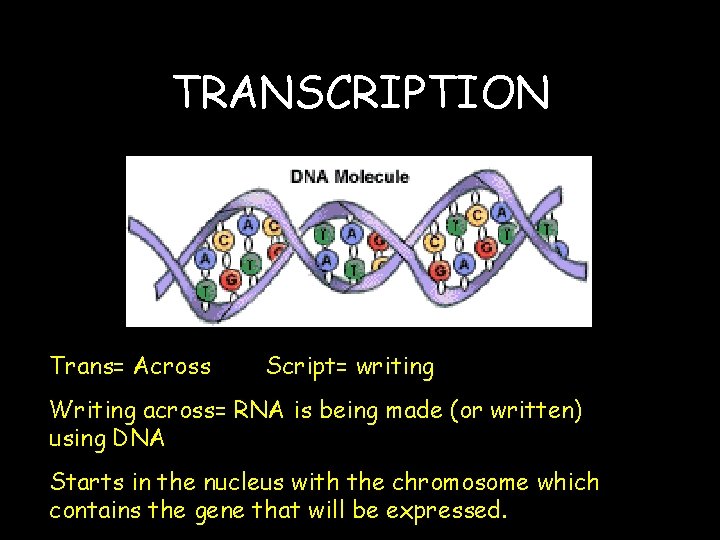
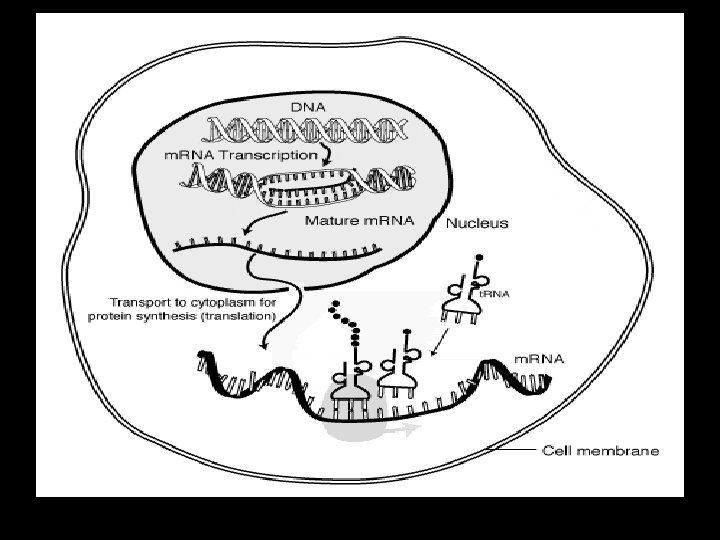
TRANSCRIPTION Trans= Across Script= writing Writing across= RNA is being made (or written) using DNA Starts in the nucleus with the chromosome which contains the gene that will be expressed.
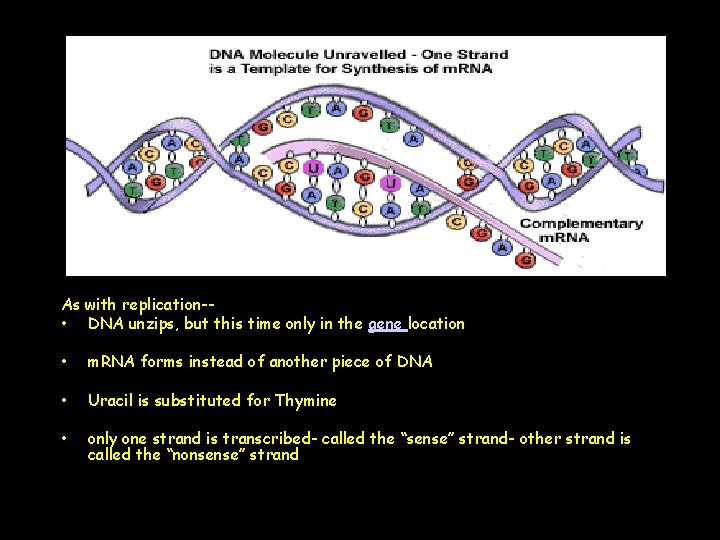
As with replication- • DNA unzips, but this time only in the gene location • m. RNA forms instead of another piece of DNA • Uracil is substituted for Thymine • only one strand is transcribed- called the “sense” strand- other strand is called the “nonsense” strand
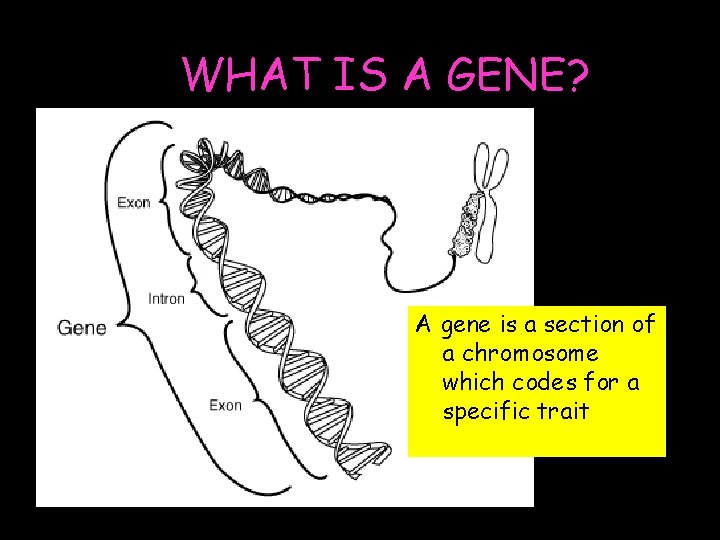
WHAT IS A GENE? A gene is a section of a chromosome which codes for a specific trait
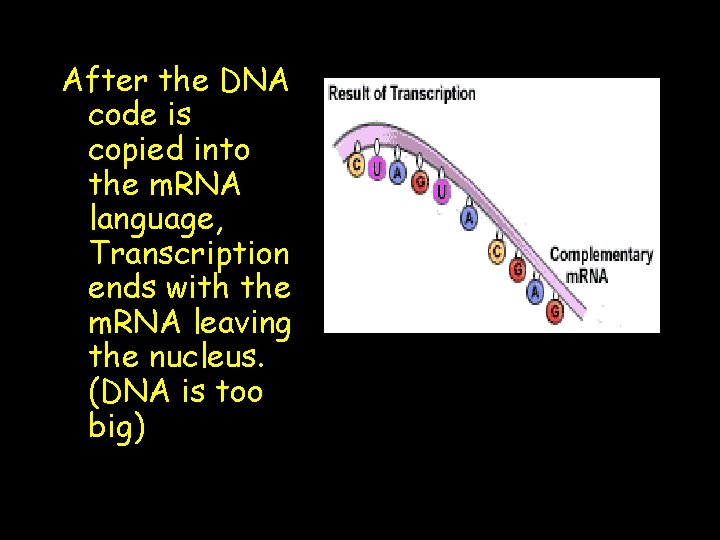
After the DNA code is copied into the m. RNA language, Transcription ends with the m. RNA leaving the nucleus. (DNA is too big)
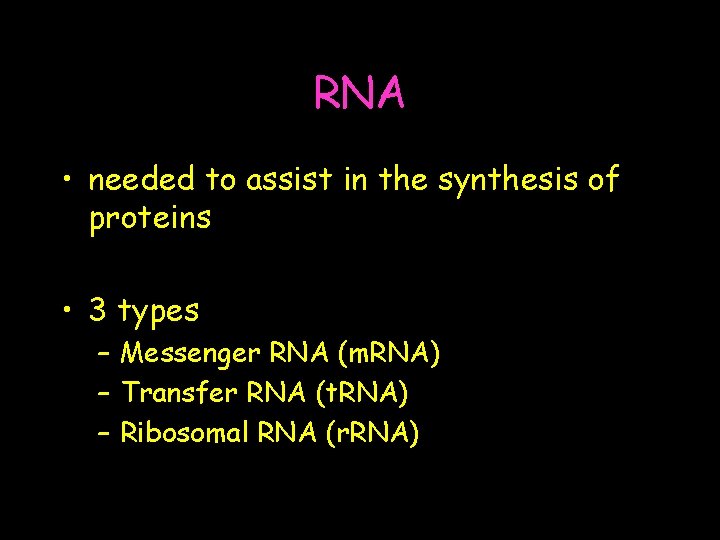
RNA • needed to assist in the synthesis of proteins • 3 types – Messenger RNA (m. RNA) – Transfer RNA (t. RNA) – Ribosomal RNA (r. RNA)
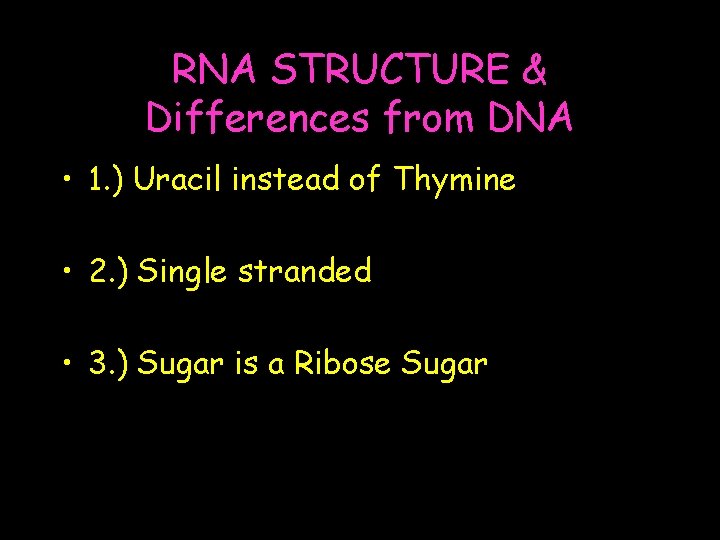
RNA STRUCTURE & Differences from DNA • 1. ) Uracil instead of Thymine • 2. ) Single stranded • 3. ) Sugar is a Ribose Sugar
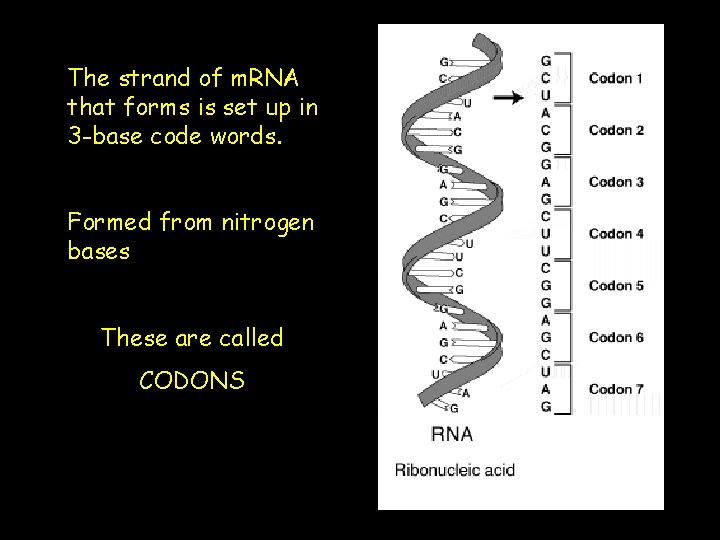
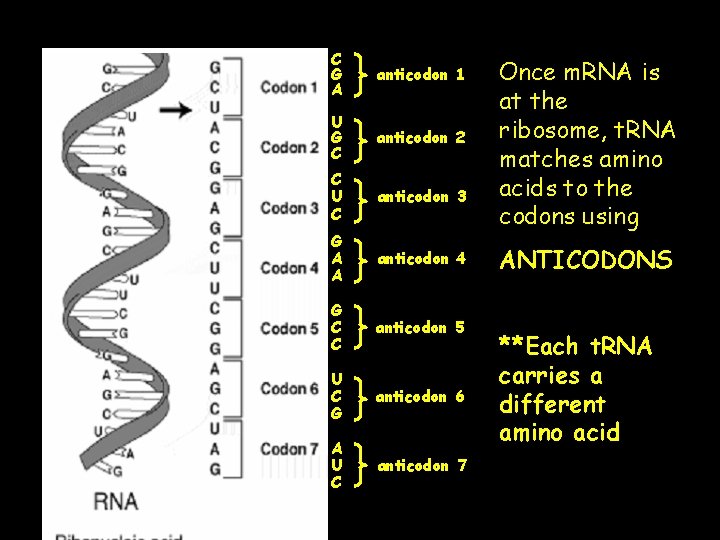
The strand of m. RNA that forms is set up in 3 -base code words. Formed from nitrogen bases These are called CODONS
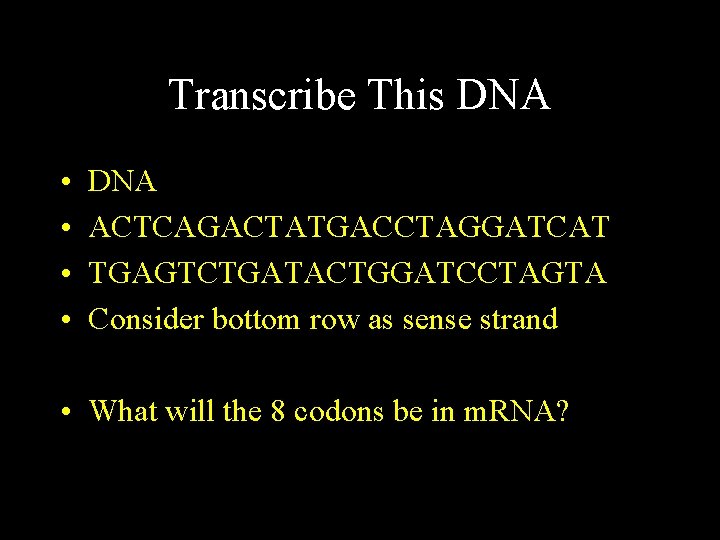
Transcribe This DNA • • DNA ACTCAGACTATGACCTAGGATCAT TGAGTCTGATACTGGATCCTAGTA Consider bottom row as sense strand • What will the 8 codons be in m. RNA?
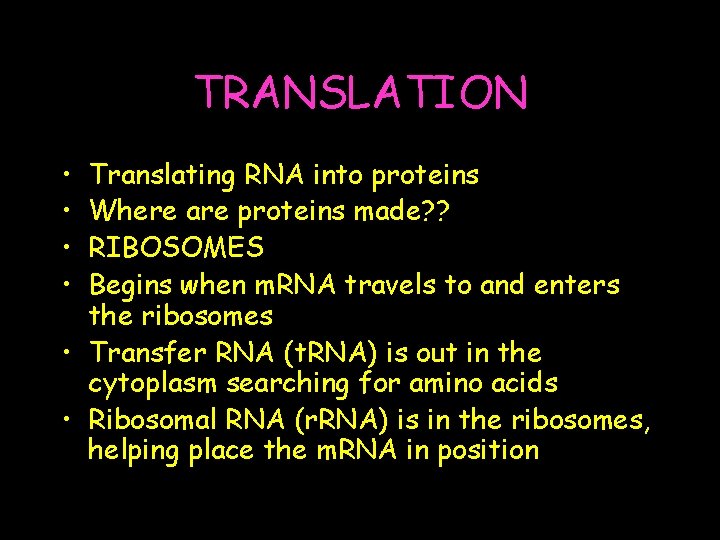
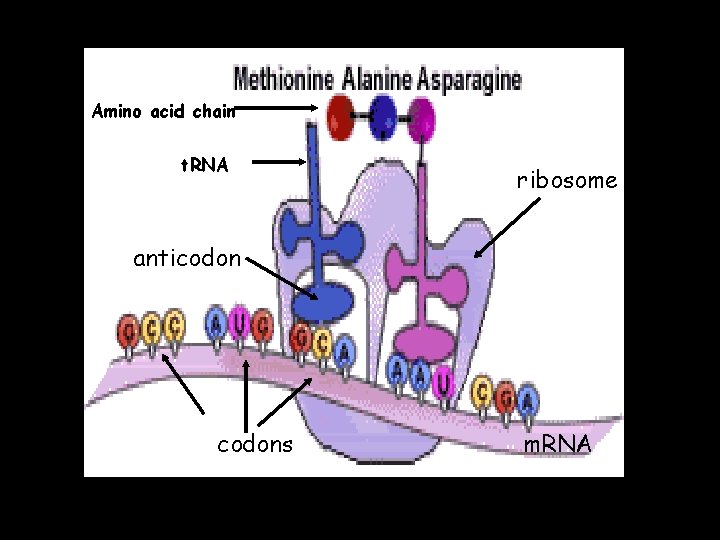
TRANSLATION • • Translating RNA into proteins Where are proteins made? ? RIBOSOMES Begins when m. RNA travels to and enters the ribosomes • Transfer RNA (t. RNA) is out in the cytoplasm searching for amino acids • Ribosomal RNA (r. RNA) is in the ribosomes, helping place the m. RNA in position
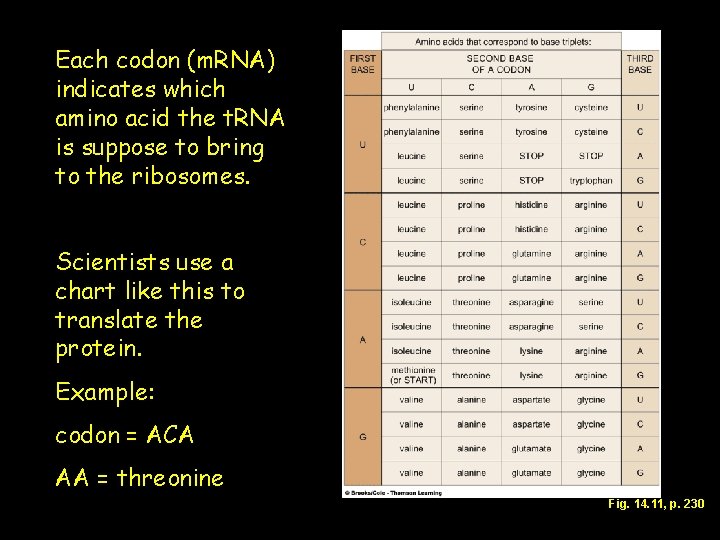
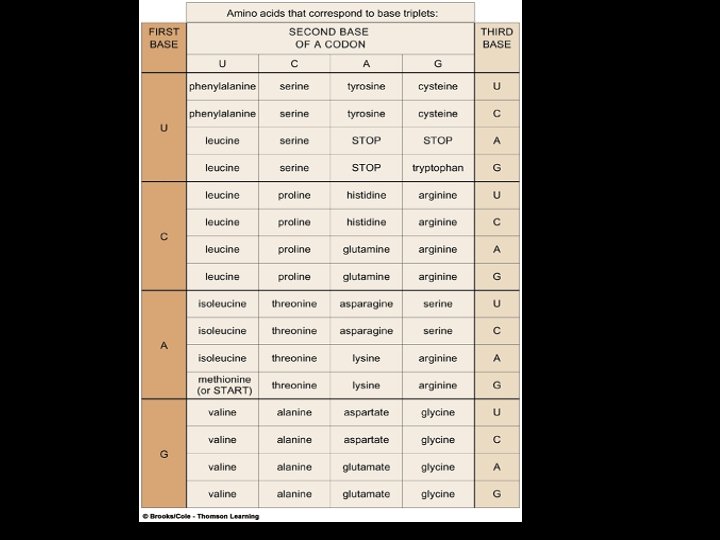
Each codon (m. RNA) indicates which amino acid the t. RNA is suppose to bring to the ribosomes. Scientists use a chart like this to translate the protein. Example: codon = ACA AA = threonine Fig. 14. 11, p. 230
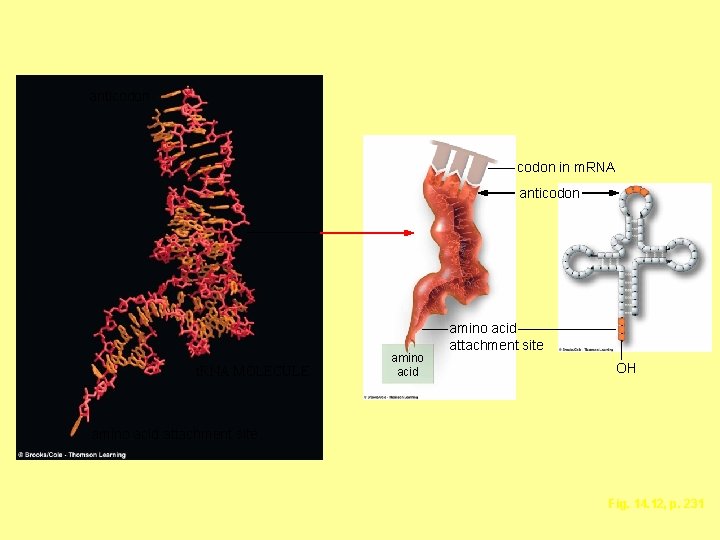
anticodon in m. RNA anticodon t. RNA MOLECULE amino acid attachment site OH amino acid attachment site Fig. 14. 12, p. 231
C G A anticodon 1 U G C anticodon 2 C U C anticodon 3 G A A anticodon 4 G C C anticodon 5 U C G anticodon 6 A U C anticodon 7 Once m. RNA is at the ribosome, t. RNA matches amino acids to the codons using ANTICODONS **Each t. RNA carries a different amino acid
Amino acid chain t. RNA ribosome anticodons m. RNA
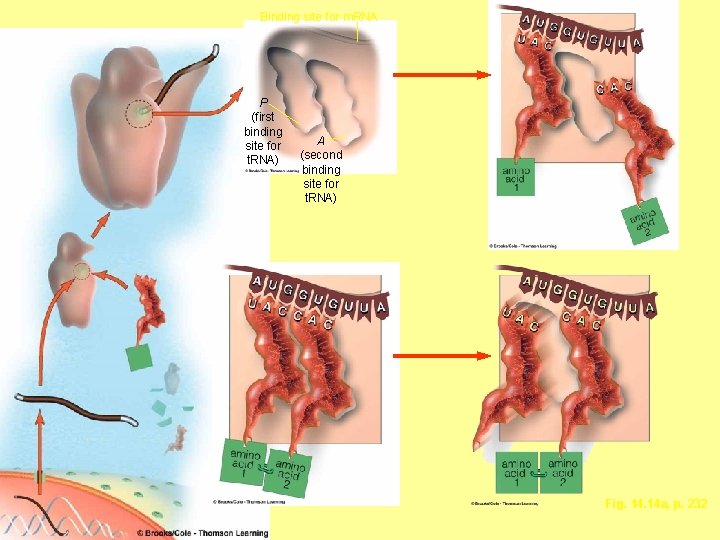
Binding site for m. RNA P (first binding site for t. RNA) A (second binding site for t. RNA) Fig. 14 a, p. 232
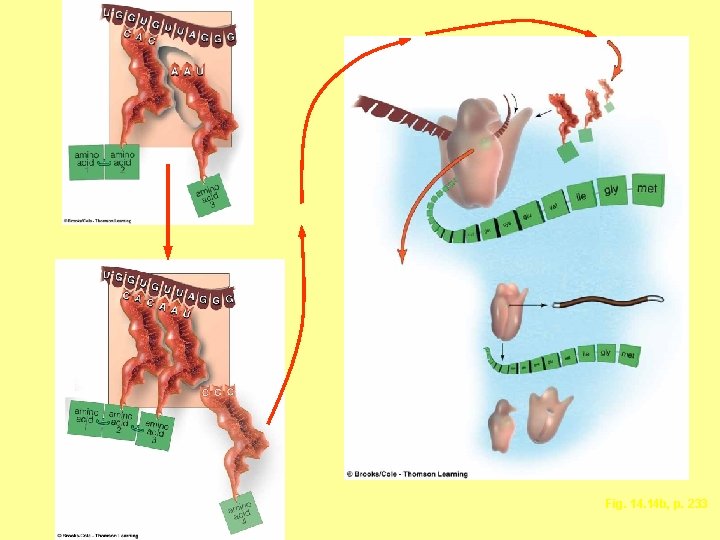
Fig. 14 b, p. 233
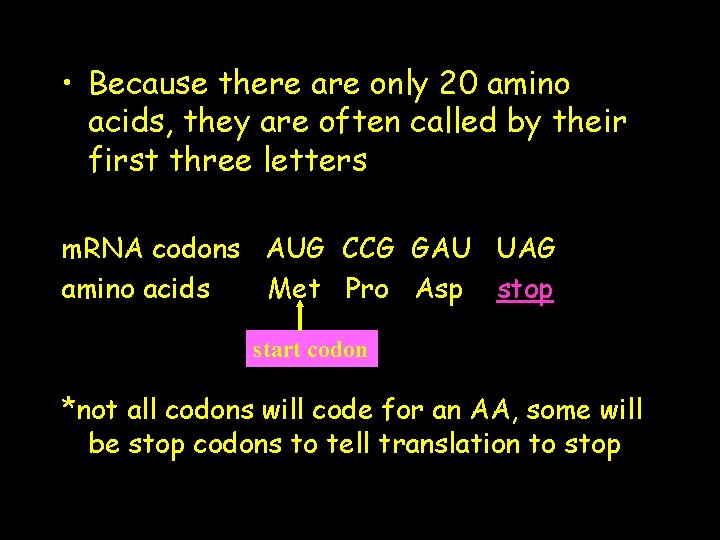
• Because there are only 20 amino acids, they are often called by their first three letters m. RNA codons AUG CCG GAU UAG amino acids Met Pro Asp stop start codon *not all codons will code for an AA, some will be stop codons to tell translation to stop