
Gene expression Transcription and Translation 1 Important Features
- Slides: 20
Gene expression Transcription and Translation
1. • • Important Features: Eukaryotic cells a. DNA contains genetic template for proteins. b. DNA is found in the nucleus c. Protein synthesis occurs in the cytoplasm - ribosome. d. "Genetic information" must be transferred to the cytoplasm where proteins are synthesized. 2 2
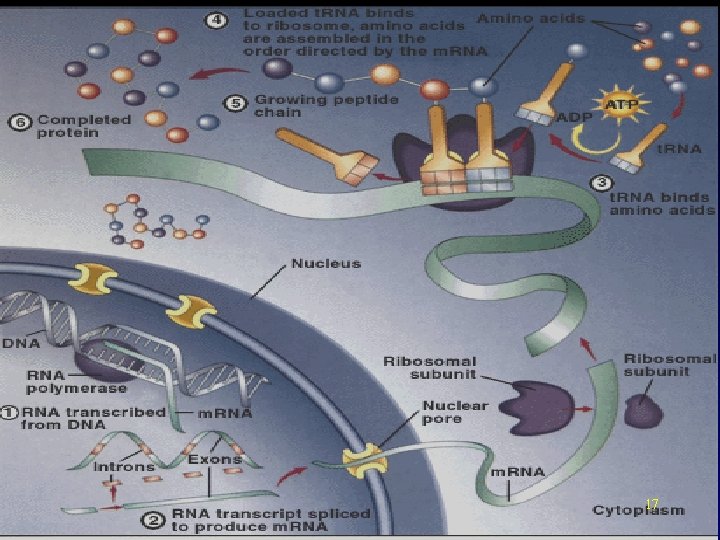
2. Processes of Protein Synthesis • • a. Transcription - genetic template for a protein is copied and carried out to the cytoplasm b. Translation - template serves as a series of codes for the amino acid sequence of the protein 3 3
Cells Use RNA to Make Protein • The RNA Players – r. RNA, m. RNA, t. RNA – – – During polypeptide synthesis, ribosomal RNA (r. RNA) is the site of polypeptide assembly. Messenger RNA (m. RNA) directs which amino acids are assembled into polypeptides. Transfer RNA (t. RNA) transports and positions amino acids. 4 4
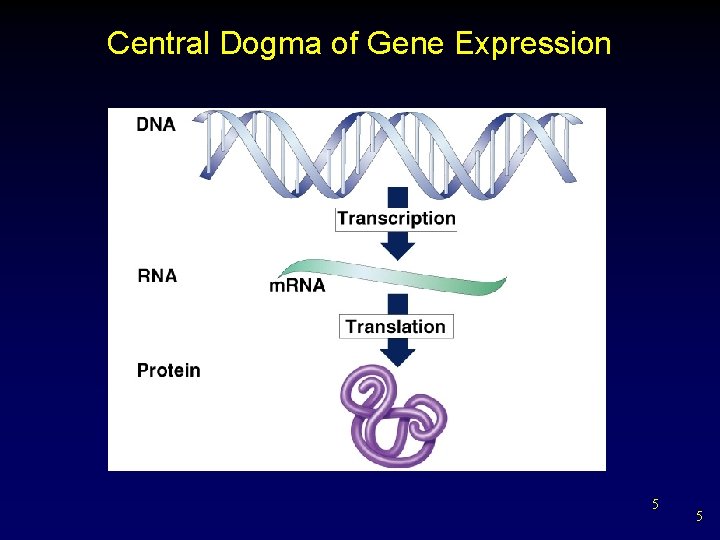
Central Dogma of Gene Expression 5 5
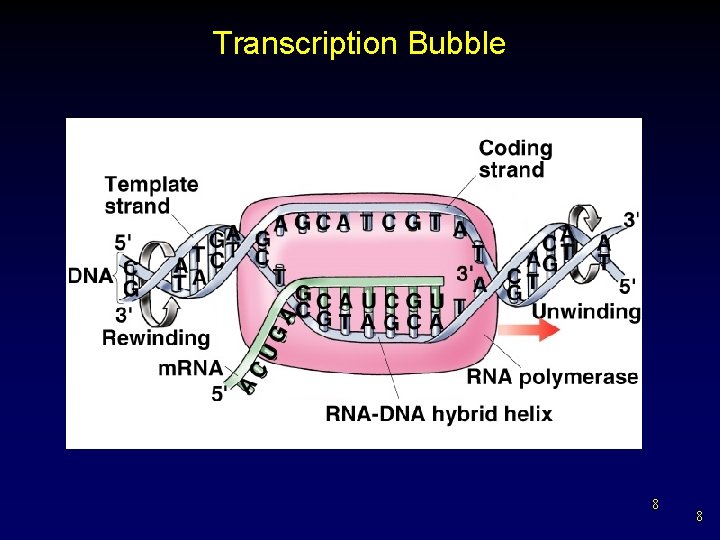
Transcription – in the nucleus (if you have one) – – DNA sequence is transcribed into RNA sequence only one of two DNA strands (template or antisense strand) is transcribed non-transcribed strand is termed coding strand or sense strand same as RNA (except T’s are U’s) RNA polymerase unzips and adds the nucleotides unlike in replication where helicase unzips. 6 6
Transcription • • • Promoter – Transcription starts at RNA polymerase binding sites called promoters on DNA template strand. Transcription factor – Binds to promoter so that RNA polymerase can then bind Initiation – Other transcription factors bind, assembling a transcription initiation complex. – RNA polymerase begins to unwind DNA helix. 7 7
Transcription Bubble 8 8
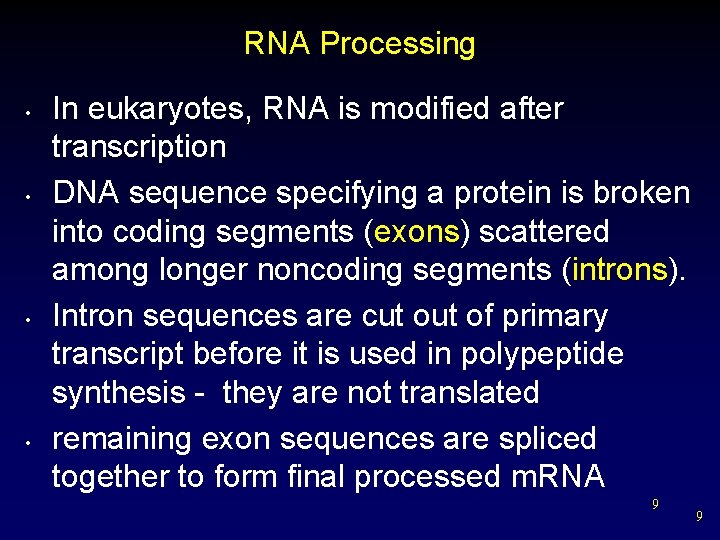
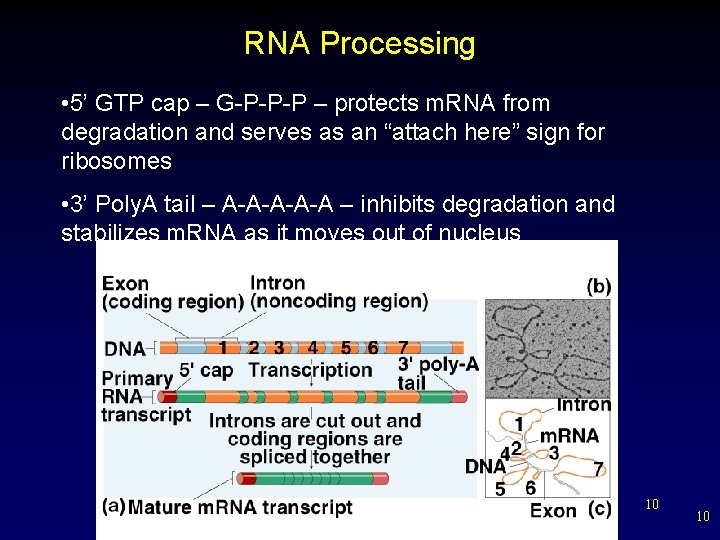
RNA Processing • • In eukaryotes, RNA is modified after transcription DNA sequence specifying a protein is broken into coding segments (exons) scattered among longer noncoding segments (introns). Intron sequences are cut of primary transcript before it is used in polypeptide synthesis - they are not translated remaining exon sequences are spliced together to form final processed m. RNA 9 9
RNA Processing • 5’ GTP cap – G-P-P-P – protects m. RNA from degradation and serves as an “attach here” sign for ribosomes • 3’ Poly. A tail – A-A-A – inhibits degradation and stabilizes m. RNA as it moves out of nucleus 10 10
RNA Processing Each person in group tells one way that RNA is modified after transcription in eukaryotes 11 11
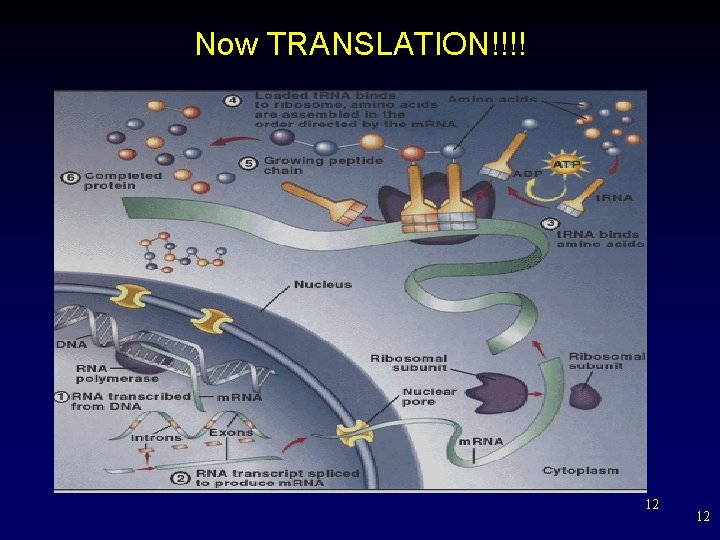
Now TRANSLATION!!!! 12 12
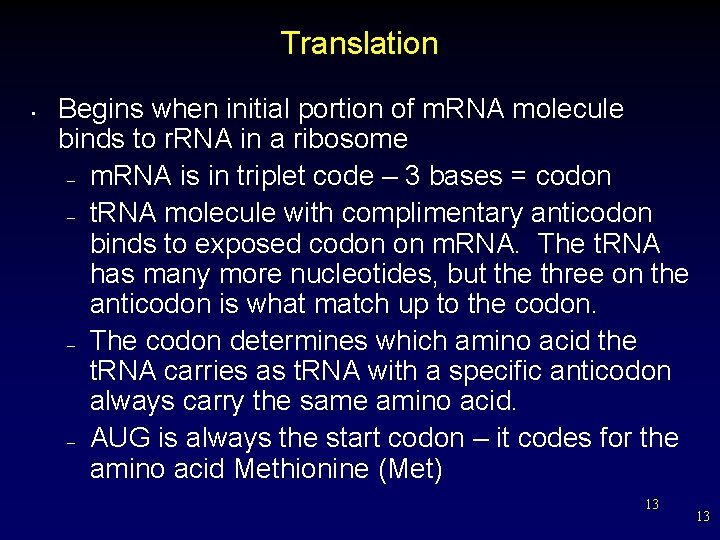
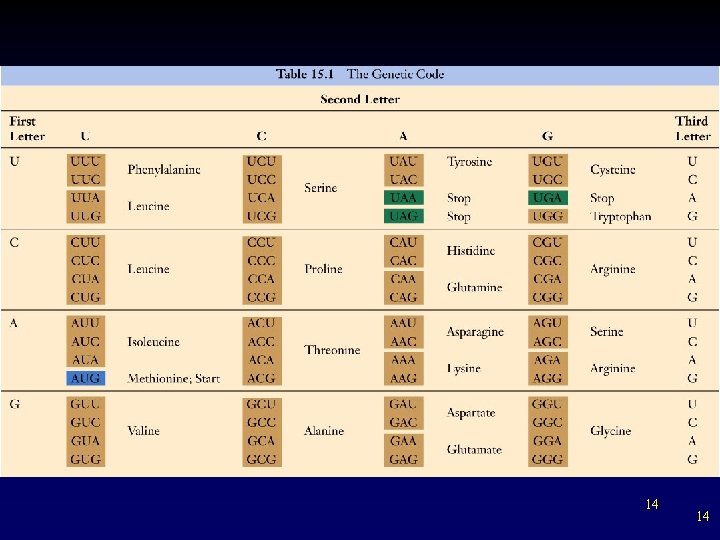
Translation • Begins when initial portion of m. RNA molecule binds to r. RNA in a ribosome – m. RNA is in triplet code – 3 bases = codon – t. RNA molecule with complimentary anticodon binds to exposed codon on m. RNA. The t. RNA has many more nucleotides, but the three on the anticodon is what match up to the codon. – The codon determines which amino acid the t. RNA carries as t. RNA with a specific anticodon always carry the same amino acid. – AUG is always the start codon – it codes for the amino acid Methionine (Met) 13 13
14 14
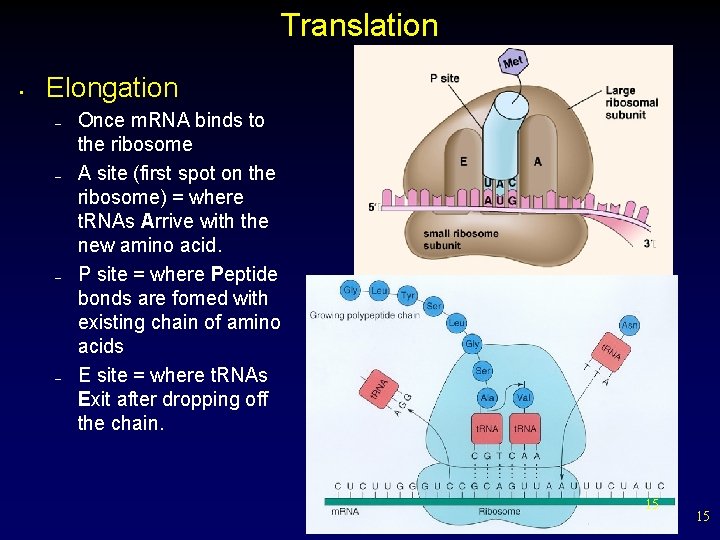
Translation • Elongation – – Once m. RNA binds to the ribosome A site (first spot on the ribosome) = where t. RNAs Arrive with the new amino acid. P site = where Peptide bonds are fomed with existing chain of amino acids E site = where t. RNAs Exit after dropping off the chain. 15 15
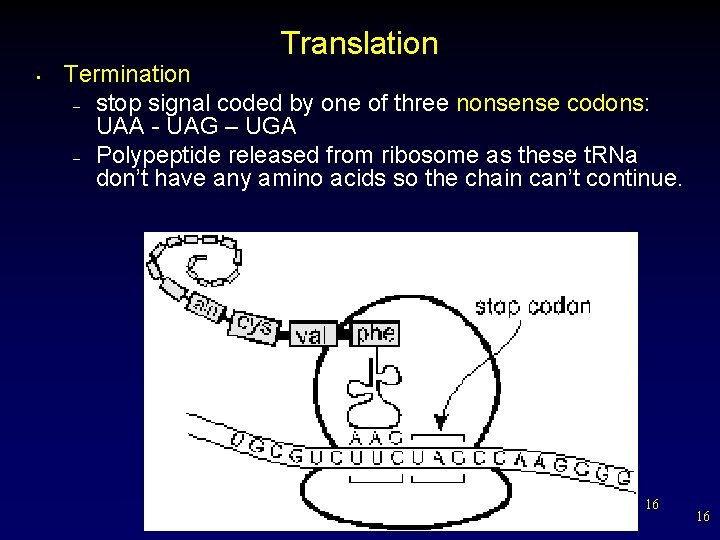
Translation • Termination – stop signal coded by one of three nonsense codons: UAA - UAG – UGA – Polypeptide released from ribosome as these t. RNa don’t have any amino acids so the chain can’t continue. 16 16
17 17
Translation Tell the story of translation with your group – one person starts: “First…. , ” and says one sentence. The next group member picks up where the first left off, and so on. 18 18
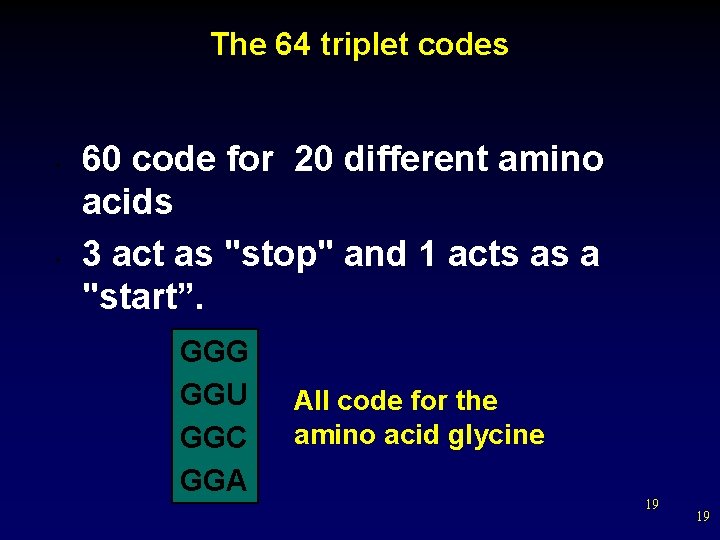
The 64 triplet codes • • 60 code for 20 different amino acids 3 act as "stop" and 1 acts as a "start”. GGG GGU GGC GGA All code for the amino acid glycine 19 19
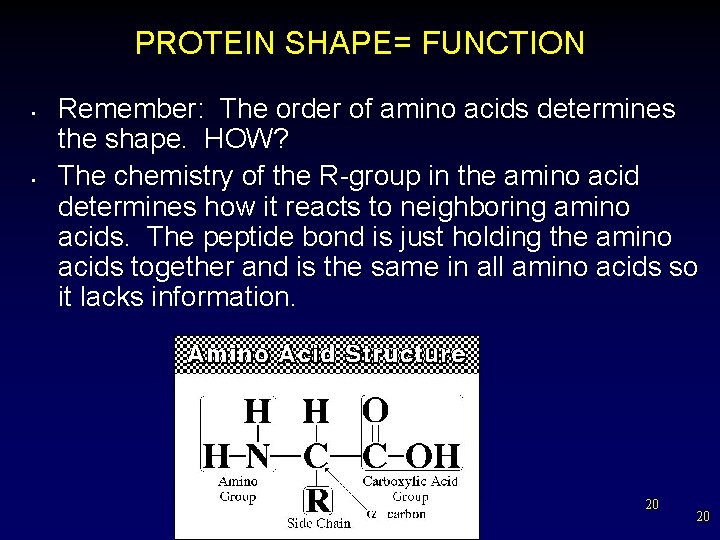
PROTEIN SHAPE= FUNCTION • • Remember: The order of amino acids determines the shape. HOW? The chemistry of the R-group in the amino acid determines how it reacts to neighboring amino acids. The peptide bond is just holding the amino acids together and is the same in all amino acids so it lacks information. 20 20