
Gene Expression from DNA to protein to phenotype
- Slides: 14
Gene Expression: from DNA to protein to phenotype • How is DNA transcribed to RNA? • How is m. RNA translated to protein? • How do alterations in DNA lead to alterations in phenotype?
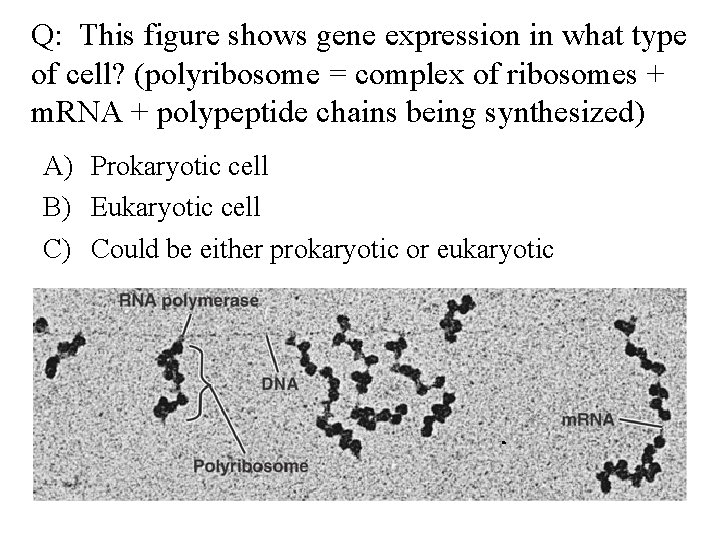
Q: This figure shows gene expression in what type of cell? (polyribosome = complex of ribosomes + m. RNA + polypeptide chains being synthesized) A) Prokaryotic cell B) Eukaryotic cell C) Could be either prokaryotic or eukaryotic
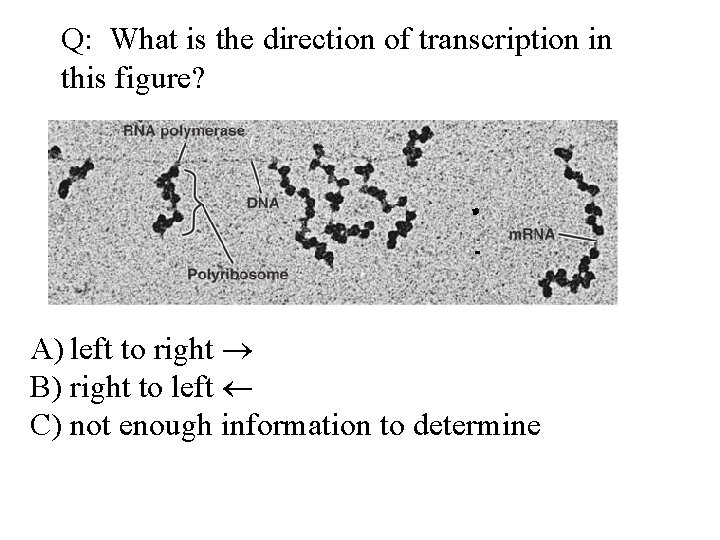
Q: What is the direction of transcription in this figure? A) left to right B) right to left C) not enough information to determine
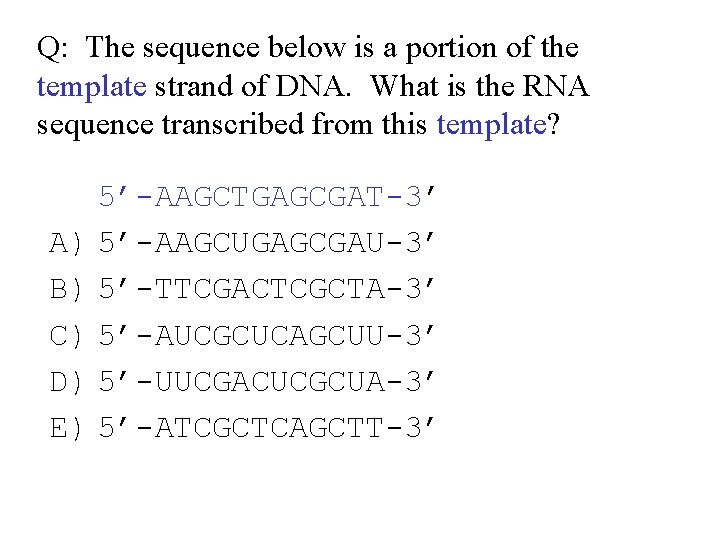
Q: The sequence below is a portion of the template strand of DNA. What is the RNA sequence transcribed from this template? 5’-AAGCTGAGCGAT-3’ A) 5’-AAGCUGAGCGAU-3’ B) 5’-TTCGACTCGCTA-3’ C) 5’-AUCGCUCAGCUU-3’ D) 5’-UUCGACUCGCUA-3’ E) 5’-ATCGCTCAGCTT-3’
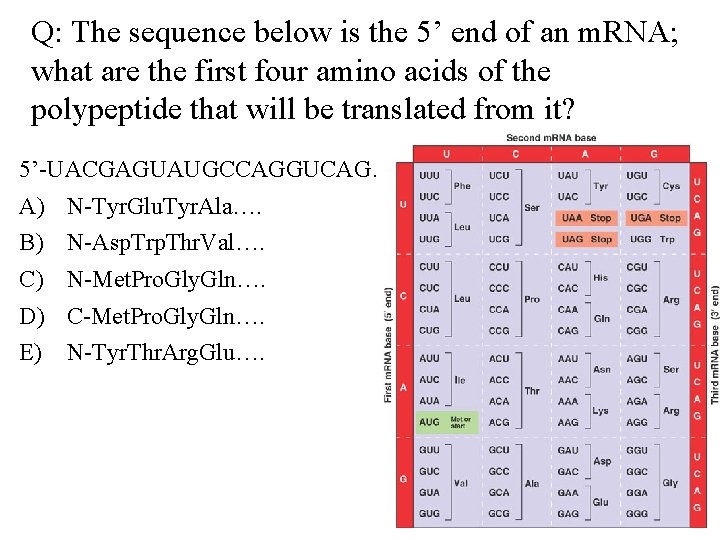
Q: The sequence below is the 5’ end of an m. RNA; what are the first four amino acids of the polypeptide that will be translated from it? 5’-UACGAGUAUGCCAGGUCAG…. A) B) C) D) E) N-Tyr. Glu. Tyr. Ala…. N-Asp. Trp. Thr. Val…. N-Met. Pro. Gly. Gln…. C-Met. Pro. Gly. Gln…. N-Tyr. Thr. Arg. Glu….
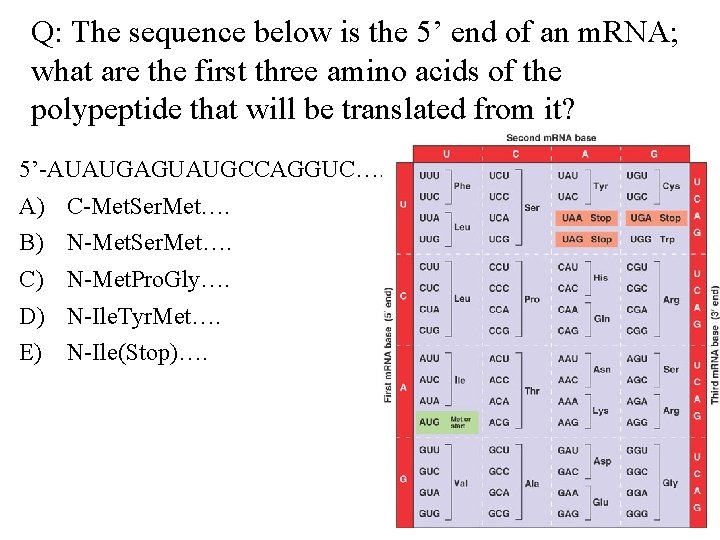
Q: The sequence below is the 5’ end of an m. RNA; what are the first three amino acids of the polypeptide that will be translated from it? 5’-AUAUGAGUAUGCCAGGUC…. A) B) C) D) E) C-Met. Ser. Met…. N-Met. Pro. Gly…. N-Ile. Tyr. Met…. N-Ile(Stop)….
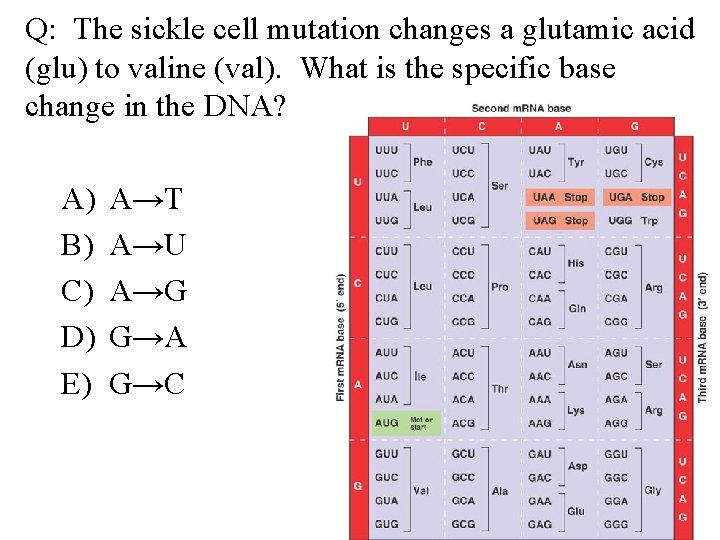
Q: The sickle cell mutation changes a glutamic acid (glu) to valine (val). What is the specific base change in the DNA? A) B) C) D) E) A→T A→U A→G G→A G→C
Which type of mutation is most likely to render a protein non-functional? A. A mis-sense mutation B. A nonsense mutation near the 3’ end of the coding region C. A single nucleotide deletion near the 5’ end of the coding region D. A single nucleotide insertion near the 3’ end of the coding region E. A 3 -nucleotide deletion in the middle of the coding sequence.
Questions for discussion: • What is a mutation? • Do healthy people have “mutations” in their DNA? • Do all “mutations” have bad consequences?
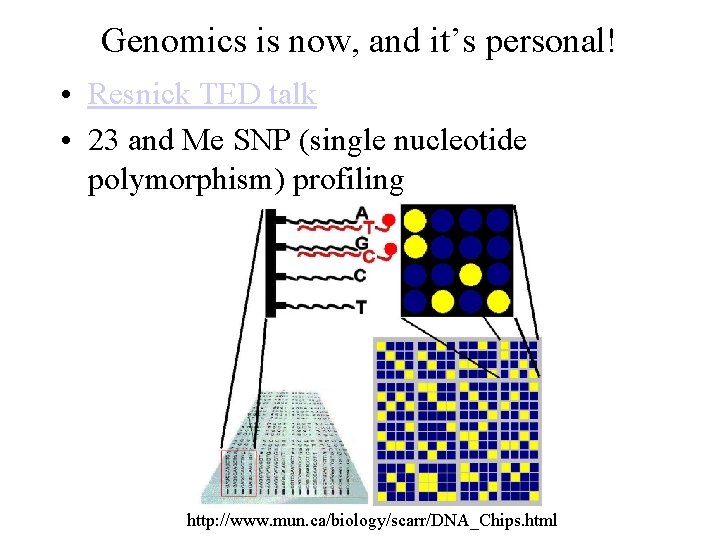
Genomics is now, and it’s personal! • Resnick TED talk • 23 and Me SNP (single nucleotide polymorphism) profiling http: //www. mun. ca/biology/scarr/DNA_Chips. html
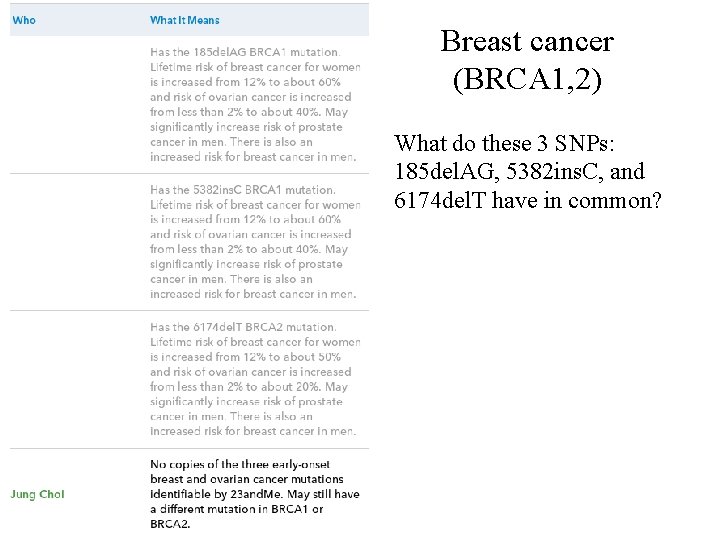
Breast cancer (BRCA 1, 2) What do these 3 SNPs: 185 del. AG, 5382 ins. C, and 6174 del. T have in common?
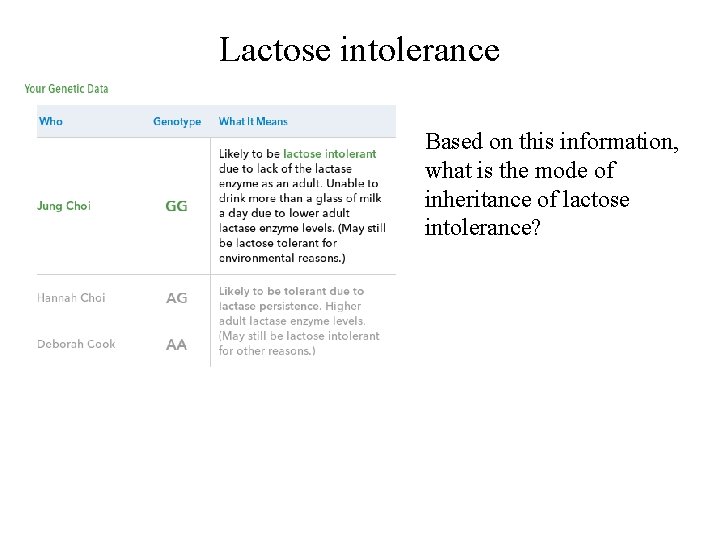
Lactose intolerance Based on this information, what is the mode of inheritance of lactose intolerance?
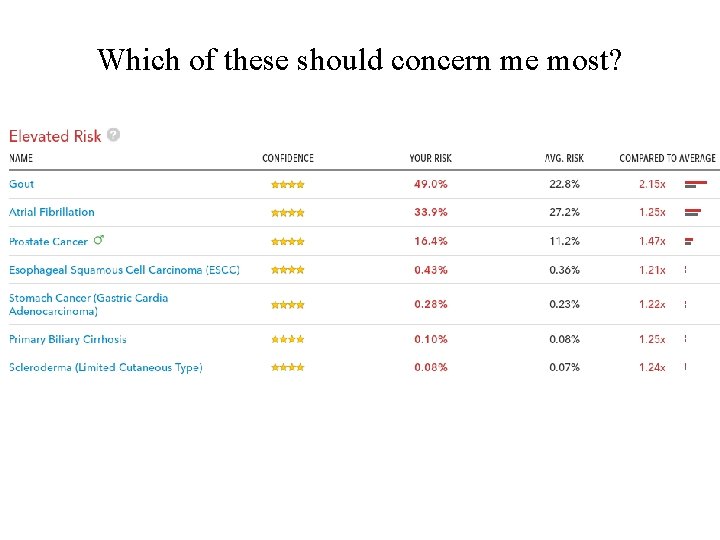
Which of these should concern me most?
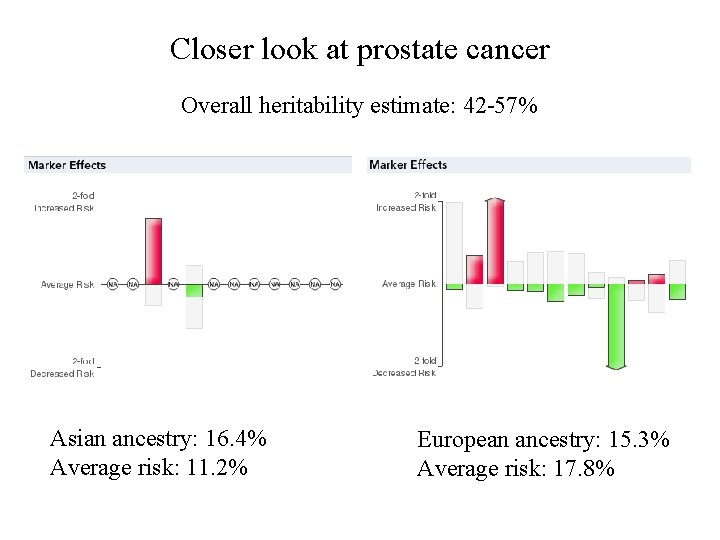
Closer look at prostate cancer Overall heritability estimate: 42 -57% Asian ancestry: 16. 4% Average risk: 11. 2% European ancestry: 15. 3% Average risk: 17. 8%