
Gene Expression and Control Chapter 7 Part 1
- Slides: 45
Gene Expression and Control Chapter 7 Part 1
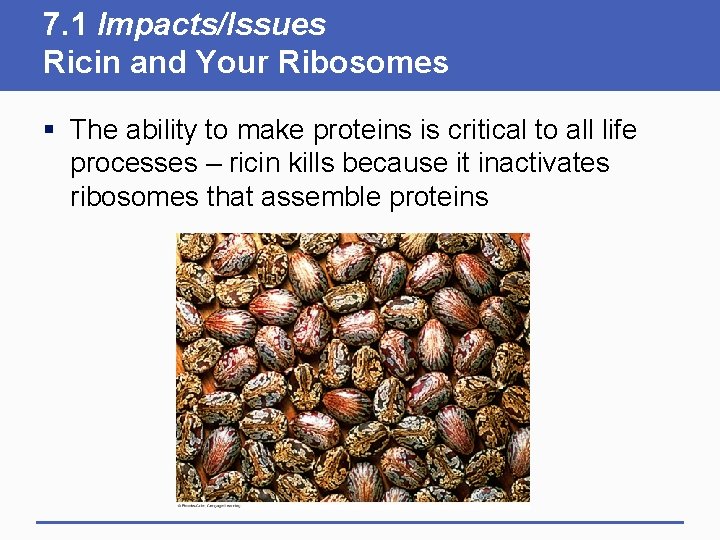
7. 1 Impacts/Issues Ricin and Your Ribosomes § The ability to make proteins is critical to all life processes – ricin kills because it inactivates ribosomes that assemble proteins
7. 2 The Nature of Genetic Information § DNA carries all the genetic information needed to build a new individual • Genetic information consists of base sequences • Genes are subunits of that sequence § Gene • Part of a DNA base sequence • Specifies structure of an RNA or protein product
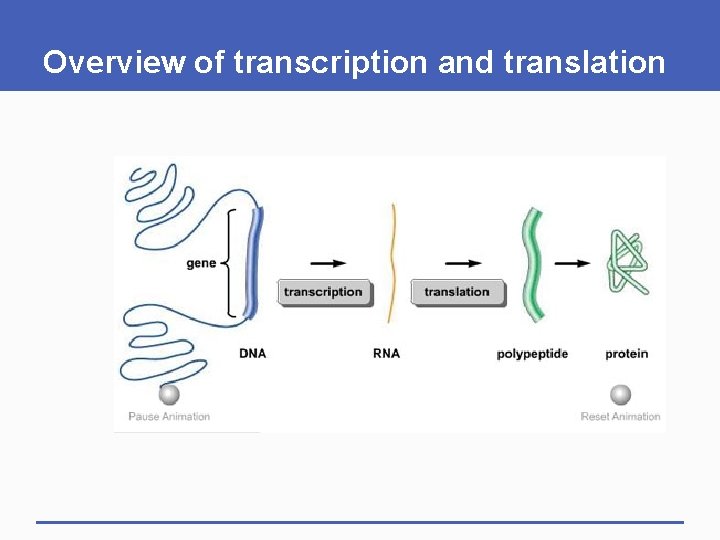
From Gene to RNA to Protein § Gene expression involves transcription (DNA to RNA), and translation (m. RNA, or messenger RNA, to protein) § Gene expression • Process by which the information in a gene becomes converted to an RNA or protein product
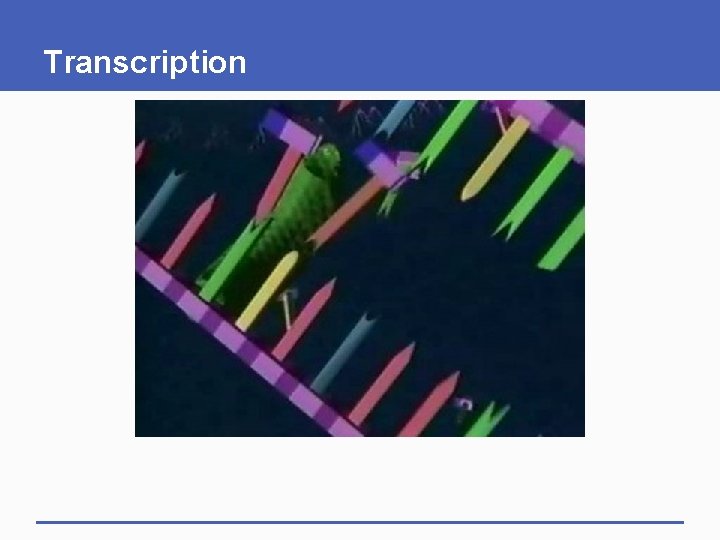
Transcription § A gene’s nucleotide base sequence encodes instructions for building an RNA or protein product § A cell transcribes the base sequence of a gene into m. RNA § m. RNA carries a protein-building message
Transcription § Transcription • Process by which an RNA is assembled from nucleotides using the base sequence of a gene as a template § Messenger RNA (m. RNA) • Type of RNA that has a protein-building message
Translation § Translation requires the participation of t. RNA (transfer RNA) and r. RNA (ribosomal RNA) § Translation • Process by which a polypeptide chain is assembled from amino acids in the order specified by an m. RNA
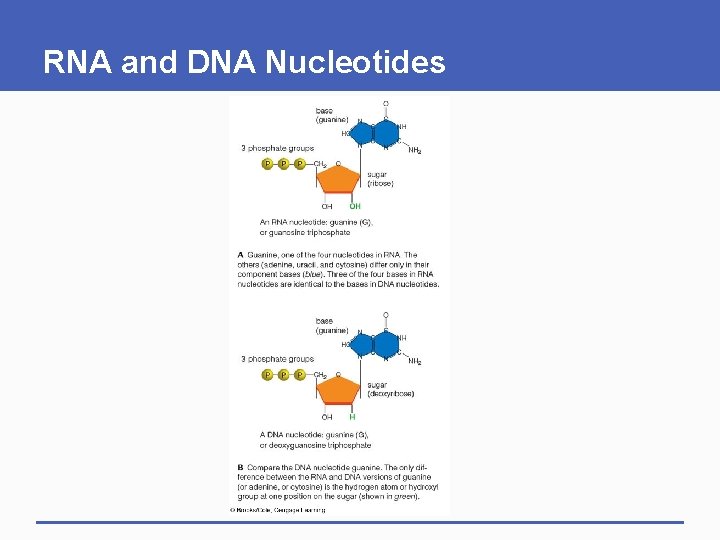
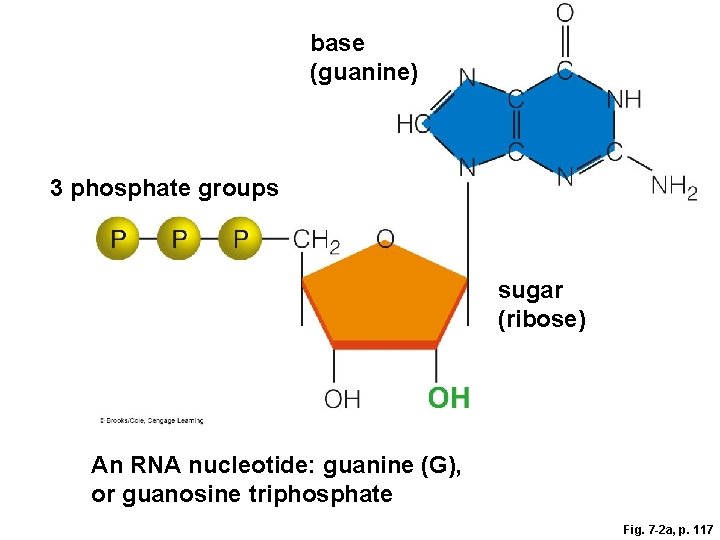
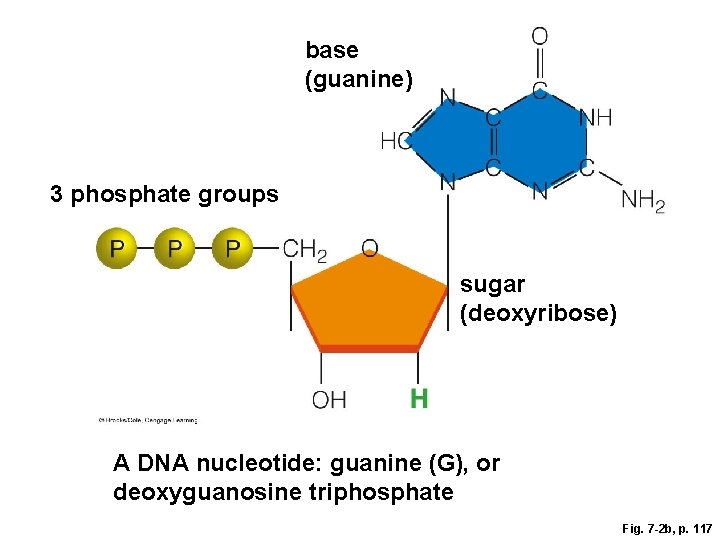
RNA and DNA Nucleotides
base (guanine) 3 phosphate groups sugar (ribose) An RNA nucleotide: guanine (G), or guanosine triphosphate Fig. 7 -2 a, p. 117
base (guanine) 3 phosphate groups sugar (deoxyribose) A DNA nucleotide: guanine (G), or deoxyguanosine triphosphate Fig. 7 -2 b, p. 117
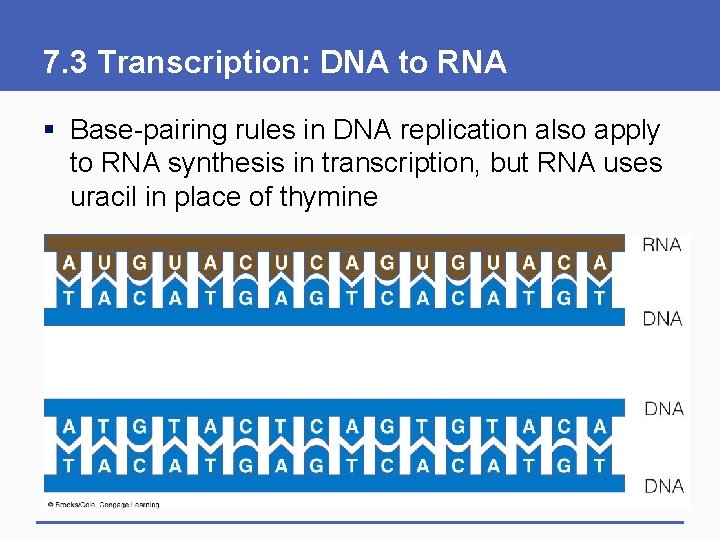
7. 3 Transcription: DNA to RNA § Base-pairing rules in DNA replication also apply to RNA synthesis in transcription, but RNA uses uracil in place of thymine
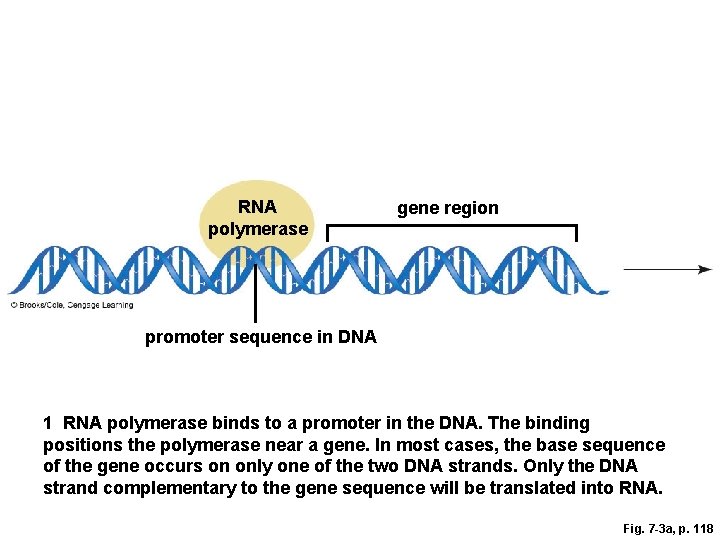
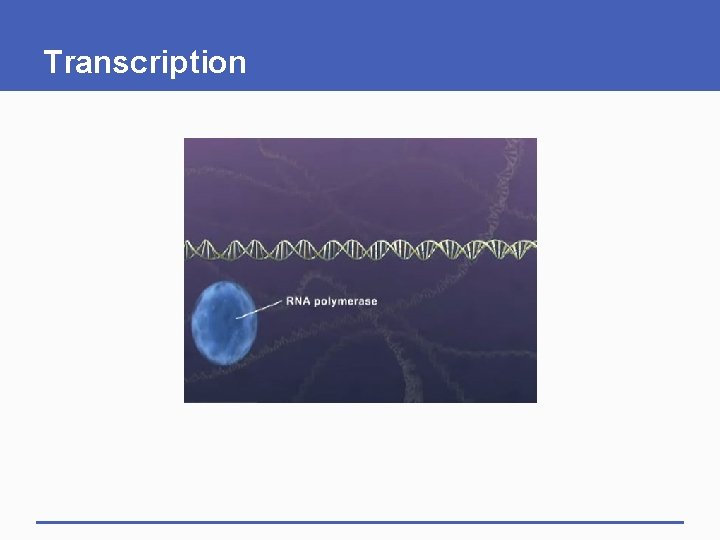
The Process of Transcription § In transcription, RNA polymerase binds to a promoter in the DNA near a gene § RNA polymerase • Enzyme that carries out transcription § Promoter • In DNA, a sequence to which RNA polymerase binds
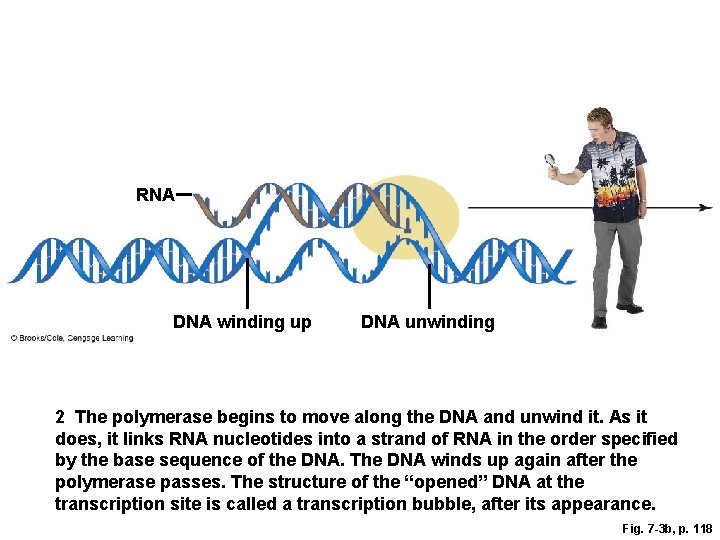
The Process of Transcription § Polymerase moves along the DNA, unwinding the DNA so it can read the base sequence § RNA polymerase assembles a strand of RNA by linking RNA nucleotides in the order determined by the base sequence of the gene § The new m. RNA is a copy of the gene from which it was transcribed
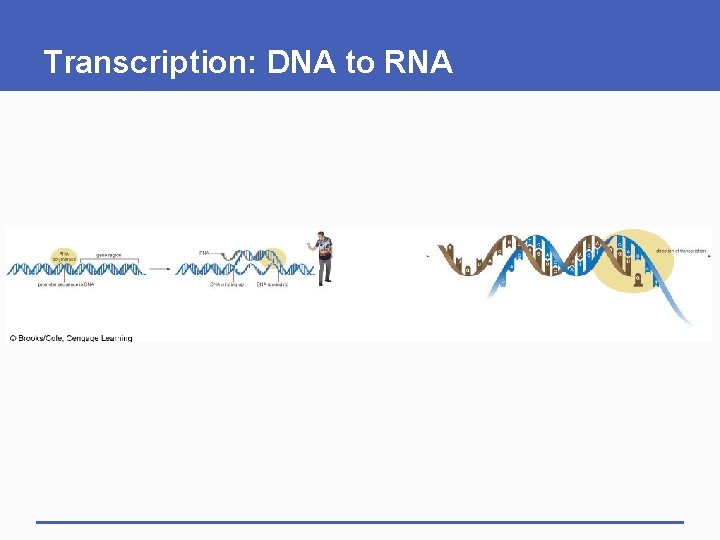
Transcription: DNA to RNA
RNA polymerase gene region promoter sequence in DNA 1 RNA polymerase binds to a promoter in the DNA. The binding positions the polymerase near a gene. In most cases, the base sequence of the gene occurs on only one of the two DNA strands. Only the DNA strand complementary to the gene sequence will be translated into RNA. Fig. 7 -3 a, p. 118
RNA DNA winding up DNA unwinding 2 The polymerase begins to move along the DNA and unwind it. As it does, it links RNA nucleotides into a strand of RNA in the order specified by the base sequence of the DNA. The DNA winds up again after the polymerase passes. The structure of the “opened” DNA at the transcription site is called a transcription bubble, after its appearance. Fig. 7 -3 b, p. 118
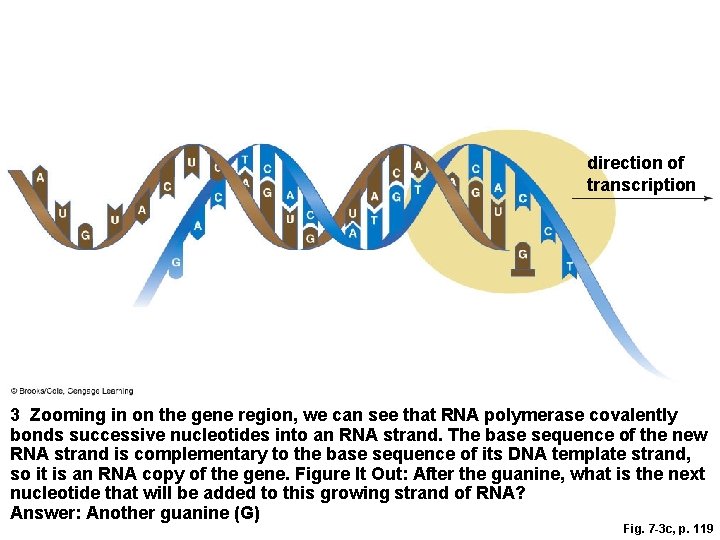
direction of transcription 3 Zooming in on the gene region, we can see that RNA polymerase covalently bonds successive nucleotides into an RNA strand. The base sequence of the new RNA strand is complementary to the base sequence of its DNA template strand, so it is an RNA copy of the gene. Figure It Out: After the guanine, what is the next nucleotide that will be added to this growing strand of RNA? Answer: Another guanine (G) Fig. 7 -3 c, p. 119
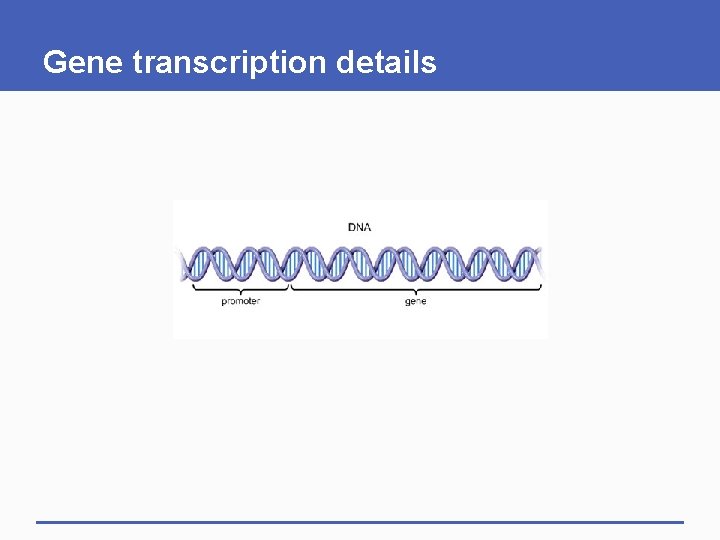
Gene transcription details
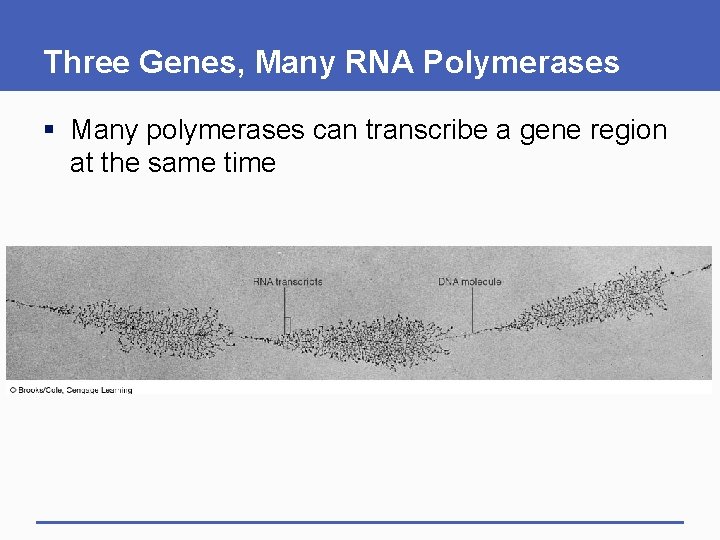
Three Genes, Many RNA Polymerases § Many polymerases can transcribe a gene region at the same time
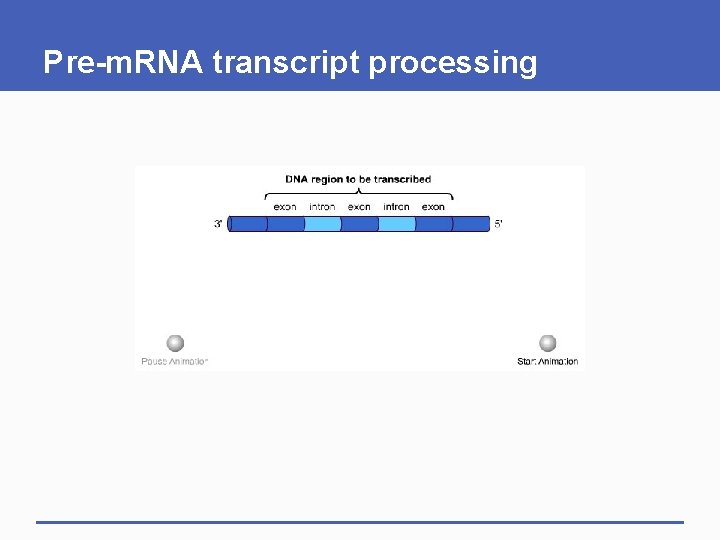
Pre-m. RNA transcript processing
Transcription
Transcription
7. 4 RNA Players in Translation § Three types of RNA are involved in translation: m. RNA, r. RNA, and t. RNA § m. RNA produced by transcription carries proteinbuilding information from DNA to the other two types of RNA for translation
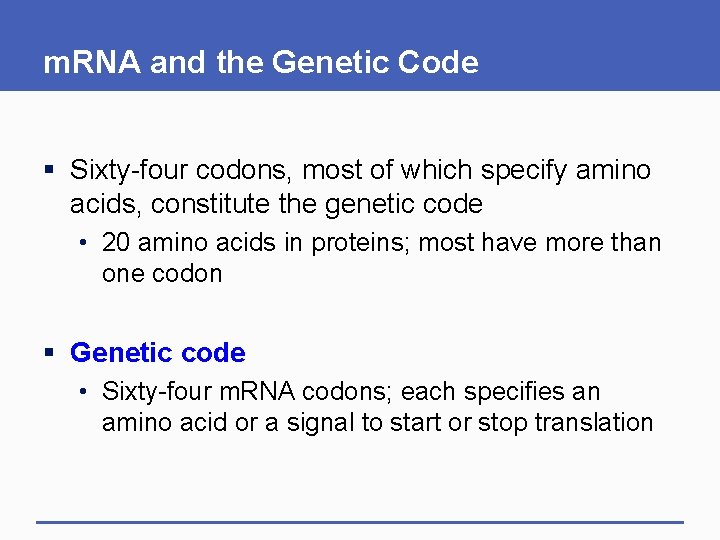
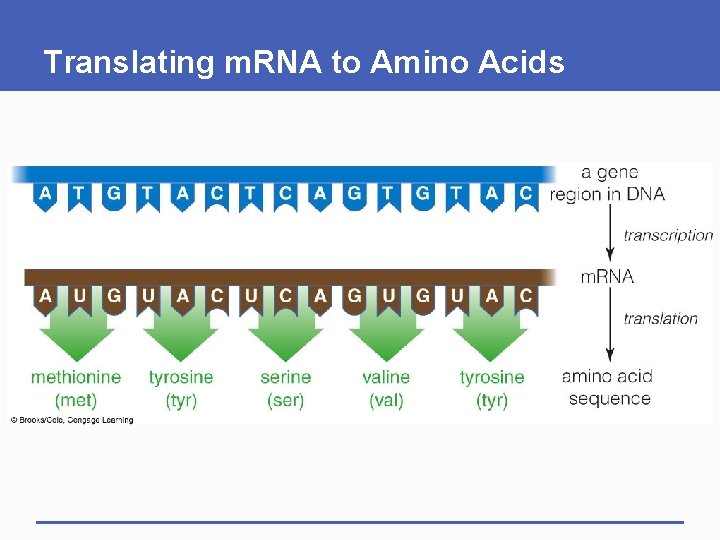
m. RNA and the Genetic Code § The information in m. RNA consists of sets of three nucleotides (codons) that form “words” spelled with the four bases A, C, G, and U § Codon • In m. RNA, a nucleotide base triplet that codes for an amino acid or stop signal during translation
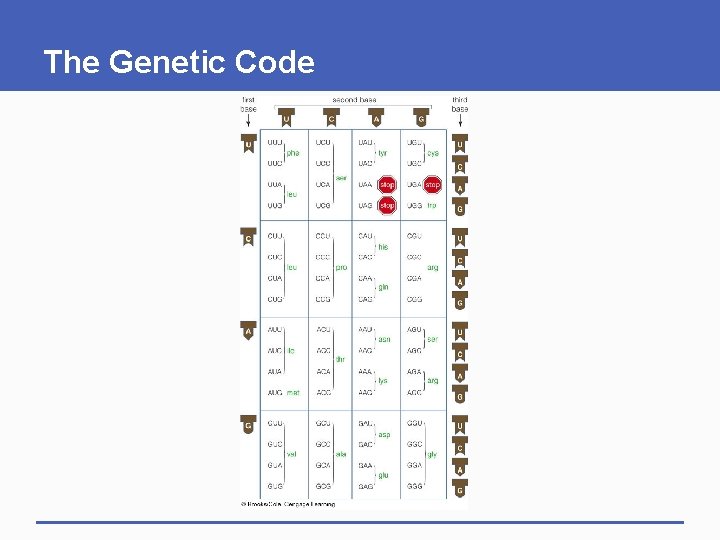
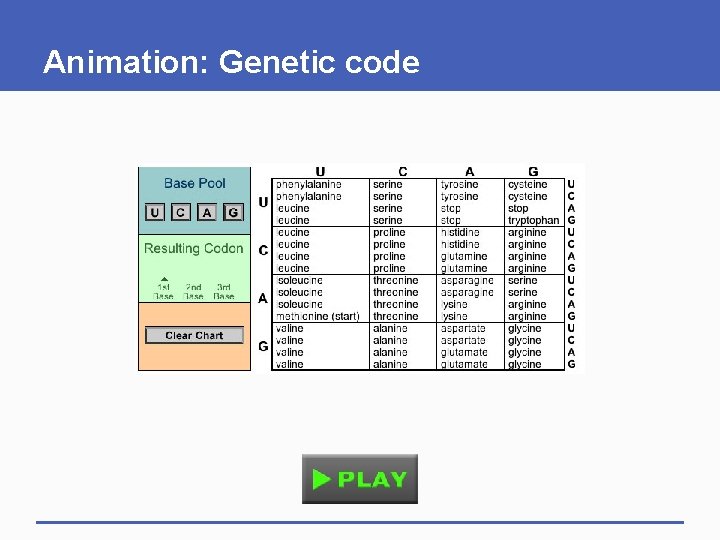
m. RNA and the Genetic Code § Sixty-four codons, most of which specify amino acids, constitute the genetic code • 20 amino acids in proteins; most have more than one codon § Genetic code • Sixty-four m. RNA codons; each specifies an amino acid or a signal to start or stop translation
The Genetic Code
Animation: Genetic code
Translating m. RNA to Amino Acids
r. RNA and t. RNA – the Translators § Ribosomes and transfer RNAs (t. RNA) interact to translate an m. RNA into a polypeptide § Ribosomes consist of two subunits of r. RNA and structural proteins § Ribosomal RNA (r. RNA) • A type of RNA that becomes part of ribosomes
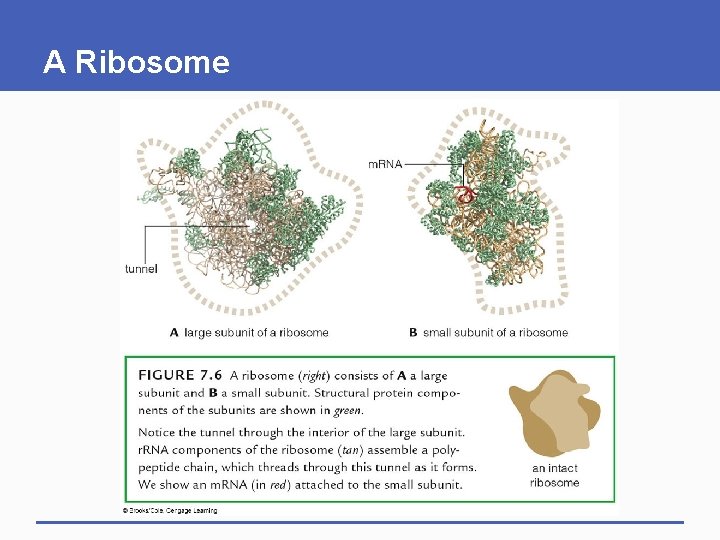
Ribosomes § During translation, one large and one small ribosomal subunit (r. RNA) converge as a ribosome on an m. RNA § r. RNA reads the m. RNA and acts as an enzyme to form peptide bonds between amino acids, assembling them into a polypeptide chain
A Ribosome
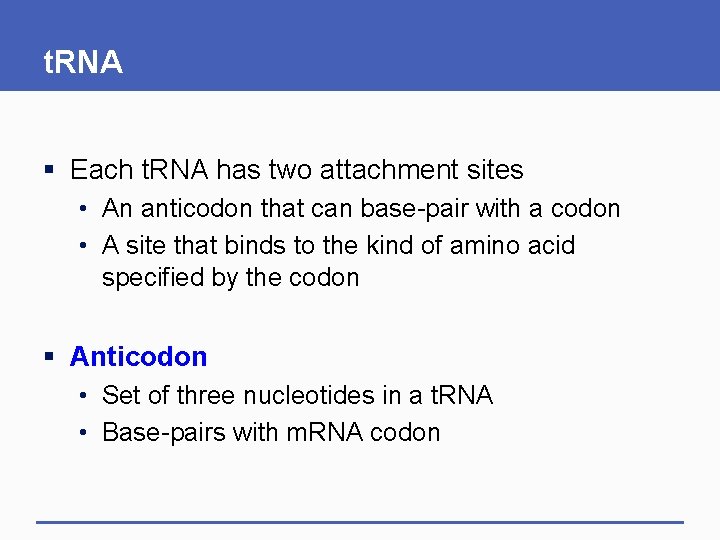
t. RNA § t. RNAs deliver amino acids to ribosomes in the order specified by m. RNA § Transfer RNA (t. RNA) • Type of RNA that delivers amino acids to a ribosome during translation
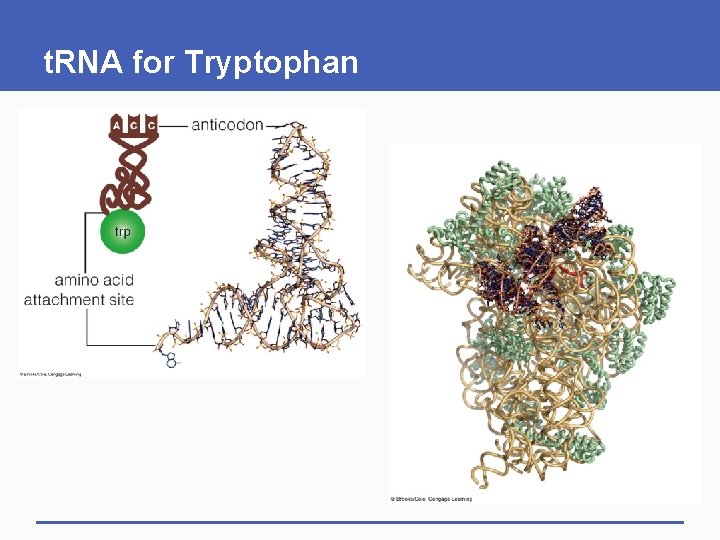
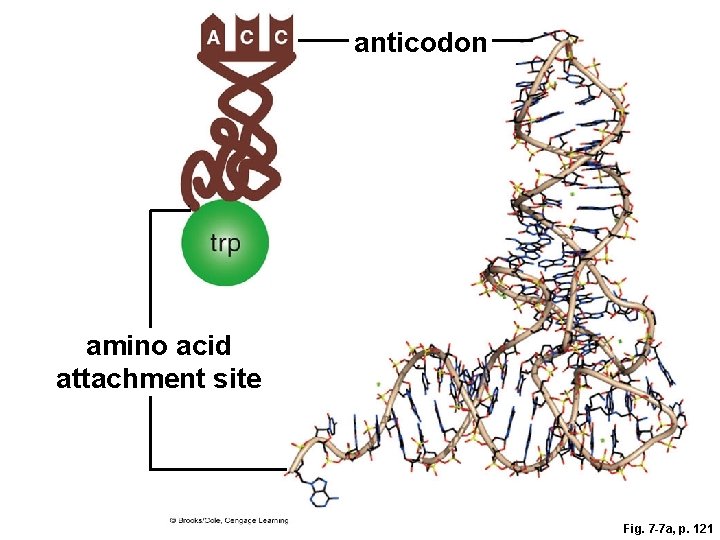
t. RNA § Each t. RNA has two attachment sites • An anticodon that can base-pair with a codon • A site that binds to the kind of amino acid specified by the codon § Anticodon • Set of three nucleotides in a t. RNA • Base-pairs with m. RNA codon
t. RNA for Tryptophan
anticodon amino acid attachment site Fig. 7 -7 a, p. 121
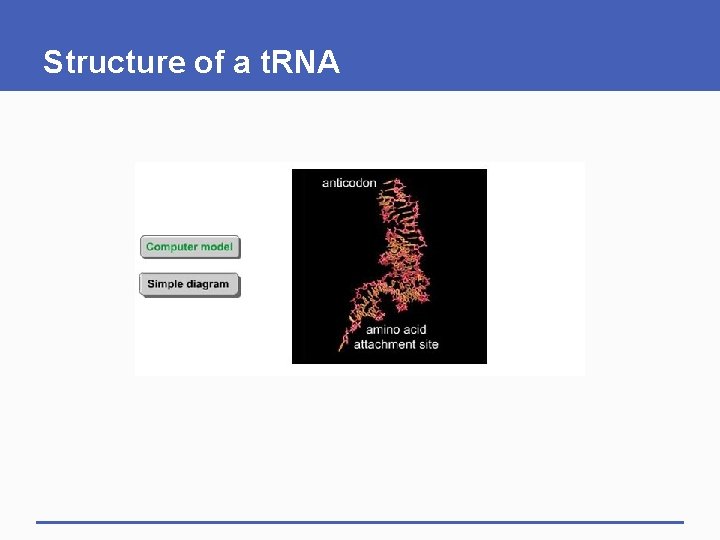
Structure of a t. RNA
7. 5 Translating the Code: RNA to Protein § Translation, the second part of protein synthesis, occurs in the cytoplasm of all cells § Translation is an energy-requiring process that converts the protein-building information carried by an m. RNA into a polypeptide
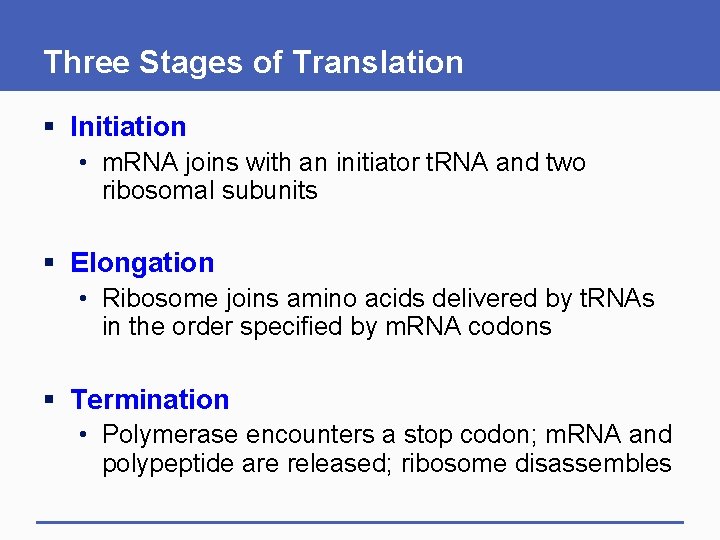
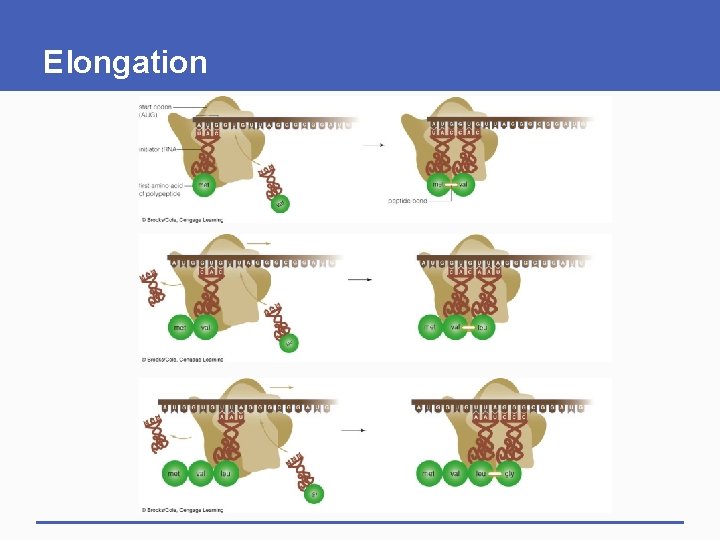
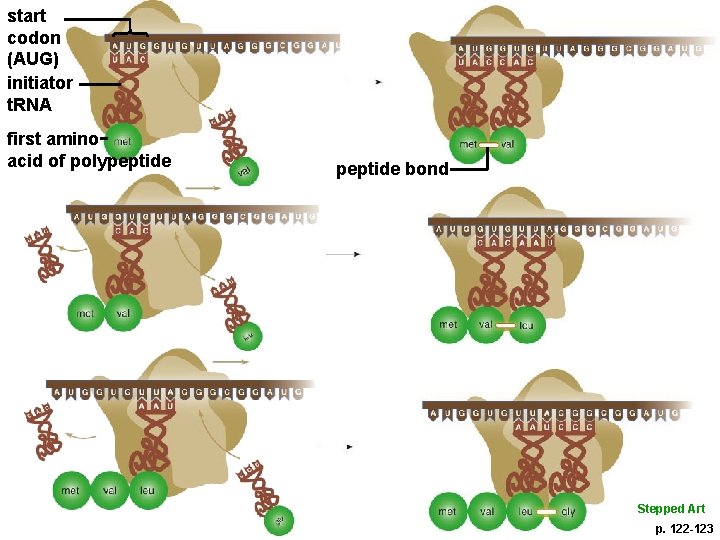
Three Stages of Translation § Initiation • m. RNA joins with an initiator t. RNA and two ribosomal subunits § Elongation • Ribosome joins amino acids delivered by t. RNAs in the order specified by m. RNA codons § Termination • Polymerase encounters a stop codon; m. RNA and polypeptide are released; ribosome disassembles
Elongation
start codon (AUG) initiator t. RNA first amino acid of polypeptide bond Stepped Art p. 122 -123
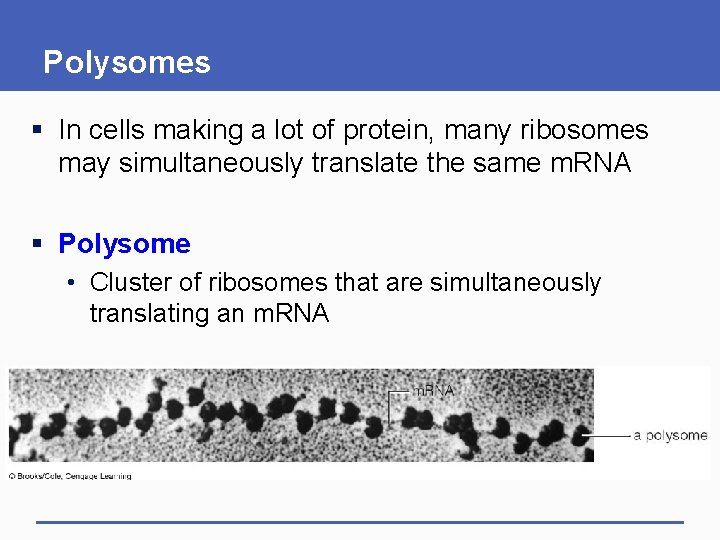
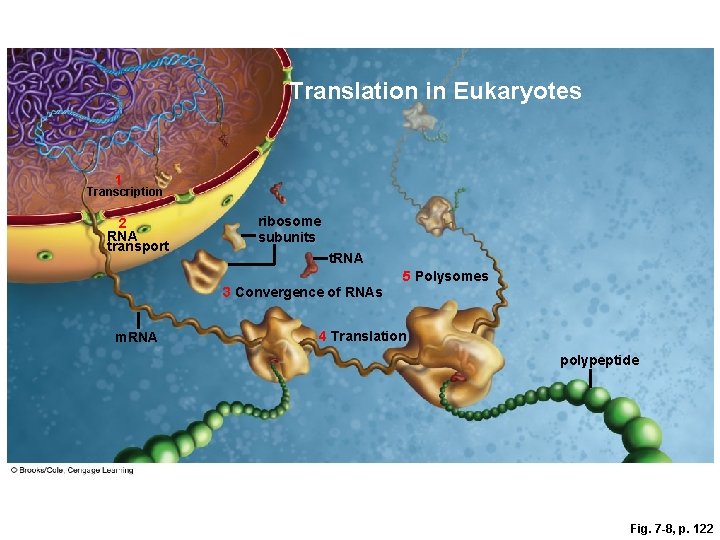
Polysomes § In cells making a lot of protein, many ribosomes may simultaneously translate the same m. RNA § Polysome • Cluster of ribosomes that are simultaneously translating an m. RNA
Translation in Eukaryotes 1 Transcription 2 RNA transport ribosome subunits t. RNA 3 Convergence of RNAs m. RNA 5 Polysomes 4 Translation polypeptide Fig. 7 -8, p. 122
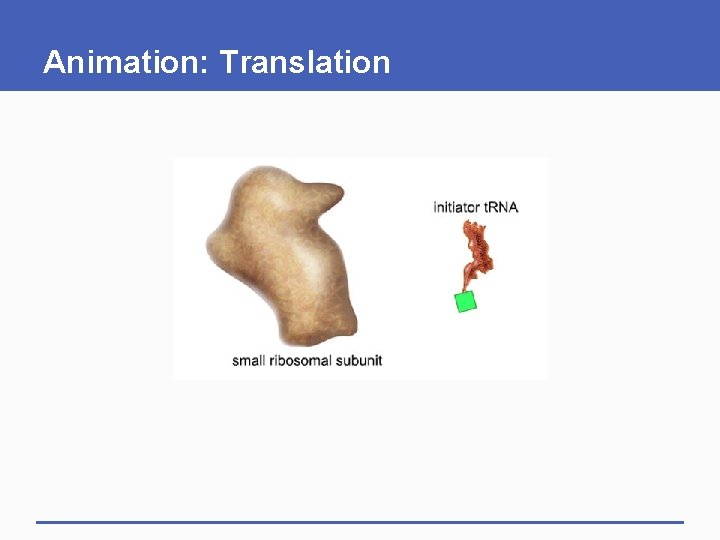
Animation: Translation
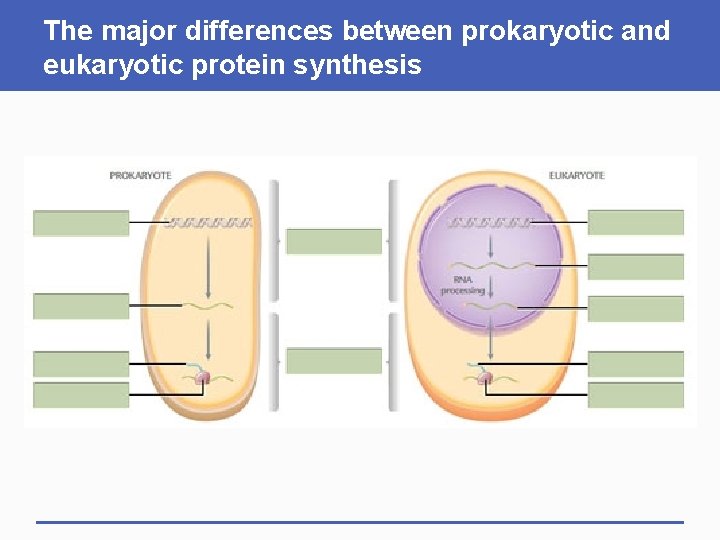
The major differences between prokaryotic and eukaryotic protein synthesis
Overview of transcription and translation