
Gene Expression and Cell Differentiation CSCOPE Unit 08
- Slides: 41
Gene Expression and Cell Differentiation CSCOPE Unit: 08 Lesson: 01
There are hundreds of different types of cells in your body, and each type has a unique function. We’re going to compare some different types of cells to see how much they have in common.
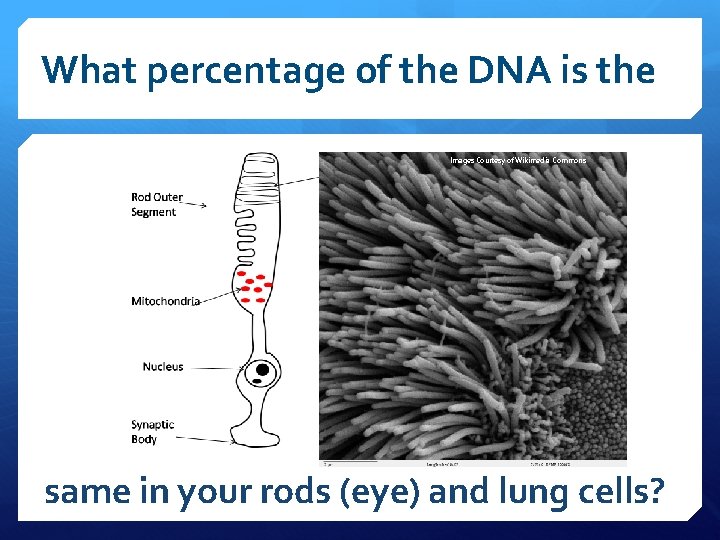
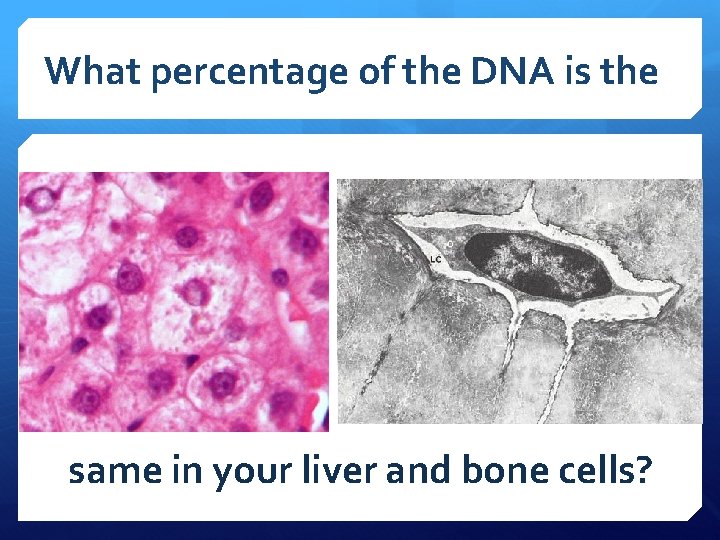
Your Best Guess For each pair of cells in your body, you are going to predict what percentage of DNA is the same in the two types of cells. Record your prediction in your science notebooks.
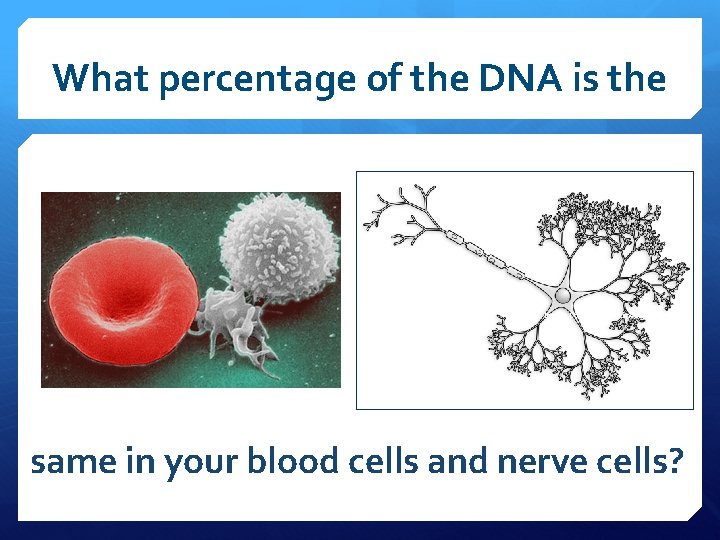
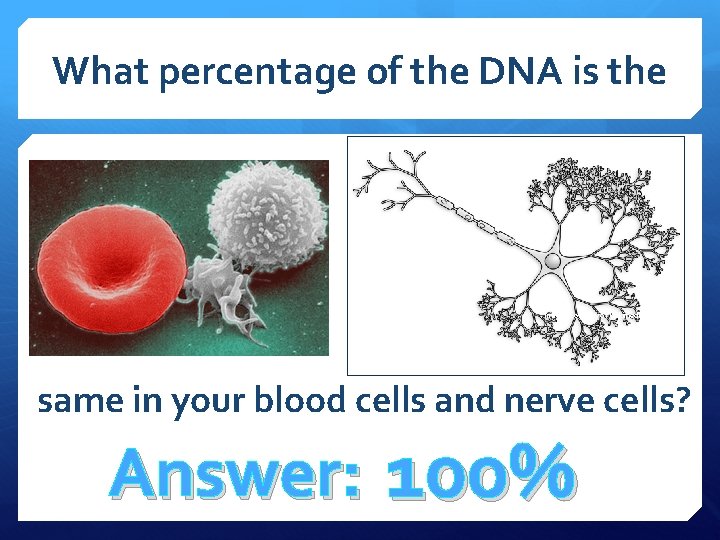
What percentage of the DNA is the Images Courtesy of Wikimedia Commons same in your blood cells and nerve cells?
What percentage of the DNA is the Images Courtesy of Wikimedia Commons same in your rods (eye) and lung cells?
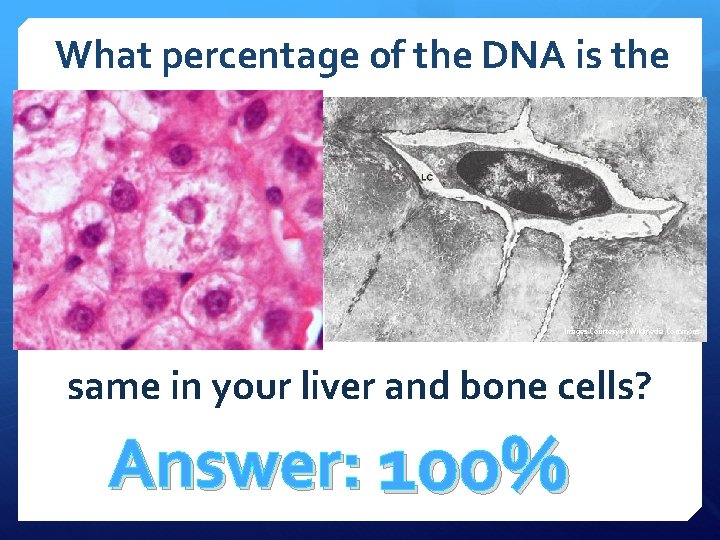
What percentage of the DNA is the same in your liver and bone cells?
What percentage of the DNA is the Images Courtesy of Wikimedia Commons same in your blood cells and nerve cells? Answer: 100%
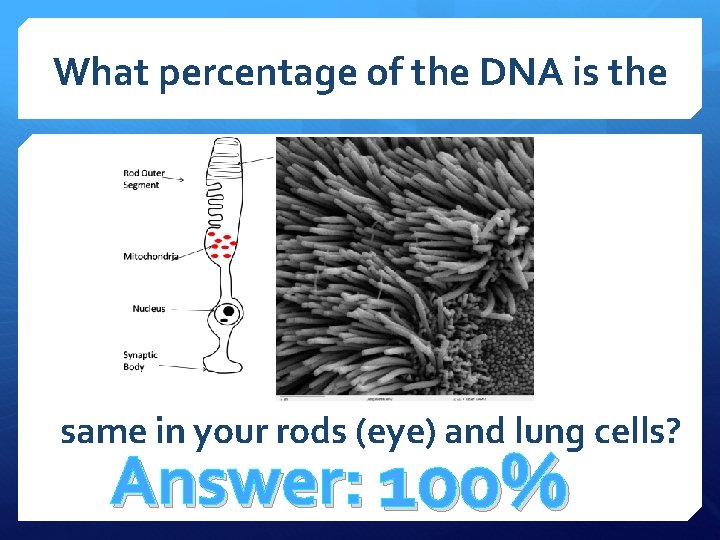
What percentage of the DNA is the same in your rods (eye) and lung cells? Answer: 100%
What percentage of the DNA is the Images Courtesy of Wikimedia Commons same in your liver and bone cells? Answer: 100%
Hmmm… How can these cells, that have very different functions, have the exact same DNA in the nucleus?
Hmmm… How does the body use the exact same set of instructions to make such different structures?
Taking a step back… HOW does DNA specify for traits in an organism? HOW does DNA instruct cells?
Animations Insert appropriate animations here (see Advance Preparation).
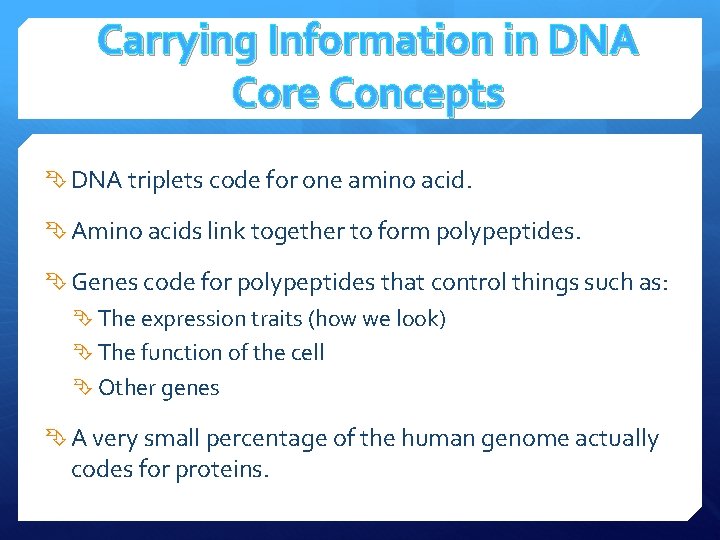
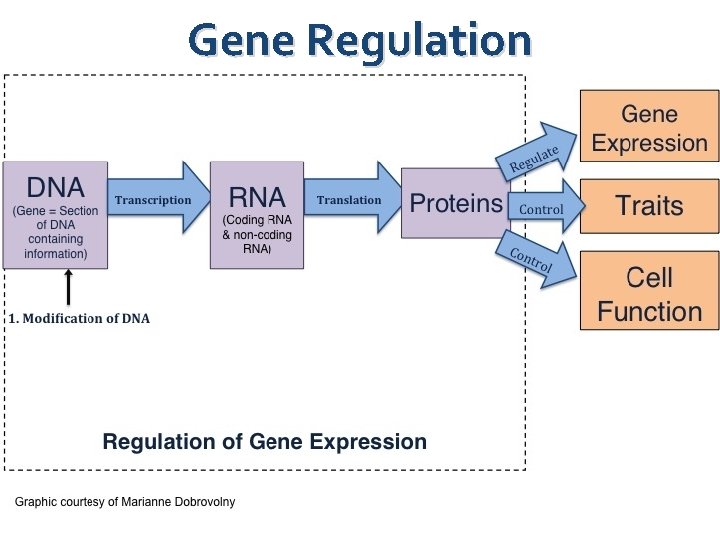
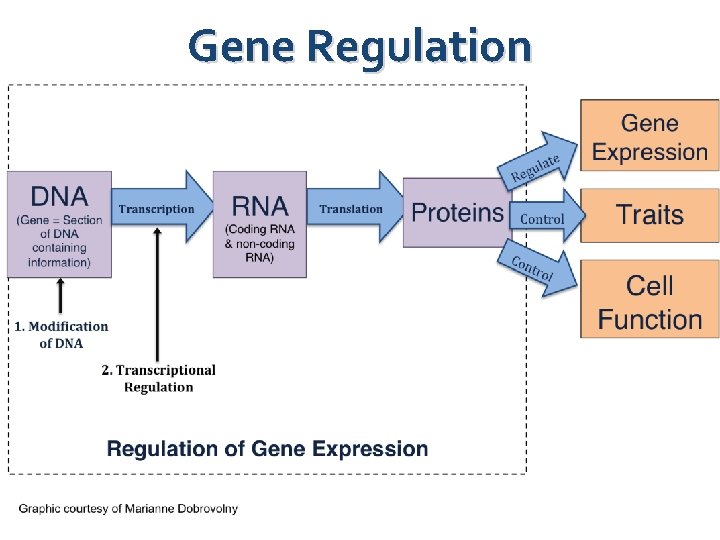
Carrying Information in DNA Core Concepts DNA triplets code for one amino acid. Amino acids link together to form polypeptides. Genes code for polypeptides that control things such as: The expression traits (how we look) The function of the cell Other genes A very small percentage of the human genome actually codes for proteins.
Now, we are going to do some activities that will help you better understand: 1. Gene expression 2. How gene expression is regulated 3. How regulation of gene expression causes cells to become different 4. How environmental factors play a roll in cell differentiation
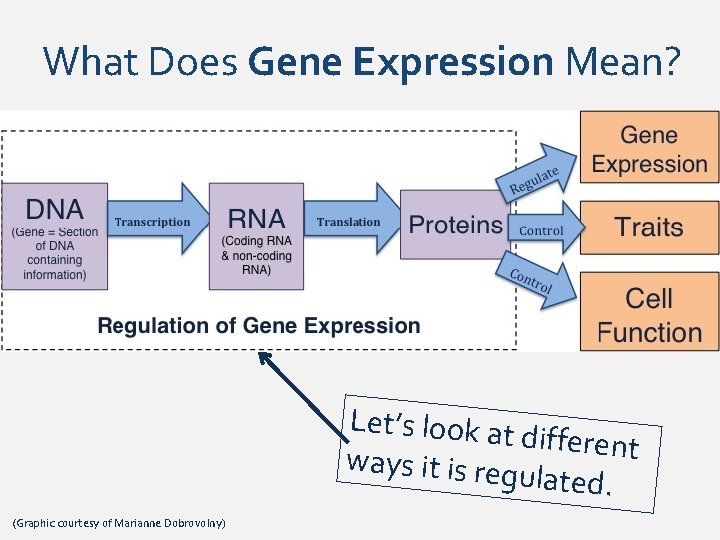
What Does Gene Expression Mean? Let’s look at different ways it is reg ulated. (Graphic courtesy of Marianne Dobrovolny)
Different Cells Have Different Functions… How? Embed a video clip on epigenetics here.
Epigenetics What causes cells with the same DNA to differentiate? What is one way to turn genes on and off? What causes changes in epigenetics? For example, why do identical twins continue to become more different in terms of their epigenetics as they get older?
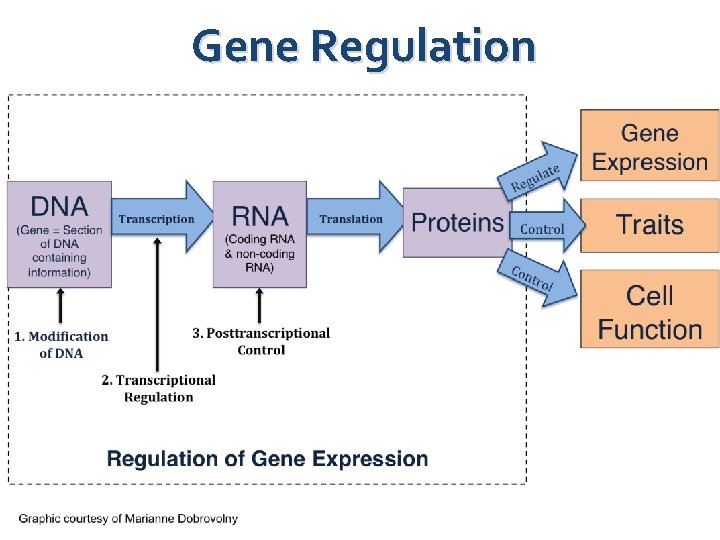
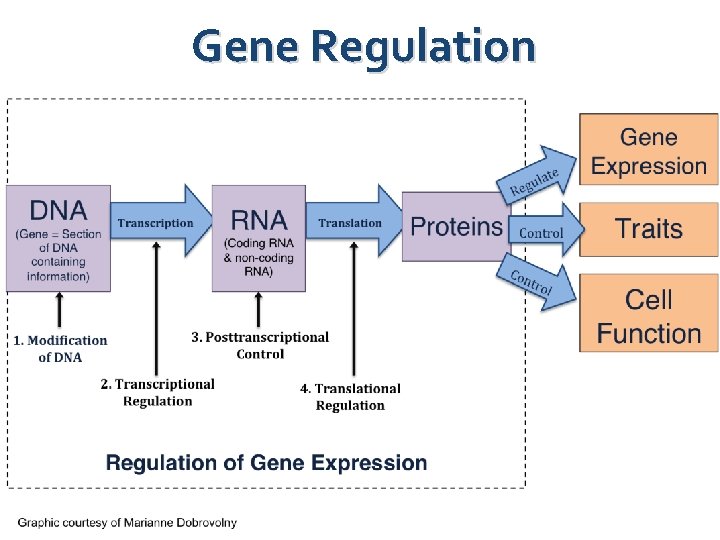
Gene Regulation
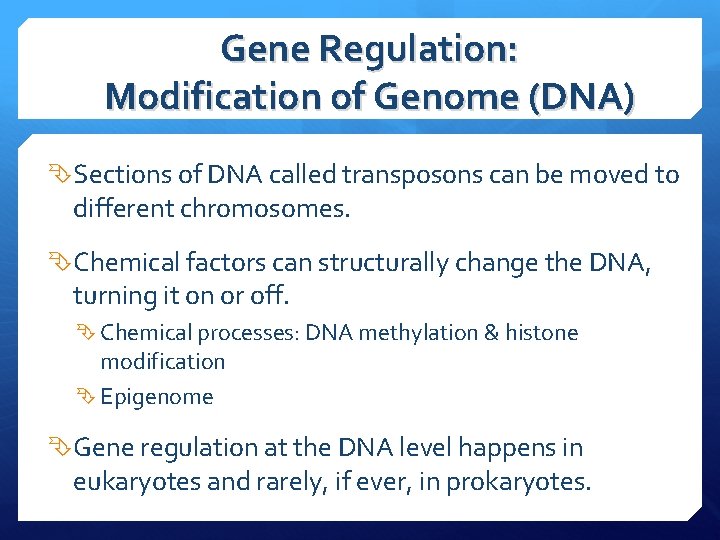
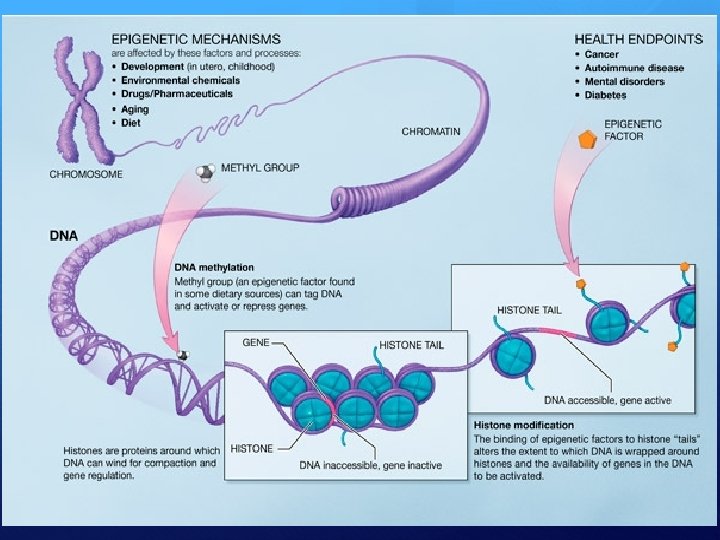
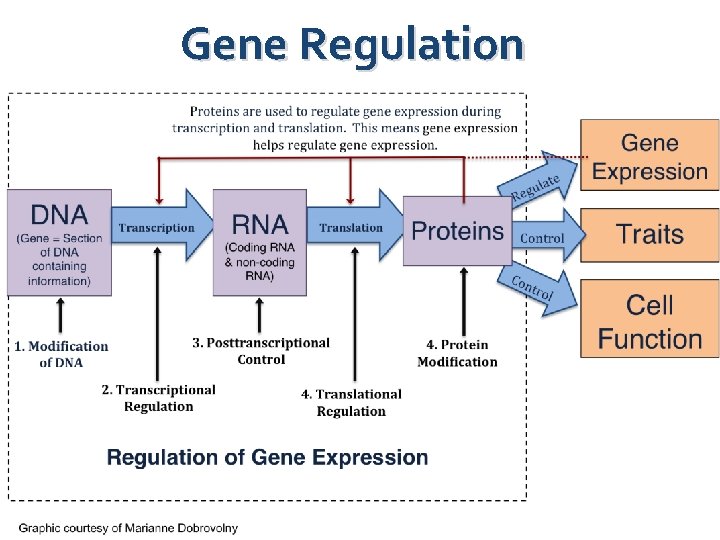
Gene Regulation: Modification of Genome (DNA) Sections of DNA called transposons can be moved to different chromosomes. Chemical factors can structurally change the DNA, turning it on or off. Chemical processes: DNA methylation & histone modification Epigenome Gene regulation at the DNA level happens in eukaryotes and rarely, if ever, in prokaryotes.
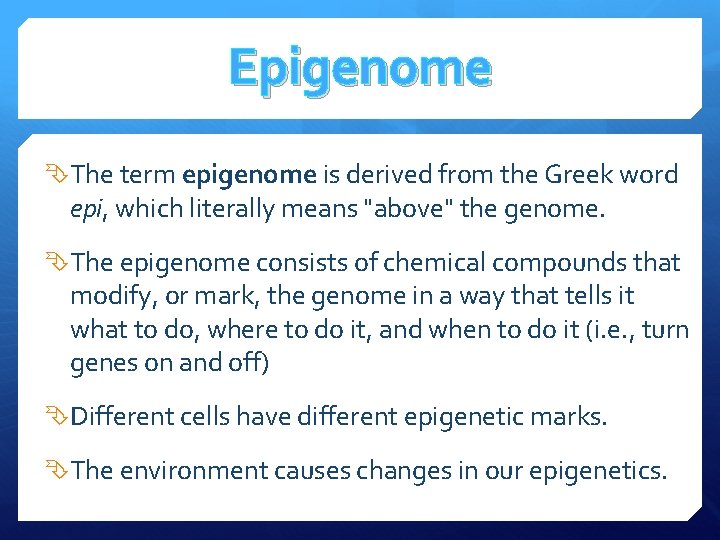
Epigenome The term epigenome is derived from the Greek word epi, which literally means "above" the genome. The epigenome consists of chemical compounds that modify, or mark, the genome in a way that tells it what to do, where to do it, and when to do it (i. e. , turn genes on and off) Different cells have different epigenetic marks. The environment causes changes in our epigenetics.
Epigenome
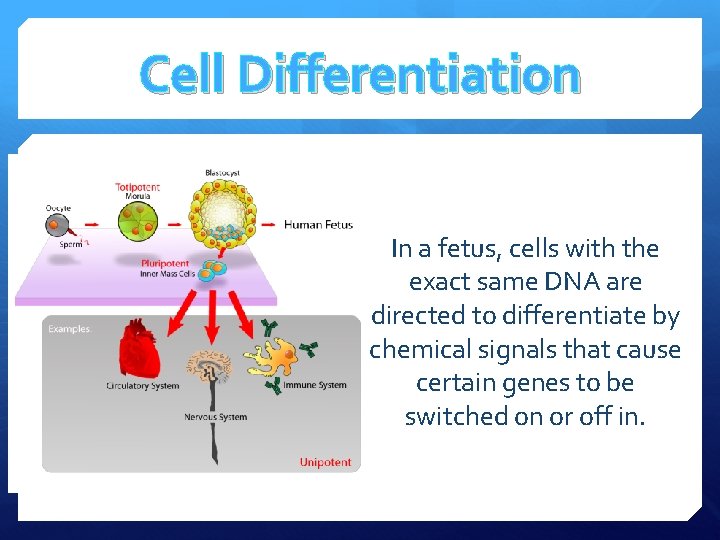
Cell Differentiation In a fetus, cells with the exact same DNA are directed to differentiate by chemical signals that cause certain genes to be switched on or off in.
Gene Regulation
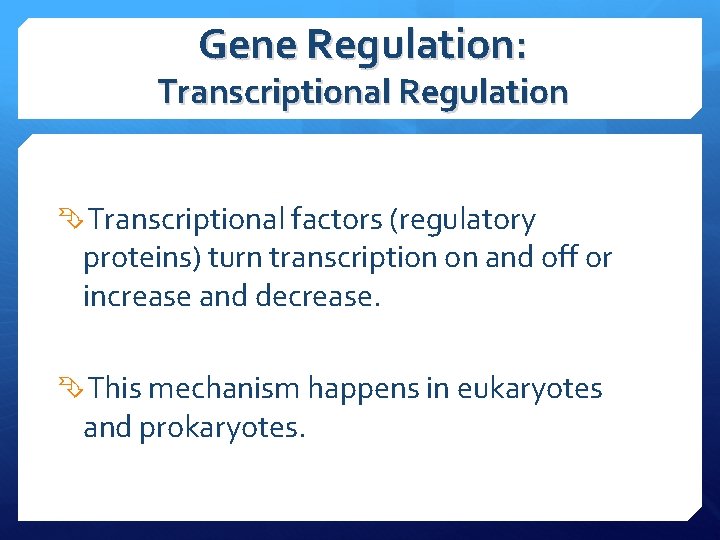
Gene Regulation: Transcriptional Regulation Transcriptional factors (regulatory proteins) turn transcription on and off or increase and decrease. This mechanism happens in eukaryotes and prokaryotes.
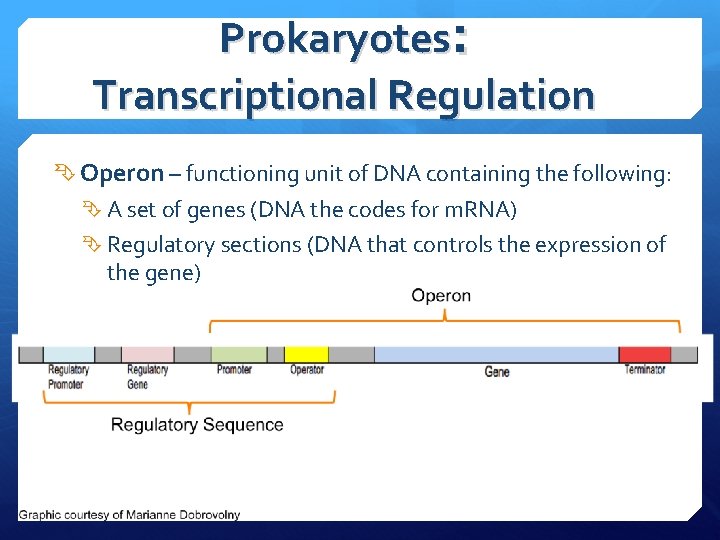
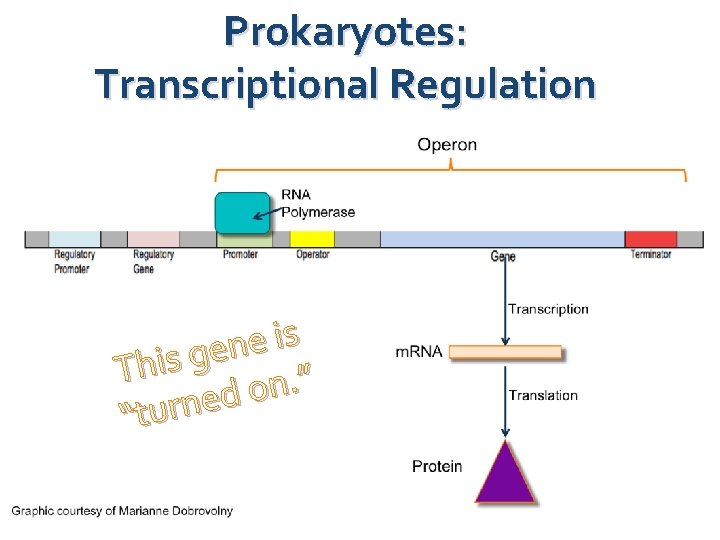
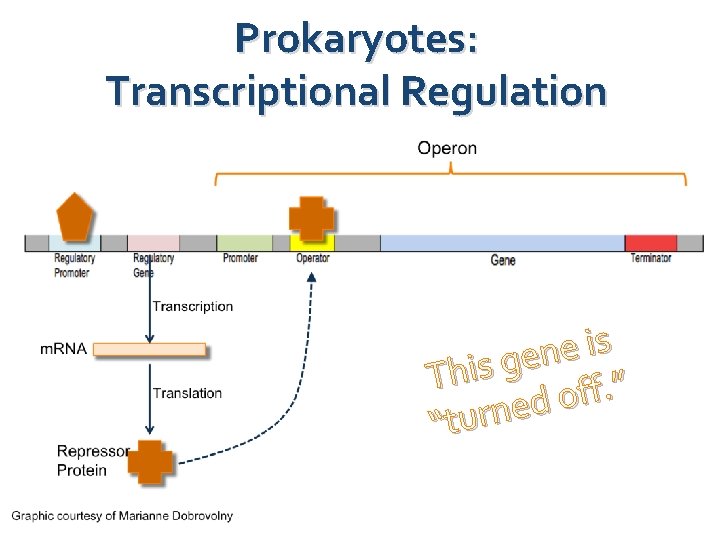
Prokaryotes: Transcriptional Regulation Operon – functioning unit of DNA containing the following: A set of genes (DNA the codes for m. RNA) Regulatory sections (DNA that controls the expression of the gene)
Prokaryotes: Transcriptional Regulation s i e n e g s i Th ”. n o d e n r “tu
Prokaryotes: Transcriptional Regulation s i e n e g s i Th ”. f f o d e n r “tu
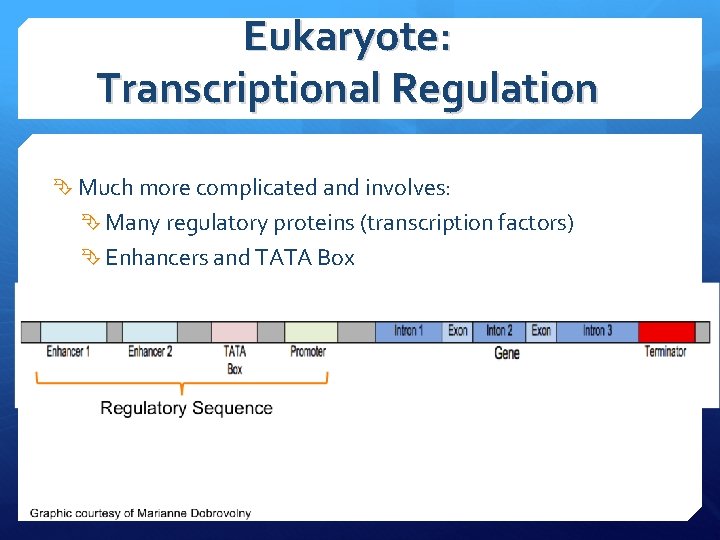
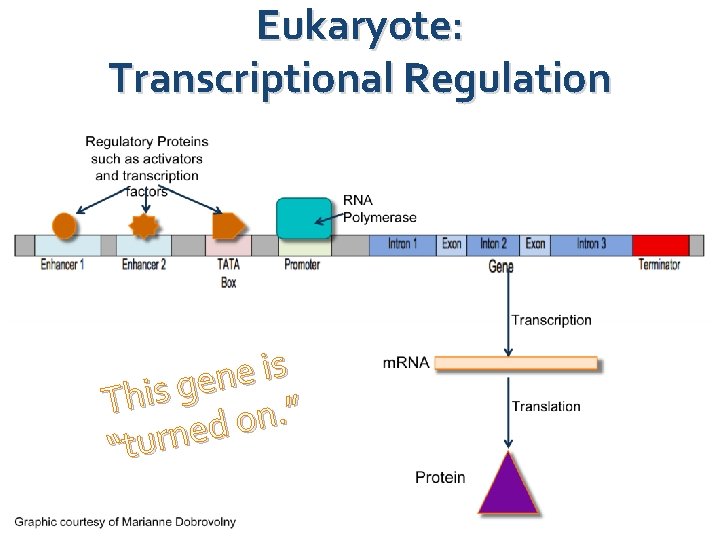
Eukaryote: Transcriptional Regulation Much more complicated and involves: Many regulatory proteins (transcription factors) Enhancers and TATA Box
Eukaryote: Transcriptional Regulation s i e n e g s i Th ”. n o d e n r “tu
Gene Regulation
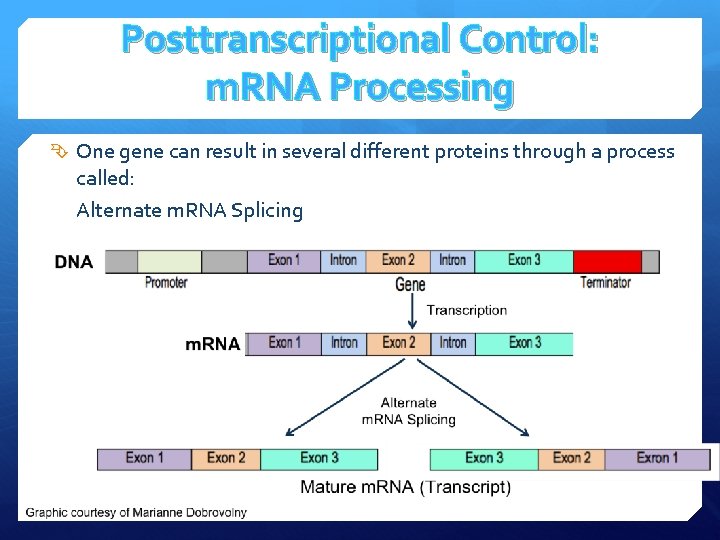
Posttranscriptional Control: m. RNA Processing One gene can result in several different proteins through a process called: Alternate m. RNA Splicing
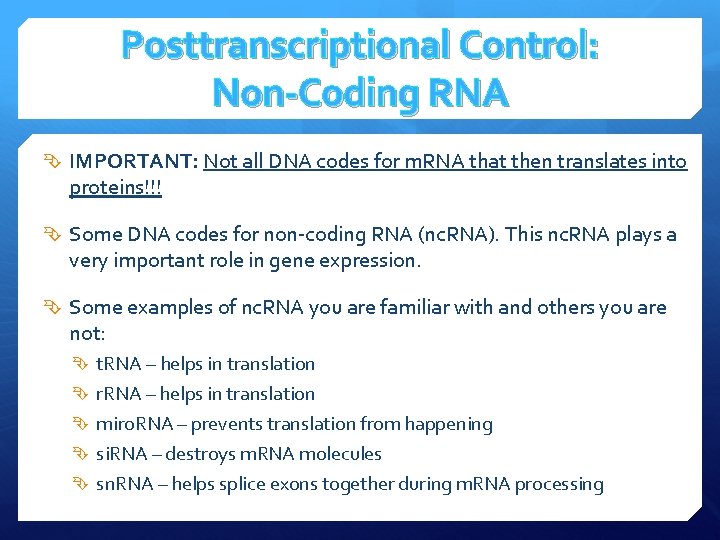
Posttranscriptional Control: Non-Coding RNA IMPORTANT: Not all DNA codes for m. RNA that then translates into proteins!!! Some DNA codes for non-coding RNA (nc. RNA). This nc. RNA plays a very important role in gene expression. Some examples of nc. RNA you are familiar with and others you are not: t. RNA – helps in translation r. RNA – helps in translation miro. RNA – prevents translation from happening si. RNA – destroys m. RNA molecules sn. RNA – helps splice exons together during m. RNA processing
Gene Regulation
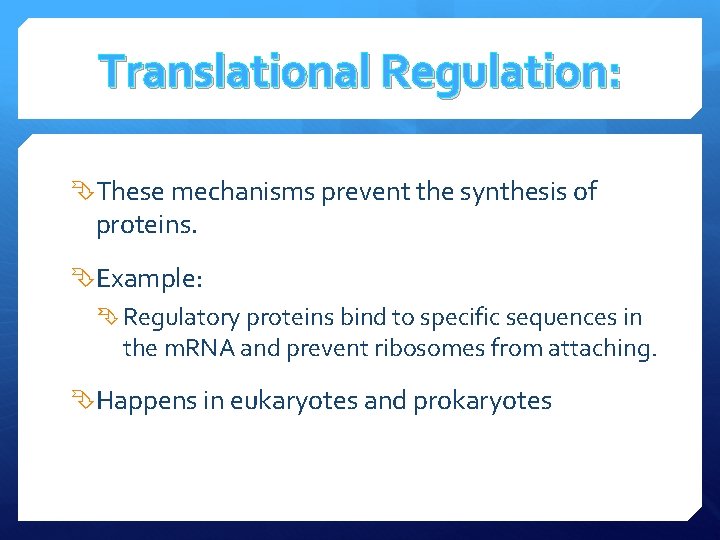
Translational Regulation: These mechanisms prevent the synthesis of proteins. Example: Regulatory proteins bind to specific sequences in the m. RNA and prevent ribosomes from attaching. Happens in eukaryotes and prokaryotes
Gene Regulation
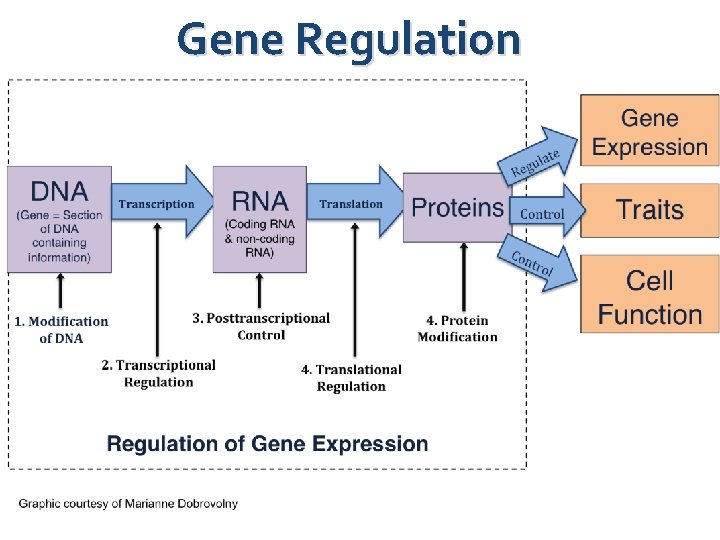
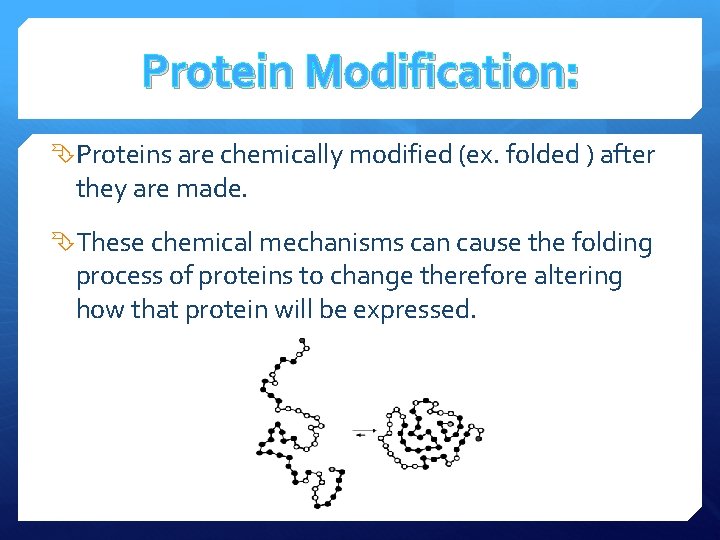
Protein Modification: Proteins are chemically modified (ex. folded ) after they are made. These chemical mechanisms can cause the folding process of proteins to change therefore altering how that protein will be expressed.
Gene Regulation
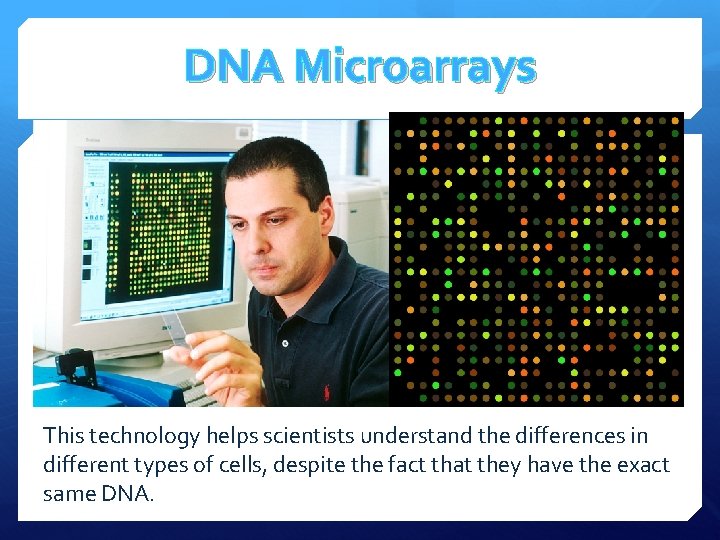
DNA Microarrays This technology helps scientists understand the differences in different types of cells, despite the fact that they have the exact same DNA.
In your science notebooks, complete the following sentence: DNA microarrays help scientists study the human genome by…
Information Sources National Institutes of Health. National Human Genome Research Institute. “Talking Glossary of Genetic Terms. ” Retrieved October 16, 2011, from http: //www. genome. gov/glossary/? id=167 NOVA science. NOW. “Epigenetics. ” Retrieved September 16, 2012 from http: //video. pbs. org/video/1525107473#