
Gene Control Gene expression is carefully regulated in


- Slides: 17
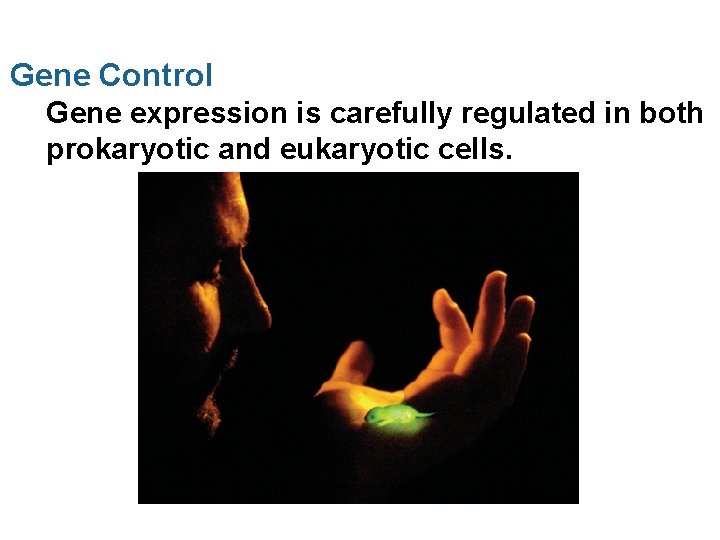
Gene Control Gene expression is carefully regulated in both prokaryotic and eukaryotic cells.
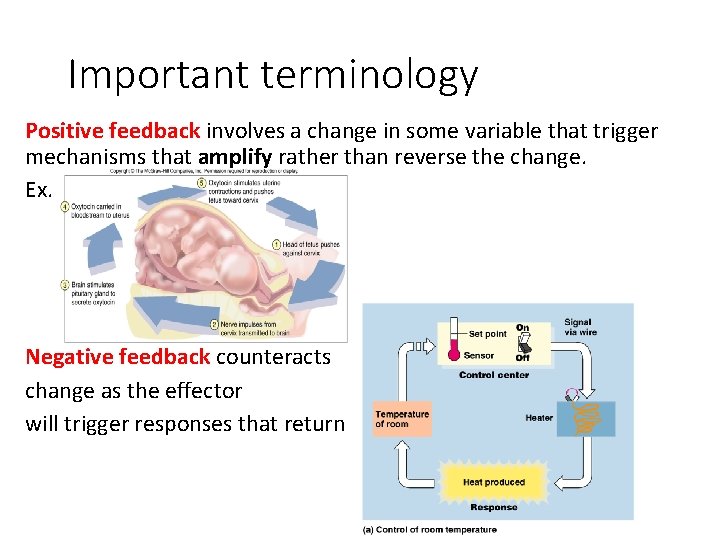
Important terminology Positive feedback involves a change in some variable that trigger mechanisms that amplify rather than reverse the change. Ex. Negative feedback counteracts change as the effector will trigger responses that return
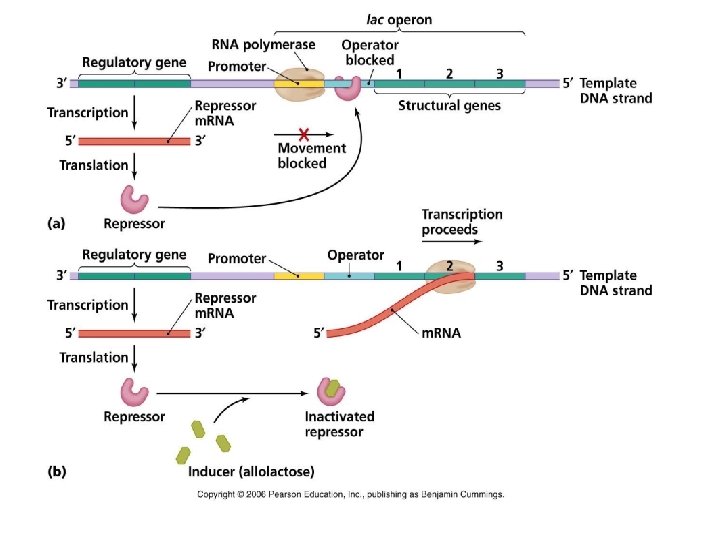
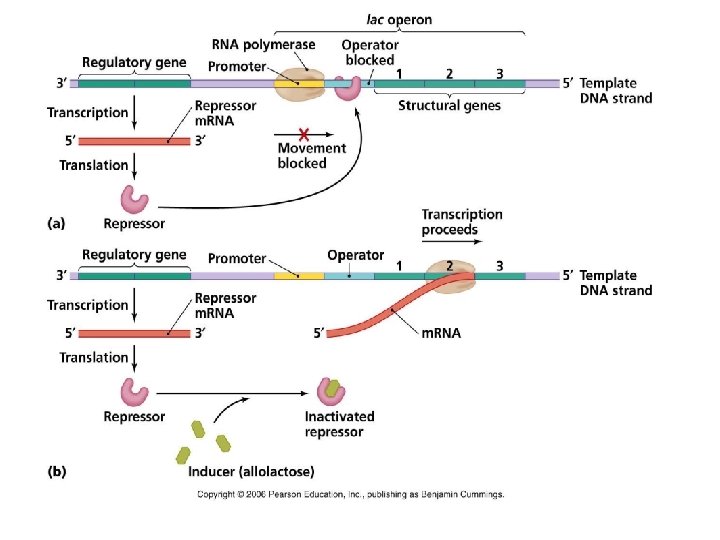
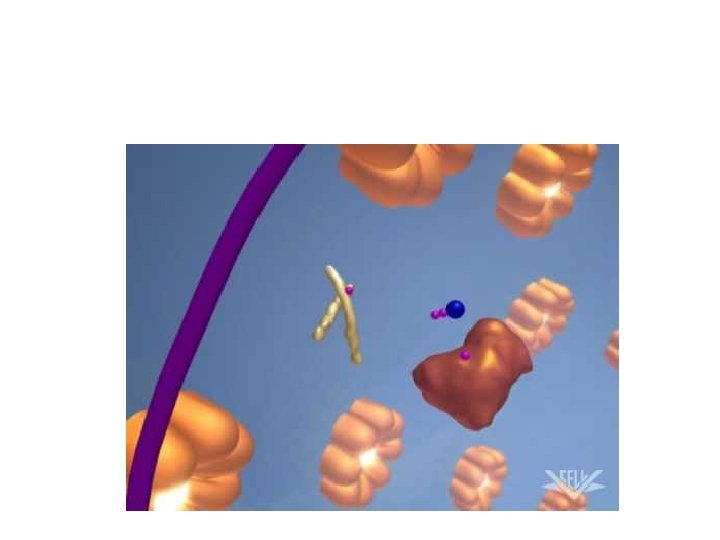
• Prokaryotic cells turn genes on and off by controlling transcription. • A promoter is a DNA segment that allows a gene to be transcribed. • An operator is a part of DNA that turns a gene “on” or ”off. ” • An OPERON includes a promoter, an operator, and one or more structural genes that code for all the proteins needed to do a job. – Operons are most common in prokaryotes. – The lac operon was one of the first examples of gene regulation to be discovered. – The lac operon has three genes that code for enzymes that break down lactose.
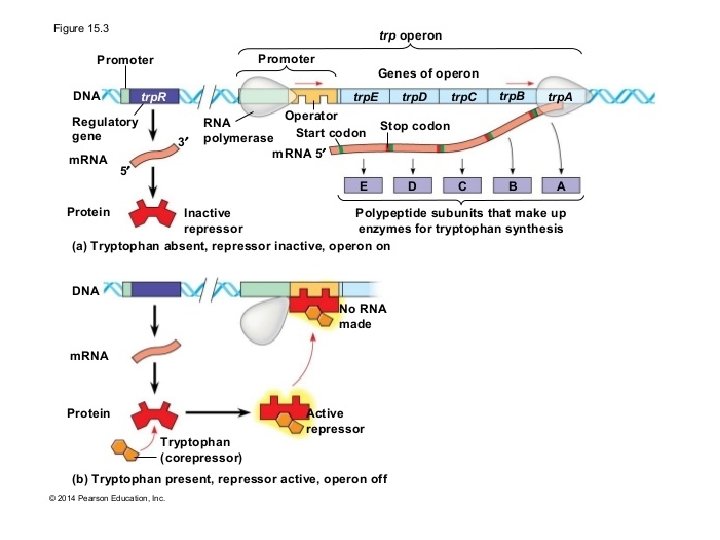
Prokaryotic Gene Control Mechanisms lac operon – Repressor under “Positive control” (inducible operon) - Operon is expressed when an inducer inactivates the repressor proteins - Repressor protein detaches from operator - RNA polymerase can transcribe genes for lactose metabolism trp operon – Repressor under “Negative control” (inducible repressor) - Operon is expressed when tryptophan is absent in the cell - Repressor protein is inactive - RNA polymerase can transcribe genes for tryptophan synthesis
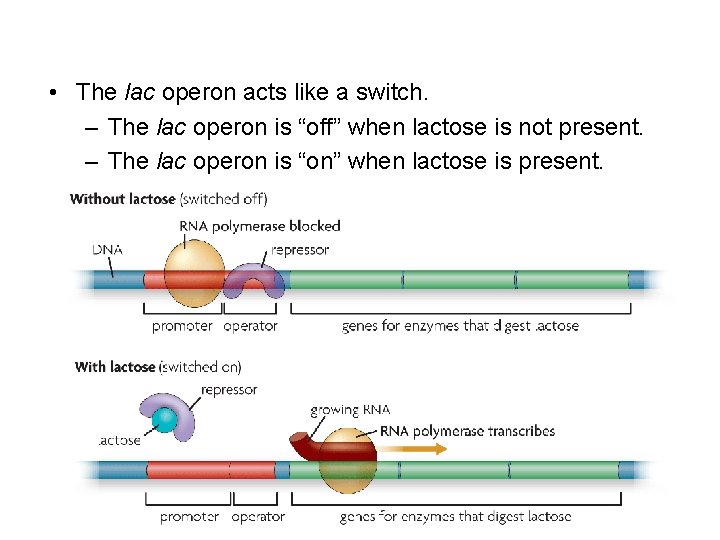
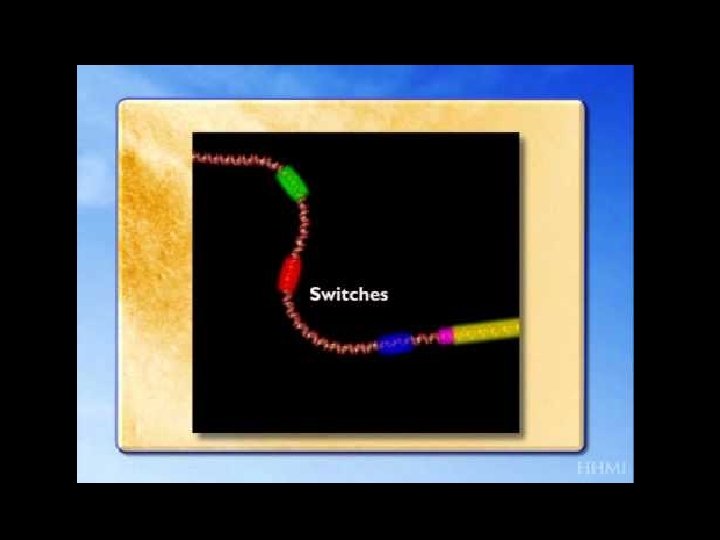
• The lac operon acts like a switch. – The lac operon is “off” when lactose is not present. – The lac operon is “on” when lactose is present.
• https: //www. youtube. com/watch? v=10 YWgqm. AEs. Q
Trp Operon • The trp operon, found in E. coli bacteria, is a group of genes that encode biosynthetic enzymes for the amino acid tryptophan. • The trp operon is expressed (turned "on") when tryptophan levels are low and repressed (turned "off") when they are high. • The trp operon is regulated by the trp repressor. When bound to tryptophan, the trp repressor blocks expression of the operon. • Tryptophan biosynthesis is also regulated by attenuation (a mechanism based on coupling of transcription and translation).
• https: //www. khanacademy. org/science/biology/generegulation/gene-regulation-in-bacteria/v/trp-operon
STOP HERE
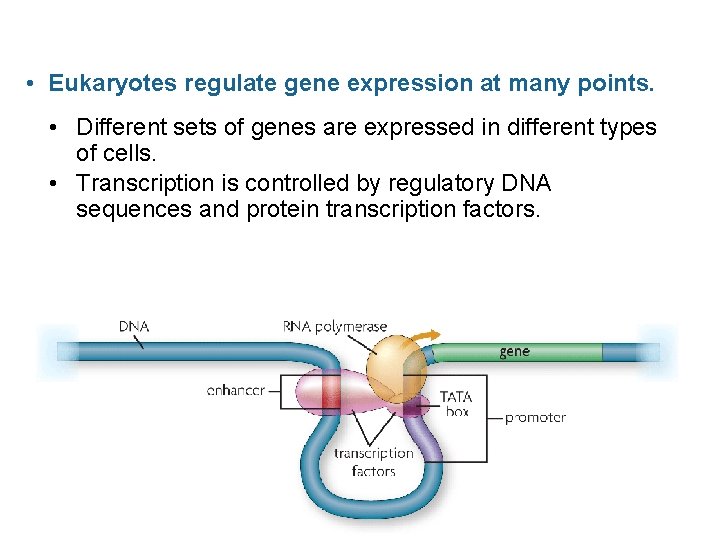
• Eukaryotes regulate gene expression at many points. • Different sets of genes are expressed in different types of cells. • Transcription is controlled by regulatory DNA sequences and protein transcription factors.
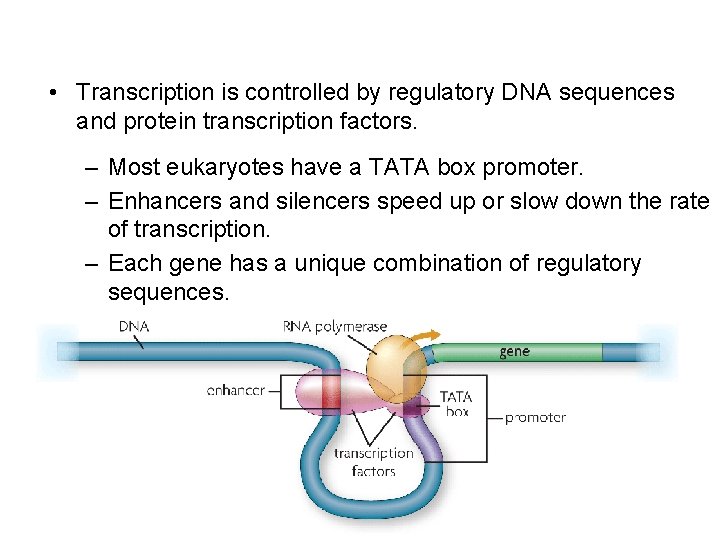
• Transcription is controlled by regulatory DNA sequences and protein transcription factors. – Most eukaryotes have a TATA box promoter. – Enhancers and silencers speed up or slow down the rate of transcription. – Each gene has a unique combination of regulatory sequences.
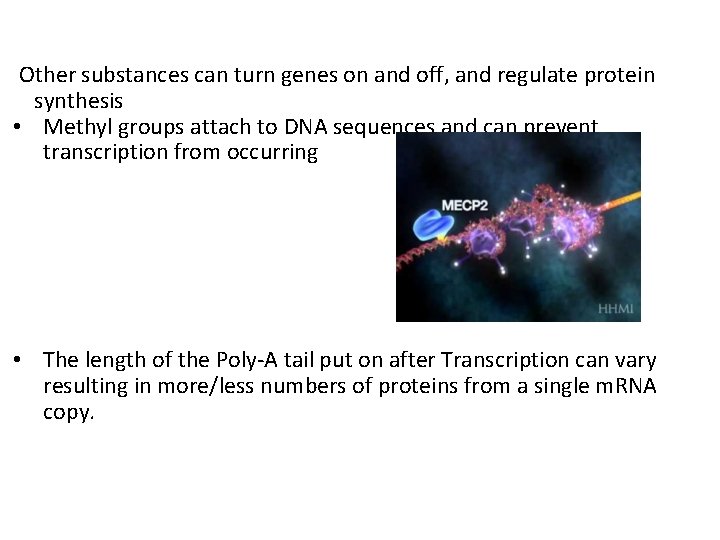
Other substances can turn genes on and off, and regulate protein synthesis • Methyl groups attach to DNA sequences and can prevent transcription from occurring • The length of the Poly-A tail put on after Transcription can vary resulting in more/less numbers of proteins from a single m. RNA copy.