
GENDERSENSITIVE POLICYMAKING AT THE CORE OF INCLUSIVE GROWTH
- Slides: 15
GENDER-SENSITIVE POLICY-MAKING AT THE CORE OF INCLUSIVE GROWTH Tatyana Teplova, Deputy Head of Public Governance and Reviews Division, Public Governance and Territorial Development Directorate OECD Brussels, 8 March 2017
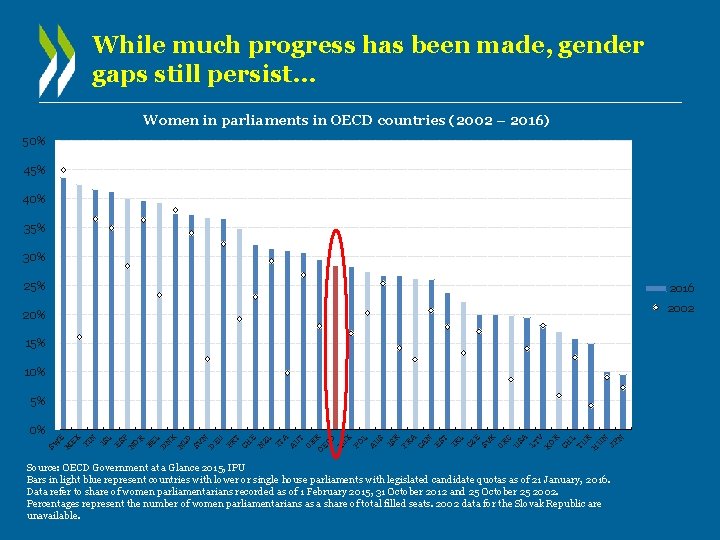
While much progress has been made, gender gaps still persist… Women in parliaments in OECD countries (2002 – 2016) 50% 45% 40% 35% 30% 25% 2016 2002 20% 15% 10% 5% LT V KO R CH L TU R H U N JP N RC U SA G A CA N ES T IR L CZ E SV K FR N IS L ES P N O R BE L D N K N LD SV N D EU PR T CH E N ZL IT A AU T G BR O EC D LU X PO L AU S IS R FI SW E M EX 0% Source: OECD Government at a Glance 2015, IPU Bars in light blue represent countries with lower or single house parliaments with legislated candidate quotas as of 21 January, 2016. Data refer to share of women parliamentarians recorded as of 1 February 2015, 31 October 2012 and 25 October 25 2002. Percentages represent the number of women parliamentarians as a share of total filled seats. 2002 data for the Slovak Republic are unavailable.
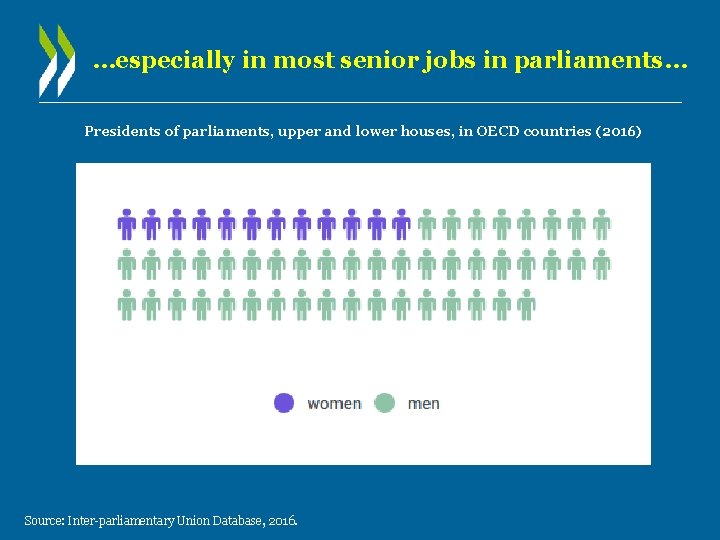
…especially in most senior jobs in parliaments… Presidents of parliaments, upper and lower houses, in OECD countries (2016) Source: Inter-parliamentary Union Database, 2016.
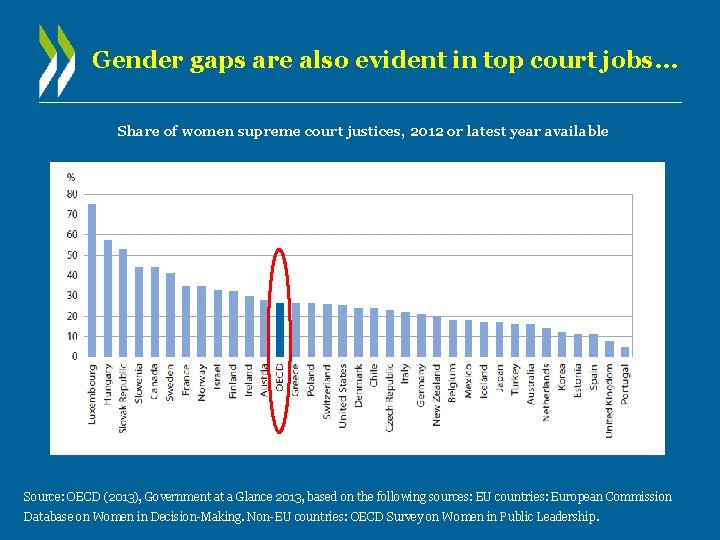
Gender gaps are also evident in top court jobs… Share of women supreme court justices, 2012 or latest year available Source: OECD (2013), Government at a Glance 2013, based on the following sources: EU countries: European Commission Database on Women in Decision-Making. Non-EU countries: OECD Survey on Women in Public Leadership.
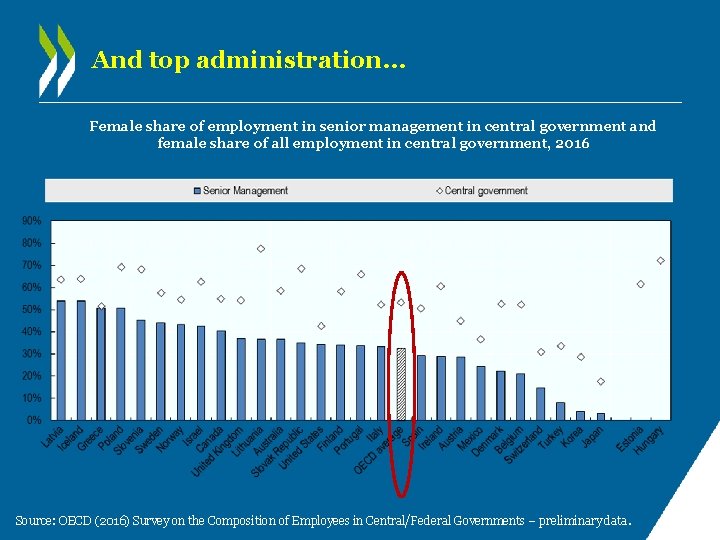
And top administration… Female share of employment in senior management in central government and female share of all employment in central government, 2016 Source: OECD (2016) Survey on the Composition of Employees in Central/Federal Governments – preliminary data.
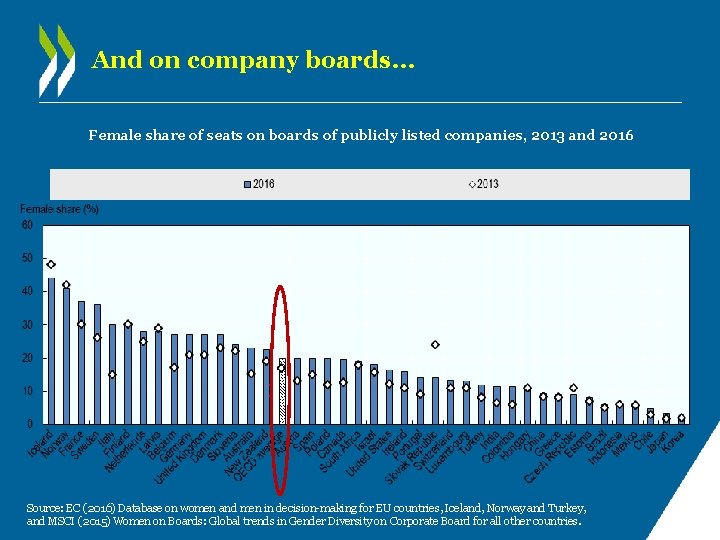
And on company boards… Female share of seats on boards of publicly listed companies, 2013 and 2016 Source: EC (2016) Database on women and men in decision-making for EU countries, Iceland, Norway and Turkey, and MSCI (2015) Women on Boards: Global trends in Gender Diversity on Corporate Board for all other countries.
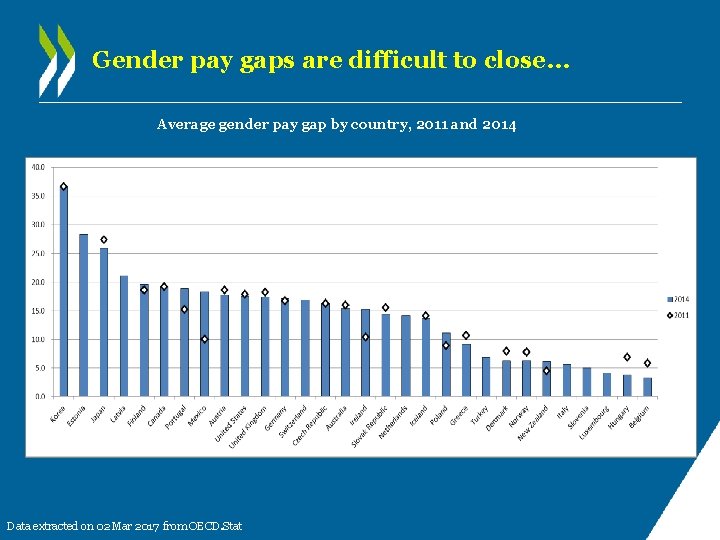
Gender pay gaps are difficult to close… Average gender pay gap by country, 2011 and 2014 Data extracted on 02 Mar 2017 from OECD. Stat
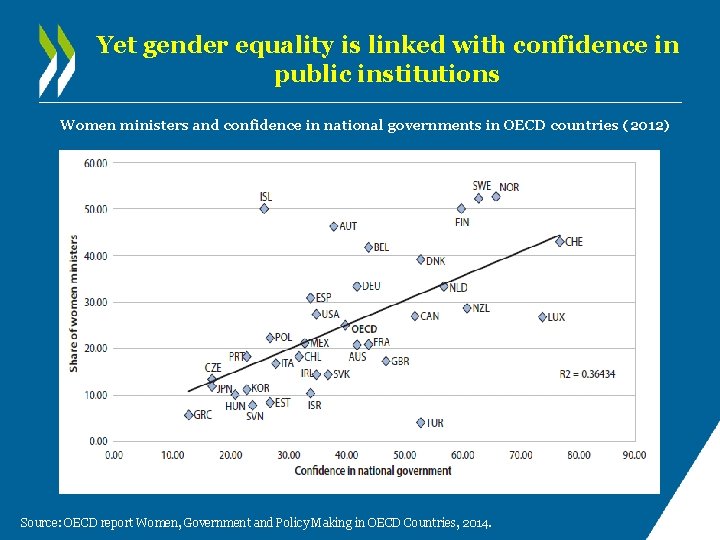
Yet gender equality is linked with confidence in public institutions Women ministers and confidence in national governments in OECD countries (2012) Source: OECD report Women, Government and Policy Making in OECD Countries, 2014.
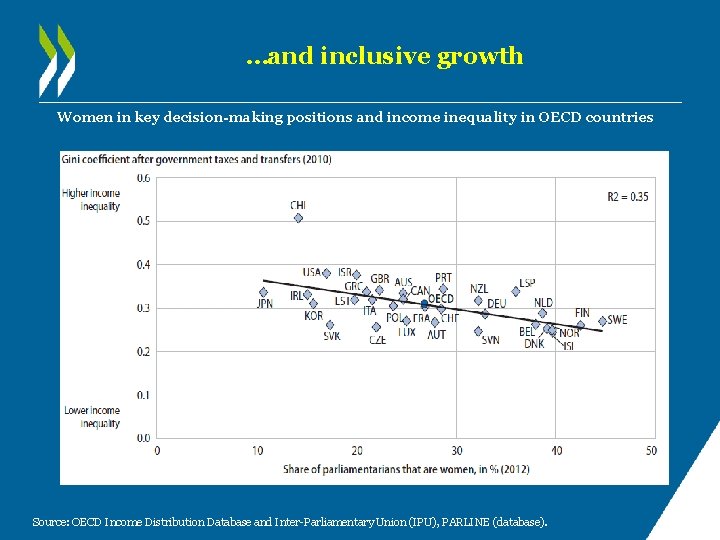
…and inclusive growth Women in key decision-making positions and income inequality in OECD countries Source: OECD Income Distribution Database and Inter-Parliamentary Union (IPU), PARLINE (database).
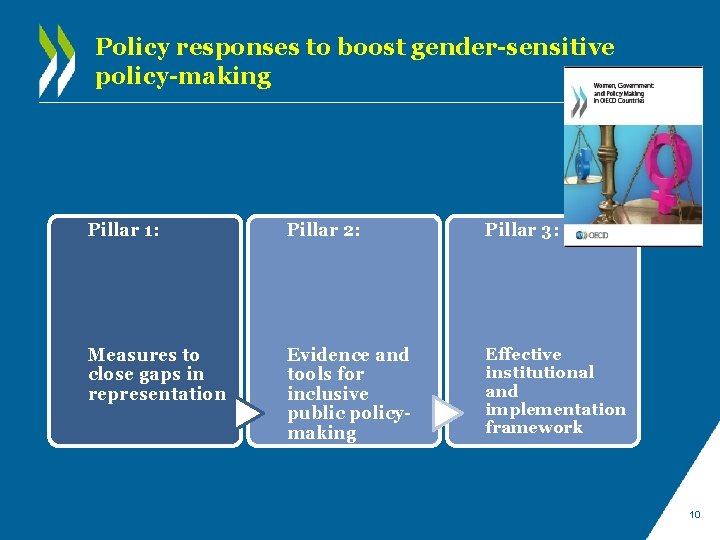
Policy responses to boost gender-sensitive policy-making Pillar 1: Pillar 2: Pillar 3: Measures to close gaps in representation Evidence and tools for inclusive public policymaking Effective institutional and implementation framework 10
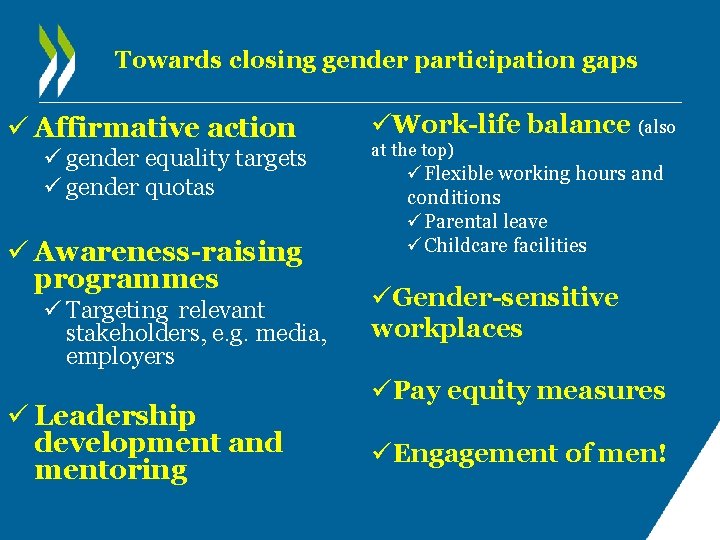
Towards closing gender participation gaps ü Affirmative action ü gender equality targets ü gender quotas ü Awareness-raising programmes ü Targeting relevant stakeholders, e. g. media, employers ü Leadership development and mentoring üWork-life balance (also at the top) üFlexible working hours and conditions üParental leave üChildcare facilities üGender-sensitive workplaces üPay equity measures üEngagement of men!
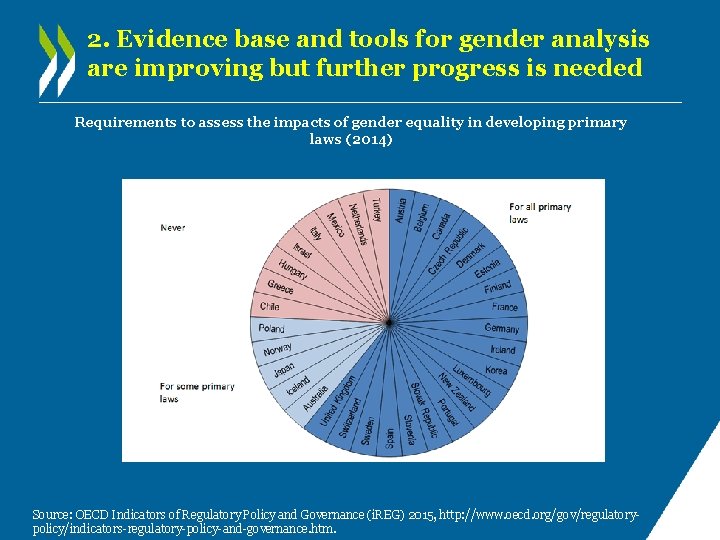
2. Evidence base and tools for gender analysis are improving but further progress is needed Requirements to assess the impacts of gender equality in developing primary laws (2014) Source: OECD Indicators of Regulatory Policy and Governance (i. REG) 2015, http: //www. oecd. org/gov/regulatorypolicy/indicators-regulatory-policy-and-governance. htm.
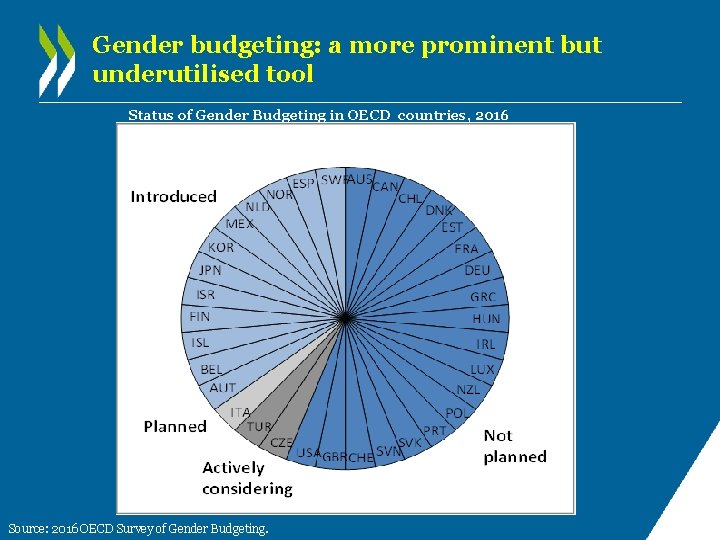
Gender budgeting: a more prominent but underutilised tool Status of Gender Budgeting in OECD countries, 2016 Source: 2016 OECD Survey of Gender Budgeting.
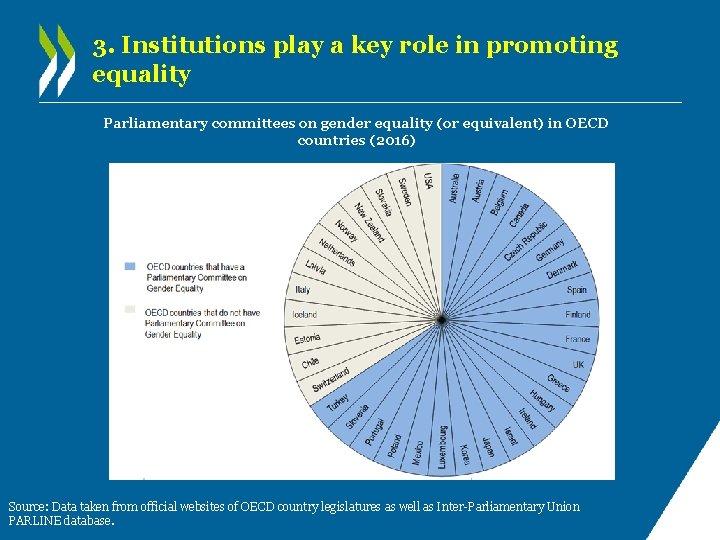
3. Institutions play a key role in promoting equality Parliamentary committees on gender equality (or equivalent) in OECD countries (2016) Source: Data taken from official websites of OECD country legislatures as well as Inter-Parliamentary Union PARLINE database.
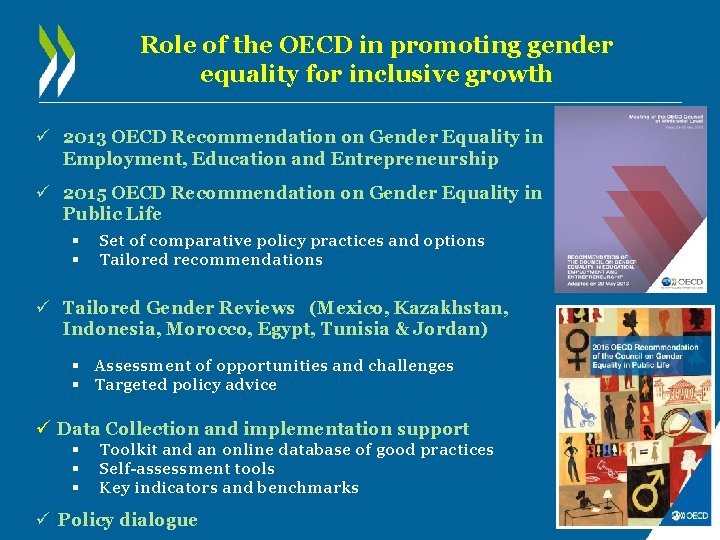
Role of the OECD in promoting gender equality for inclusive growth ü 2013 OECD Recommendation on Gender Equality in Employment, Education and Entrepreneurship ü 2015 OECD Recommendation on Gender Equality in Public Life § § Set of comparative policy practices and options Tailored recommendations ü Tailored Gender Reviews (Mexico, Kazakhstan, Indonesia, Morocco, Egypt, Tunisia & Jordan) § Assessment of opportunities and challenges § Targeted policy advice ü Data Collection and implementation support § § § Toolkit and an online database of good practices Self-assessment tools Key indicators and benchmarks ü Policy dialogue