
Gender Related Differences In Coronary Artery Surgery Bypass
Gender Related Differences In Coronary Artery Surgery Bypass: Midcab Surgery Can Close The Gap Buonocore M, Van den Eynde J, De Praetere H, Jacobs S, Coosemans M, Hiltrop N, Bennet J, Oosterlinck W
Introduction Gender differences in coronary artery disease in terms of clinical presentation, diagnosis and outcomes after coronary artery bypass surgery are known. • Across the EU-28, a higher proportion of women (38. 4 %) died from diseases of the circulatory system than men (33. 1 %) EUROSTAT November 2019 • Delayed presentation/diagnosis/medical treatment/admission • Less aggressive treatment for women with NSTEMI-ACS CRUSADE trial • 25 -30% of PCI and cabg /year are performed in women • Higher (unadjusted) in-hospital mortality after PCI/cabg
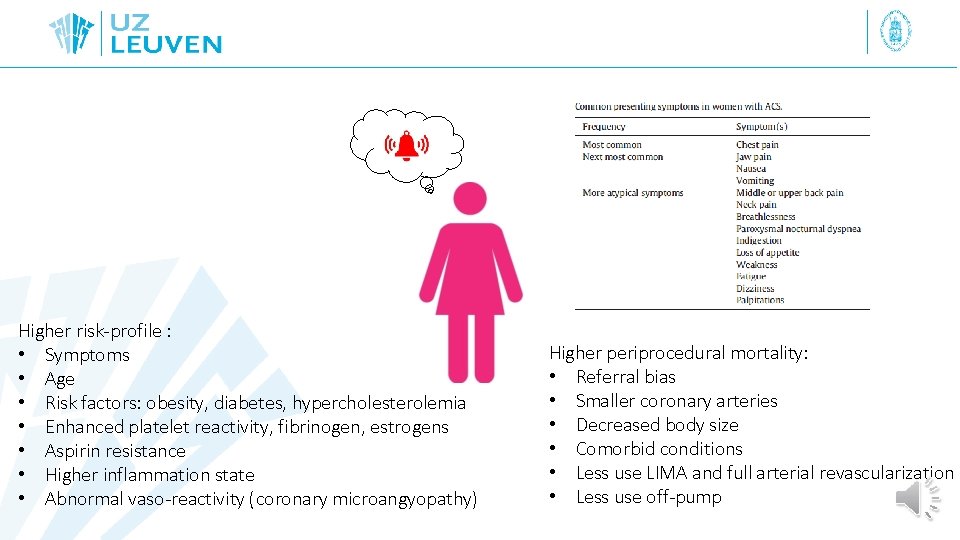
Higher risk-profile : • Symptoms • Age • Risk factors: obesity, diabetes, hypercholesterolemia • Enhanced platelet reactivity, fibrinogen, estrogens • Aspirin resistance • Higher inflammation state • Abnormal vaso-reactivity (coronary microangyopathy) Higher periprocedural mortality: • Referral bias • Smaller coronary arteries • Decreased body size • Comorbid conditions • Less use LIMA and full arterial revascularization • Less use off-pump
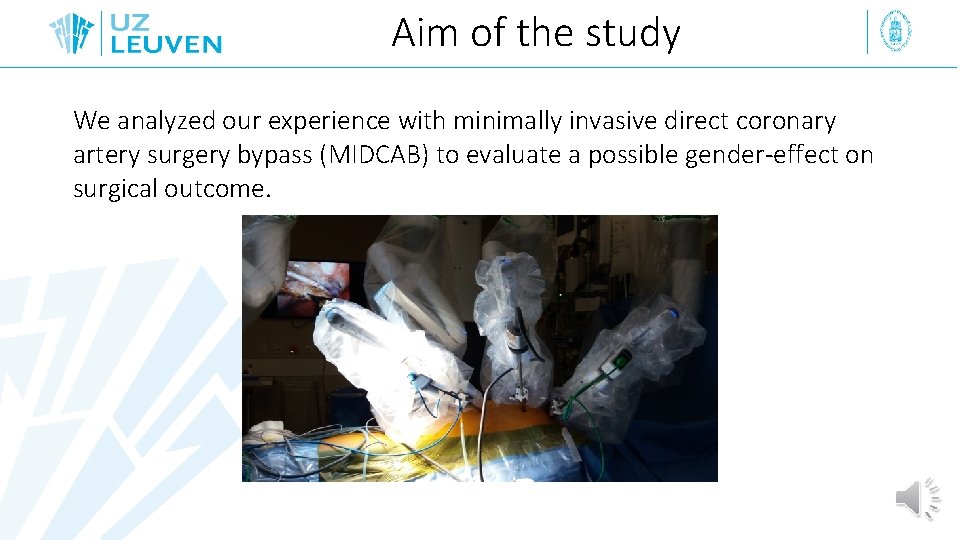
Aim of the study We analyzed our experience with minimally invasive direct coronary artery surgery bypass (MIDCAB) to evaluate a possible gender-effect on surgical outcome.
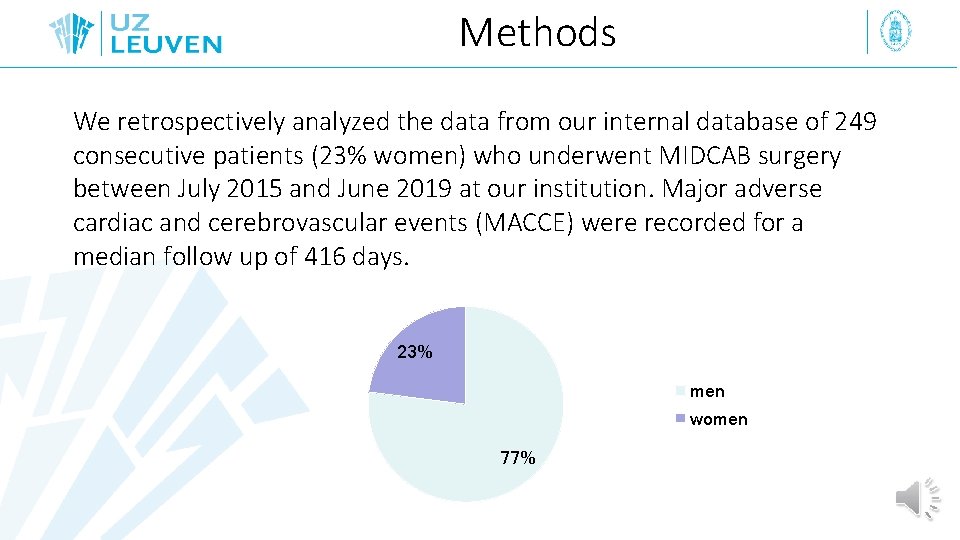
Methods We retrospectively analyzed the data from our internal database of 249 consecutive patients (23% women) who underwent MIDCAB surgery between July 2015 and June 2019 at our institution. Major adverse cardiac and cerebrovascular events (MACCE) were recorded for a median follow up of 416 days. 23% men women 77%
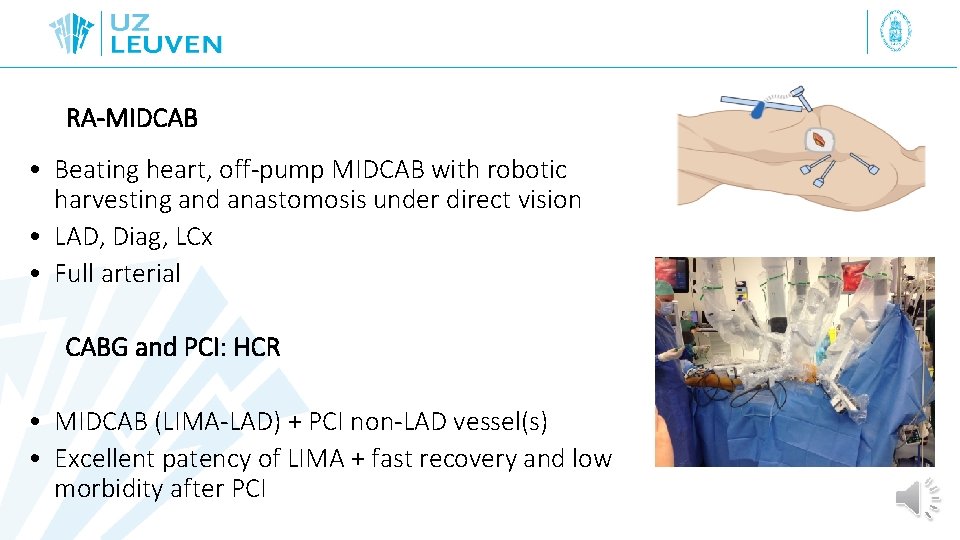
RA-MIDCAB • Beating heart, off-pump MIDCAB with robotic harvesting and anastomosis under direct vision • LAD, Diag, LCx • Full arterial CABG and PCI: HCR • MIDCAB (LIMA-LAD) + PCI non-LAD vessel(s) • Excellent patency of LIMA + fast recovery and low morbidity after PCI
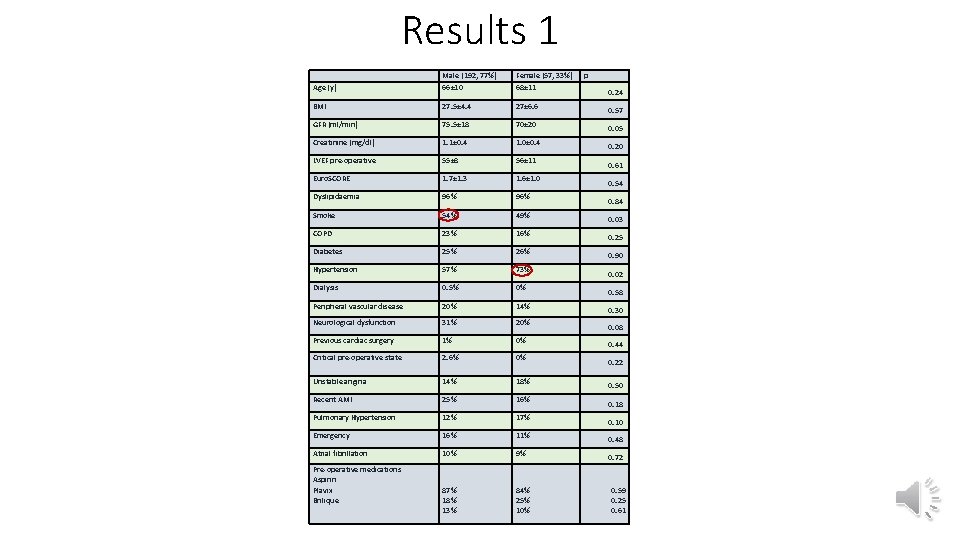
Results 1 Age (y) Male (192, 77%) 66± 10 Female (57, 33%) 68± 11 BMI 27. 5± 4. 4 27± 6. 6 GFR (ml/min) 75. 5± 18 70± 20 Creatinine (mg/dl) 1. 1± 0. 4 1. 0± 0. 4 LVEF pre-operative 55± 8 56± 11 Euro. SCORE 1. 7± 1. 3 1. 6± 1. 0 Dyslipidaemia 96% Smoke 54% 49% COPD 23% 16% Diabetes 25% 26% Hypertension 57% 73% Dialysis 0. 5% 0% Peripheral vascular disease 20% 14% Neurological dysfunction 31% 20% Previous cardiac surgery 1% 0% Critical pre-operative state 2. 6% 0% Unstable angina 14% 18% Recent AMI 25% 16% Pulmonary Hypertension 12% 17% Emergency 16% 11% Atrial fibrillation 10% 9% 87% 18% 13% 84% 25% 10% Pre-operative medications Aspirin Plavix Brilique p 0. 24 0. 57 0. 05 0. 20 0. 61 0. 54 0. 84 0. 03 0. 25 0. 90 0. 02 0. 58 0. 30 0. 08 0. 44 0. 22 0. 50 0. 18 0. 10 0. 48 0. 72 0. 59 0. 25 0. 61
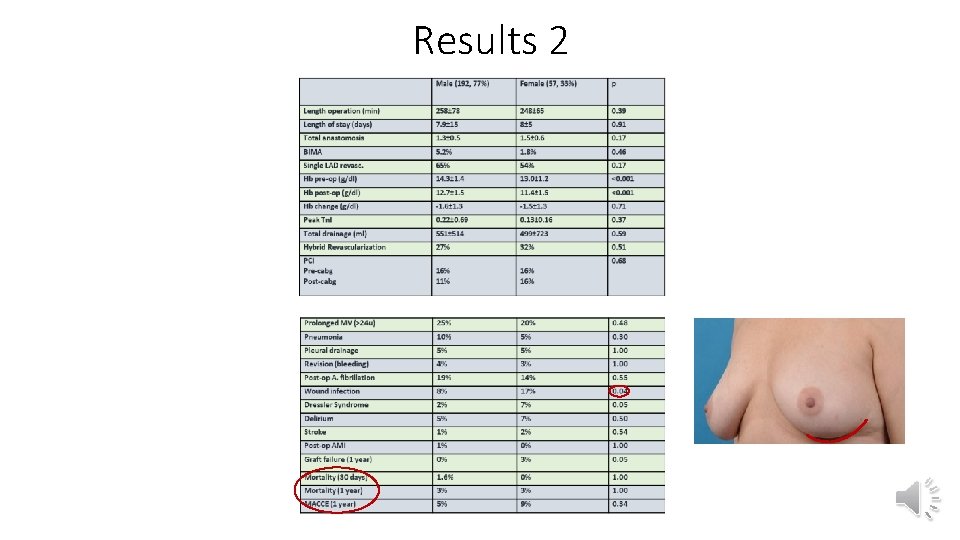
Results 2
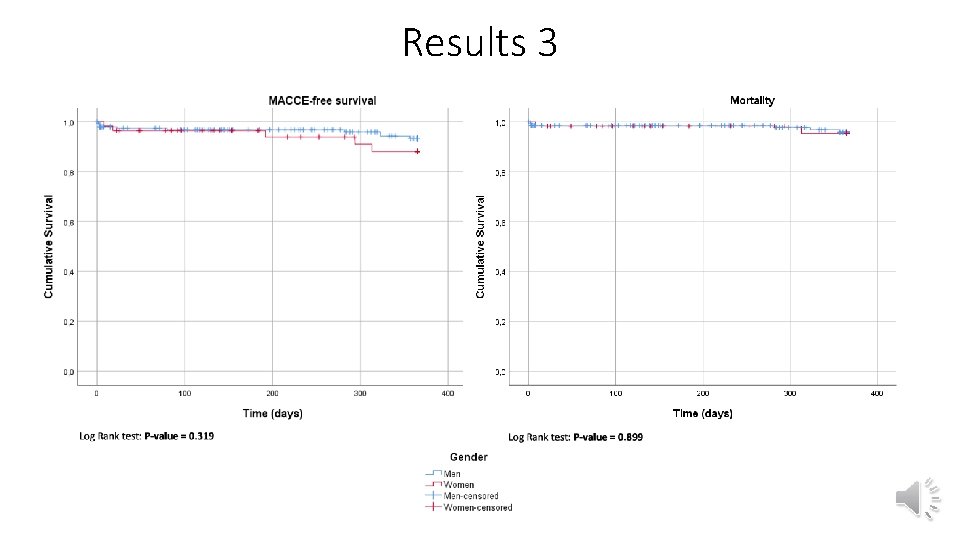
Results 3
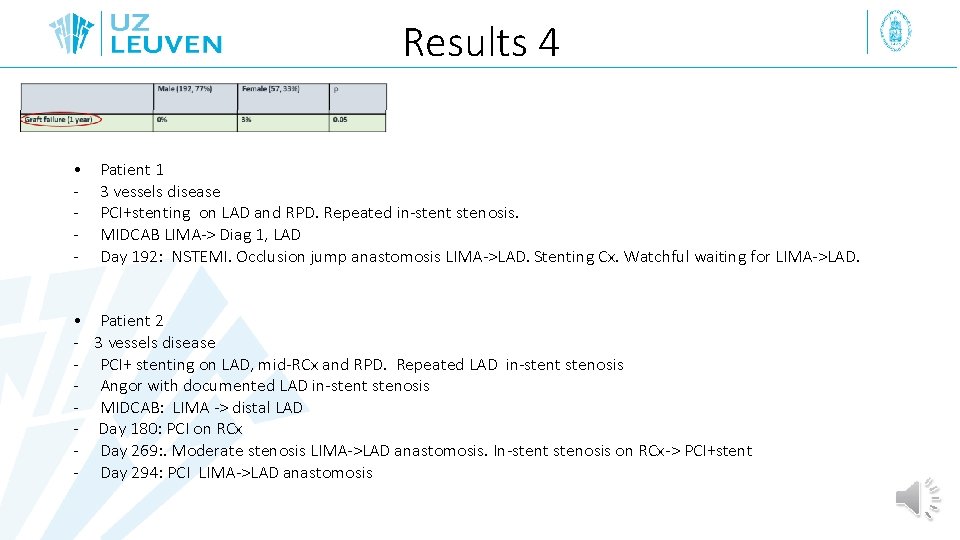
Results 4 • - Patient 1 3 vessels disease PCI+stenting on LAD and RPD. Repeated in-stent stenosis. MIDCAB LIMA-> Diag 1, LAD Day 192: NSTEMI. Occlusion jump anastomosis LIMA->LAD. Stenting Cx. Watchful waiting for LIMA->LAD. • - Patient 2 3 vessels disease PCI+ stenting on LAD, mid-RCx and RPD. Repeated LAD in-stent stenosis Angor with documented LAD in-stent stenosis MIDCAB: LIMA -> distal LAD Day 180: PCI on RCx Day 269: . Moderate stenosis LIMA->LAD anastomosis. In-stent stenosis on RCx-> PCI+stent Day 294: PCI LIMA->LAD anastomosis
Conclusions • MIDCAB surgery, either isolated or in a hybrid revascularization setting, can safely be performed with comparable good results in both genders. Off-pump surgery, use of arterial grafts and minimal invasive techniques can potentially help to close the gender-gap. • Wound healing complications associated with female chest anatomy could potentially benefit from totally endoscopic coronary artery bypass technique.
- Slides: 11