
Gender in the Writing Center INDIA RHODES How
- Slides: 18
Gender in the Writing Center INDIA RHODES
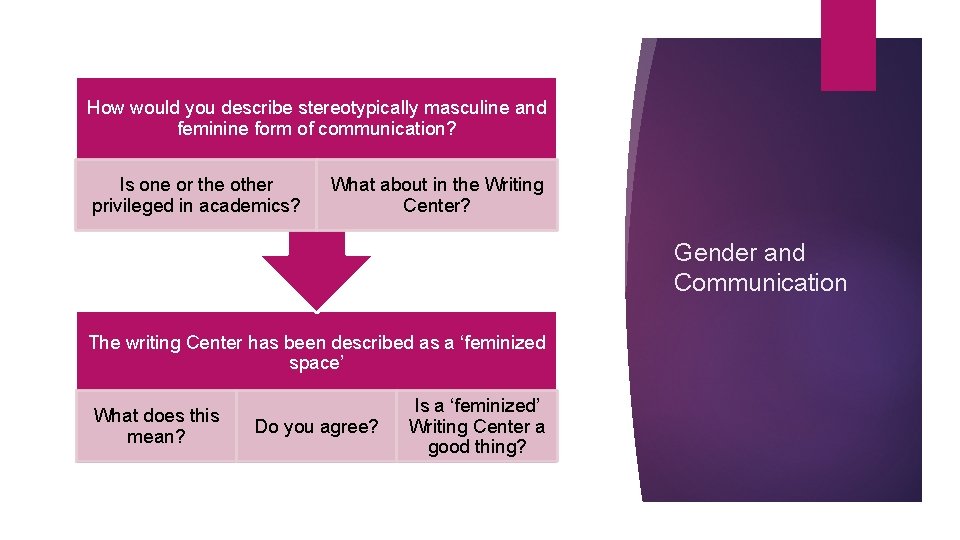
How would you describe stereotypically masculine and feminine form of communication? Is one or the other privileged in academics? What about in the Writing Center? Gender and Communication The writing Center has been described as a ‘feminized space’ What does this mean? Do you agree? Is a ‘feminized’ Writing Center a good thing?
Sex in the center: Gender differences in tutorial interactions Rafoth et. al. MAIN IDEA: Gender is a part of the tutorial, and there should be open communication about the possible effects of gender dynamics.
Introduction It’s hard to talk about gender. Stigma around gender discussion, even in class (Quote on Handout) This article was published in 1999. Do you think this attitude still exists today?
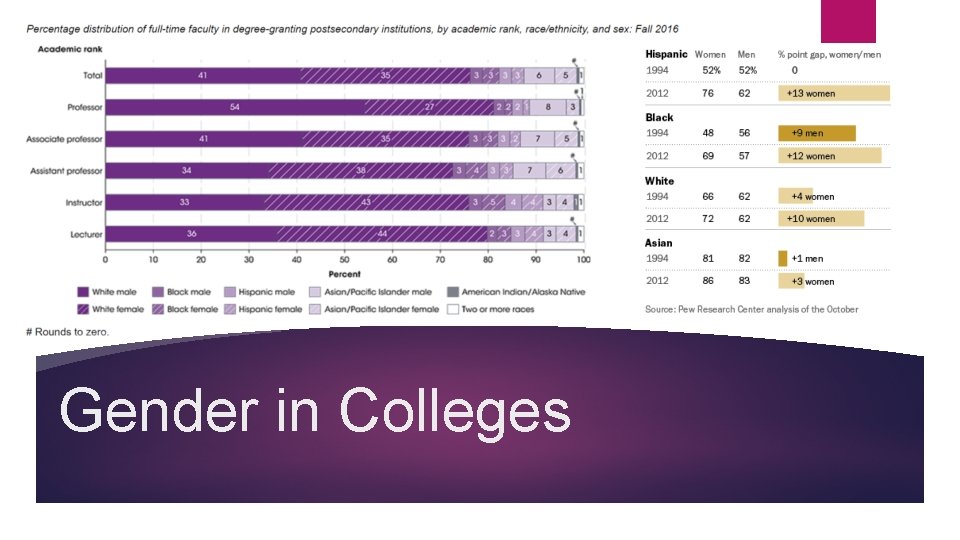
Gender in Colleges
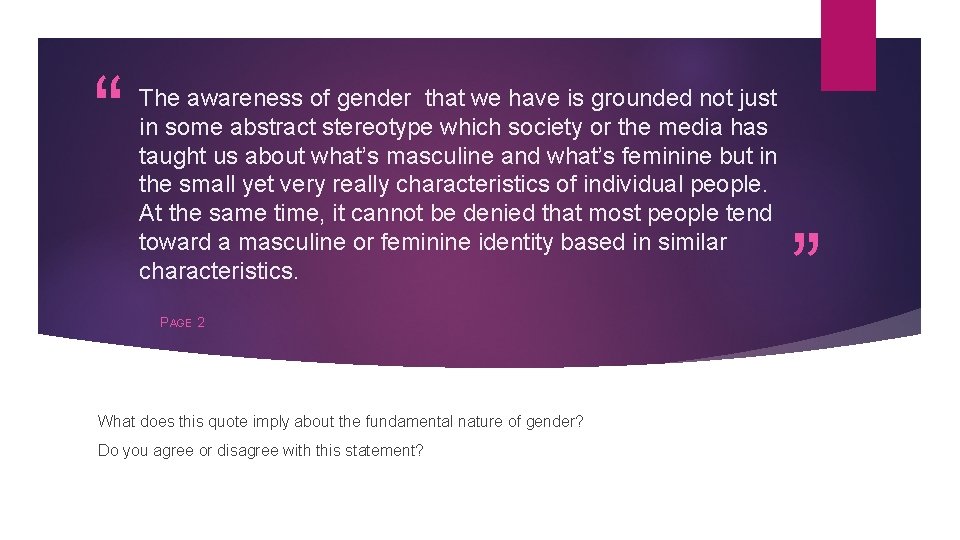
“ The awareness of gender that we have is grounded not just in some abstract stereotype which society or the media has taught us about what’s masculine and what’s feminine but in the small yet very really characteristics of individual people. At the same time, it cannot be denied that most people tend toward a masculine or feminine identity based in similar characteristics. PAGE 2 What does this quote imply about the fundamental nature of gender? Do you agree or disagree with this statement? ”
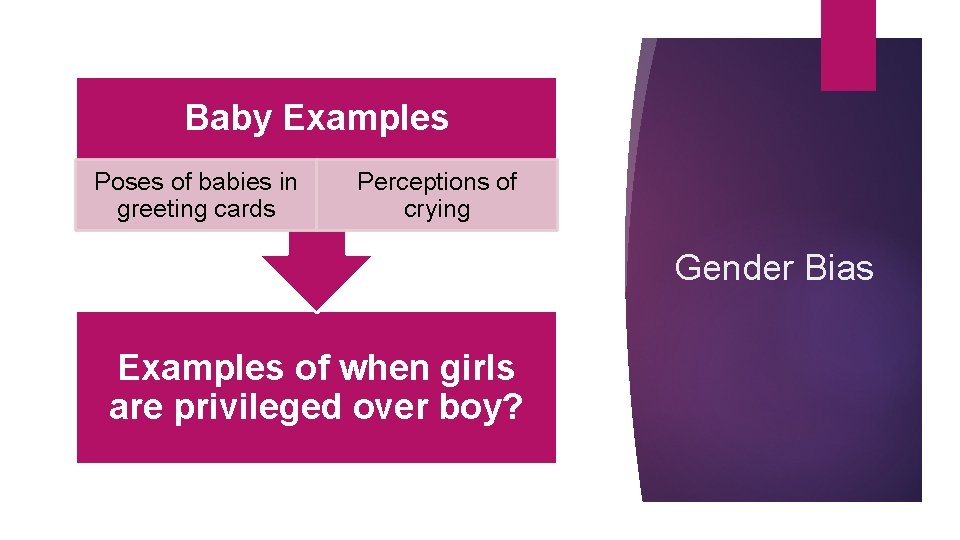
Baby Examples Poses of babies in greeting cards Perceptions of crying Gender Bias Examples of when girls are privileged over boy?
Does Gender Make a Difference? The authors question what effects gender could have on a tutorial. Tutors at the authors’ own center, question if gender makes any difference at all. Do you believe that gender makes a difference based on your personal experiences and beliefs? If so, what is its impact?
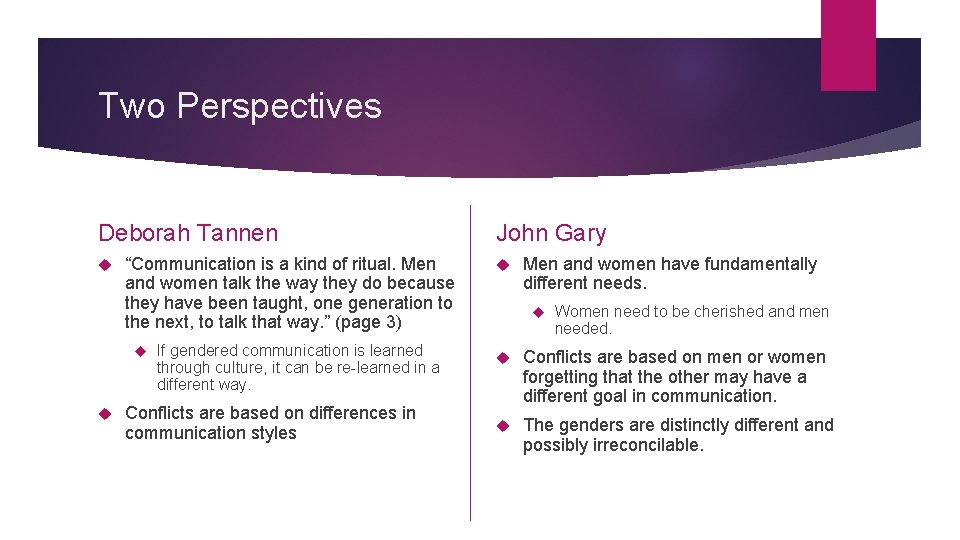
Two Perspectives Deborah Tannen “Communication is a kind of ritual. Men and women talk the way they do because they have been taught, one generation to the next, to talk that way. ” (page 3) If gendered communication is learned through culture, it can be re-learned in a different way. Conflicts are based on differences in communication styles John Gary Men and women have fundamentally different needs. Women need to be cherished and men needed. Conflicts are based on men or women forgetting that the other may have a different goal in communication. The genders are distinctly different and possibly irreconcilable.
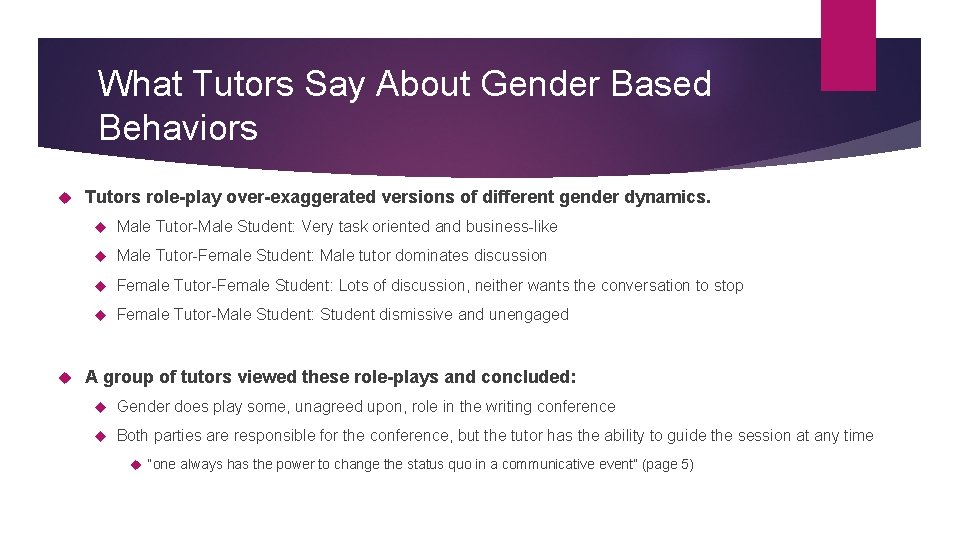
What Tutors Say About Gender Based Behaviors Tutors role-play over-exaggerated versions of different gender dynamics. Male Tutor-Male Student: Very task oriented and business-like Male Tutor-Female Student: Male tutor dominates discussion Female Tutor-Female Student: Lots of discussion, neither wants the conversation to stop Female Tutor-Male Student: Student dismissive and unengaged A group of tutors viewed these role-plays and concluded: Gender does play some, unagreed upon, role in the writing conference Both parties are responsible for the conference, but the tutor has the ability to guide the session at any time “one always has the power to change the status quo in a communicative event” (page 5)
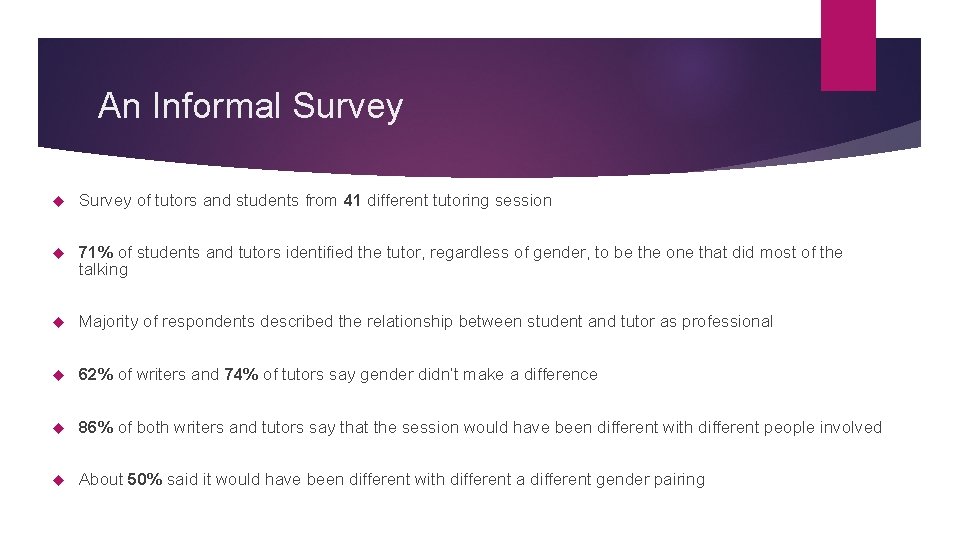
An Informal Survey of tutors and students from 41 different tutoring session 71% of students and tutors identified the tutor, regardless of gender, to be the one that did most of the talking Majority of respondents described the relationship between student and tutor as professional 62% of writers and 74% of tutors say gender didn’t make a difference 86% of both writers and tutors say that the session would have been different with different people involved About 50% said it would have been different with different a different gender pairing
IT’S NOT ABOUT WHAT YOU SAY, BUT HOW YOU SAY IT (AND TO WHOM): ACCOMODATING GENDER IN THE WRITING CENTER CLAIRE ELIZABETH O’LEARY
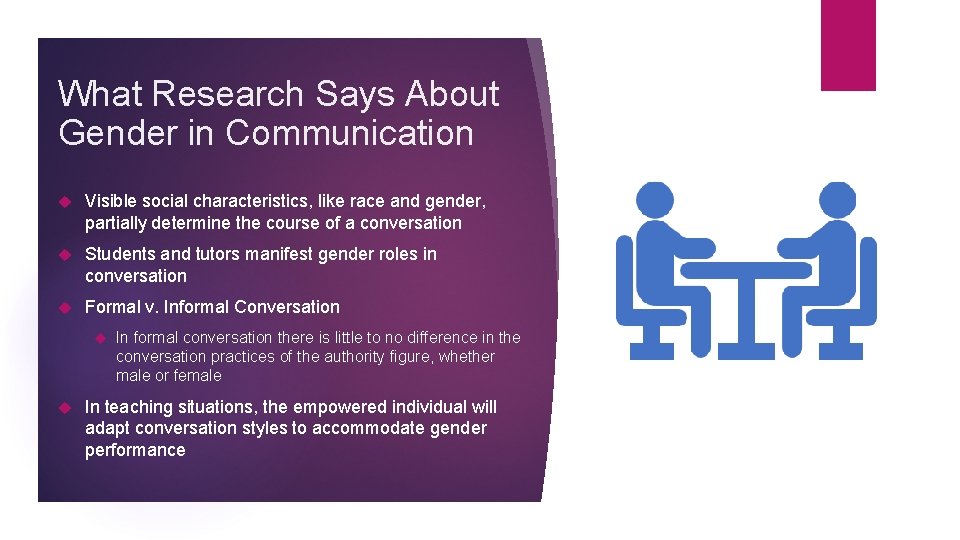
What Research Says About Gender in Communication Visible social characteristics, like race and gender, partially determine the course of a conversation Students and tutors manifest gender roles in conversation Formal v. Informal Conversation In formal conversation there is little to no difference in the conversation practices of the authority figure, whether male or female In teaching situations, the empowered individual will adapt conversation styles to accommodate gender performance
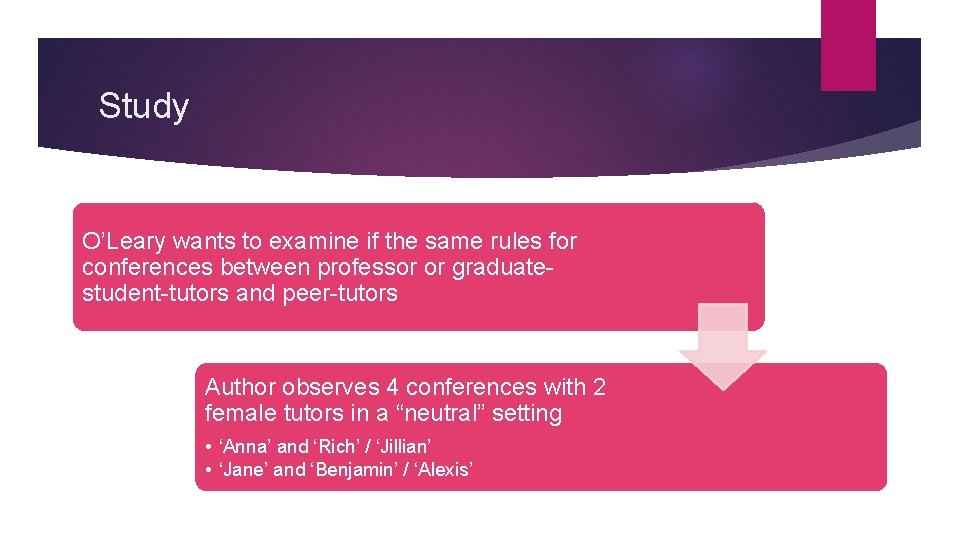
Study O’Leary wants to examine if the same rules for conferences between professor or graduatestudent-tutors and peer-tutors Author observes 4 conferences with 2 female tutors in a “neutral” setting • ‘Anna’ and ‘Rich’ / ‘Jillian’ • ‘Jane’ and ‘Benjamin’ / ‘Alexis’
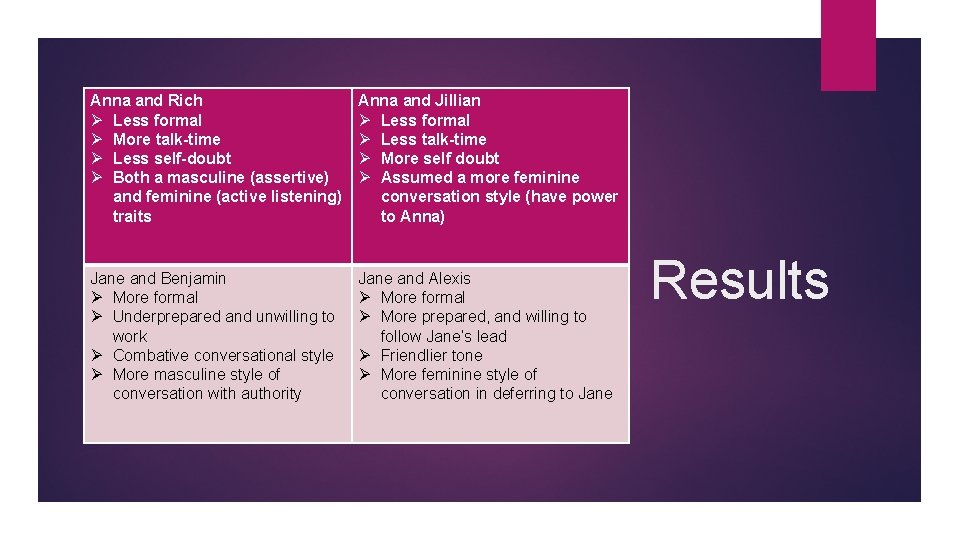
Anna and Rich Ø Less formal Ø More talk-time Ø Less self-doubt Ø Both a masculine (assertive) and feminine (active listening) traits Anna and Jillian Ø Less formal Ø Less talk-time Ø More self doubt Ø Assumed a more feminine conversation style (have power to Anna) Jane and Benjamin Ø More formal Ø Underprepared and unwilling to work Ø Combative conversational style Ø More masculine style of conversation with authority Jane and Alexis Ø More formal Ø More prepared, and willing to follow Jane’s lead Ø Friendlier tone Ø More feminine style of conversation in deferring to Jane Results
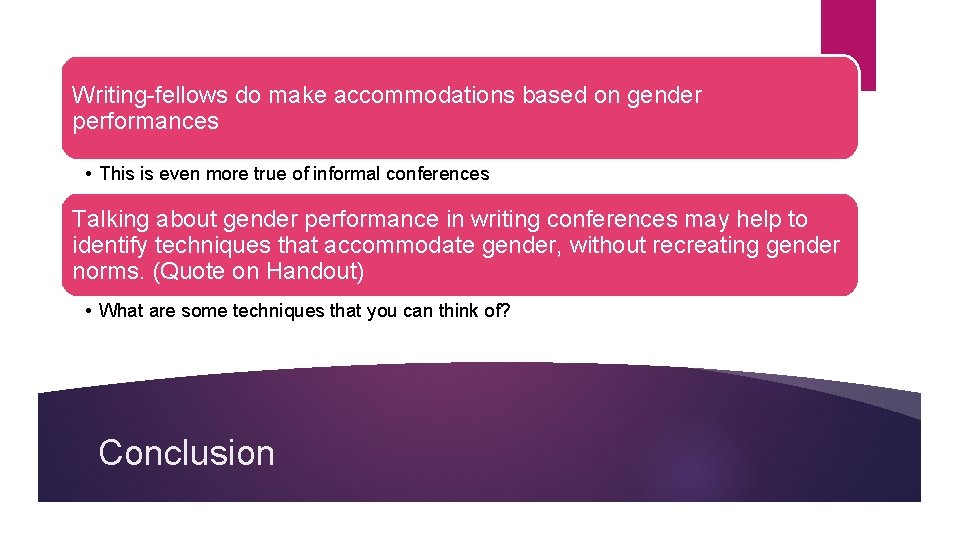
Writing-fellows do make accommodations based on gender performances • This is even more true of informal conferences Talking about gender performance in writing conferences may help to identify techniques that accommodate gender, without recreating gender norms. (Quote on Handout) • What are some techniques that you can think of? Conclusion
A Critique of Both Readings GENDER NON-CONFORMING AND NON-BINARY IDENTINITES
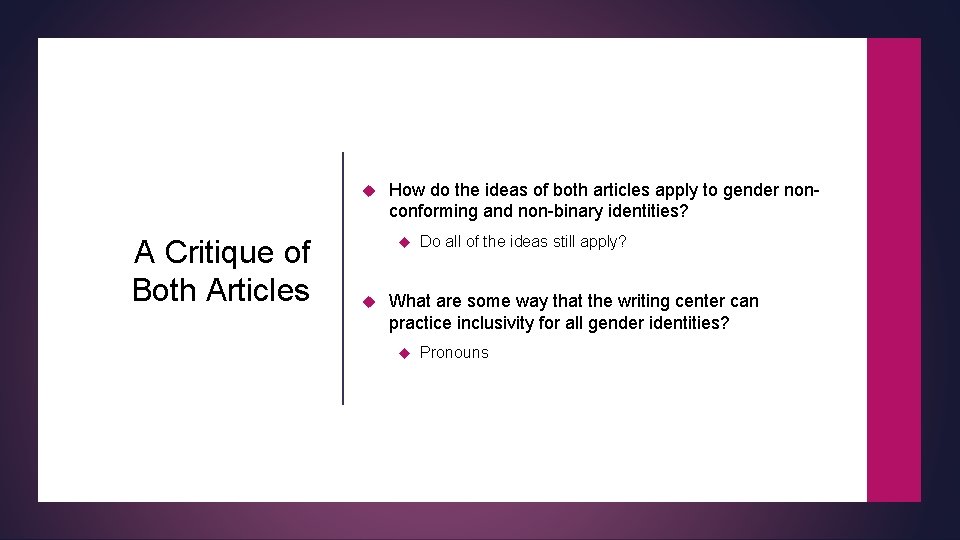
A Critique of Both Articles How do the ideas of both articles apply to gender nonconforming and non-binary identities? Do all of the ideas still apply? What are some way that the writing center can practice inclusivity for all gender identities? Pronouns