
Gender Differences in the Effects of Subjective Feedback
Gender Differences in the Effects of Subjective Feedback – a Computer Game-Based Experiment Ewa Cukrowska-Torzewska, Andrea Kiss, Anna Lovász, Mariann Rigó, Ágnes Szabó-Morvai November 15, 2016
Overview 1. Does the effect of subjective feedback on performance differ by gender? • Types of supervisory (teacher, boss) feedback – Performance feedback: info about performance • „You scored 67 points. ” – Praise: info about performance + the environment’s valuation of it • „ 67 points, good job!” – Encouragement: info about environment’s expectation of future performance • „You can do it. ” • Model: individual’s choice of effort in a given task – Expected benefit – expected cost – Differential impact of feedback types by personality and gender • Self confidence 2
Overview 2. Does the effect of subjective feedback on performance differ by gender? • Test: online computer game, randomized feedback – Control: Objective feedback – Treatment 1: Objective feedback + Praise – Treatment 2: Objective feedback + Encouragement • Analysis: effort and performance – mean differences in outcomes by feedback type – difference in these differences by gender è Gender differences in response to subjective feedback è Channel: differences in personality/self-confidence 3
Implications Does the effect of subjective feedback on performance differ by gender? – Females could perform better in a different environment, a a more suitable „mix” of feedback – Current/undifferentiated supervisory communication may lead to gender differences and quantifiable losses in performance (inefficiency) – Also important for student/employee motivation by personality type – Different effectiveness of feedback types along ability distribution 4
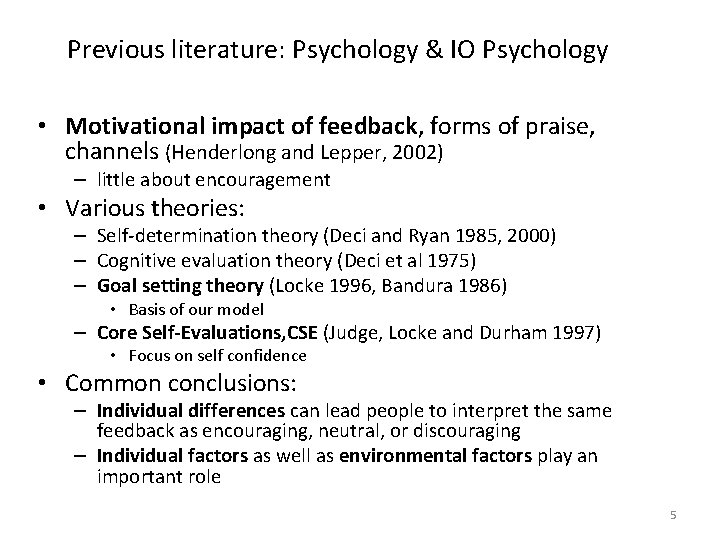
Previous literature: Psychology & IO Psychology • Motivational impact of feedback, forms of praise, channels (Henderlong and Lepper, 2002) – little about encouragement • Various theories: – Self-determination theory (Deci and Ryan 1985, 2000) – Cognitive evaluation theory (Deci et al 1975) – Goal setting theory (Locke 1996, Bandura 1986) • Basis of our model – Core Self-Evaluations, CSE (Judge, Locke and Durham 1997) • Focus on self confidence • Common conclusions: – Individual differences can lead people to interpret the same feedback as encouraging, neutral, or discouraging – Individual factors as well as environmental factors play an important role 5
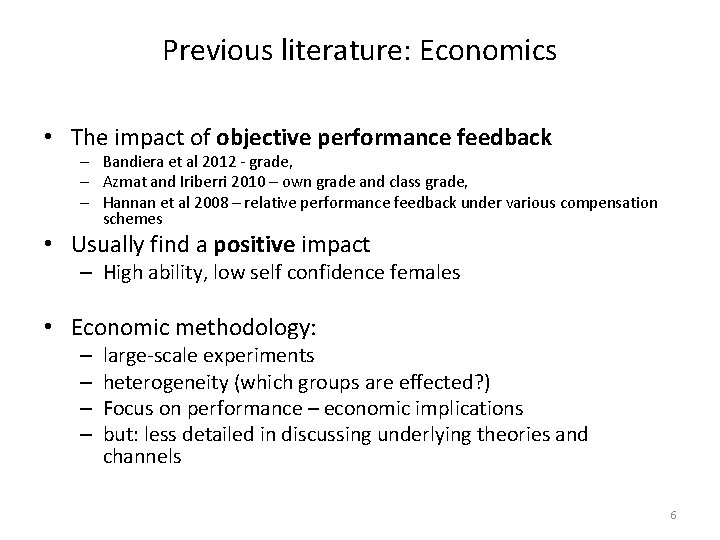
Previous literature: Economics • The impact of objective performance feedback – Bandiera et al 2012 - grade, – Azmat and Iriberri 2010 – own grade and class grade, – Hannan et al 2008 – relative performance feedback under various compensation schemes • Usually find a positive impact – High ability, low self confidence females • Economic methodology: – – large-scale experiments heterogeneity (which groups are effected? ) Focus on performance – economic implications but: less detailed in discussing underlying theories and channels 6
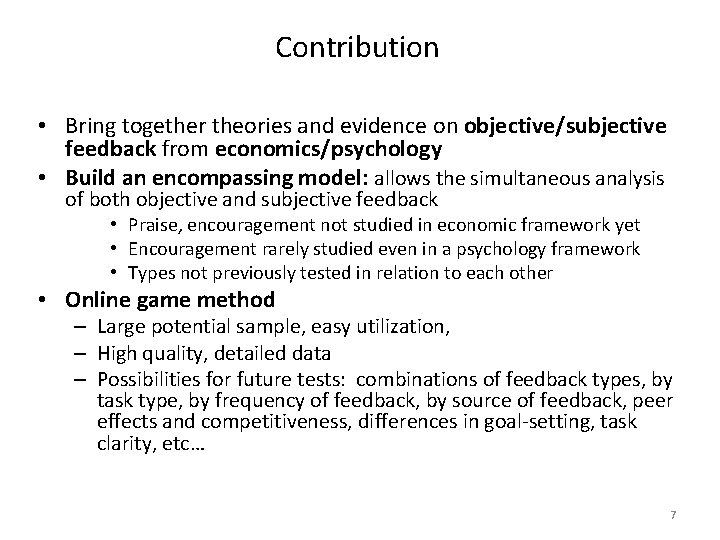
Contribution • Bring together theories and evidence on objective/subjective feedback from economics/psychology • Build an encompassing model: allows the simultaneous analysis of both objective and subjective feedback • Praise, encouragement not studied in economic framework yet • Encouragement rarely studied even in a psychology framework • Types not previously tested in relation to each other • Online game method – Large potential sample, easy utilization, – High quality, detailed data – Possibilities for future tests: combinations of feedback types, by task type, by frequency of feedback, by source of feedback, peer effects and competitiveness, differences in goal-setting, task clarity, etc… 7
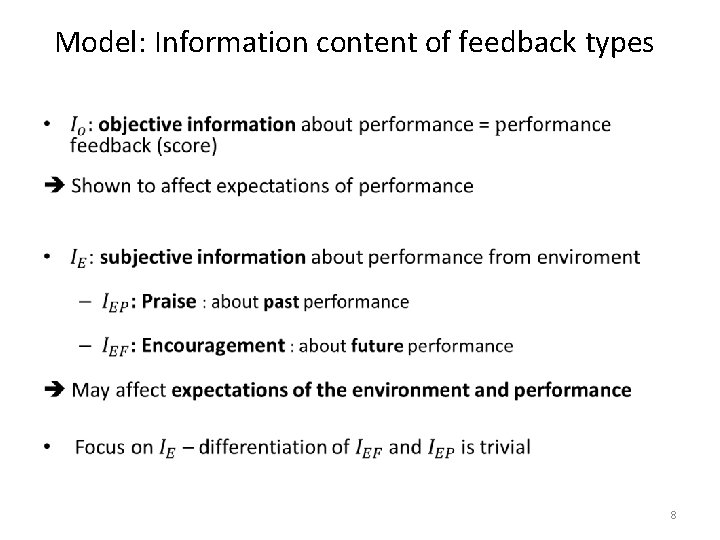
Model: Information content of feedback types • 8
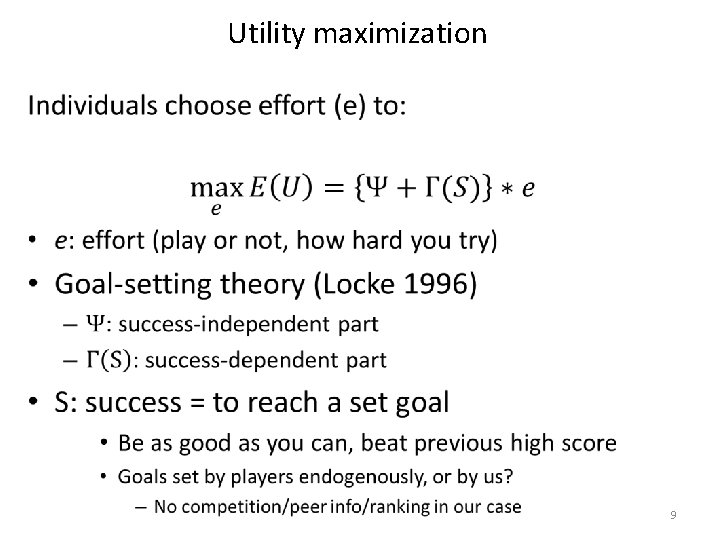
Utility maximization • 9
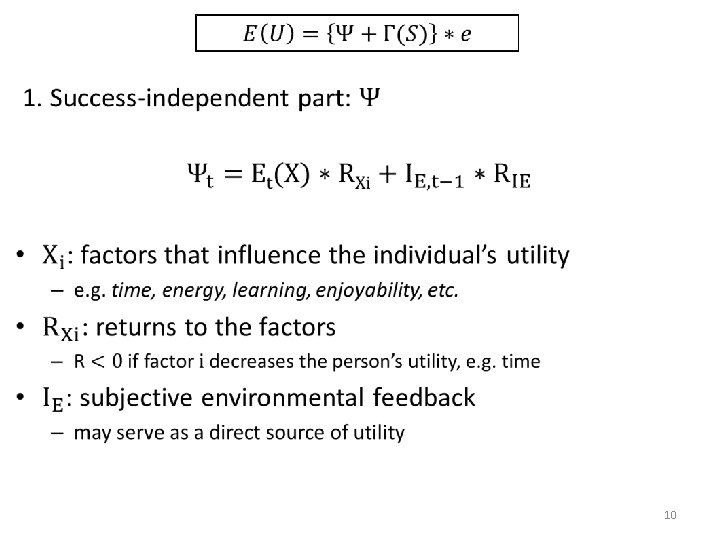
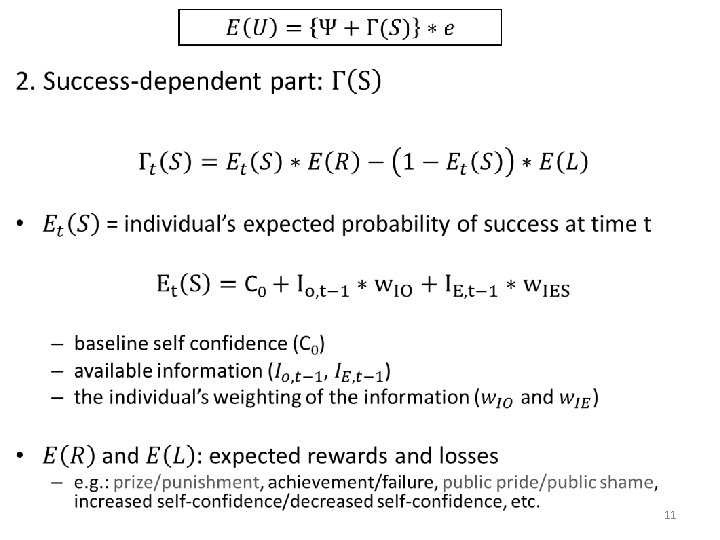

Optimal choice • 12
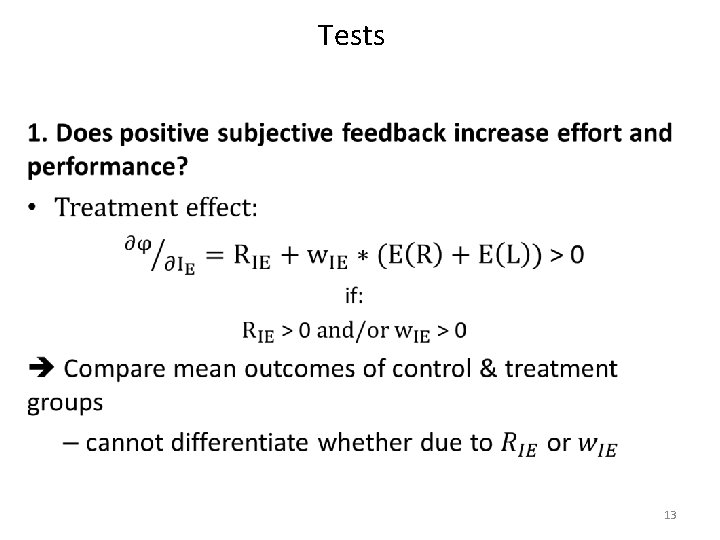
Tests • 13
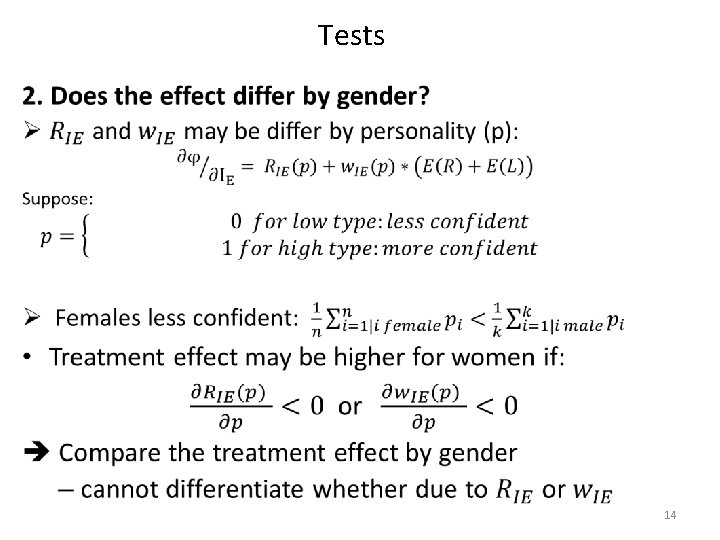
Tests • 14
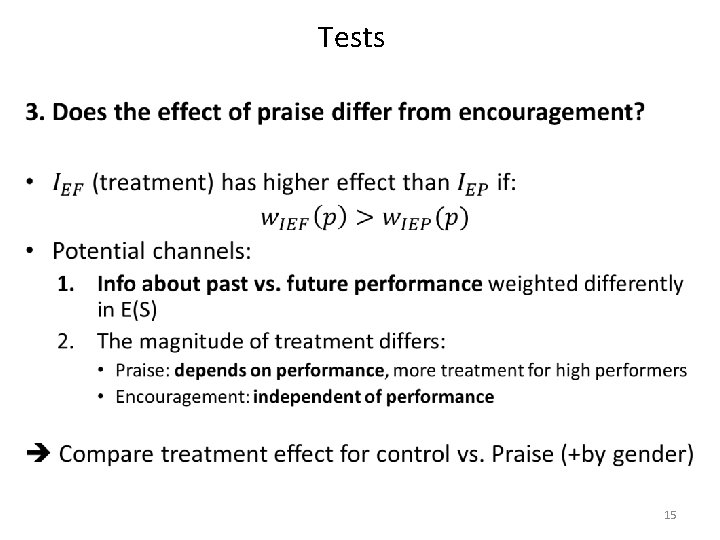
Tests • 15
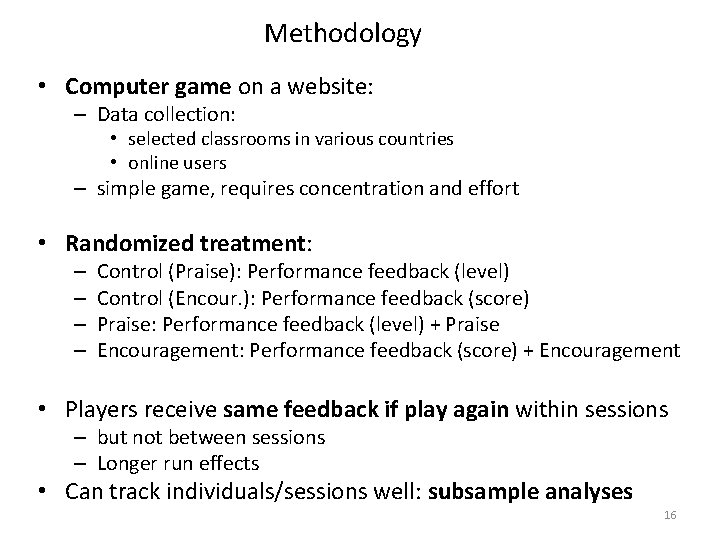
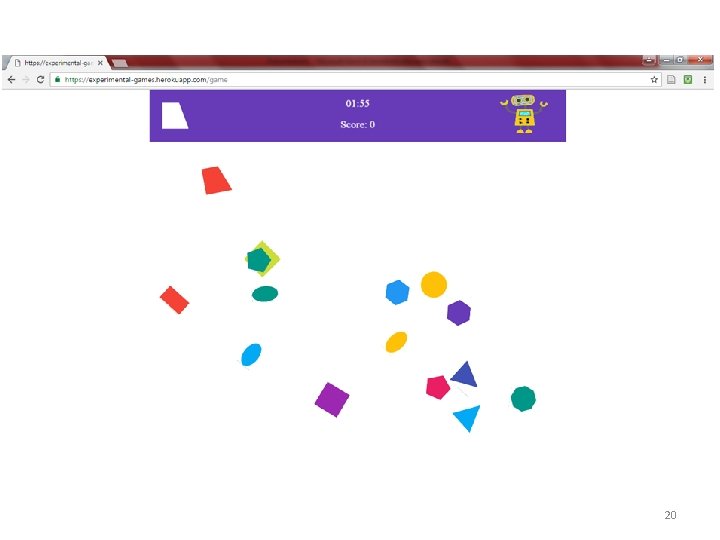
Methodology • Computer game on a website: – Data collection: • selected classrooms in various countries • online users – simple game, requires concentration and effort • Randomized treatment: – – Control (Praise): Performance feedback (level) Control (Encour. ): Performance feedback (score) Praise: Performance feedback (level) + Praise Encouragement: Performance feedback (score) + Encouragement • Players receive same feedback if play again within sessions – but not between sessions – Longer run effects • Can track individuals/sessions well: subsample analyses 16
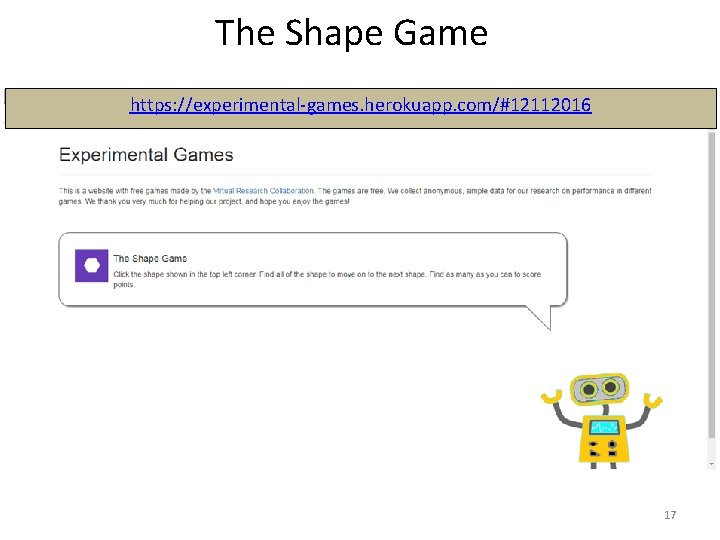
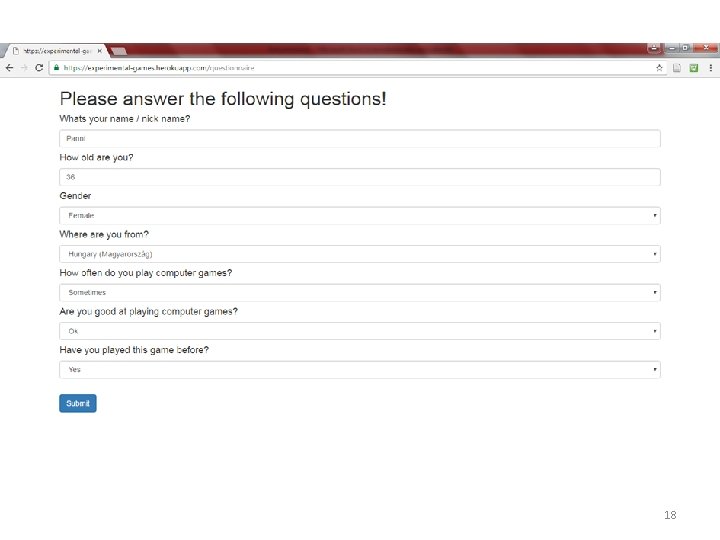
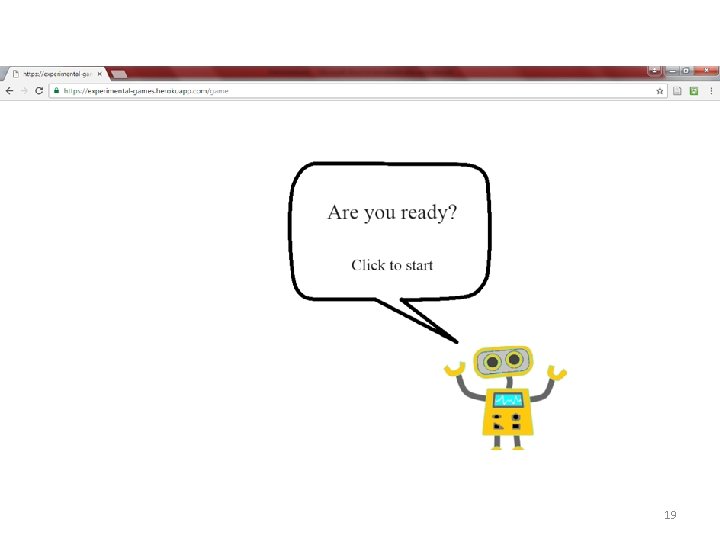
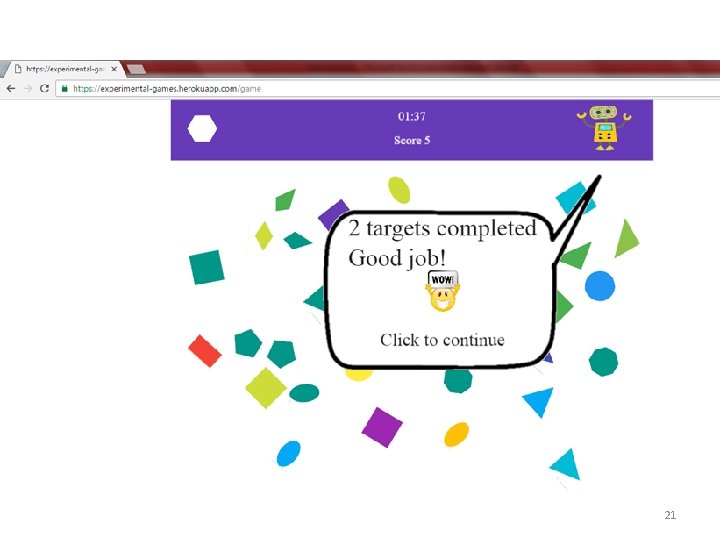
The Shape Game https: //experimental-games. herokuapp. com/#12112016 17
18
19
20
21
Feedback Specifications 22
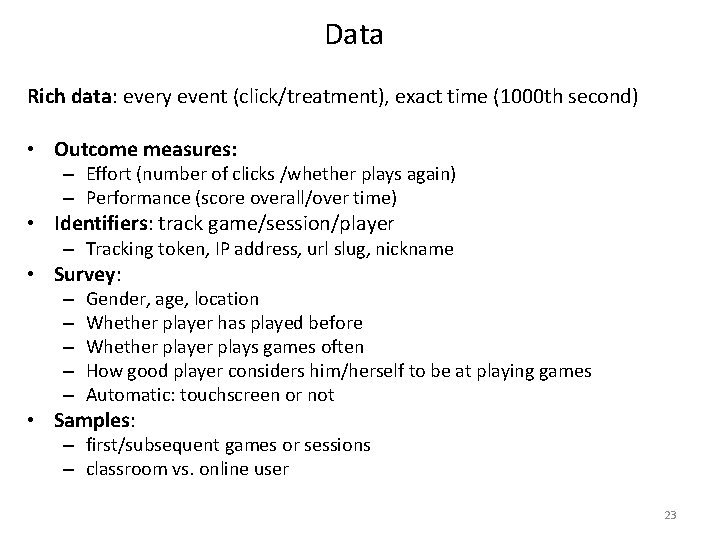
Data Rich data: every event (click/treatment), exact time (1000 th second) • Outcome measures: – Effort (number of clicks /whether plays again) – Performance (score overall/over time) • Identifiers: track game/session/player – Tracking token, IP address, url slug, nickname • Survey: – – – Gender, age, location Whether player has played before Whether plays games often How good player considers him/herself to be at playing games Automatic: touchscreen or not • Samples: – first/subsequent games or sessions – classroom vs. online user 23
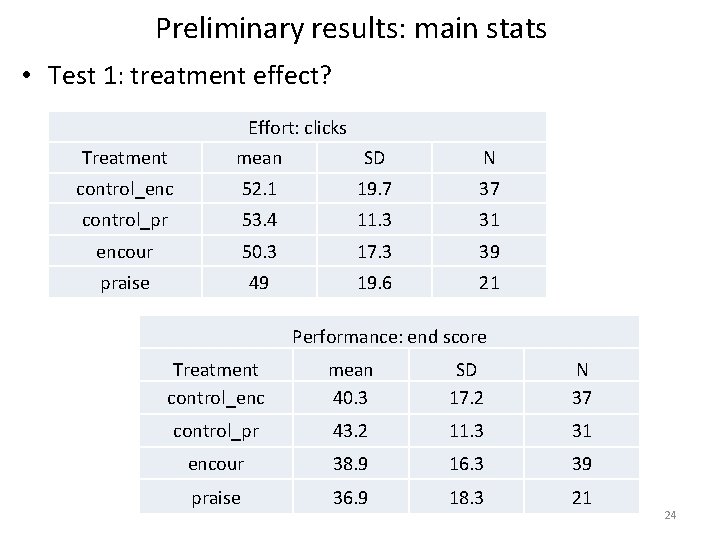
Preliminary results: main stats • Test 1: treatment effect? Effort: clicks Treatment mean SD N control_enc 52. 1 19. 7 37 control_pr 53. 4 11. 3 31 encour 50. 3 17. 3 39 praise 49 19. 6 21 Performance: end score Treatment control_enc mean 40. 3 SD 17. 2 N 37 control_pr 43. 2 11. 3 31 encour 38. 9 16. 3 39 praise 36. 9 18. 3 21 24
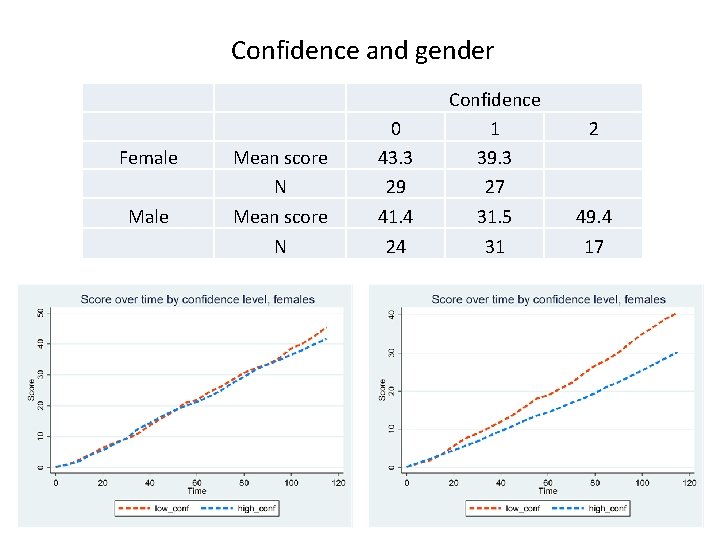
Confidence and gender Confidence 1 39. 3 27 Female Mean score N 0 43. 3 29 2 Male Mean score 41. 4 31. 5 49. 4 N 24 31 17 25
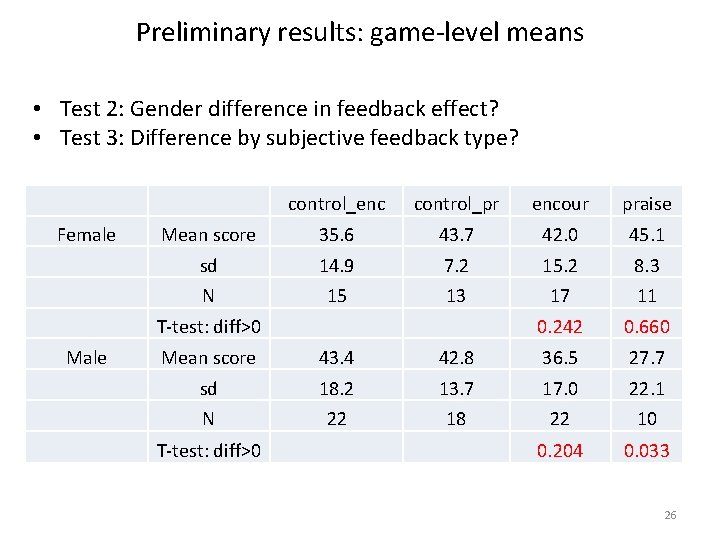
Preliminary results: game-level means • Test 2: Gender difference in feedback effect? • Test 3: Difference by subjective feedback type? Female control_enc control_pr encour praise Mean score 35. 6 43. 7 42. 0 45. 1 sd 14. 9 7. 2 15. 2 8. 3 N 15 13 17 11 0. 242 0. 660 T-test: diff>0 Male Mean score 43. 4 42. 8 36. 5 27. 7 sd 18. 2 13. 7 17. 0 22. 1 N 22 18 22 10 0. 204 0. 033 T-test: diff>0 26
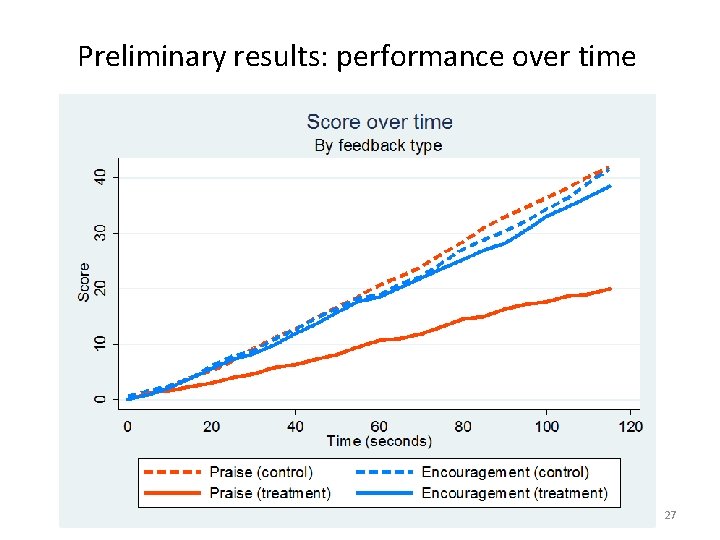
Preliminary results: performance over time 27
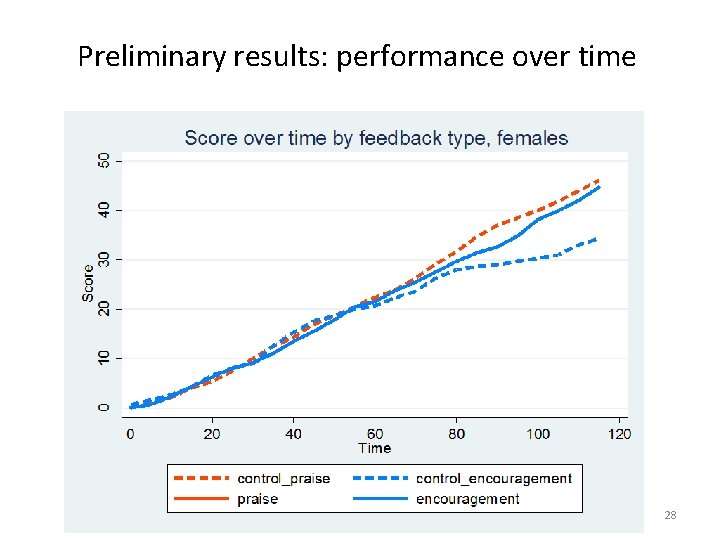
Preliminary results: performance over time 28
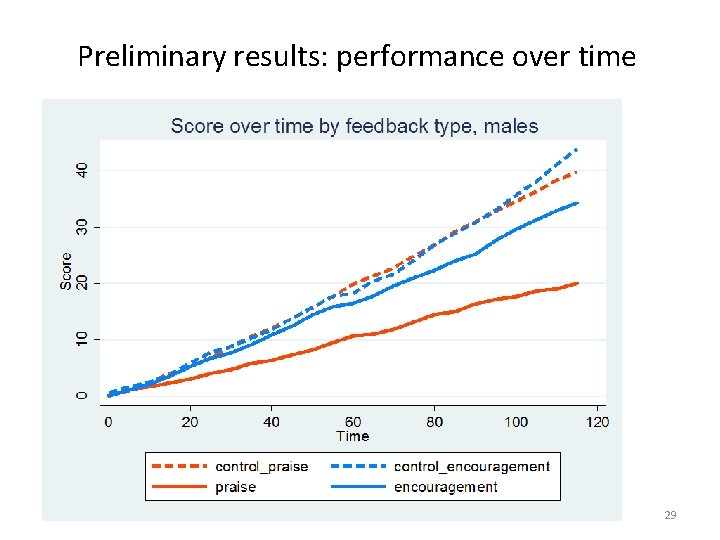
Preliminary results: performance over time 29
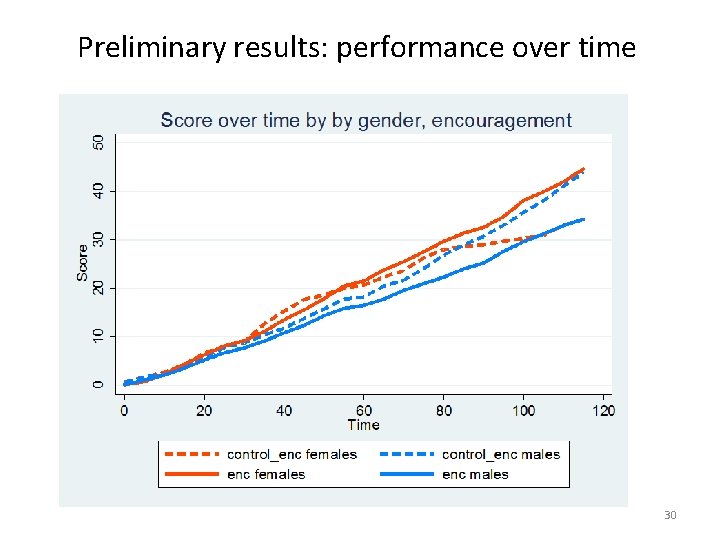
Preliminary results: performance over time 30
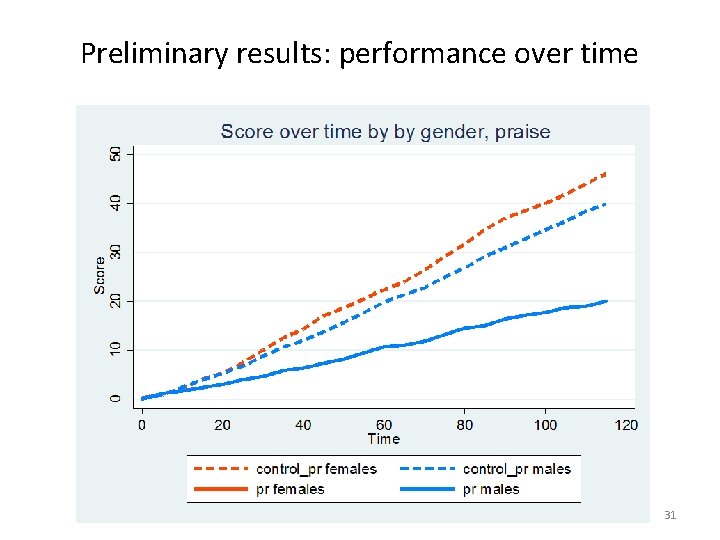
Preliminary results: performance over time 31
Conclusion and plans • Results so far: very few observations, but in the right direction • More detailed responses from testers also in line: – Males/more confident annoyed by feedback – Females/less confident like it TO DO: • Include more personality questions? • Gather data! – Careful with sample analysis • Results by gender & confidence • Consult psychologists for relevant literature • Consult educators/pedagogists for relevant literature 32

33
- Slides: 33