
Gender and the Body Technologies of the Gendered
Gender and the Body Technologies of the Gendered Body (Week 3)
Feminism and the body • Long-standing concern with the body – Our Bodies, Ourselves (Boston Women’s Health Book Collective, 1973; www. ourbodiesourselves. org) – “the personal is political” – Body image – Reproduction – Domestic violence – Division of labour – Distribution of resources
Feminism and the body • Contested issue within feminism – Equal bodies – Different bodies – Discursive bodies
Feminism and the body • Common themes: – Treating the body as significant – Politicising the body – Centralising women’s bodies – Taking experience seriously – Challenging prevailing ideas / scientific beliefs about the sexed / gendered body
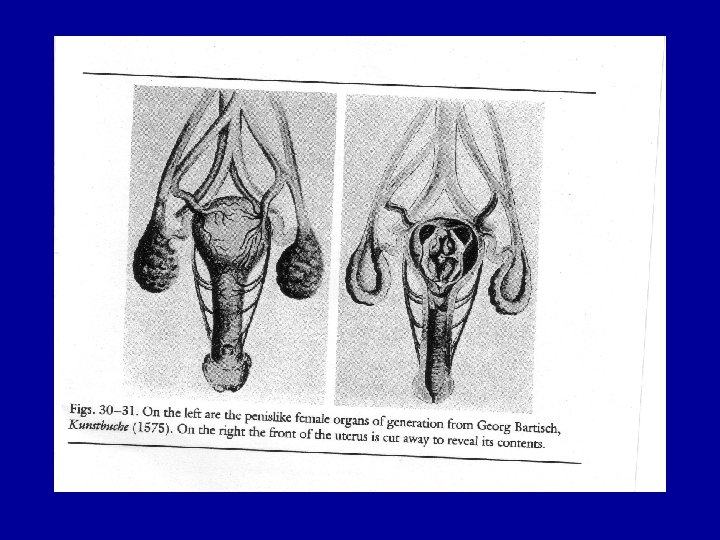
The one-sex body Ø Pre-enlightenment Ø Male and female bodies are, fundamentally, a single entity Ø Female reproductive organs are the same as the male organs, but inverted.

Key differences… Ø (Galen) men are hot and women are cold Ø Distinguished by reproductive capacity Ø Women are presumed to be unable to produce fertile seed Ø “underdeveloped” genitals Ø Inferior brains Ø But… a woman could become a man (e. g. by coughing), but men can’t become women.
The two-sex body Ø C 18 th – male and female bodies seen as entirely different (Lacqueur 1992; Shildrick 1997; Schiebinger 2000) Ø Justification, through science, for social inequalities Ø Intense research interest in sex difference, not just at the superficial level, but down to the skeletons, brains, hormones etc.
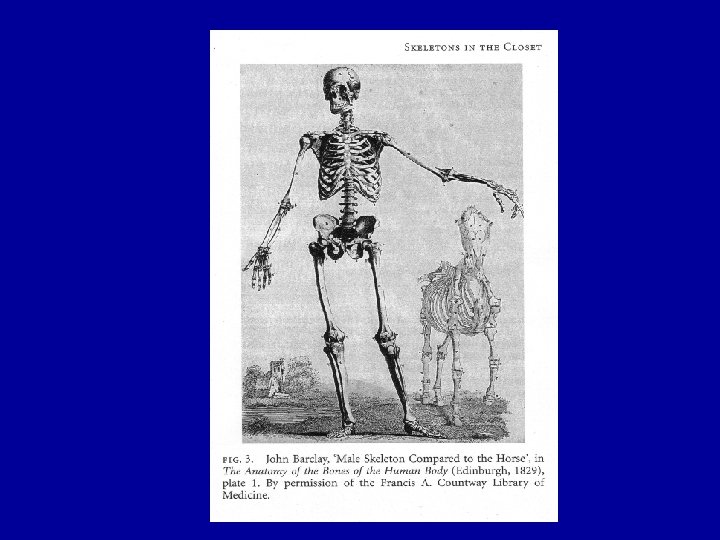
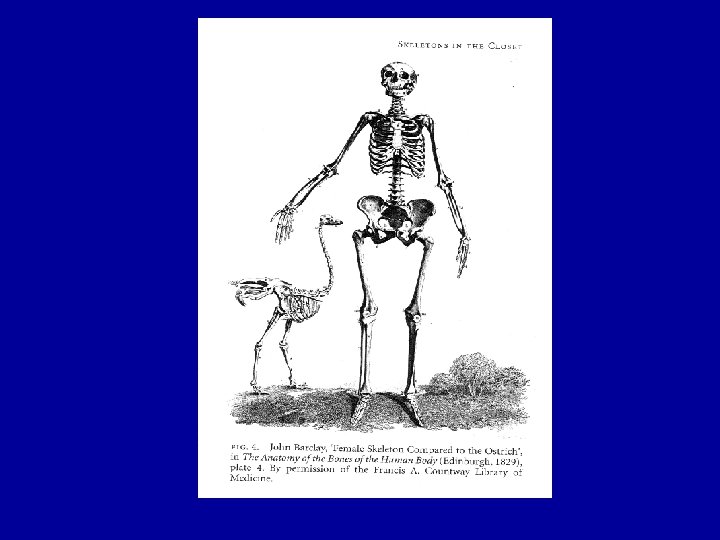
Importantly…. Ø For Schiebinger, this is not a progress narrative – not a product of “improved” vision / better science “Ideology, not accuracy of observation, determined how they were seen and which differences would matter. ” (Lacqueur 1992: 88)
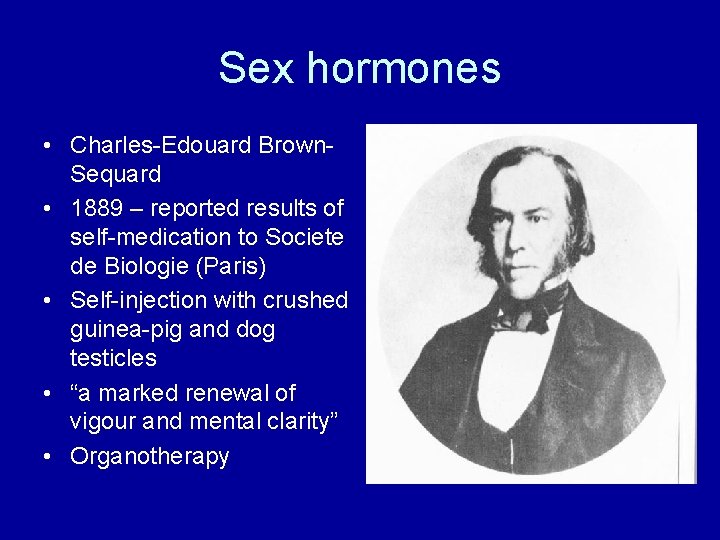
Sex hormones • Charles-Edouard Brown. Sequard • 1889 – reported results of self-medication to Societe de Biologie (Paris) • Self-injection with crushed guinea-pig and dog testicles • “a marked renewal of vigour and mental clarity” • Organotherapy
Hormonal hurricanes • “Even a Congresswoman must defer to scientific truths…there just are physical and psychological inhabitants that limit a female’s potential… I would still rather have a male John F Kennedy make the Cuban missile crisis decisions than a female of the same age who could possibly be subject to the curious mental aberrations of that age group” • Dr Edgar Berman (personal physician to VP Hubert Humphrey (1970)), cited in Fausto-Sterling, 1992: 91
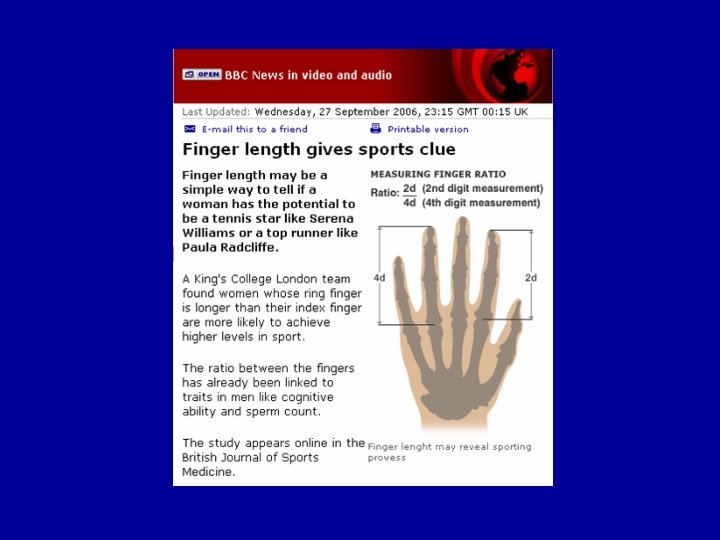
Professor Spector, cited in The Independent (28 Sept, 2006) • “The longer the ring finger, the more butch you are. ”

Speaking with certainty… • “Many – perhaps most – of the mysteries of how the brain works have yet to be unravelled, but the differences between the brains of males and female – and the processes by which they become different – are now clear. There is more to be known, more detail and qualification perhaps to add – but the nature and cause of brain differences are now known beyond speculation, beyond prejudice, and beyond reasonable doubt. ” (Moir and Jessel 1989: 11)

Challenges from feminism Anne Fausto-Sterling Ø Challenging “scientific” evidence /scientific process (see also, Birke 1999; Oudshoorn (ch. 3 in Schiebinger (ed. ) 2000) Ø Medical management of intersex children
Challenges from Feminism Lynda Birke (1999) Ø Anatomical diagrams show a very partial view ØWomen’s bodies included only in relation to reproduction (see also, Visible Human Project, Waldby 2000) Ø Knowledge produced / mediated by technology and professional “translators”
Challenges from feminism Emily Martin ØThe egg and the sperm (1996) ØMetaphors of production / waste (1989)
Conclusions • Feminists have always had a strong interest in the body as a central focus of study • Beliefs about sex / gender and the body are always changing • There is strong contemporary interest in sex difference research • Feminists have challenged these understandings of sex difference as lacking in sound evidence, as perpetuating problematic ideologies of gender, and as constructed through profoundly gendered metaphors and “ways of seeing”. • Technologies of visualisation and modification are inseparable from those understandings
- Slides: 22