
Gender and Diversity Analysis MB Status of Women
Gender and Diversity Analysis. . . . . MB Status of Women Family Services & Labour
Gender Mainstreaming • Integrating a gender perspective into all policies & programs to ensure decision-making processes, at all levels & stages, include an analysis of the effects on women & men respectively. • Beijing Platform for Action – Gender Analysis
More than Gender • Gender is not the only social category or position that can create barriers & inequalities. • Women & men have diverse identities & positions, based on age, ethnicity, class, geography, sexuality, ability etc. • People are socially constructed along the gender spectrum, but also according to their age, ethnic background, citizenship status, income & education level, among many other things. • Public policy approaches are increasingly taking this into account.
What about Diversity? • Diversity: recognizing & respecting individuals’ characteristics; what makes them distinct from others, including age, culture, ethnicity, skills, gender, sexual orientation, religion, family status, abilities, talents & perspectives (Provincial Civil Service Diversity Strategy, 2009) • Intersectionality: a way to understand how multiple identities e. g. , gender, ethnicity, class, age, location etc. , intersect to construct individuals’ lived experiences and systemic barriers
Gender and Diversity Analysis • An analytical tool or evidence-based process which examines: – The different concerns, opportunities, obstacles, experiences, capacities & needs of women and men of diverse groups. – The potential differential impacts (positive and negative) of a program or policy on women & men of diverse groups.
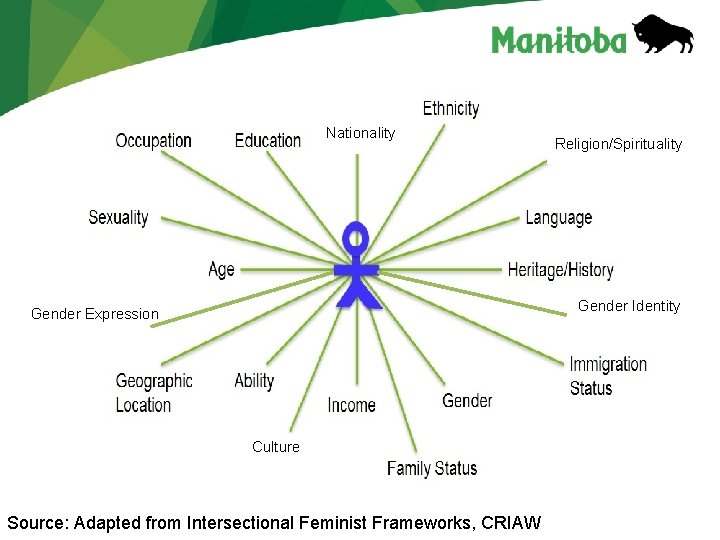
Nationality Religion/Spirituality Gender Identity Gender Expression Culture Source: Adapted from Intersectional Feminist Frameworks, CRIAW
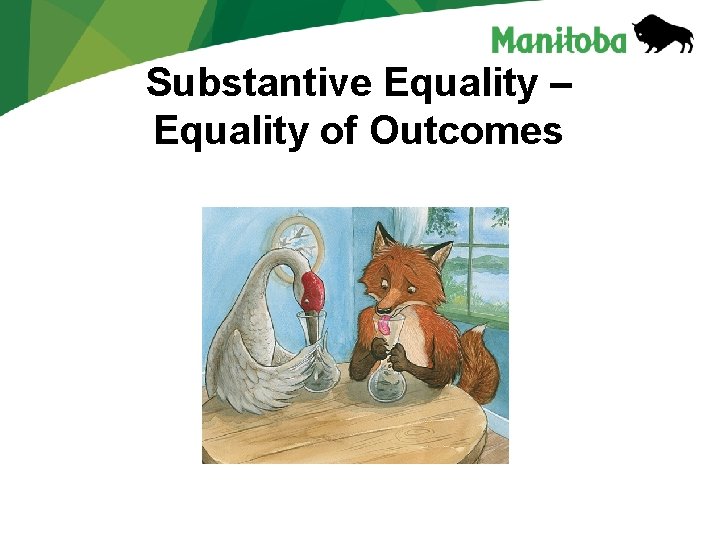
Substantive Equality – Equality of Outcomes
How Does it Work? • Exploring the specific needs of all citizens & taking into account population diversity; • Identifying policy challenges & opportunities from different perspectives; • Developing policy options based on these different perspectives & needs; • Implementing, monitoring & evaluating programs and policies by assessing their impact upon and effectiveness for women, men and diverse groups.
Why is GDA important? • GDA makes good policy • It’s the law: Provincial, national & international human rights law • Manitoba’s population is becoming more diverse: One size does not fit all
GDA Makes Good Policy • Reflects the needs & interests of all citizens. • Creates policy & programs that are relevant, comprehensive and effective. • Avoids underutilized or ineffective policies & programs.
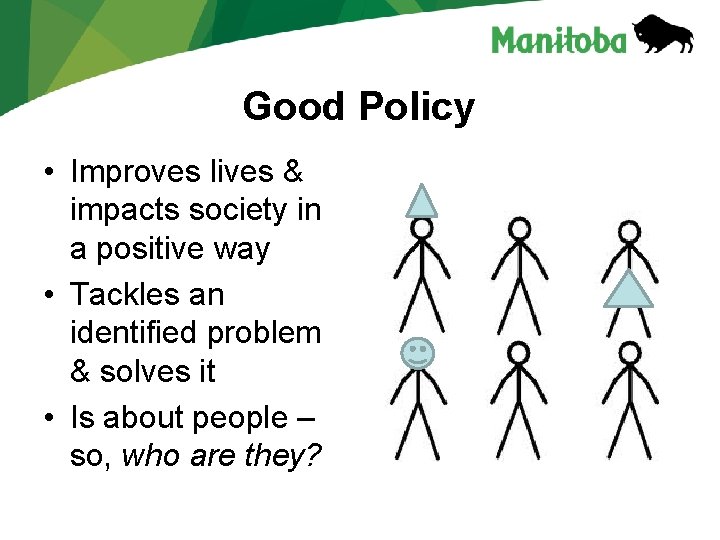
Good Policy • Improves lives & impacts society in a positive way • Tackles an identified problem & solves it • Is about people – so, who are they?
Why GDA? • As part of our provincial HIV/AIDS strategy, I am tasked with developing an educational campaign. I know that the largest growing population affected by HIV/AIDS is Aboriginal women. How can I find out the best ways to reach Aboriginal women across the province for the campaign?
Why GDA? • My team is responsible for overseeing the planning & implementation of a major infrastructure project. Training & economic development have been identified as important outcomes of the project. How can I ensure these outcomes are successfully achieved?
- Slides: 13