
Gel Electrophoresis Technology that uses electricity to separate



- Slides: 13
Gel Electrophoresis Technology that uses electricity to separate molecules in a gel slab
Objectives • To understand that molecules vary in size, shape and charge • To understand what gel electrophoresis is and how it is used to separate molecules based upon size and charge
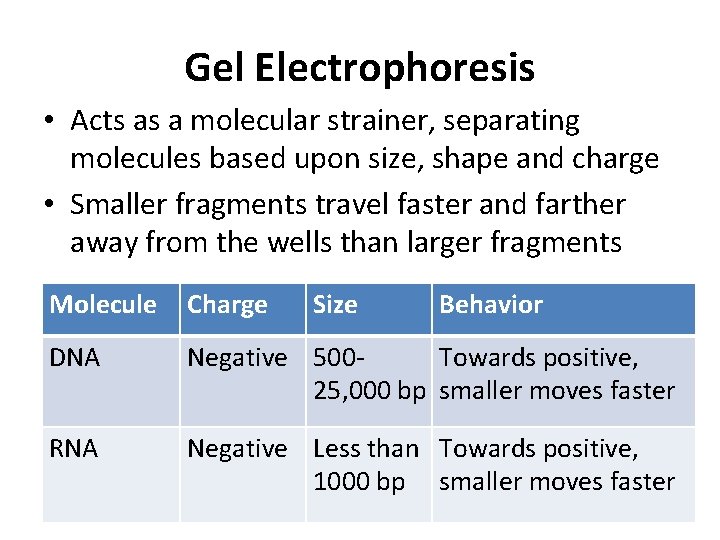
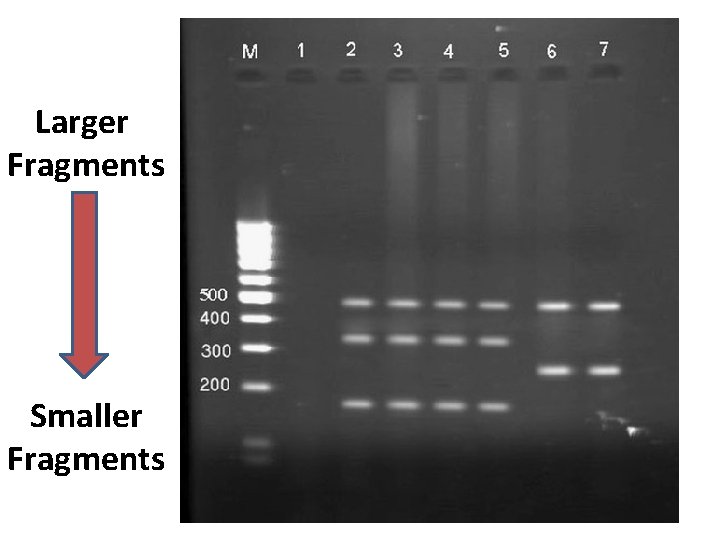
Gel Electrophoresis • Acts as a molecular strainer, separating molecules based upon size, shape and charge • Smaller fragments travel faster and farther away from the wells than larger fragments Molecule Charge Size Behavior DNA Negative 500 Towards positive, 25, 000 bp smaller moves faster RNA Negative Less than Towards positive, 1000 bp smaller moves faster
Larger Fragments Smaller Fragments
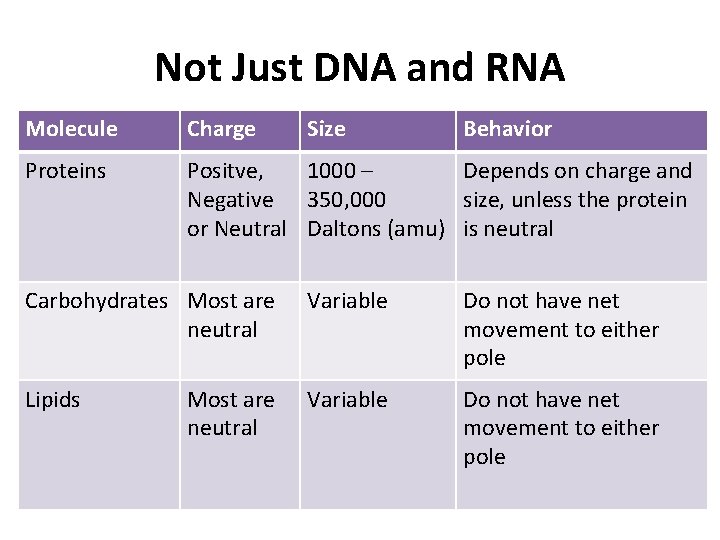
Not Just DNA and RNA Molecule Charge Size Behavior Proteins Positve, 1000 – Depends on charge and Negative 350, 000 size, unless the protein or Neutral Daltons (amu) is neutral Carbohydrates Most are neutral Variable Do not have net movement to either pole Lipids Variable Do not have net movement to either pole Most are neutral
Components of Gel Electrophoresis Equipment
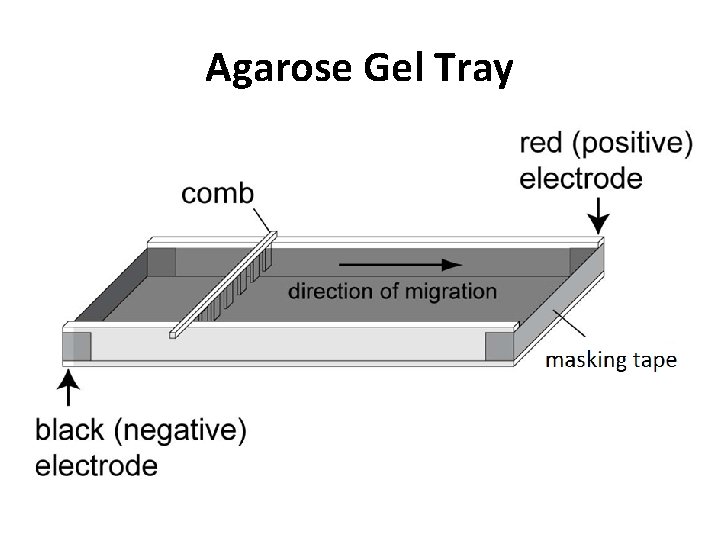
Agarose Gel Tray
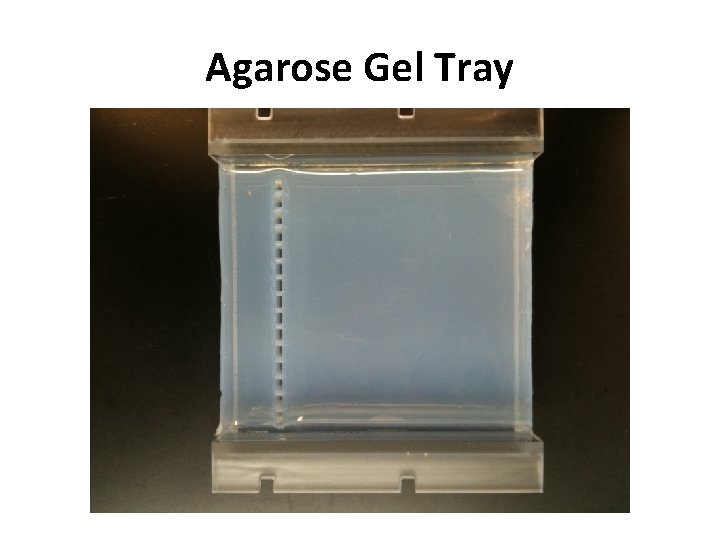
Agarose Gel Tray
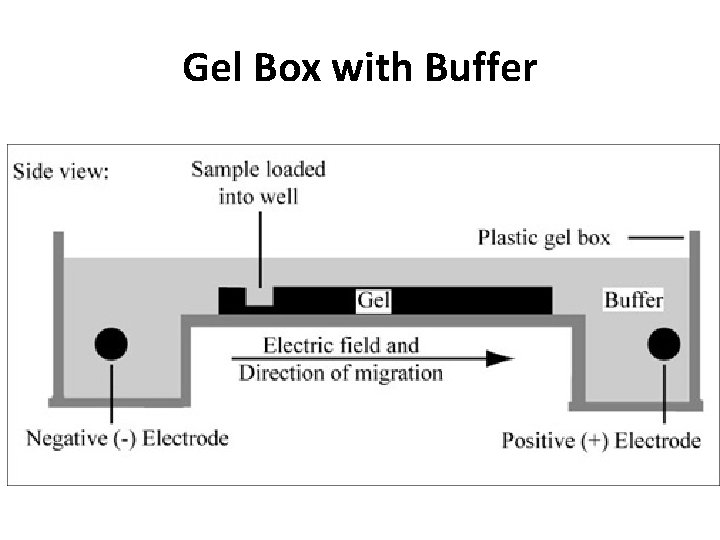
Gel Box with Buffer
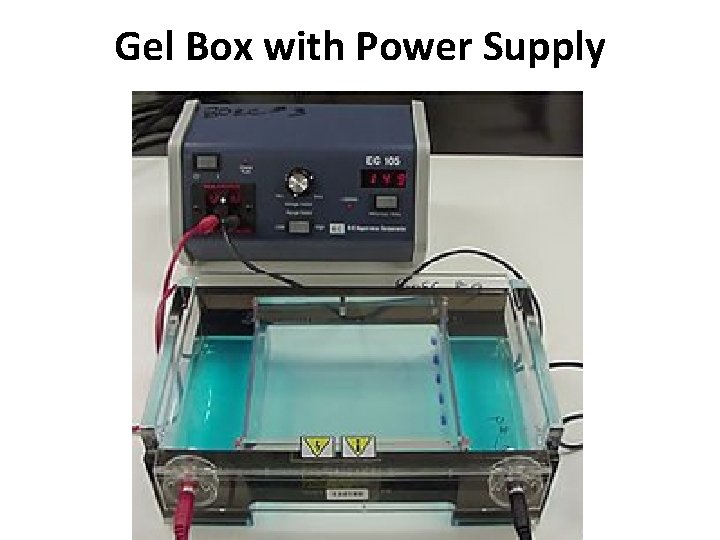
Gel Box with Power Supply
More About Gel Electrophoresis • Two most common gels are agarose and polyacrylamide • Polyacrylamide gels – used to separate proteins and very small pieces of DNA and RNA • Buffer: stabilizes p. H, maintains molecule shape, and conducts electricity
Polyacrylamide Gel Electrophoresis
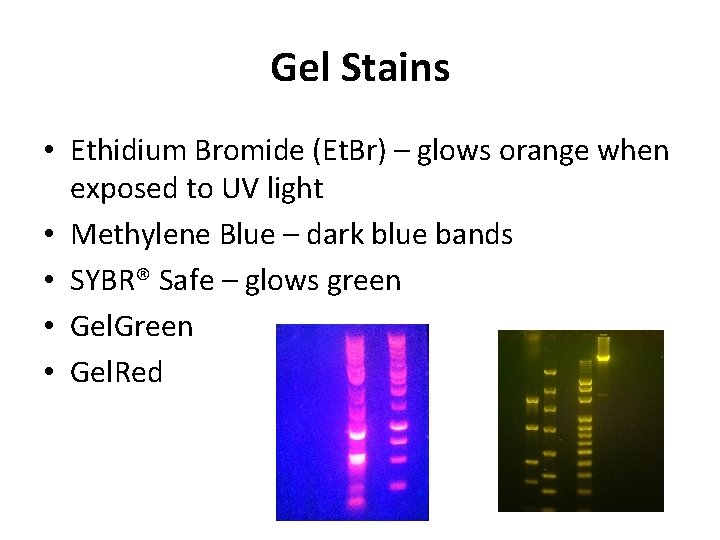
Gel Stains • Ethidium Bromide (Et. Br) – glows orange when exposed to UV light • Methylene Blue – dark blue bands • SYBR® Safe – glows green • Gel. Green • Gel. Red