
Gearing Up for GIS Using a systemic approach
- Slides: 16
Gearing Up for GIS Using a systemic approach to infuse the use of spatial thinking related to the Chesapeake Bay watershed in middle school science
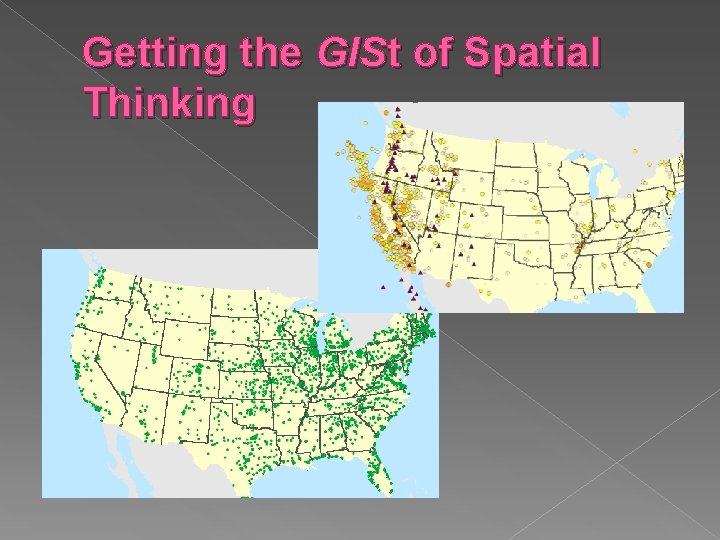
Getting the GISt of Spatial Thinking
Current Curriculum Students in Life Science complete hands-on lessons that focus on VA SOL Lessons incorporate the 5 E’s › Engage, Explore, Explain, Extend, and Evaluate Students are expected to analyze data they collect during investigations and apply their understanding to new problems, settings, and situations
Modified Curriculum (GIS) Incorporate spatial thinking Prepare our students for future careers Incorporate Science Technology Engineering and Mathematics (STEM) Provide strong inquiry-based learning opportunities that develop synthesis-level thinking
Short-term Objectives Modify and field test GIS-based watershedrelated lesson › Start in the GT Center classes › Gather data from students during process Modify other existing lessons that relate to biomes, watershed, nutrient pollution, wetlands, development, etc. to include the use of GPS and/or GIS
Long-term Objectives Expand students’ understanding of spatial thinking; promote visualization Provide a learning experience in which students synthesize information Develop students’ fluency in the use of GIS using Arc. View Offer teachers a model for using GIS and held GPS units with students Build a support model for schools to facilitate their implementation of GIS
Build Capacity Work with existing curriculum › Use familiar curriculum format › Package data sets as projects in Arc. View Plan and execute professional development by qualified trainers Develop teacher leaders Work with technology staff at each school Provide installation instructions and access to data sets
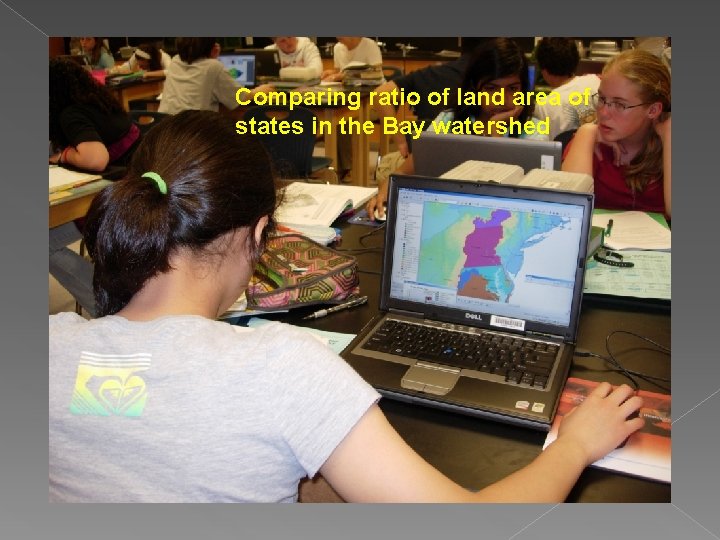
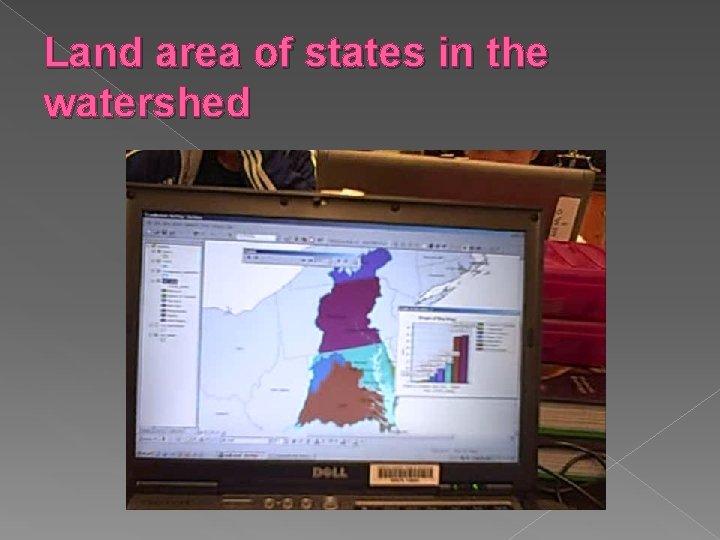
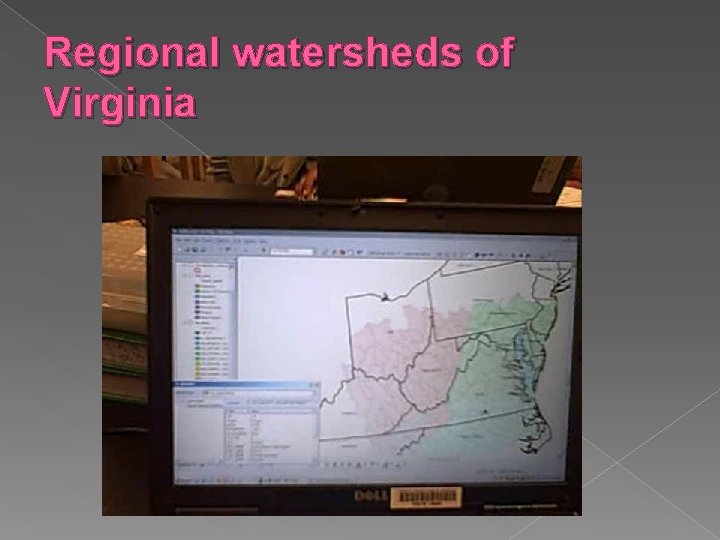
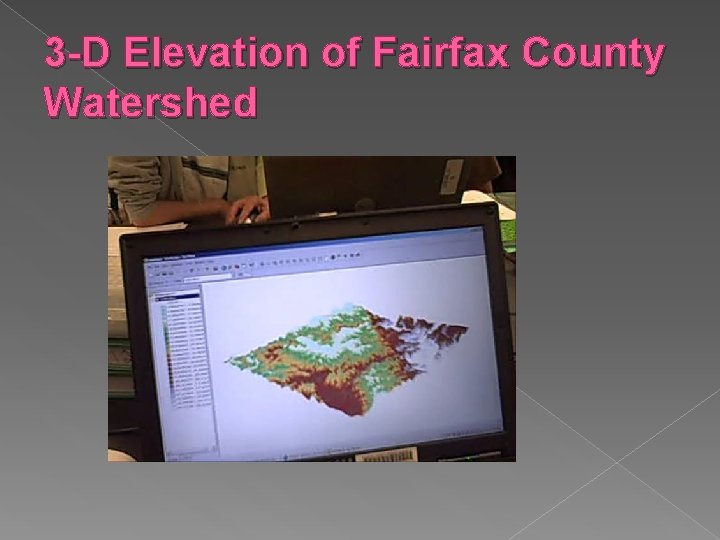
Watershed Walk: Part 1 Compare and contrast land area of each state that contributes runoff to the Bay Examine elevation and topographic features in the Bay watershed Locate and name four regional watersheds in Virginia Analyze a three-dimensional watershed model of Fairfax County
Watershed Walk: Part 2 Conduct schoolyard walk to collect GPS waypoints and note features Upload waypoints to aerial map of school grounds and annotate map in Arc. View Locate the school’s “watershed address” Create a presentation that synthesizes student learning
Comparing ratio of land area of states in the Bay watershed
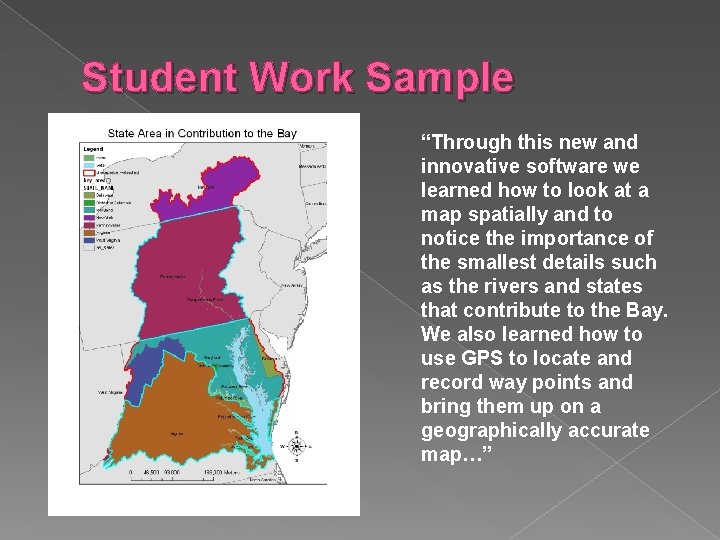
Land area of states in the watershed
Regional watersheds of Virginia
3 -D Elevation of Fairfax County Watershed
Student Work Sample “Through this new and innovative software we learned how to look at a map spatially and to notice the importance of the smallest details such as the rivers and states that contribute to the Bay. We also learned how to use GPS to locate and record way points and bring them up on a geographically accurate map…”
Lessons Learned Ensure that everyone has the same version of Arc. View Secure help with data set acquisition Include students in the development of curriculum Package data sets as projects for students and teachers to facilitate their use during a lesson Revise lesson as needed to increase level of inquiry
Lessons Learned (cont’d) Include “screen shots” and icons in directions to help students navigate and become fluent with the program Use the curriculum format students and teachers are most familiar with Encourage students to check off each step as they work through the directions Make sure to empower teachers to take an active role throughout the process