
GEARBOXES IN AUTOMOBILES Introduction Gearbox is speed and
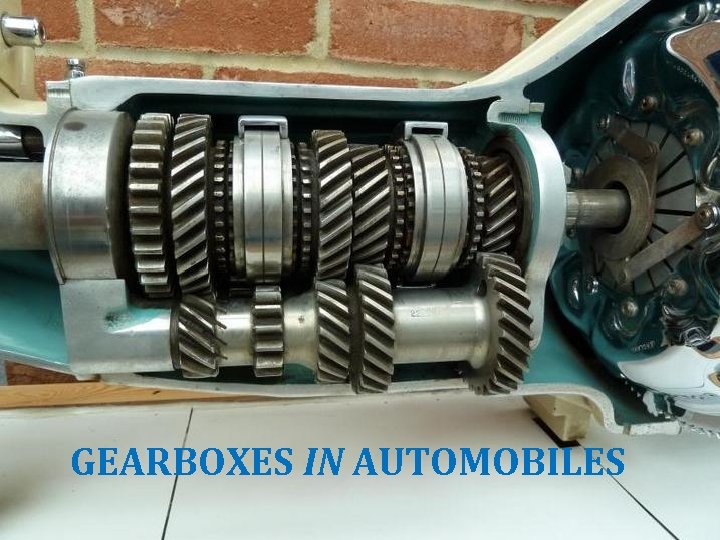
GEARBOXES IN AUTOMOBILES
Introduction • Gearbox is speed and torque changing device between engine and driving wheels. • Gearbox exchanges engine power for greater torque to drive the vehicle under different operating condition. • Gearbox disconnect the clutch shaft from driving wheel during gear in neutral position. • Gearbox changes direction of rotation of driving wheels when gear is meshed in reverse position and provides backward movement of vehicle.
Types of Gearboxes • • • Sliding Mesh Gear box Constant Mesh Gear Box Synchromesh Gear Box Transaxle Gear Box Sequential gear box Automatic Gear Box
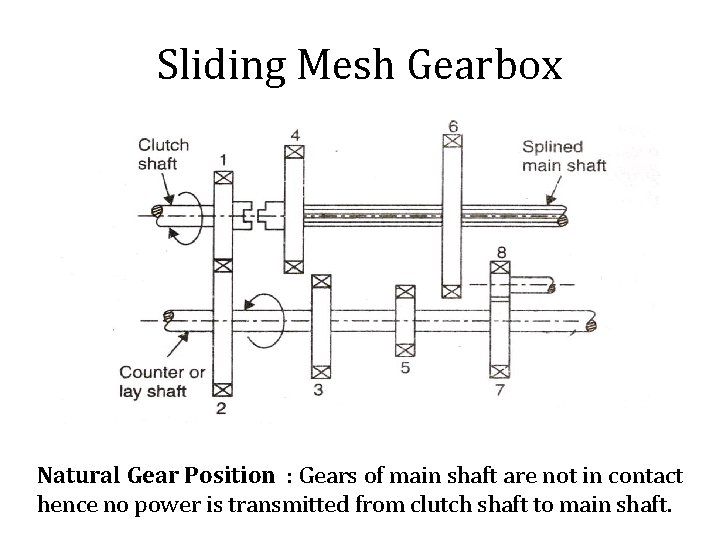
Sliding Mesh Gearbox Natural Gear Position : Gears of main shaft are not in contact hence no power is transmitted from clutch shaft to main shaft.
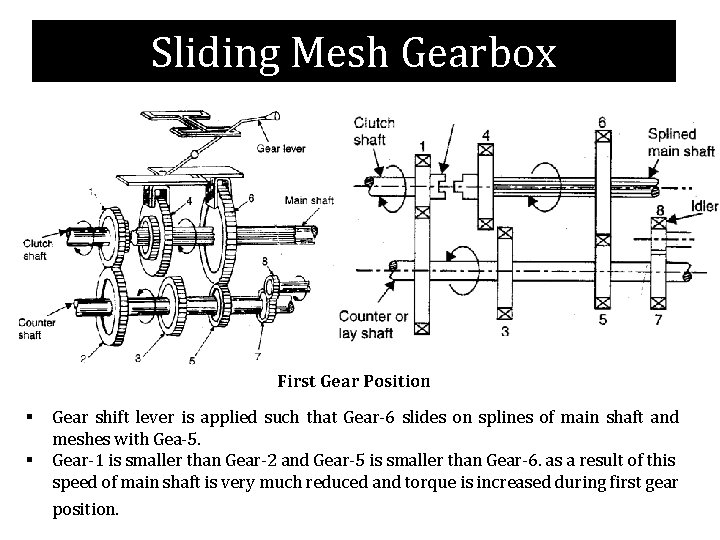
Sliding Mesh Gearbox First Gear Position § § Gear shift lever is applied such that Gear-6 slides on splines of main shaft and meshes with Gea-5. Gear-1 is smaller than Gear-2 and Gear-5 is smaller than Gear-6. as a result of this speed of main shaft is very much reduced and torque is increased during first gear position.
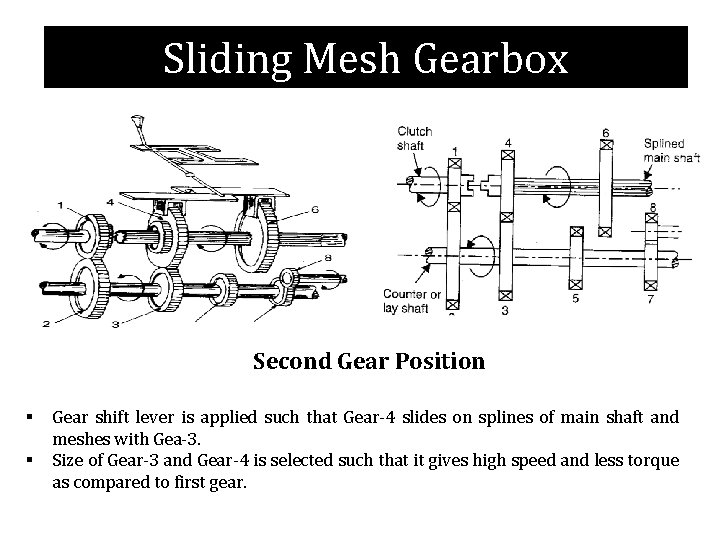
Sliding Mesh Gearbox Second gear position Second Gear Position § § Gear shift lever is applied such that Gear-4 slides on splines of main shaft and meshes with Gea-3. Size of Gear-3 and Gear-4 is selected such that it gives high speed and less torque as compared to first gear.
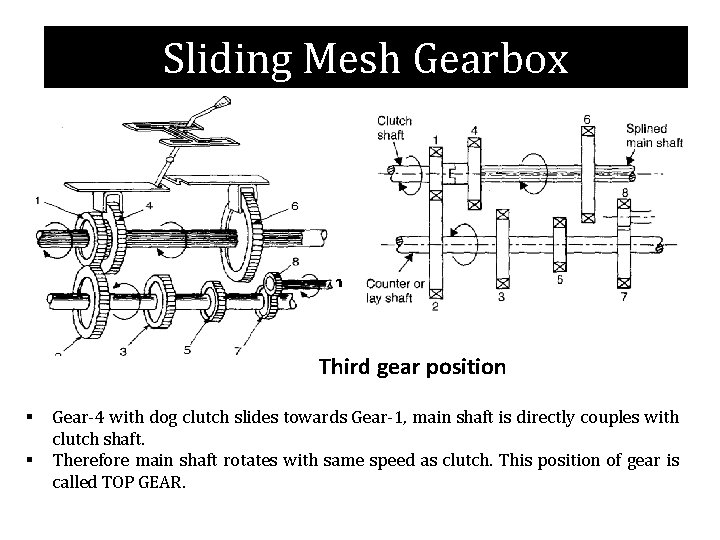
Sliding Mesh Gearbox Second gear position Third gear position § § Gear-4 with dog clutch slides towards Gear-1, main shaft is directly couples with clutch shaft. Therefore main shaft rotates with same speed as clutch. This position of gear is called TOP GEAR.
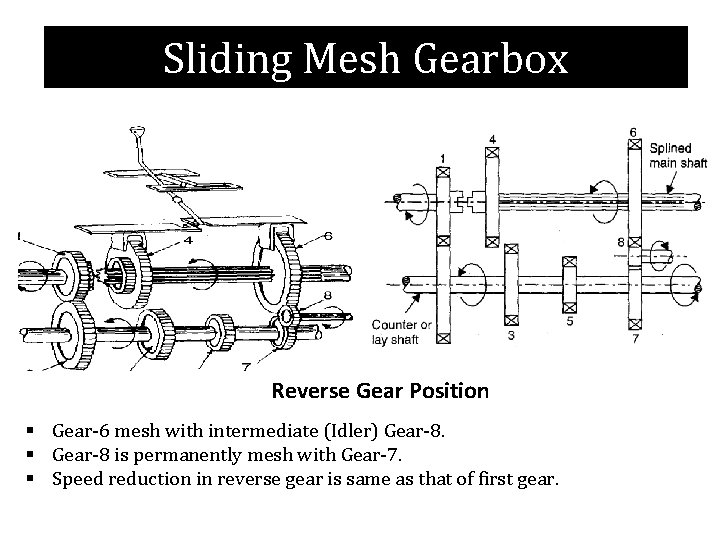
Sliding Mesh Gearbox Second gear position Reverse Gear Position § Gear-6 mesh with intermediate (Idler) Gear-8. § Gear-8 is permanently mesh with Gear-7. § Speed reduction in reverse gear is same as that of first gear.
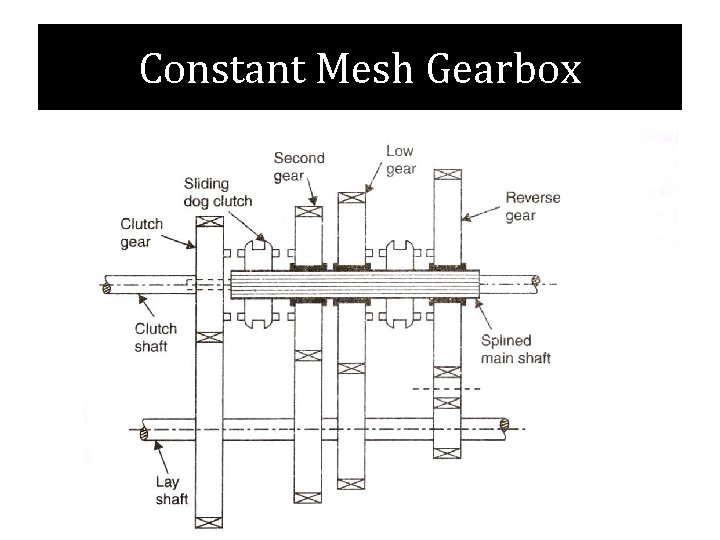
Constant Mesh Gearbox
Constant Mesh Gearbox • • • All the gears are always in mesh Gears on counter shaft are fixed to it Gears on main shaft are free to rotate on bearing. Dog clutches can slide on the main shaft and rotate with it. Dog clutches engage with gears on the main shaft to obtain desired speed Advantages over Sliding mesh Gearbox: • Since the gears are engaged by dog clutches, if any damage occurs while engaging the gears, the dog unit members get damaged and not the gear wheels.

Constant Mesh Gearbox Herringbone Gears Helical and herringbone gear can be used in these gearboxes and therefore, constant mesh gearboxes are quieter.

Synchromesh Gearbox Disadvantage of Constant Mesh Type Gearbox • It requires Double Declutching. • Necessary to wait until gears to be meshed are rotating with same speed before actual meshing takes place, otherwise it leads to failure of gear teeth. • Gear shifting operation is requires considerable skill.
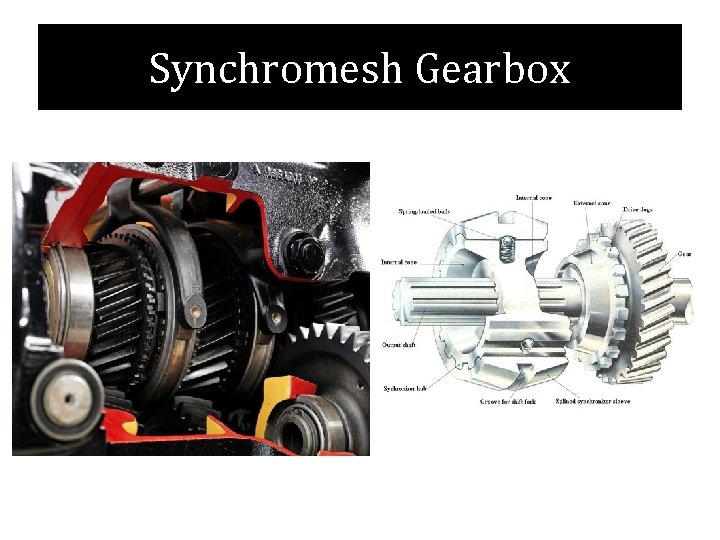
Synchromesh Gearbox
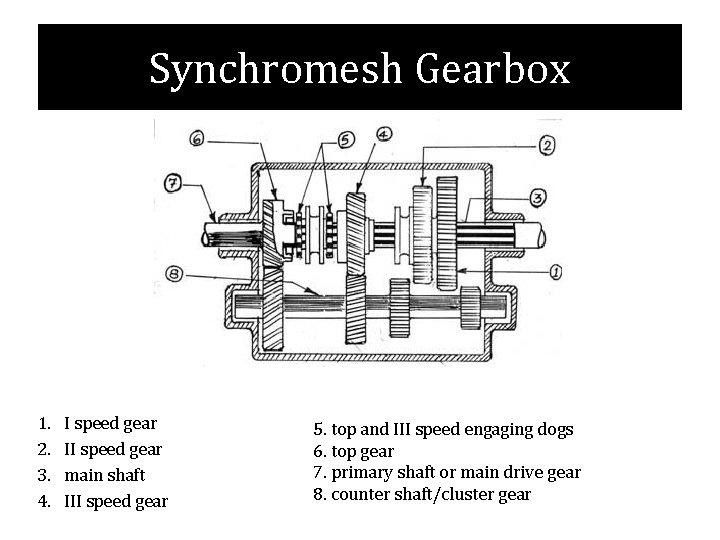
Synchromesh Gearbox 1. 2. 3. 4. I speed gear II speed gear main shaft III speed gear 5. top and III speed engaging dogs 6. top gear 7. primary shaft or main drive gear 8. counter shaft/cluster gear
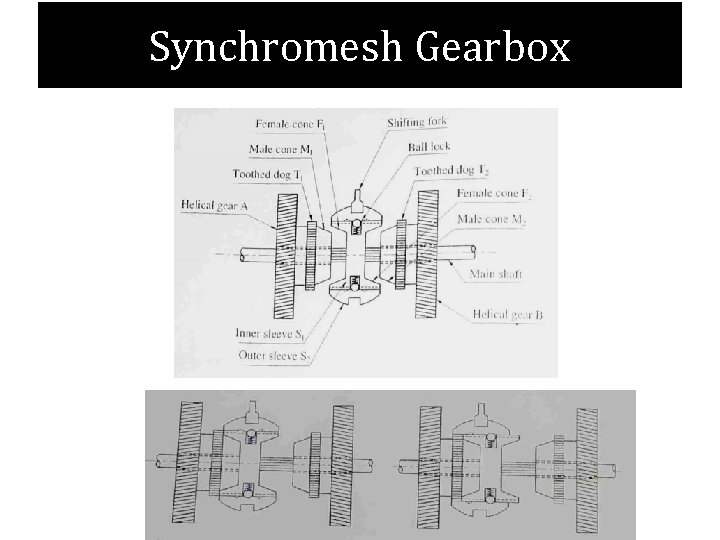
Synchromesh Gearbox
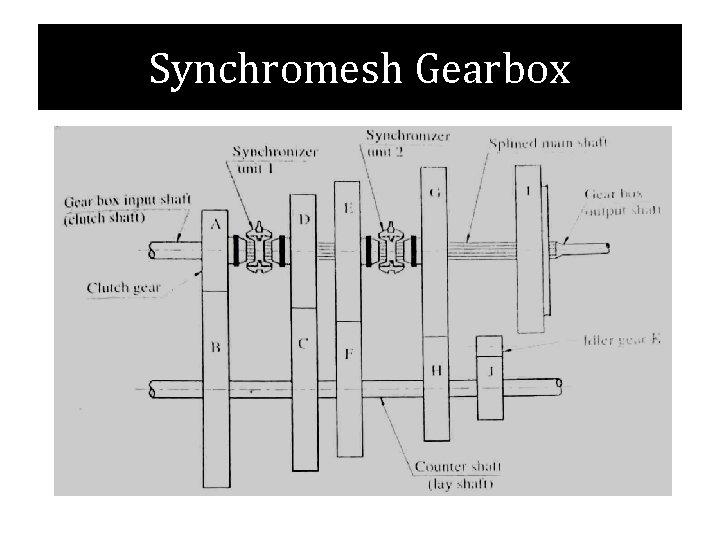
Synchromesh Gearbox
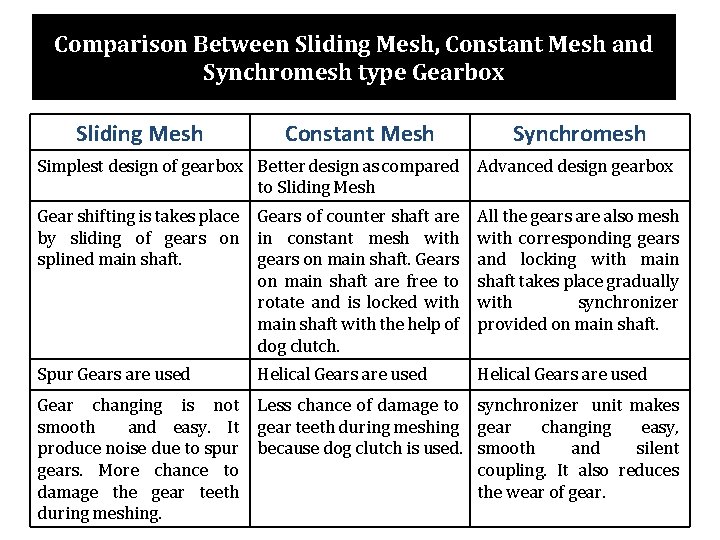
Comparison Between Sliding Mesh, Constant Mesh and Synchromesh type Gearbox Sliding Mesh Constant Mesh Synchromesh Simplest design of gearbox Better design as compared to Sliding Mesh Advanced design gearbox Gear shifting is takes place by sliding of gears on splined main shaft. Gears of counter shaft are in constant mesh with gears on main shaft. Gears on main shaft are free to rotate and is locked with main shaft with the help of dog clutch. All the gears are also mesh with corresponding gears and locking with main shaft takes place gradually with synchronizer provided on main shaft. Spur Gears are used Helical Gears are used Gear changing is not smooth and easy. It produce noise due to spur gears. More chance to damage the gear teeth during meshing. Less chance of damage to synchronizer unit makes gear teeth during meshing gear changing easy, because dog clutch is used. smooth and silent coupling. It also reduces the wear of gear.
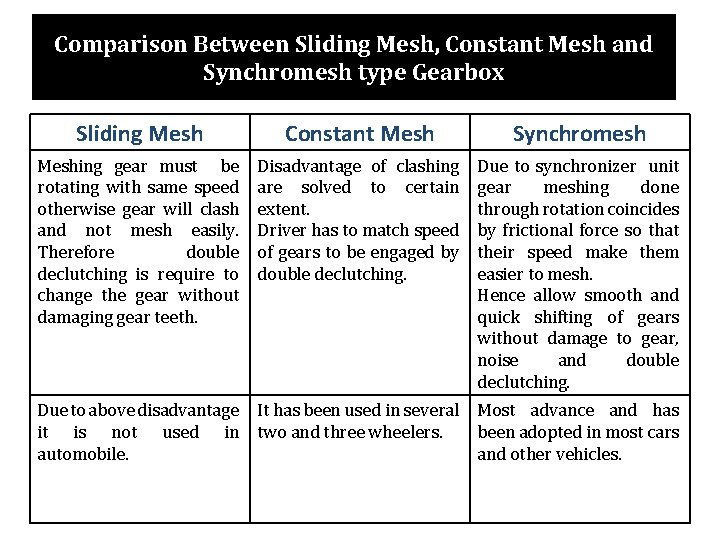
Comparison Between Sliding Mesh, Constant Mesh and Synchromesh type Gearbox Sliding Mesh Constant Mesh Synchromesh Meshing gear must be rotating with same speed otherwise gear will clash and not mesh easily. Therefore double declutching is require to change the gear without damaging gear teeth. Disadvantage of clashing are solved to certain extent. Driver has to match speed of gears to be engaged by double declutching. Due to synchronizer unit gear meshing done through rotation coincides by frictional force so that their speed make them easier to mesh. Hence allow smooth and quick shifting of gears without damage to gear, noise and double declutching. Due to above disadvantage it is not used in automobile. It has been used in several two and three wheelers. Most advance and has been adopted in most cars and other vehicles.
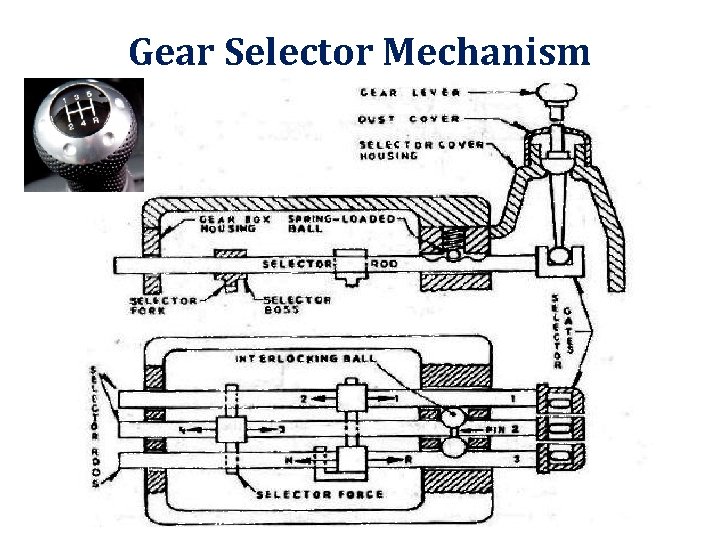
Gear Selector Mechanism
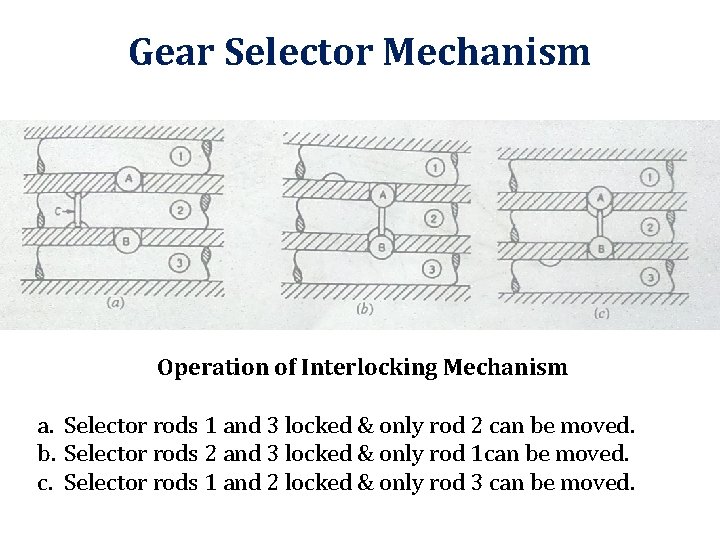
Gear Selector Mechanism Operation of Interlocking Mechanism a. Selector rods 1 and 3 locked & only rod 2 can be moved. b. Selector rods 2 and 3 locked & only rod 1 can be moved. c. Selector rods 1 and 2 locked & only rod 3 can be moved.
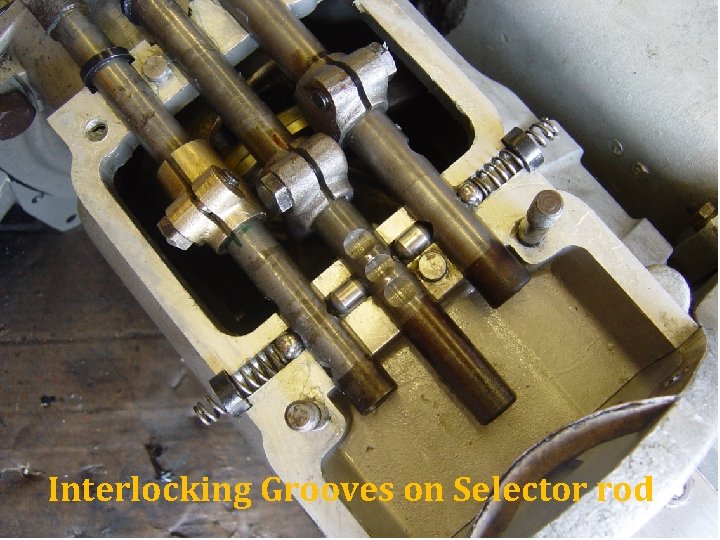
Interlocking Grooves on Selector rod
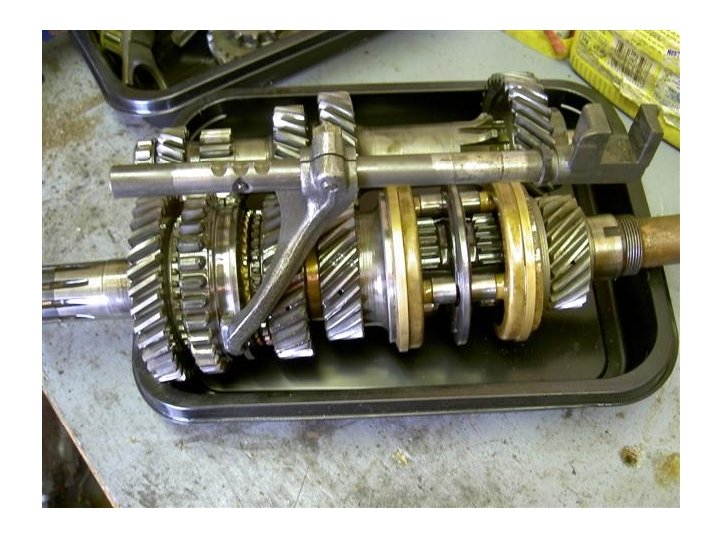
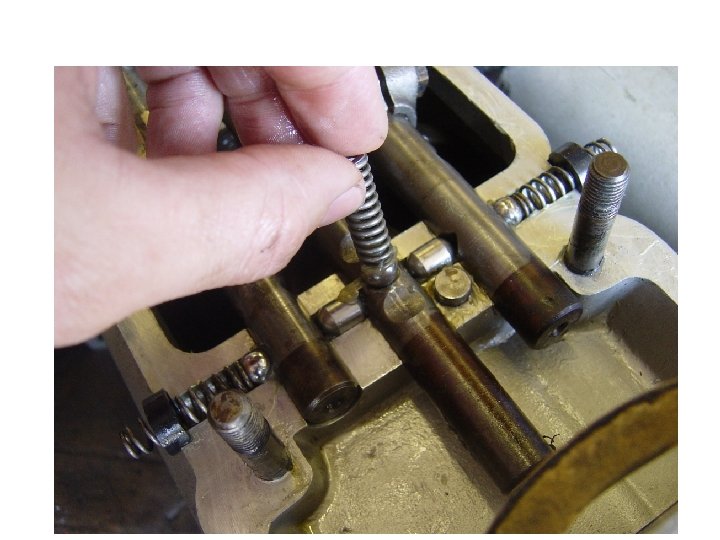
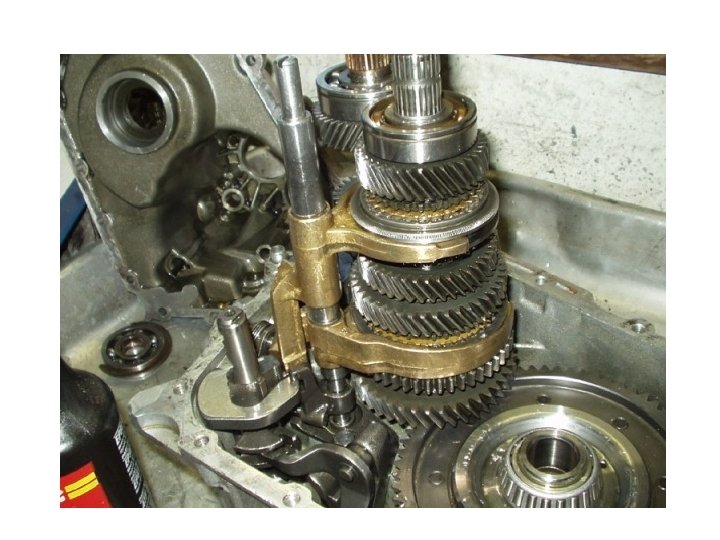
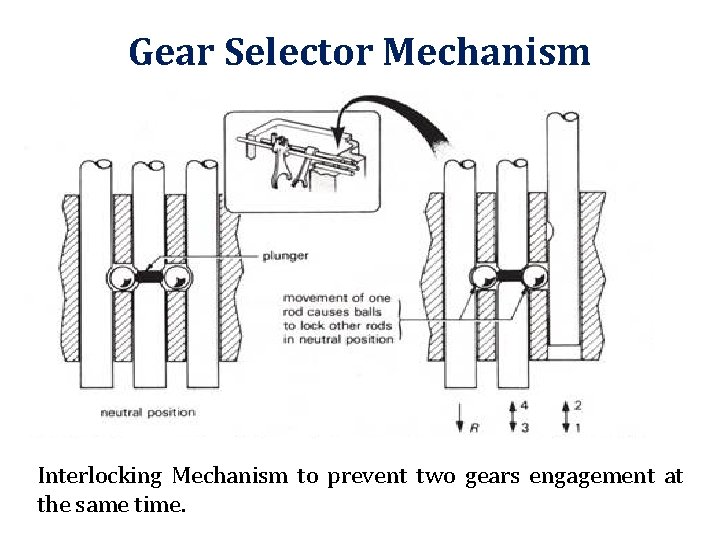
Gear Selector Mechanism Interlocking Mechanism to prevent two gears engagement at the same time.
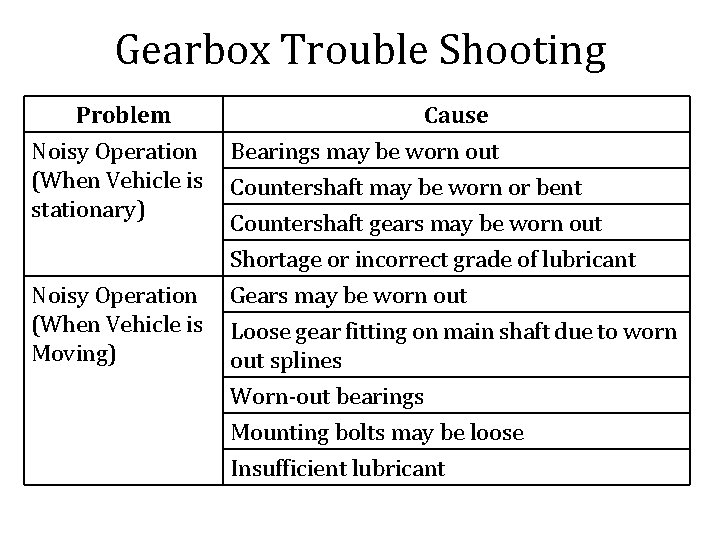
Gearbox Trouble Shooting Problem Noisy Operation (When Vehicle is stationary) Noisy Operation (When Vehicle is Moving) Cause Bearings may be worn out Countershaft may be worn or bent Countershaft gears may be worn out Shortage or incorrect grade of lubricant Gears may be worn out Loose gear fitting on main shaft due to worn out splines Worn-out bearings Mounting bolts may be loose Insufficient lubricant
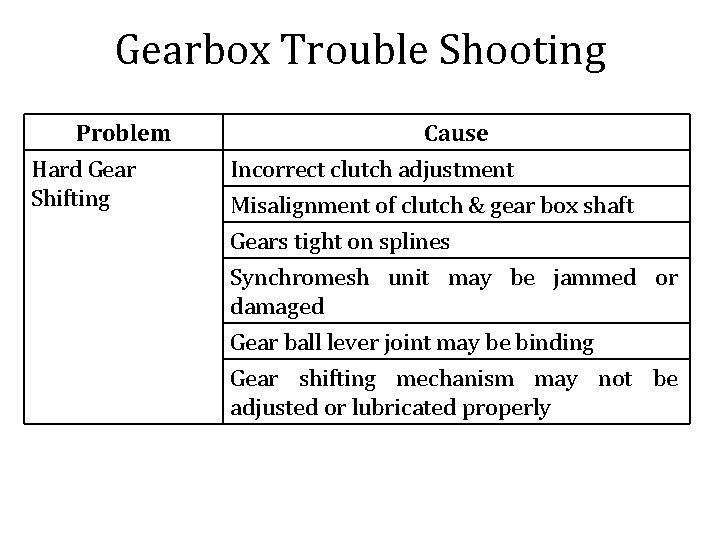
Gearbox Trouble Shooting Problem Hard Gear Shifting Cause Incorrect clutch adjustment Misalignment of clutch & gear box shaft Gears tight on splines Synchromesh unit may be jammed or damaged Gear ball lever joint may be binding Gear shifting mechanism may not be adjusted or lubricated properly
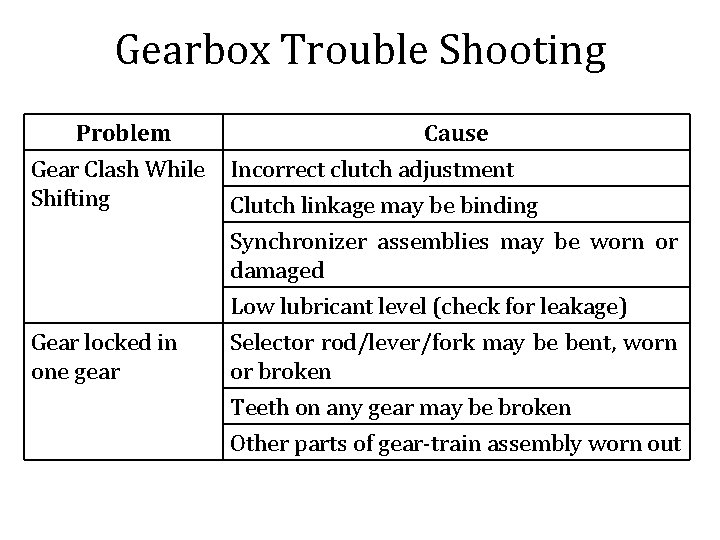
Gearbox Trouble Shooting Problem Gear Clash While Shifting Gear locked in one gear Cause Incorrect clutch adjustment Clutch linkage may be binding Synchronizer assemblies may be worn or damaged Low lubricant level (check for leakage) Selector rod/lever/fork may be bent, worn or broken Teeth on any gear may be broken Other parts of gear-train assembly worn out
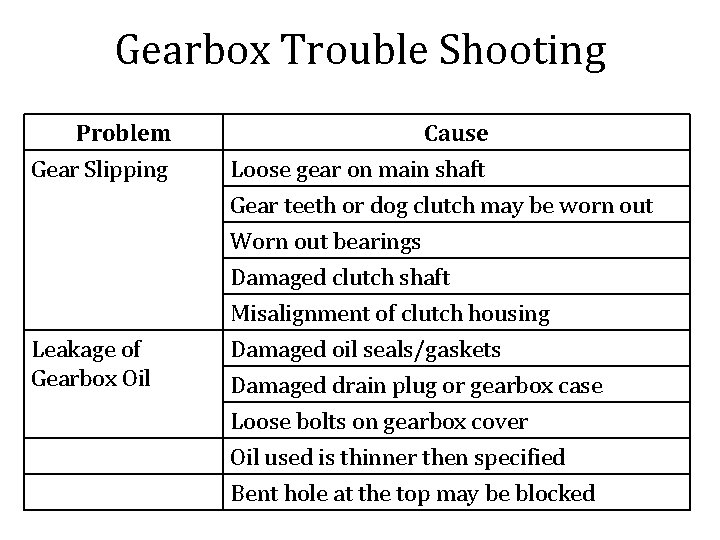
Gearbox Trouble Shooting Problem Gear Slipping Leakage of Gearbox Oil Cause Loose gear on main shaft Gear teeth or dog clutch may be worn out Worn out bearings Damaged clutch shaft Misalignment of clutch housing Damaged oil seals/gaskets Damaged drain plug or gearbox case Loose bolts on gearbox cover Oil used is thinner then specified Bent hole at the top may be blocked
- Slides: 29