
Gear Trains What Sometimes two or more gears
- Slides: 26
Gear Trains
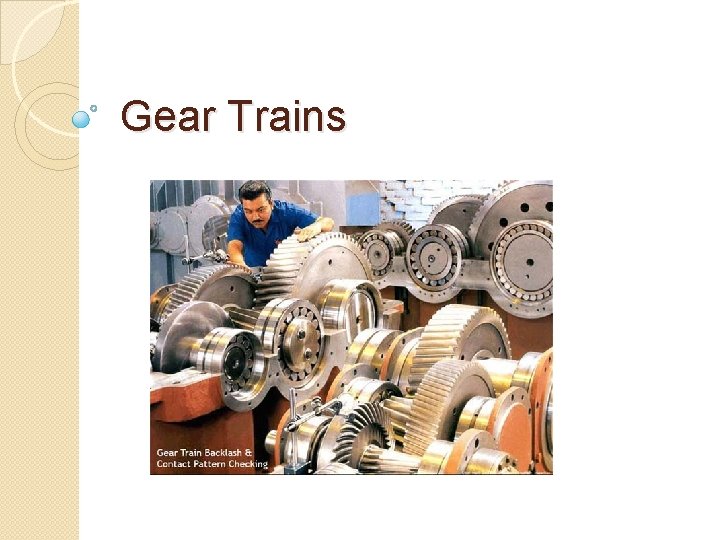
What? �Sometimes, two or more gears are made to mesh with each other to transmit power from one shaft to another. Such a combination is called gear train of toothed wheels. The nature of the train used depends upon the velocity ratio required and the relative position of the axes of shafts. A gear train may consist of spur, bevel or spiral gears. 30/10/2020 NAS 2
Types Simple gear train, 2. Compound gear train, 3. Reverted gear train, and 4. Epicyclic gear train. 1. 30/10/2020 NAS 3
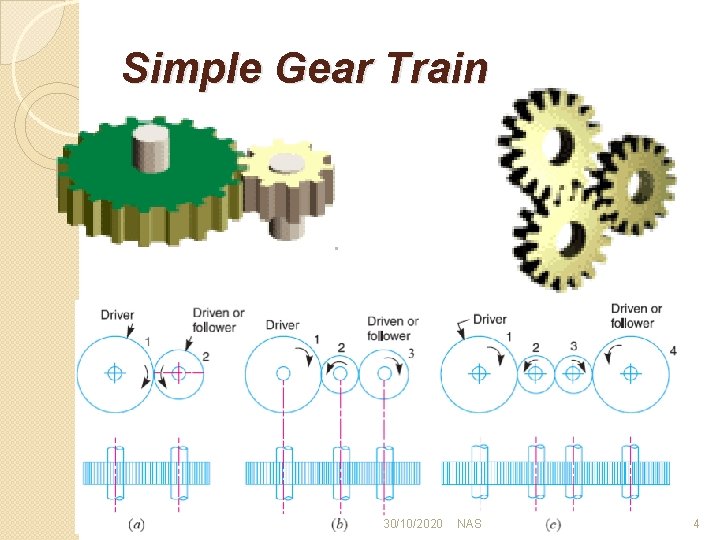
Simple Gear Train 30/10/2020 NAS 4
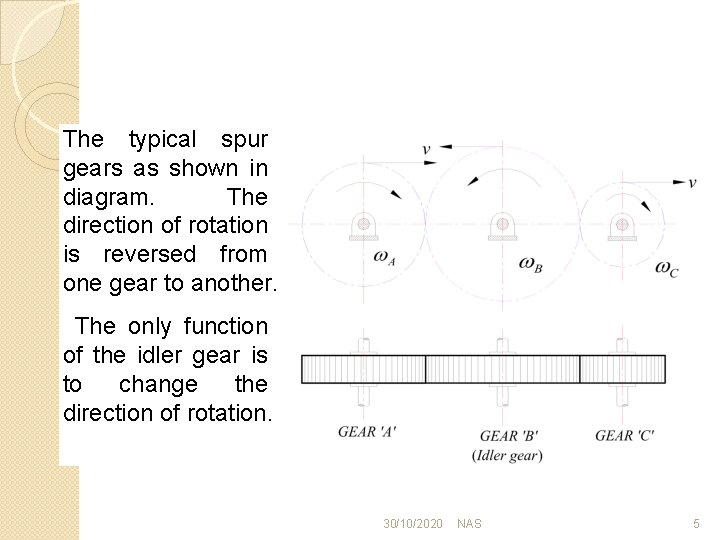
The typical spur gears as shown in diagram. The direction of rotation is reversed from one gear to another. The only function of the idler gear is to change the direction of rotation. 30/10/2020 NAS 5
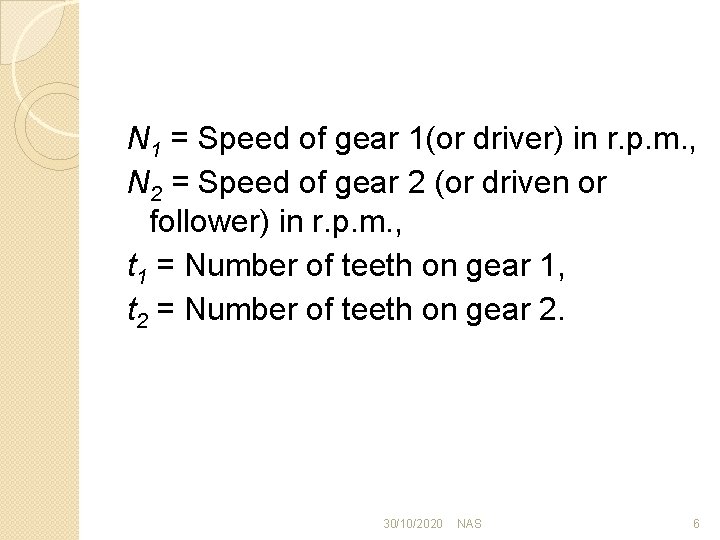
N 1 = Speed of gear 1(or driver) in r. p. m. , N 2 = Speed of gear 2 (or driven or follower) in r. p. m. , t 1 = Number of teeth on gear 1, t 2 = Number of teeth on gear 2. 30/10/2020 NAS 6
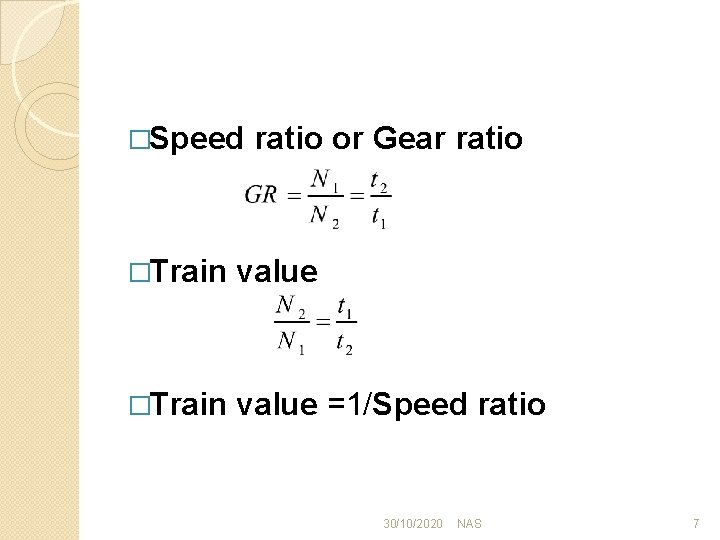
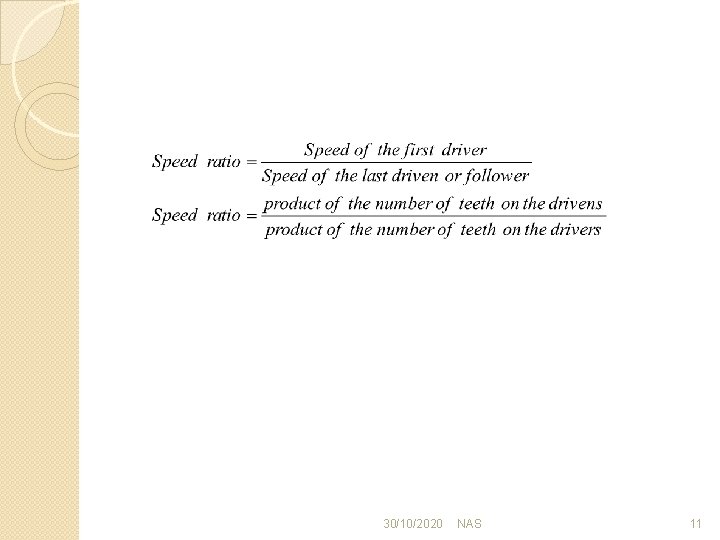
�Speed ratio or Gear ratio �Train value =1/Speed ratio 30/10/2020 NAS 7
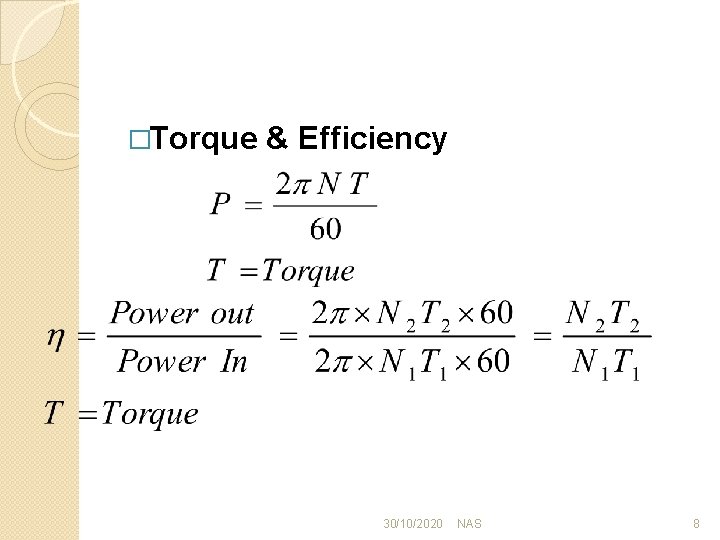
�Torque & Efficiency 30/10/2020 NAS 8
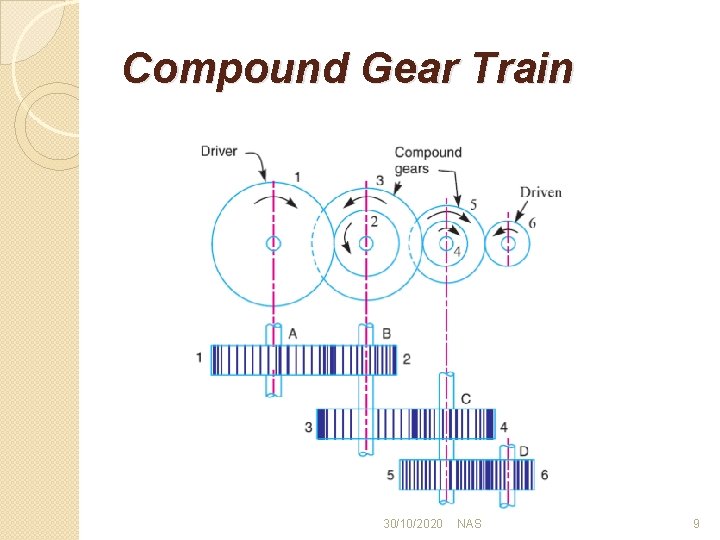
Compound Gear Train 30/10/2020 NAS 9
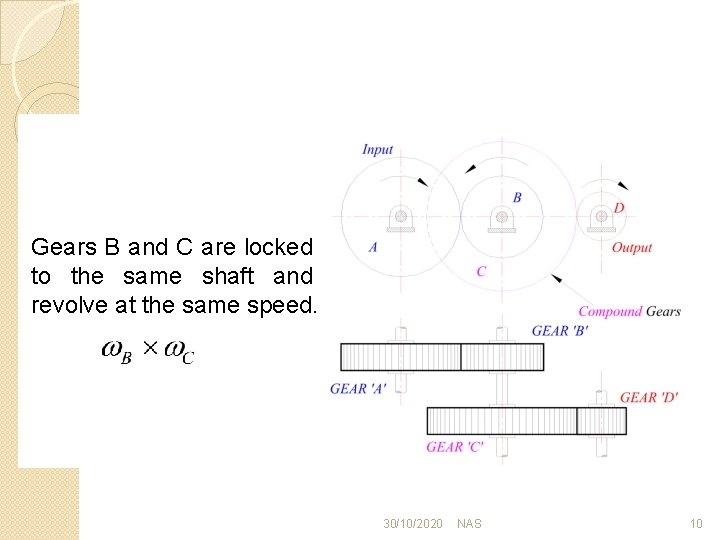
Gears B and C are locked to the same shaft and revolve at the same speed. 30/10/2020 NAS 10
30/10/2020 NAS 11
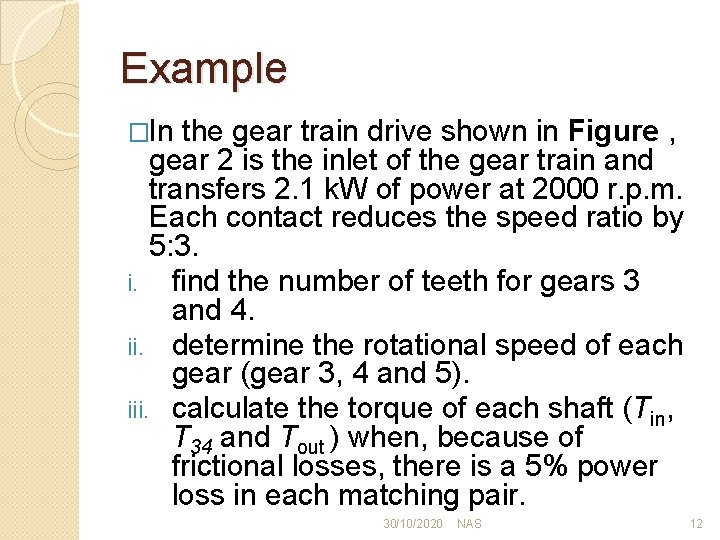
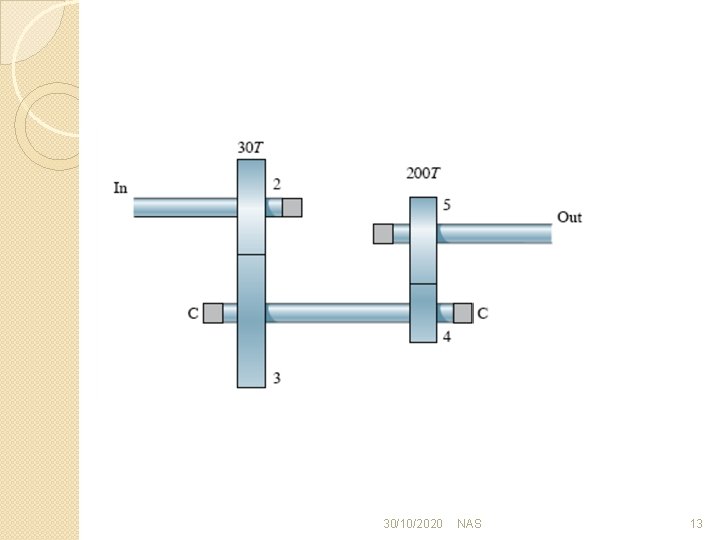
Example �In the gear train drive shown in Figure , gear 2 is the inlet of the gear train and transfers 2. 1 k. W of power at 2000 r. p. m. Each contact reduces the speed ratio by 5: 3. i. find the number of teeth for gears 3 and 4. ii. determine the rotational speed of each gear (gear 3, 4 and 5). iii. calculate the torque of each shaft (Tin, T 34 and Tout ) when, because of frictional losses, there is a 5% power loss in each matching pair. 30/10/2020 NAS 12
30/10/2020 NAS 13
Design of Spur Gears �x = Distance between the centres of two shafts, �N 1 = Speed of the driver, �t 1 = Number of teeth on the driver, �d 1 = Pitch circle diameter of the driver, �N 2 , t 2 and d 2 = Corresponding values for the driven or follower, and �pc = Circular pitch. 30/10/2020 NAS 14
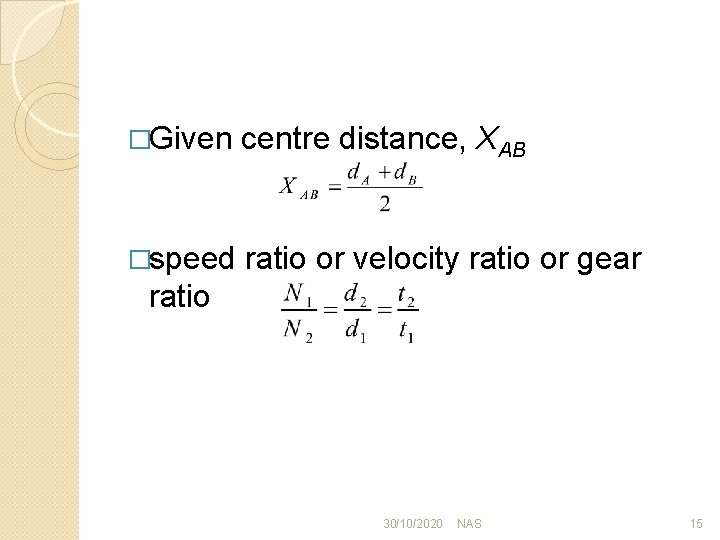
�Given centre distance, XAB �speed ratio or velocity ratio or gear ratio 30/10/2020 NAS 15
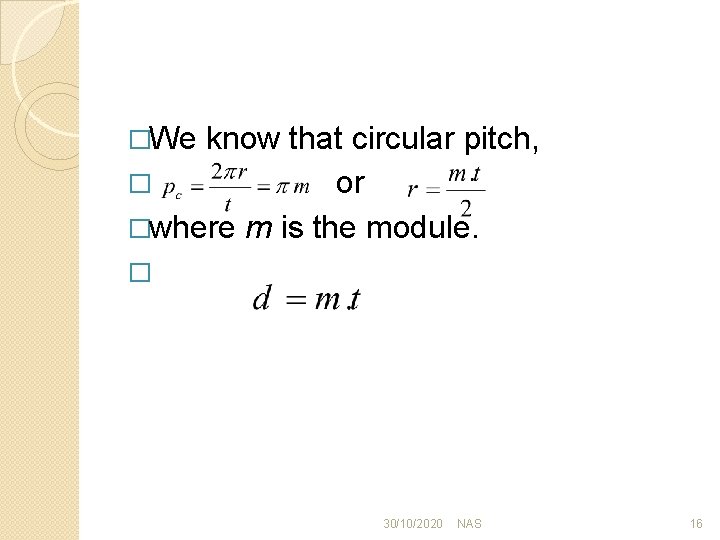
�We know that circular pitch, � or �where m is the module. � 30/10/2020 NAS 16
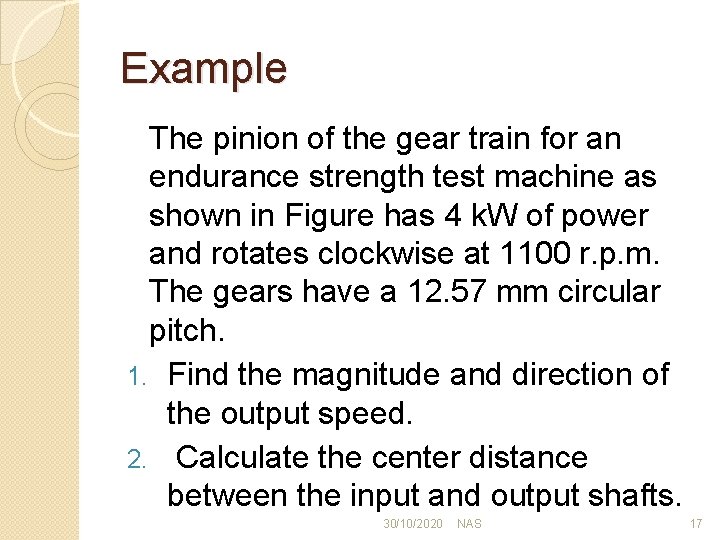
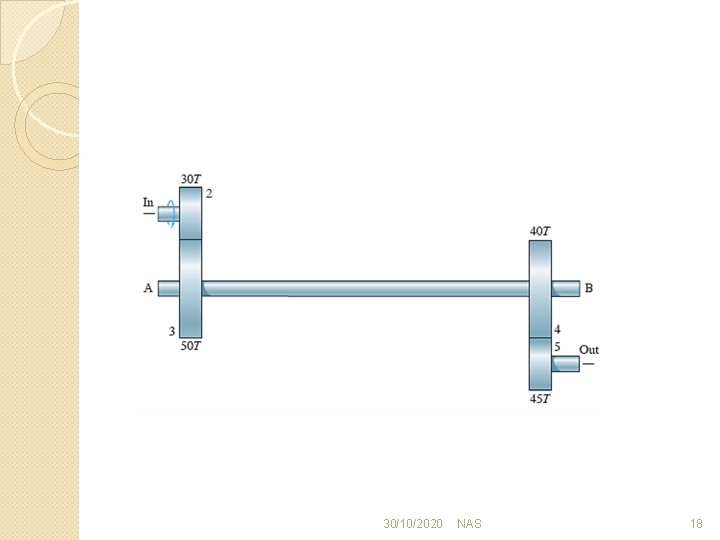
Example The pinion of the gear train for an endurance strength test machine as shown in Figure has 4 k. W of power and rotates clockwise at 1100 r. p. m. The gears have a 12. 57 mm circular pitch. 1. Find the magnitude and direction of the output speed. 2. Calculate the center distance between the input and output shafts. 30/10/2020 NAS 17
30/10/2020 NAS 18
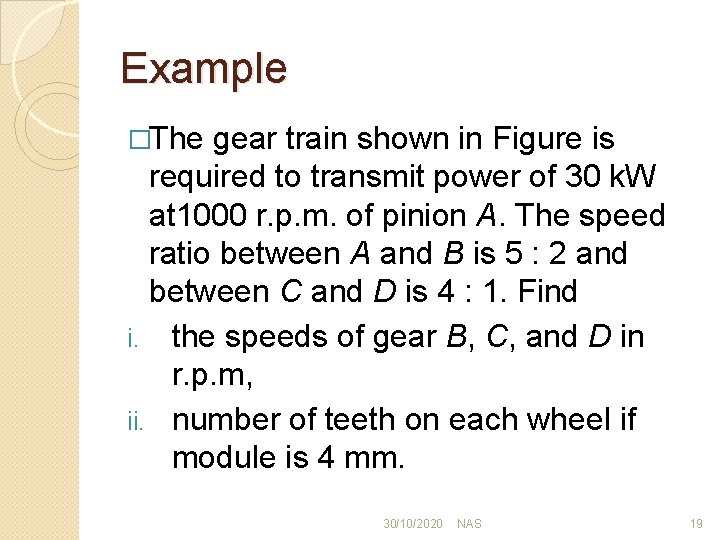
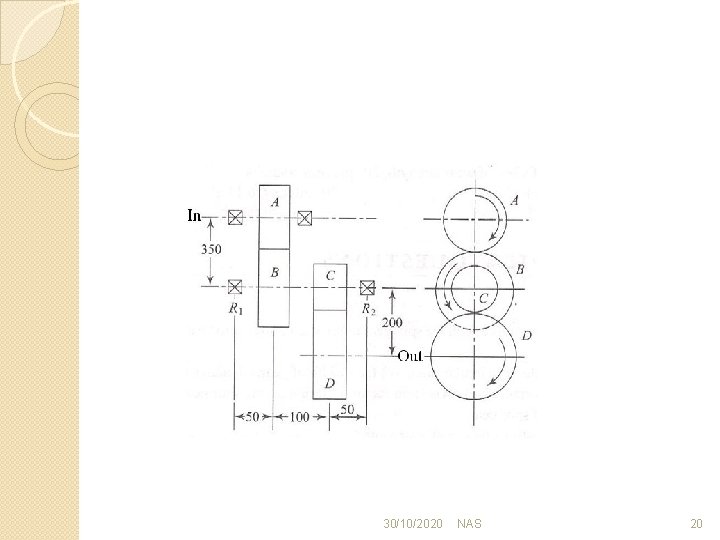
Example �The gear train shown in Figure is required to transmit power of 30 k. W at 1000 r. p. m. of pinion A. The speed ratio between A and B is 5 : 2 and between C and D is 4 : 1. Find i. the speeds of gear B, C, and D in r. p. m, ii. number of teeth on each wheel if module is 4 mm. 30/10/2020 NAS 19
30/10/2020 NAS 20
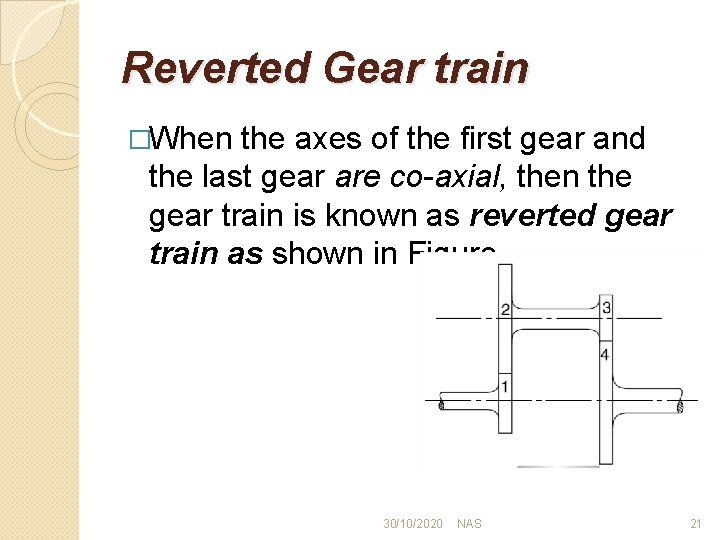
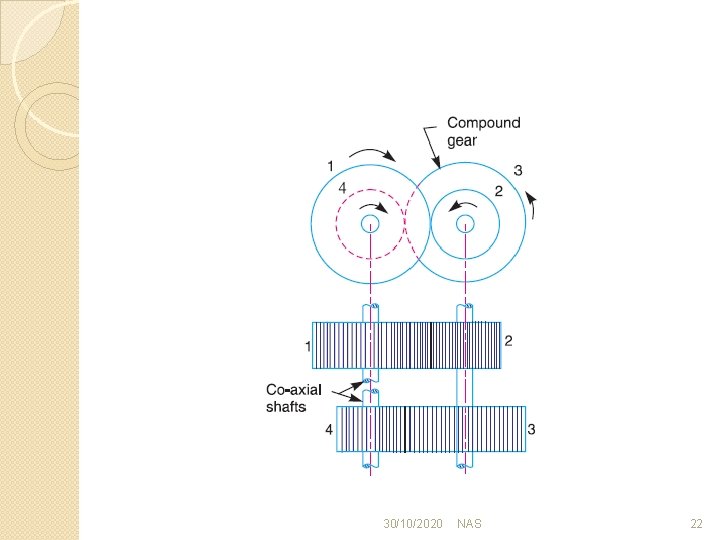
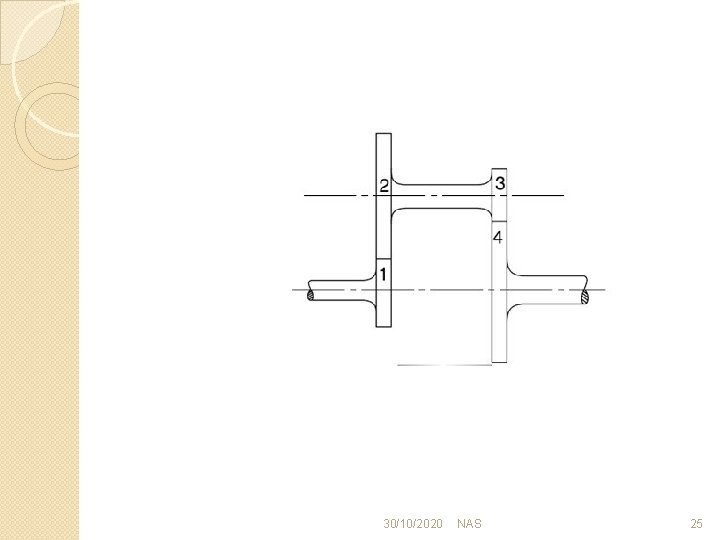
Reverted Gear train �When the axes of the first gear and the last gear are co-axial, then the gear train is known as reverted gear train as shown in Figure. 30/10/2020 NAS 21
30/10/2020 NAS 22
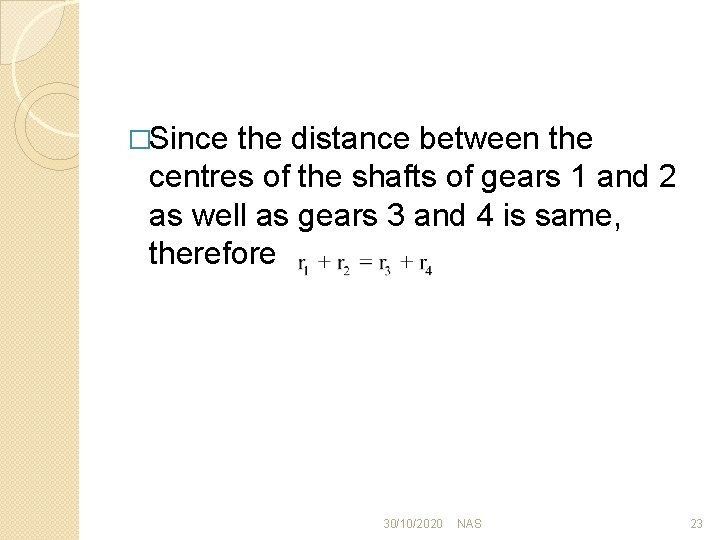
�Since the distance between the centres of the shafts of gears 1 and 2 as well as gears 3 and 4 is same, therefore 30/10/2020 NAS 23
Example �A reverted gear train as shown is used to provide a speed ratio of 10. The module of gears 1 and 2 is 3. 2 mm and of gears 3 and 4 is 2 mm. Determine suitable numbers of teeth for each gear. No gear is to have less than 20 teeth. The centre distance between the shafts is 160 mm. Assume speed ratio of gear 1 and 2 is 2. 5, and of gear 3 and 4 is 4. 30/10/2020 NAS 24
30/10/2020 NAS 25
Example �A compound train consist of four gears. The number of teeth on gears A, B, C and D are 54, 75, 36 and 81 respectively. Gears B and C constitute a compound gear. Determine the torque on the output shaft if the gear A transmit 9 k. W at 200 r. p. m and the train efficiency is 80% 30/10/2020 NAS 26