
GE 0 3112 Sedimentary processes and products Lecture





- Slides: 56
GE 0 -3112 Sedimentary processes and products Lecture 3. Sedimentary structures I – fluid flows Geoff Corner Department of Geology University of Tromsø 2006 Literature: - Leeder 1999. Ch. 7, 8 & 9. Sediment transport and structures.
Contents ► 3. 1 Introduction ► 3. 2 Unidirectional water flows ► 3. 3 Atmospheric flows ► 3. 4 Combined flows and tides ► Further reading
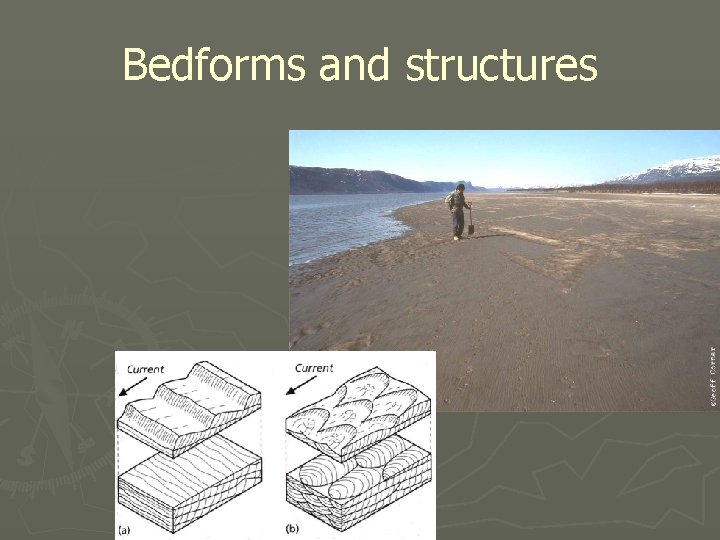
3. 1 Introduction ► Bedforms and structures (definition) ► Plane bed, ripples and dunes ► Bed shape changes with flow strength ► Feedback: bedforms modify flow
Bedforms and structures
Classification of primary sedimentary structures
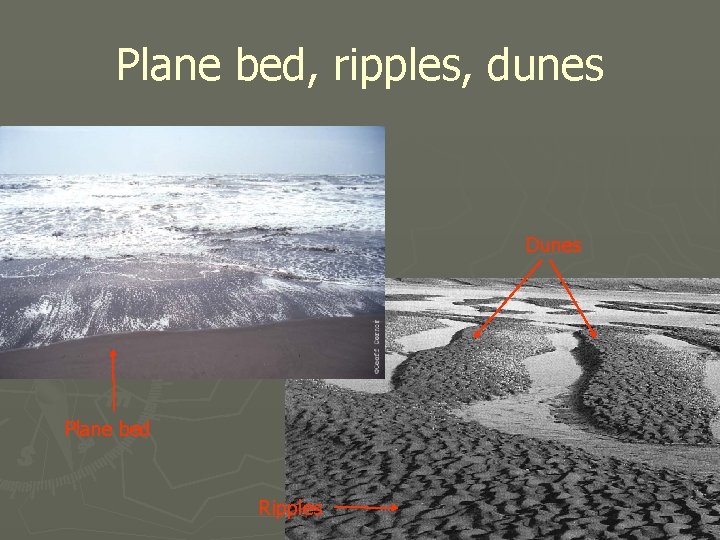
Plane bed, ripples, dunes Dunes Plane bed Ripples
3. 2 Unidirectional water flows ► Current ripples ► Lower-stage plane bed ► Dunes ► Upper stage plane beds ► Antidunes ► Bedform relationships
Current ripples ► Are stable bedforms at low flow strength in fine sand. ► Do not form in sand coarser than 0. 7 mm (c. s. ). ► Asymmetric profile parallel to flow: gentle stoss, steep (c. 35 o) lee. ► Height (h): <4 cm; wavelength (λ): <0, 5 m. ► Ripple index (λ/h): 10 -40. ► Ripple size varies clearly with grain size (λ ≈ 1000 d) but not with flow strength or water depth.
Ripple shapes ► Ripple crests are straight, sinuous or linguoid (tongue-shaped). ► Straight- and sinuous ripples are metastable and change to linuoid with time.
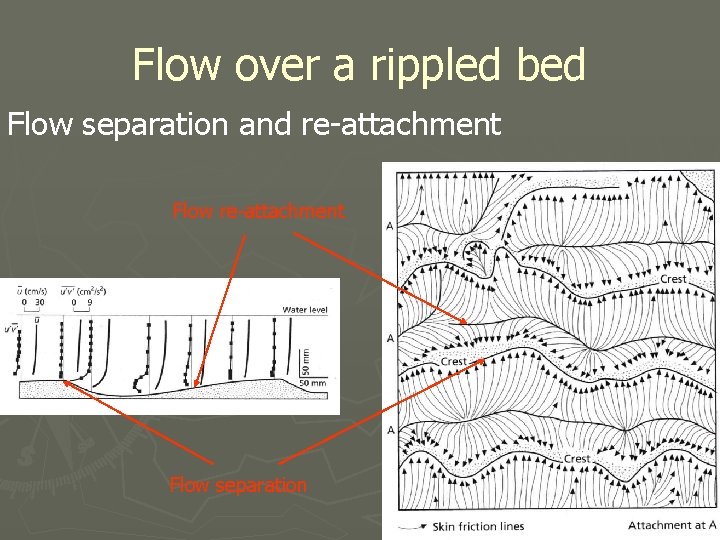
Flow over a rippled bed Flow separation and re-attachment Flow separation
Ripple cross-bedding Climbing-ripple cross-lamination Planar cross-sets Trough cross-sets
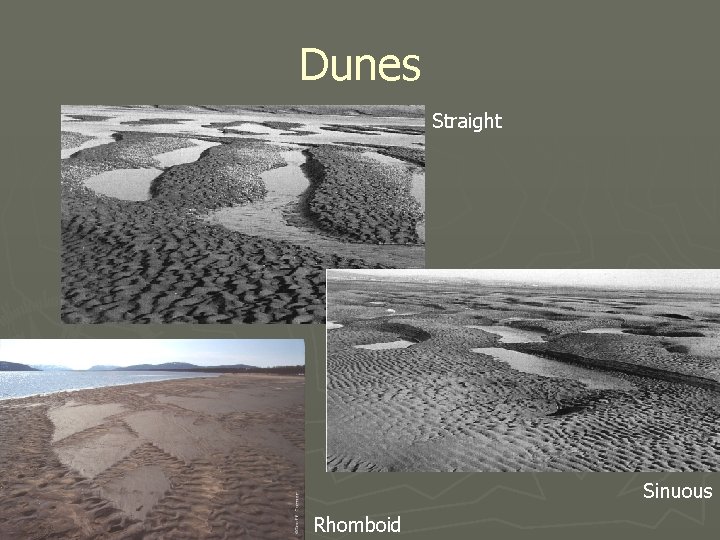
Dunes ► Similar to ripples in general shape but distinctly different because: § ripple and dune form indices do not overlap. § ripples occur on the backs of dunes in apparent equilibrium. ► Height: 5 cm - 10 m; wavelength: 0, 6 – 100’s m. ► Modification during stage variation may produce ’reactivation’ surfaces.
Dunes Straight Sinuous Rhomboid
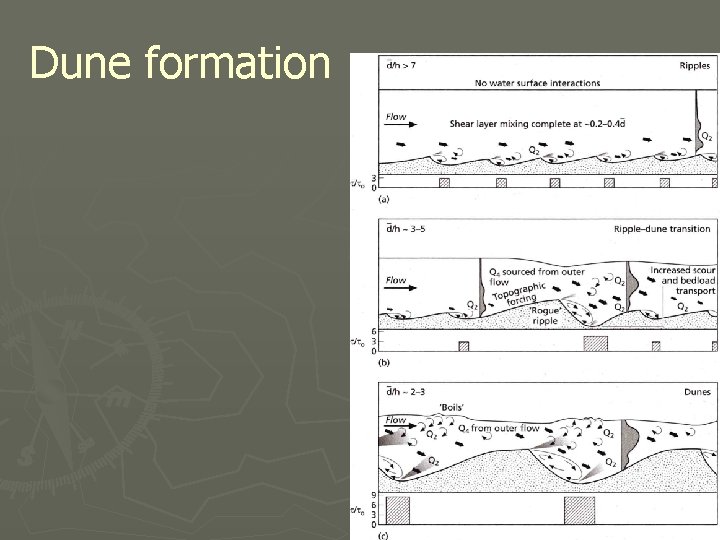
Dune formation
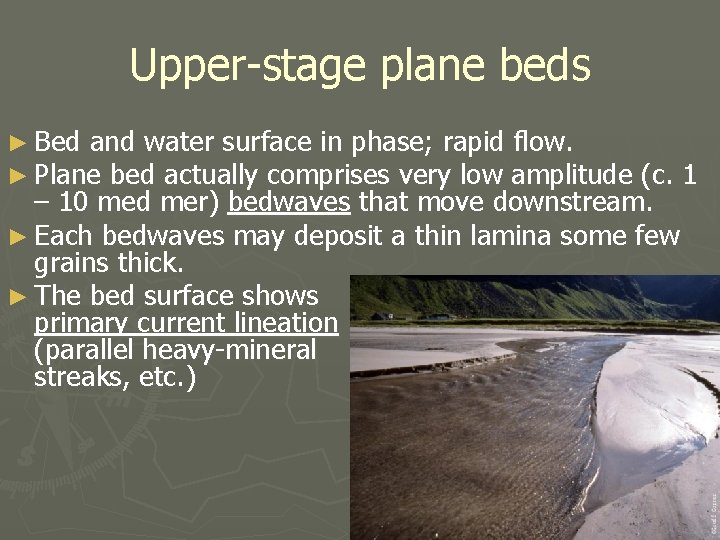
Upper-stage plane beds ► Bed and water surface in phase; rapid flow. ► Plane bed actually comprises very low amplitude (c. 1 – 10 med mer) bedwaves that move downstream. ► Each bedwaves may deposit a thin lamina some few grains thick. ► The bed surface shows primary current lineation (parallel heavy-mineral streaks, etc. )
Upper-stage plane lamination Parting lineation
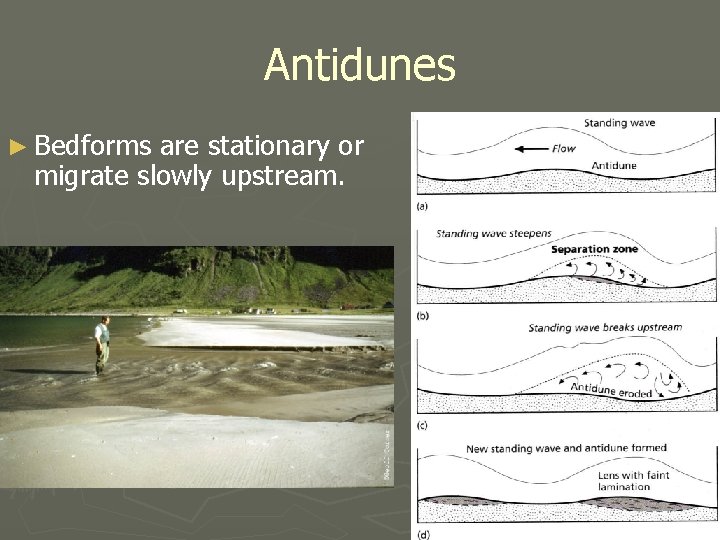
Antidunes ► Bedforms are stationary or migrate slowly upstream.
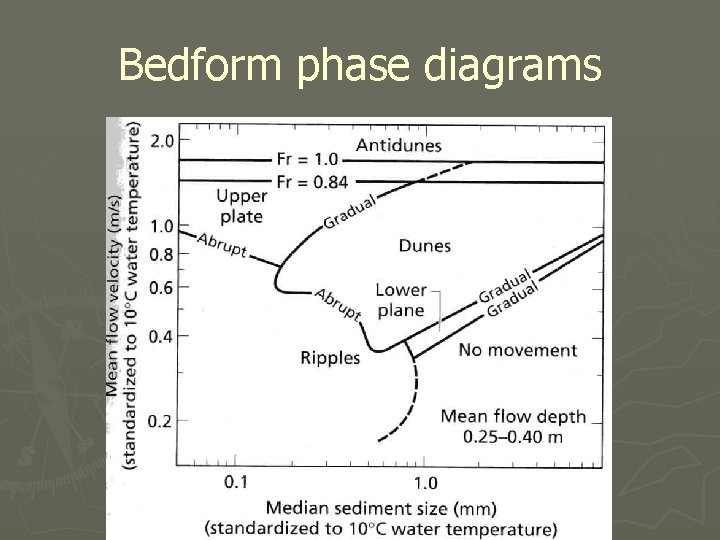
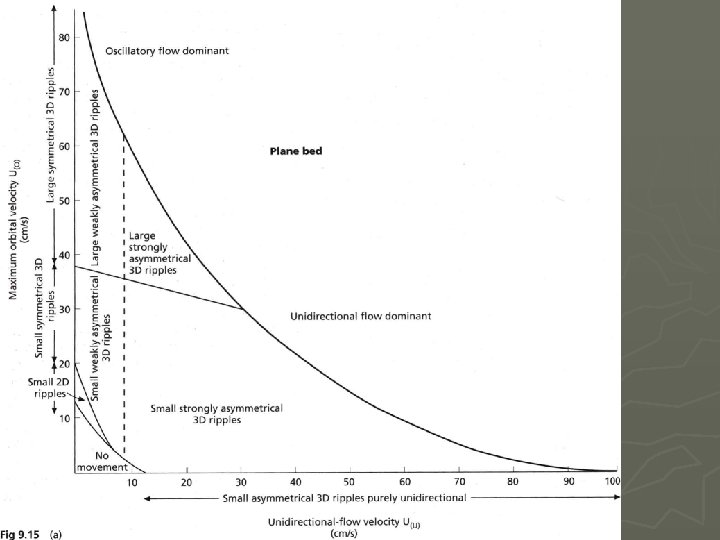
Bedform phase diagrams
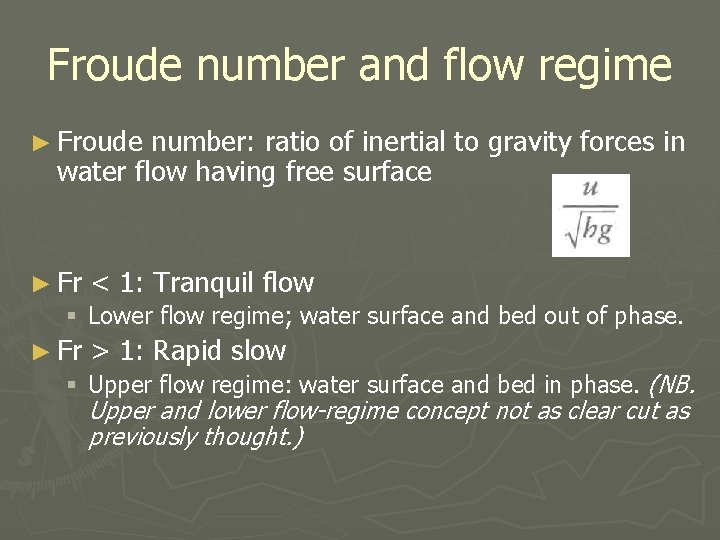
Froude number and flow regime ► Froude number: ratio of inertial to gravity forces in water flow having free surface ► Fr < 1: Tranquil flow § Lower flow regime; water surface and bed out of phase. ► Fr > 1: Rapid slow § Upper flow regime: water surface and bed in phase. (NB. Upper and lower flow-regime concept not as clear cut as previously thought. )
3. 3 Atmospheric flows ► Differences ► Ripples ► Dunes between air and water flows
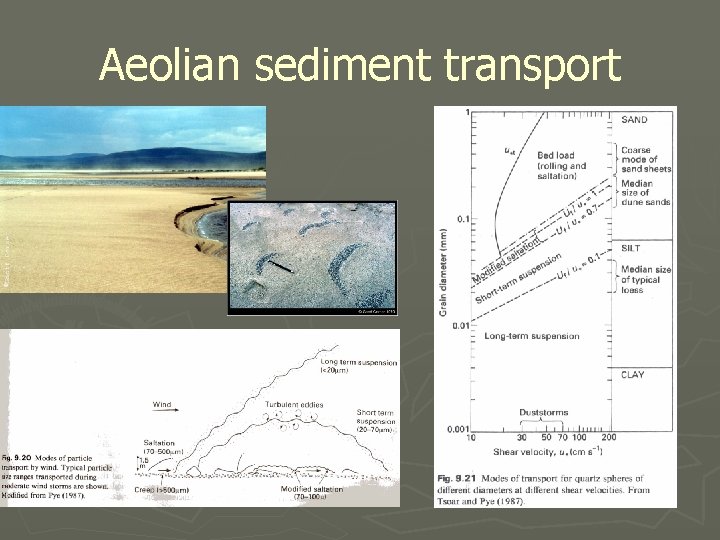
Comparison of air and water ► Low shear stresses in air limits maximum bedload grain size to v. coarse sand/v. f. pebble. ► Collision effects and saltation more important in air. ► Energetic kollisions promote abrasion of grains and substrate. (NB. Snow particle abrasion is effective in periglacial regions). ► Suspension transport of sand is more difficult in air than in water because of lower buoyancy. ►
Aeolian sediment transport
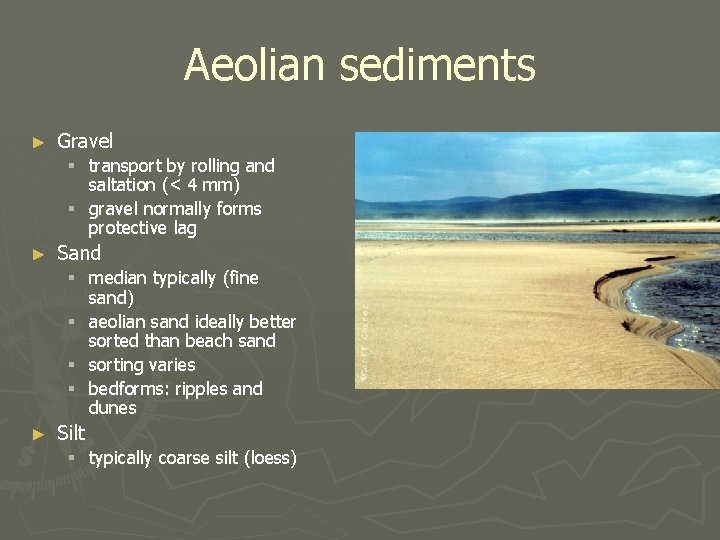
Aeolian sediments ► Gravel § transport by rolling and saltation (< 4 mm) § gravel normally forms protective lag ► Sand § median typically (fine sand) § aeolian sand ideally better sorted than beach sand § sorting varies § bedforms: ripples and dunes ► Silt § typically coarse silt (loess)
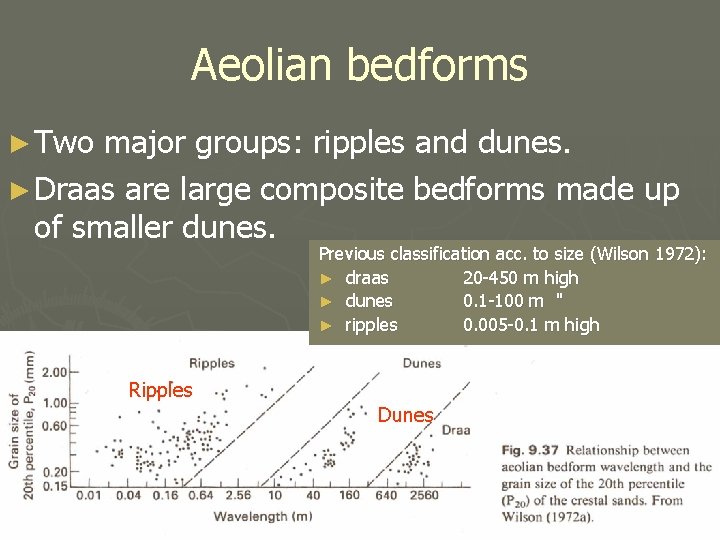
Aeolian bedforms ► Two major groups: ripples and dunes. ► Draas are large composite bedforms made up of smaller dunes. Previous classification acc. to size (Wilson 1972): ► draas 20 -450 m high ► dunes 0. 1 -100 m " ► ripples 0. 005 -0. 1 m high Ripples Dunes
Ripple types ► Ballistic ripples ► Adhesion ripples
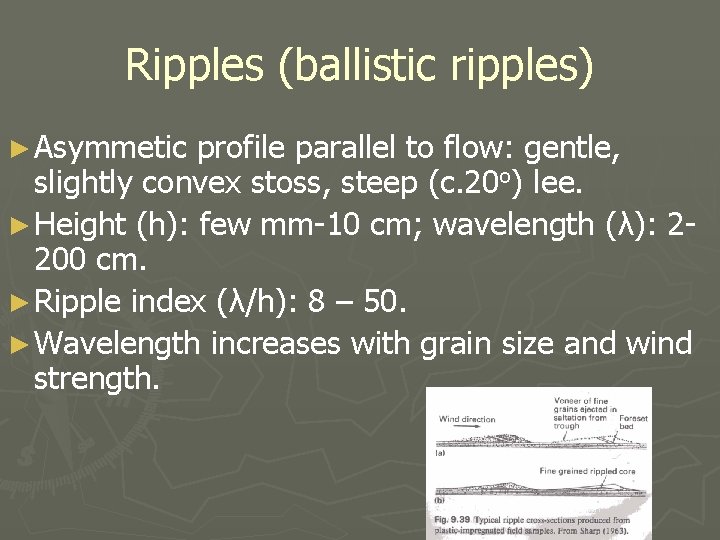
Ripples (ballistic ripples) ► Asymmetic profile parallel to flow: gentle, slightly convex stoss, steep (c. 20 o) lee. ► Height (h): few mm-10 cm; wavelength (λ): 2200 cm. ► Ripple index (λ/h): 8 – 50. ► Wavelength increases with grain size and wind strength.
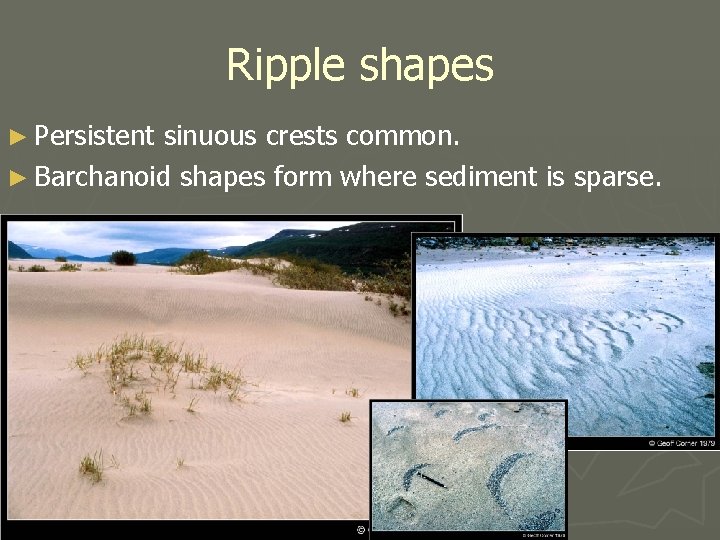
Ripple shapes ► Persistent sinuous crests common. ► Barchanoid shapes form where sediment is sparse.
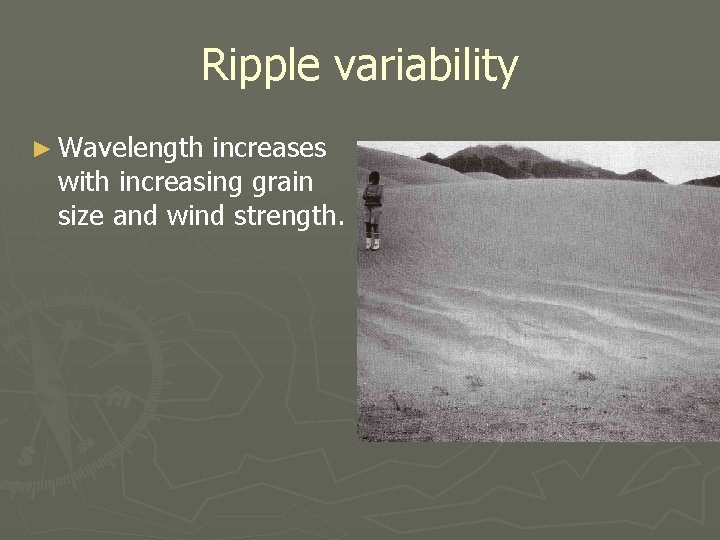
Ripple variability ► Wavelength increases with increasing grain size and wind strength.
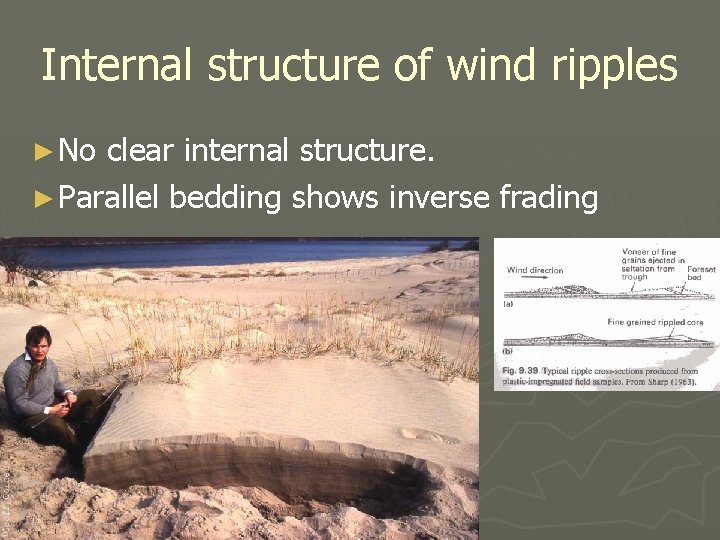
Formation of wind ripples ► Ballistic collisions due to saltation cause up to 25% transport as ’creepload’. ► Lee slopes migrate more from effects of saltation bombardment than avalanching (hence lower angle than in water ripples) ► Crests contain coarser grains more resistent to bombardment (gives inverse grading in structures)
Internal structure of wind ripples ► No clear internal structure. ► Parallel bedding shows inverse frading
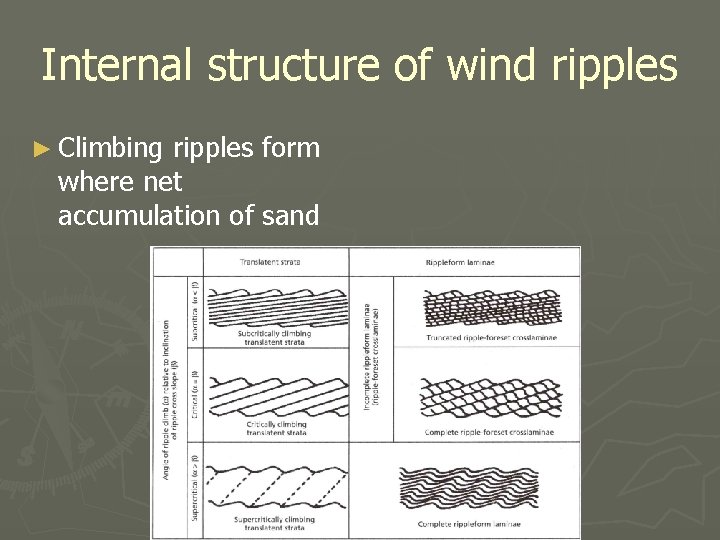
Internal structure of wind ripples ► Climbing ripples form where net accumulation of sand
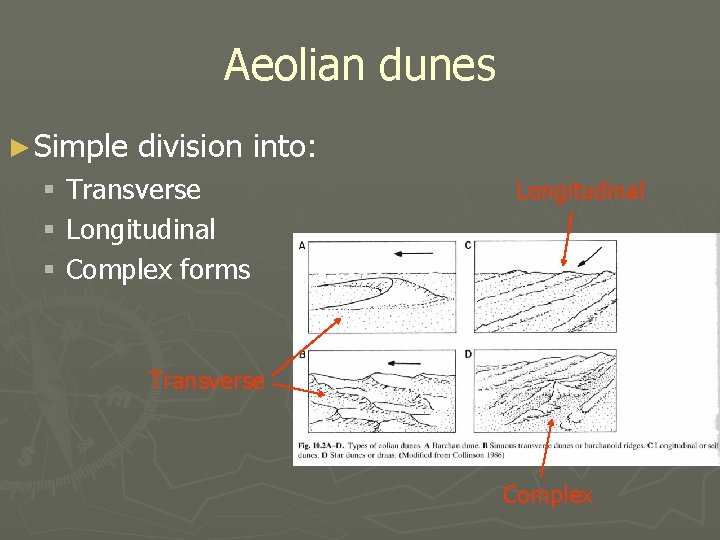
Aeolian dunes ► Simple division into: § Transverse § Longitudinal § Complex forms Longitudinal Transverse Complex
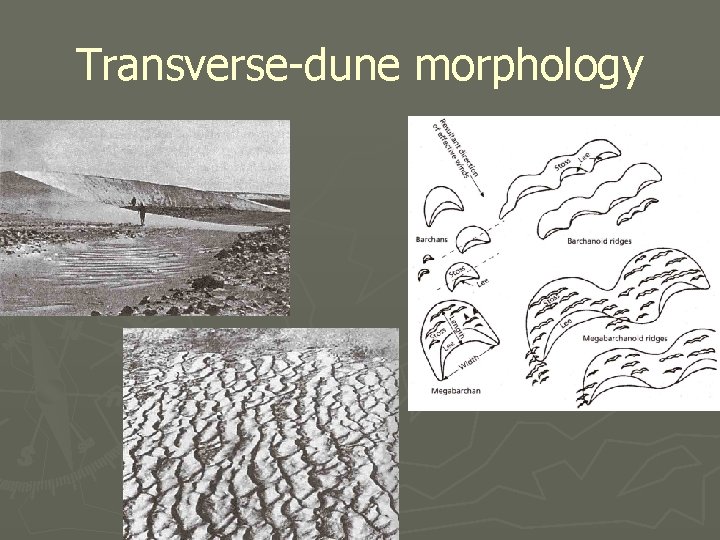
Flow-transverse dunes ► Occur where predominant seasonal winds are unidirectional. ► Sand supply influences dune shape: § barchans: low sand supply. § sinuous-crested (aklé) dunes: plentiful supply.
Transverse-dune morphology
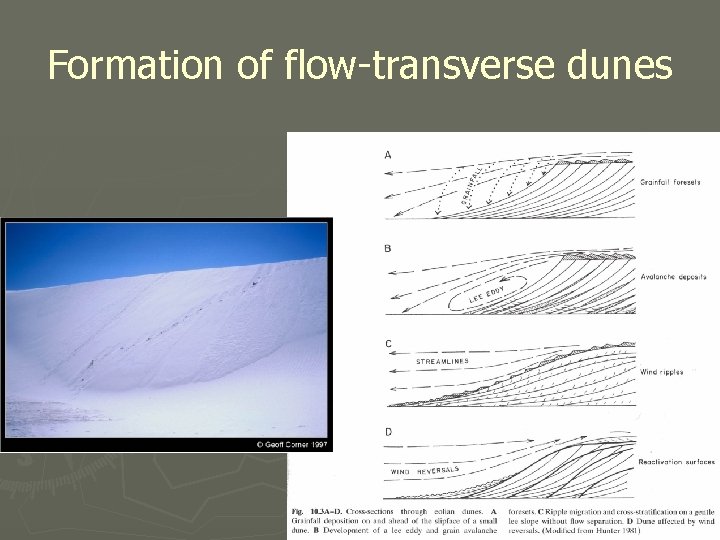
Formation of flow-transverse dunes
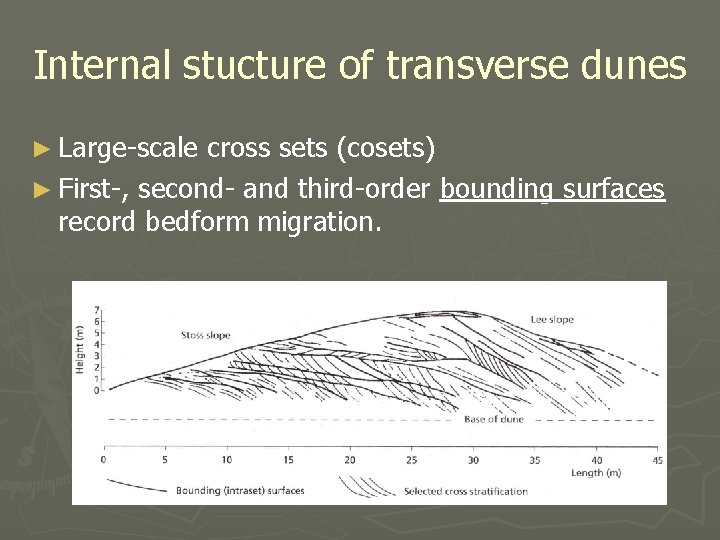
Internal stucture of transverse dunes ► Large-scale cross sets (cosets) ► First-, second- and third-order bounding surfaces record bedform migration.
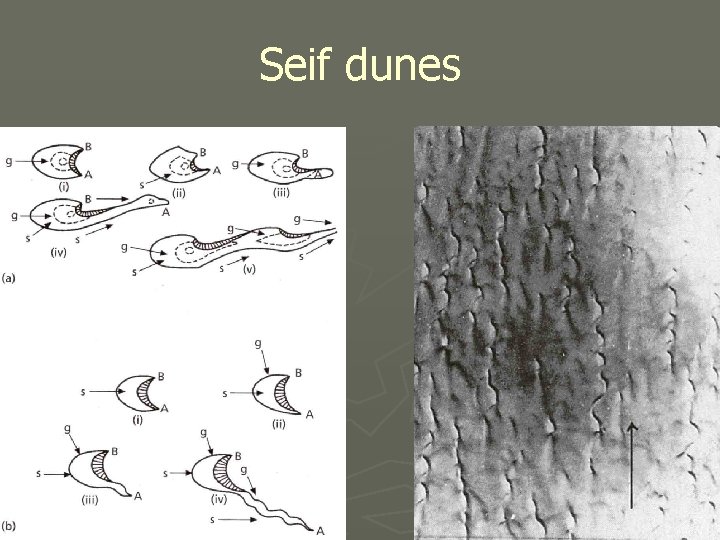
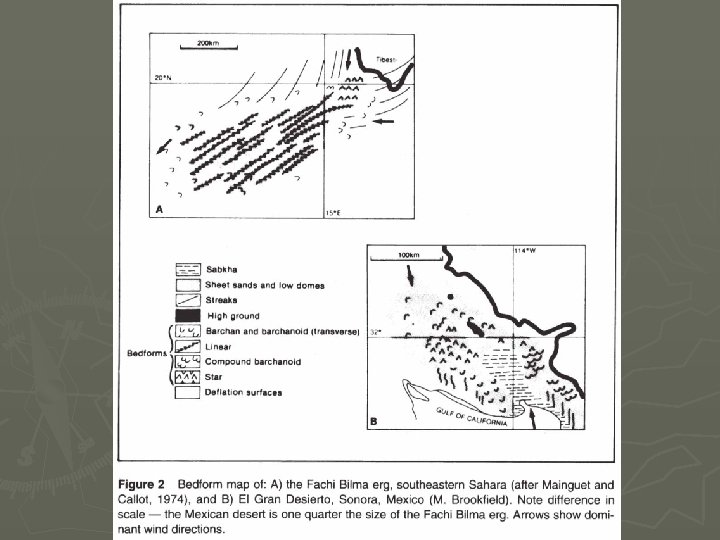
Flow-parallel dunes ► Longitudinal (linear) dunes (’seif’ dunes). ► Height up to 50 m, separation several 100 m’s. ► Two wind directions may be important (transition from barchanoid to linear).
Seif dunes
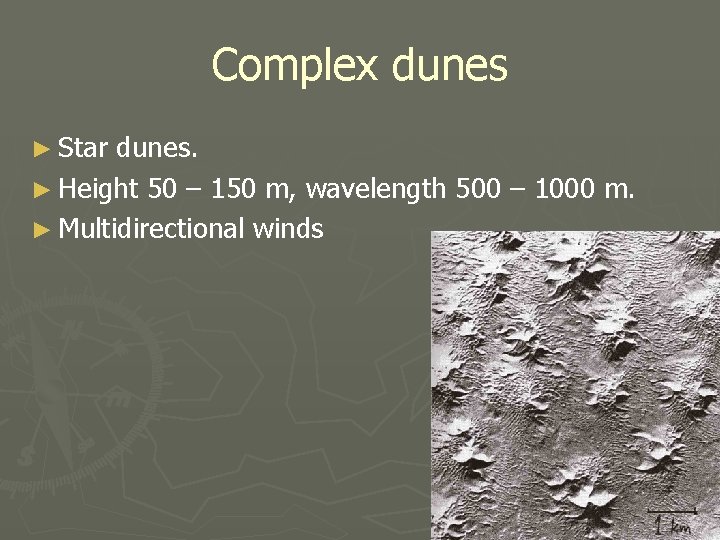
Complex dunes ► Star dunes. ► Height 50 – 150 m, wavelength 500 – 1000 m. ► Multidirectional winds
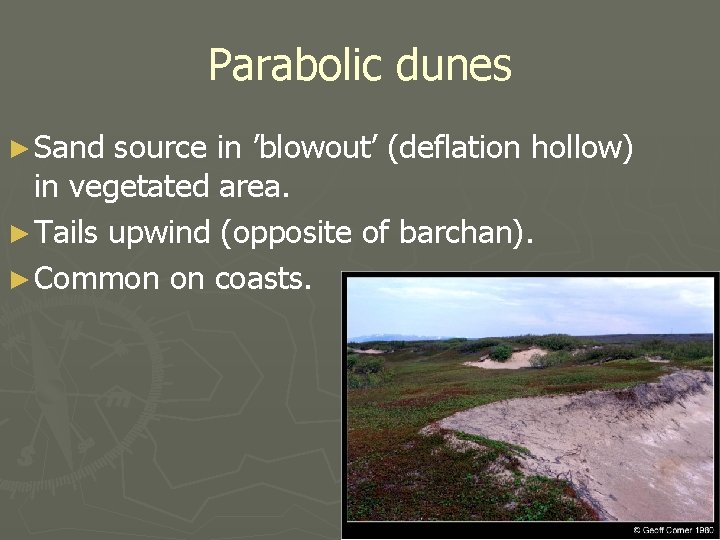
Parabolic dunes ► Sand source in ’blowout’ (deflation hollow) in vegetated area. ► Tails upwind (opposite of barchan). ► Common on coasts.
3. 4 Combined flows and tides ► Waves ► Tides
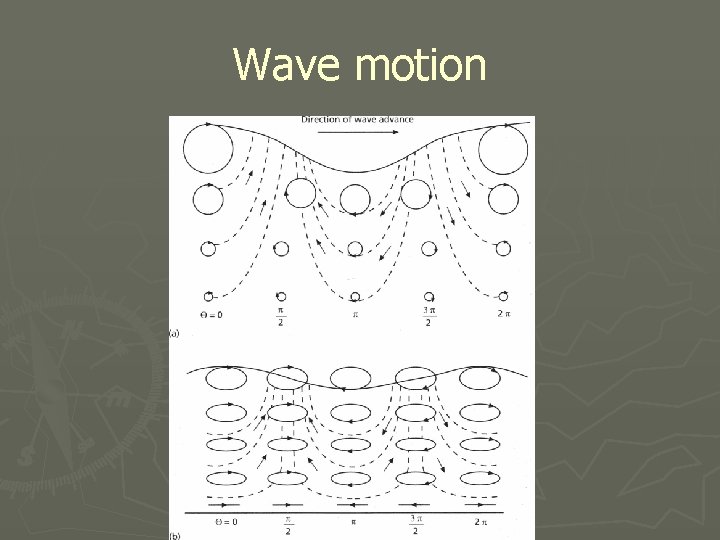
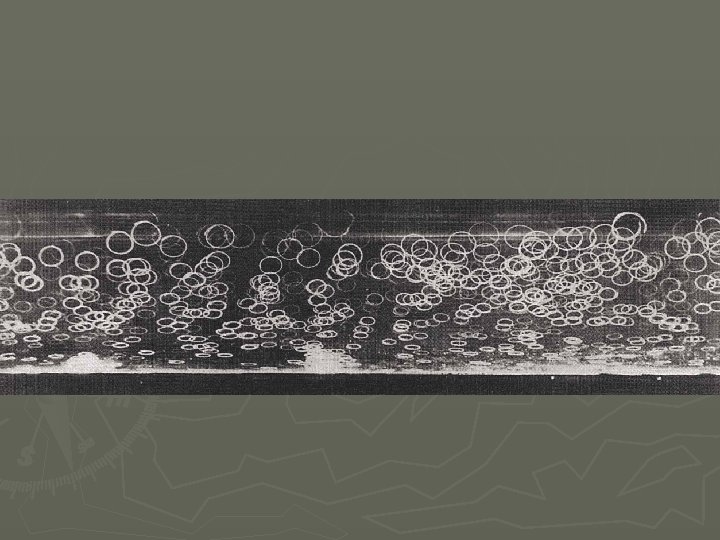
Wave motion
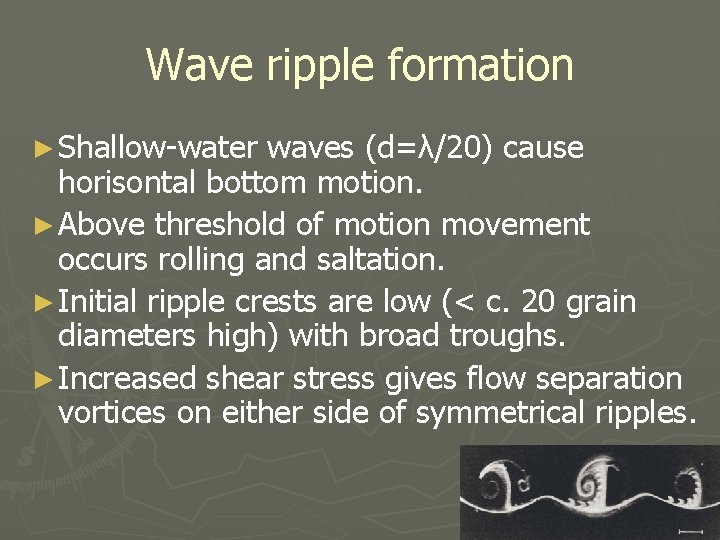
Wave ripple formation ► Shallow-water waves (d=λ/20) cause horisontal bottom motion. ► Above threshold of motion movement occurs rolling and saltation. ► Initial ripple crests are low (< c. 20 grain diameters high) with broad troughs. ► Increased shear stress gives flow separation vortices on either side of symmetrical ripples.
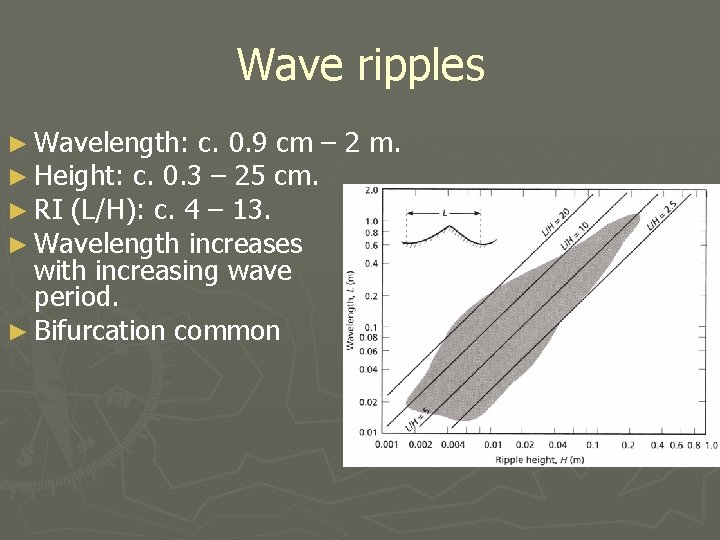
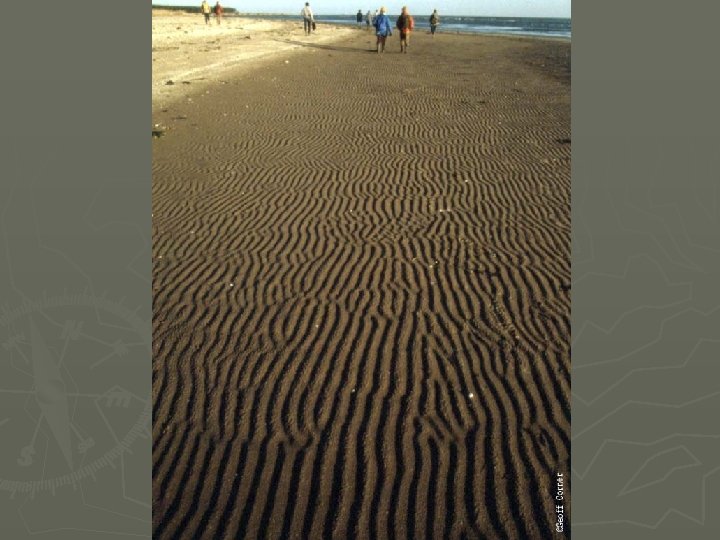
Wave ripples ► Wavelength: c. 0. 9 cm – ► Height: c. 0. 3 – 25 cm. ► RI (L/H): c. 4 – 13. ► Wavelength increases with increasing wave period. ► Bifurcation common 2 m.
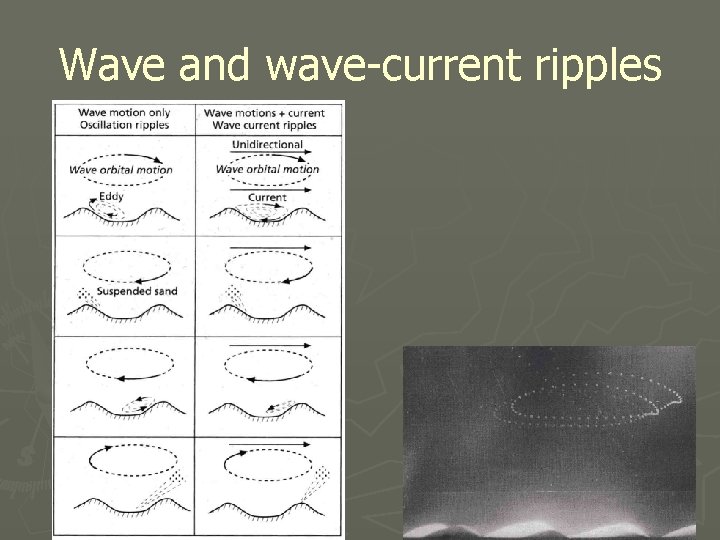
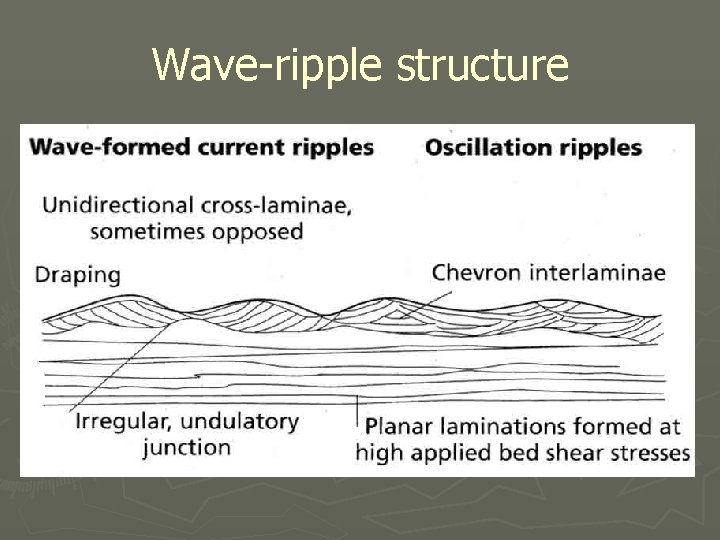
Wave and wave-current ripples
Wave-ripple structure
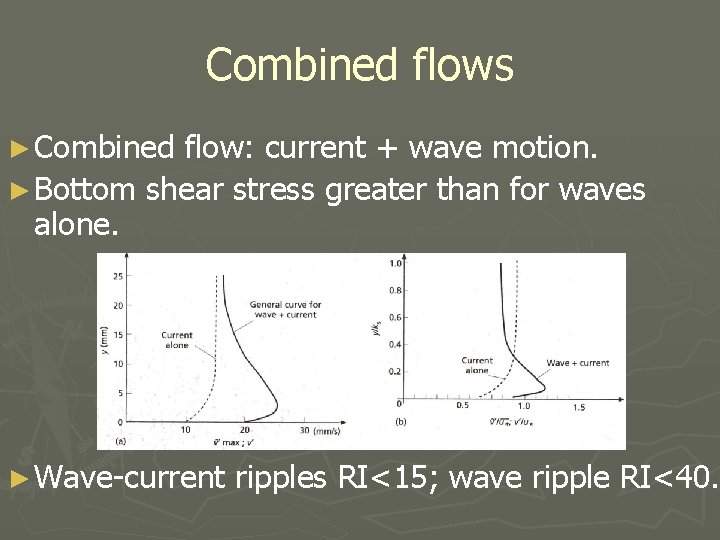
Combined flows ► Combined flow: current + wave motion. ► Bottom shear stress greater than for waves alone. ► Wave-current ripples RI<15; wave ripple RI<40.
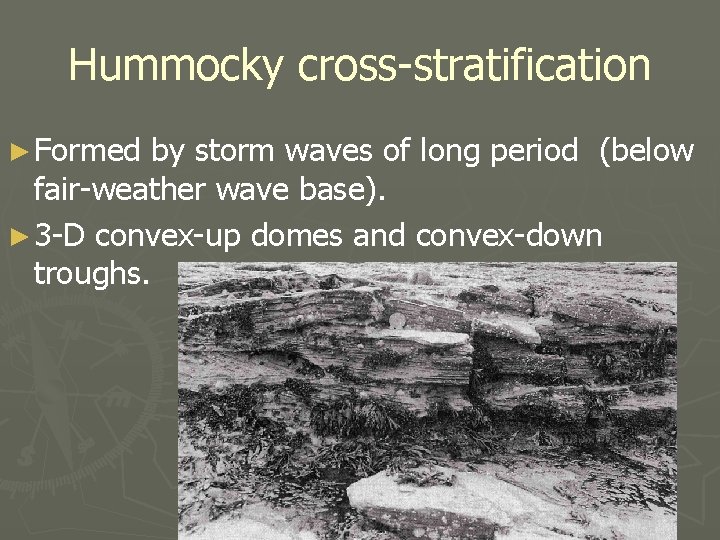
Hummocky cross-stratification ► Formed by storm waves of long period (below fair-weather wave base). ► 3 -D convex-up domes and convex-down troughs.
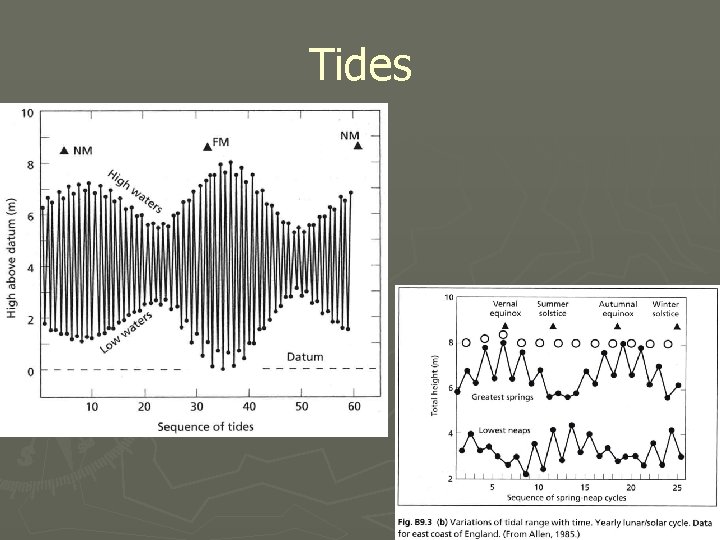
Tides
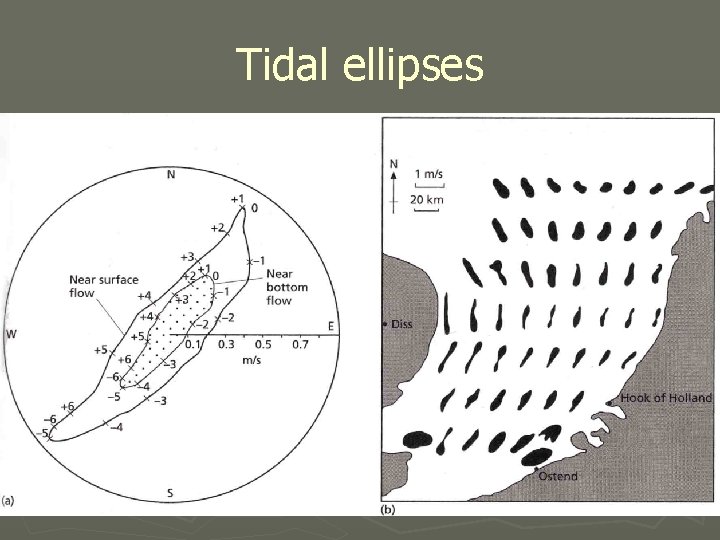
Tidal ellipses
Further reading ► Allen, J. R. L. 1970. Physical processes of sedimentation. § Chapter 1 covers the same ground as Leeder and explains clearly the principles involved; good supplementary reading for aquiring a sound grasp of the physics of fluid dynamics and sedimentation. Alternatively consult the more encyclopedic: ► Allen, J. R. L 1984. Sedimentary structures: their character and physical basis. § A more encyclopedic alternative to the above if it is unavailable.