
GCSE Physical Education AerobicAnaerobic and long term effects
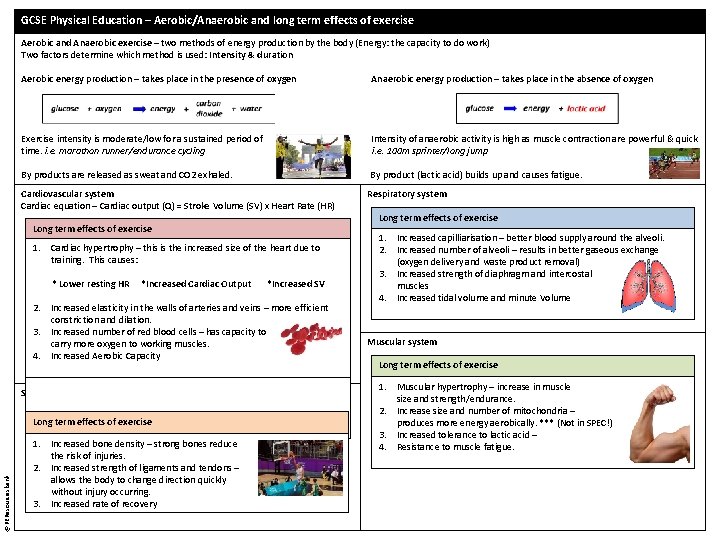
GCSE Physical Education – Aerobic/Anaerobic and long term effects of exercise Aerobic and Anaerobic exercise – two methods of energy production by the body (Energy: the capacity to do work) Two factors determine which method is used: Intensity & duration Aerobic energy production – takes place in the presence of oxygen Anaerobic energy production – takes place in the absence of oxygen Exercise intensity is moderate/low for a sustained period of time. i. e. marathon runner/endurance cycling Intensity of anaerobic activity is high as muscle contraction are powerful & quick i. e. 100 m sprinter/long jump By products are released as sweat and CO 2 exhaled. By product (lactic acid) builds up and causes fatigue. Cardiovascular system Cardiac equation – Cardiac output (Q) = Stroke Volume (SV) x Heart Rate (HR) Long term effects of exercise 1. Cardiac hypertrophy – this is the increased size of the heart due to training. This causes: * Lower resting HR *Increased Cardiac Output *Increased SV 2. Increased elasticity in the walls of arteries and veins – more efficient constriction and dilation. 3. Increased number of red blood cells – has capacity to carry more oxygen to working muscles. 4. Increased Aerobic Capacity Skeletal system @PEResourcesbank Long term effects of exercise 1. Increased bone density – strong bones reduce the risk of injuries. 2. Increased strength of ligaments and tendons – allows the body to change direction quickly without injury occurring. 3. Increased rate of recovery Respiratory system Long term effects of exercise 1. Increased capilliarisation – better blood supply around the alveoli. 2. Increased number of alveoli – results in better gaseous exchange (oxygen delivery and waste product removal) 3. Increased strength of diaphragm and intercostal muscles 4. Increased tidal volume and minute Volume Muscular system Long term effects of exercise 1. Muscular hypertrophy – increase in muscle size and strength/endurance. 2. Increase size and number of mitochondria – produces more energy aerobically. *** (Not in SPEC!) 3. Increased tolerance to lactic acid – 4. Resistance to muscle fatigue.
GCSE Physical Education – Aerobic/Anaerobic and long term effects of exercise @PEResourcesbank Term Keywords: Definition/notes/concept
- Slides: 2