
GCSE PE Theory Unit 8 Lesson 2 The


- Slides: 24
GCSE PE: Theory Unit 8 Lesson 2 The Muscular System 1 of 28
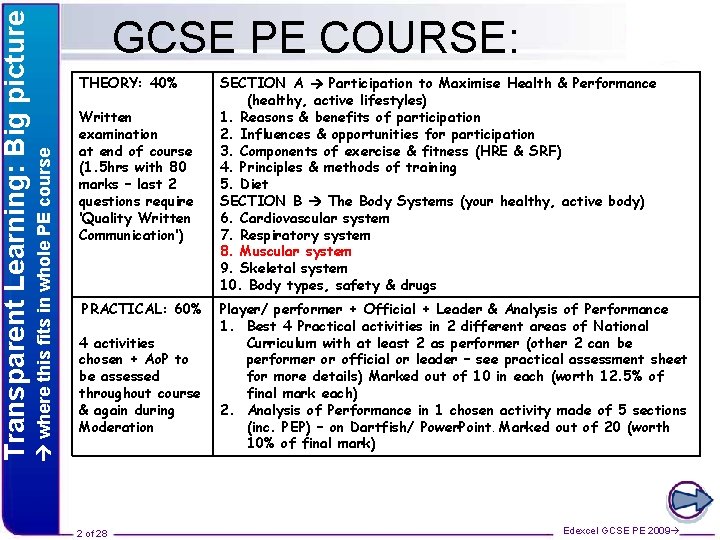
THEORY: 40% where this fits in whole PE course Transparent Learning: Big picture GCSE PE COURSE: Written examination at end of course (1. 5 hrs with 80 marks – last 2 questions require ‘Quality Written Communication’) PRACTICAL: 60% 4 activities chosen + Ao. P to be assessed throughout course & again during Moderation 2 of 28 SECTION A Participation to Maximise Health & Performance (healthy, active lifestyles) 1. Reasons & benefits of participation 2. Influences & opportunities for participation 3. Components of exercise & fitness (HRE & SRF) 4. Principles & methods of training 5. Diet SECTION B The Body Systems (your healthy, active body) 6. Cardiovascular system 7. Respiratory system 8. Muscular system 9. Skeletal system 10. Body types, safety & drugs Player/ performer + Official + Leader & Analysis of Performance 1. Best 4 Practical activities in 2 different areas of National Curriculum with at least 2 as performer (other 2 can be performer or official or leader – see practical assessment sheet for more details) Marked out of 10 in each (worth 12. 5% of final mark each) 2. Analysis of Performance in 1 chosen activity made of 5 sections (inc. PEP) – on Dartfish/ Power. Point. Marked out of 20 (worth 10% of final mark) Edexcel GCSE PE 2009
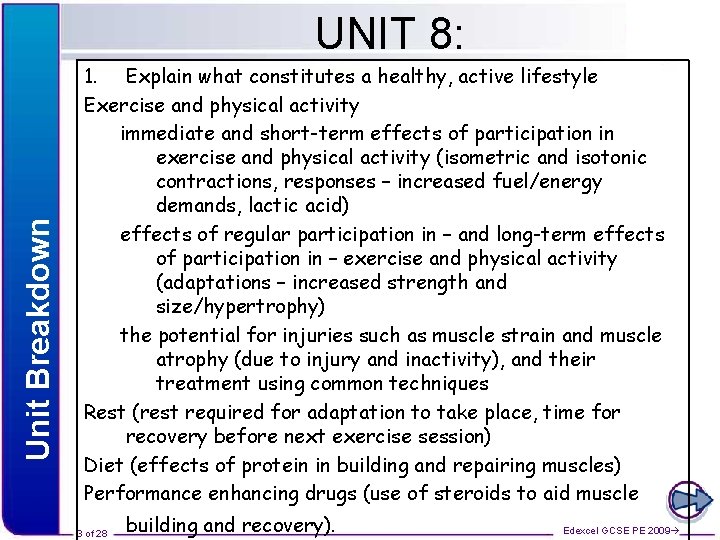
Unit Breakdown UNIT 8: 1. Explain what constitutes a healthy, active lifestyle Exercise and physical activity immediate and short-term effects of participation in exercise and physical activity (isometric and isotonic contractions, responses – increased fuel/energy demands, lactic acid) effects of regular participation in – and long-term effects of participation in – exercise and physical activity (adaptations – increased strength and size/hypertrophy) the potential for injuries such as muscle strain and muscle atrophy (due to injury and inactivity), and their treatment using common techniques Rest (rest required for adaptation to take place, time for recovery before next exercise session) Diet (effects of protein in building and repairing muscles) Performance enhancing drugs (use of steroids to aid muscle 3 of 28 building and recovery). Edexcel GCSE PE 2009
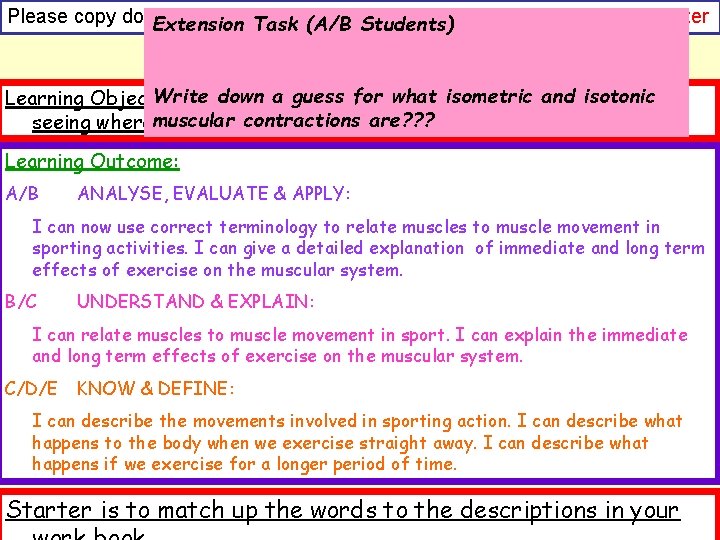
Please copy down the date, Task title and learning outcome and complete the starter Extension (A/B Students) The Muscular System- Part 1 Write. Taking down a look guess isometric isotonic Learning Objectives: at for the what different types and of muscle and are? ? ? seeing wheremuscular they are contractions located Learning Outcome: A/B ANALYSE, EVALUATE & APPLY: I can now use correct terminology to relate muscles to muscle movement in sporting activities. I can give a detailed explanation of immediate and long term effects of exercise on the muscular system. B/C UNDERSTAND & EXPLAIN: I can relate muscles to muscle movement in sport. I can explain the immediate and long term effects of exercise on the muscular system. C/D/E KNOW & DEFINE: Time for activity on each page. I can describe the movements involved in sporting action. I can describe what happens to the body when we exercise straight away. I can describe what happens if we exercise for a longer period of time. Starter is to match up the words to the descriptions in your
Movement of muscles Flexion- bending Extension- straightening Abduction- take away from body Adduction- bring towards body Rotation- move in circular motion
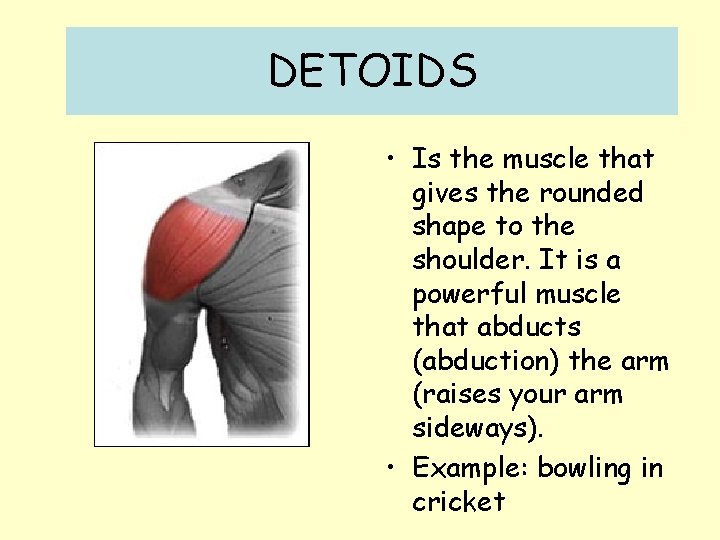
DETOIDS • Is the muscle that gives the rounded shape to the shoulder. It is a powerful muscle that abducts (abduction) the arm (raises your arm sideways). • Example: bowling in cricket
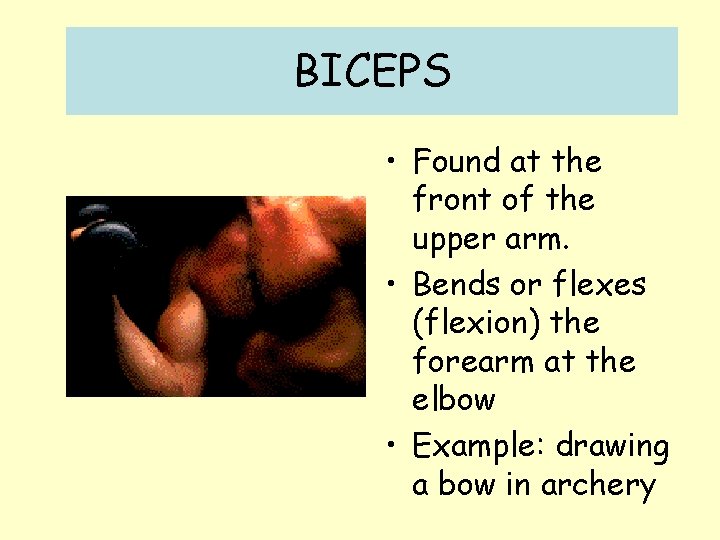
BICEPS • Found at the front of the upper arm. • Bends or flexes (flexion) the forearm at the elbow • Example: drawing a bow in archery
TRICEPS • Found behind the upper arm • Extends (extension) the forearm at the elbow • Extends (extension) the arm at the shoulder • Example: a smash in badminton
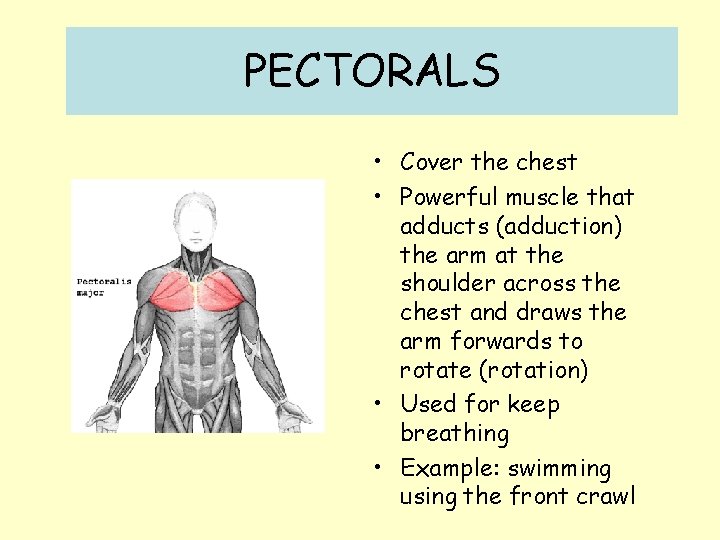
PECTORALS • Cover the chest • Powerful muscle that adducts (adduction) the arm at the shoulder across the chest and draws the arm forwards to rotate (rotation) • Used for keep breathing • Example: swimming using the front crawl
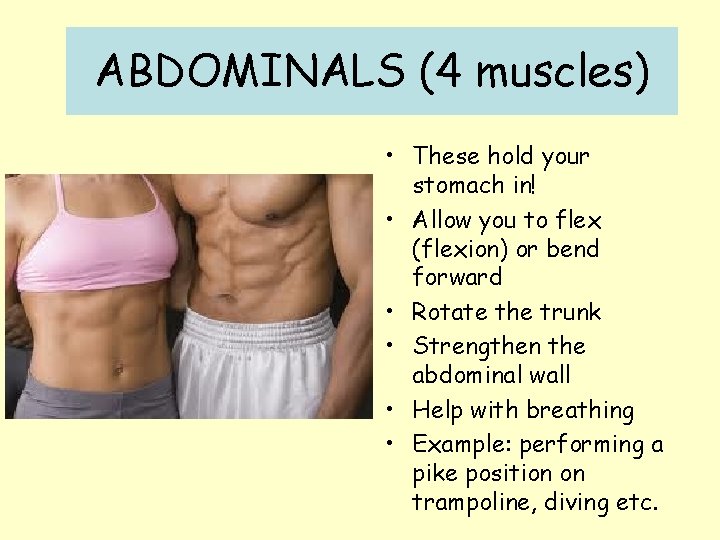
ABDOMINALS (4 muscles) • These hold your stomach in! • Allow you to flex (flexion) or bend forward • Rotate the trunk • Strengthen the abdominal wall • Help with breathing • Example: performing a pike position on trampoline, diving etc.
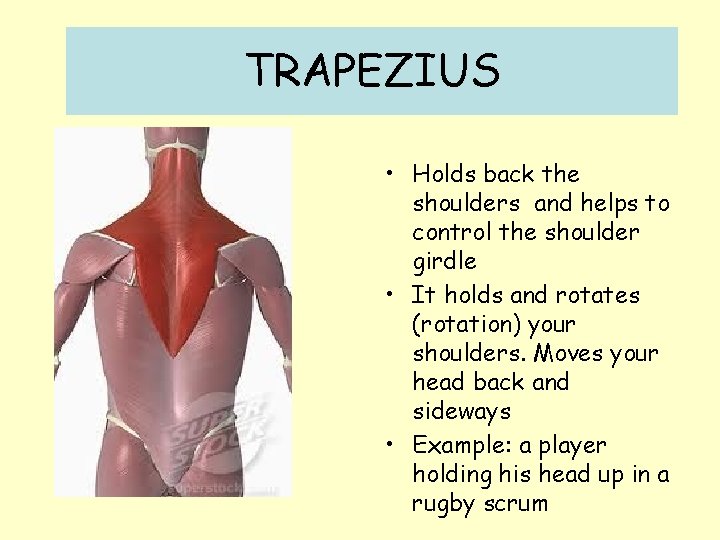
TRAPEZIUS • Holds back the shoulders and helps to control the shoulder girdle • It holds and rotates (rotation) your shoulders. Moves your head back and sideways • Example: a player holding his head up in a rugby scrum
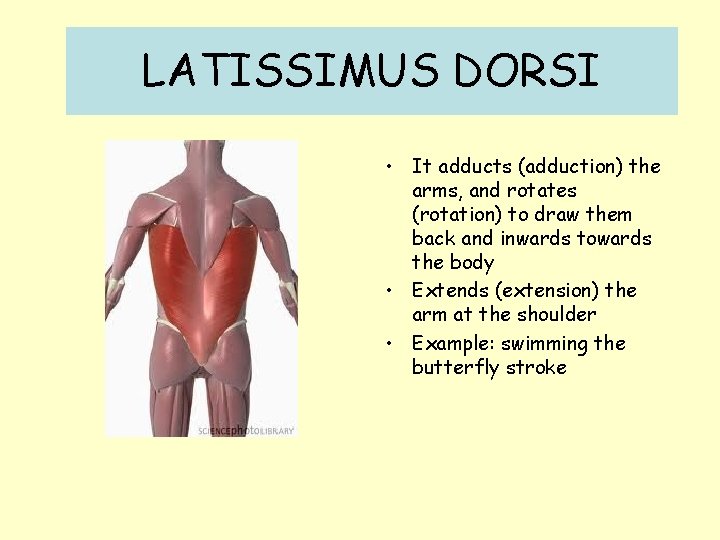
LATISSIMUS DORSI • It adducts (adduction) the arms, and rotates (rotation) to draw them back and inwards towards the body • Extends (extension) the arm at the shoulder • Example: swimming the butterfly stroke
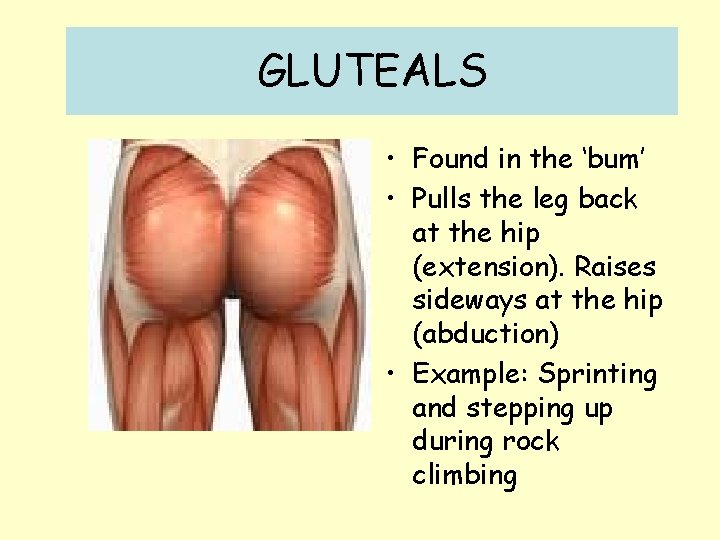
GLUTEALS • Found in the ‘bum’ • Pulls the leg back at the hip (extension). Raises sideways at the hip (abduction) • Example: Sprinting and stepping up during rock climbing
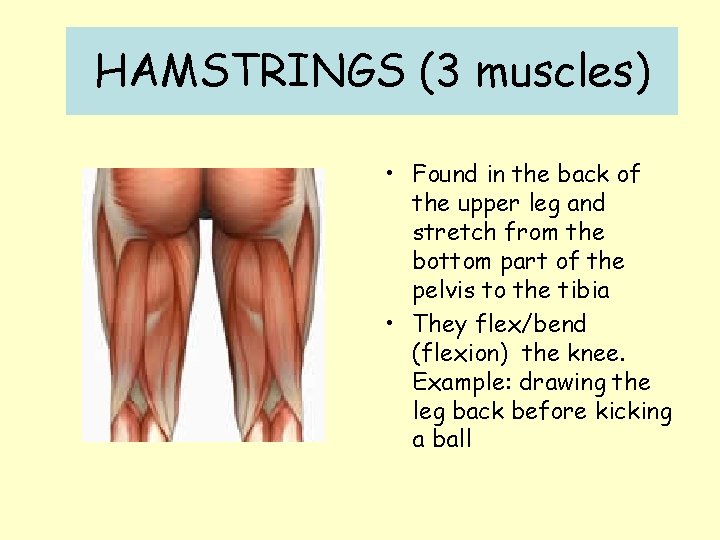
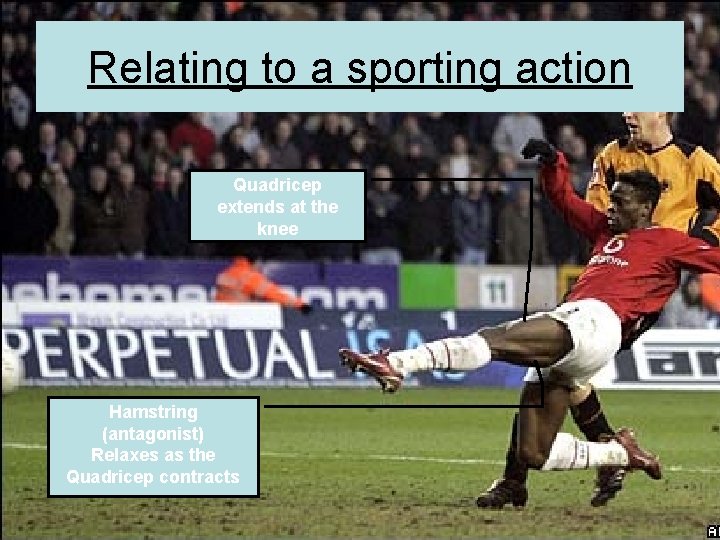
HAMSTRINGS (3 muscles) • Found in the back of the upper leg and stretch from the bottom part of the pelvis to the tibia • They flex/bend (flexion) the knee. Example: drawing the leg back before kicking a ball
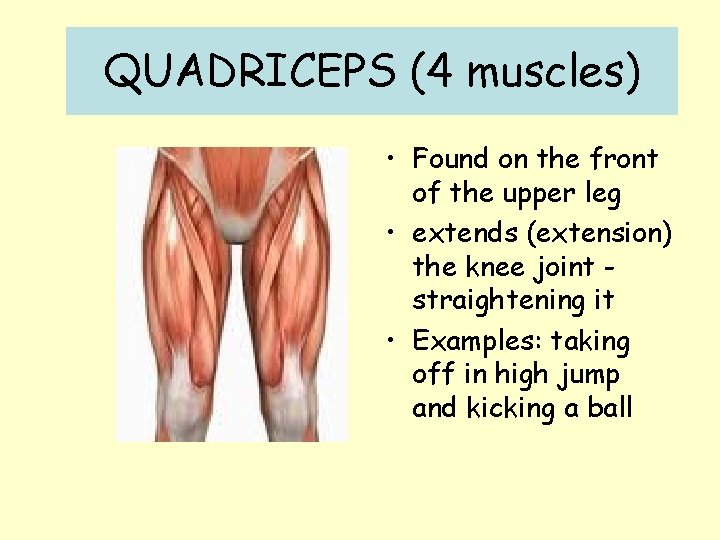
QUADRICEPS (4 muscles) • Found on the front of the upper leg • extends (extension) the knee joint straightening it • Examples: taking off in high jump and kicking a ball
GASTROCNEMIUS • Found at the back of the lower leg • Attached at the ‘Achilles’ tendon • straightens (EXTENSION) the ankle joint so that you can stand on your tiptoes • Example: running
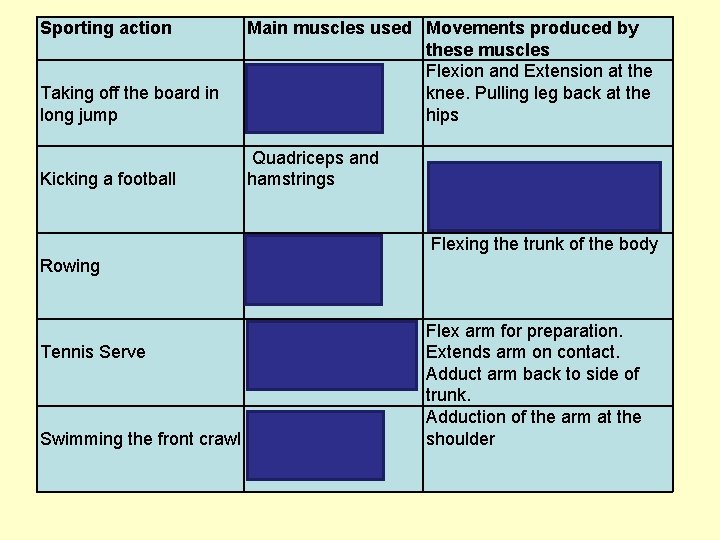
Sporting action Taking off the board in long jump Main muscles used Movements produced by these muscles Quadriceps and Flexion and Extension at the hamstrings and knee. Pulling leg back at the gluteals hips Kicking a football Quadriceps and hamstrings Flexion and Extension at the knee Abdominals Flexing the trunk of the body Bicep, triceps and pectorals Flex arm for preparation. Extends arm on contact. Adduct arm back to side of trunk. Adduction of the arm at the shoulder Rowing Tennis Serve Swimming the front crawl Pectorals
Progress check Complete the task in your workbooks. Fill out the table. Give yourself a working at grade. Are you on track to meet your lesson targets? B C D A/A*
Plenary: What have we learned today? Who can stand up and talk to me, giving me the most description, explanation and application for the next few slides
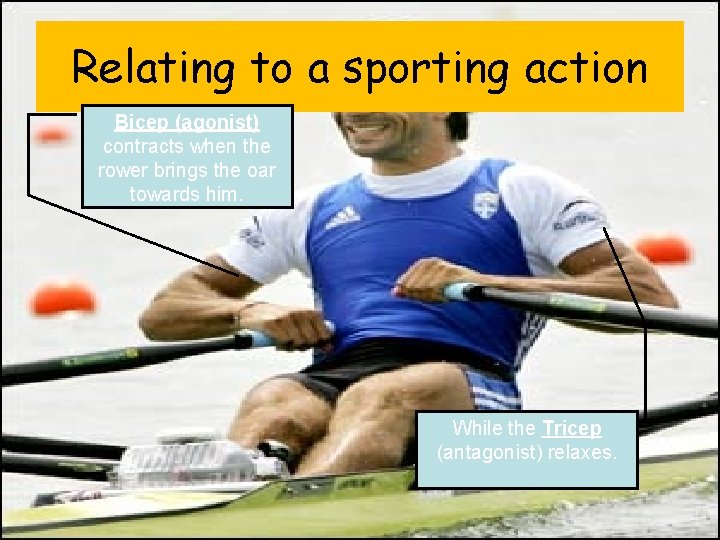
Relating to a sporting action Bicep (agonist) contracts when the rower brings the oar towards him. While the Tricep (antagonist) relaxes.
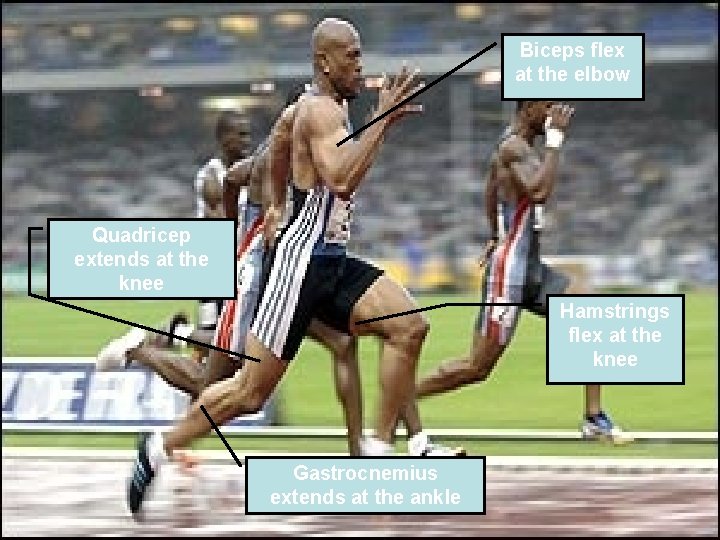
Biceps flex at the elbow Quadricep extends at the knee Hamstrings flex at the knee Gastrocnemius extends at the ankle
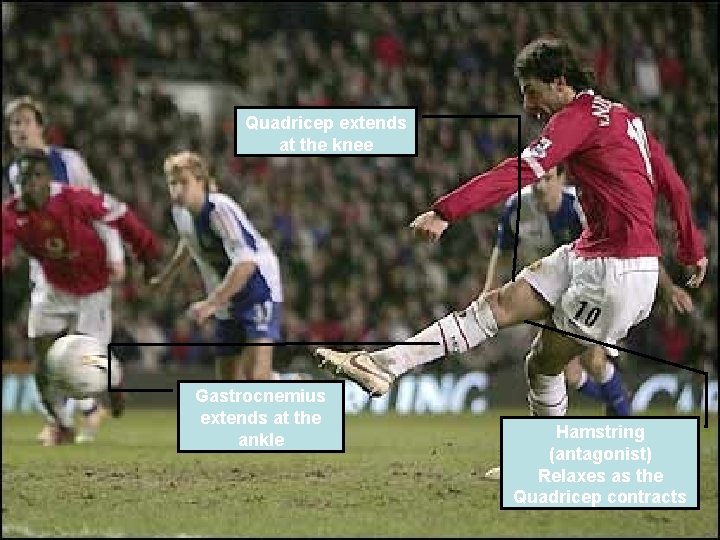
Quadricep extends at the knee Gastrocnemius extends at the ankle Hamstring (antagonist) Relaxes as the Quadricep contracts
Relating to a sporting action Quadricep extends at the knee Hamstring (antagonist) Relaxes as the Quadricep contracts
Please copy down the date, Task title and learning outcome and complete the starter Extension (A/B Students) The Muscular System- Part 1 Write. Taking down a look guess isometric isotonic Learning Objectives: at for the what different types and of muscle and are? ? ? seeing wheremuscular they are contractions located Learning Outcome: A/B ANALYSE, EVALUATE & APPLY: I can now use correct terminology to relate muscles to muscle movement in sporting activities. I can give a detailed explanation of immediate and long term effects of exercise on the muscular system. B/C UNDERSTAND & EXPLAIN: I can relate muscles to muscle movement in sport. I can explain the immediate and long term effects of exercise on the muscular system. C/D/E KNOW & DEFINE: Time for activity on each page. I can describe the movements involved in sporting action. I can describe what happens to the body when we exercise straight away. I can describe what happens if we exercise for a longer period of time. Starter is to match up the words to the descriptions in your