
GCSE Geology Mineral Forming Processes Click anywhere on
- Slides: 10
GCSE Geology Mineral Forming Processes Click anywhere on the screen to move on. GCSE Geology
Mineral Forming Processes – S. H. R. E. C. Minerals form in 5 different ways • • • Solidification Hydrothermal Activity Recrystallisation Evaporation Cementation Creative Commons https: //www. flickr. com/photos/ modhousewife/2943107801 GCSE Geology
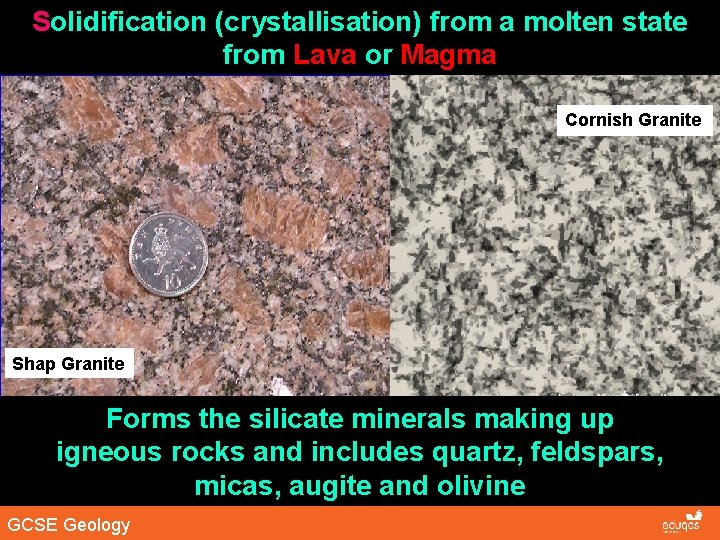
Solidification (crystallisation) from a molten state from Lava or Magma Cornish Granite Shap Granite Forms the silicate minerals making up igneous rocks and includes quartz, feldspars, micas, augite and olivine GCSE Geology
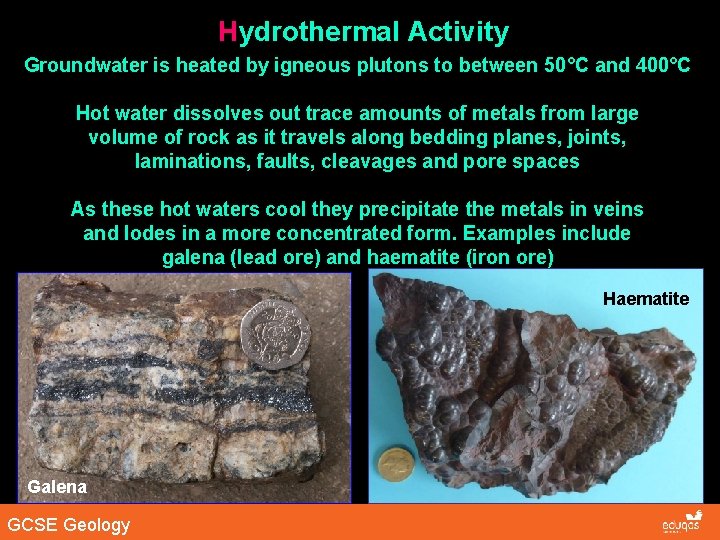
Hydrothermal Activity Groundwater is heated by igneous plutons to between 50°C and 400°C Hot water dissolves out trace amounts of metals from large volume of rock as it travels along bedding planes, joints, laminations, faults, cleavages and pore spaces As these hot waters cool they precipitate the metals in veins and lodes in a more concentrated form. Examples include galena (lead ore) and haematite (iron ore) Haematite Galena GCSE Geology
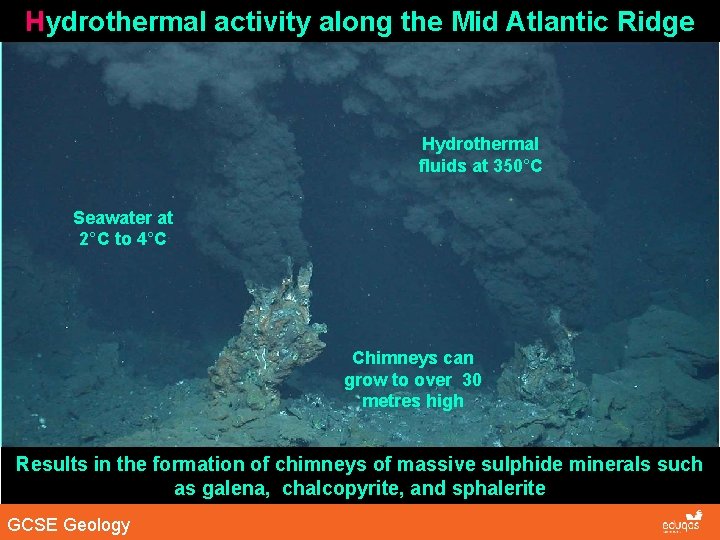
Hydrothermal activity along the Mid Atlantic Ridge Hydrothermal fluids at 350°C Seawater at 2°C to 4°C Chimneys can grow to over 30 metres high Results in the formation of chimneys of massive sulphide minerals such as galena, chalcopyrite, and sphalerite GCSE Geology
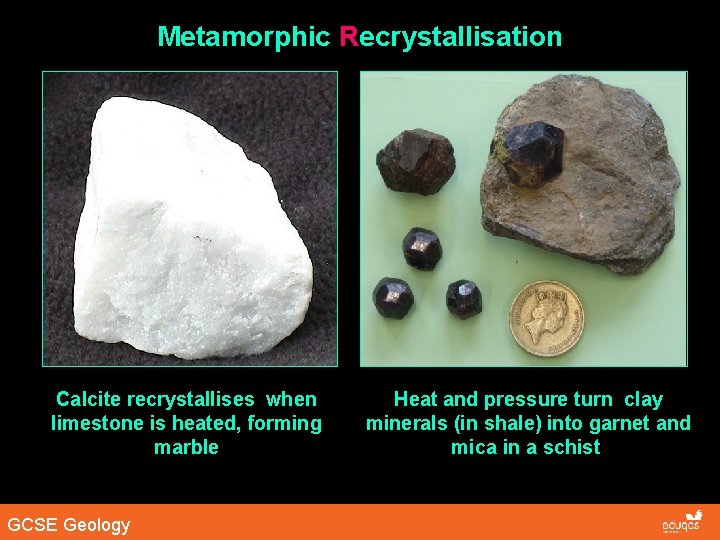
Metamorphic Recrystallisation Calcite recrystallises when limestone is heated, forming marble GCSE Geology Heat and pressure turn clay minerals (in shale) into garnet and mica in a schist.
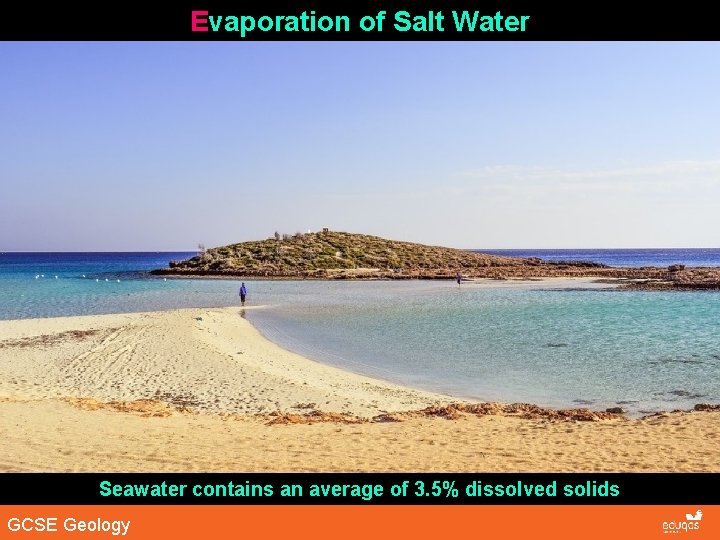
Evaporation of Salt Water Seawater contains an average of 3. 5% dissolved solids GCSE Geology
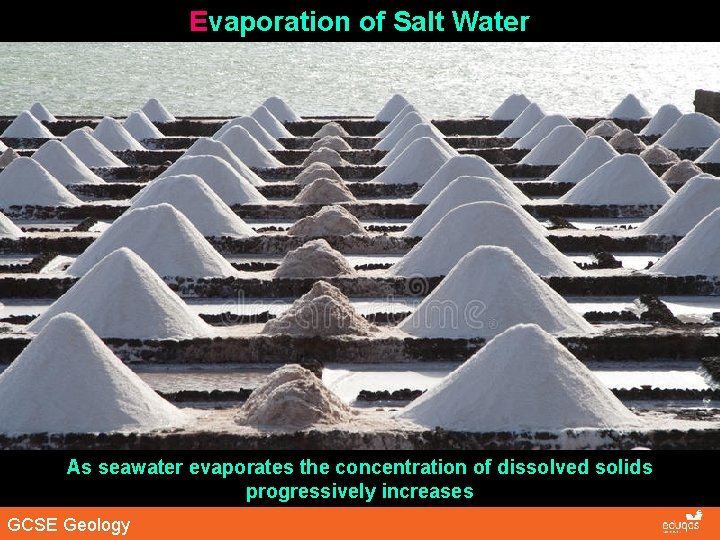
Evaporation of Salt Water As seawater evaporates the concentration of dissolved solids progressively increases GCSE Geology
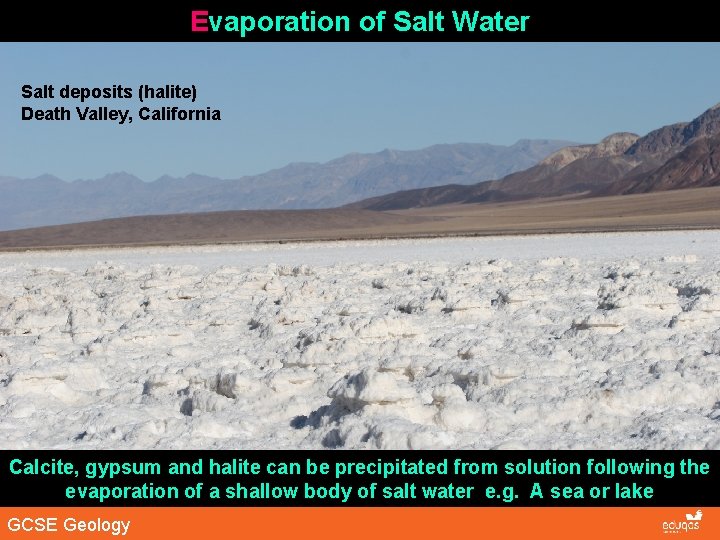
Evaporation of Salt Water Salt deposits (halite) Death Valley, California Calcite, gypsum and halite can be precipitated from solution following the evaporation of a shallow body of salt water e. g. A sea or lake GCSE Geology
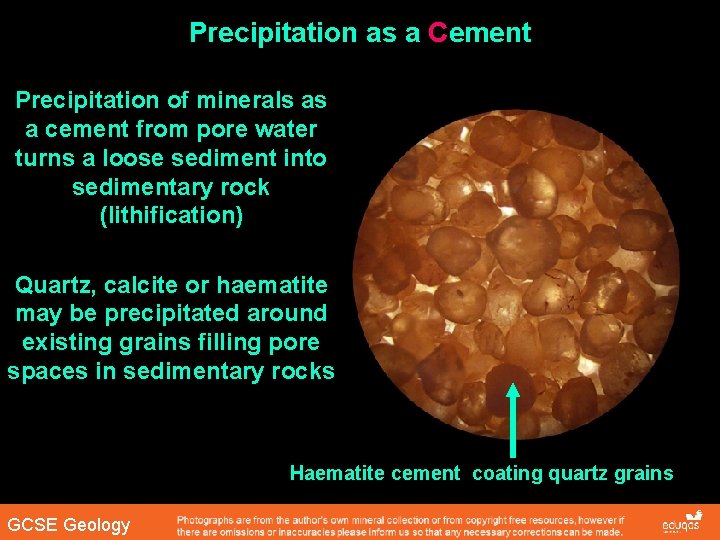
Precipitation as a Cement Precipitation of minerals as a cement from pore water turns a loose sediment into sedimentary rock (lithification) Quartz, calcite or haematite may be precipitated around existing grains filling pore spaces in sedimentary rocks Haematite cement coating quartz grains GCSE Geology