
GCSE Chemistry Key Stage 4 Organic chemistry Review
- Slides: 12
GCSE Chemistry - Key Stage 4 Organic chemistry Review 3 Dr Patel
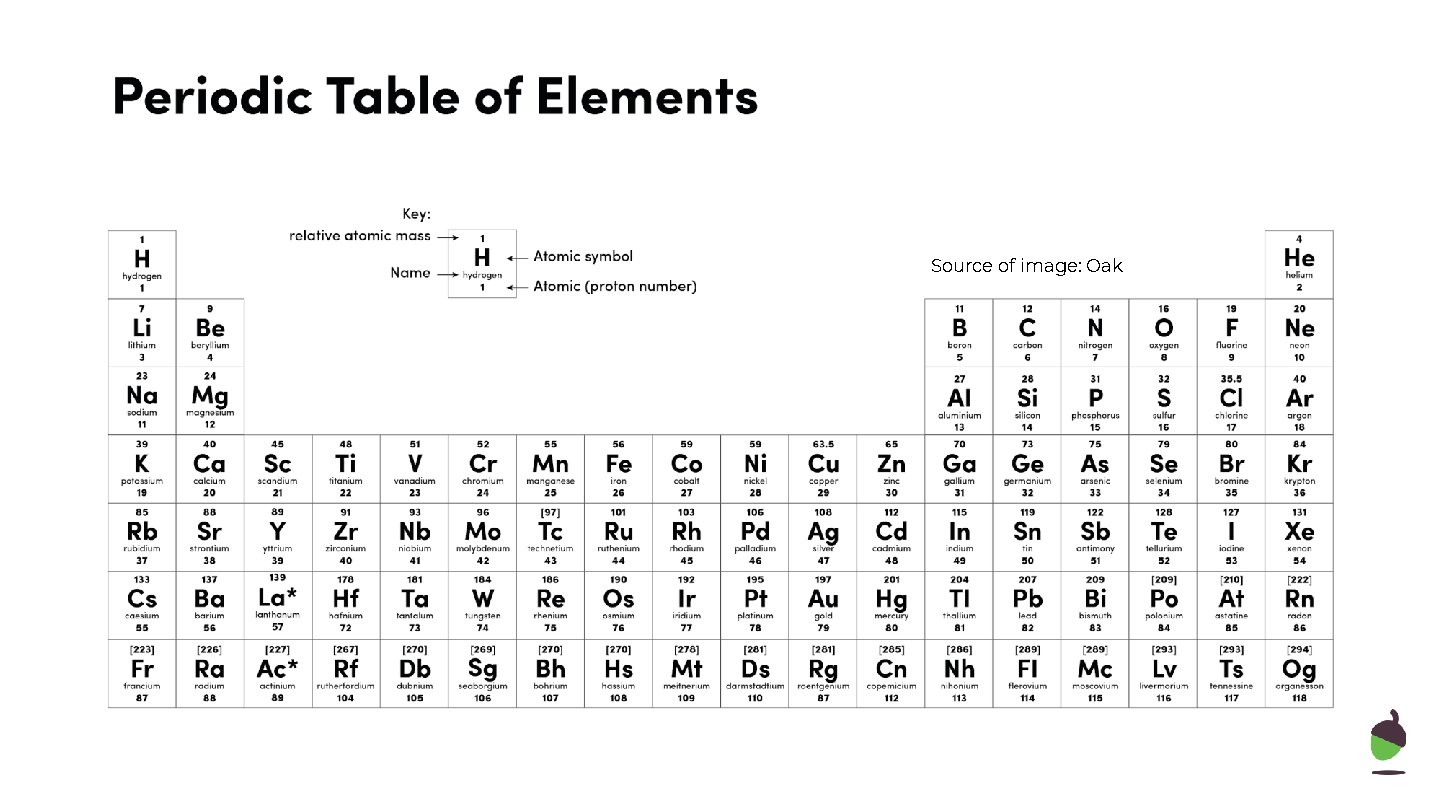
Source of image: Oak
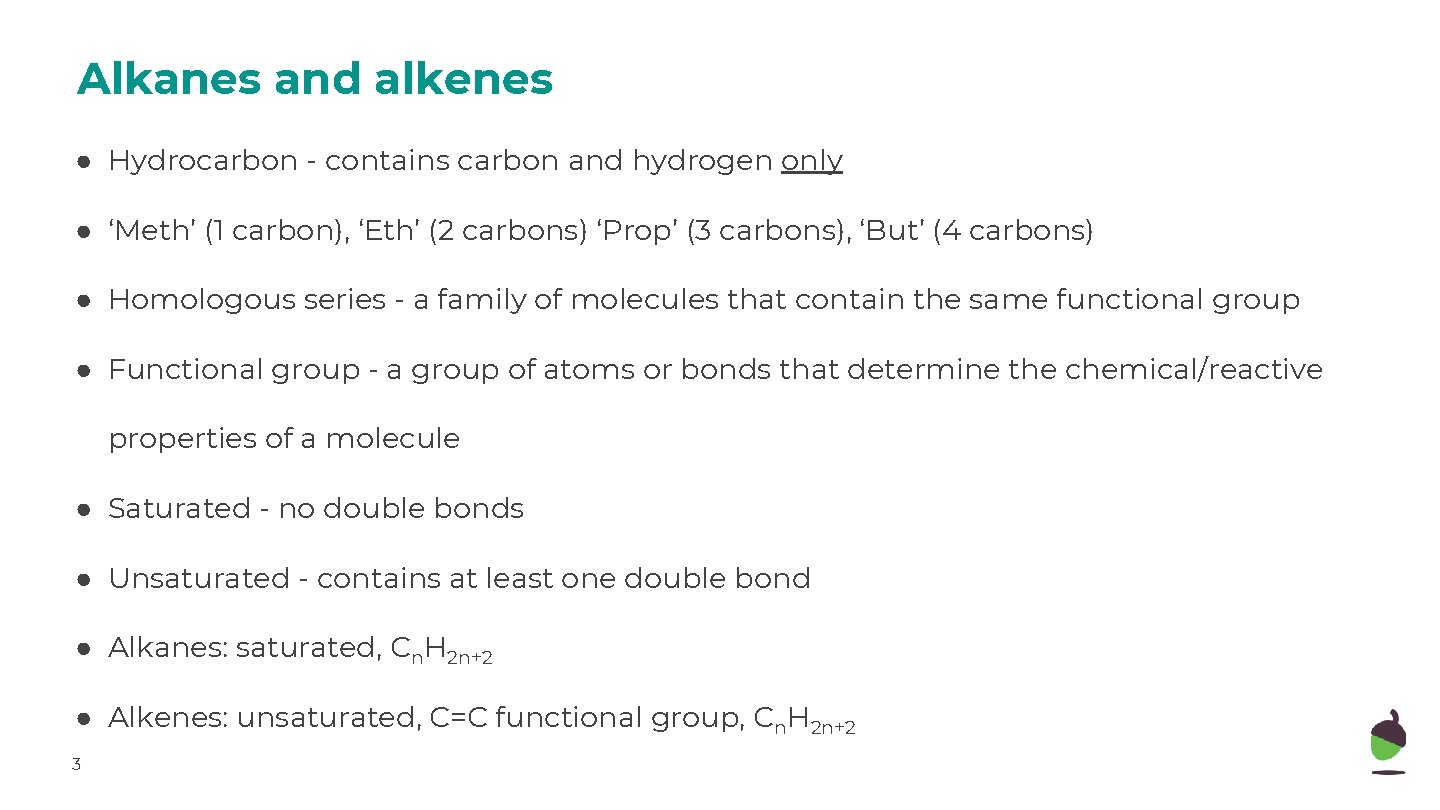
Alkanes and alkenes ● Hydrocarbon - contains carbon and hydrogen only ● ‘Meth’ (1 carbon), ‘Eth’ (2 carbons) ‘Prop’ (3 carbons), ‘But’ (4 carbons) ● Homologous series - a family of molecules that contain the same functional group ● Functional group - a group of atoms or bonds that determine the chemical/reactive properties of a molecule ● Saturated - no double bonds ● Unsaturated - contains at least one double bond ● Alkanes: saturated, Cn. H 2 n+2 ● Alkenes: unsaturated, C=C functional group, Cn. H 2 n+2 3
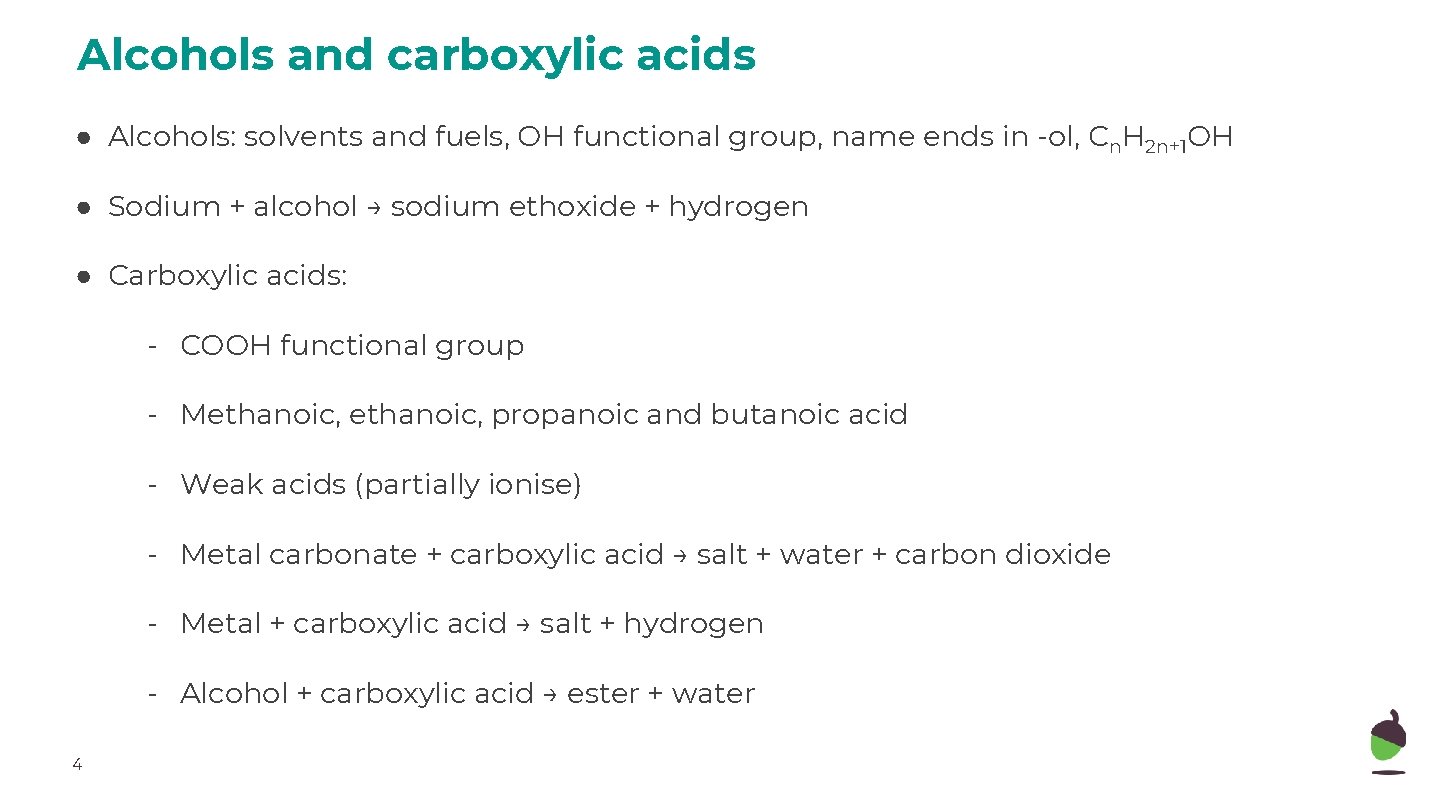
Alcohols and carboxylic acids ● Alcohols: solvents and fuels, OH functional group, name ends in -ol, Cn. H 2 n+1 OH ● Sodium + alcohol → sodium ethoxide + hydrogen ● Carboxylic acids: - COOH functional group - Methanoic, propanoic and butanoic acid - Weak acids (partially ionise) - Metal carbonate + carboxylic acid → salt + water + carbon dioxide - Metal + carboxylic acid → salt + hydrogen - Alcohol + carboxylic acid → ester + water 4
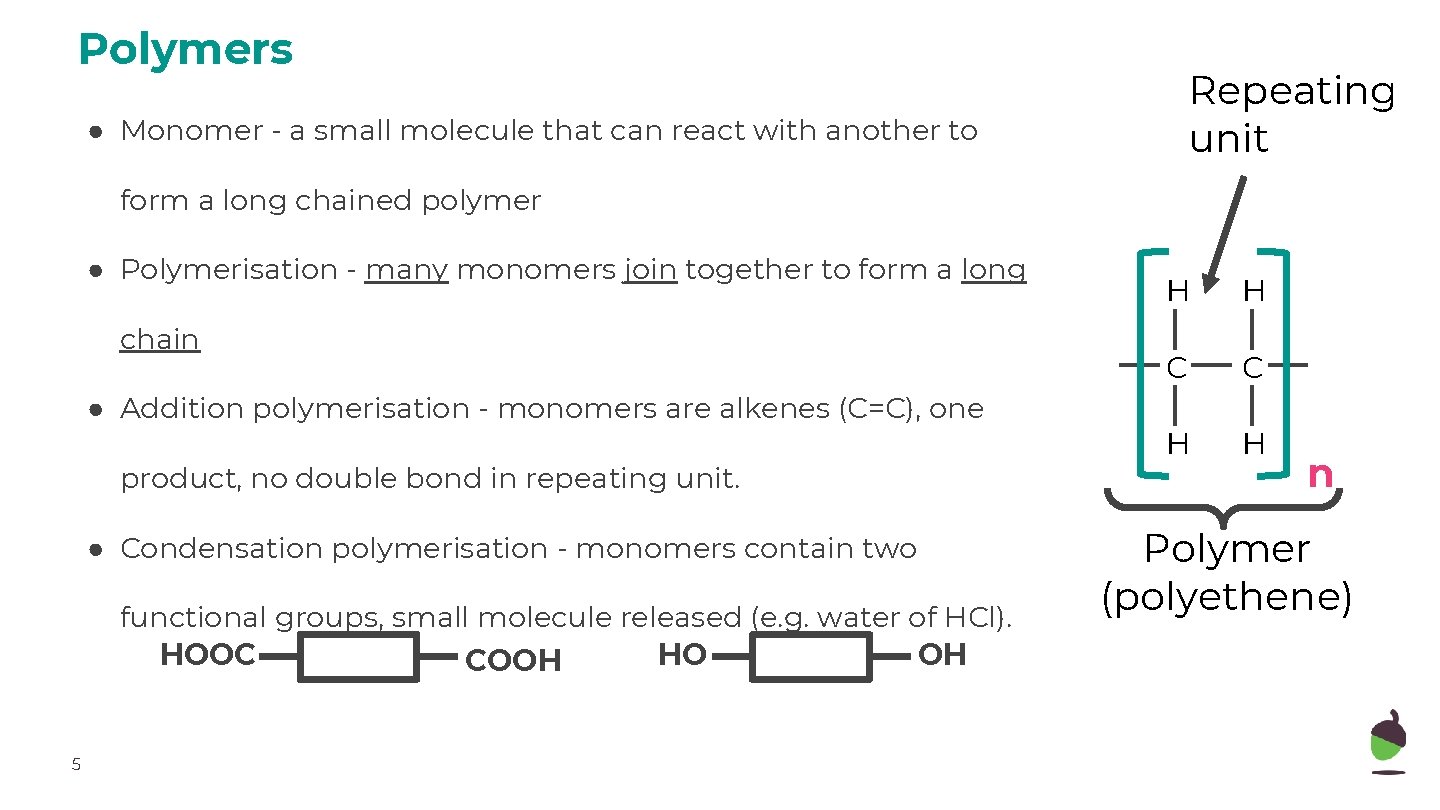
Polymers Repeating unit ● Monomer - a small molecule that can react with another to form a long chained polymer ● Polymerisation - many monomers join together to form a long chain ● Addition polymerisation - monomers are alkenes (C=C), one product, no double bond in repeating unit. ● Condensation polymerisation - monomers contain two functional groups, small molecule released (e. g. water of HCl). HOOC HO OH COOH 5 H H C C H H n Polymer (polyethene)
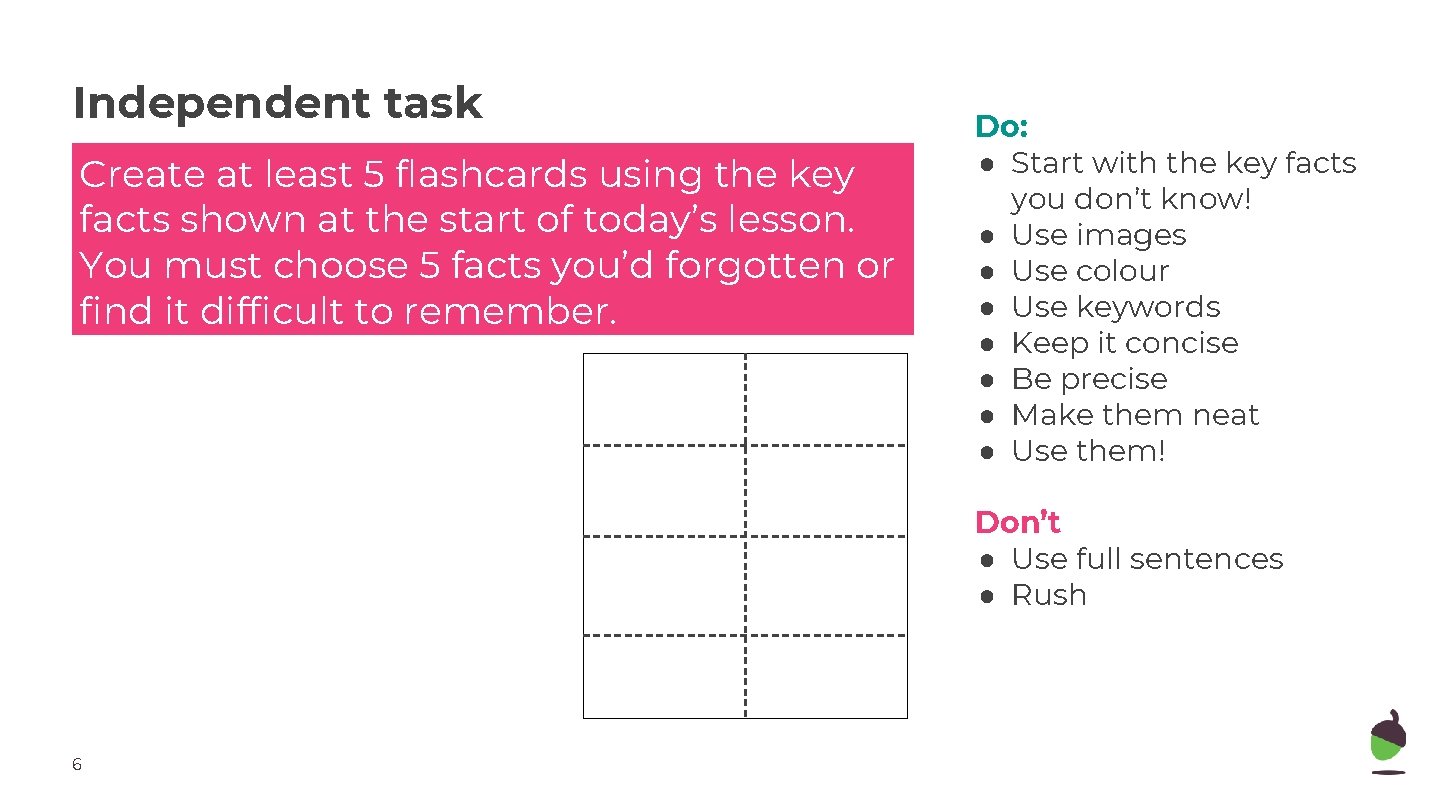
Independent task Create at least 5 flashcards using the key facts shown at the start of today’s lesson. You must choose 5 facts you’d forgotten or find it difficult to remember. Do: ● Start with the key facts you don’t know! ● Use images ● Use colour ● Use keywords ● Keep it concise ● Be precise ● Make them neat ● Use them! Don’t ● Use full sentences ● Rush 6
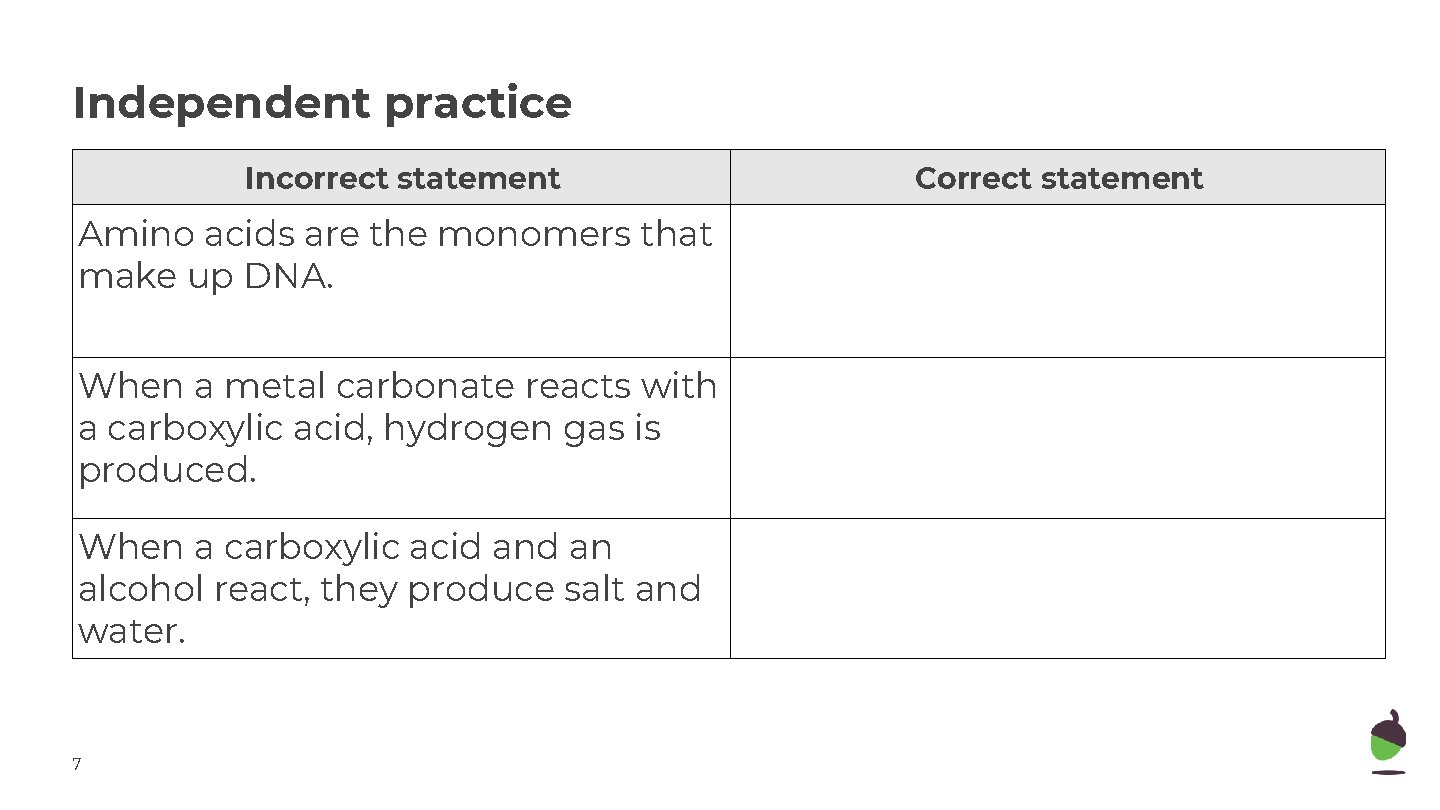
Independent practice Incorrect statement Amino acids are the monomers that make up DNA. When a metal carbonate reacts with a carboxylic acid, hydrogen gas is produced. When a carboxylic acid an alcohol react, they produce salt and water. 7 Correct statement
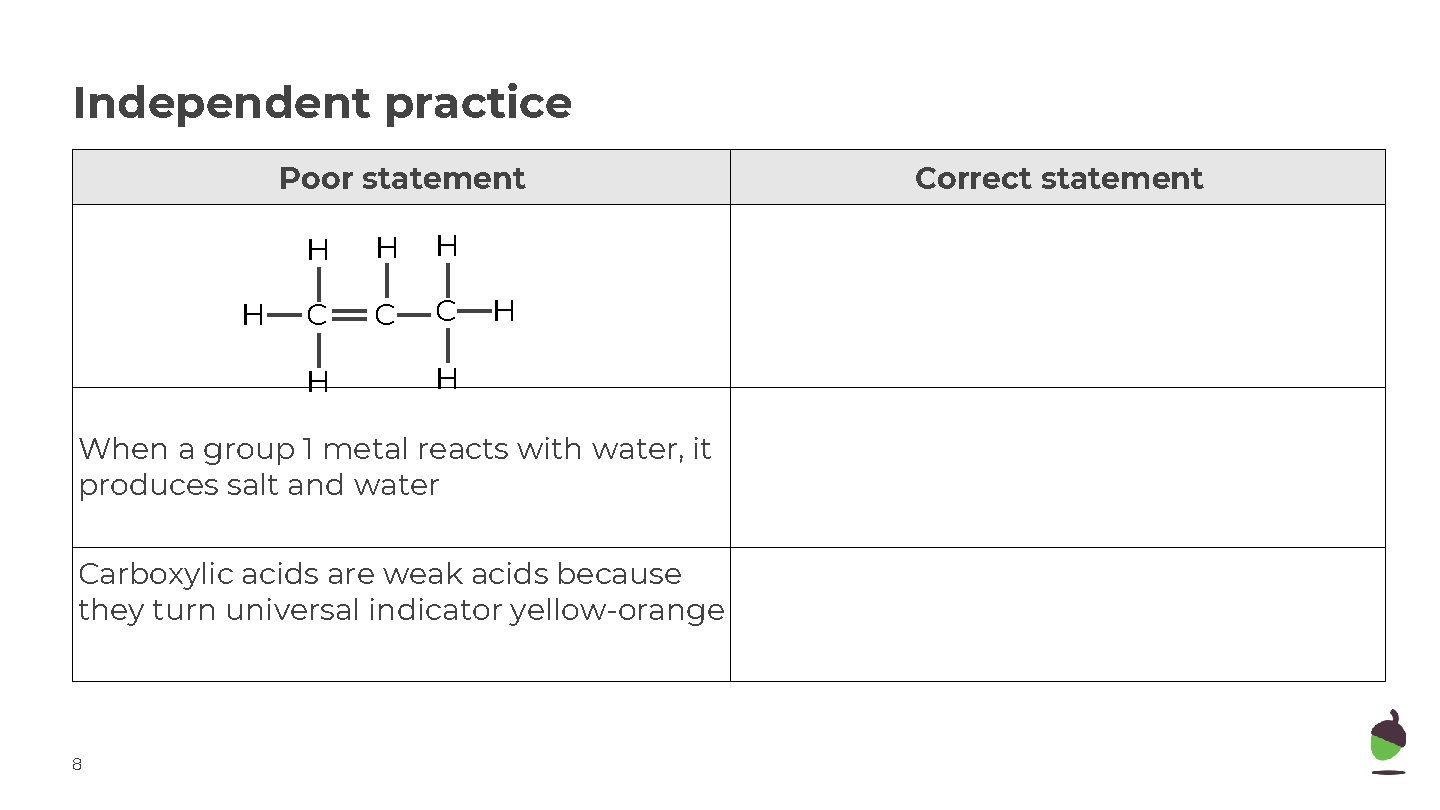
Independent practice Poor statement H H C C C H H H When a group 1 metal reacts with water, it produces salt and water Carboxylic acids are weak acids because they turn universal indicator yellow-orange 8 Correct statement
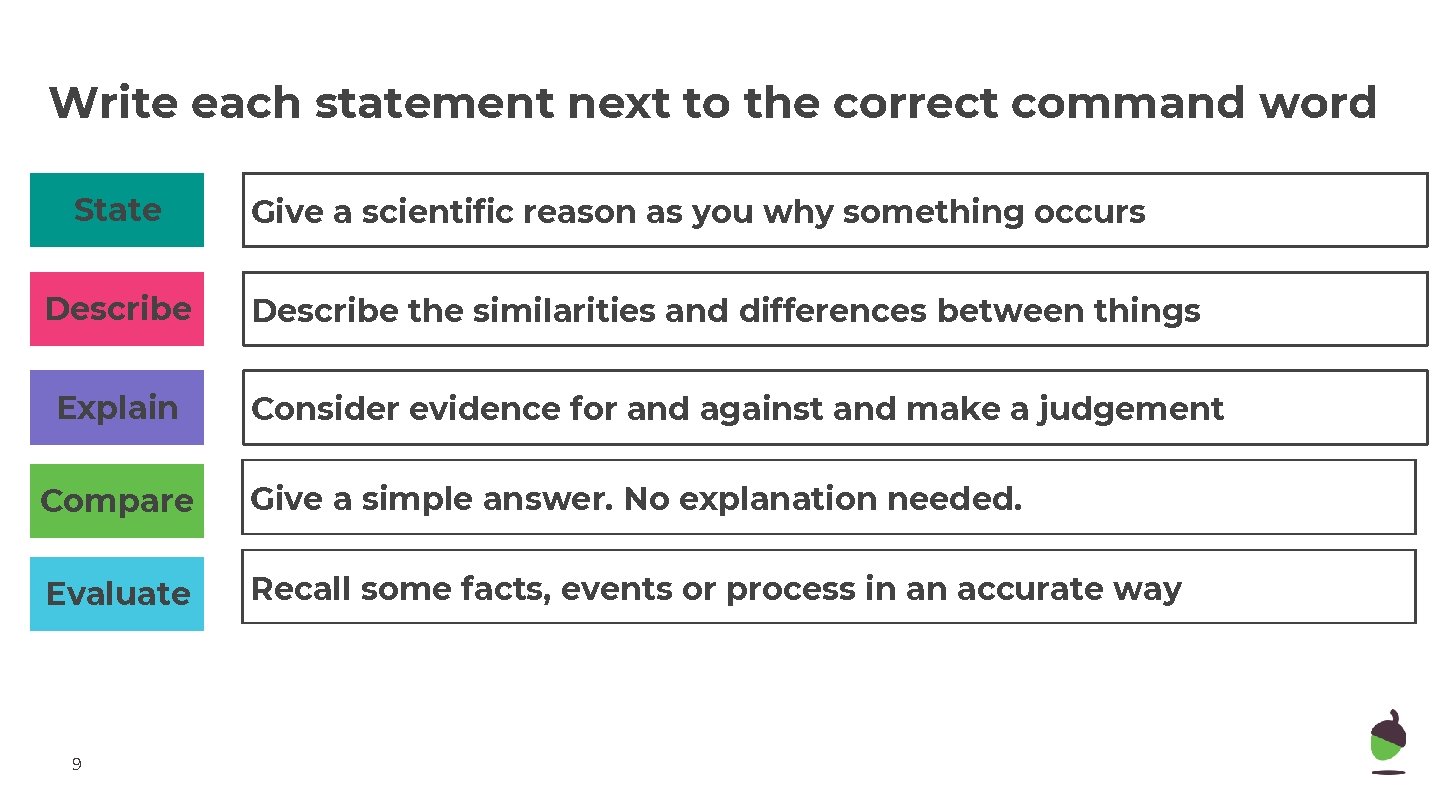
Write each statement next to the correct command word State Describe Explain Give a scientific reason as you why something occurs Describe the similarities and differences between things Consider evidence for and against and make a judgement Compare Give a simple answer. No explanation needed. Evaluate Recall some facts, events or process in an accurate way 9
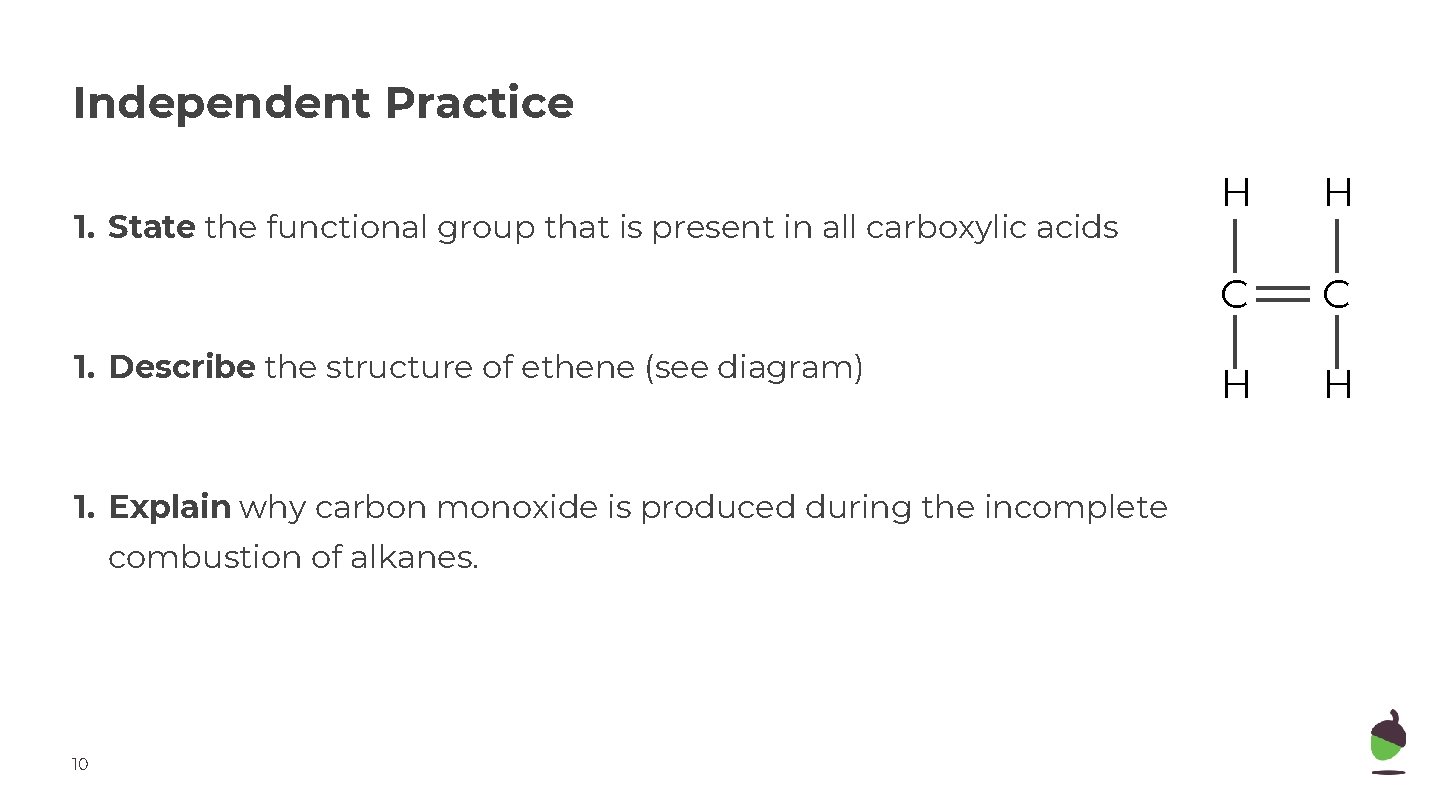
Independent Practice 1. State the functional group that is present in all carboxylic acids 1. Describe the structure of ethene (see diagram) 1. Explain why carbon monoxide is produced during the incomplete combustion of alkanes. 10 H H C C H H
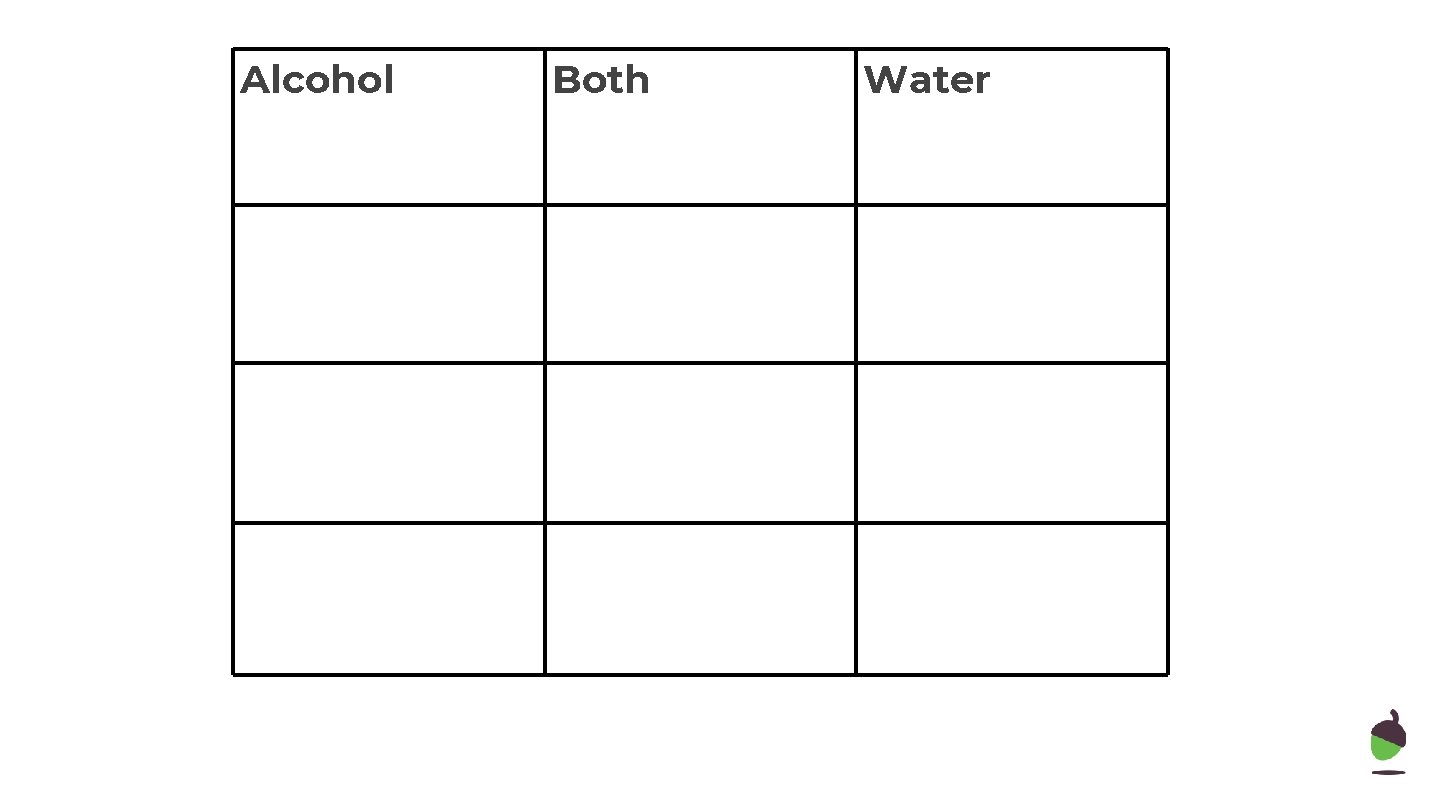
Alcohol Both Water
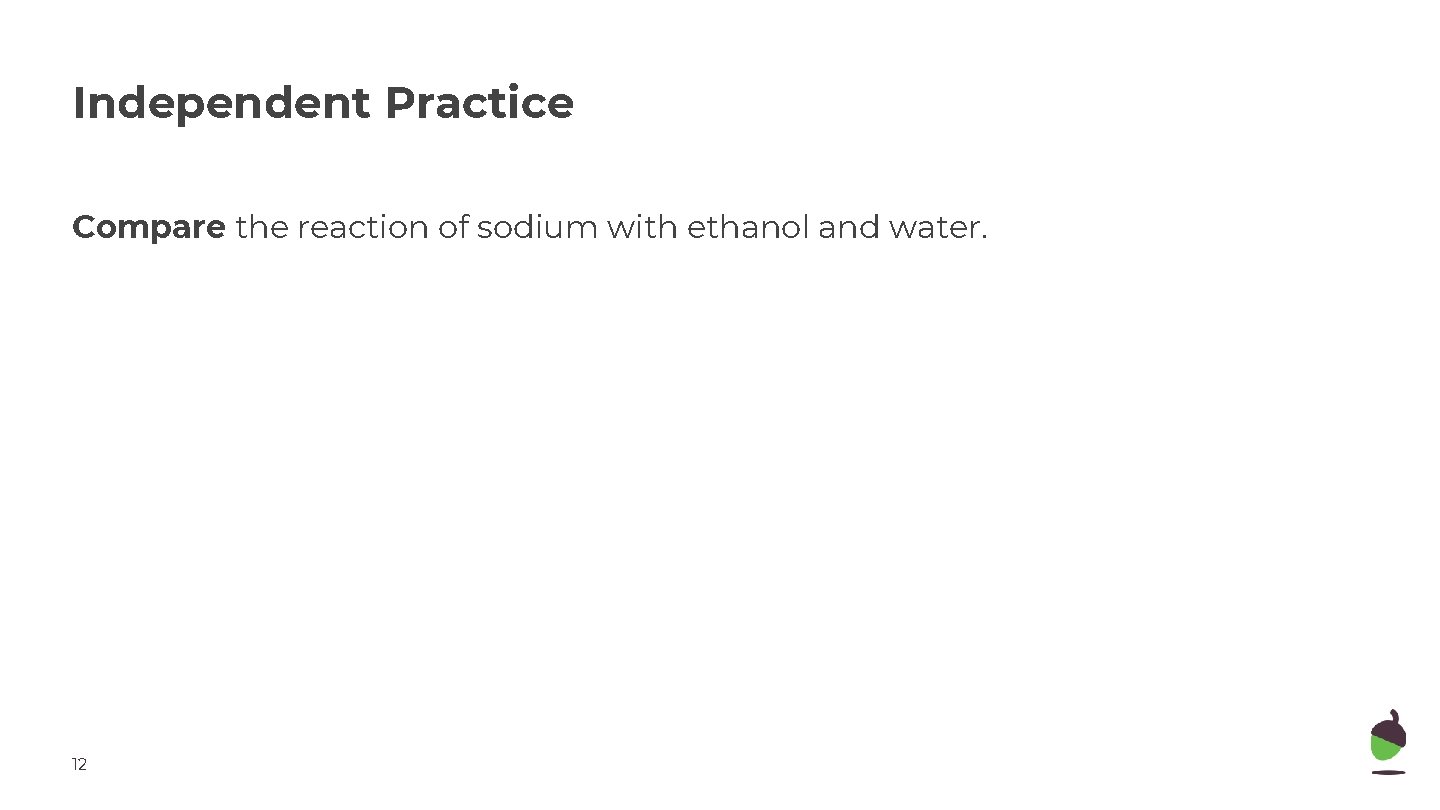
Independent Practice Compare the reaction of sodium with ethanol and water. 12