
GCSE Business Communication Systems Marketing Mix Learning Outcomes
GCSE Business Communication Systems Marketing Mix
Learning Outcomes Students should be able to: • demonstrate knowledge and understanding of the PLC and strategies used to extend the PLC • demonstrate knowledge and understanding of the 4 aspects of pricing • demonstrate knowledge and understanding of advertising and sales promotion • demonstrate knowledge and understanding of channels of distribution • analyse the impact digital technology has on the marketing mix Images © thinkstockphotos. co. uk
Marketing “Marketing is the management process responsible for identifying, anticipating and satisfying customer requirements efficiently and profitably. ” The Chartered Institute of Marketing (CIM) Images © thinkstockphotos. co. uk
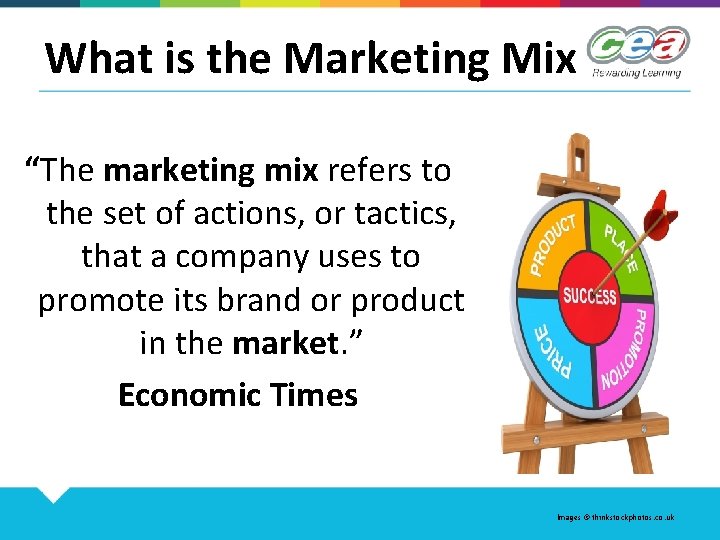
What is the Marketing Mix “The marketing mix refers to the set of actions, or tactics, that a company uses to promote its brand or product in the market. ” Economic Times Images © thinkstockphotos. co. uk
Marketing Mix The marketing mix is made up the four P’s: • Product • Price • Place • Promotion Images © thinkstockphotos. co. uk
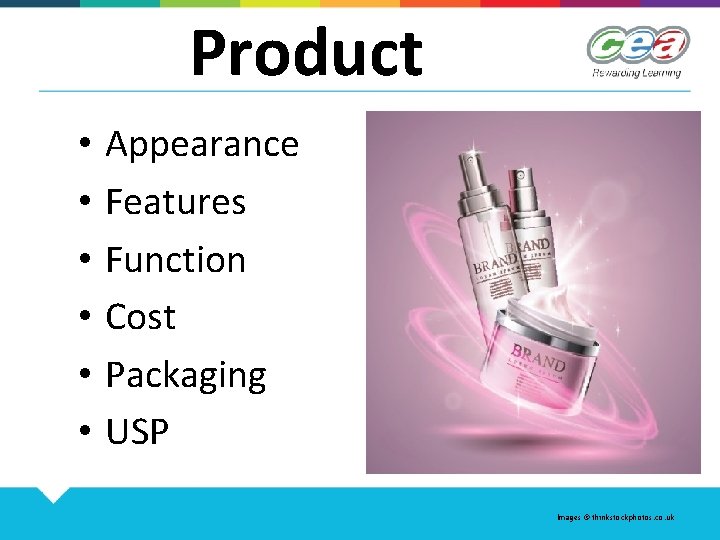
Product • • • Appearance Features Function Cost Packaging USP Images © thinkstockphotos. co. uk
What is the Product Life Cycle “The product life cycle (PLC) is the cycle through which every product goes through from introduction to withdrawal or eventual demise. ” Economic Times Images © thinkstockphotos. co. uk
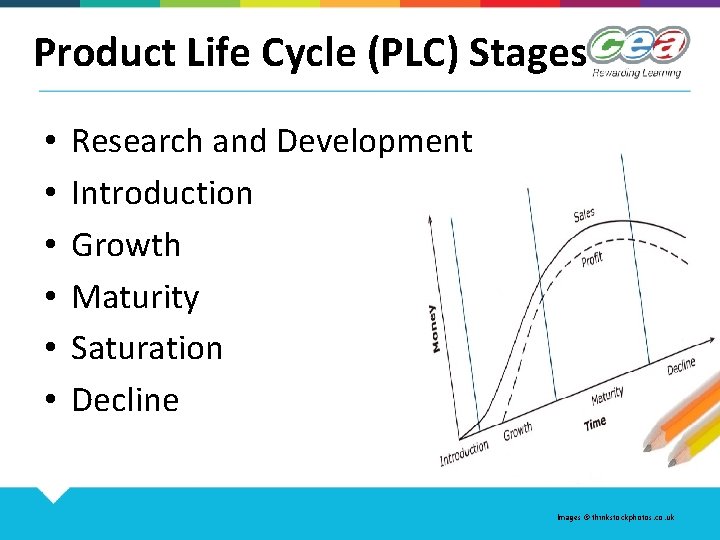
Product Life Cycle (PLC) Stages • • • Research and Development Introduction Growth Maturity Saturation Decline Images © thinkstockphotos. co. uk
Product Life Cycle Diagram Images © thinkstockphotos. co. uk
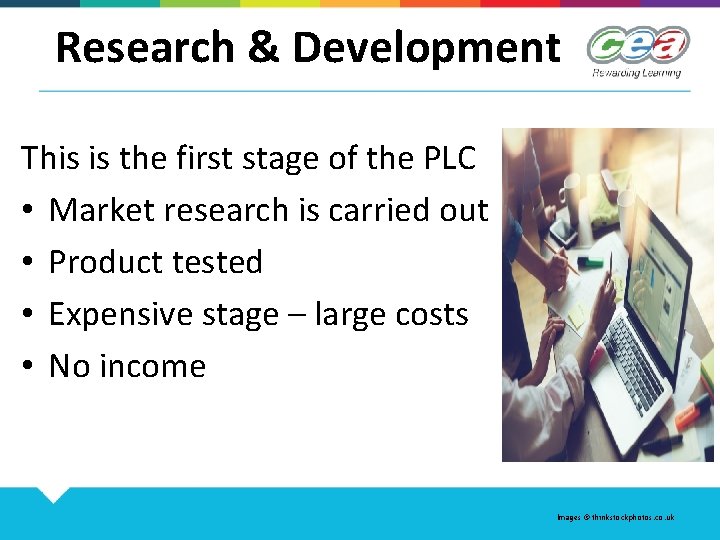
Research & Development This is the first stage of the PLC • Market research is carried out • Product tested • Expensive stage – large costs • No income Images © thinkstockphotos. co. uk
Introduction This is the stage when the product is launched into the market • At this stage, there is heavy marketing and product promotion • Sales are slow as customers are made aware of the product • Expenditure high • Profits low Images © thinkstockphotos. co. uk
Growth This is third stage of the PLC • Sales increase rapidly as customers are now aware of the product • Customer loyalty • Competition can be high • Profits should begin to increase Images © thinkstockphotos. co. uk
Maturity This fourth stage of the PLC • Sales are maintained as the product is established in the market • Competition becomes very intense • Difficult to increase the volume of the product sales any further • Business start to think of ways of extending the PLC Images © thinkstockphotos. co. uk
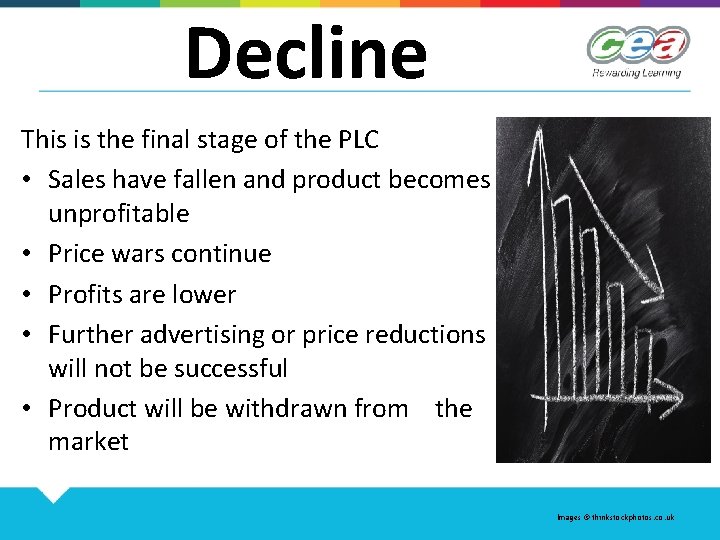
Decline This is the final stage of the PLC • Sales have fallen and product becomes unprofitable • Price wars continue • Profits are lower • Further advertising or price reductions will not be successful • Product will be withdrawn from the market Images © thinkstockphotos. co. uk
Strategies to Extend Product Life Cycle • • • Modify the product Change the packaging Increase promotion Reduce the price Find new market Encourage increased use of product Images © thinkstockphotos. co. uk
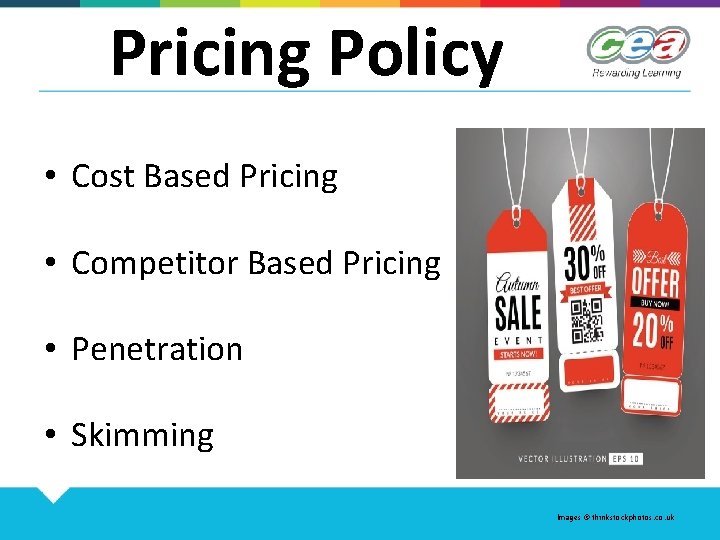
Pricing Policy • Cost Based Pricing • Competitor Based Pricing • Penetration • Skimming Images © thinkstockphotos. co. uk
Cost Based Pricing A method of pricing in which a mark-up is added to the total product/service cost. This involves: • Working out the total fixed and variable costs of the product • Deciding the percentage profit you want. • Adding the two together to get the selling price The advantage of this pricing policy is that the business is guaranteed a profit. Disadvantage is if competitors sell at a lower price they don't get sales to make the profit. Images © thinkstockphotos. co. uk
Competitor Based Pricing A method of pricing which involves the setting prices based on what your competitors are charging. If there is strong competition in the market, customers are faced with a wide choice leading to better value for money. Images © thinkstockphotos. co. uk
Penetration A method of pricing when a business sets a low price at the beginning in order to gain entry into an existing market. This is used for new business trying to enter an existing market which is well established. They need to offer low prices to attract customers. The idea that they gain the customers and then they can increase the price when they gain regular customers. Risk is that the prices can be set very low which makes profit minimal. Images © thinkstockphotos. co. uk
Skimming is when a business set a high price initially to ‘skim’ the market and gain as high a profit as possible. This policy is used for new products which have little competition at the start eg smart phone. People are willing to pay high prices to be the first to have the new/unique product. Later on other businesses come into the market and the prices have to fall to maintain sales, this policy can be mean high profits can be short lived. Images © thinkstockphotos. co. uk
Factors that Affect Price • • • Cost of production Need to make a profit Competition in the market Price which the market can bear Season Quantity of stock in hand Images © thinkstockphotos. co. uk
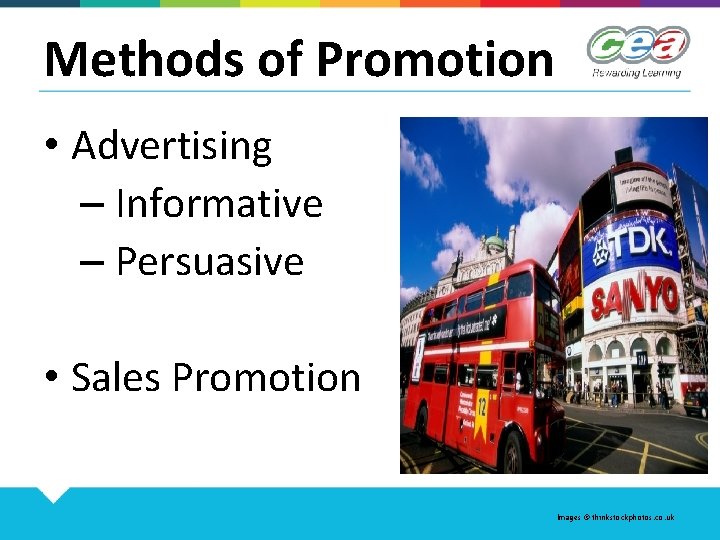
Methods of Promotion • Advertising – Informative – Persuasive • Sales Promotion Images © thinkstockphotos. co. uk
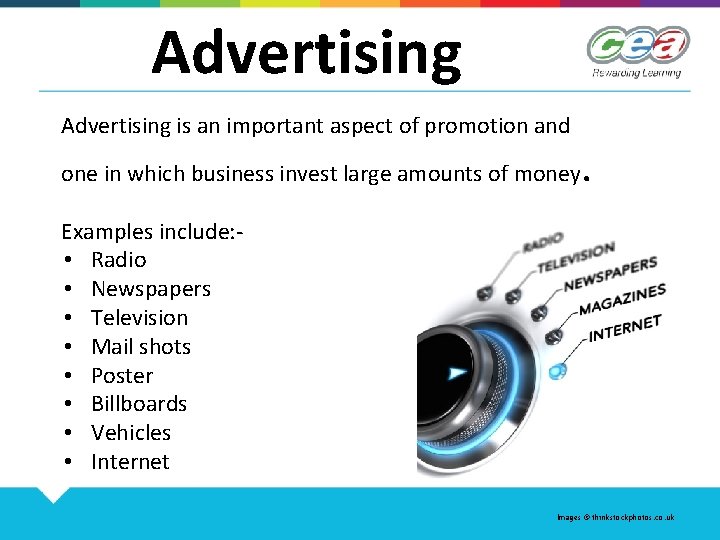
Advertising is an important aspect of promotion and one in which business invest large amounts of money . Examples include: • Radio • Newspapers • Television • Mail shots • Poster • Billboards • Vehicles • Internet Images © thinkstockphotos. co. uk
Sales Promotion Sales promotion is the term used to cover all methods which business use to persuade customers to purchase their product. Examples include: �Coupons �Loyalty cards �Competitions �Product endorsements �Free offers �Merchandising �Point of sale displays Images © thinkstockphotos. co. uk
Place is about getting the product to the customer by having the product in the right place so that it sells most successfully. This means that manufacturers must be very careful where they sell their product so that their image is maintained. They also plan the most effective way for transport and delivery. To achieve this businesses must: • Identify the most appropriate retail store for their product • Get the best possible channel of distribution for their product • Identify the most appropriate transport method for their product Images © thinkstockphotos. co. uk
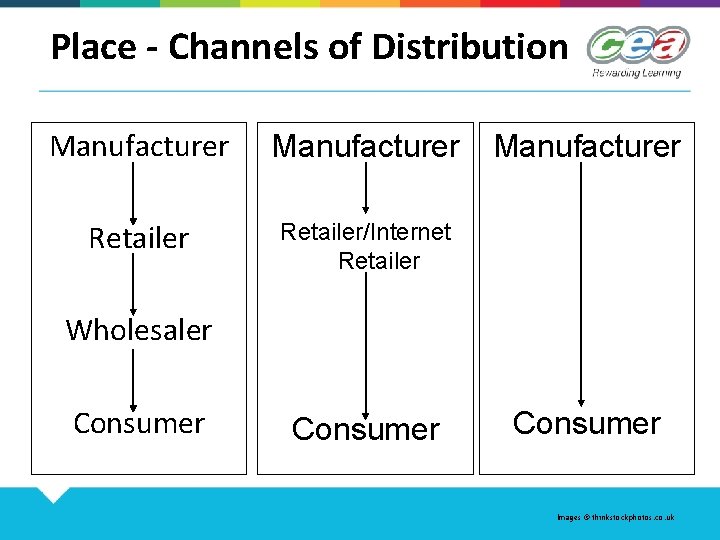
Place - Channels of Distribution Manufacturer Retailer/Internet Retailer Manufacturer Wholesaler Consumer Images © thinkstockphotos. co. uk
Factors Affecting Choice of Distribution Channel • Type of goods • Value of goods • If the product is perishable • Costs involved Images © thinkstockphotos. co. uk
Key Trends - Distribution Channel • • Growth of digital technology Growth of call centres Growth of retail parks Diversification of products and services offered by retailers Images © thinkstockphotos. co. uk
Impact of Digital Technology on the Marketing Mix • Businesses can no longer rely solely on traditional marketing materials like newspaper, posters, flyers etc • They need to attract the attention of their customers by embracing digital technology in their marketing strategy. Images © thinkstockphotos. co. uk
Impact of Digital Technology on the Marketing Mix • Product – eg more advanced features, packaging (ie downloads) • Price – eg more competitive pricing • Promotion – eg digital advertising • Place – eg downloads, same day delivery Images © thinkstockphotos. co. uk
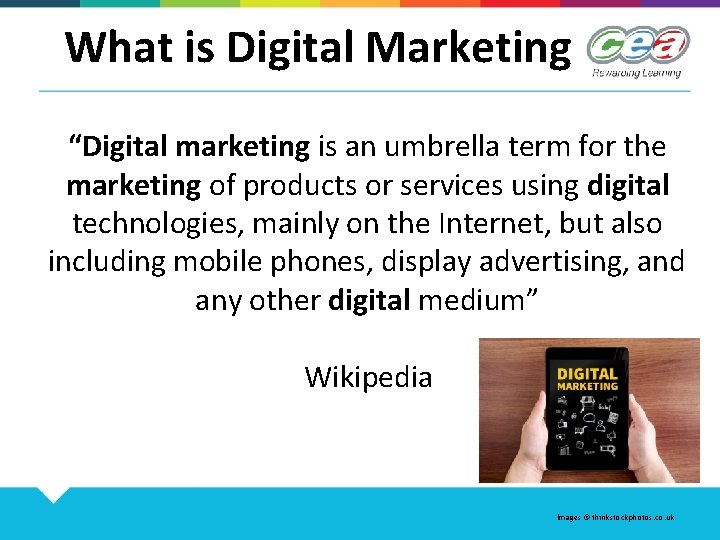
What is Digital Marketing “Digital marketing is an umbrella term for the marketing of products or services using digital technologies, mainly on the Internet, but also including mobile phones, display advertising, and any other digital medium” Wikipedia Images © thinkstockphotos. co. uk
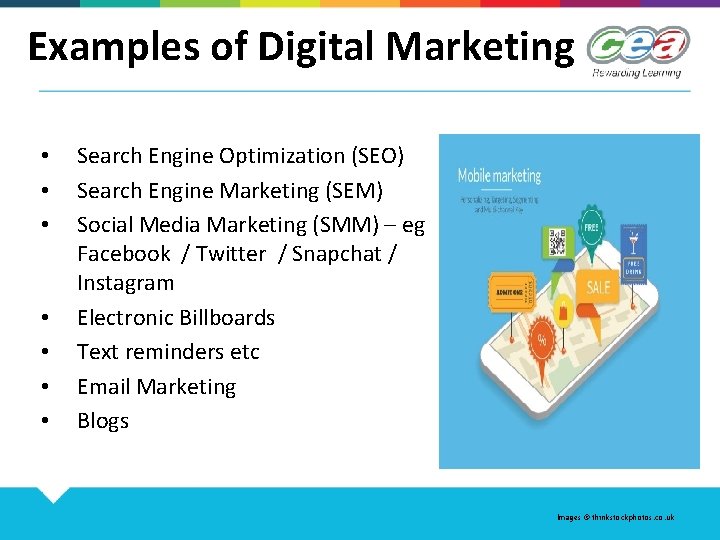
Examples of Digital Marketing • • Search Engine Optimization (SEO) Search Engine Marketing (SEM) Social Media Marketing (SMM) – eg Facebook / Twitter / Snapchat / Instagram Electronic Billboards Text reminders etc Email Marketing Blogs Images © thinkstockphotos. co. uk
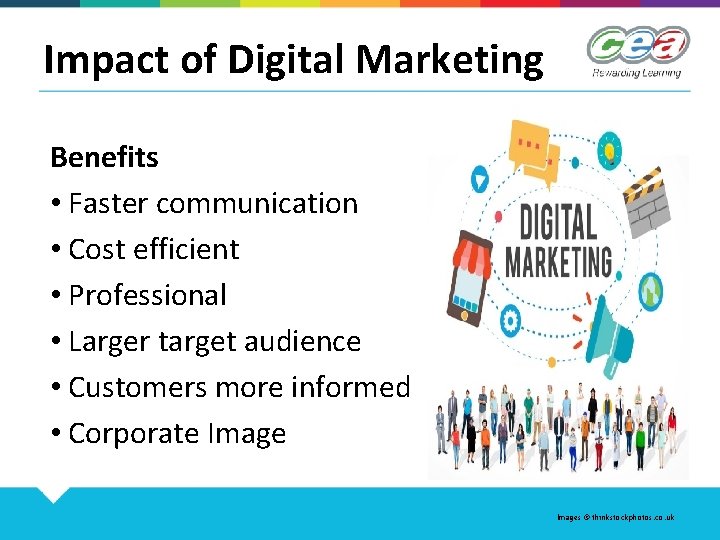
Impact of Digital Marketing Benefits • Faster communication • Cost efficient • Professional • Larger target audience • Customers more informed • Corporate Images © thinkstockphotos. co. uk
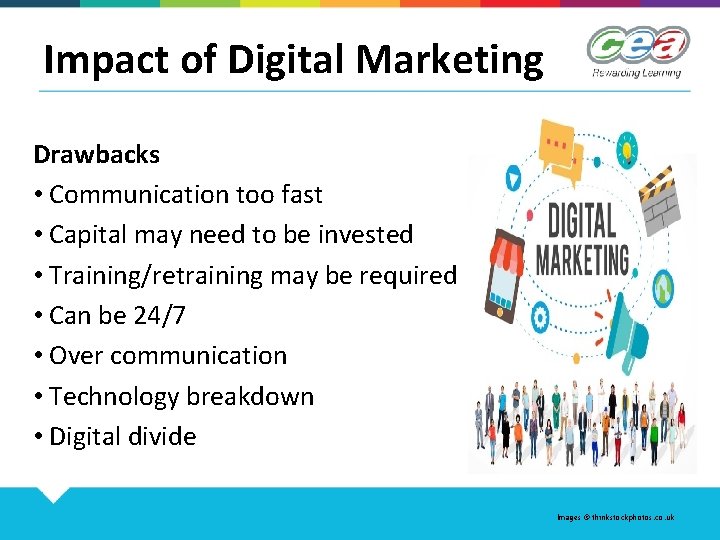
Impact of Digital Marketing Drawbacks • Communication too fast • Capital may need to be invested • Training/retraining may be required • Can be 24/7 • Over communication • Technology breakdown • Digital divide Images © thinkstockphotos. co. uk
Pupil Activity Working individually answer the following past paper questions: • 2016 Question 2 a Market Research Question 2 b Pricing Question 2 c PLC Question 2 d Promotion • 2015 Question 3 a Market Research • 2013 Question 3 a Market Research Question 3 b Promotion Question 3 c PLC Question 3 d Pricing Images © thinkstockphotos. co. uk
Learning Check Can you: • • demonstrate knowledge and understanding of the PLC and strategies used to extend the PLC demonstrate knowledge and understanding of the following aspects of pricing Ø Cost-plus pricing Ø Competitor-based pricing Ø Penetration Ø Skimming • demonstrate knowledge and understanding of advertising and sales promotion • demonstrate knowledge and understanding of channels of distribution • analyse the impact digital technology has on the marketing mix Images © thinkstockphotos. co. uk
- Slides: 36