
GCSE Astronomy Topic 3 EarthSunMoon 3 2 Tides
- Slides: 14
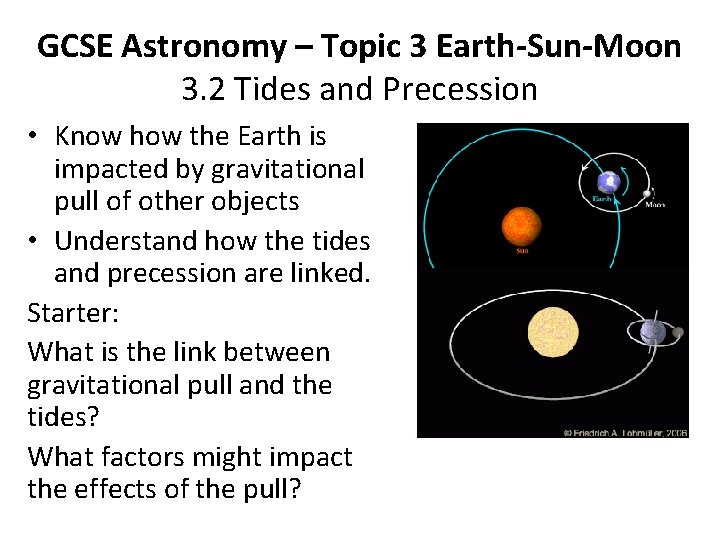
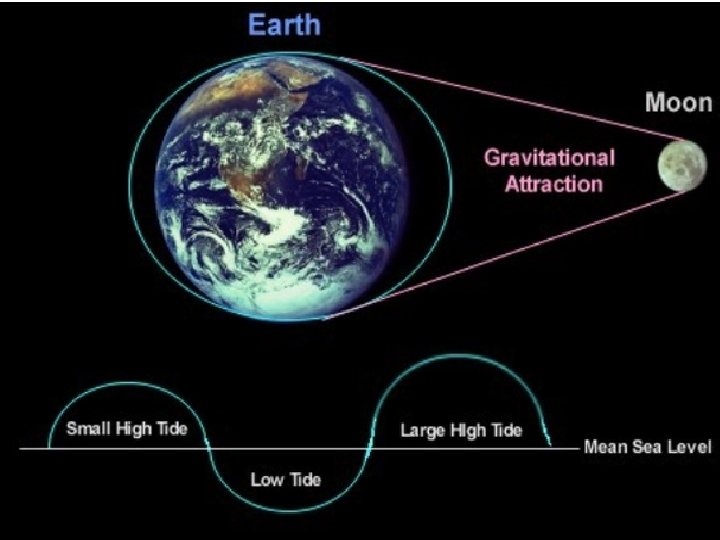
GCSE Astronomy – Topic 3 Earth-Sun-Moon 3. 2 Tides and Precession • Know how the Earth is impacted by gravitational pull of other objects • Understand how the tides and precession are linked. Starter: What is the link between gravitational pull and the tides? What factors might impact the effects of the pull?
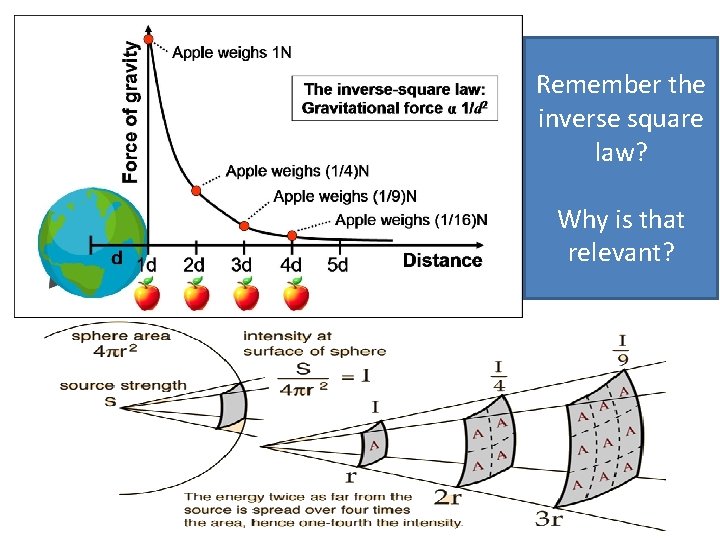
Remember the inverse square law? Why is that relevant?
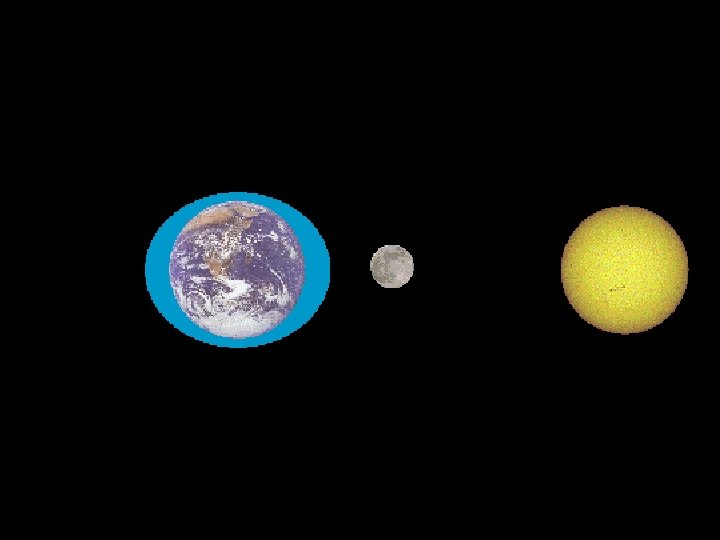
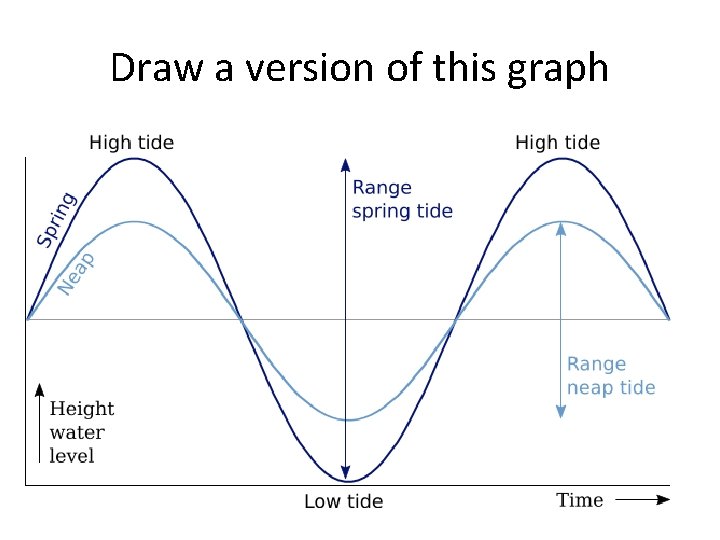
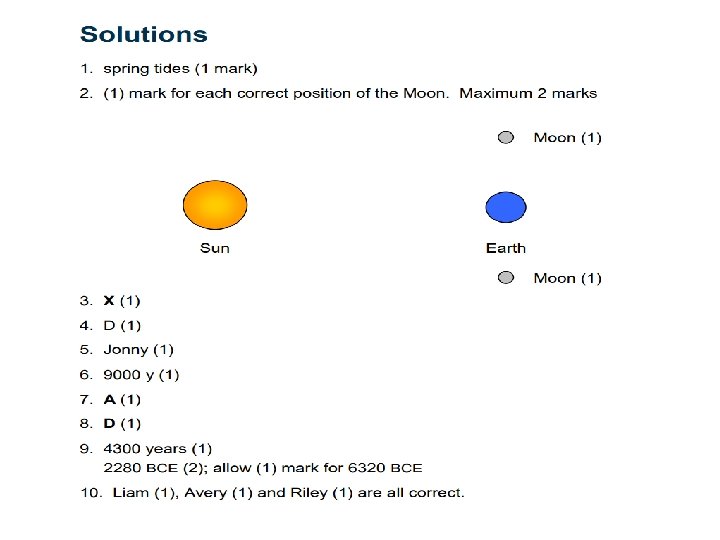
Causes of tides? Investigate tides, including the relative effects of the Sun and Moon in producing: • high tides • low tides • spring tides • neap tides.
Draw a version of this graph
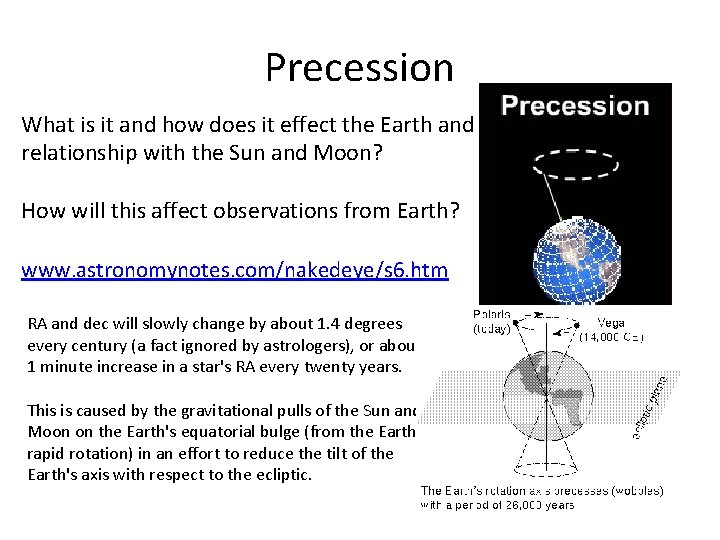
Precession What is it and how does it effect the Earth and its relationship with the Sun and Moon? How will this affect observations from Earth? www. astronomynotes. com/nakedeye/s 6. htm RA and dec will slowly change by about 1. 4 degrees every century (a fact ignored by astrologers), or about 1 minute increase in a star's RA every twenty years. This is caused by the gravitational pulls of the Sun and Moon on the Earth's equatorial bulge (from the Earth's rapid rotation) in an effort to reduce the tilt of the Earth's axis with respect to the ecliptic.
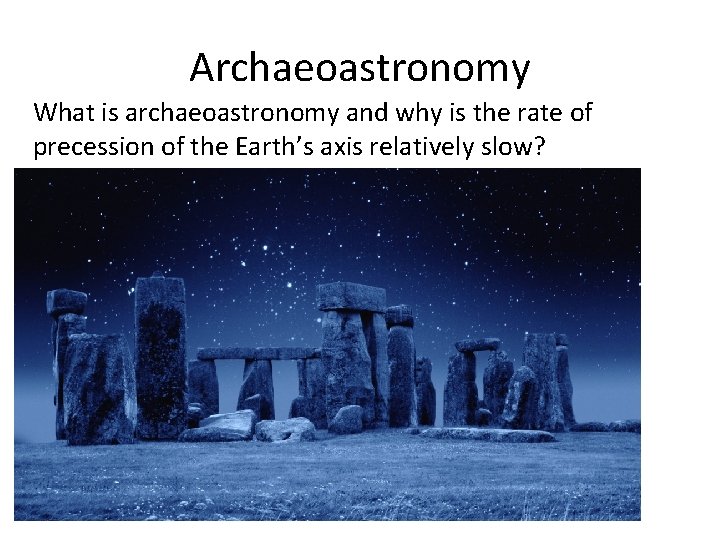
Archaeoastronomy What is archaeoastronomy and why is the rate of precession of the Earth’s axis relatively slow?
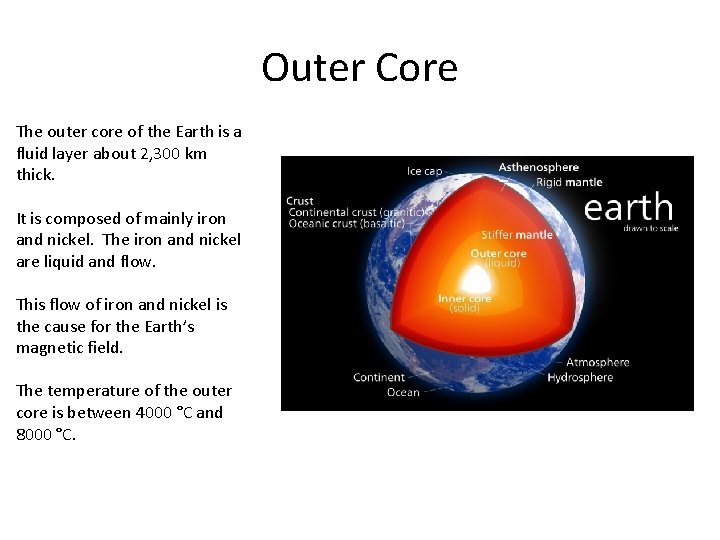
Outer Core The outer core of the Earth is a fluid layer about 2, 300 km thick. It is composed of mainly iron and nickel. The iron and nickel are liquid and flow. This flow of iron and nickel is the cause for the Earth’s magnetic field. The temperature of the outer core is between 4000 °C and 8000 °C.
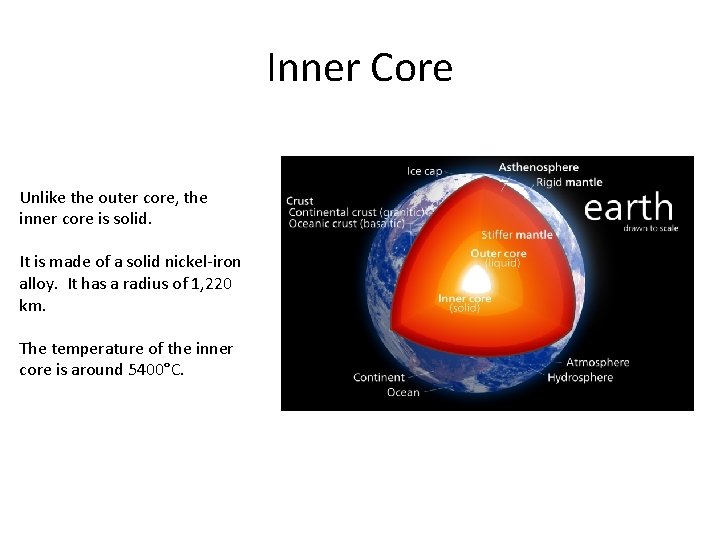
Inner Core Unlike the outer core, the inner core is solid. It is made of a solid nickel-iron alloy. It has a radius of 1, 220 km. The temperature of the inner core is around 5400°C.
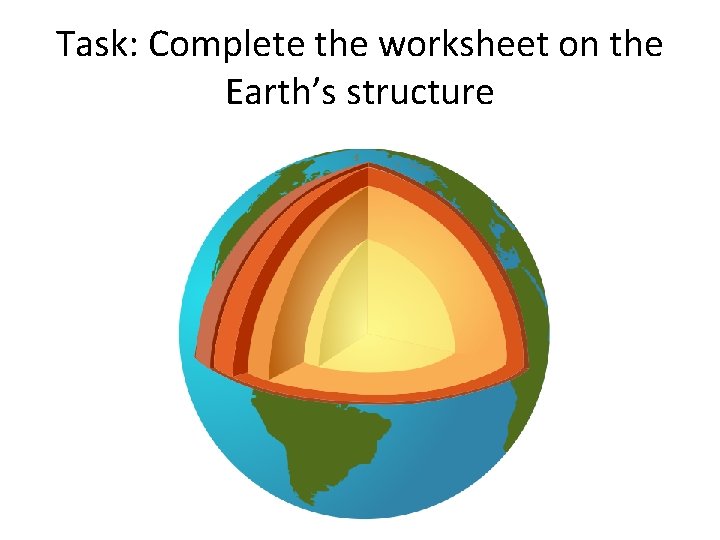
Task: Complete the worksheet on the Earth’s structure