
GCSE Art and Design OCR J 170 Fine


- Slides: 7
GCSE Art and Design OCR J 170 Fine Art
Why choose Art and Design GCSE? • A very successful subject with a high GCSE pass rate! • 100% practical subject. • 100% coursework. No final examination. • Students develop knowledge, skills, and understanding to enable them to express their creativity and imagination. • Complements other subjects. • It will inspire your interests, develop your enquiring mind and critical thinking skills. • Selecting it at GCSE level, does not necessarily lead to pursuing an Art career. It may be used to gain a vital GCSE. • You may wish to pursue a career in the one of the many exciting creative industries.
Course content • The GCSE is made up of two components. Both components are made up of practical responses. • Component 1 = 60% A portfolio is assembled in Year 11 and part of Year 12, using a theme of your choice. You will develop, explore and record your ideas. You will learn new skills, whilst developing your knowledge and understanding. • Component 2 = 40% A second (much smaller) portfolio is assembled using a theme you choose from a range of themes set by OCR. • You will have experience in a wide range of media such as Printing, Ceramics, Textiles, Digital art, Fine Art – drawing, painting and mixed media etc. • Both components are undertaken in the art room, with your Art teacher.
How is it assessed? GCSE Art and Design encourages students to select, organise and present work that represents the best of their achievement. • There are two areas of assessment: • Component 1 - A Portfolio, which is 60% of the GCSE • Component 2 - An externally set task, which is 40% of the GCSE • Both components are 100% non-exam assessment and are internally assessed by the Art and Design Department and externally moderated by OCR.
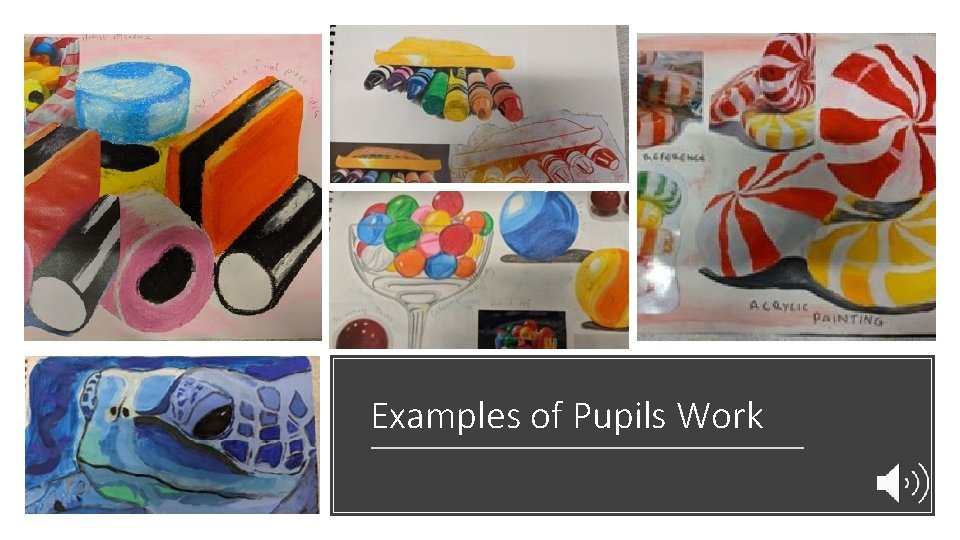
Examples of Pupils Work
FAQs • What is the pass rate? The pass rate achieved over the last three years has exceeded 86%. A – C. We constantly outperform other male NI non-grammars schools. • Is Art and Design difficult? If you enjoy Art and Design and have been attaining high grades in your Art assessments, you should not find it difficult. You will need to put in lots of effort and be able to meet deadlines. • Can I select my own theme? Yes, you can. • Does my son have to follow an Art career? No. It can be used to collect a full GCSE. • Is there any written content? Yes, however it is minimal. • Is there an examination? There is no examination.
Careers and progression routes What would you like to be? • An artist, a graphic designer, a games designer, a multimedia animator, a photographer, an architect, a fashion designer, tattoo artist, a textile designer, product designer, interior designer, garden designer, a digital artist, a theatre set designer, an art director in the film industry, a costume designer, a movie maker, an animator, prop maker, advertising, journalism. . . • The list is endless as so many Art and Design skills are transferrable to employment and further education. . . • The creative industries are the fastest growing of all areas. Learn to use your creativity and critical thinking skills here and they will open opportunities. • Many entrepreneurs, scientists, doctors, business owners and industry leaders to name just a few have a creative GCSE so why not you?