
GCOS Plans WMO Strategic Plan Goals 1 Better
GCOS – Plans
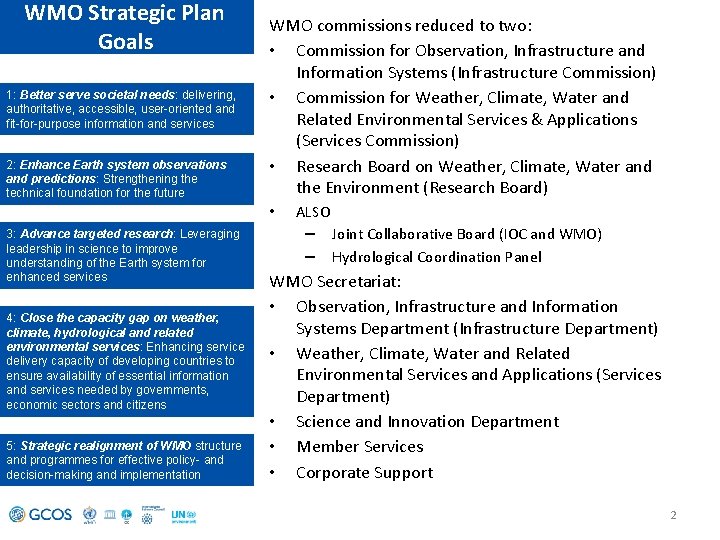
WMO Strategic Plan Goals 1: Better serve societal needs: delivering, authoritative, accessible, user-oriented and fit-for-purpose information and services 2: Enhance Earth system observations and predictions: Strengthening the technical foundation for the future 3: Advance targeted research: Leveraging leadership in science to improve understanding of the Earth system for enhanced services 4: Close the capacity gap on weather, climate, hydrological and related environmental services: Enhancing service delivery capacity of developing countries to ensure availability of essential information and services needed by governments, economic sectors and citizens 5: Strategic realignment of WMO structure and programmes for effective policy- and decision-making and implementation WMO commissions reduced to two: • Commission for Observation, Infrastructure and Information Systems (Infrastructure Commission) • Commission for Weather, Climate, Water and Related Environmental Services & Applications (Services Commission) • Research Board on Weather, Climate, Water and the Environment (Research Board) • ALSO – Joint Collaborative Board (IOC and WMO) – Hydrological Coordination Panel WMO Secretariat: • Observation, Infrastructure and Information Systems Department (Infrastructure Department) • Weather, Climate, Water and Related Environmental Services and Applications (Services Department) • Science and Innovation Department • Member Services • Corporate Support 2
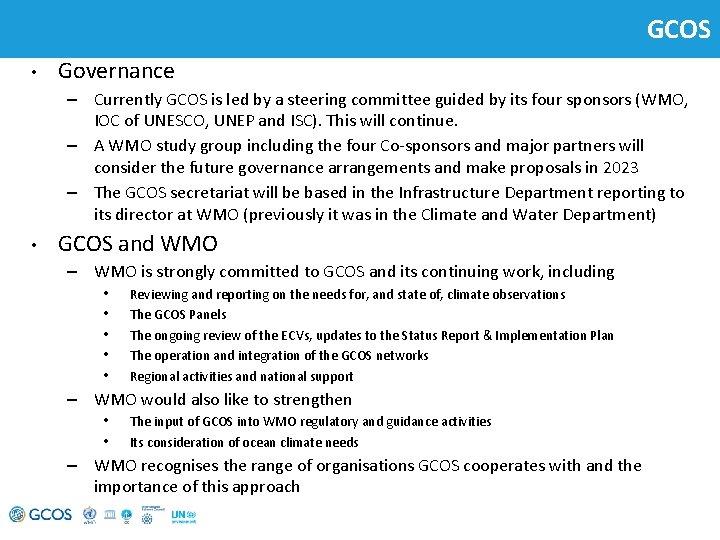
GCOS • Governance – Currently GCOS is led by a steering committee guided by its four sponsors (WMO, IOC of UNESCO, UNEP and ISC). This will continue. – A WMO study group including the four Co-sponsors and major partners will consider the future governance arrangements and make proposals in 2023 – The GCOS secretariat will be based in the Infrastructure Department reporting to its director at WMO (previously it was in the Climate and Water Department) • GCOS and WMO – WMO is strongly committed to GCOS and its continuing work, including • Reviewing and reporting on the needs for, and state of, climate observations • The GCOS Panels • The ongoing review of the ECVs, updates to the Status Report & Implementation Plan • The operation and integration of the GCOS networks • Regional activities and national support – WMO would also like to strengthen • The input of GCOS into WMO regulatory and guidance activities • Its consideration of ocean climate needs – WMO recognises the range of organisations GCOS cooperates with and the importance of this approach

Timeline for Status Report (SR 4 ) and Implementation Plan (IP 4) SEPTEMBER (? ) 2020: Panel Meetings Consider Requirements SEPTEMBER OCTOBER 2021: 2022 March Panel MARCH 2021: Panel Meetings 2021: 4 th Status Meetings 2 nd Climate Agree revised Report published Agree revised Observation Status Report Implementation Plan Conference Jan 2021 Jan 2020 Public consultation (11 -15 October 2021, Darmstadt, Germany) panels draft SR 4 Jan 2022 Review SR 4 Panels consider comments on requirements panels draft IP 4 Review IP 4 Jan 2023 OCTOBER: Steering Committee Meeting: 4 th Implementation Plan published Jan 2024 UNFCCC Global Stocktake ECV Stewards and IP Action rapporteurs update panels on progress, issues and gaps. Develop work on monitoring impacts and responses, regional support, gaps in climate cycles
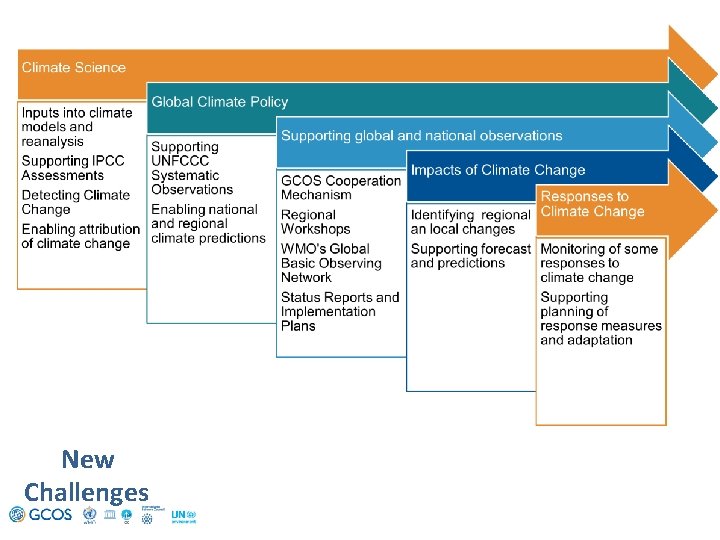
New Challenges
- Slides: 5