
gcom 343 gestalt principles similarity continuation closure proximity
- Slides: 8
gcom 343 | gestalt principles similarity continuation closure proximity figure/ground equilibrium isomorphic correspondence
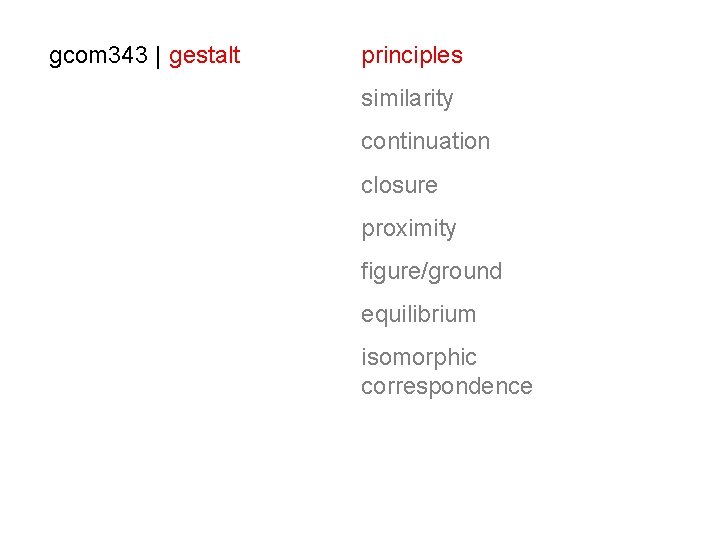
gcom 343 | gestalt similarity | continuation | closure | proximity | figure/ground | equilibrium | isomorphic correspondence Visual elements that are similar in shape, size, color, direction and motion are seen as part of a group
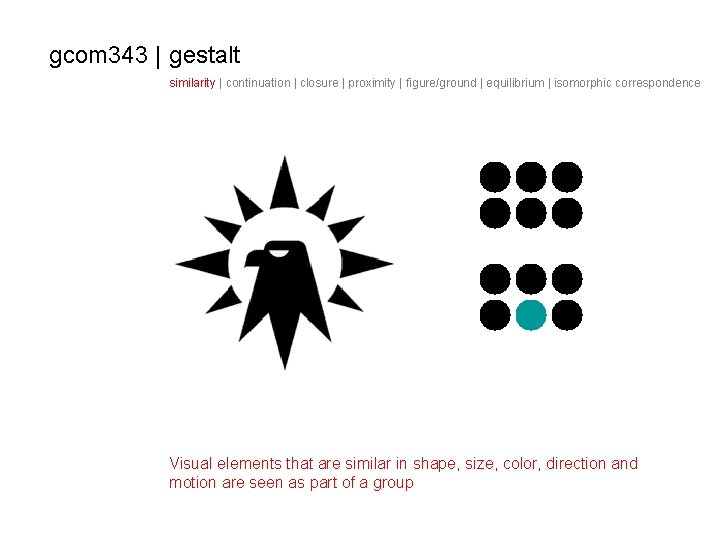
gcom 343 | gestalt similarity | continuation | closure | proximity | figure/ground | equilibrium | isomorphic correspondence Occurs when the eye follow along a line or curve, even when it crosses over negative and positive shapes
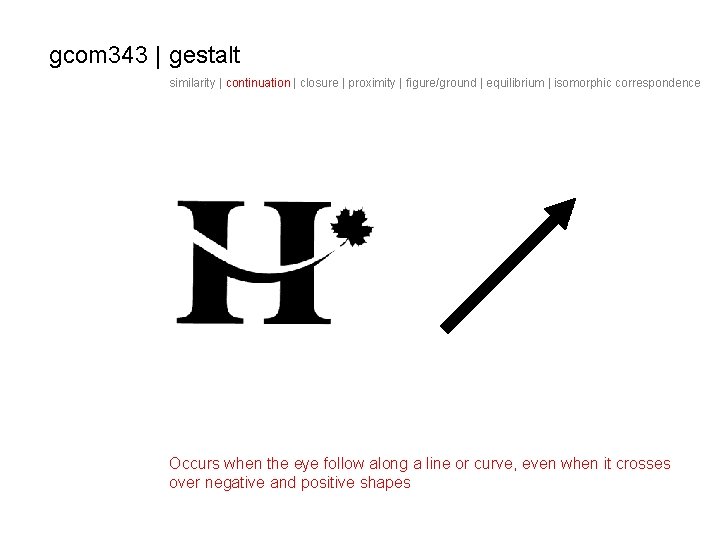
gcom 343 | gestalt similarity | continuation | closure | proximity | figure/ground | equilibrium | isomorphic correspondence Draws on the natural human tendency to visually close gaps in forms, especially familiar forms
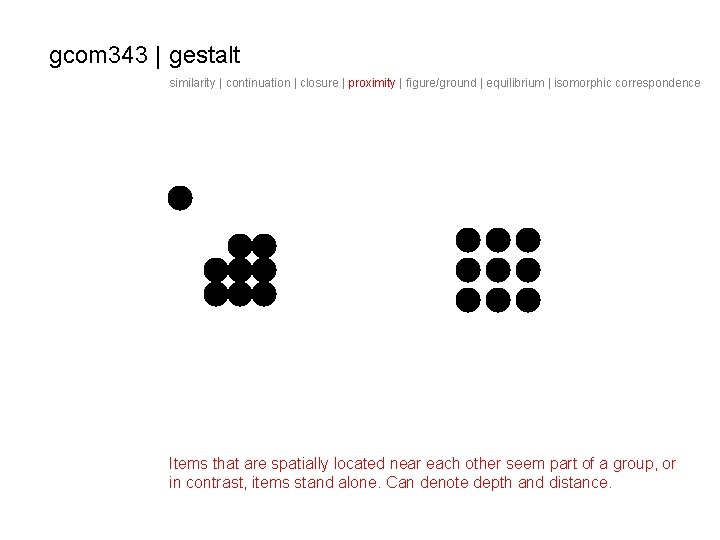
gcom 343 | gestalt similarity | continuation | closure | proximity | figure/ground | equilibrium | isomorphic correspondence Items that are spatially located near each other seem part of a group, or in contrast, items stand alone. Can denote depth and distance.
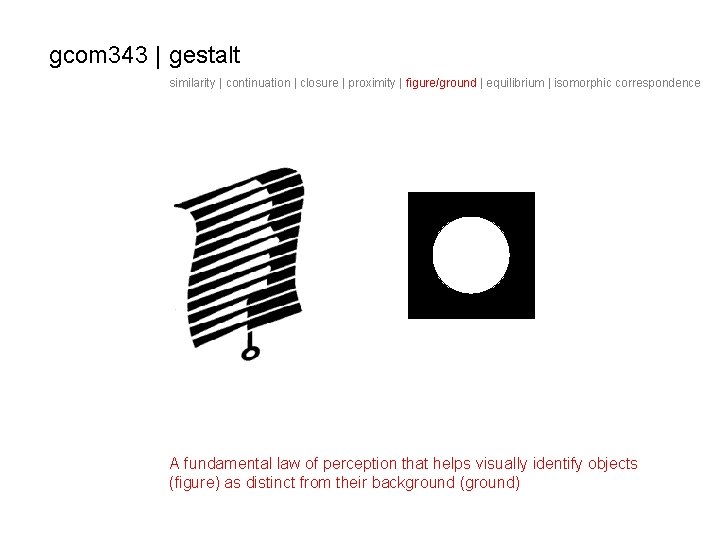
gcom 343 | gestalt similarity | continuation | closure | proximity | figure/ground | equilibrium | isomorphic correspondence A fundamental law of perception that helps visually identify objects (figure) as distinct from their background (ground)
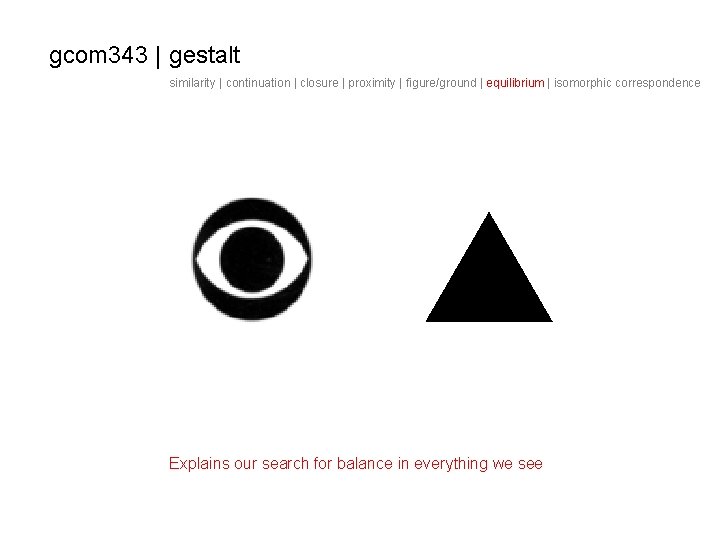
gcom 343 | gestalt similarity | continuation | closure | proximity | figure/ground | equilibrium | isomorphic correspondence Explains our search for balance in everything we see
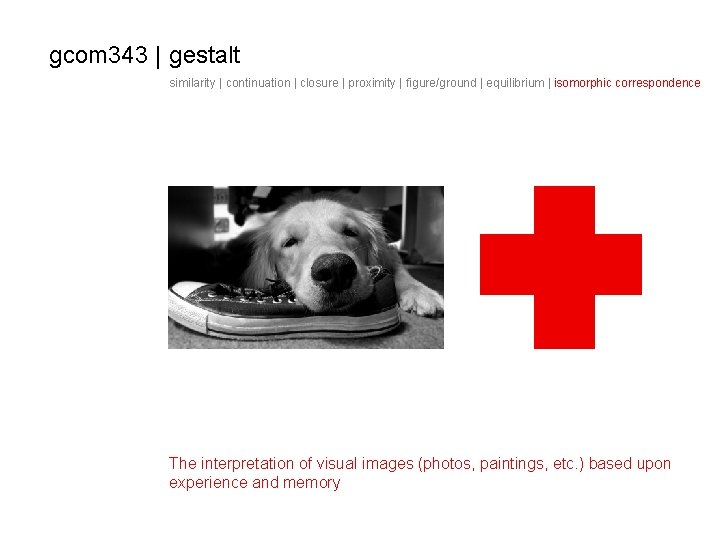
gcom 343 | gestalt similarity | continuation | closure | proximity | figure/ground | equilibrium | isomorphic correspondence The interpretation of visual images (photos, paintings, etc. ) based upon experience and memory