
GCE PROFESSIONAL BUSINESS SERVICES AS 3 RATIO ANALYSIS
GCE PROFESSIONAL BUSINESS SERVICES AS 3 RATIO ANALYSIS FOR DECISION MAKING 1
RATIO ANALYSIS FOR DECISION MAKING 2
Ratio Analysis – Decision Making Different types of accounting ratios are used for different purposes: • Profitability/Performance Ratios – to assess profitability levels • Liquidity Ratios – to assess solvency levels • Gearing Ratio – to assess debt levels • Financial Efficiency Ratios – to assess efficiency levels • Shareholder Ratios – to assess equity investments 3
Profitability/Performance Ratios • Return On Capital Employed (ROCE) • Gross Profit Margin • Net Profit Margin 4

Return on Capital Employed (ROCE) This shows a firms profitability in relation to the investors capital investment. ROCE = Profit before tax x 100% = x % (Total Assets-Current Liabilities) 5
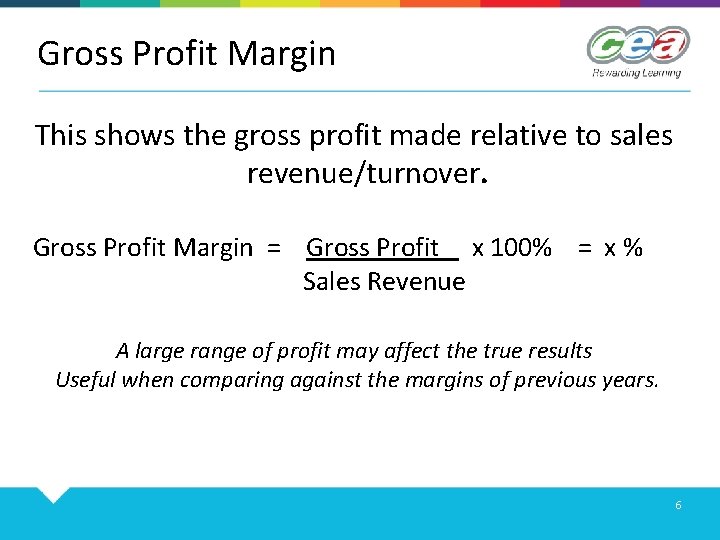
Gross Profit Margin This shows the gross profit made relative to sales revenue/turnover. Gross Profit Margin = Gross Profit x 100% = x % Sales Revenue A large range of profit may affect the true results Useful when comparing against the margins of previous years. 6
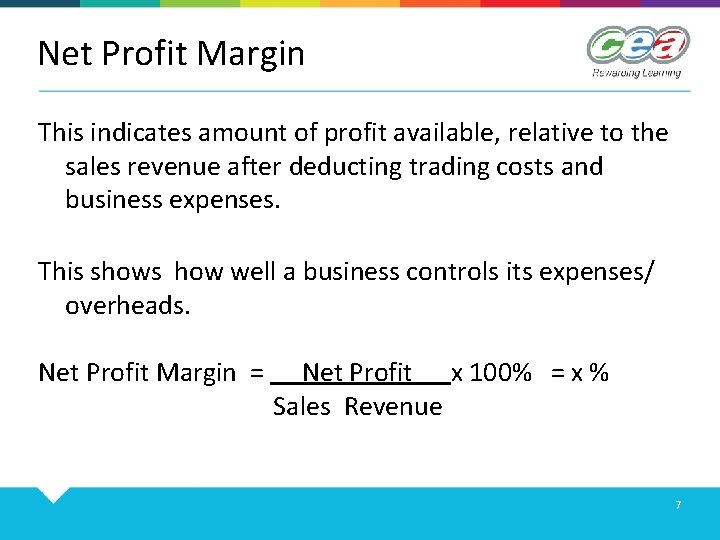
Net Profit Margin This indicates amount of profit available, relative to the sales revenue after deducting trading costs and business expenses. This shows how well a business controls its expenses/ overheads. Net Profit Margin = Net Profit x 100% = x % Sales Revenue 7
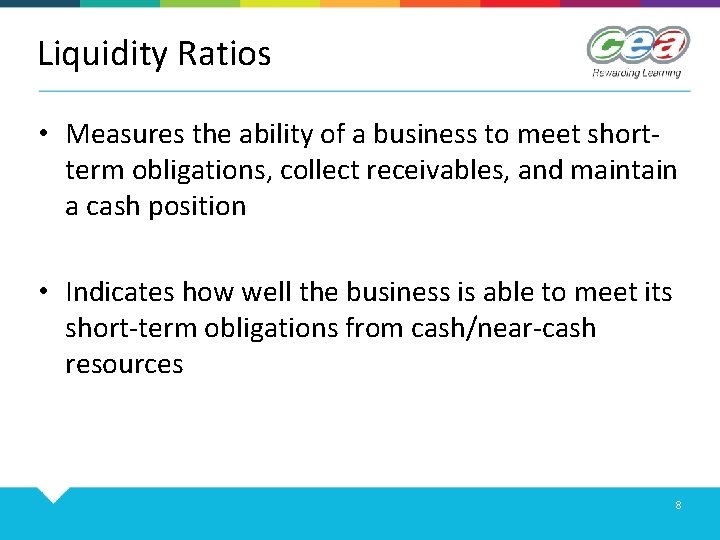
Liquidity Ratios • Measures the ability of a business to meet shortterm obligations, collect receivables, and maintain a cash position • Indicates how well the business is able to meet its short-term obligations from cash/near-cash resources 8
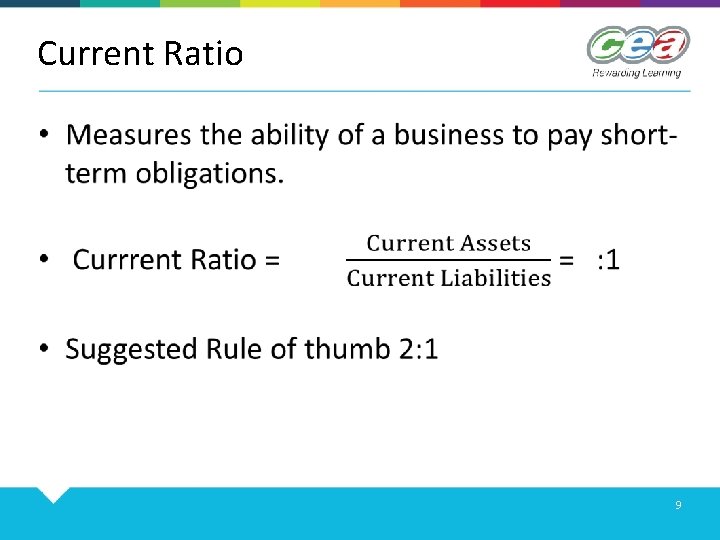
Current Ratio • 9
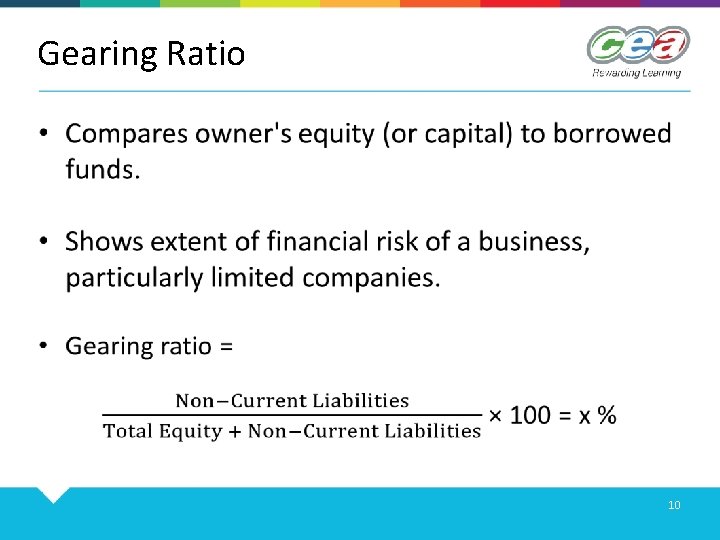
Gearing Ratio • 10
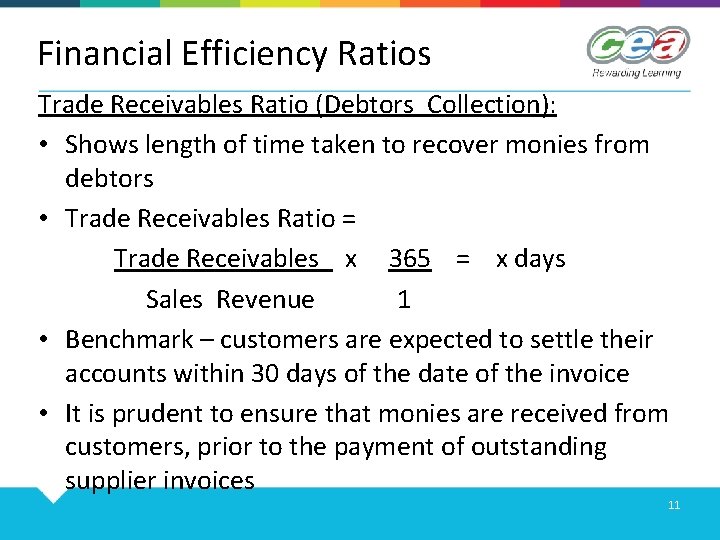
Financial Efficiency Ratios Trade Receivables Ratio (Debtors Collection): • Shows length of time taken to recover monies from debtors • Trade Receivables Ratio = Trade Receivables x 365 = x days Sales Revenue 1 • Benchmark – customers are expected to settle their accounts within 30 days of the date of the invoice • It is prudent to ensure that monies are received from customers, prior to the payment of outstanding supplier invoices 11
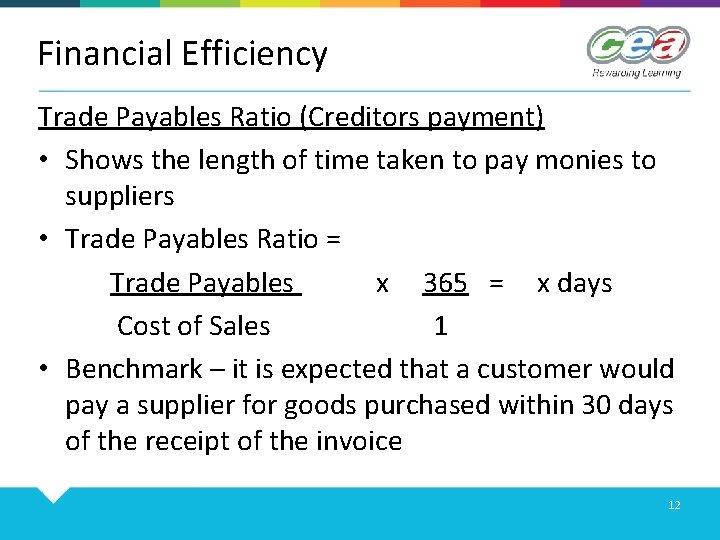
Financial Efficiency Trade Payables Ratio (Creditors payment) • Shows the length of time taken to pay monies to suppliers • Trade Payables Ratio = Trade Payables x 365 = x days Cost of Sales 1 • Benchmark – it is expected that a customer would pay a supplier for goods purchased within 30 days of the receipt of the invoice 12
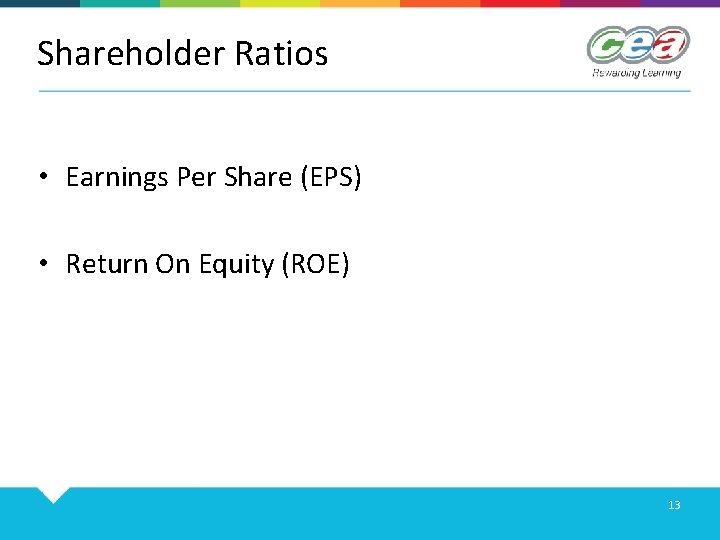
Shareholder Ratios • Earnings Per Share (EPS) • Return On Equity (ROE) 13
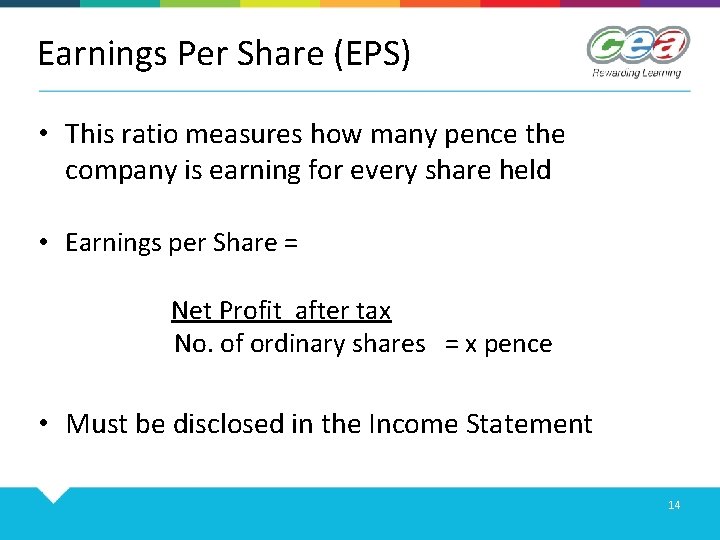
Earnings Per Share (EPS) • This ratio measures how many pence the company is earning for every share held • Earnings per Share = Net Profit after tax No. of ordinary shares = x pence • Must be disclosed in the Income Statement 14
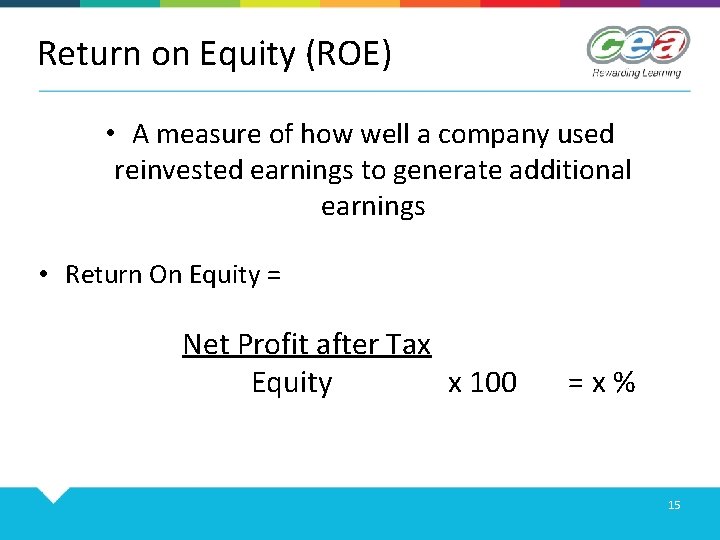
Return on Equity (ROE) • A measure of how well a company used reinvested earnings to generate additional earnings • Return On Equity = Net Profit after Tax Equity x 100 = x % 15
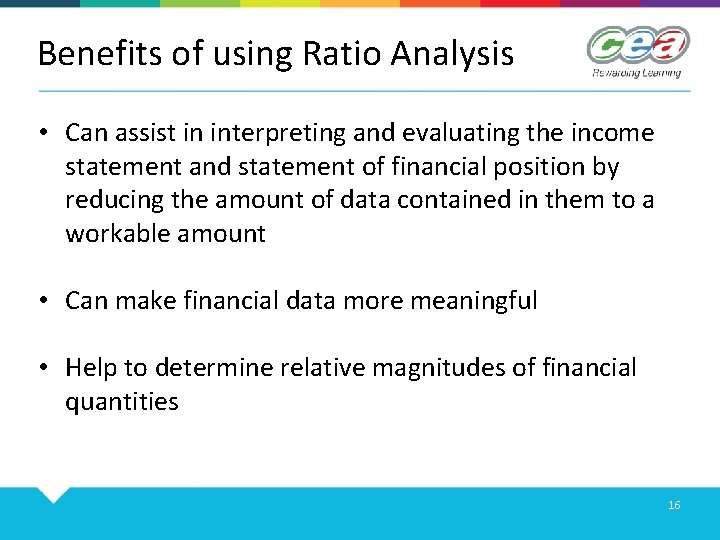
Benefits of using Ratio Analysis • Can assist in interpreting and evaluating the income statement and statement of financial position by reducing the amount of data contained in them to a workable amount • Can make financial data more meaningful • Help to determine relative magnitudes of financial quantities 16
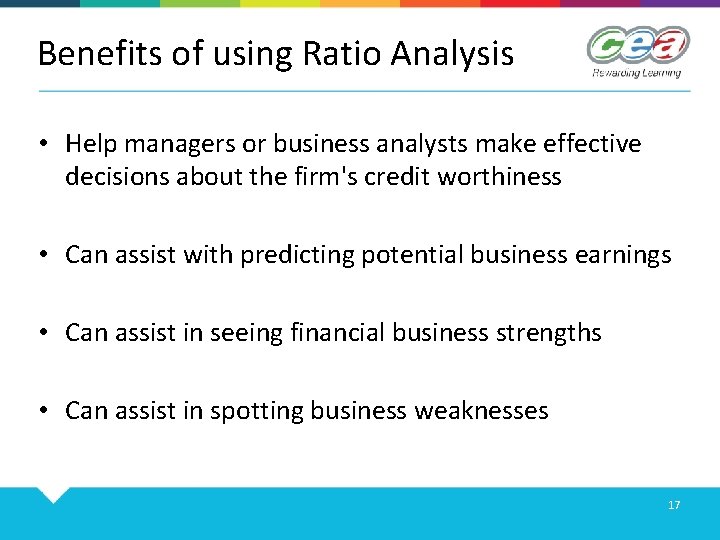
Benefits of using Ratio Analysis • Help managers or business analysts make effective decisions about the firm's credit worthiness • Can assist with predicting potential business earnings • Can assist in seeing financial business strengths • Can assist in spotting business weaknesses 17
Limitations of using Ratio Analysis • Comparing the ratios with past trends and with competitors may be inaccurate as the data may not be easily comparable due to differences in accounting policies, accounting period etc. • It is based on current and past trends, but not future trends. • Impact of inflation is not properly reflected, as many figures are taken at historical numbers, several years old. 18
Limitations of using Ratio Analysis • There are differences in approach among financial analysts on how to treat certain items, how to interpret ratios etc. • The ratios are only as good or bad as the underlying information used to calculate them – “window dressing” may be used by management to manipulate the financial results 19
Making Recommendations • Ratio analysis may be used to make recommendations for improvement, but will also depend on other factors such as: – Inflation – External factors e. g. changes in interest rates – Management changes – Business Performance – State of the economy – Performance of competitors 20
Ratio Analysis • Notes: 21
- Slides: 21