
Gausss Law Parallel Plate Capacitors Quick Electrostatics Refresher
- Slides: 22
Gauss’s Law & Parallel Plate Capacitors
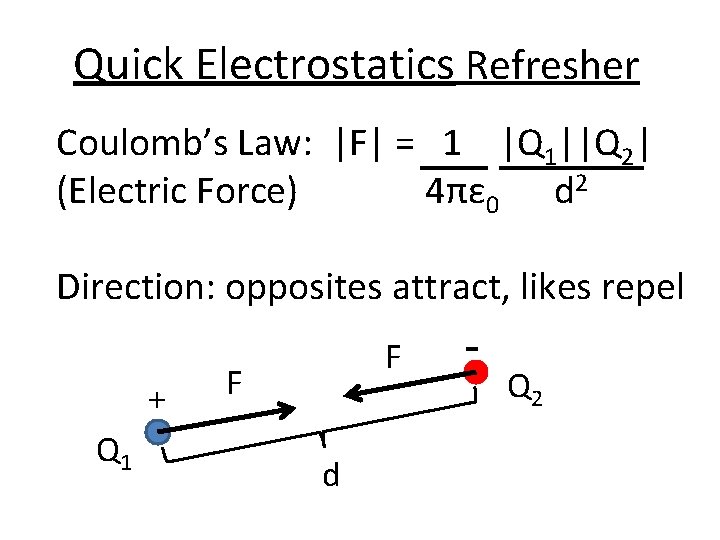
Quick Electrostatics Refresher Coulomb’s Law: |F| = 1 |Q 1||Q 2| (Electric Force) 4πε 0 d 2 Direction: opposites attract, likes repel + Q 1 F F d - Q 2
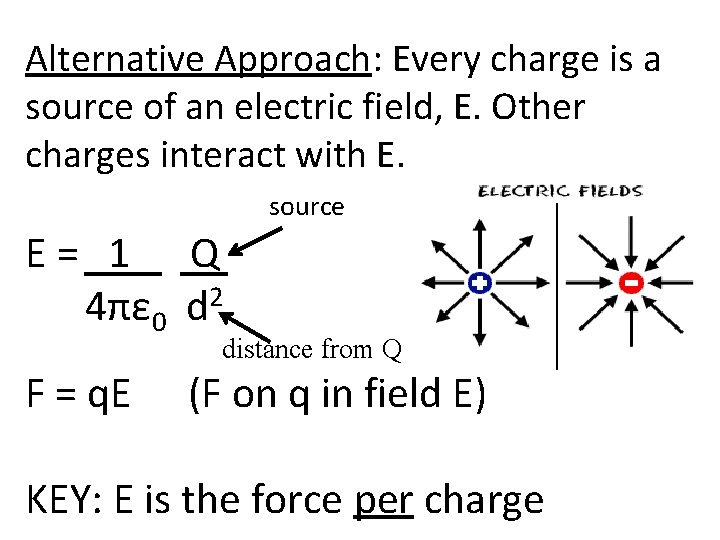
Alternative Approach: Every charge is a source of an electric field, E. Other charges interact with E. source E = 1 Q 4πε 0 d 2 distance from Q F = q. E (F on q in field E) KEY: E is the force per charge
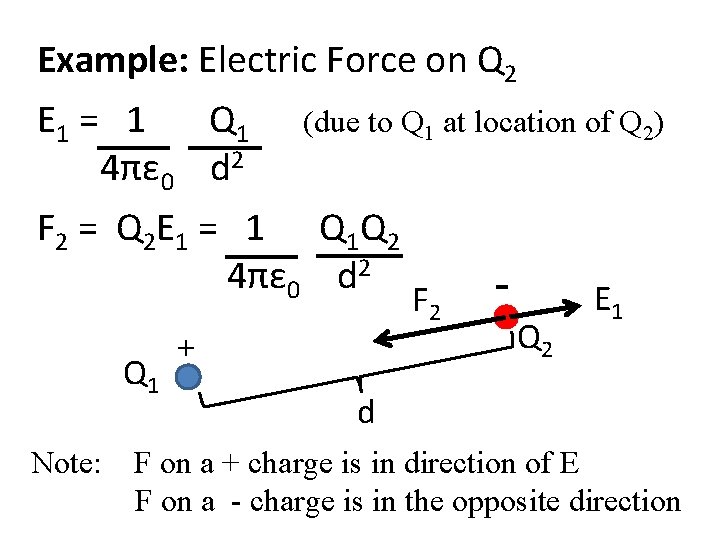
Example: Electric Force on Q 2 E 1 = 1 Q 1 (due to Q 1 at location of Q 2) 4πε 0 d 2 F 2 = Q 2 E 1 = 1 Q 1 Q 2 4πε 0 d 2 Q 1 Note: F 2 + Q 2 E 1 d F on a + charge is in direction of E F on a - charge is in the opposite direction
What is Gauss’s Law? - Fundamental relationship between charge and flux of the electric field through a surface enclosing the charge - Equivalent to Coulomb’s Law
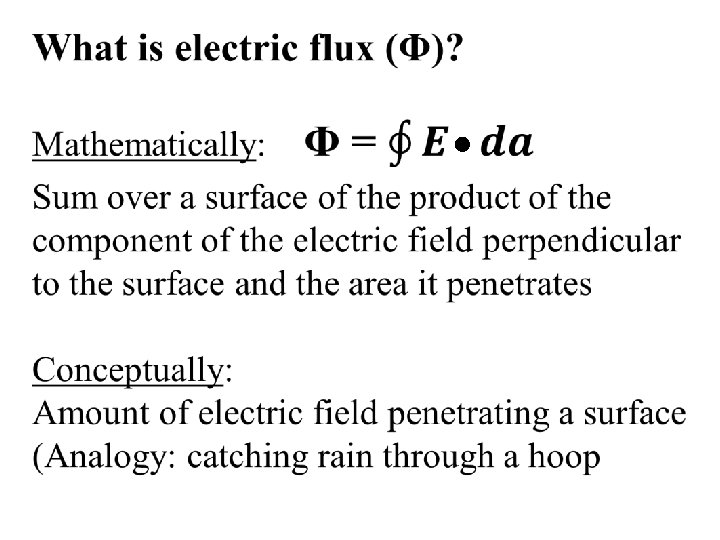
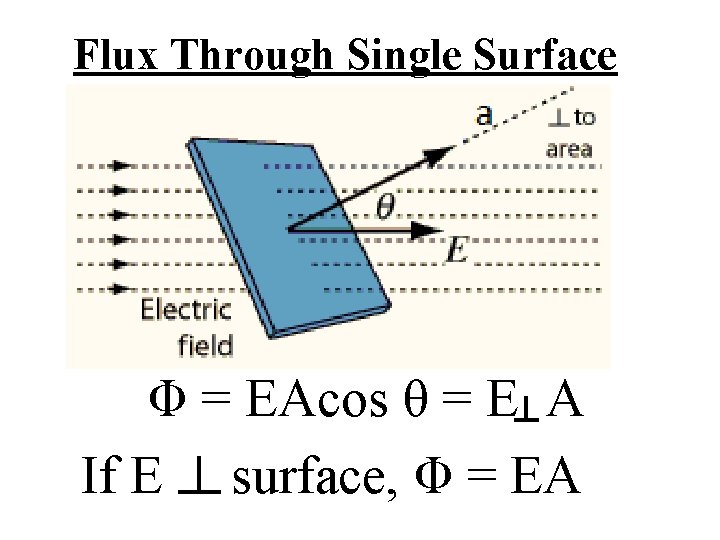
Flux Through Single Surface Φ = EAcos θ = E A If E surface, Φ = EA
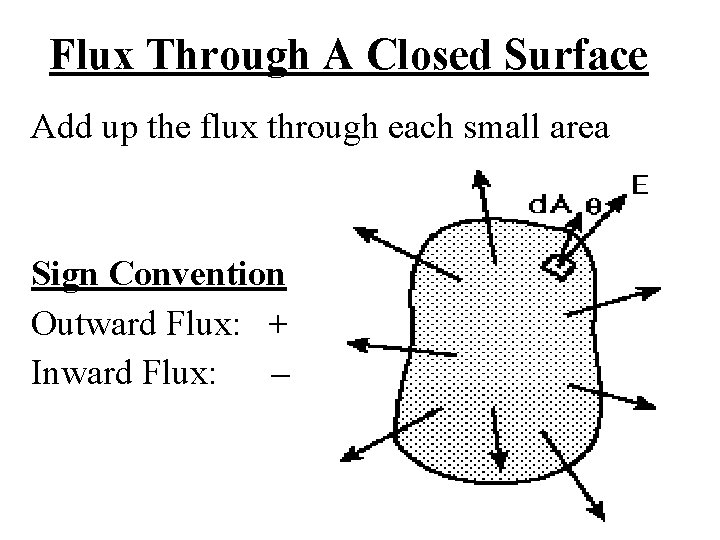
Flux Through A Closed Surface Add up the flux through each small area Sign Convention Outward Flux: + Inward Flux: –
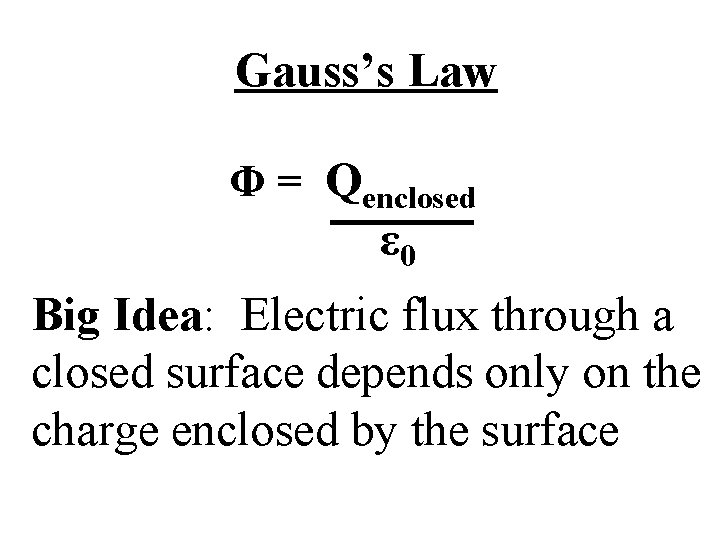
Gauss’s Law Φ = Qenclosed ε 0 Big Idea: Electric flux through a closed surface depends only on the charge enclosed by the surface
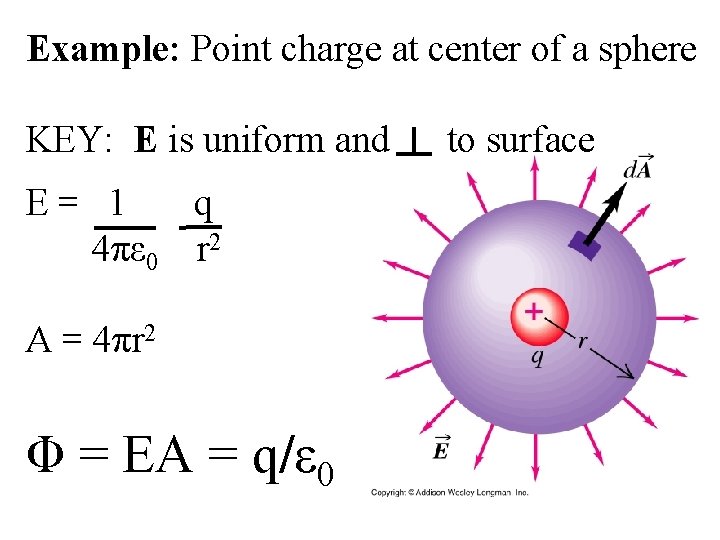
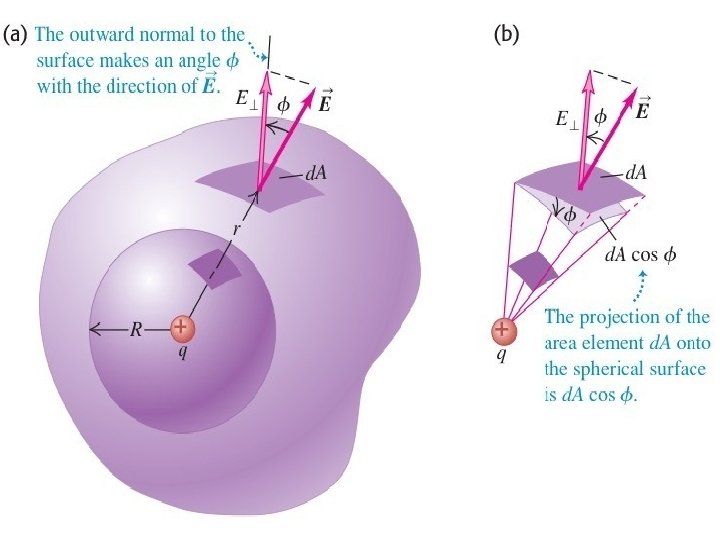
Example: Point charge at center of a sphere KEY: E is uniform and E= 1 q 4πε 0 r 2 A = 4πr 2 Φ = EA = q/ε 0 to surface
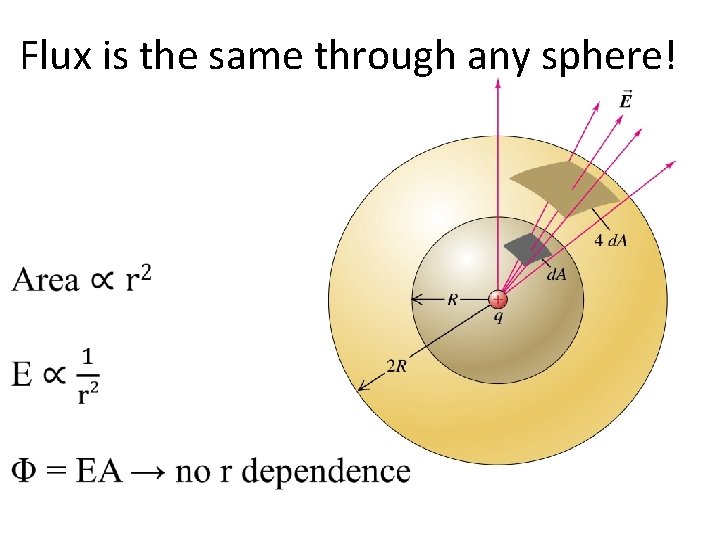
Flux is the same through any sphere!
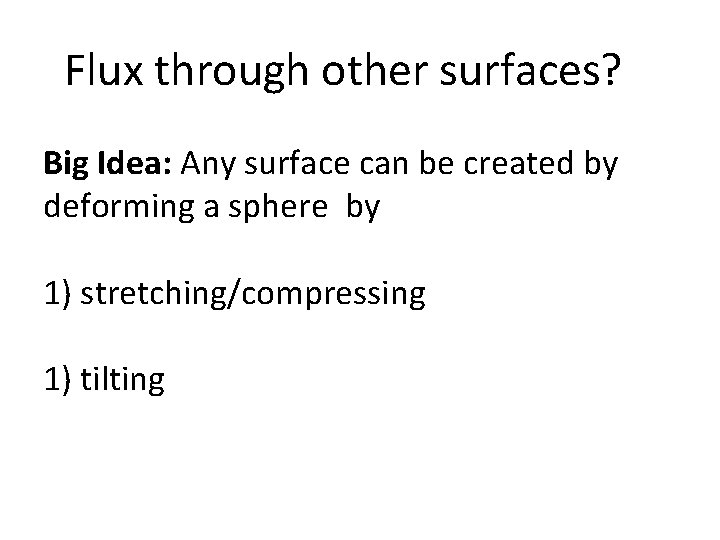
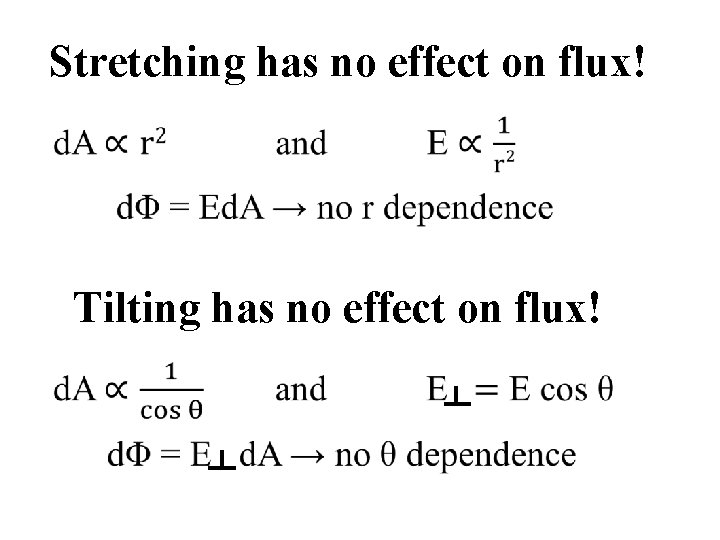
Flux through other surfaces? Big Idea: Any surface can be created by deforming a sphere by 1) stretching/compressing 1) tilting
Stretching has no effect on flux! Tilting has no effect on flux!
Conclusion: Electric flux through any surface enclosing an isolated point charge is the same!
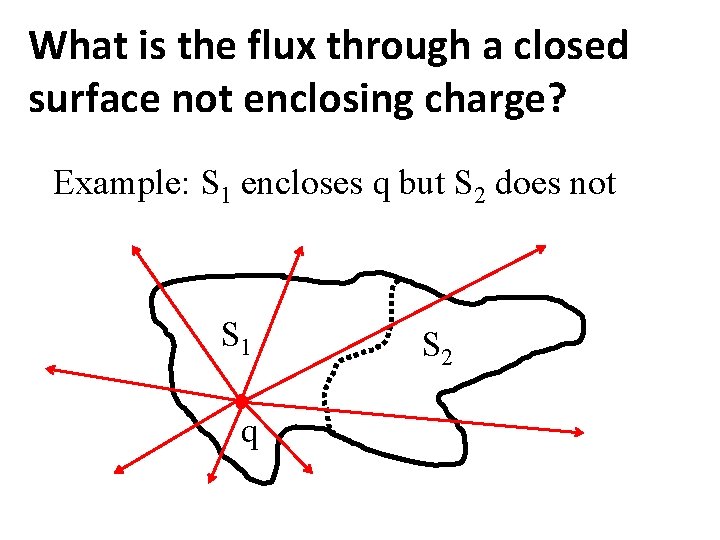
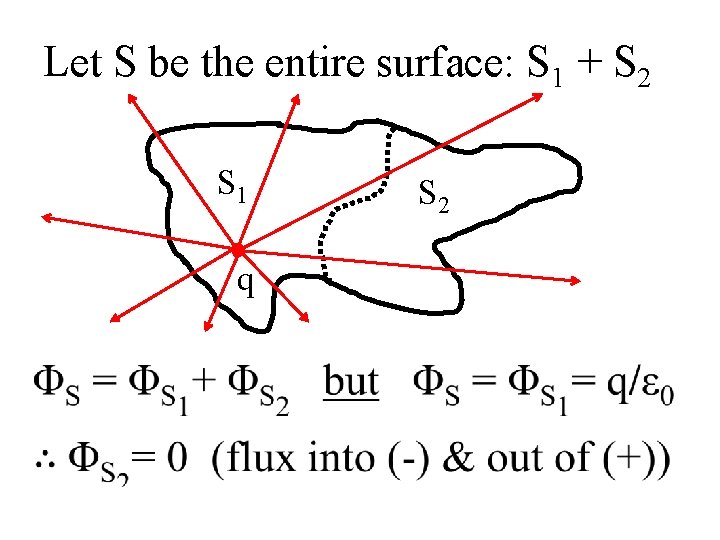
What is the flux through a closed surface not enclosing charge? Example: S 1 encloses q but S 2 does not S 1 q S 2
Let S be the entire surface: S 1 + S 2 S 1 q S 2
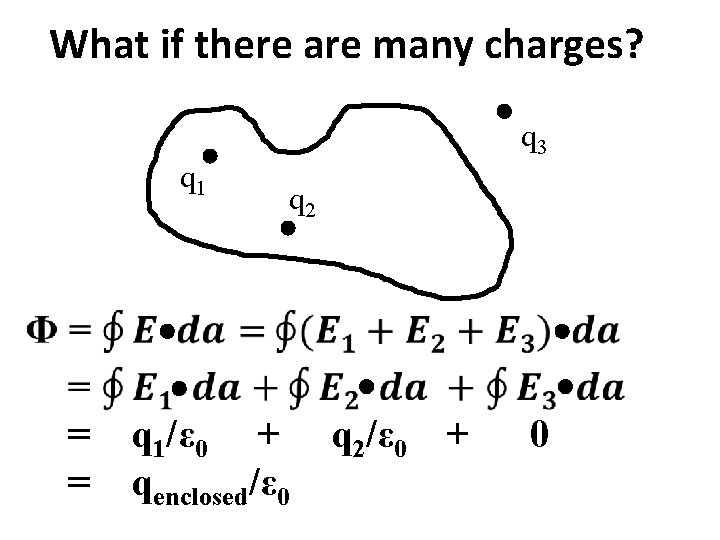
What if there are many charges? q 3 q 1 q 2 = q 1/ε 0 + = qenclosed/ε 0 q 2/ε 0 + 0
KEY: Gauss’s Law always holds but is most useful where there is lots of symmetry! (i. e. , where flux can be found without actually doing an integral)
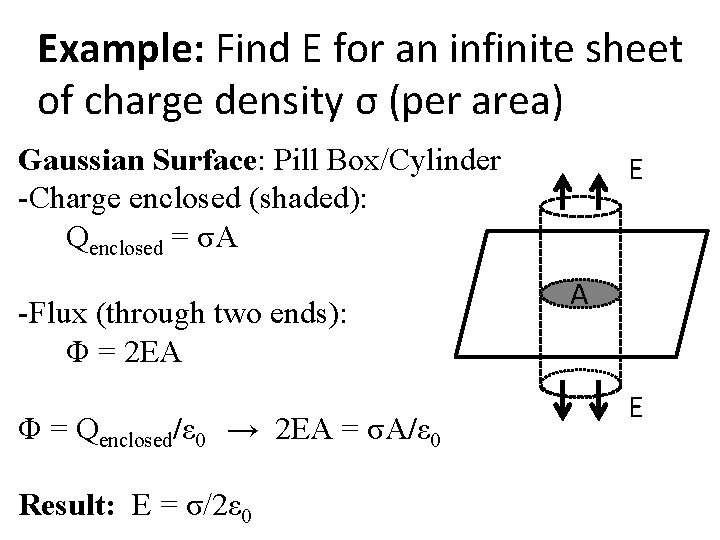
Example: Find E for an infinite sheet of charge density σ (per area) Gaussian Surface: Pill Box/Cylinder -Charge enclosed (shaded): Qenclosed = σA -Flux (through two ends): Φ = 2 EA Φ = Qenclosed/ε 0 → 2 EA = σA/ε 0 Result: E = σ/2ε 0 E A E
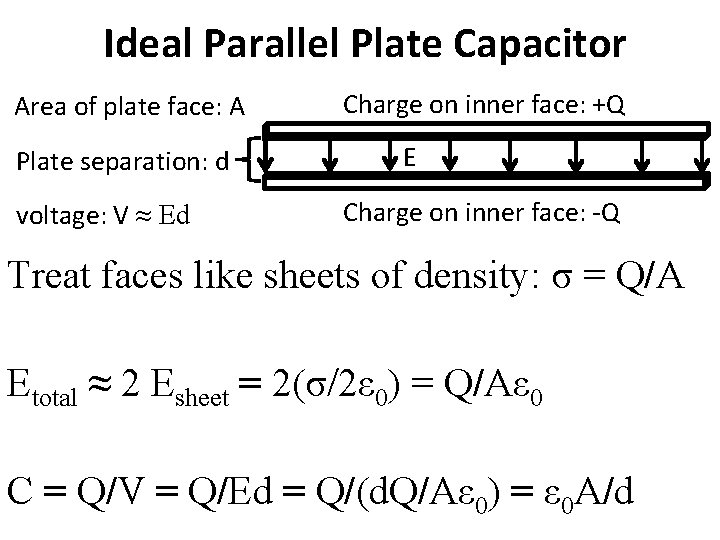
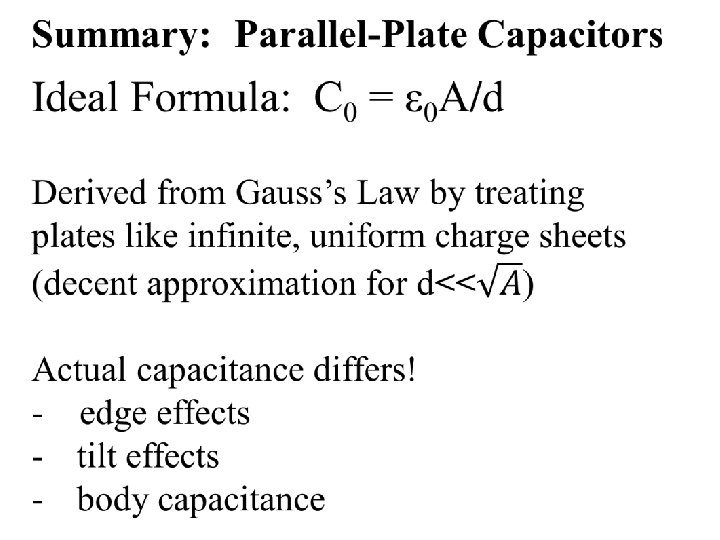
Ideal Parallel Plate Capacitor Area of plate face: A Plate separation: d voltage: V ≈ Ed Charge on inner face: +Q E Charge on inner face: -Q Treat faces like sheets of density: σ = Q/A Etotal ≈ 2 Esheet = 2(σ/2ε 0) = Q/Aε 0 C = Q/V = Q/Ed = Q/(d. Q/Aε 0) = ε 0 A/d