
GATEKEEPER TRAINING IN SUICIDE PREVENTION SUICIDE RISK ASSESSMENT


- Slides: 12
GATEKEEPER TRAINING IN SUICIDE PREVENTION
SUICIDE RISK ASSESSMENT
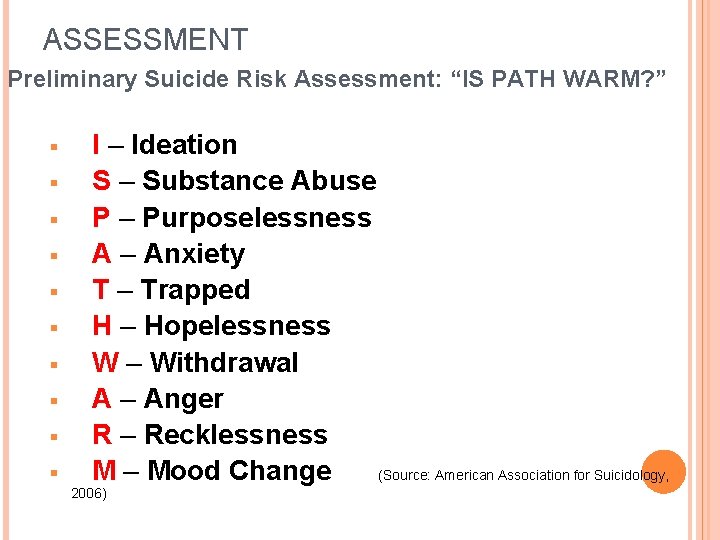
ASSESSMENT Preliminary Suicide Risk Assessment: “IS PATH WARM? ” § § § § § I – Ideation S – Substance Abuse P – Purposelessness A – Anxiety T – Trapped H – Hopelessness W – Withdrawal A – Anger R – Recklessness M – Mood Change (Source: American Association for Suicidology, 2006)
ASSESSMENT CONT ASSESS SUICIDAL INTENT How to ask a suicide question? Use ‘Normalizing questions’ and not Direct or Indirect questions Example: Indirect question Do you feel like harming yourself? Do you feel like getting away from all of this? From what I understand, do you mean that you want to kill yourself?
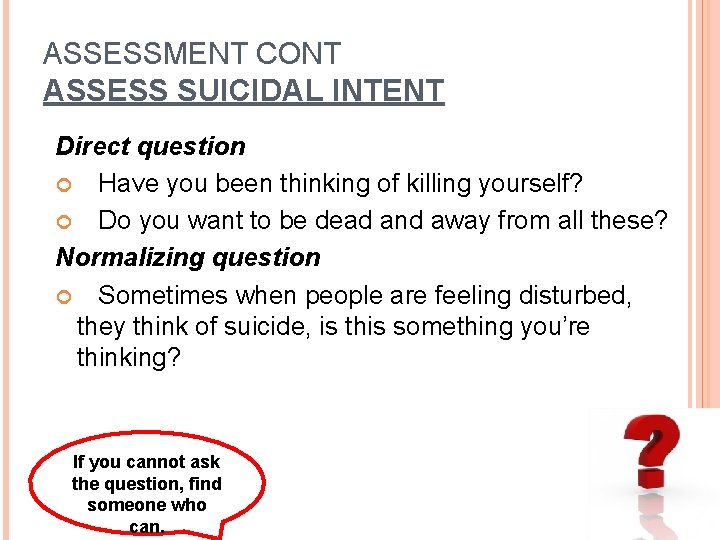
ASSESSMENT CONT ASSESS SUICIDAL INTENT Direct question Have you been thinking of killing yourself? Do you want to be dead and away from all these? Normalizing question Sometimes when people are feeling disturbed, they think of suicide, is this something you’re thinking? If you cannot ask the question, find someone who can.
ASSESSMENT CONT… Tips for Asking the Suicide Question If in doubt, don’t wait, ask the question If the person is reluctant, be persistent Talk to the person alone in a private setting Allow the person to talk freely Give yourself plenty of time Check about the frequency of thoughts, whether the thoughts are fleeting or fixed.
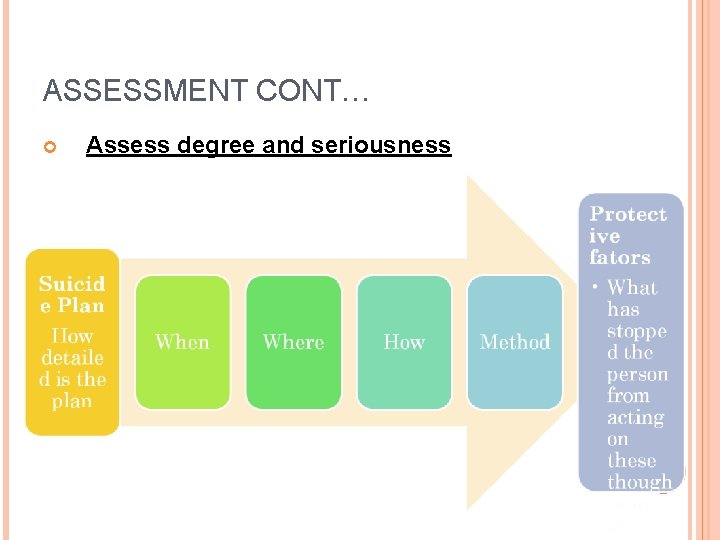
ASSESSMENT CONT… Assess degree and seriousness
INTERVENTIO N
INTERVENTION What immediate intervention can be provided? Being a good listener and pay full attention Being non-judgmental Being supportive and instilling hope Offering help by asking ‘Can I help you? ’ Building a contract by asking ‘Will you promise me not to kill yourself till I find a help for you? ’ As a part of the contract, provide a crisis plan as a safety net
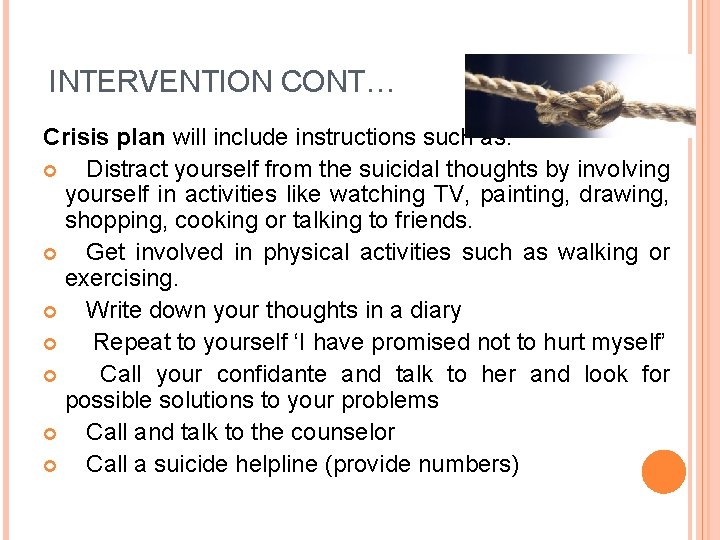
INTERVENTION CONT… Crisis plan will include instructions such as: Distract yourself from the suicidal thoughts by involving yourself in activities like watching TV, painting, drawing, shopping, cooking or talking to friends. Get involved in physical activities such as walking or exercising. Write down your thoughts in a diary Repeat to yourself ‘I have promised not to hurt myself’ Call your confidante and talk to her and look for possible solutions to your problems Call and talk to the counselor Call a suicide helpline (provide numbers)
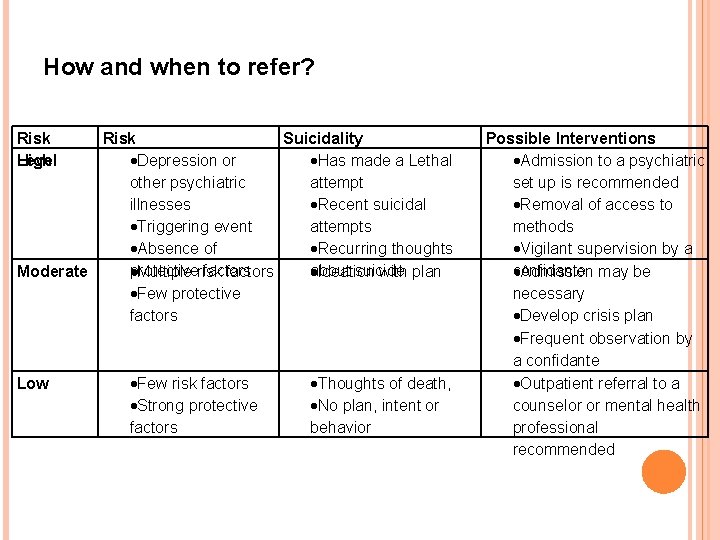
How and when to refer? Risk Level High Risk Suicidality Depression or Has made a Lethal other psychiatric attempt illnesses Recent suicidal Triggering event attempts Absence of Recurring thoughts factors suicide Moderate protective Multiple risk factors about Ideation with plan Few protective factors Low Few risk factors Strong protective factors Thoughts of death, No plan, intent or behavior Possible Interventions Admission to a psychiatric set up is recommended Removal of access to methods Vigilant supervision by a confidante Admission may be necessary Develop crisis plan Frequent observation by a confidante Outpatient referral to a counselor or mental health professional recommended