
Gated Graphs and Causal Inference John Winn Microsoft
![do calculus • [Pearl, Causal diagrams for empirical research, Biometrika 1995]](https://slidetodoc.com/presentation_image/5ead5f2b2a3df7537ef9c00ae8026eb3/image-32.jpg "do calculus • [Pearl, Causal diagrams for empirical research, Biometrika 1995]")
- Slides: 51
Gated Graphs and Causal Inference John Winn Microsoft Research, Cambridge with lots of input from Tom Minka Networks: Processes and Causality, September 2012
Outline • • • Graphical models of mixtures Gated graphs d-separation in gated graphs Inference in gated graphs Modelling interventions with gated graphs Causal inference with gated graphs
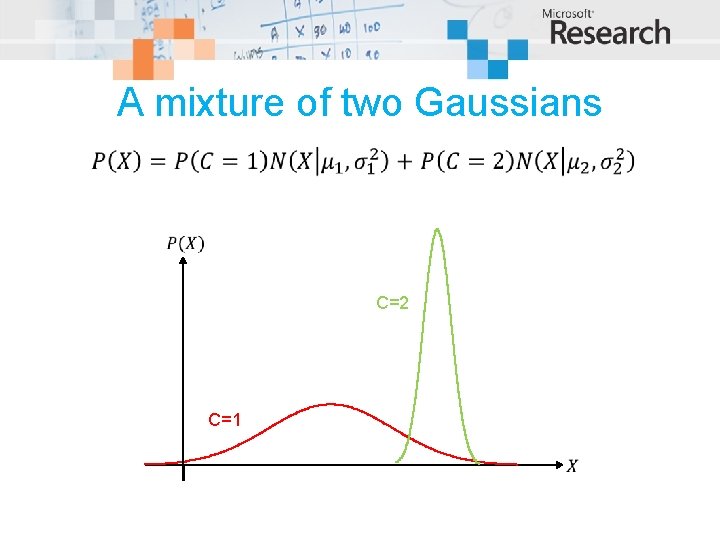
A mixture of two Gaussians C=2 C=1
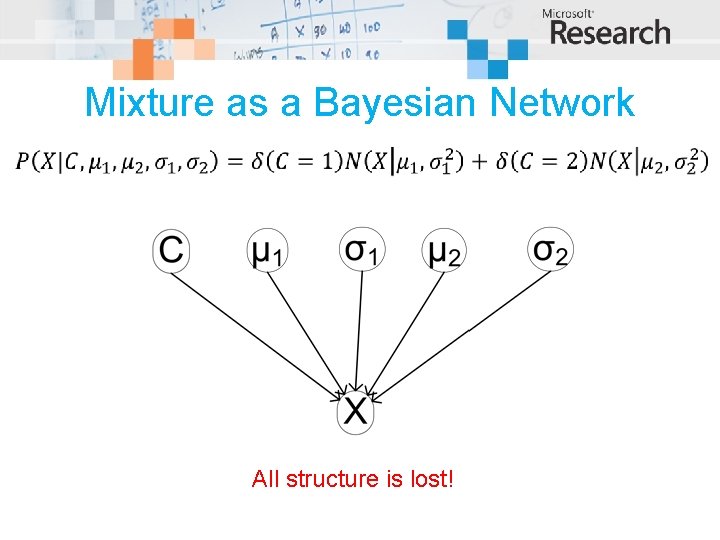
Mixture as a Bayesian Network All structure is lost!
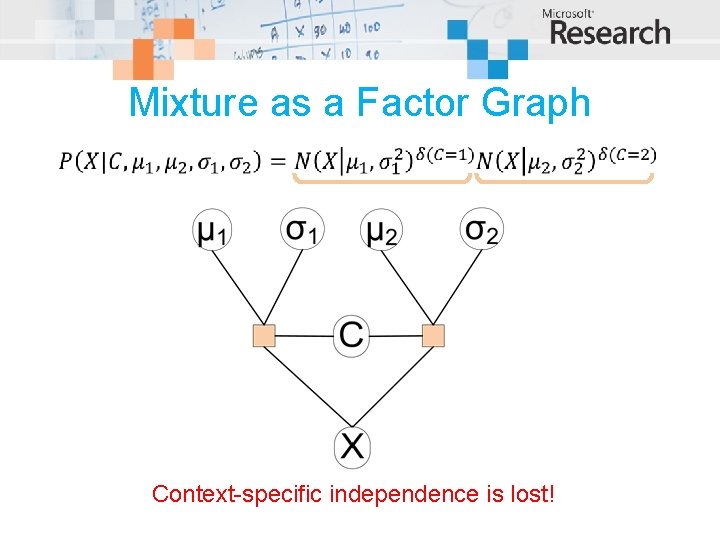
Mixture as a Factor Graph Context-specific independence is lost!
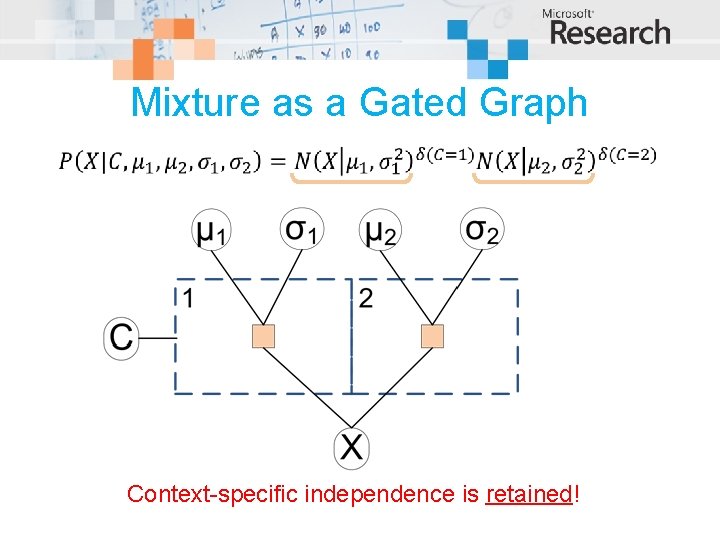
Mixture as a Gated Graph Context-specific independence is retained!
GATED GRAPHS
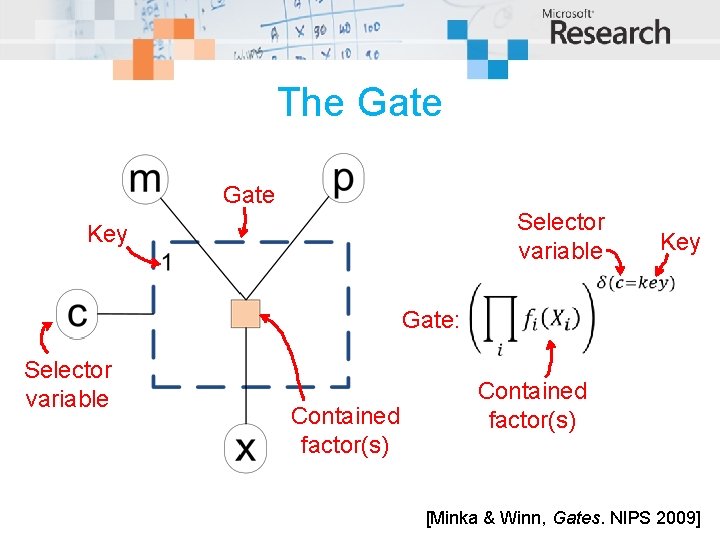
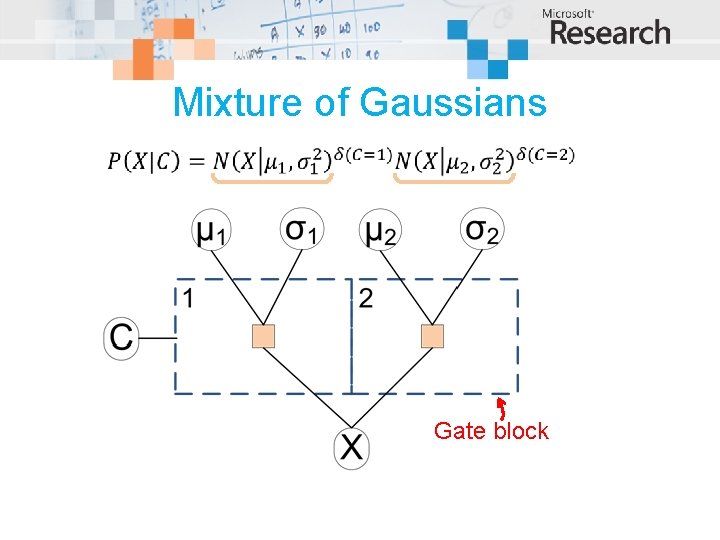
The Gate Selector variable Key Gate: Selector variable Contained factor(s) [Minka & Winn, Gates. NIPS 2009]
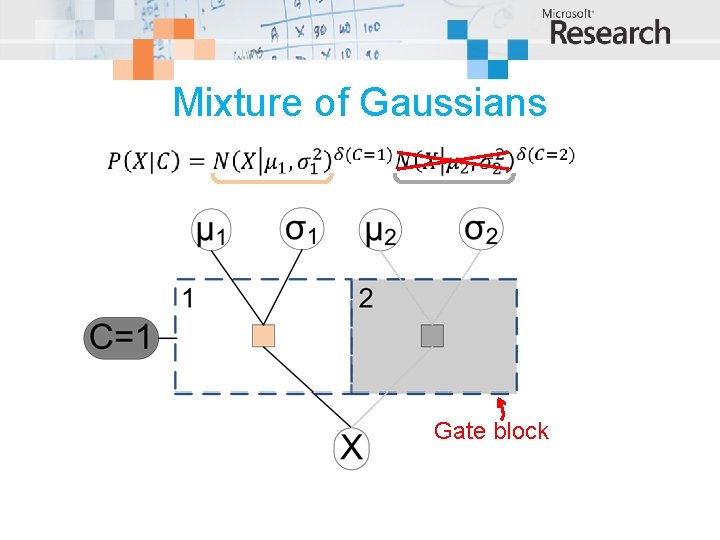
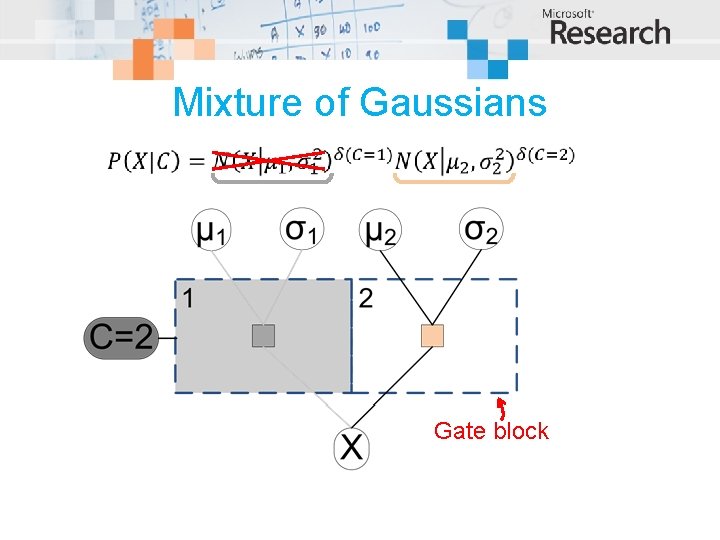
Mixture of Gaussians Gate block
Mixture of Gaussians Gate block
Mixture of Gaussians Gate block
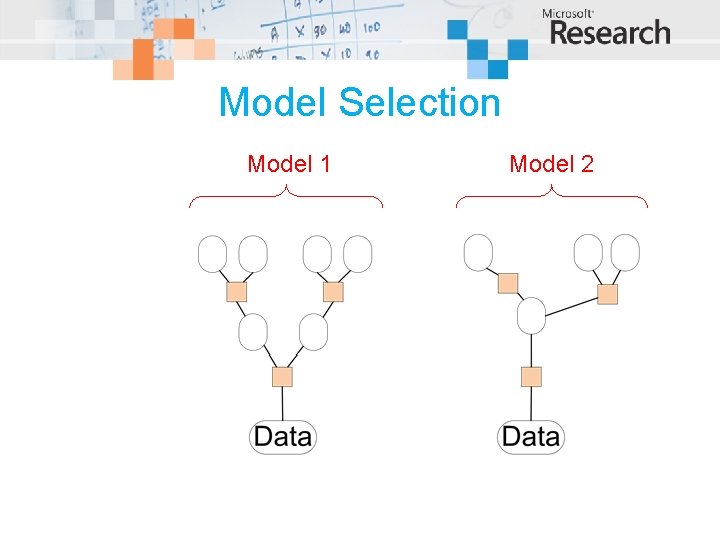
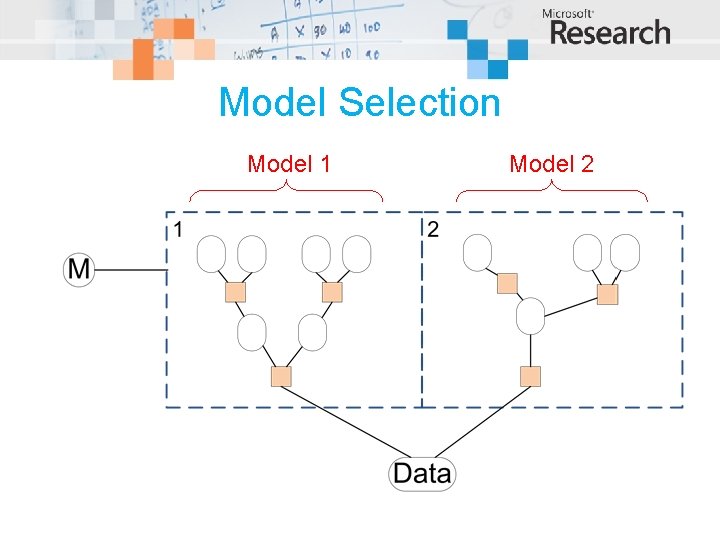
Model Selection Model 1 Model 2
Model Selection Model 1 Model 2
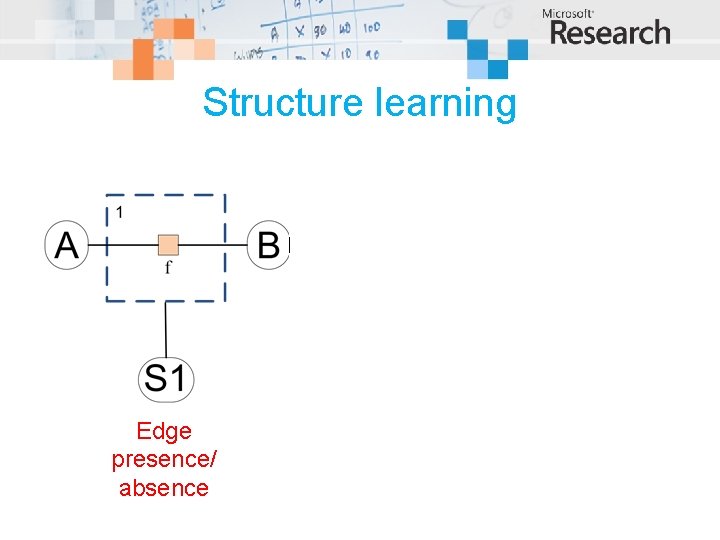
Structure learning Edge presence/ absence Edge type Variable presence/ absence
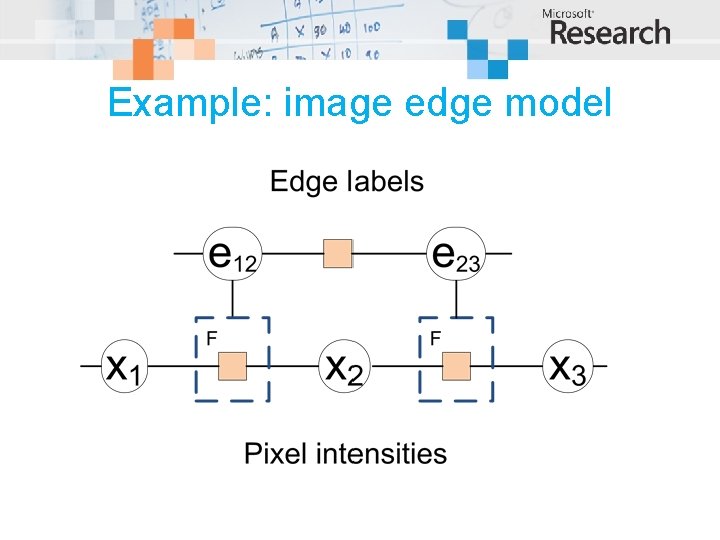
Example: image edge model
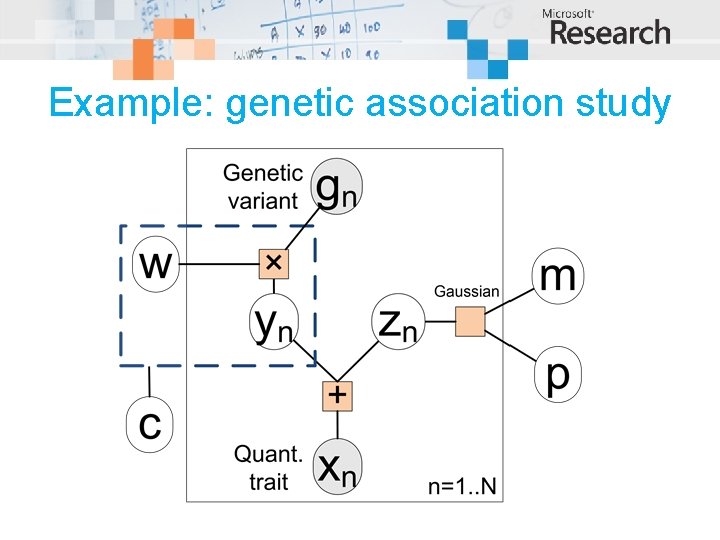
Example: genetic association study
D-SEPARATION IN GATED GRAPHS
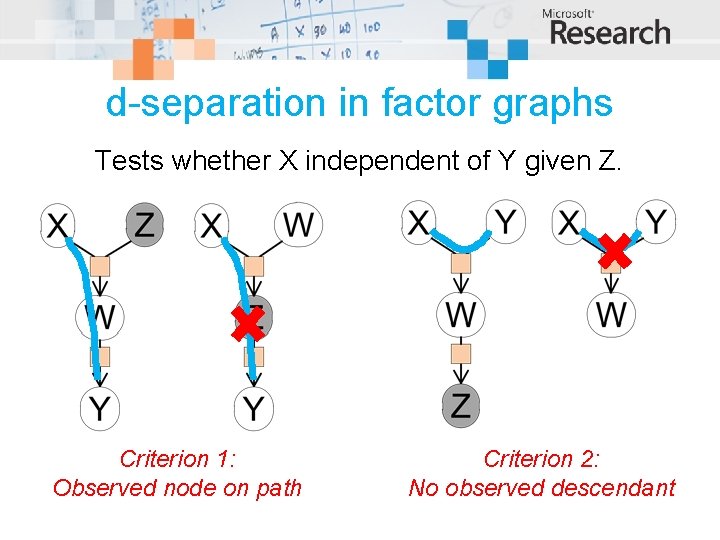
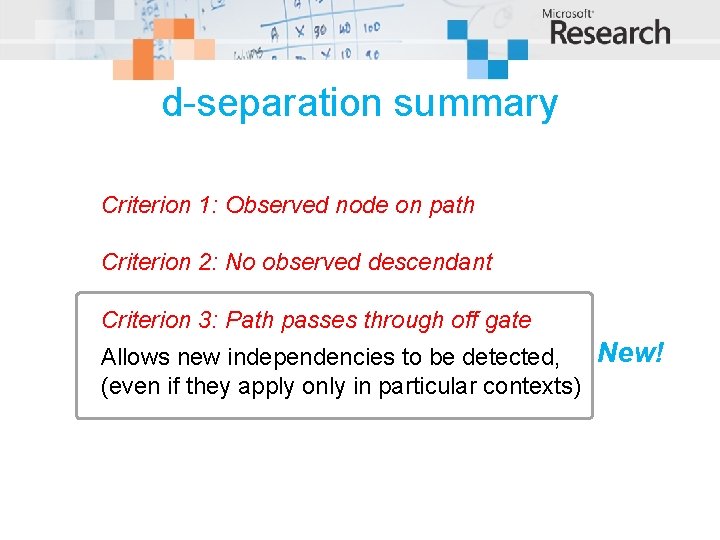
d-separation in factor graphs Tests whether X independent of Y given Z. Criterion 1: Observed node on path Criterion 2: No observed descendant
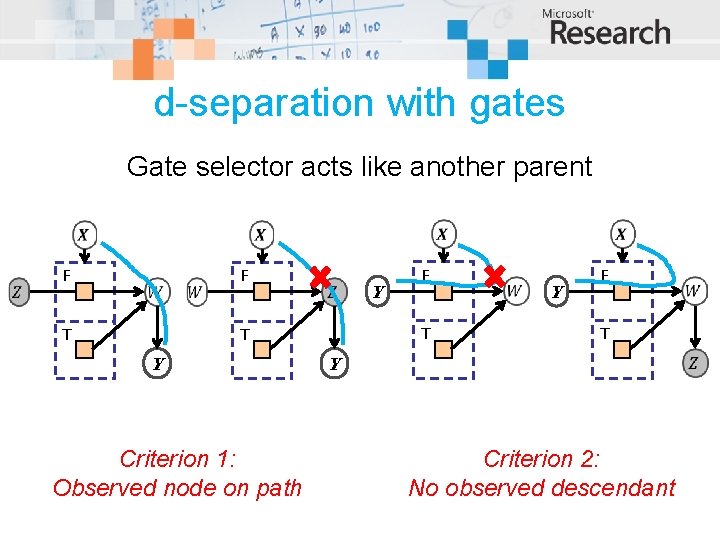
d-separation with gates Gate selector acts like another parent F T F T T Y Criterion 1: Observed node on path Y F T Y Criterion 2: No observed descendant
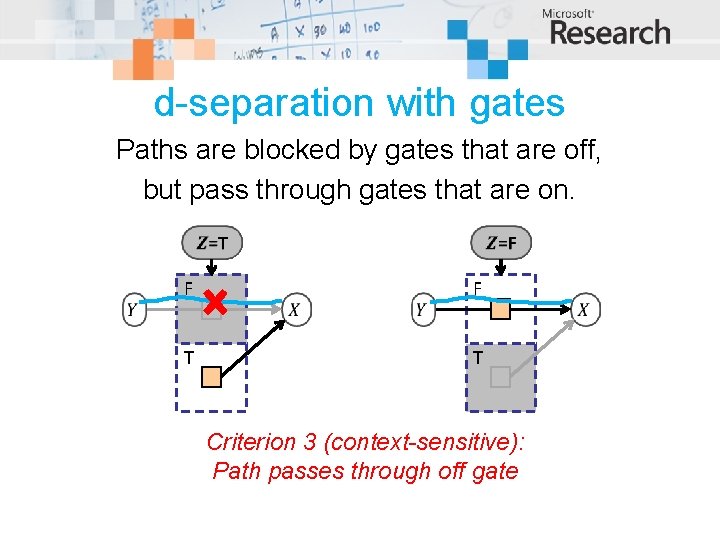
d-separation with gates Paths are blocked by gates that are off, but pass through gates that are on. F F T T Criterion 3 (context-sensitive): Path passes through off gate
d-separation summary Criterion 1: Observed node on path Criterion 2: No observed descendant Criterion 3: Path passes through off gate Allows new independencies to be detected, New! (even if they apply only in particular contexts)
INFERENCE IN GATED GRAPHS
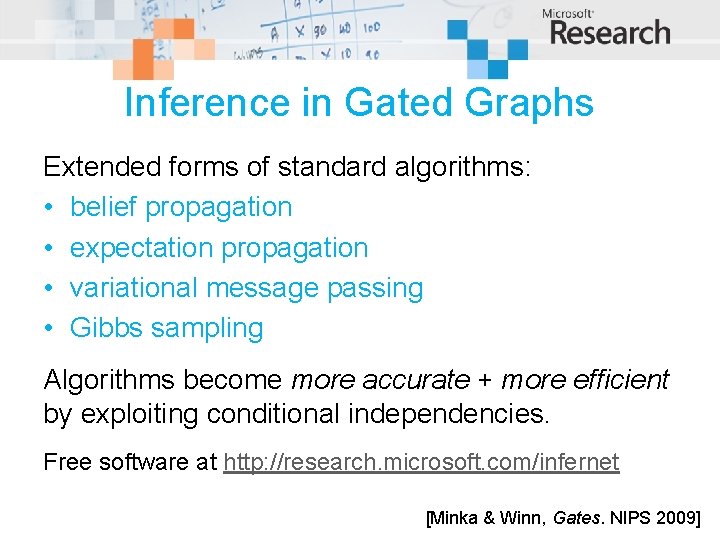
Inference in Gated Graphs Extended forms of standard algorithms: • belief propagation • expectation propagation • variational message passing • Gibbs sampling Algorithms become more accurate + more efficient by exploiting conditional independencies. Free software at http: //research. microsoft. com/infernet [Minka & Winn, Gates. NIPS 2009]
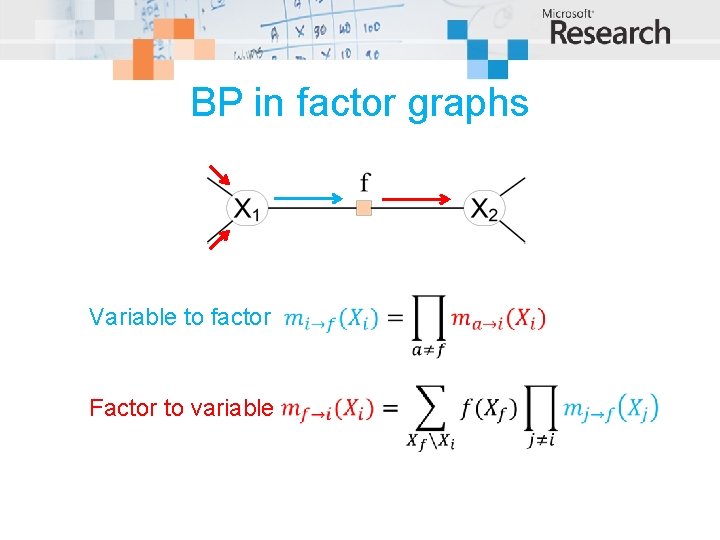
BP in factor graphs Variable to factor Factor to variable
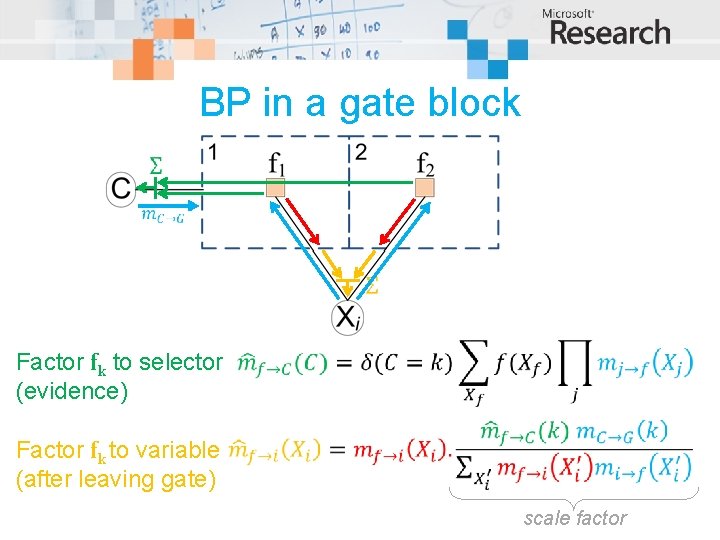
BP in a gate block Factor fk to selector (evidence) Factor fk to variable (after leaving gate) scale factor
MODELLING INTERVENTIONS WITH GATED GRAPHS (yes – I’m finally getting round to talking about causality)
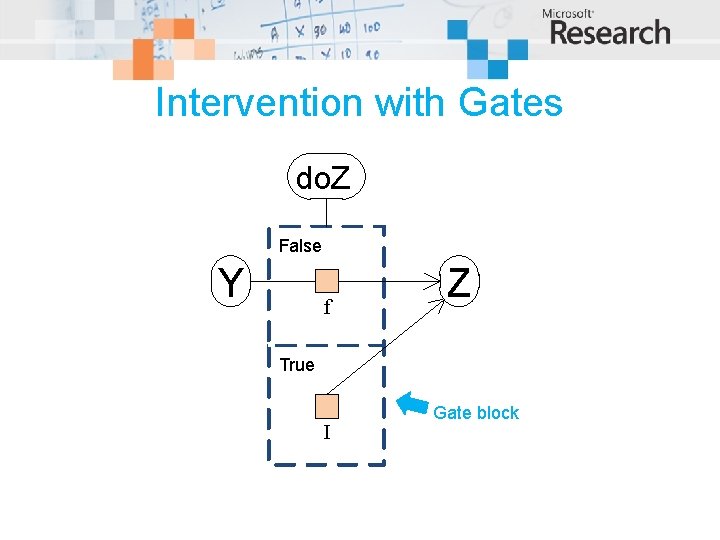
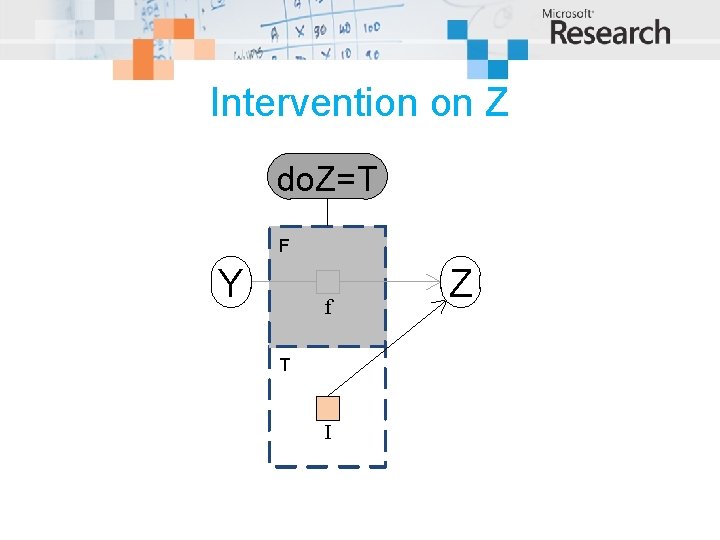
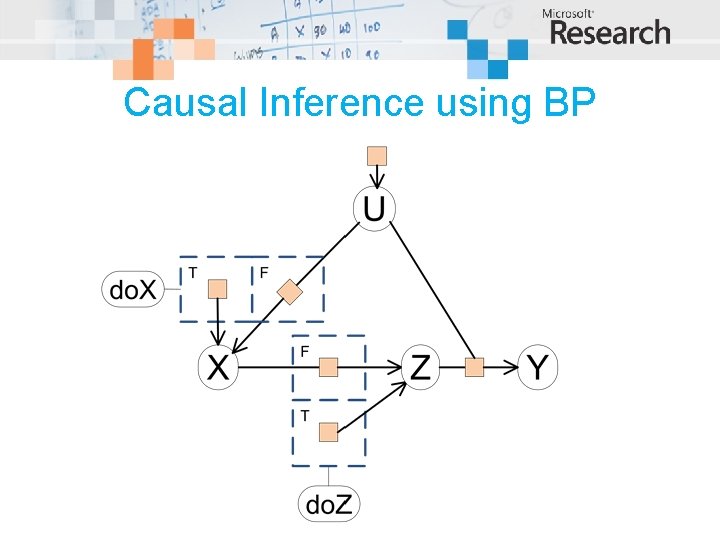
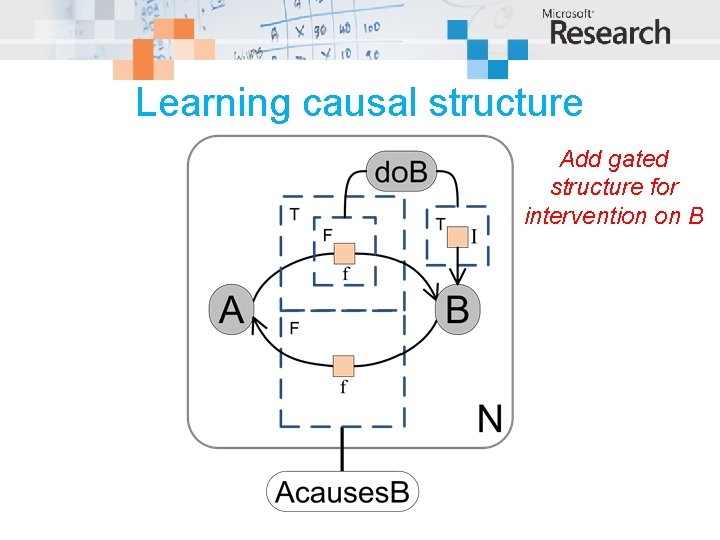
Intervention with Gates do. Z False Y f Z True I Gate block
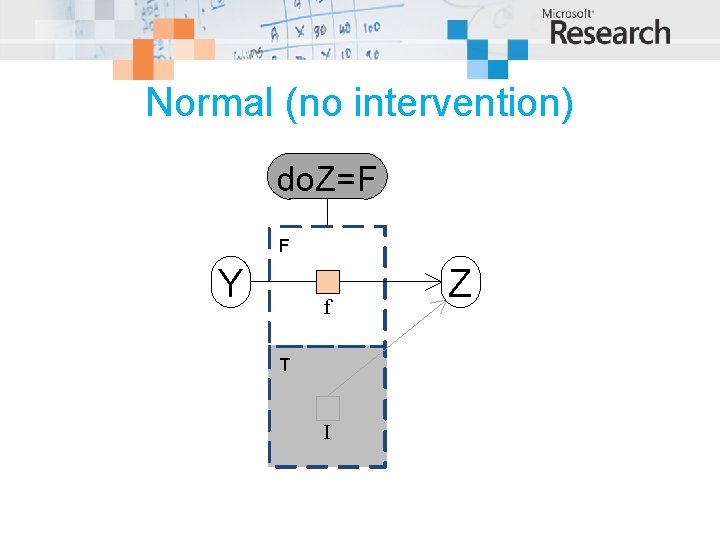
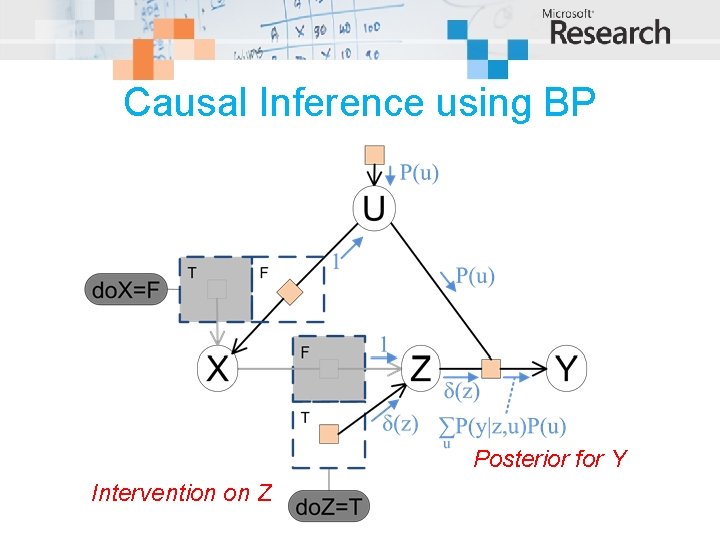
Normal (no intervention) do. Z=F F Y f T I Z
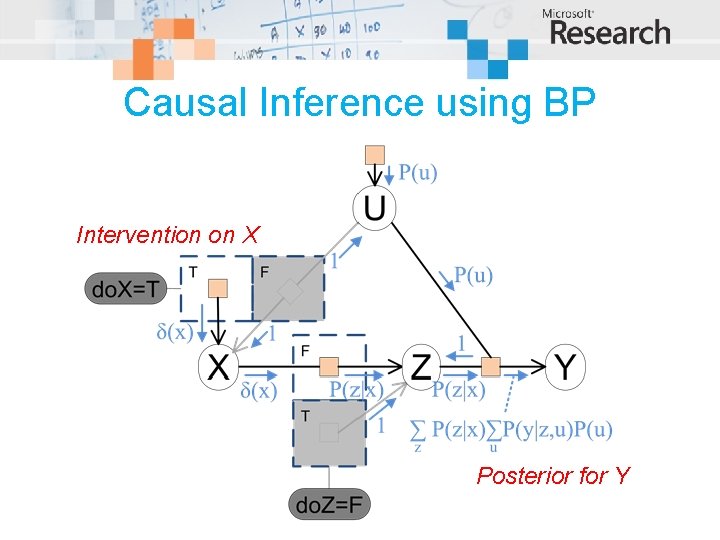
Intervention on Z do. Z=T F Y f T I Z
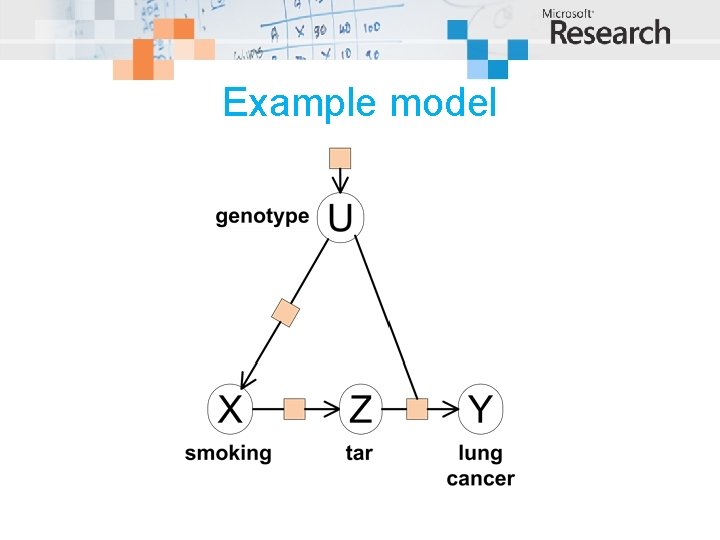
Example model
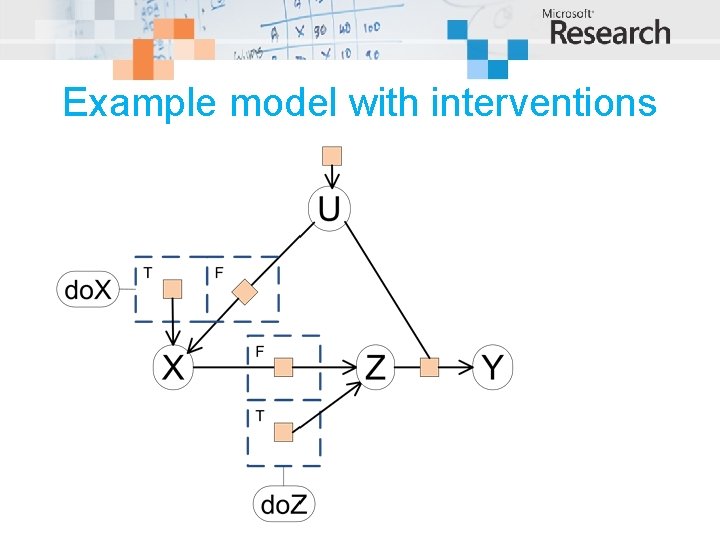
Example model with interventions
do calculus • [Pearl, Causal diagrams for empirical research, Biometrika 1995]
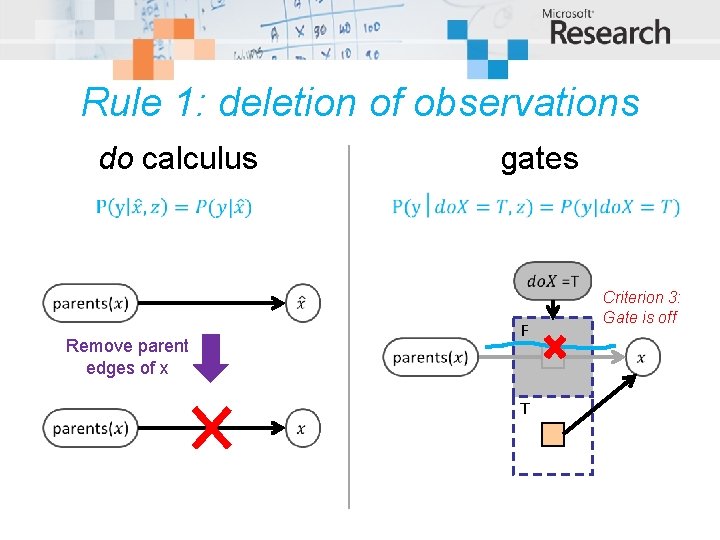
Rule 1: deletion of observations do calculus gates F Remove parent edges of x Criterion 3: Gate is off T
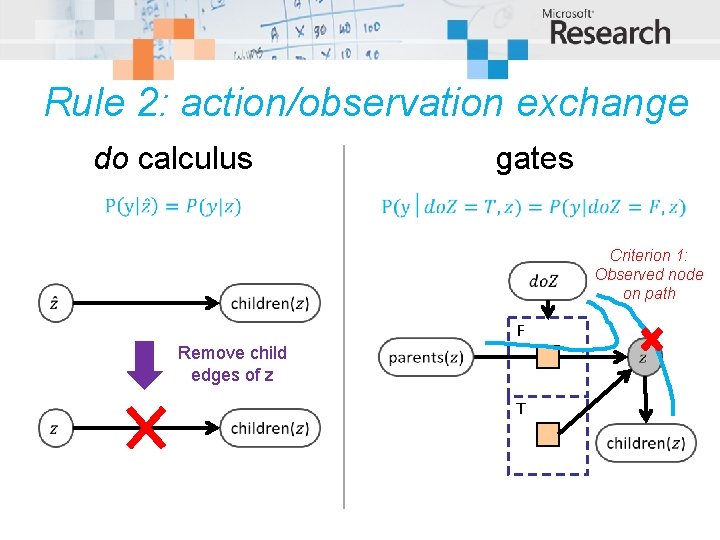
Rule 2: action/observation exchange do calculus gates Criterion 1: Observed node on path F Remove child edges of z T
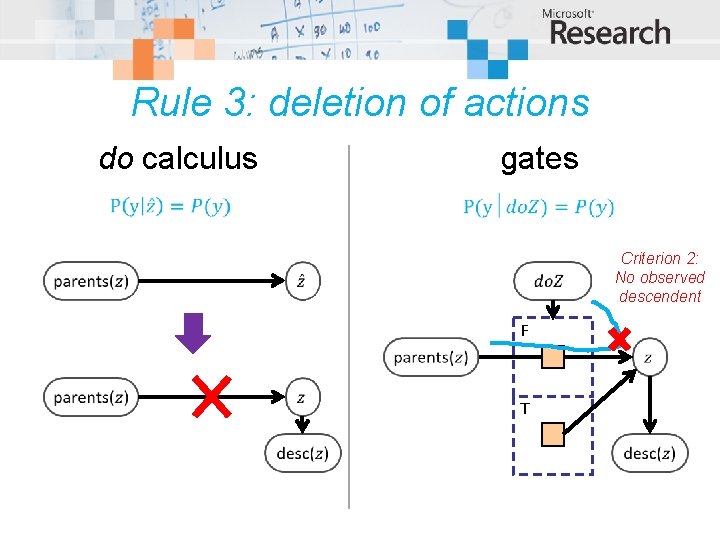
Rule 3: deletion of actions do calculus gates Criterion 2: No observed descendent F T
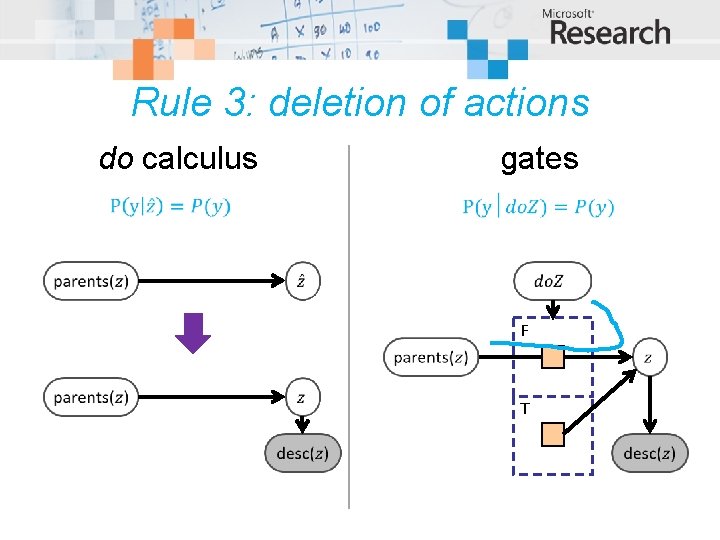
Rule 3: deletion of actions do calculus gates F T
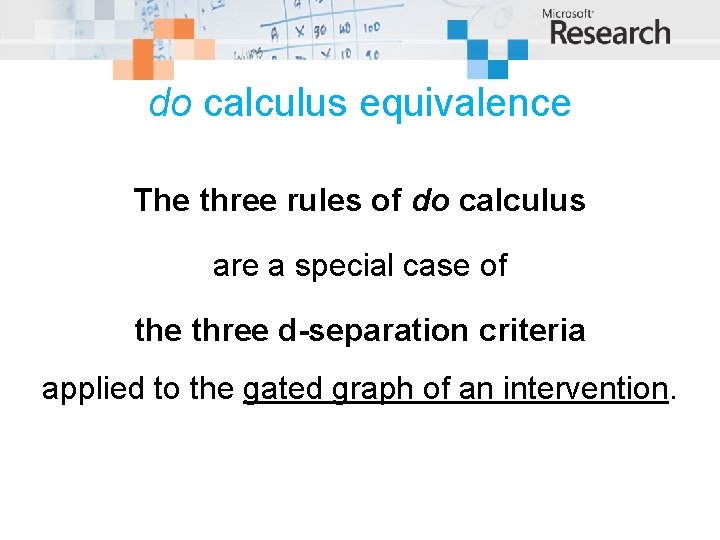
do calculus equivalence The three rules of do calculus are a special case of the three d-separation criteria applied to the gated graph of an intervention.
CAUSAL INFERENCE WITH GATED GRAPHS
Causal Inference using BP
Causal Inference using BP Intervention on X Posterior for Y
Causal Inference using BP Posterior for Y Intervention on Z
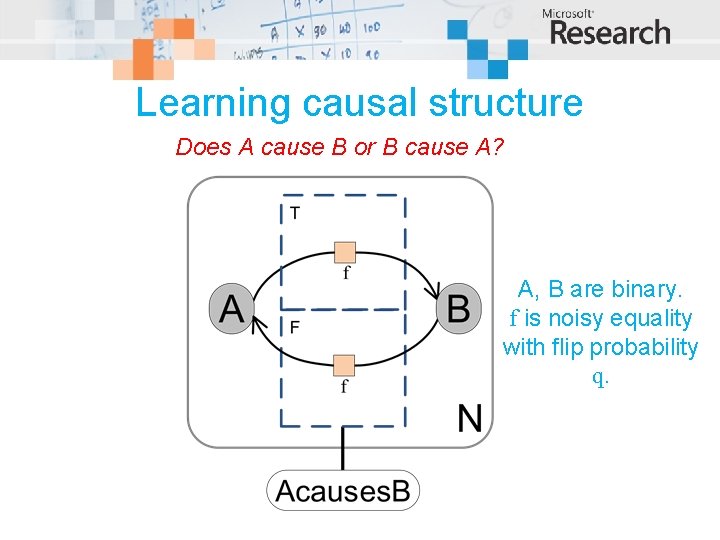
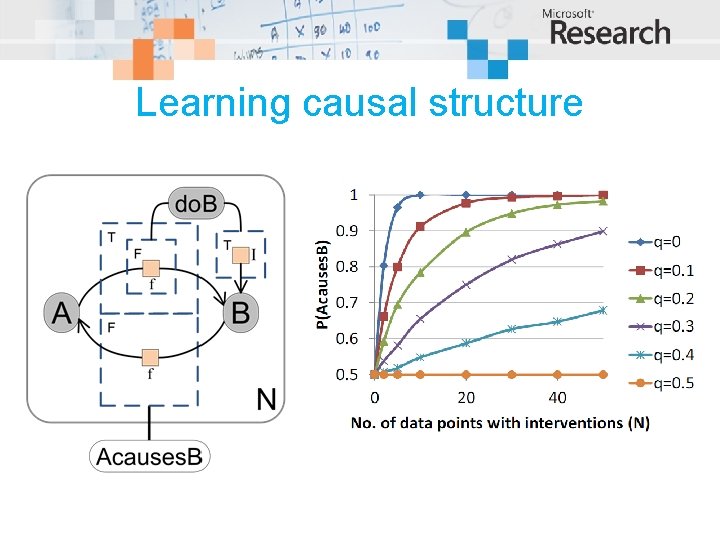
Learning causal structure Does A cause B or B cause A? A, B are binary. f is noisy equality with flip probability q.
Learning causal structure Add gated structure for intervention on B
Learning causal structure
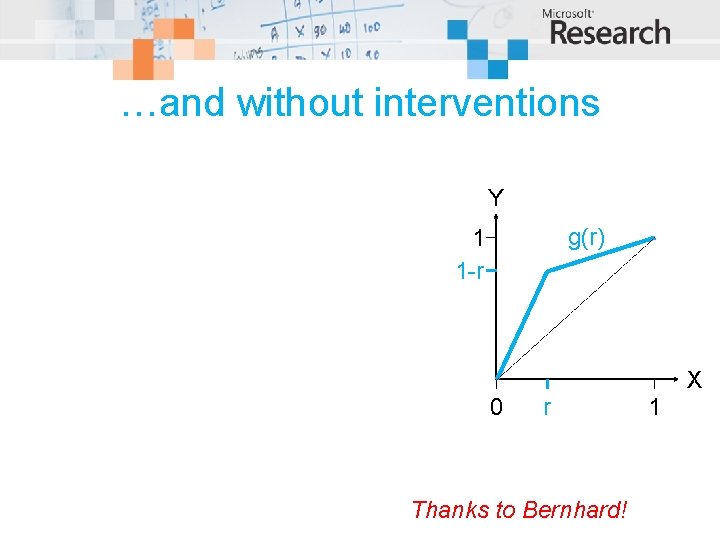
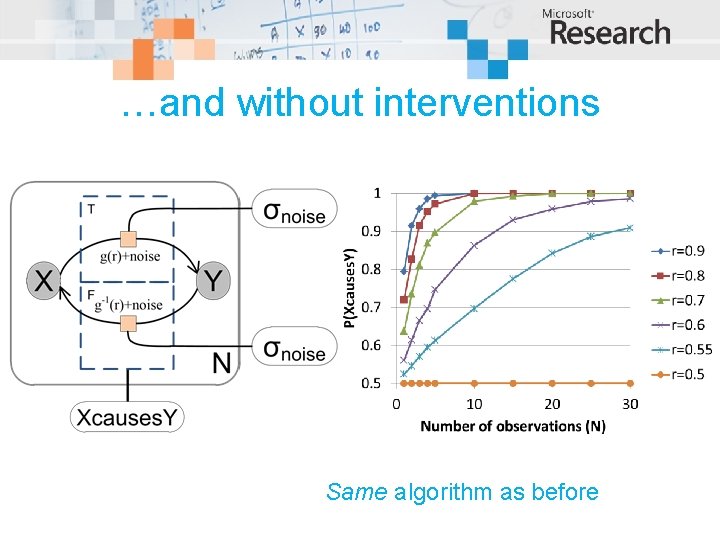
…and without interventions Y g(r) 1 1 -r X 0 r Thanks to Bernhard! 1
…and without interventions Same algorithm as before
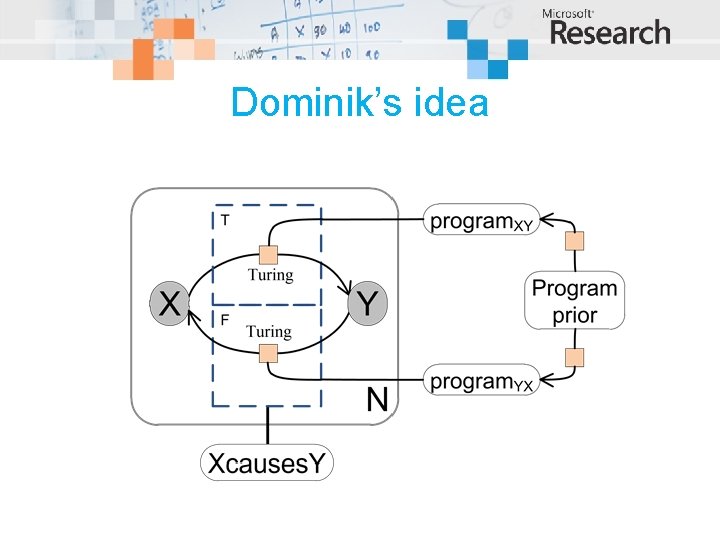
Dominik’s idea
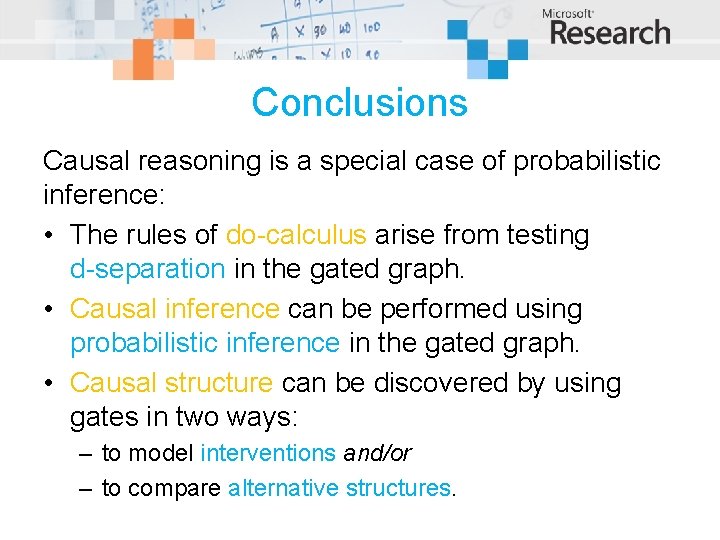
Conclusions Causal reasoning is a special case of probabilistic inference: • The rules of do-calculus arise from testing d-separation in the gated graph. • Causal inference can be performed using probabilistic inference in the gated graph. • Causal structure can be discovered by using gates in two ways: – to model interventions and/or – to compare alternative structures.
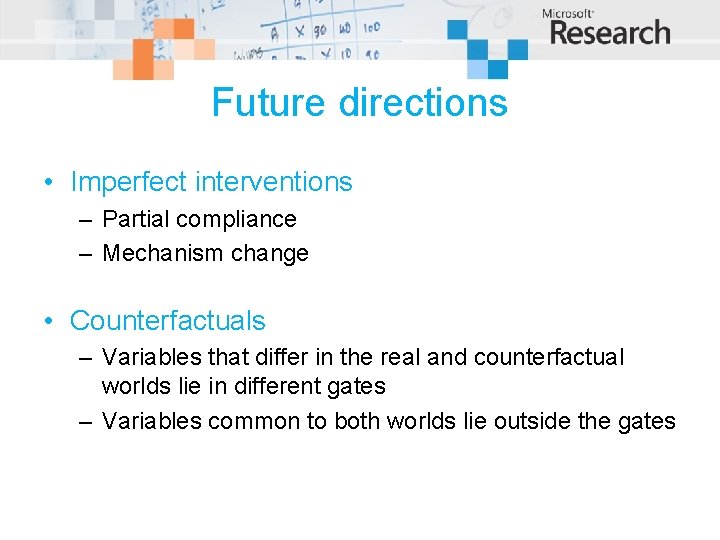
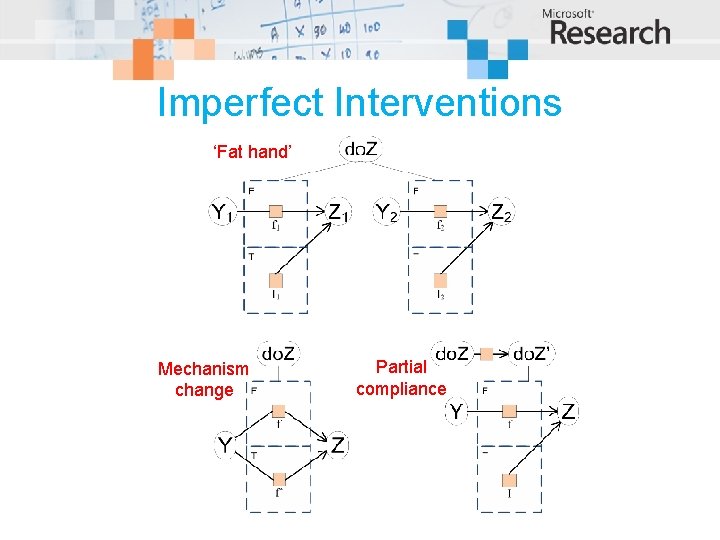
Future directions • Imperfect interventions – Partial compliance – Mechanism change • Counterfactuals – Variables that differ in the real and counterfactual worlds lie in different gates – Variables common to both worlds lie outside the gates
THANK YOU!
Imperfect Interventions ‘Fat hand’ Mechanism change Partial compliance