
Gate Set Tomography Kenneth Rudinger Sandia National Laboratories
Gate Set Tomography Kenneth Rudinger Sandia National Laboratories is a multi-program laboratory managed and operated by Sandia Corporation, a wholly owned subsidiary of Lockheed Martin Corporation, for the U. S. Department of Energy’s National Nuclear Security Administration under contract DE-AC 04 -94 AL 85000.
Outline § Motivation for quantum tomography § Framework for self-consistent, calibration-free tomography: Gate set tomography § Achieving Heisenberg accuracy scaling with gate set tomography § Using gate set tomography to build a better trapped ion qubit at Sandia National Laboratories 3
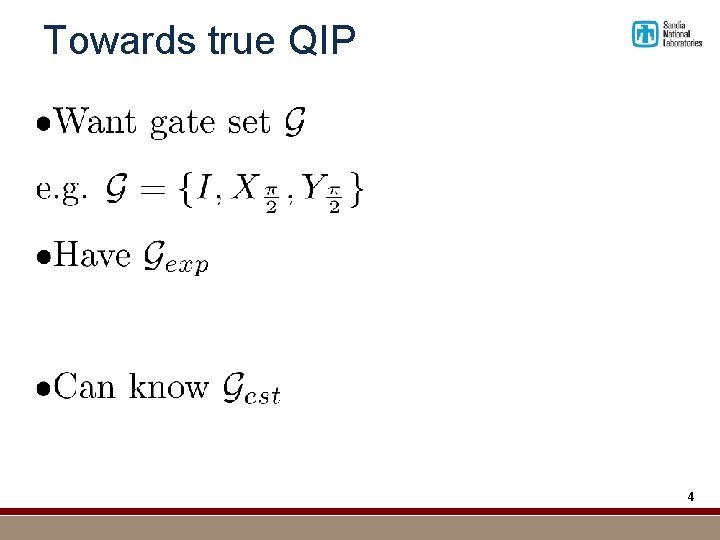
Towards true QIP 4
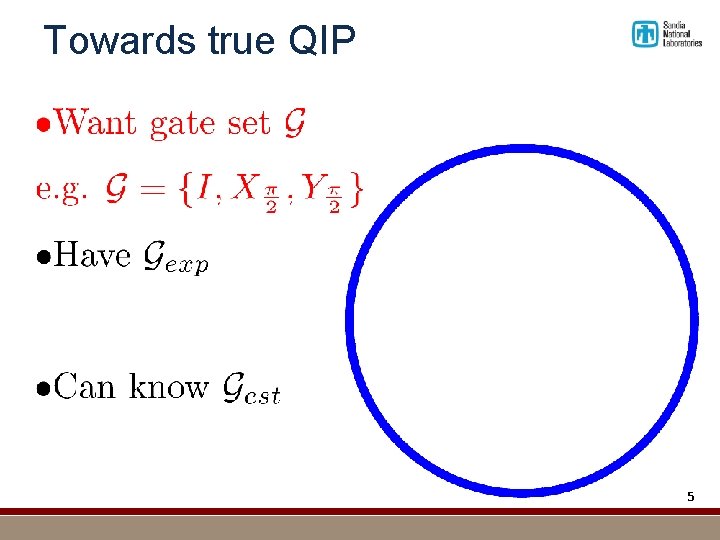
Towards true QIP 5
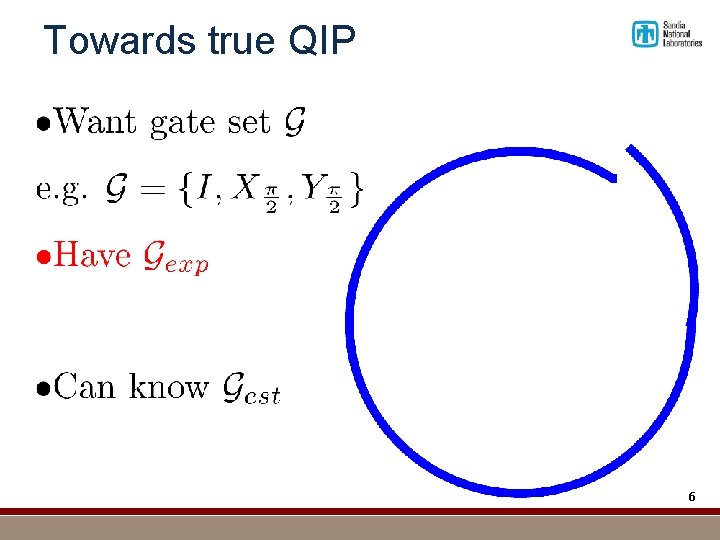
Towards true QIP 6
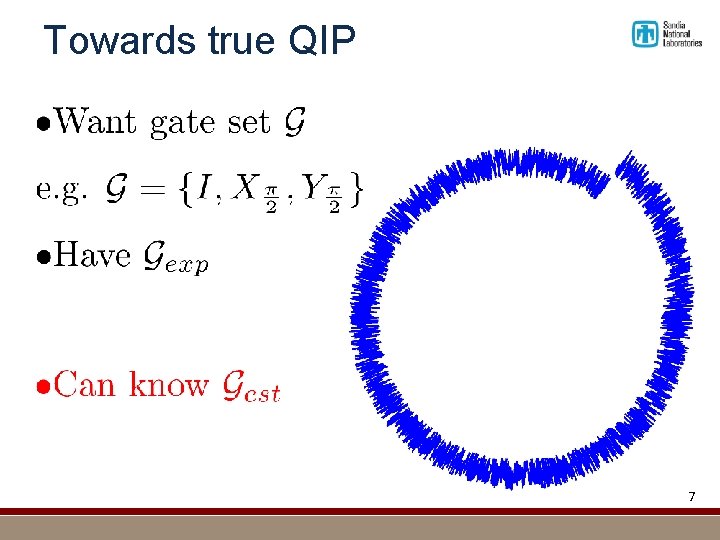
Towards true QIP 7
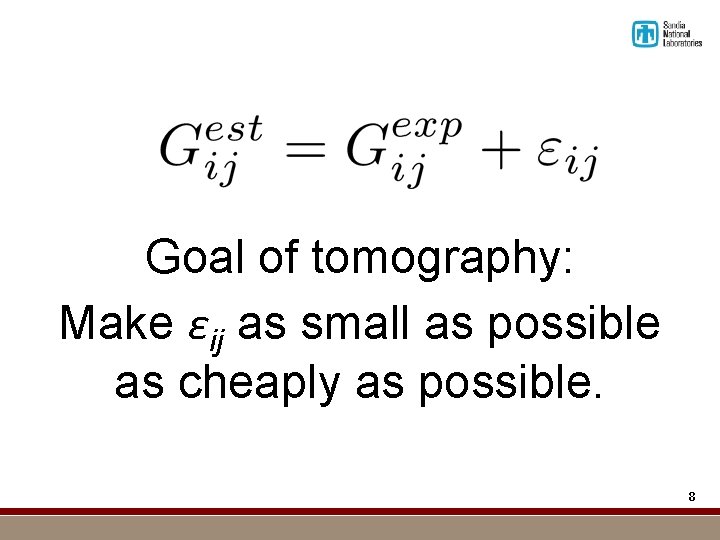
Goal of tomography: Make εij as small as possible as cheaply as possible. 8
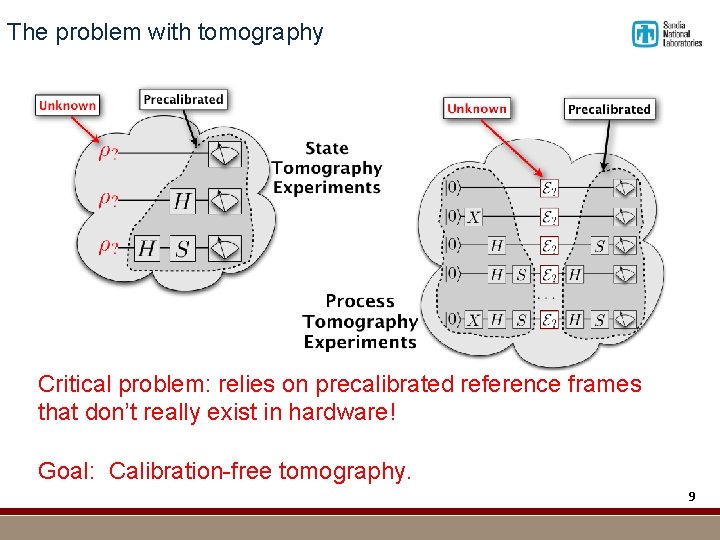
The problem with tomography Critical problem: relies on precalibrated reference frames that don’t really exist in hardware! Goal: Calibration-free tomography. 9
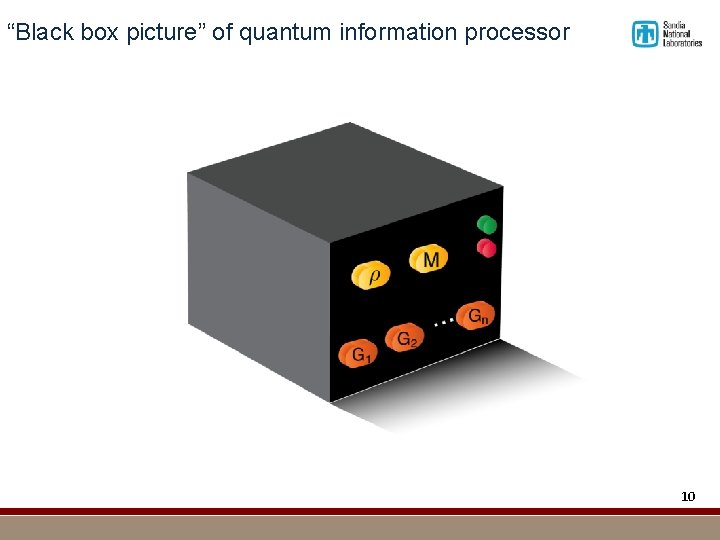
“Black box picture” of quantum information processor 10
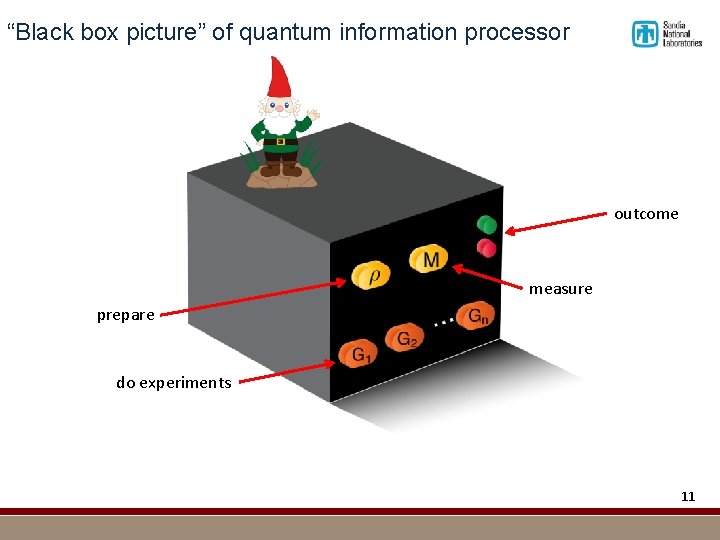
“Black box picture” of quantum information processor outcome measure prepare do experiments 11
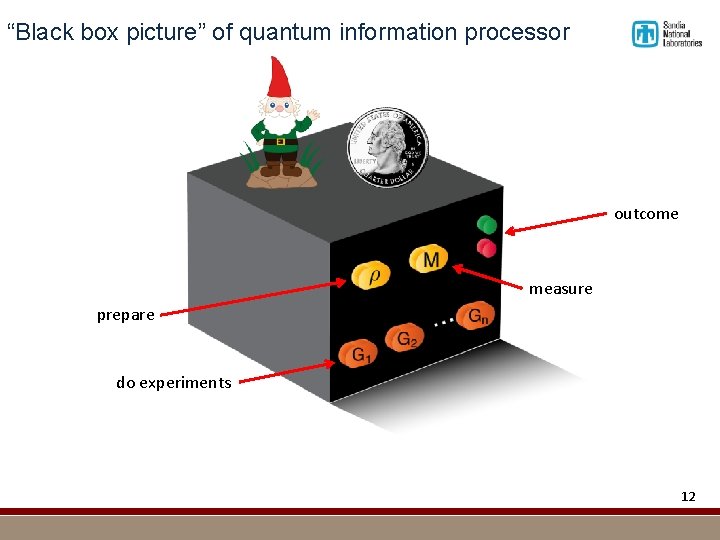
“Black box picture” of quantum information processor outcome measure prepare do experiments 12
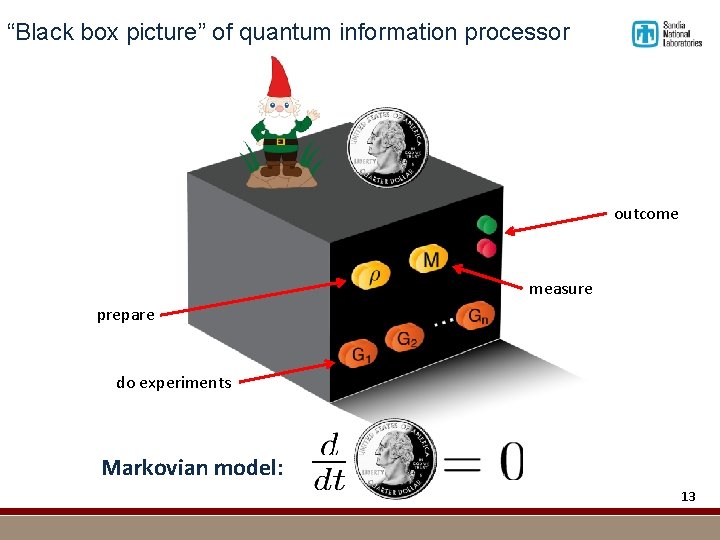
“Black box picture” of quantum information processor outcome measure prepare do experiments Markovian model: 13
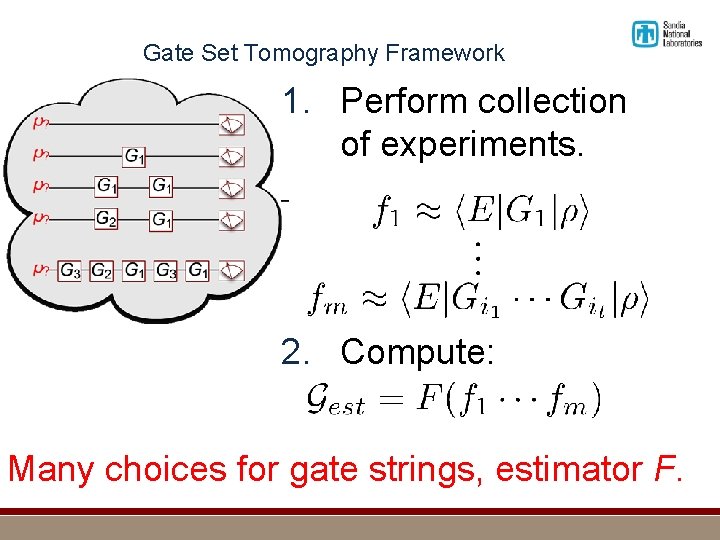
Gate Set Tomography Framework 1. Perform collection of experiments. 2. Compute: Many choices for gate strings, estimator F.
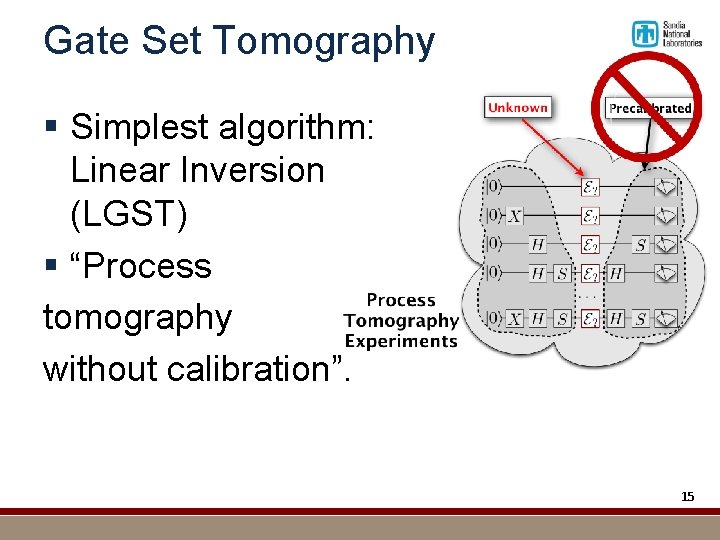
Gate Set Tomography § Simplest algorithm: Linear Inversion (LGST) § “Process tomography without calibration”. 15
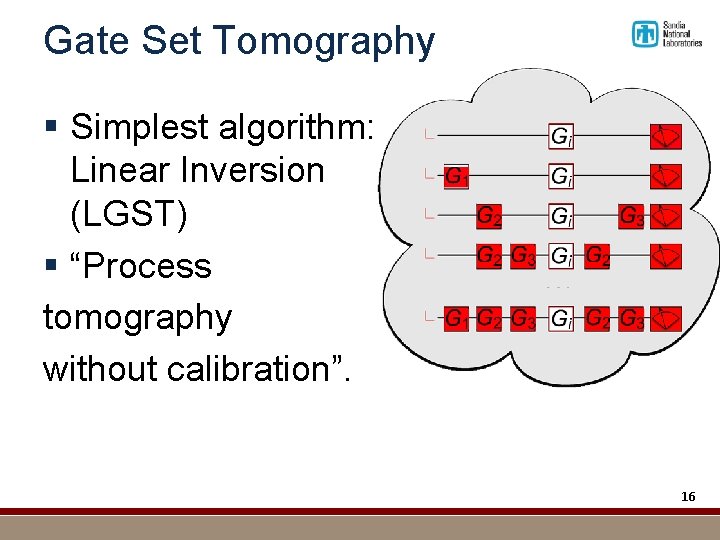
Gate Set Tomography § Simplest algorithm: Linear Inversion (LGST) § “Process tomography without calibration”. 16
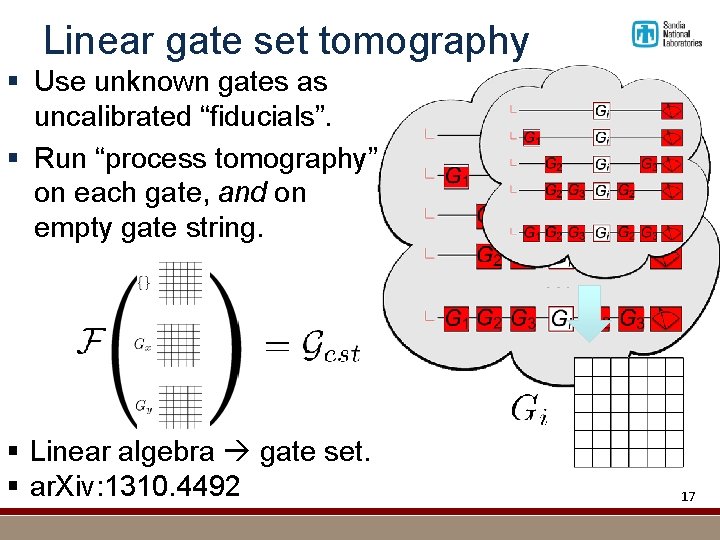
Linear gate set tomography § Use unknown gates as uncalibrated “fiducials”. § Run “process tomography” on each gate, and on empty gate string. § Linear algebra gate set. § ar. Xiv: 1310. 4492 17
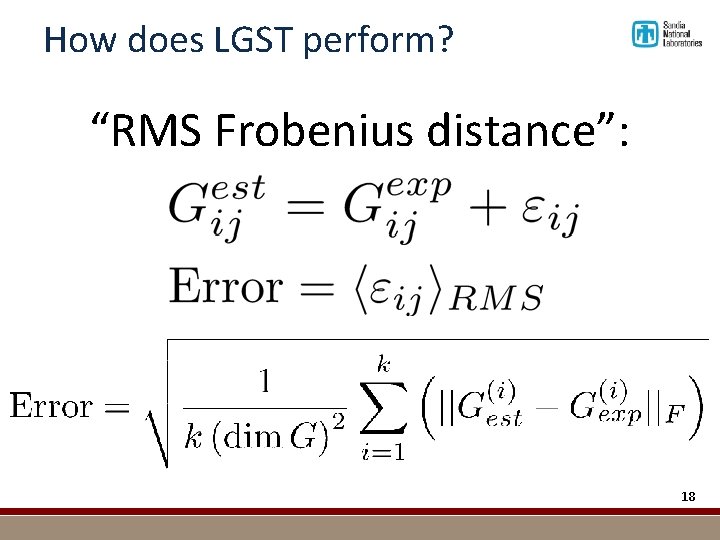
How does LGST perform? “RMS Frobenius distance”: 18
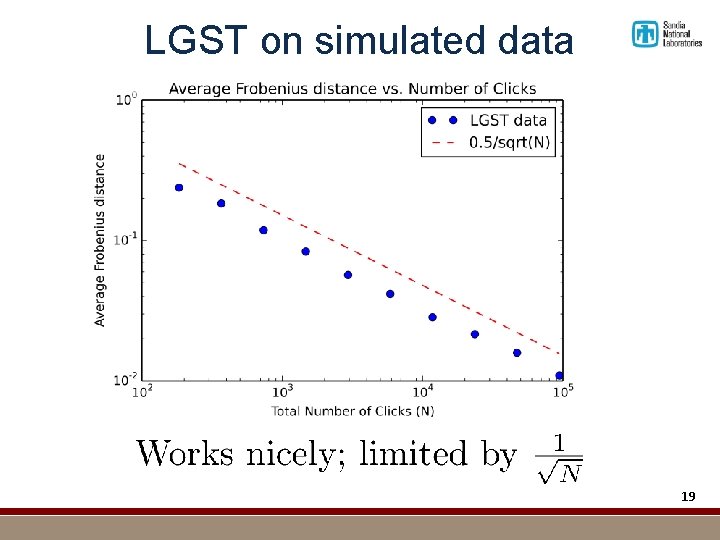
LGST on simulated data 19
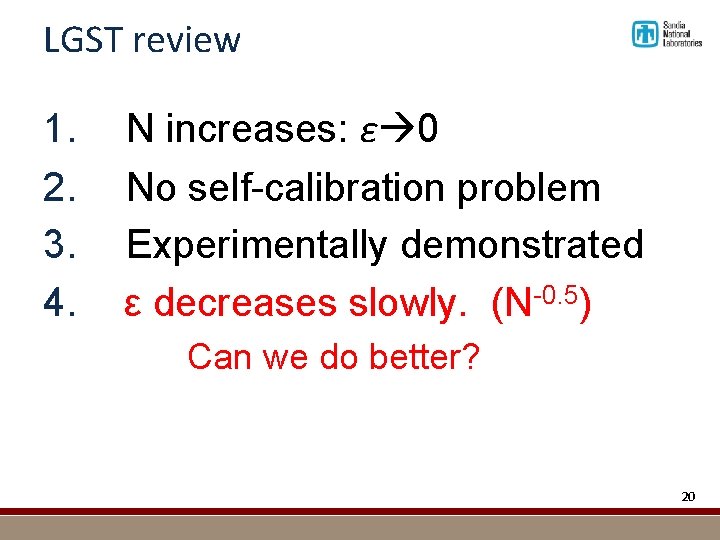
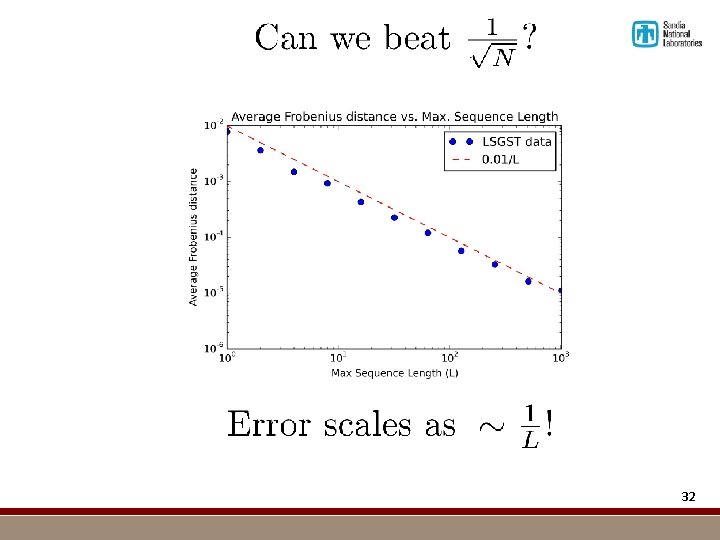
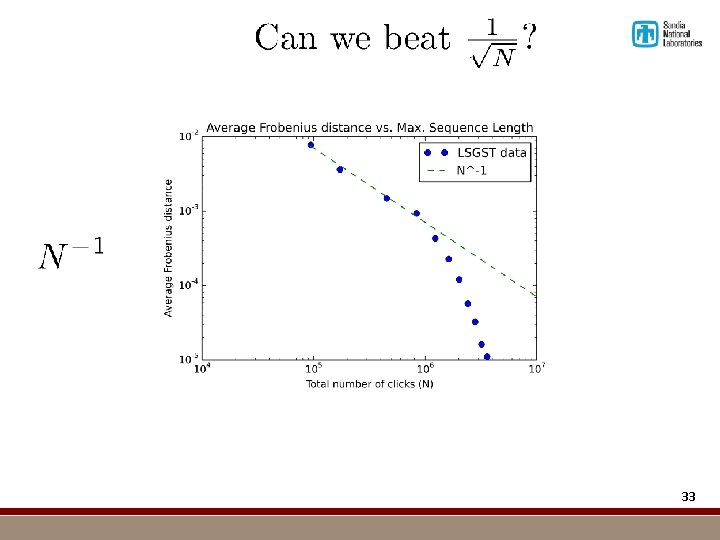
LGST review 1. N increases: ε 0 2. No self-calibration problem 3. Experimentally demonstrated 4. iε decreases slowly. (N-0. 5) Can we do better? 20
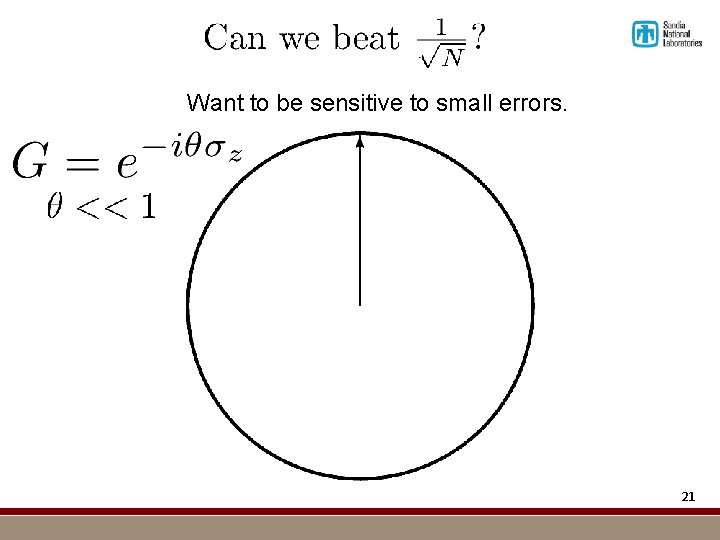
Want to be sensitive to small errors. 21
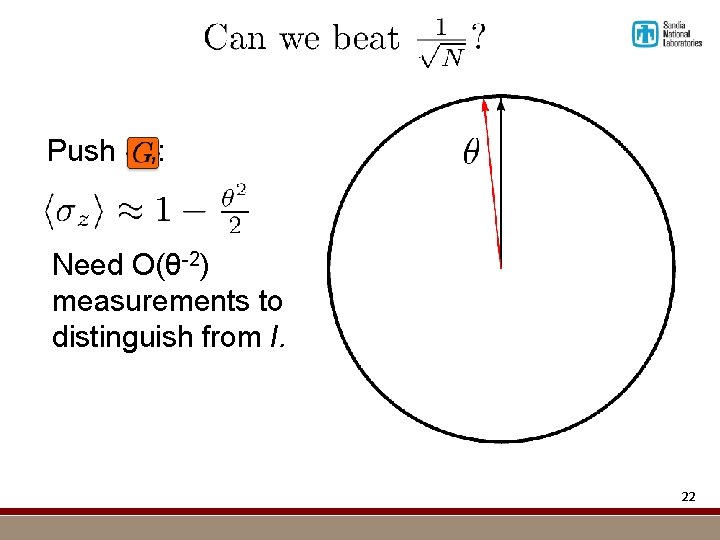
Push : Need Ο(θ-2) measurements to distinguish from I. 22
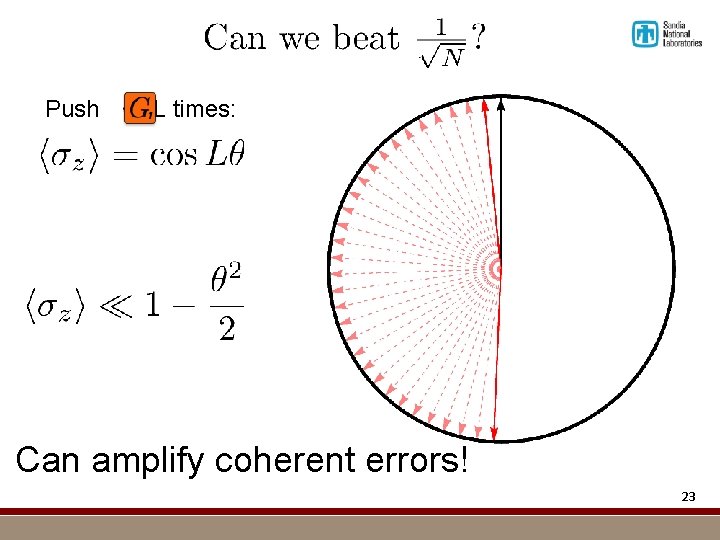
Push L times: Can amplify coherent errors! 23
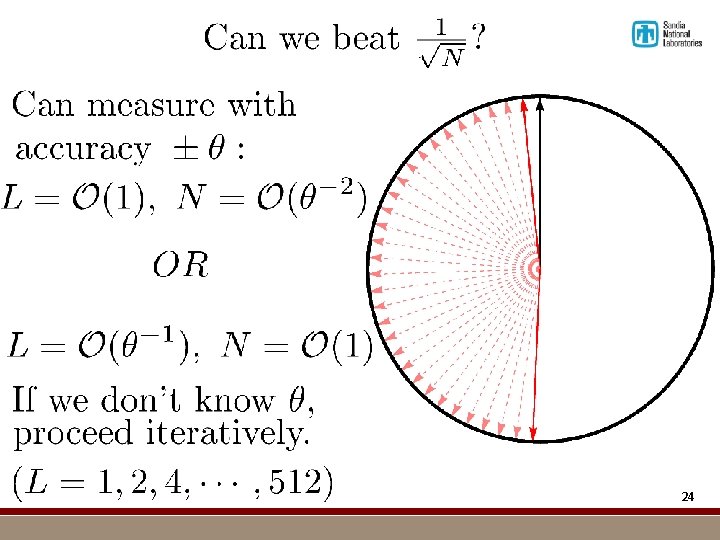
24
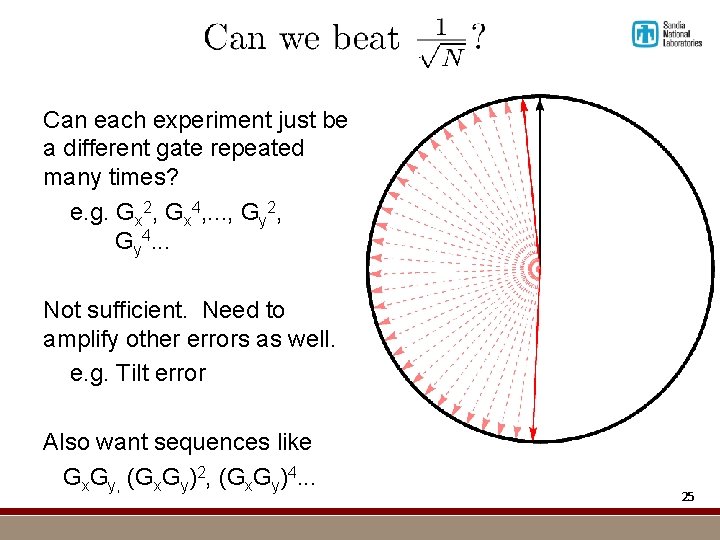
Can each experiment just be a different gate repeated many times? e. g. Gx 2, Gx 4, . . . , Gy 2, Gy 4. . . Not sufficient. Need to amplify other errors as well. e. g. Tilt error Also want sequences like Gx. Gy, (Gx. Gy)2, (Gx. Gy)4. . . 25
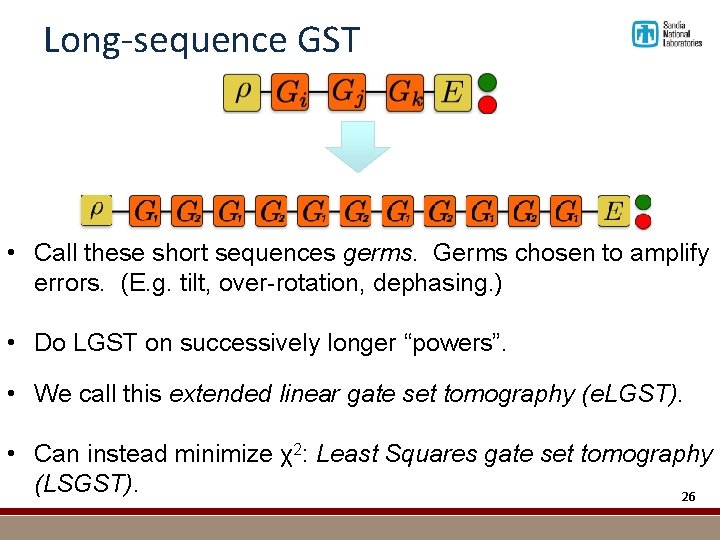
Long-sequence GST • Call these short sequences germs. Germs chosen to amplify errors. (E. g. tilt, over-rotation, dephasing. ) • Do LGST on successively longer “powers”. • We call this extended linear gate set tomography (e. LGST). • Can instead minimize χ2: Least Squares gate set tomography (LSGST). 26
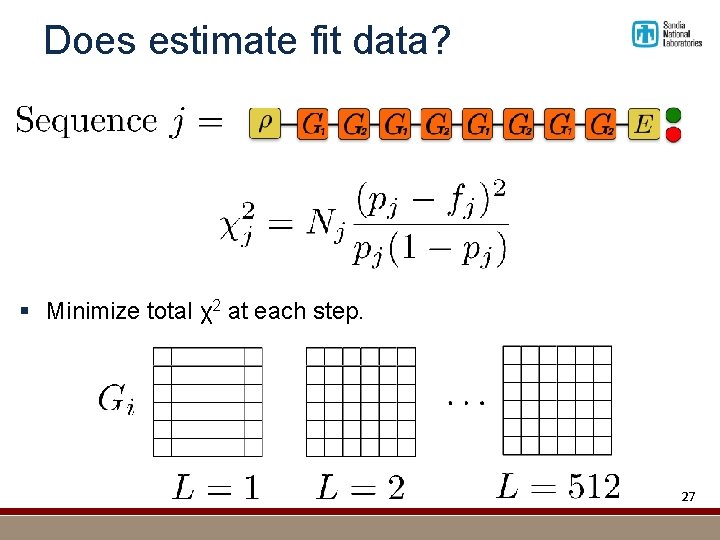
Does estimate fit data? § Minimize total χ2 at each step. 27
Algorithm summary 1. Start with experimental gate set, eg. {Gi, Gx, Gy} 2. From knowledge of target gate set, determine set of germs e. g. {Gx, Gy, Gi, Gx. Gy. Gi, Gx. Gi. Gy, Gx. Gi, Gy. Gi, Gx. Gi. Gy, Gx. Gy. Gi, Gx. Gy} 3. For varying maximum sequence length (L=1, 2, …, 512), perform “process tomography” experiments on each “extended germ” 4. Using least-squares, iteratively find gate set estimates that minimize χ2. 5. Compare to target gate set. 28
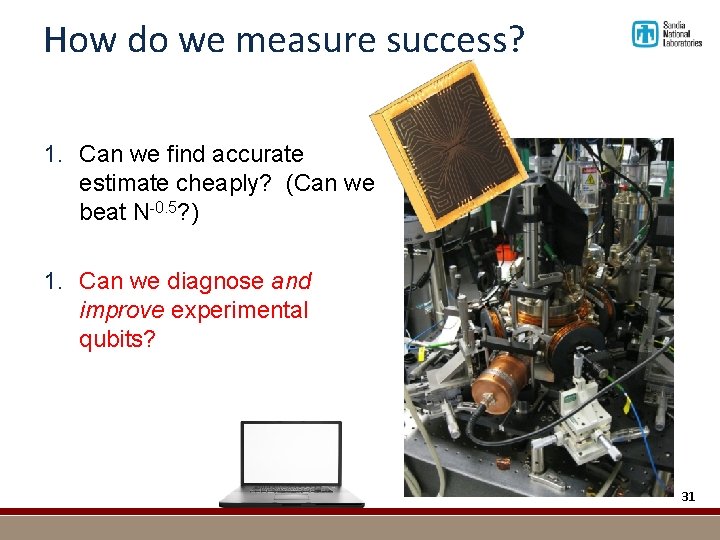
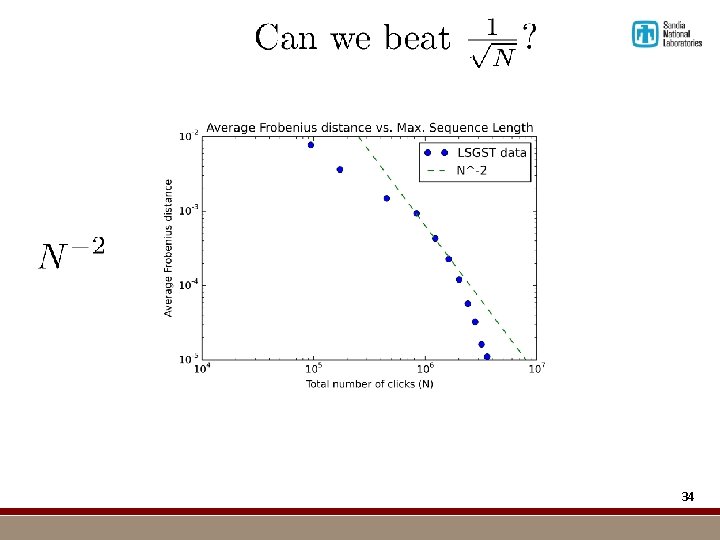
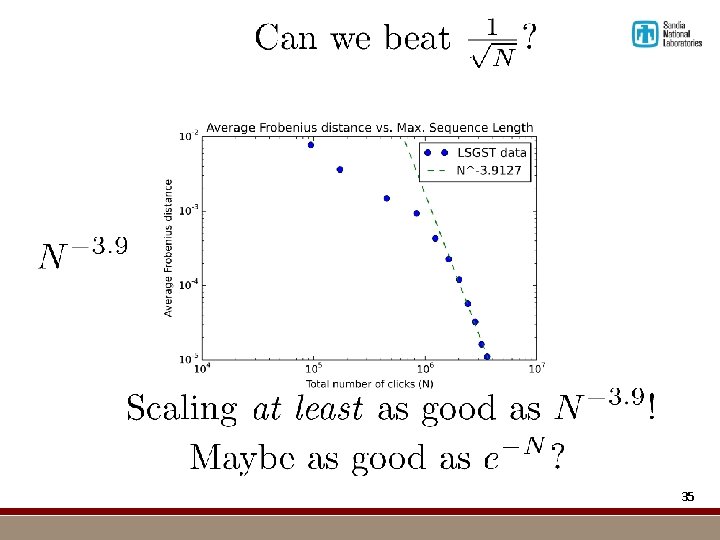
How do we measure success? 1. Can we find accurate estimate cheaply? (Can we beat N-0. 5? ) 1. Can we diagnose and improve experimental qubits? 29
How do we measure success? 1. Can we find accurate estimate cheaply? (Can we beat N-0. 5? ) 1. Can we diagnose and improve experimental qubits? 30
How do we measure success? 1. Can we find accurate estimate cheaply? (Can we beat N-0. 5? ) 1. Can we diagnose and improve experimental qubits? 31
32
33
34
35
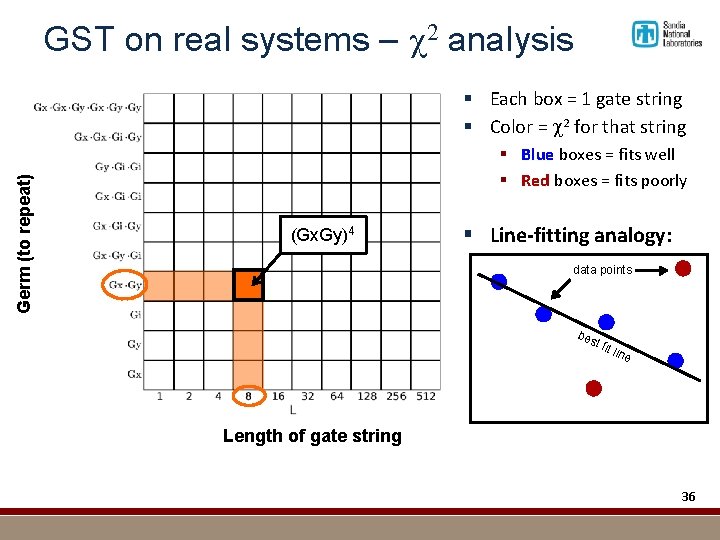
GST on real systems – c 2 analysis Germ (to repeat) § Each box = 1 gate string § Color = c 2 for that string § Blue boxes = fits well § Red boxes = fits poorly (Gx. Gy)4 § Line-fitting analogy: data points bes t fit l ine Length of gate string 36
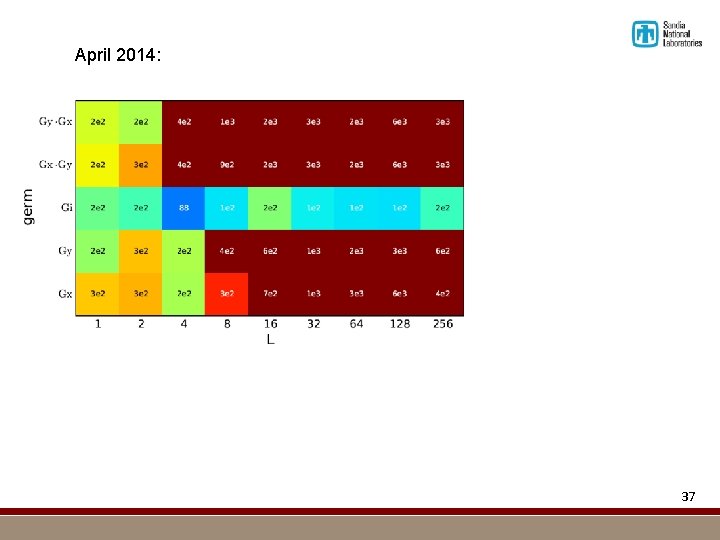
April 2014: 37
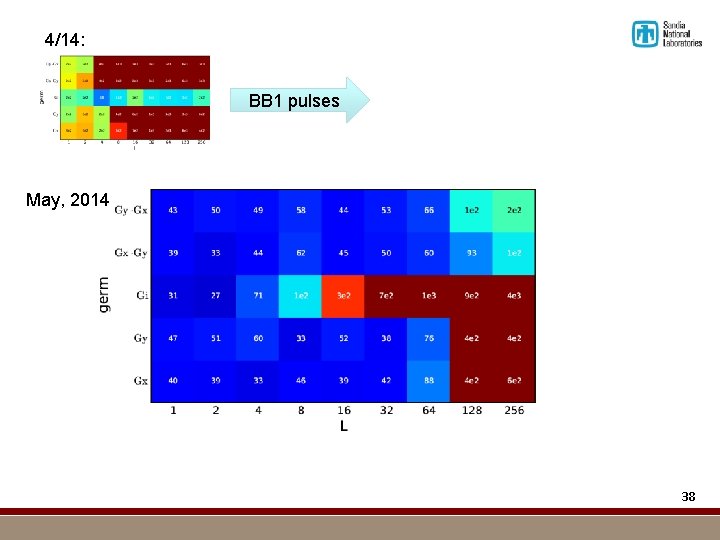
4/14: BB 1 pulses May, 2014 38
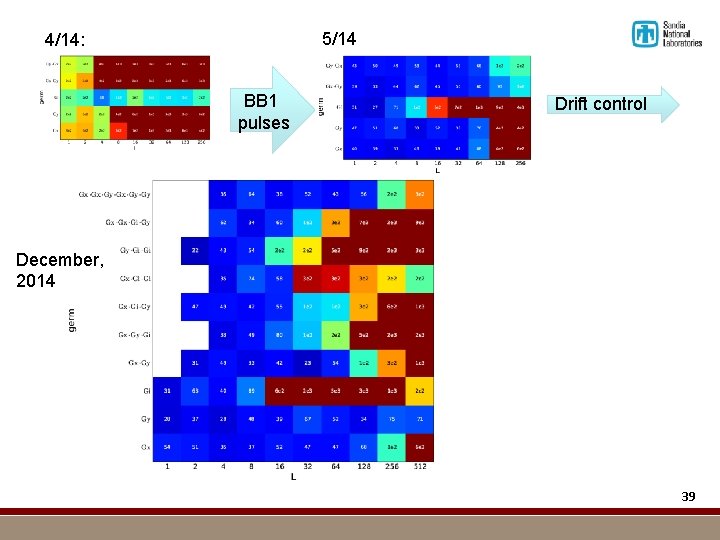
5/14 4/14: BB 1 pulses Drift control December, 2014 39
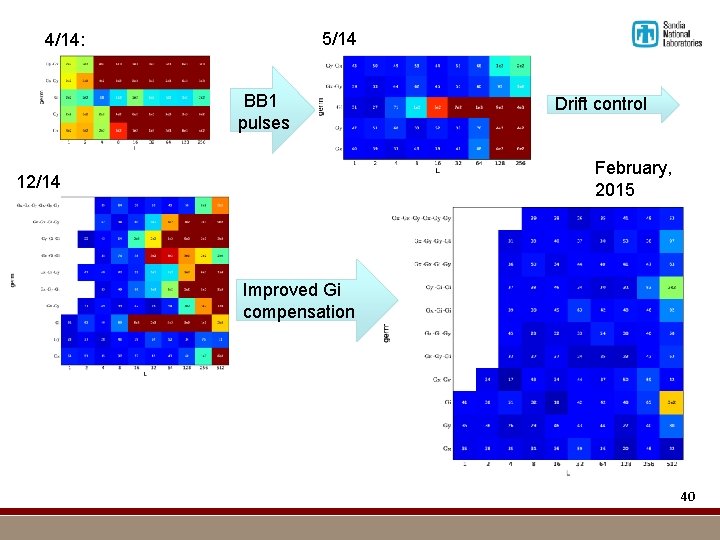
5/14 4/14: BB 1 pulses Drift control February, 2015 12/14 Improved Gi compensation 40
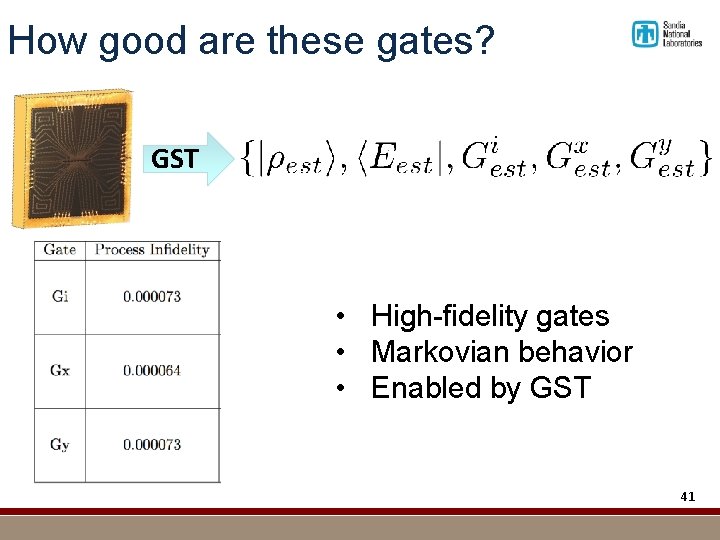
How good are these gates? GST • High-fidelity gates • Markovian behavior • Enabled by GST 41
Conclusions § GST yields reliable, highly accurate estimates far more cheaply than standard tomography. § GST can diagnose the presence of non-Markovian noise. § GST is being used in the construction of reliable, high-fidelity experimental gates. 42
Future directions § § Multi-qubit systems Randomized benchmarking predictions Non-Markovian analysis Drift control. § More experimental implenetation Contact me! kmrudin@sandia. gov § Thank you! § Gnome image courtesy of http: //sweetclipart. com/friendly-garden-gnome-1464 43

Bonus slides! 44
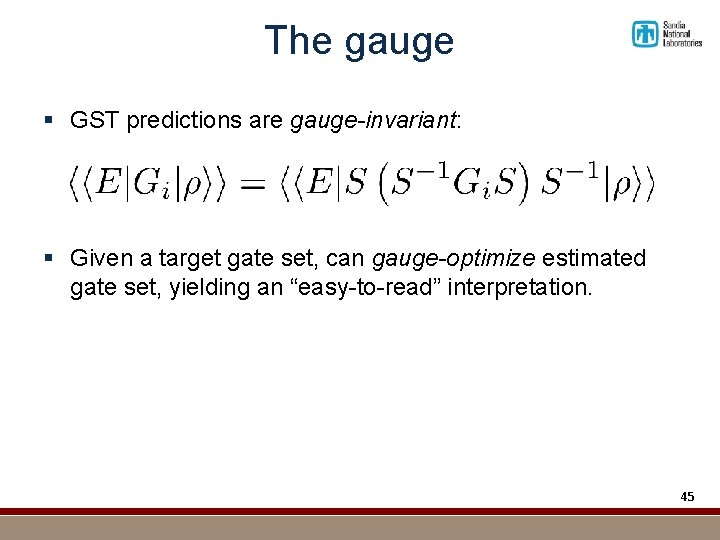
The gauge § GST predictions are gauge-invariant: § Given a target gate set, can gauge-optimize estimated gate set, yielding an “easy-to-read” interpretation. 45
New end user infrastructure § Automated report generation § Explains GST to end user § Provides best GST estimate, along with relevant scoring parameters § Fidelity, trace distance, rotation axes and angles § c 2 plots § Diagnostic “whac-a-mole” plots § Website interface for end user to generate own reports. § https: //prod. sandia. gov/gst/index. html § Generation takes ~1 minute, depending on data set. 46
Experimental error quantification § Can’t use ||. ||F error for experimental data (don’t know G_true) § c 2 gives goodness-of-fit; what about error bars on individual gate set parameters? § Tackled experimental error bars in three ways: § Hessian of c 2 function (in progress) § Parametric bootstrapping § Non-parametric bootstrapping 47
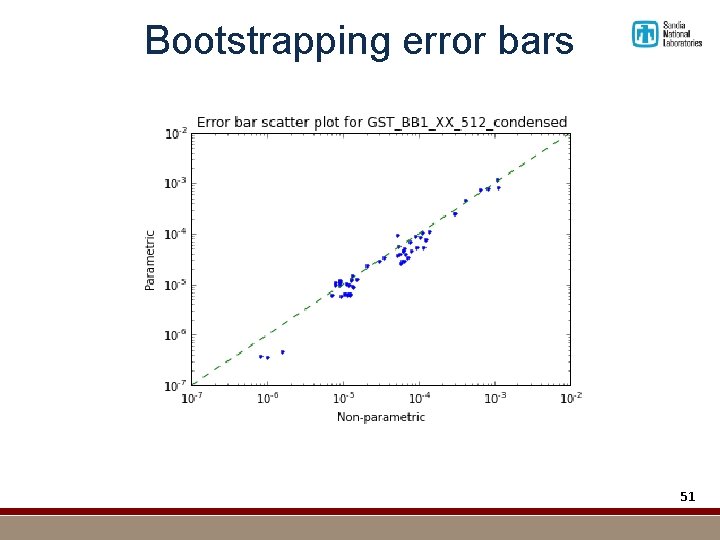
Bootstrapping error bars § Non-parametric bootstrapping: § Randomly take subsamples of experimental dataset many times to generate new datasets § Run GST on each new dataset; generate ensemble of gate sets. § Compute spread (or other statistics) of new ensemble of gate sets. 48
Bootstrapping error bars § Parametric bootstrapping: § Compute GST estimate of experimental dataset. § Use GST estimate to generate many new datasets. § Run GST on each new dataset; generate ensemble of gate sets. § Compute spread (or other statistics) of new ensemble of gate sets. 49
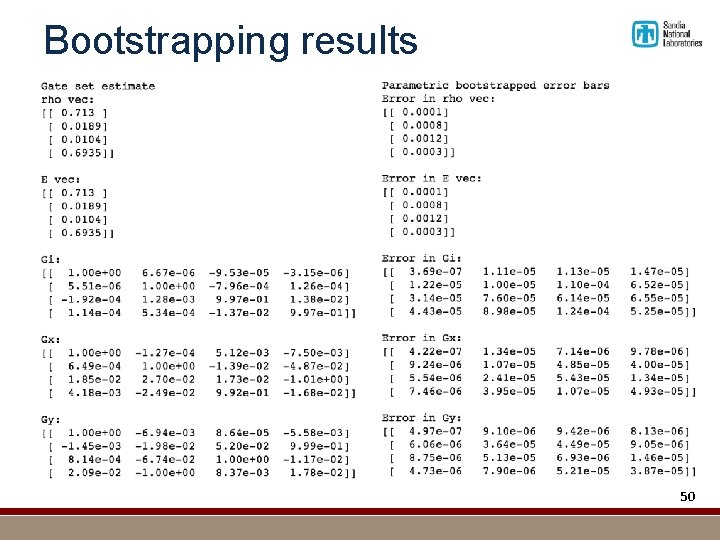
Bootstrapping results 50
Bootstrapping error bars 51
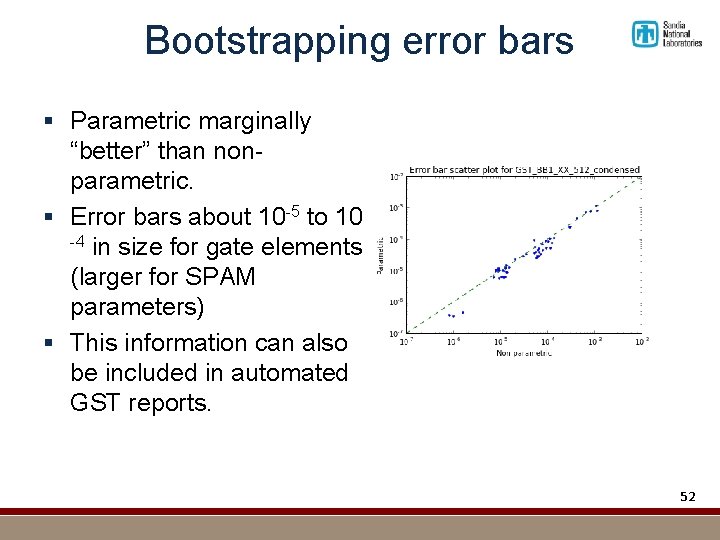
Bootstrapping error bars § Parametric marginally “better” than nonparametric. § Error bars about 10 -5 to 10 -4 in size for gate elements (larger for SPAM parameters) § This information can also be included in automated GST reports. 52
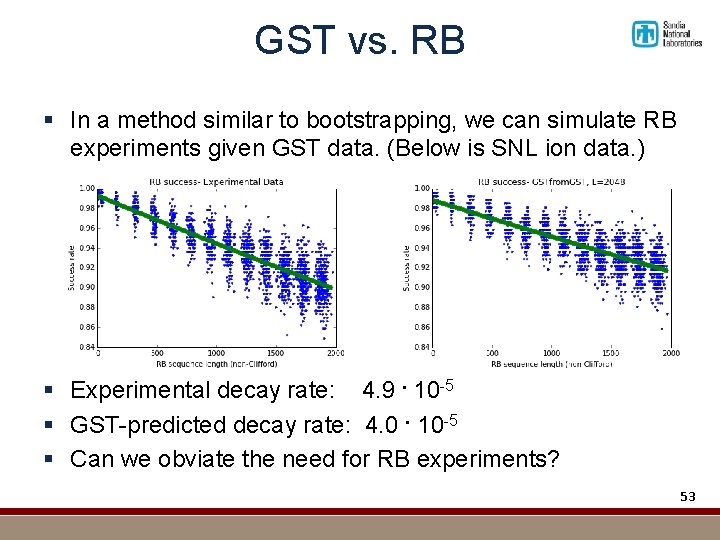
GST vs. RB § In a method similar to bootstrapping, we can simulate RB experiments given GST data. (Below is SNL ion data. ) § Experimental decay rate: 4. 9. 10 -5 § GST-predicted decay rate: 4. 0. 10 -5 § Can we obviate the need for RB experiments? 53
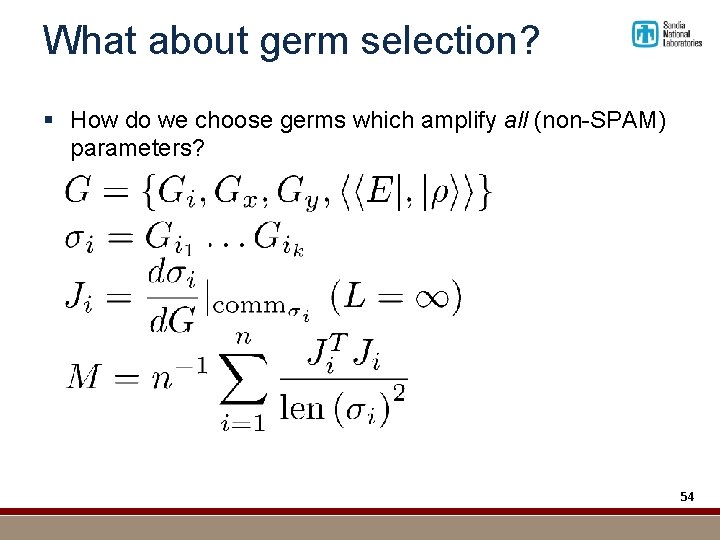
What about germ selection? § How do we choose germs which amplify all (non-SPAM) parameters? 54
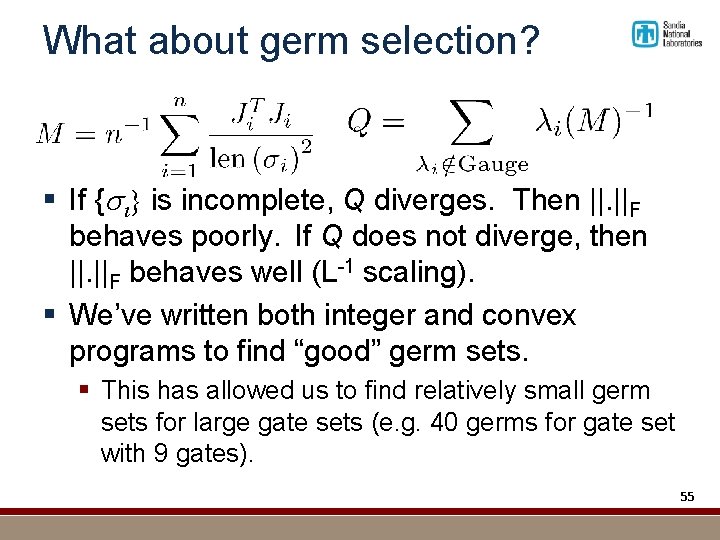
What about germ selection? § If {si} is incomplete, Q diverges. Then ||. ||F behaves poorly. If Q does not diverge, then ||. ||F behaves well (L-1 scaling). § We’ve written both integer and convex programs to find “good” germ sets. § This has allowed us to find relatively small germ sets for large gate sets (e. g. 40 germs for gate set with 9 gates). 55
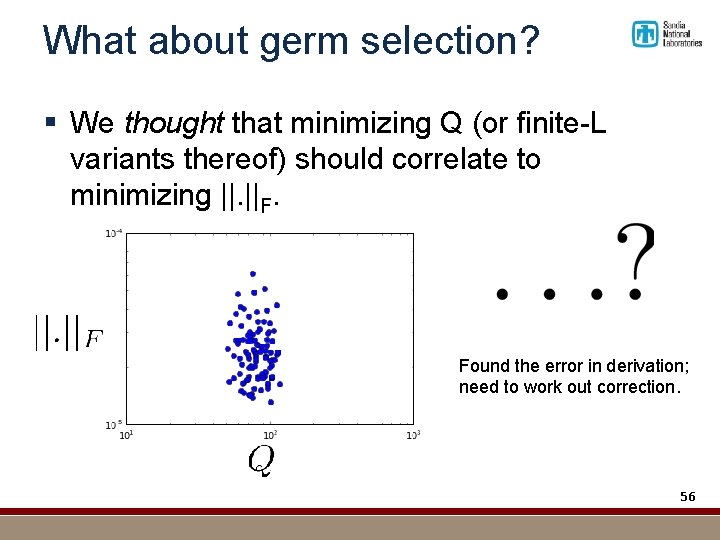
What about germ selection? § We thought that minimizing Q (or finite-L variants thereof) should correlate to minimizing ||. ||F. Found the error in derivation; need to work out correction. 56
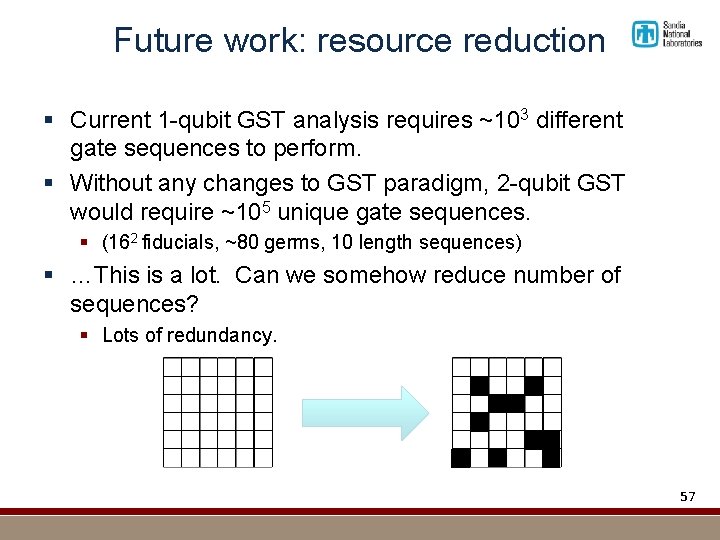
Future work: resource reduction § Current 1 -qubit GST analysis requires ~103 different gate sequences to perform. § Without any changes to GST paradigm, 2 -qubit GST would require ~105 unique gate sequences. § (162 fiducials, ~80 germs, 10 length sequences) § …This is a lot. Can we somehow reduce number of sequences? § Lots of redundancy. 57
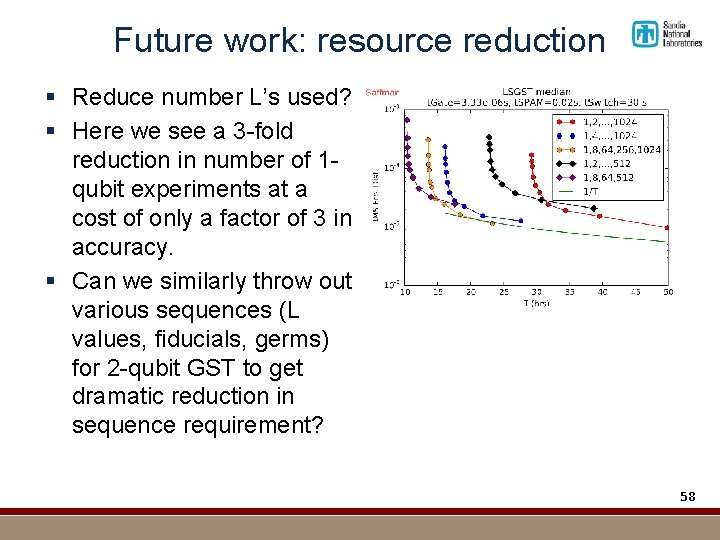
Future work: resource reduction § Reduce number L’s used? § Here we see a 3 -fold reduction in number of 1 qubit experiments at a cost of only a factor of 3 in accuracy. § Can we similarly throw out various sequences (L values, fiducials, germs) for 2 -qubit GST to get dramatic reduction in sequence requirement? 58
Additional future work § Can we use germ selection techniques to pick out various long gate sequences that always amplify errors? § “Derandomized benchmarking? ” § Can we use model selection techniques with GST to diagnose quantum devices of unknown a priori dimension? § Thanks! 59
- Slides: 58