
GAT PRACTICE NUMERACY Prompts 1 Understand the problem

GAT PRACTICE NUMERACY
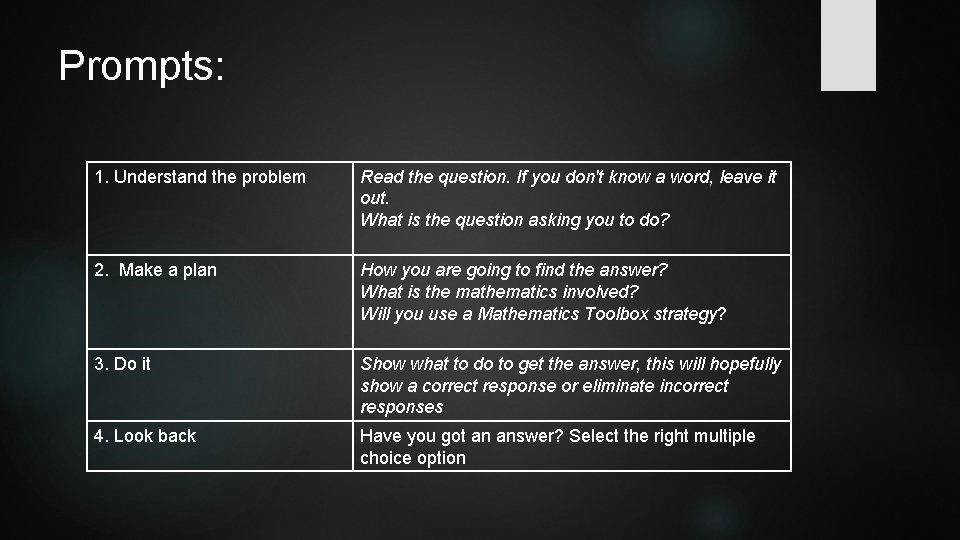
Prompts: 1. Understand the problem Read the question. If you don't know a word, leave it out. What is the question asking you to do? 2. Make a plan How you are going to find the answer? What is the mathematics involved? Will you use a Mathematics Toolbox strategy? 3. Do it Show what to do to get the answer, this will hopefully show a correct response or eliminate incorrect responses 4. Look back Have you got an answer? Select the right multiple choice option

Some strategies: Many GAT questions will require you to ‘Try all Possibilities’ These are the questions that ask: Which answer/statement is the ‘best supported’ or ‘best explains’ Some GAT questions require you to: • draw a diagram, • make a table, • look for a pattern, • break a problem into smaller parts, • work backwards
The strategies- what are they? Try all possibilities Draw a diagram Make a table Look for a pattern Break a problem into smaller parts Work backwards

Underline key words
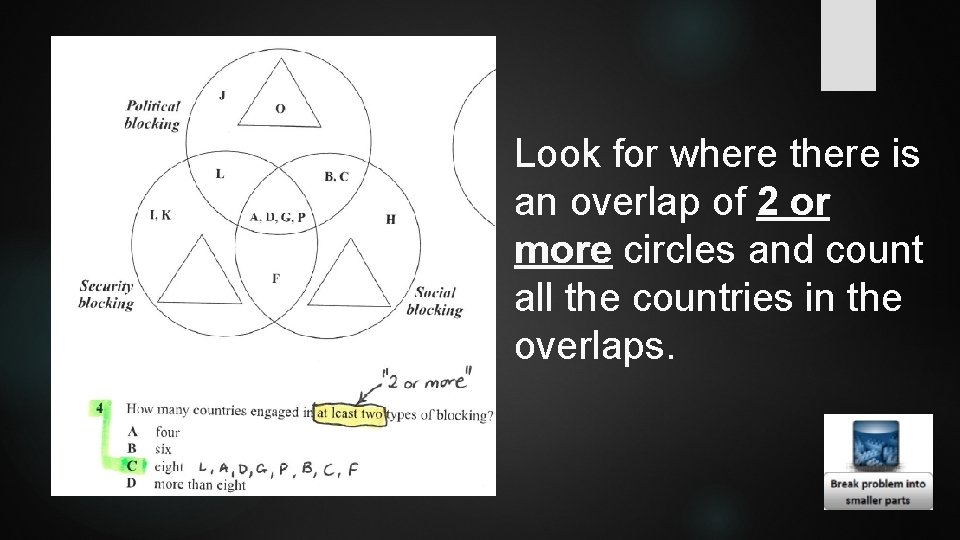
Look for where there is an overlap of 2 or more circles and count all the countries in the overlaps.
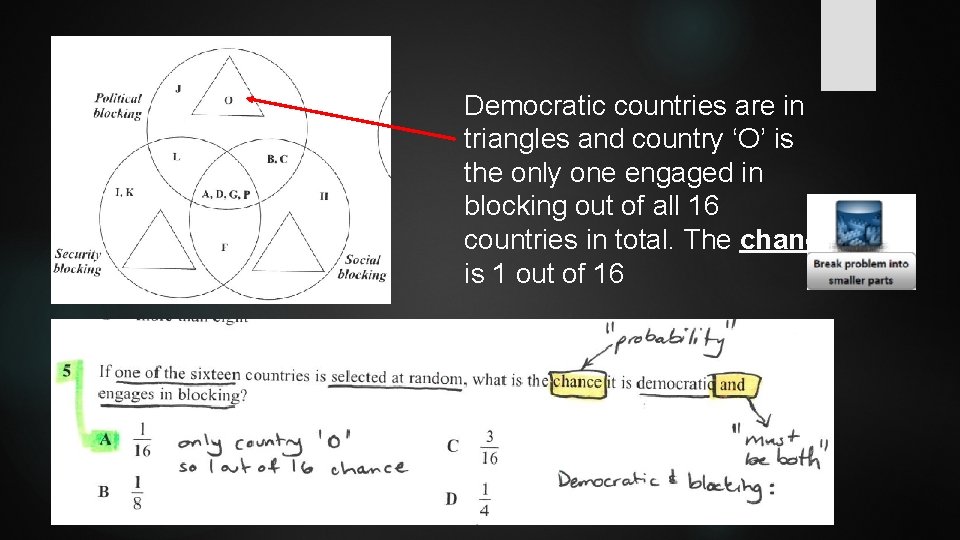
Democratic countries are in triangles and country ‘O’ is the only one engaged in blocking out of all 16 countries in total. The chance is 1 out of 16
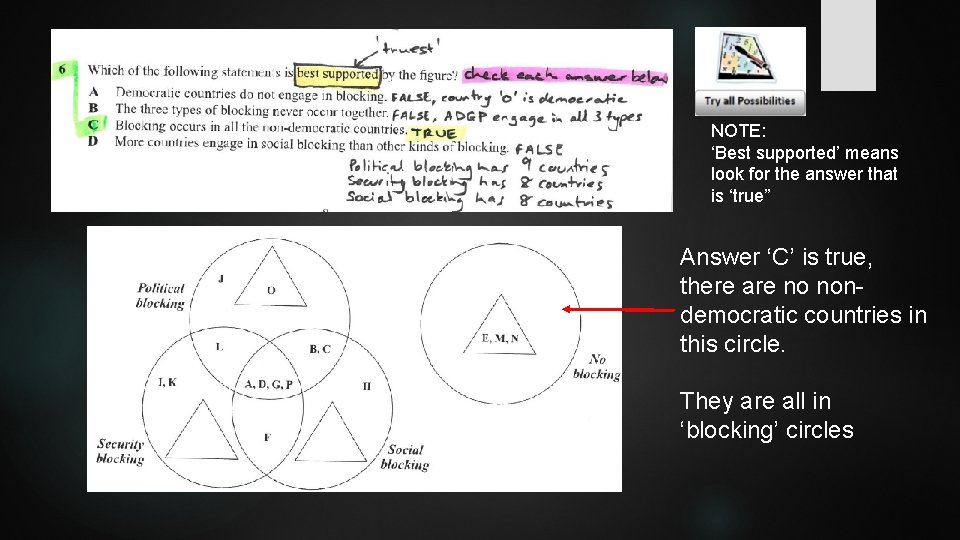
NOTE: ‘Best supported’ means look for the answer that is ‘true” Answer ‘C’ is true, there are no nondemocratic countries in this circle. They are all in ‘blocking’ circles
Rate your understanding of Venn Diagrams: 4 - Excellent 3 - Competent 2 - With assistance 1 - Need more explanation
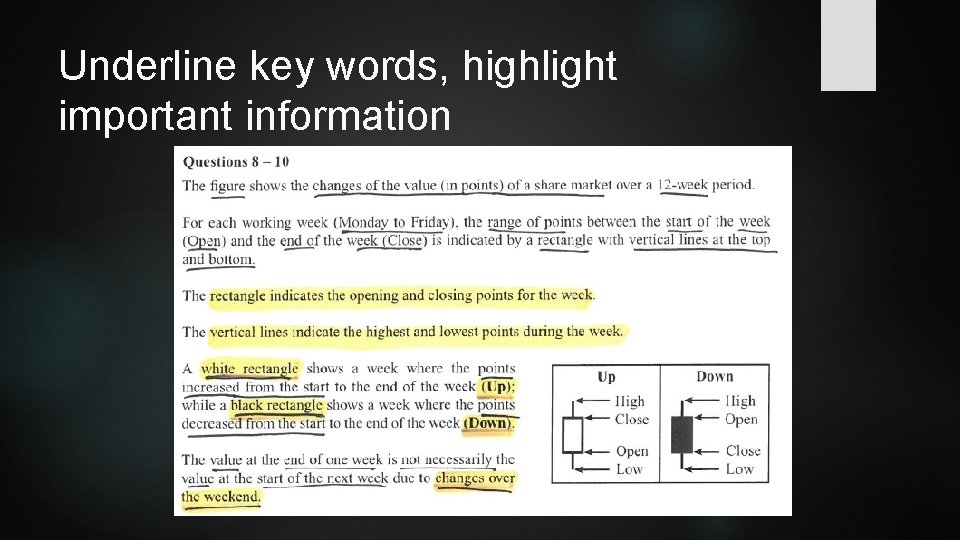
Underline key words, highlight important information
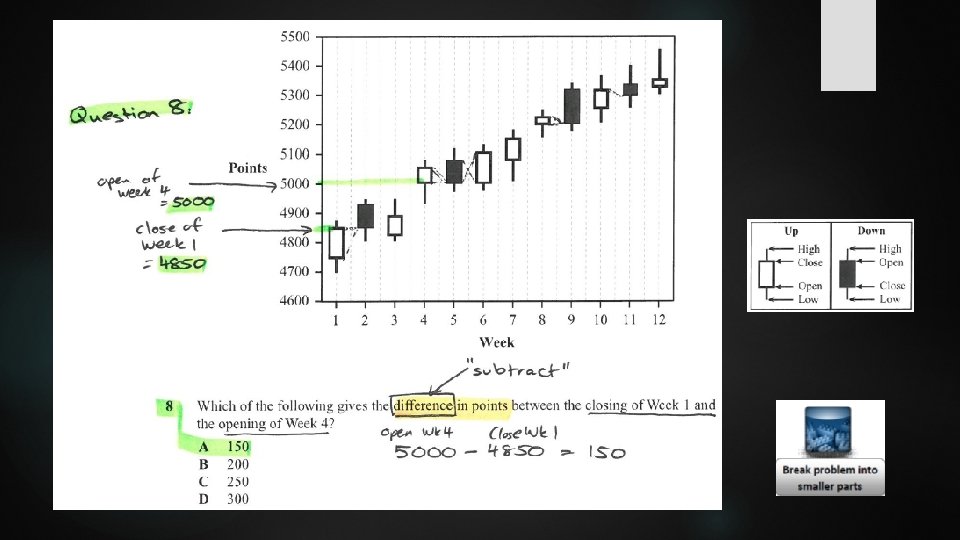
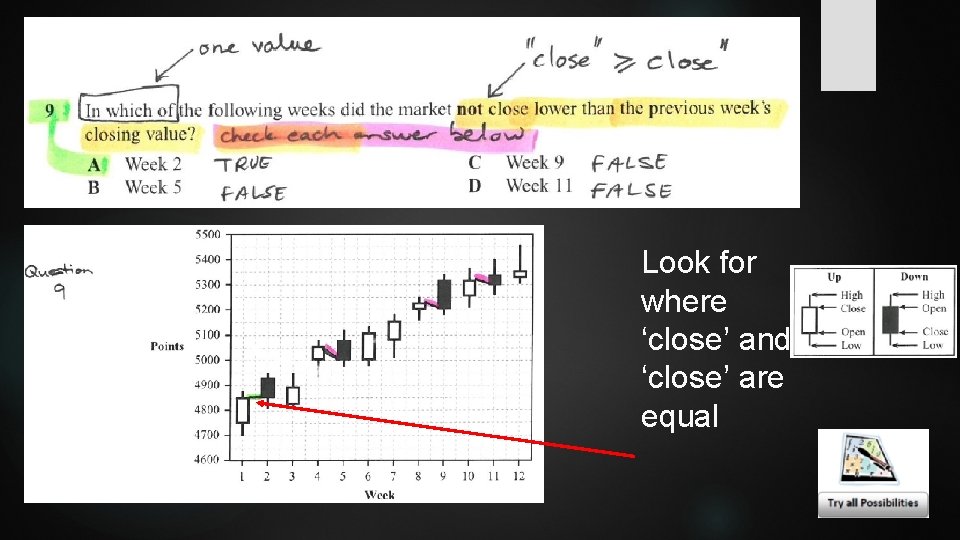
Look for where ‘close’ and ‘close’ are equal
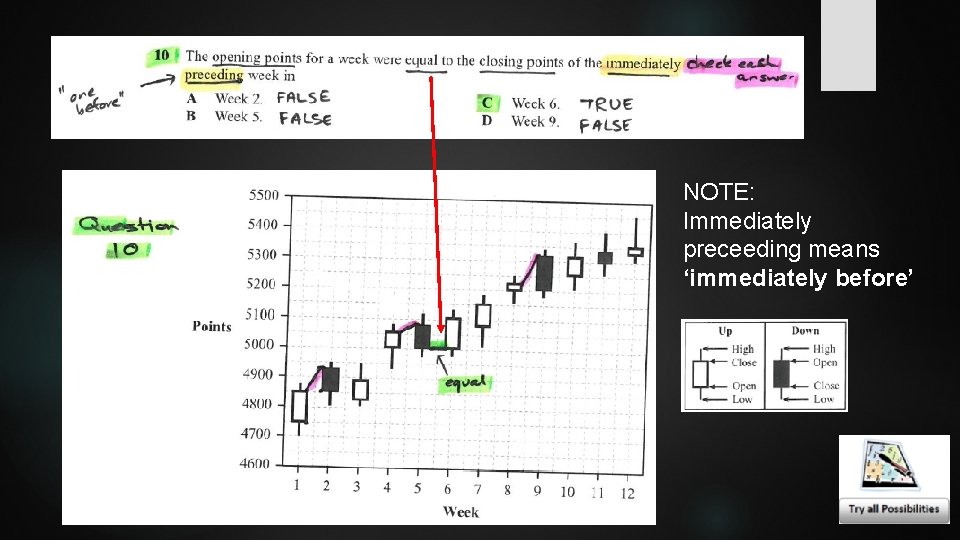
NOTE: Immediately preceeding means ‘immediately before’
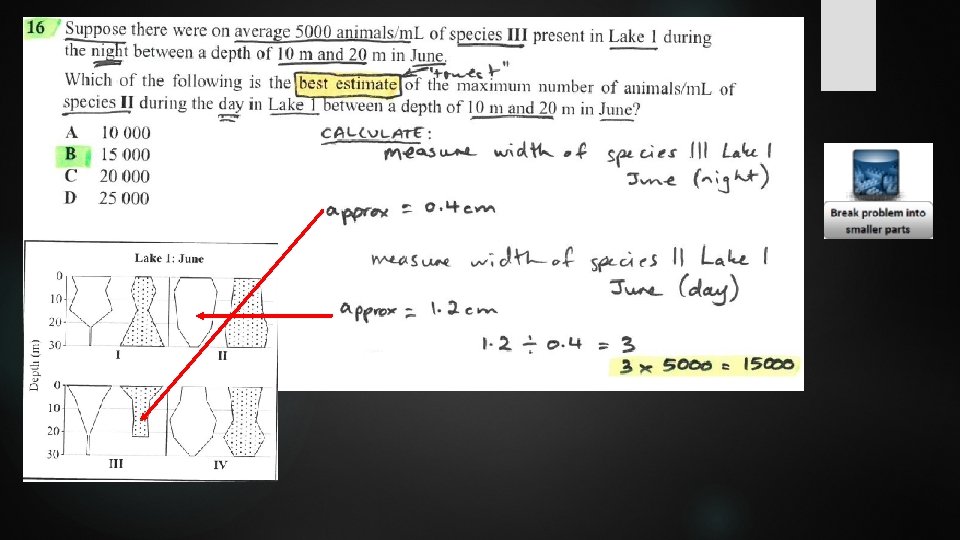
What key strategies where needed to answers the questions? Look for a key and keep referring to it Note words in bold Understand what it means by ‘difference’ Use a ruler to line up values ‘Not close lower’ meant greater than or equal to Preceding means ‘the one before’
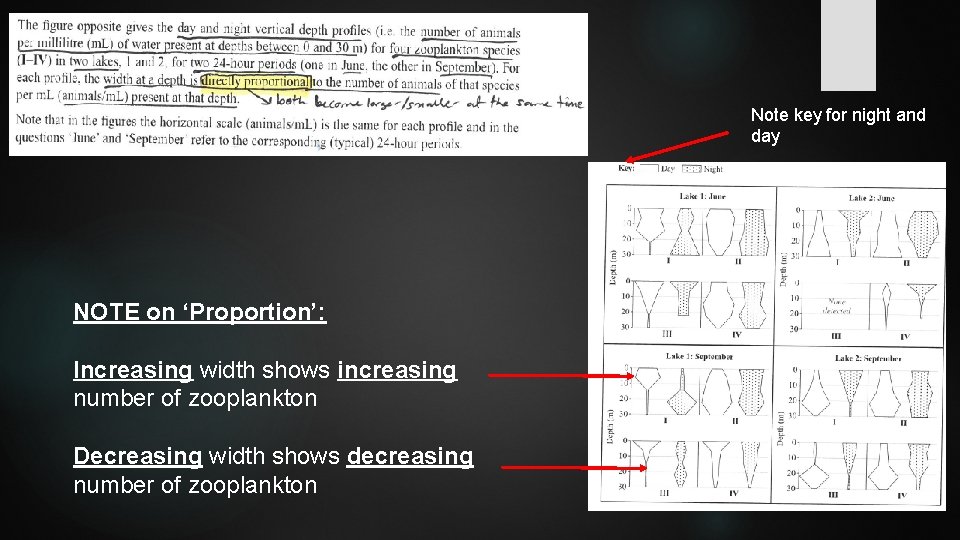
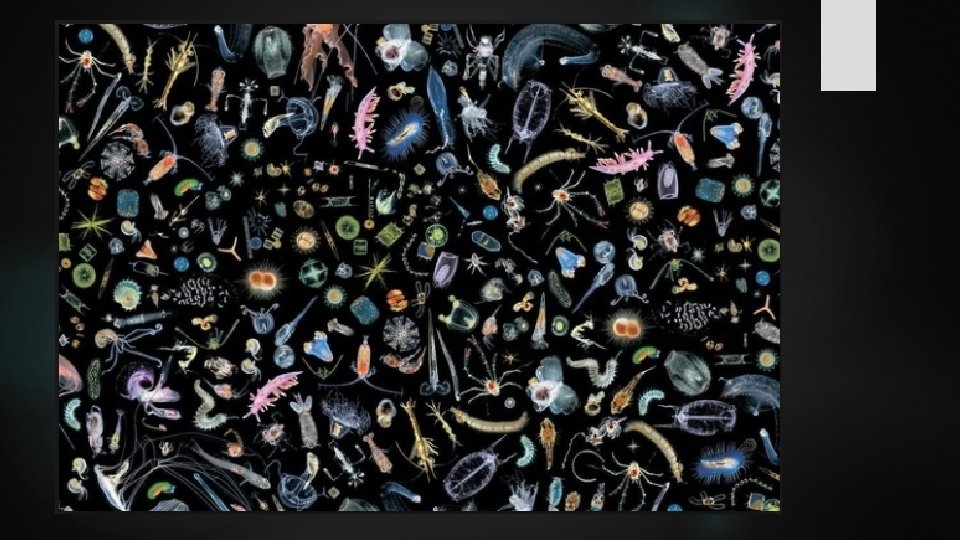
Note key for night and day NOTE on ‘Proportion’: Increasing width shows increasing number of zooplankton Decreasing width shows decreasing number of zooplankton
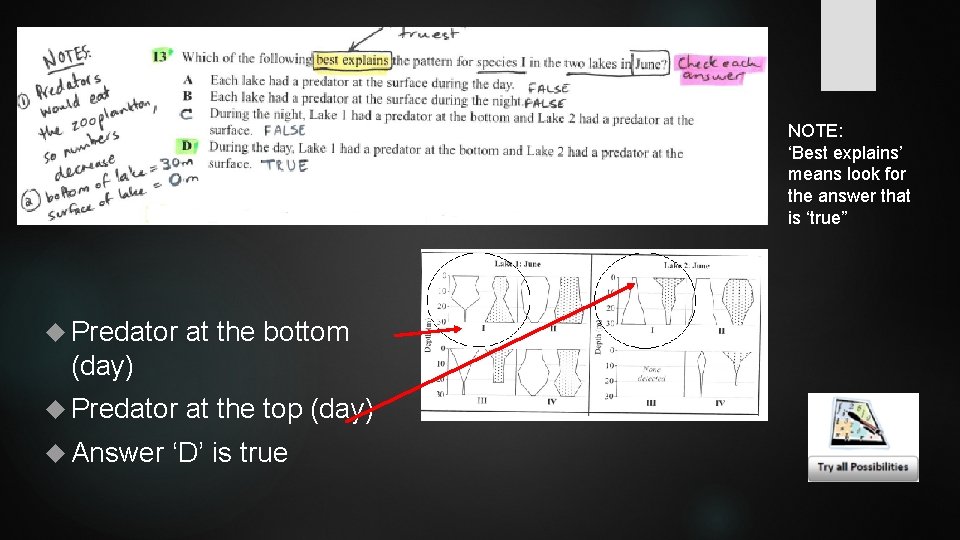
NOTE: ‘Best explains’ means look for the answer that is ‘true” Predator at the bottom (day) Predator Answer at the top (day) ‘D’ is true
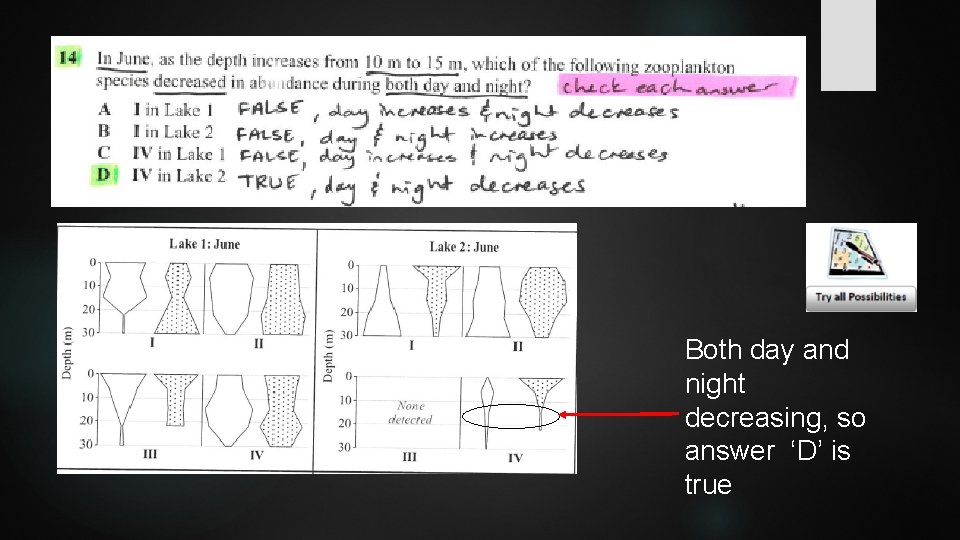
Both day and night decreasing, so answer ‘D’ is true
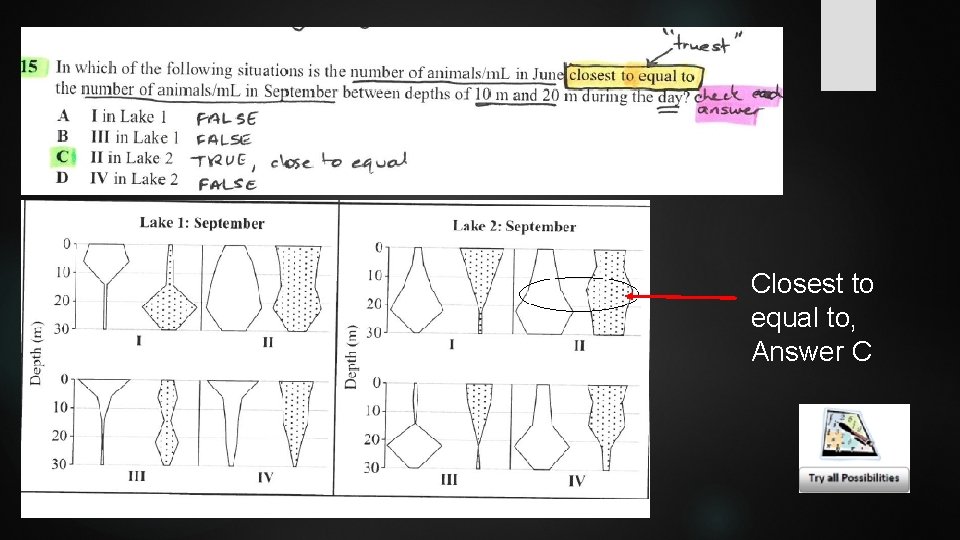
Closest to equal to, Answer C
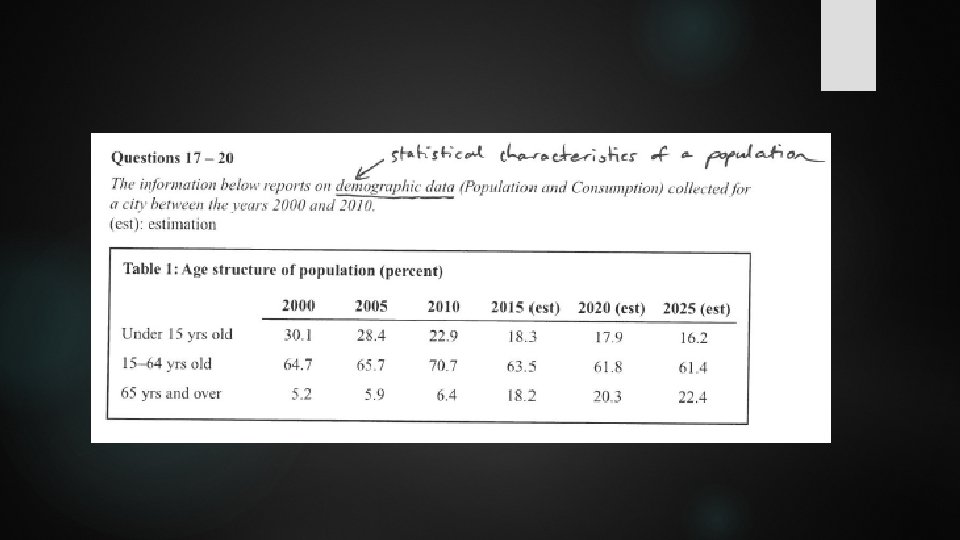
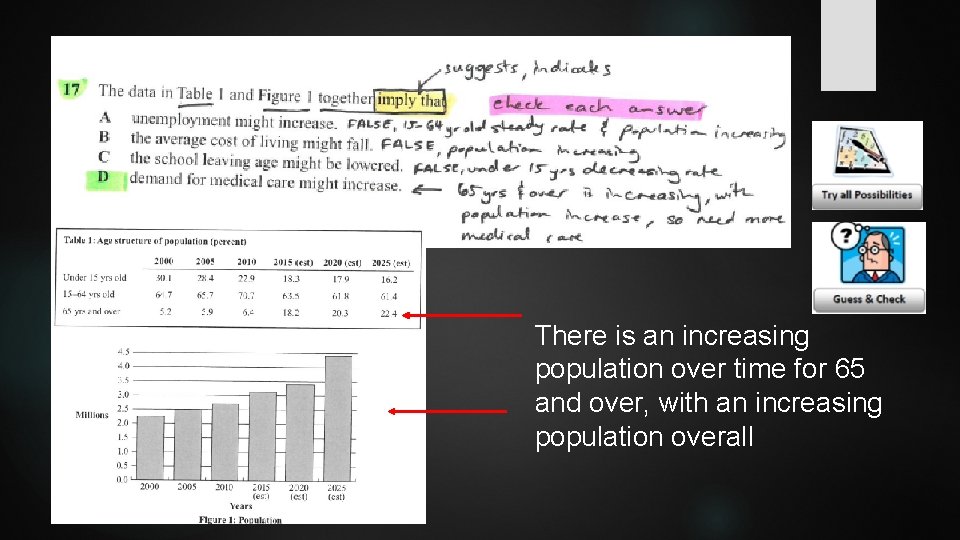
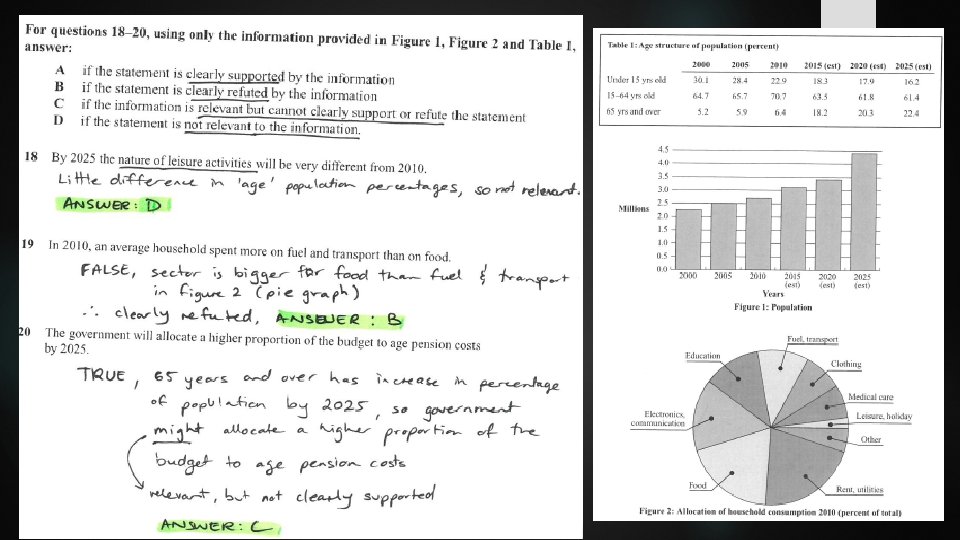
There is an increasing population over time for 65 and over, with an increasing population overall
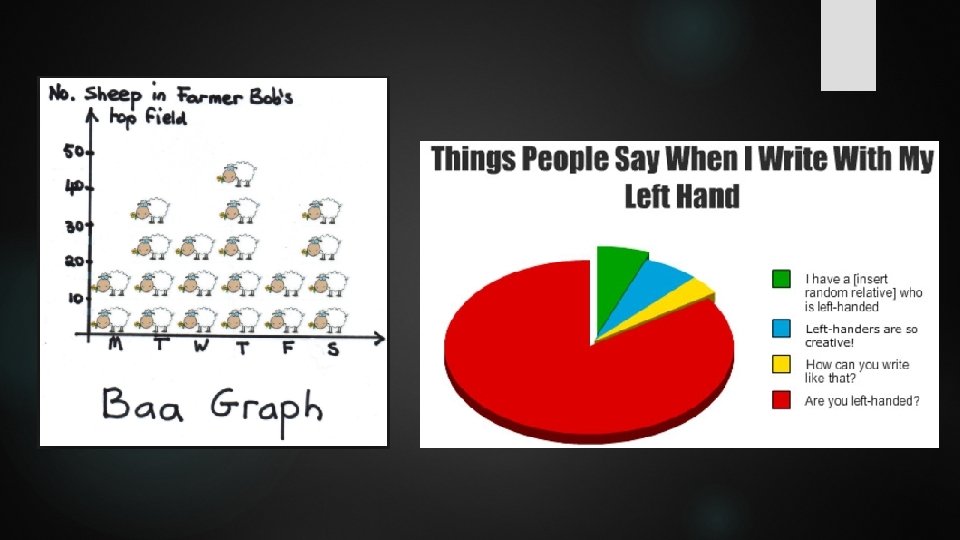

Underline Key words
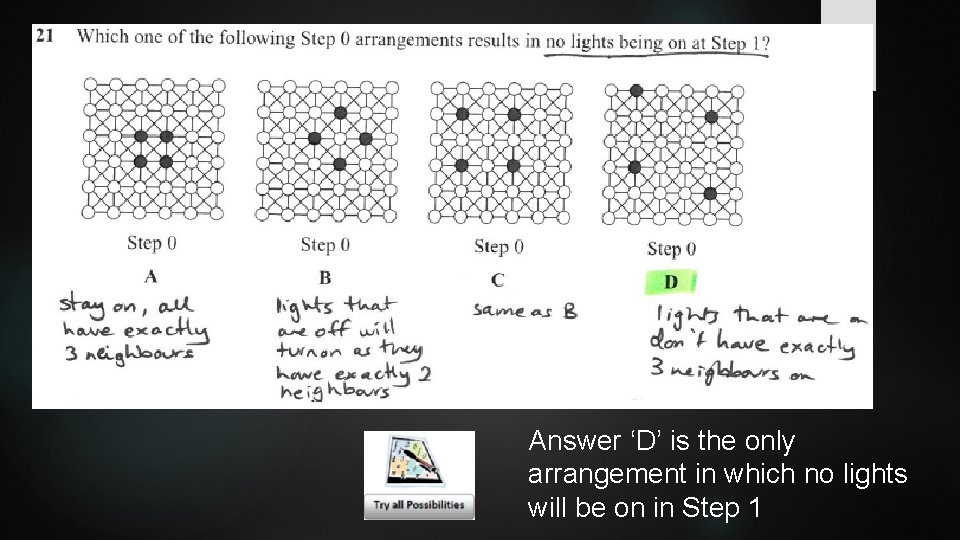
Answer ‘D’ is the only arrangement in which no lights will be on in Step 1
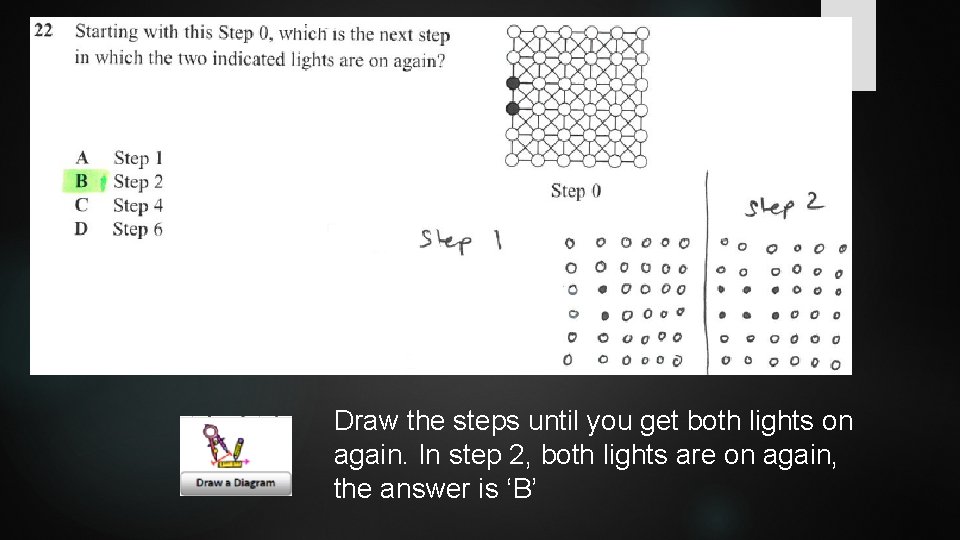
Draw the steps until you get both lights on again. In step 2, both lights are on again, the answer is ‘B’
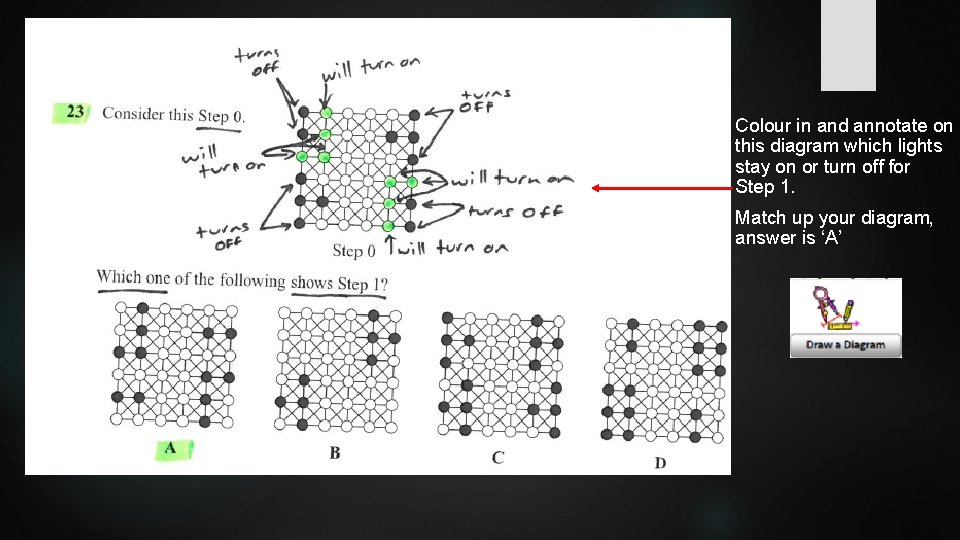
Colour in and annotate on this diagram which lights stay on or turn off for Step 1. Match up your diagram, answer is ‘A’
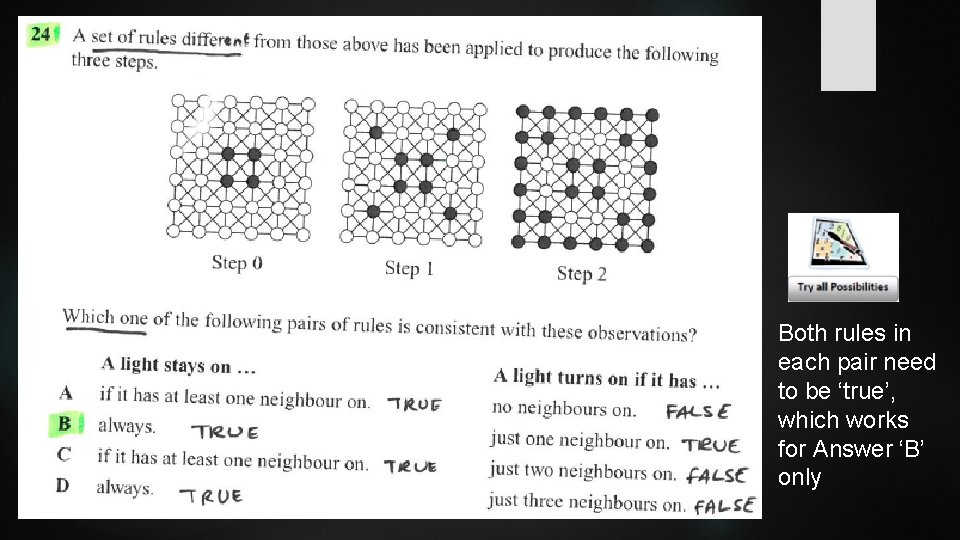
Both rules in each pair need to be ‘true’, which works for Answer ‘B’ only

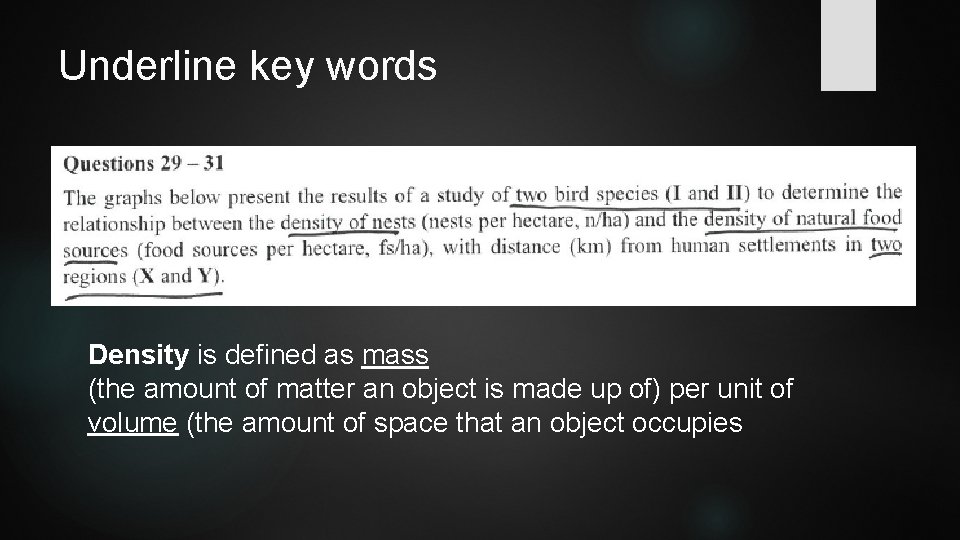
Underline key words Density is defined as mass (the amount of matter an object is made up of) per unit of volume (the amount of space that an object occupies
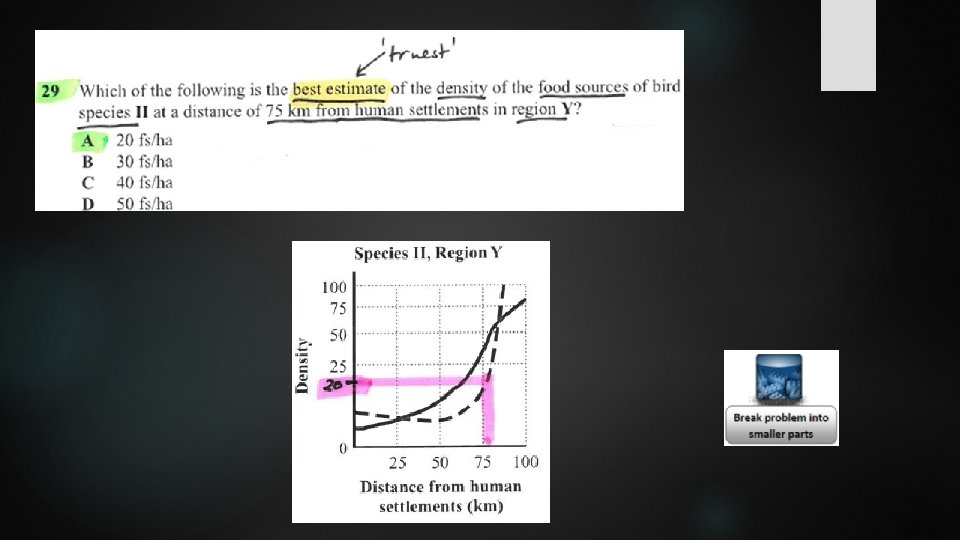
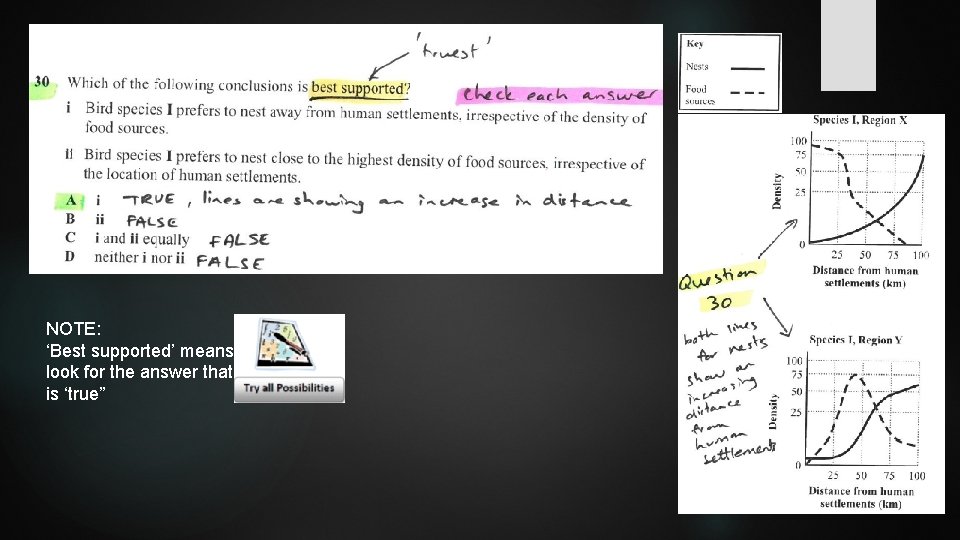
NOTE: ‘Best supported’ means look for the answer that is ‘true”
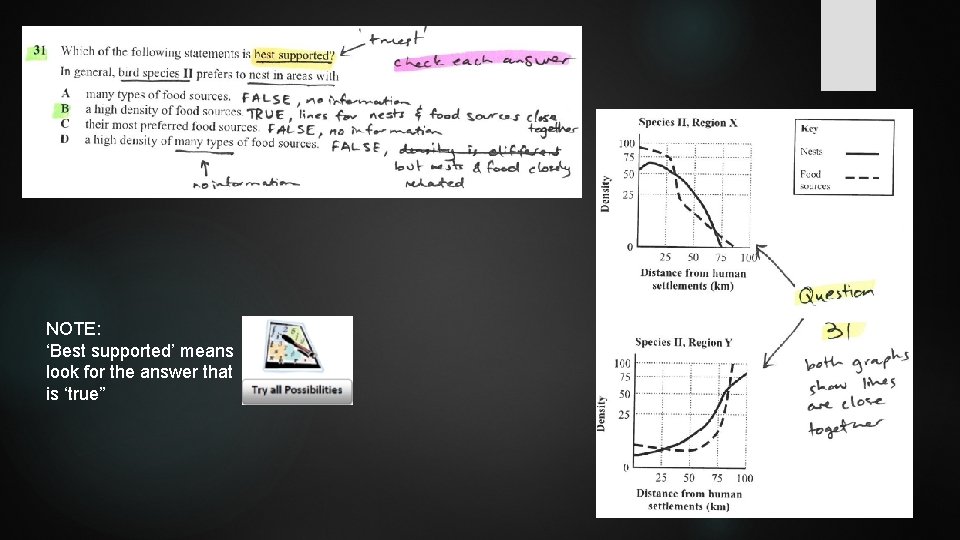
NOTE: ‘Best supported’ means look for the answer that is ‘true”

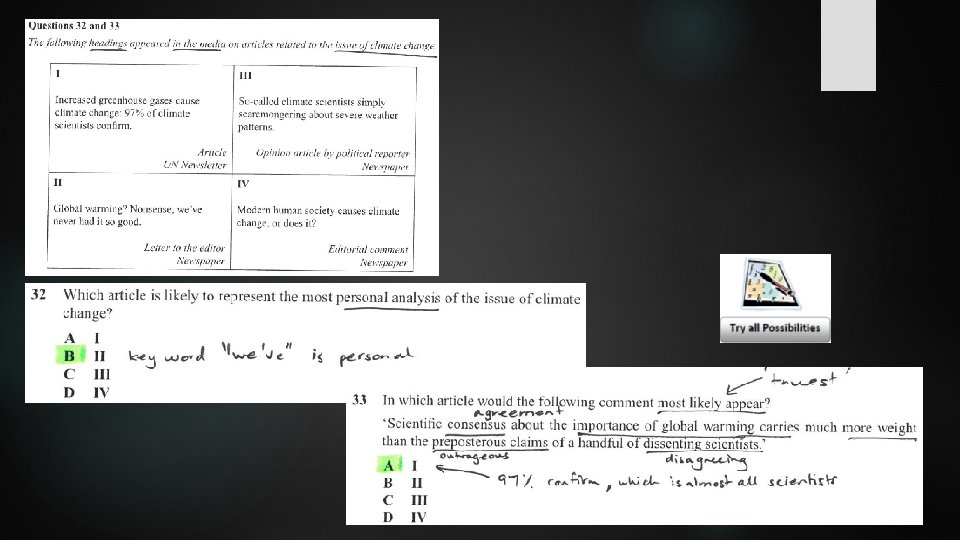

Underline key words
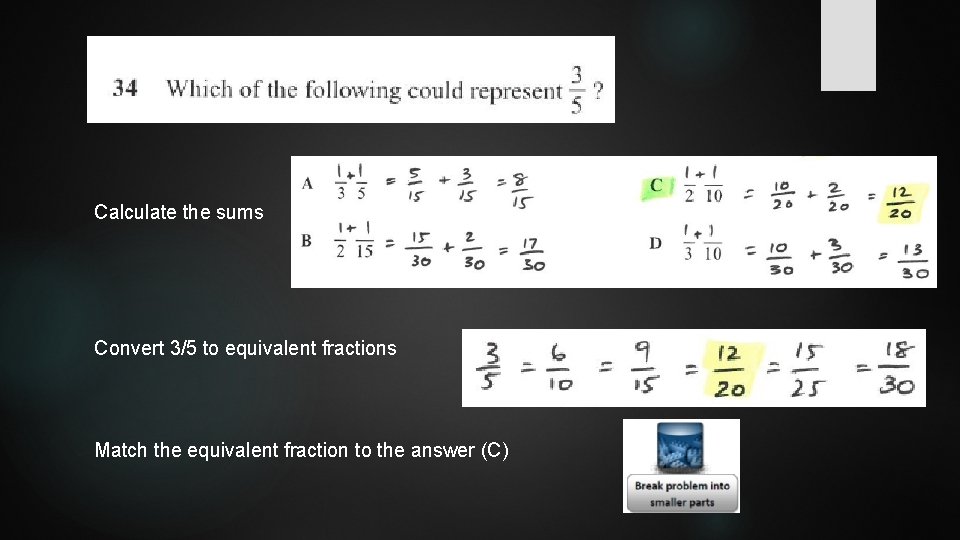
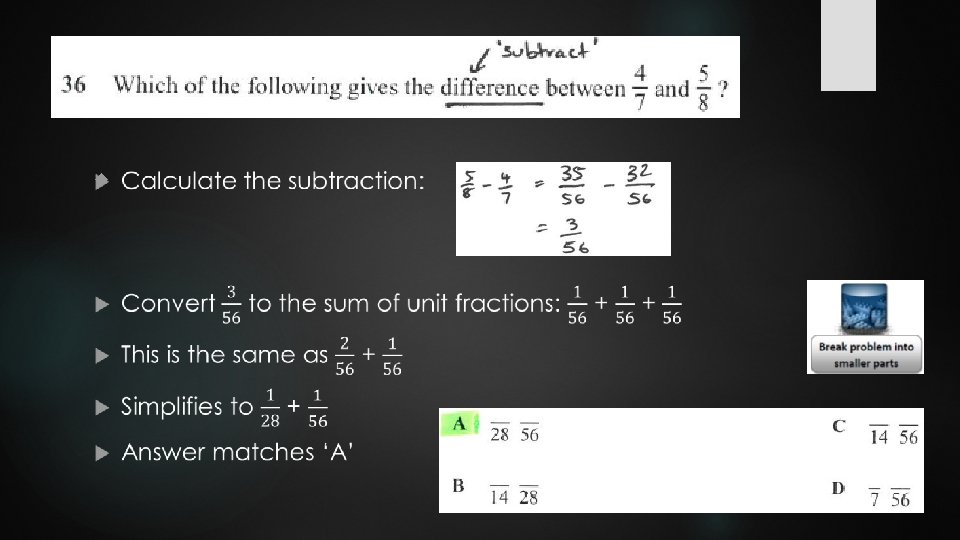
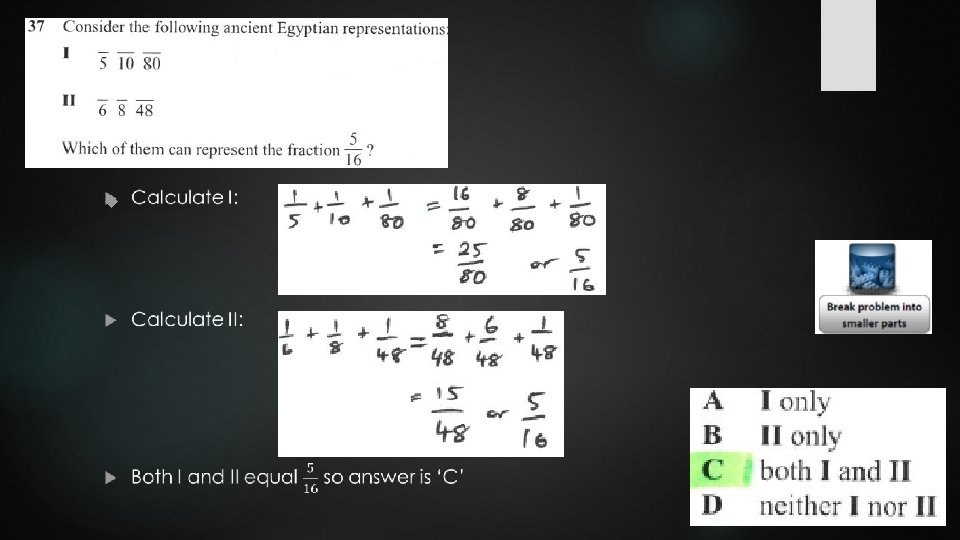
Calculate the sums Convert 3/5 to equivalent fractions Match the equivalent fraction to the answer (C)
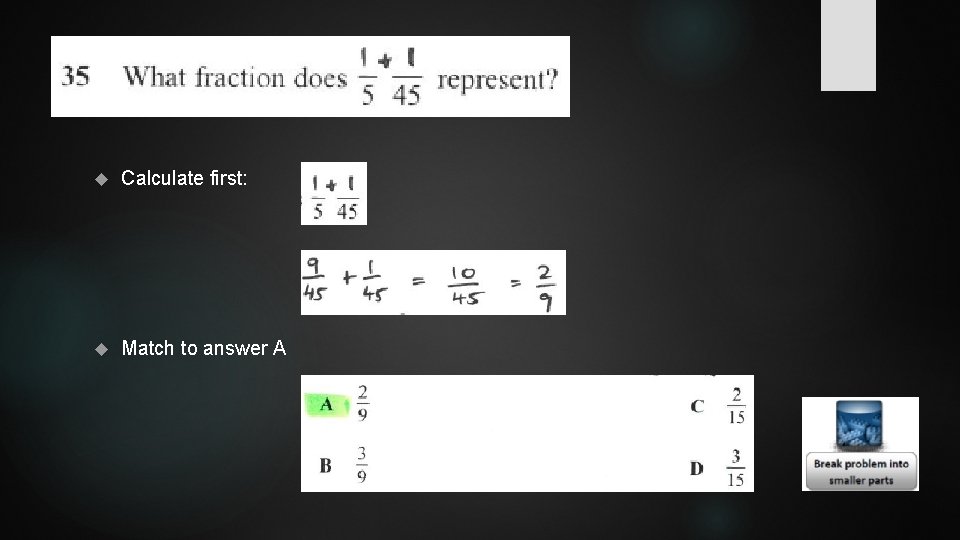
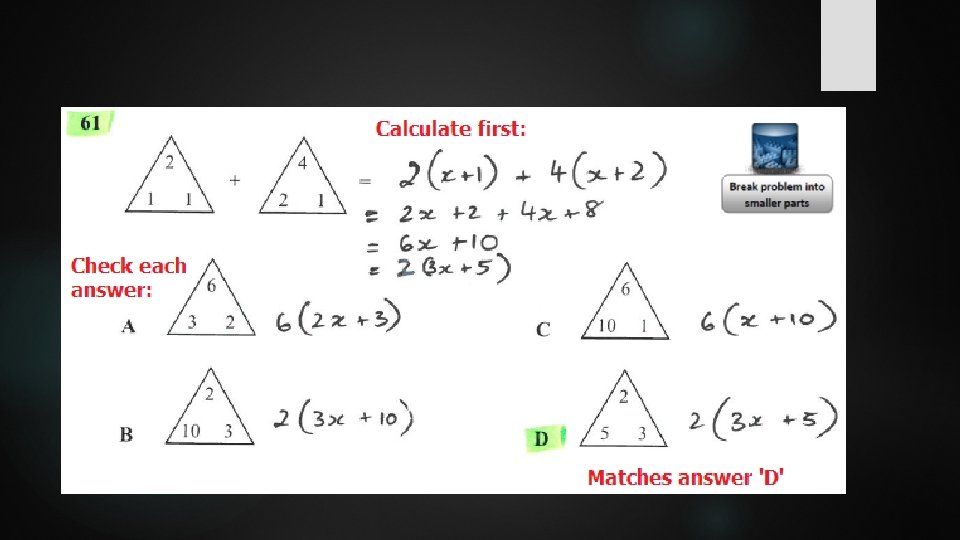
Calculate first: Match to answer A

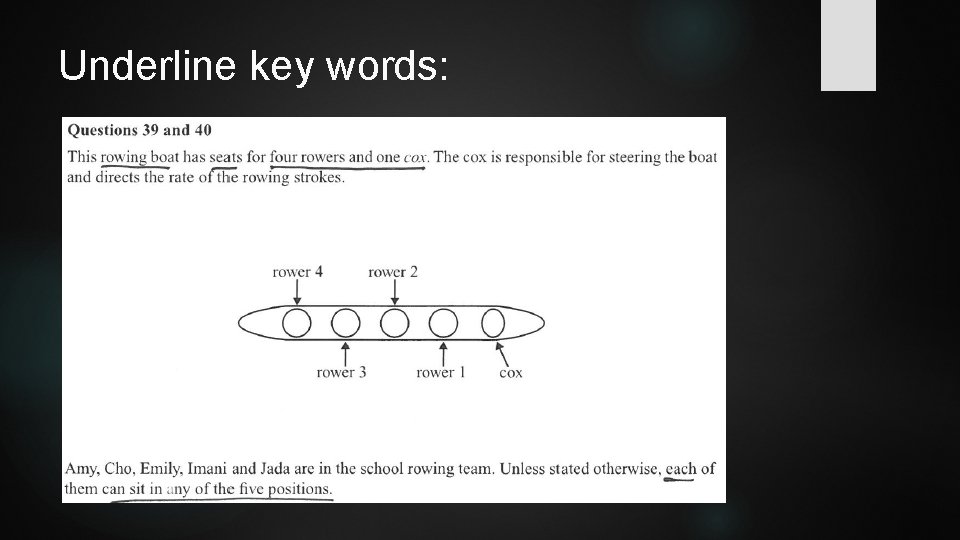
Underline key words:
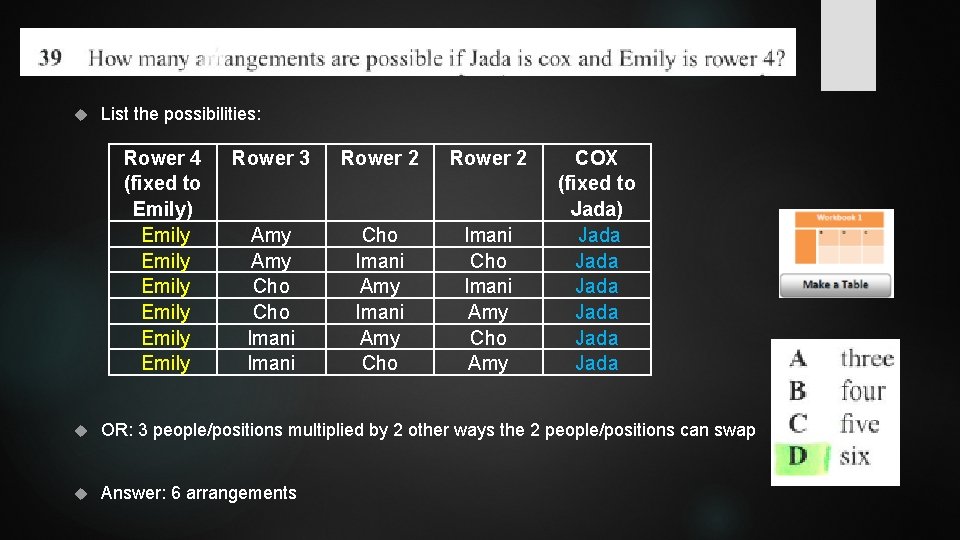
List the possibilities: Rower 4 (fixed to Emily) Emily Emily Rower 3 Rower 2 Amy Cho Imani Amy Cho Imani Amy Cho Amy COX (fixed to Jada) Jada Jada OR: 3 people/positions multiplied by 2 other ways the 2 people/positions can swap Answer: 6 arrangements
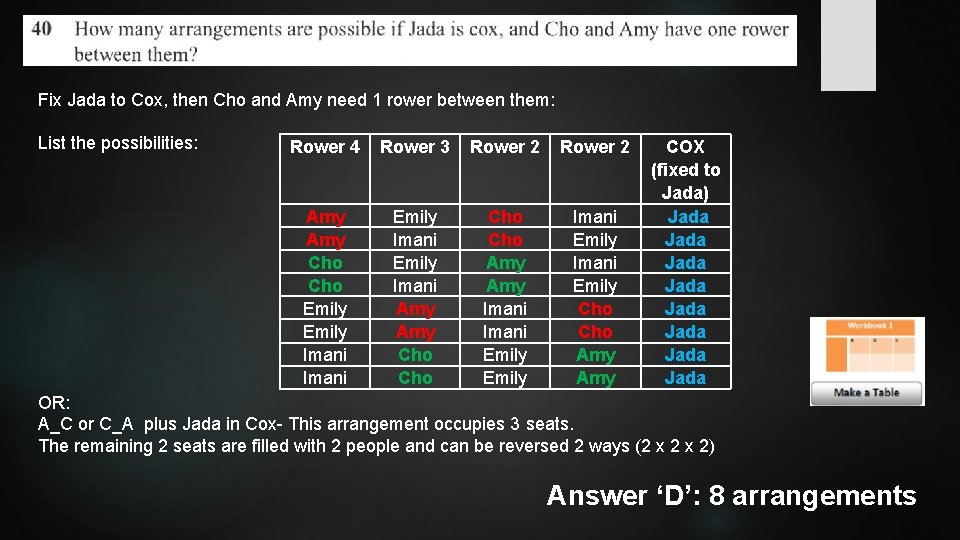
Fix Jada to Cox, then Cho and Amy need 1 rower between them: List the possibilities: Rower 4 Rower 3 Rower 2 Amy Cho Emily Imani Amy Cho Cho Amy Imani Emily Cho Amy COX (fixed to Jada) Jada Jada OR: A_C or C_A plus Jada in Cox- This arrangement occupies 3 seats. The remaining 2 seats are filled with 2 people and can be reversed 2 ways (2 x 2) Answer ‘D’: 8 arrangements

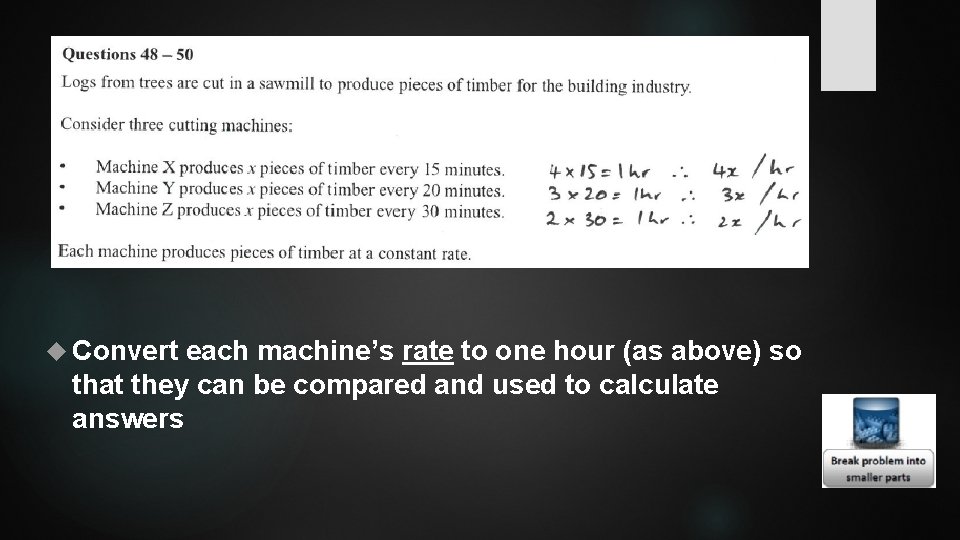
Convert each machine’s rate to one hour (as above) so that they can be compared and used to calculate answers
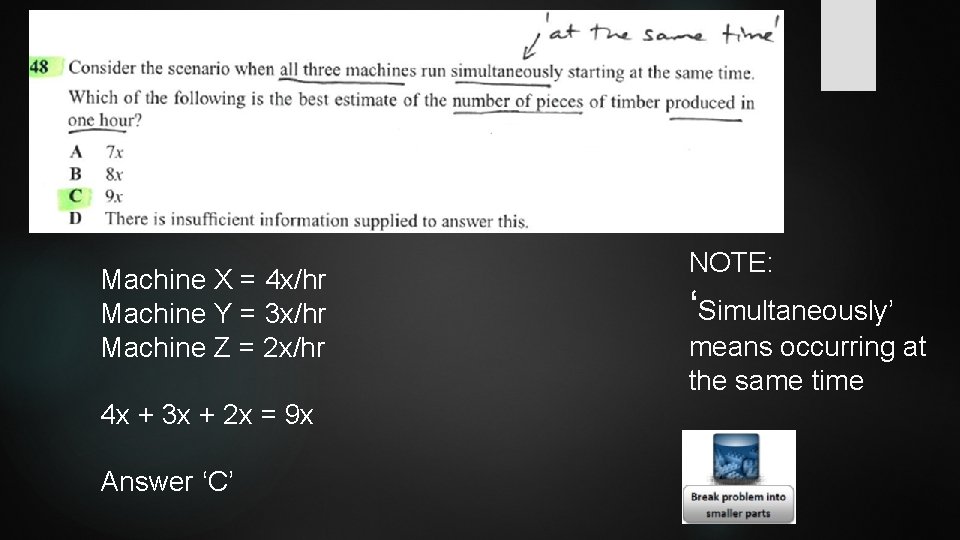
Machine X = 4 x/hr Machine Y = 3 x/hr Machine Z = 2 x/hr 4 x + 3 x + 2 x = 9 x Answer ‘C’ NOTE: ‘Simultaneously’ means occurring at the same time
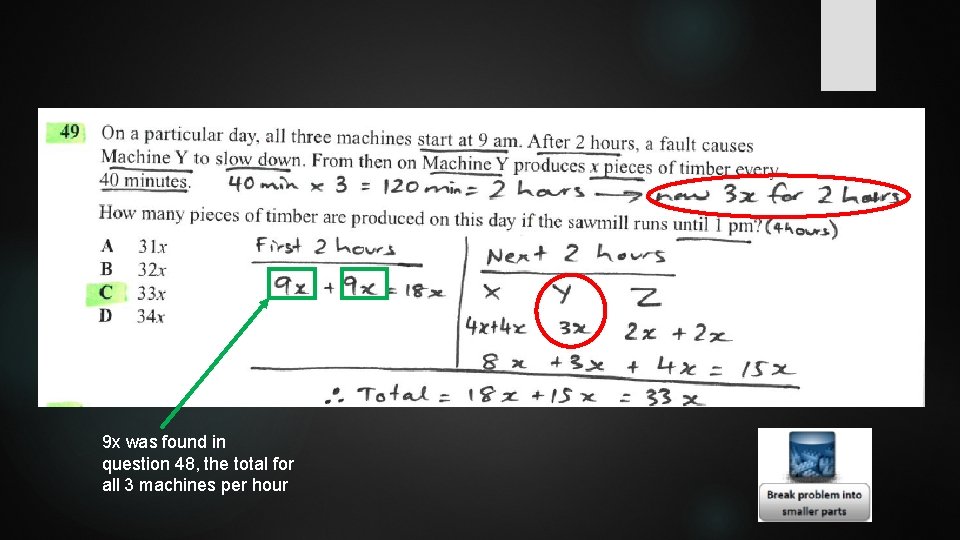
9 x was found in question 48, the total for all 3 machines per hour
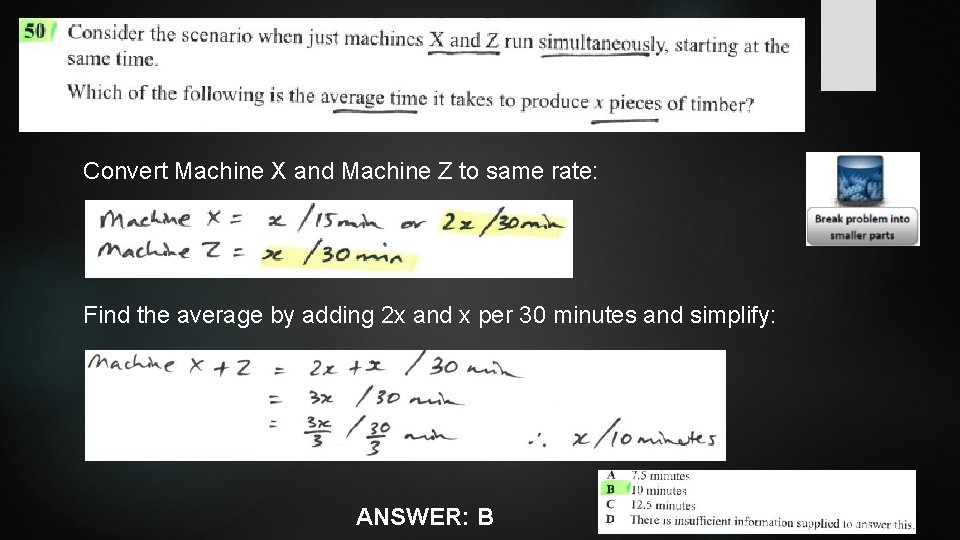
Convert Machine X and Machine Z to same rate: Find the average by adding 2 x and x per 30 minutes and simplify: ANSWER: B

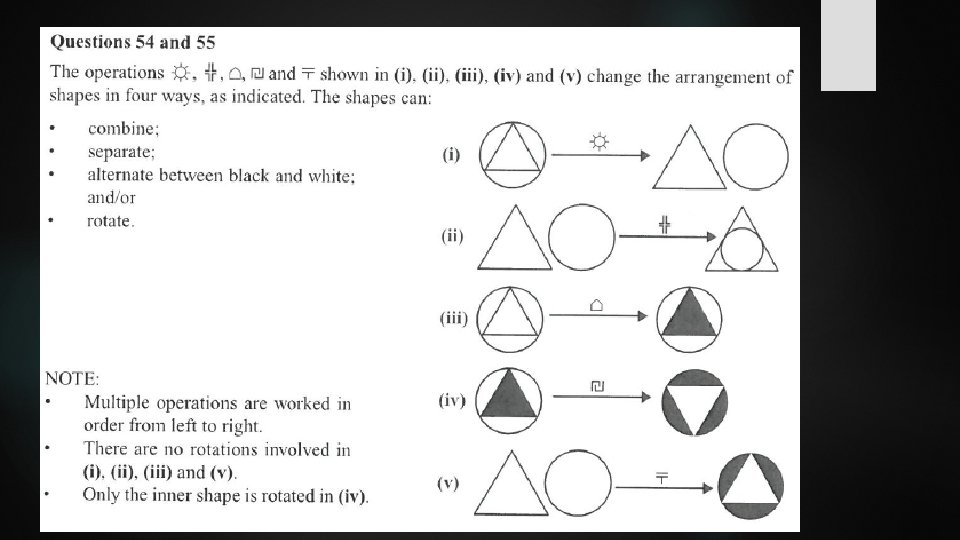
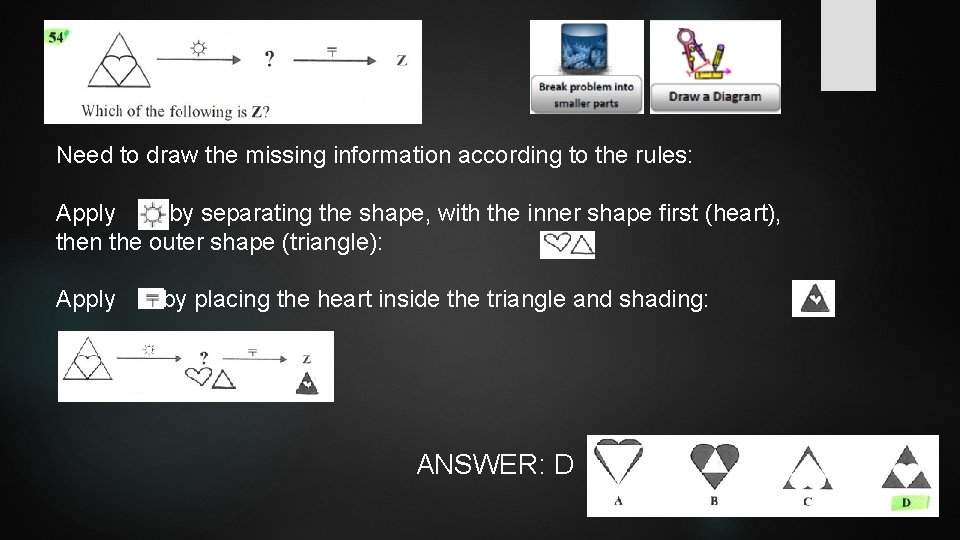
Need to draw the missing information according to the rules: Apply by separating the shape, with the inner shape first (heart), then the outer shape (triangle): Apply by placing the heart inside the triangle and shading: ANSWER: D
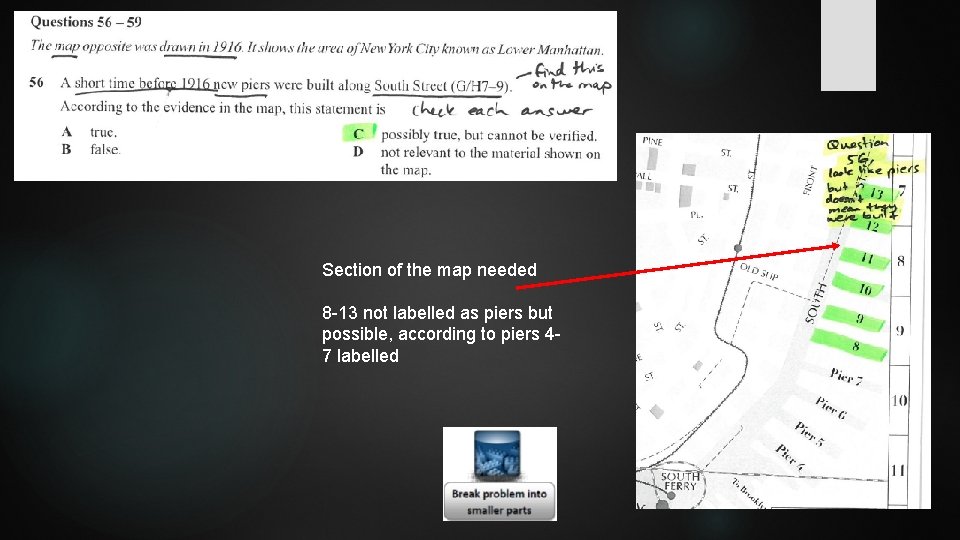
Section of the map needed 8 -13 not labelled as piers but possible, according to piers 47 labelled
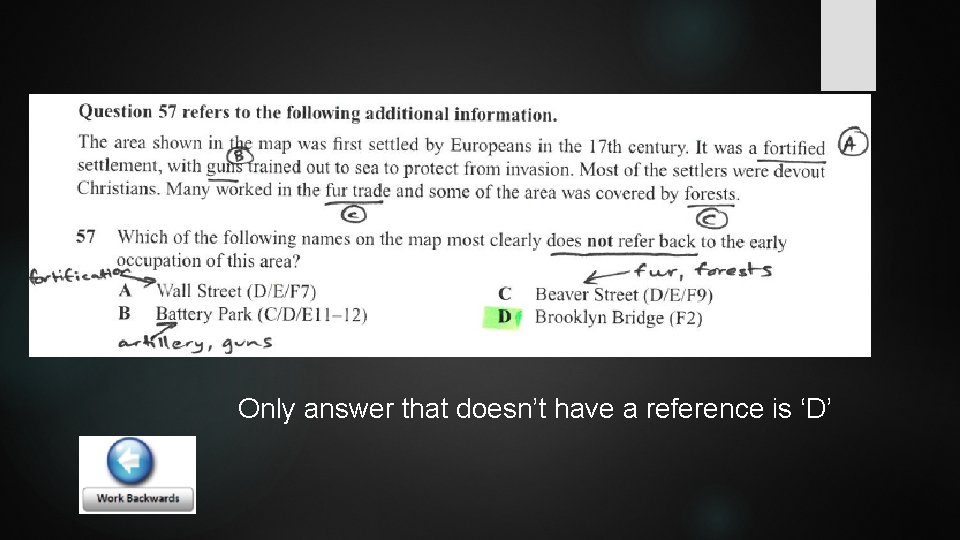
Only answer that doesn’t have a reference is ‘D’
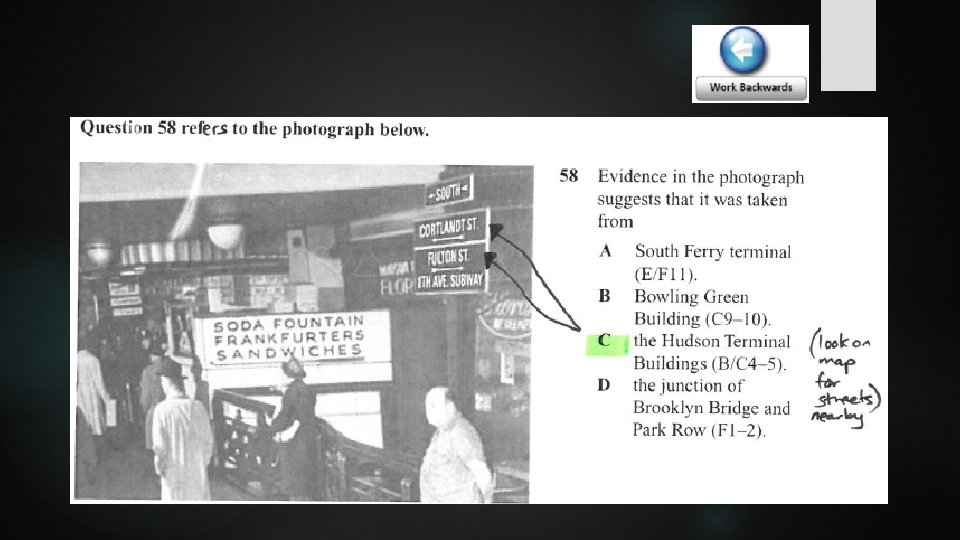
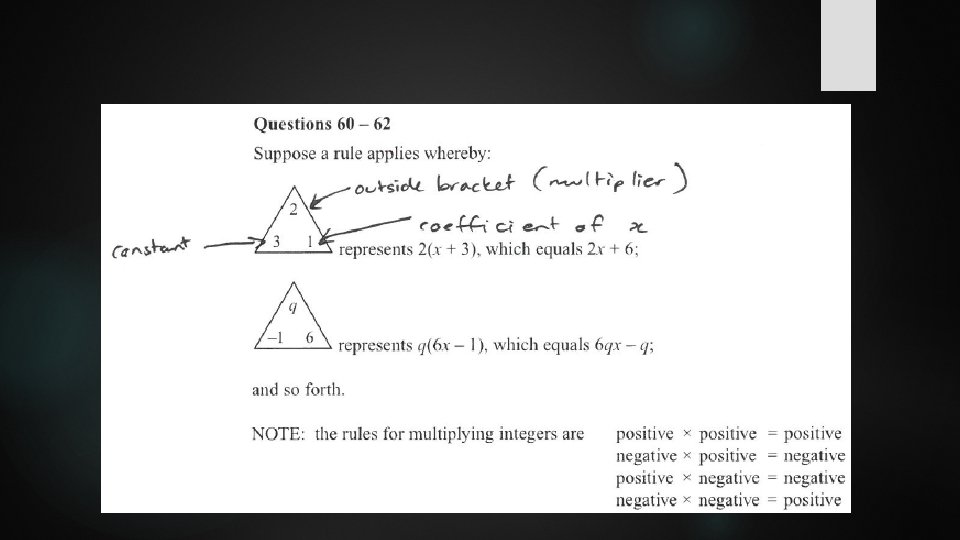
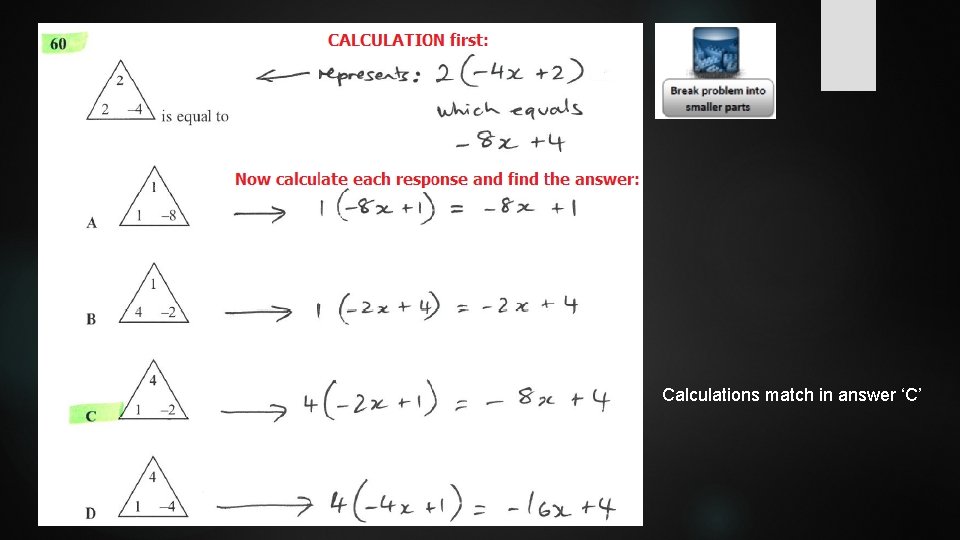
Calculations match in answer ‘C’
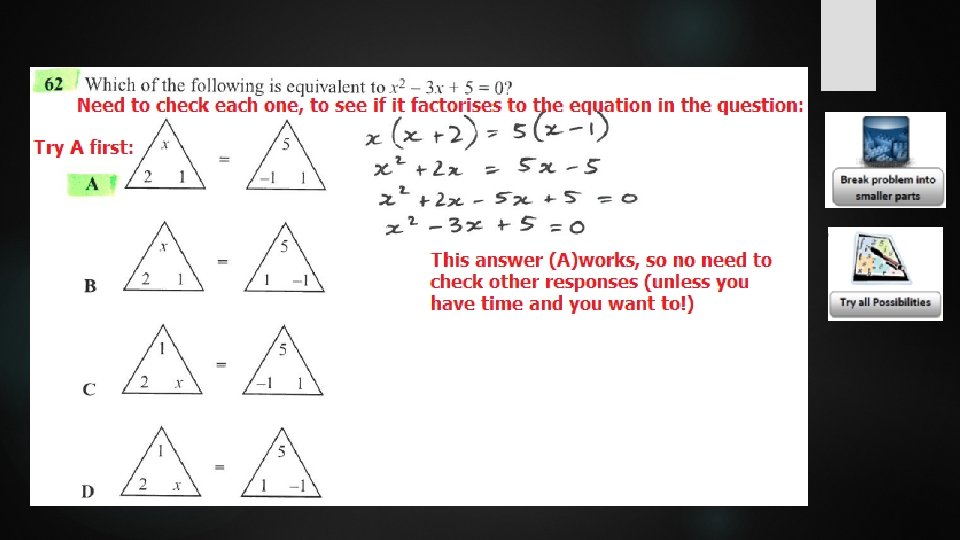
End of Numeracy Solutions Try another past GAT paper and check your answers: http: //www. vcaa. vic. edu. au/Pages/vce/exams/gat. aspx
- Slides: 63