
Gastrointestinal System Introduction Digestive tract runs from mouth



- Slides: 33
Gastrointestinal System
Introduction • Digestive tract runs from mouth to anus • Food broken down from large items to small molecules for absorption into bloodstream • Molecules sent to area of body to be used as energy, in synthesis of proteins, and as enzymes for essential reactions • Nonessential elements excreted through feces or urine.
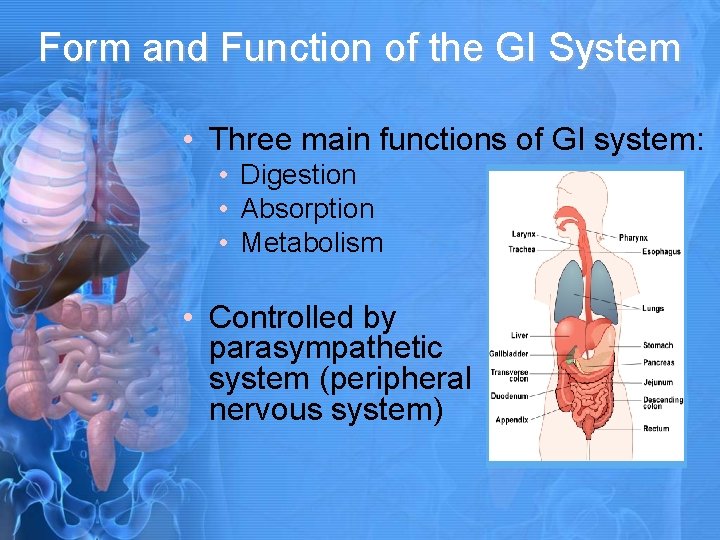
Form and Function of the GI System • Three main functions of GI system: • Digestion • Absorption • Metabolism • Controlled by parasympathetic system (peripheral nervous system)
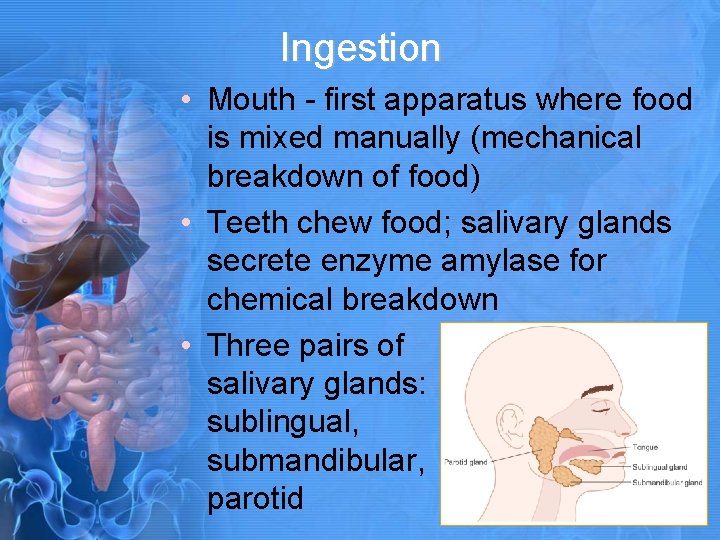
Ingestion • Mouth - first apparatus where food is mixed manually (mechanical breakdown of food) • Teeth chew food; salivary glands secrete enzyme amylase for chemical breakdown • Three pairs of salivary glands: sublingual, submandibular, parotid
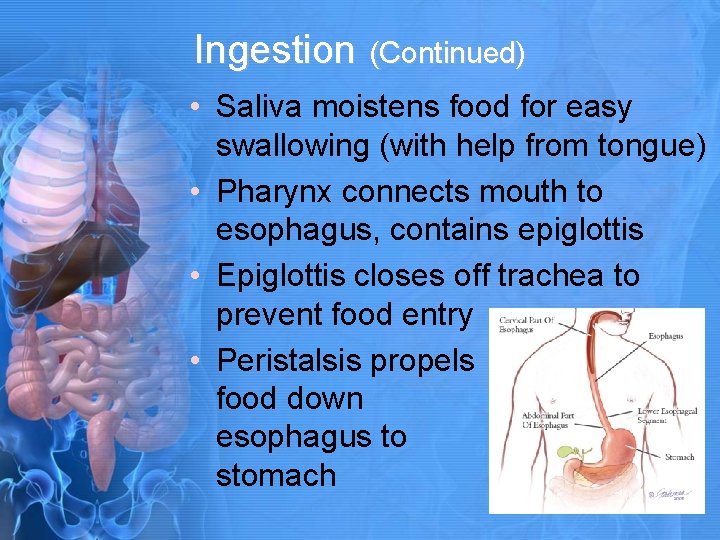
Ingestion (Continued) • Saliva moistens food for easy swallowing (with help from tongue) • Pharynx connects mouth to esophagus, contains epiglottis • Epiglottis closes off trachea to prevent food entry • Peristalsis propels food down esophagus to stomach
Digestion • Stomach - food enters acidic environment and chemical breakdown takes place • Food activates gastric juices secreted in stomach • Gastric juice consists of intrinsic factor enzymes and hydrochloric acid (HCl)
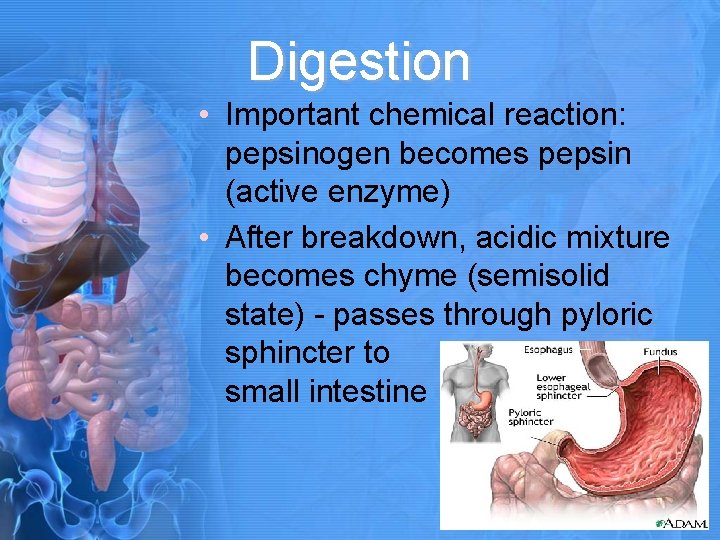
Digestion • Important chemical reaction: pepsinogen becomes pepsin (active enzyme) • After breakdown, acidic mixture becomes chyme (semisolid state) - passes through pyloric sphincter to small intestine
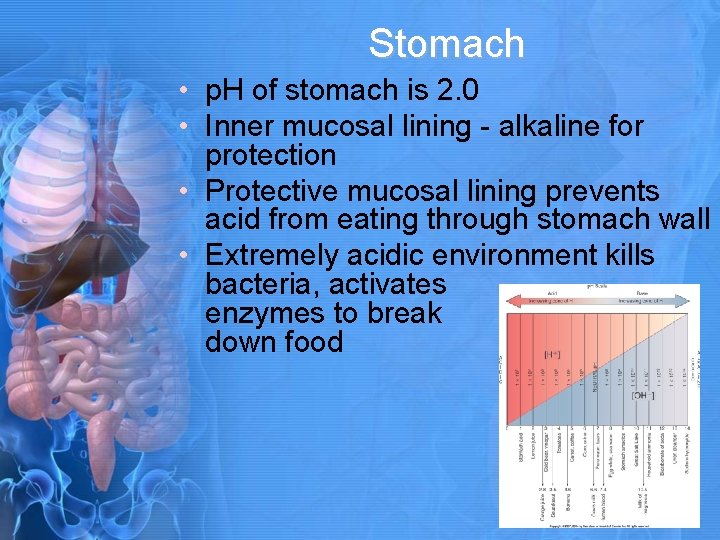
Stomach • p. H of stomach is 2. 0 • Inner mucosal lining - alkaline for protection • Protective mucosal lining prevents acid from eating through stomach wall • Extremely acidic environment kills bacteria, activates enzymes to break down food
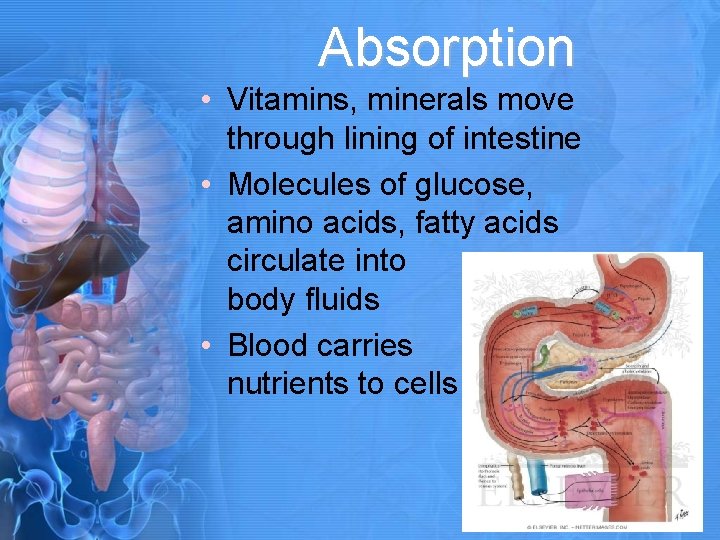
Absorption • Vitamins, minerals move through lining of intestine • Molecules of glucose, amino acids, fatty acids circulate into body fluids • Blood carries nutrients to cells
Absorption • Intestinal secretions - alkaline p. H • Enzymes break down sugar, protein, fat • Acidic environment destroys medications (special coatings needed or use parenterals) • Gallbladder releases bile to disperse and absorb fats
Metabolism • Nutrients used for energy and as building blocks for larger complex chemicals • Anabolism: act of building molecules • Catabolism: act of breaking down molecules to release energy • Metabolism = anabolism + catabolism
Small Intestines • Final area where nutrients are absorbed • Send remains that the body can’t use to the large intestines
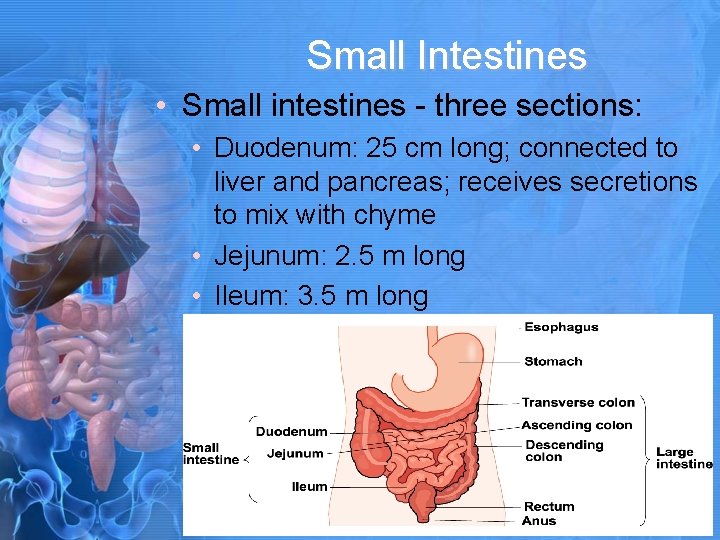
Small Intestines • Small intestines - three sections: • Duodenum: 25 cm long; connected to liver and pancreas; receives secretions to mix with chyme • Jejunum: 2. 5 m long • Ileum: 3. 5 m long
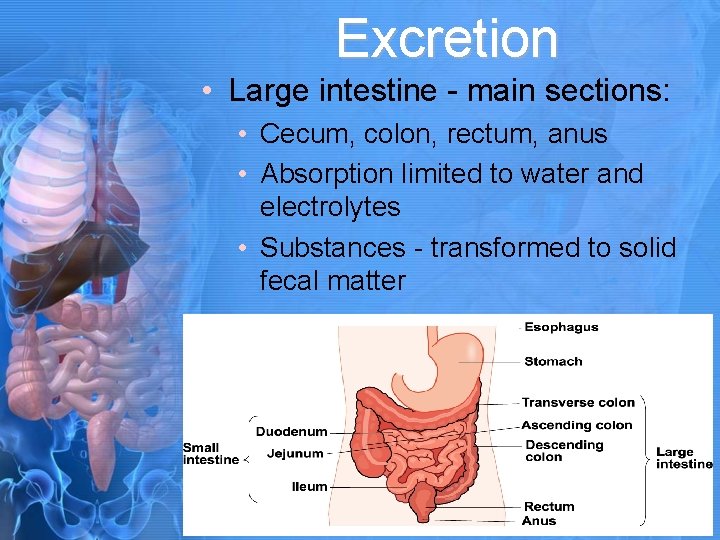
Excretion • Large intestine - main sections: • Cecum, colon, rectum, anus • Absorption limited to water and electrolytes • Substances - transformed to solid fecal matter
Excretion (Cont) • Rectum: shortest section; connects to anal canal • Empty except during defecation • Time for normal passage of fecal material: 3 to 5 days • Sphincters: • Internal sphincter - involuntary • External sphincter - voluntary
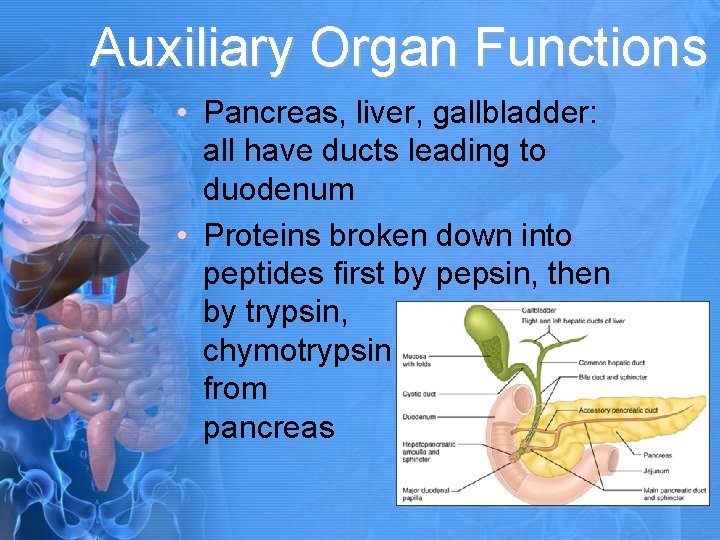
Auxiliary Organ Functions • Pancreas, liver, gallbladder: all have ducts leading to duodenum • Proteins broken down into peptides first by pepsin, then by trypsin, chymotrypsin from pancreas
Auxiliary Organ Functions (Cont) • Carbohydrates: large sugar molecules, broken down to disaccharides, then to monosaccharides; absorbed and used for energy • Fats: broken down by bile (emulsification), then by lipases (enzymes)
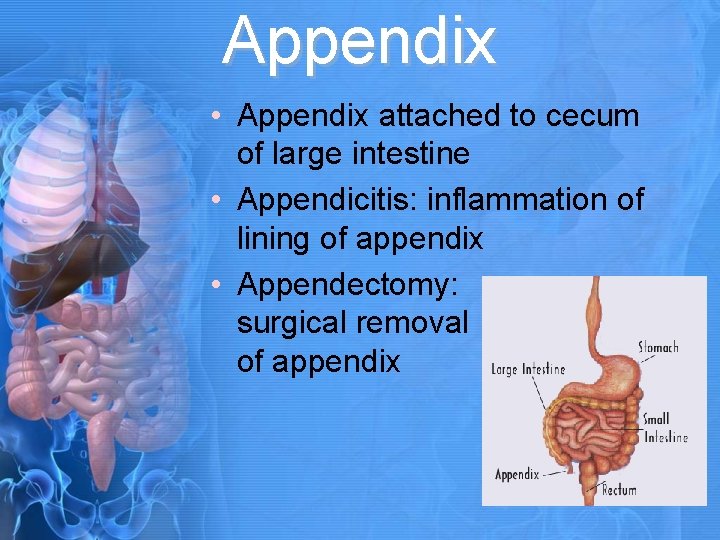
Appendix • Appendix attached to cecum of large intestine • Appendicitis: inflammation of lining of appendix • Appendectomy: surgical removal of appendix
Mouth and Throat conditions • Inflamed throat because of cold, flu, strained vocal cords • Treatments: mouthwashes, sprays, lozenges, troches • Agents contain alcohol, phenol bases; antiseptics • Anesthetics: benzocaines, phenols, menthol • Oral antibiotics: swished and spit out or swallowed per doctor’s orders
Conditions Affecting GI System • Constipation, diarrhea • Crohn’s disease (severe illness) • Bacterial infections • Food allergies • Tumors • Genetic defects: lack of chemicals
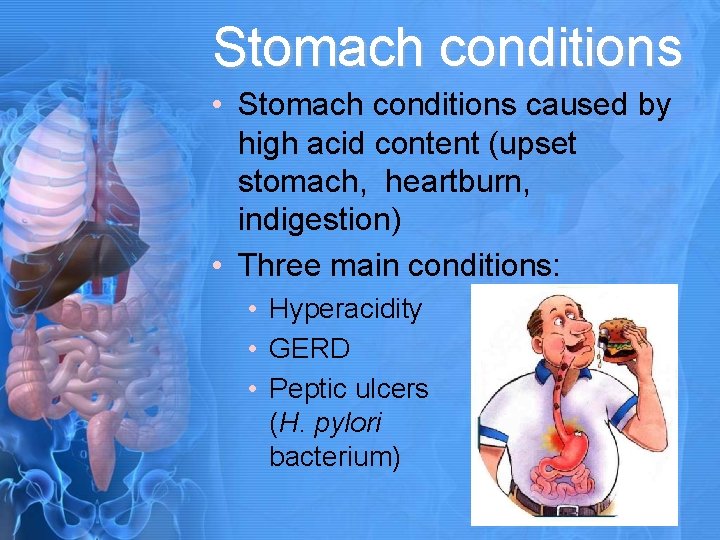
Stomach conditions • Stomach conditions caused by high acid content (upset stomach, heartburn, indigestion) • Three main conditions: • Hyperacidity • GERD • Peptic ulcers (H. pylori bacterium)
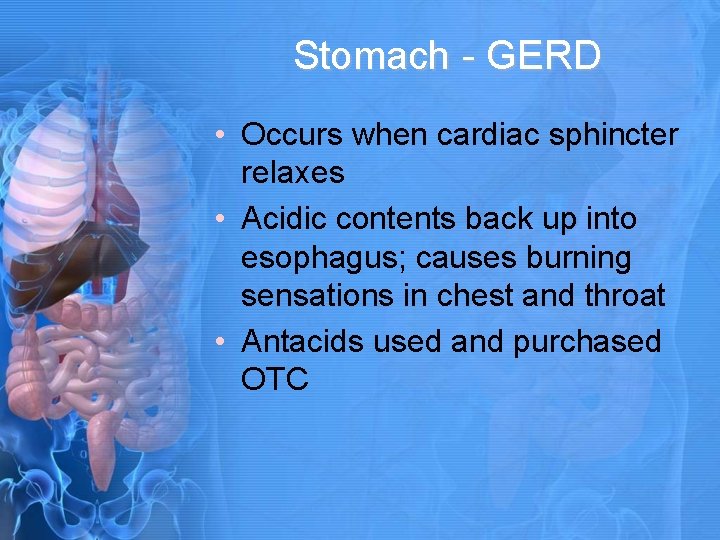
Stomach - GERD • Occurs when cardiac sphincter relaxes • Acidic contents back up into esophagus; causes burning sensations in chest and throat • Antacids used and purchased OTC
Stomach (Continued) • OTC medications contain simethicone and antacids • Flatulence (gas) accompanies gastric upsets • Gas - side effect of carbonates (major ingredient in antacids)
Antacids Used to Treat Hyperacidity and GERD • Ion additives used: aluminum carbonate, sodium bicarbonate, calcium carbonate, magnesium hydroxide, aluminum hydroxide • Aluminum causes constipation • Magnesium causes diarrhea • Buffers decrease acidity within stomach
Calcium & Magnesium Content of Common OTC Antacids 800 700 600 500 400 mg Calcium mg Magnesium 300 200 100 0 Tums ES Rolaids Pepto-Bismol Maalox Gaviscon
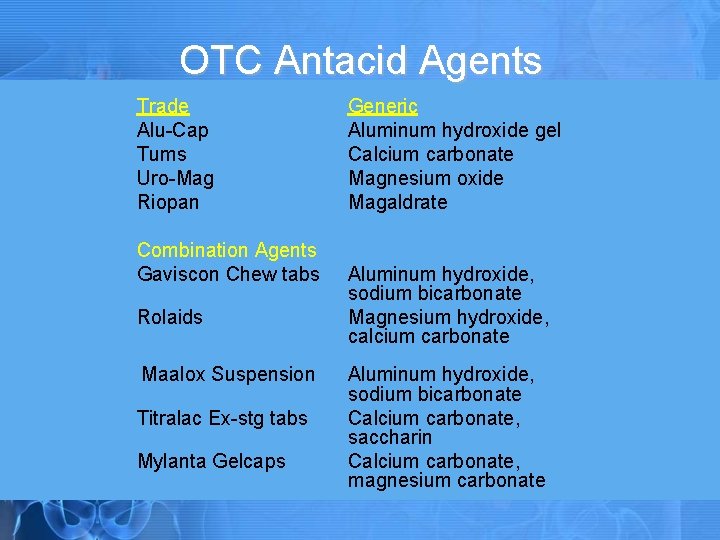
OTC Antacid Agents Trade Alu-Cap Tums Uro-Mag Riopan Combination Agents Gaviscon Chew tabs Rolaids Maalox Suspension Titralac Ex-stg tabs Mylanta Gelcaps Generic Aluminum hydroxide gel Calcium carbonate Magnesium oxide Magaldrate Aluminum hydroxide, sodium bicarbonate Magnesium hydroxide, calcium carbonate Aluminum hydroxide, sodium bicarbonate Calcium carbonate, saccharin Calcium carbonate, magnesium carbonate
Prescriptions for Stomach • H 2 antagonists - block H 2 receptors in lining of stomach • Examples: cimetidine and ranitidine • Proton-pump inhibitors - inhibit gastric acid secretion by blocking last enzymatic reaction before acid secretion takes place • Example: Prilosec
Peptic Ulcer Disease • H. pylori - gram-negative bacillus - embeds itself in mucosal lining of stomach, duodenum, rectum • Cause of inflammation, peptic ulcers, linked to stomach cancer • Treatments: 2 to 4 agents given simultaneously • Most effective: bismuth, metronidazole, tetracycline, omeprazole
Emesis • Emesis - extreme nausea and vomiting - caused by chemotherapy treatments • Medulla oblongata - control center • Chemoreceptor trigger zone or nausea center activated by smell, pain, medication, motion sickness, emotions • Treat with antiemetics
Diarrhea • Agents: OTC and prescription • OTC - Kaopectate, Fiber. Con, Pepto-Bismol • Potent/controlled substances: Lomotil, Paregoric (short-term use) • Lack of normal intestinal bacteria - cause of diarrhea (Lactobacillus - bacterial replacement therapy used)
Constipation • Symptoms: lack of defecation, dry and hard stools • Causes: lack of fiber in diet • Treatment: • Bulk-forming agents - absorb water from the body, increase moisture, bulk up stool for easier elimination • Stool softeners pull water and fatty compounds into intestines to aid elimination • Hyperosmotic agents increase pressure within bowels by drawing in water • Stimulants if severe
Flatulence • Gas caused by byproduct of microbial breakdown of food • Foods that produce gas: broccoli, onions, garlic • Symptoms: discomfort, pain • OTC: simethicone (tablets, chew tablets, liquid)
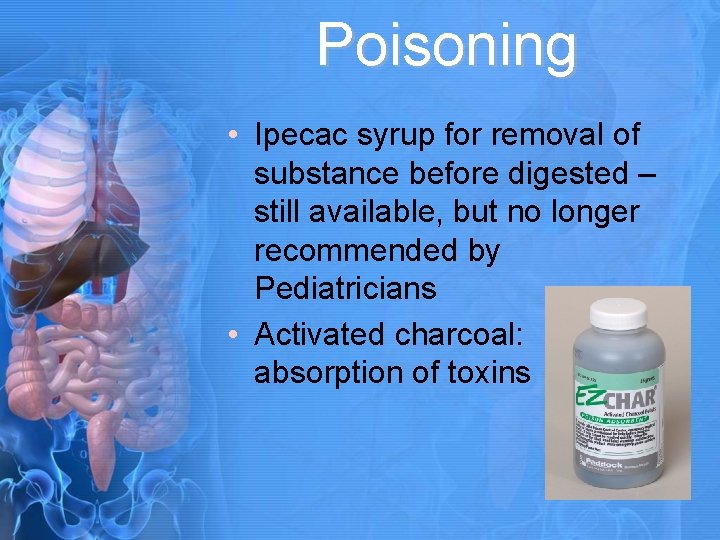
Poisoning • Ipecac syrup for removal of substance before digested – still available, but no longer recommended by Pediatricians • Activated charcoal: absorption of toxins