
Gastrointestinal physiology Principles of Anatomy and Physiology Tortora

- Slides: 31
Gastrointestinal physiology Principles of Anatomy and Physiology Tortora and Derickson, 14 the ed: 886 -939. 13 th ed: p 968 -1014, 12 th Ed. P 924 -967.
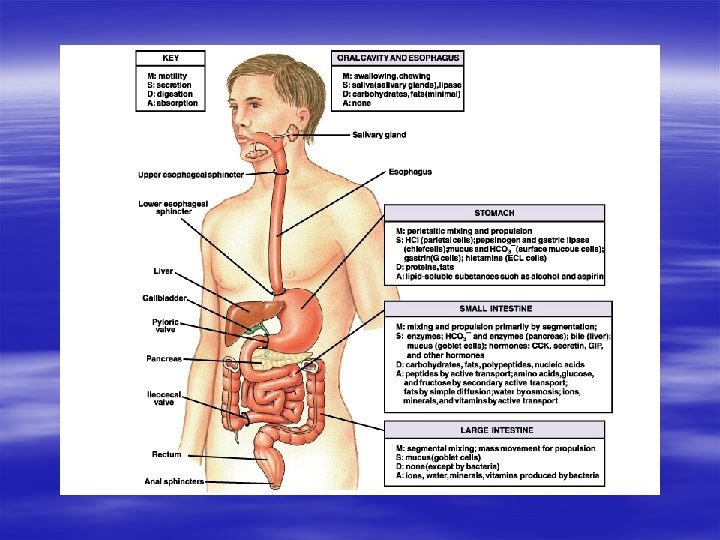
Physiological processes are taking place along the gastrointestinal (GI) tract. § § 1. Motility. 2. Secretion 3. Digestion. 4. Absorption.
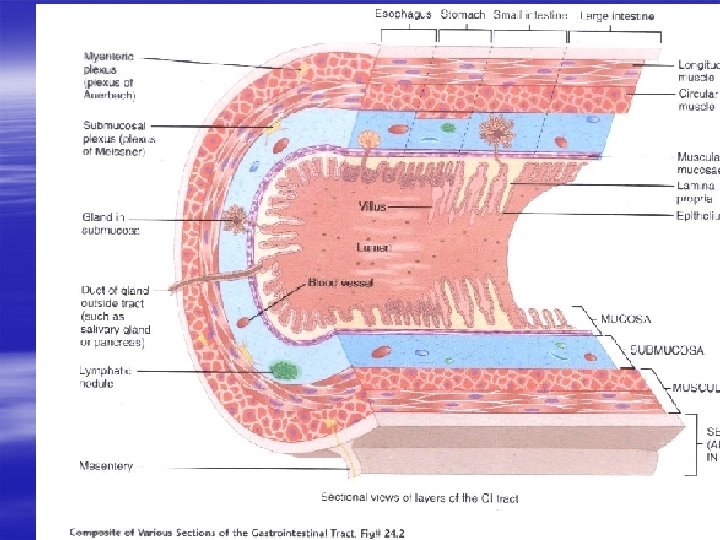
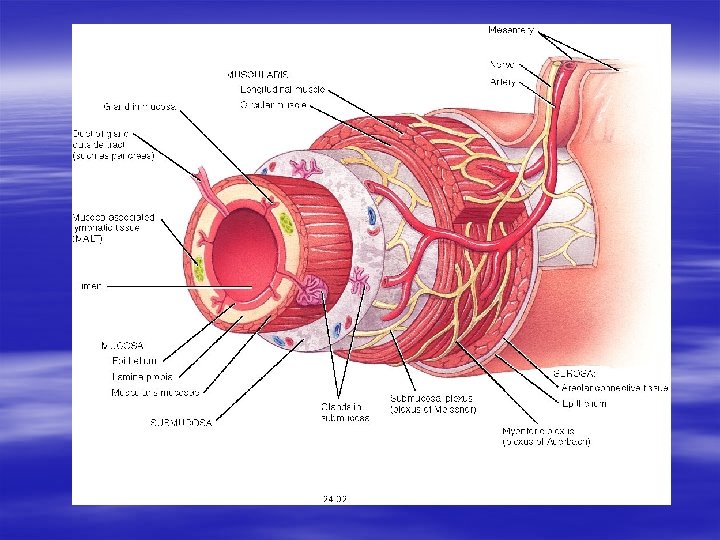
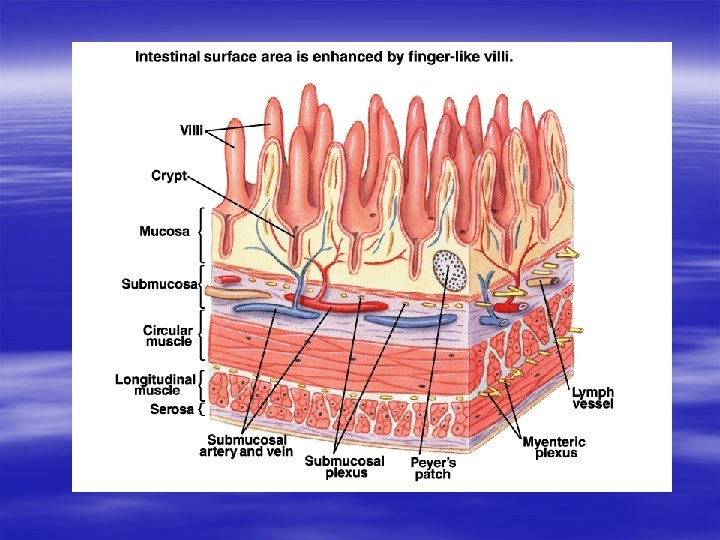
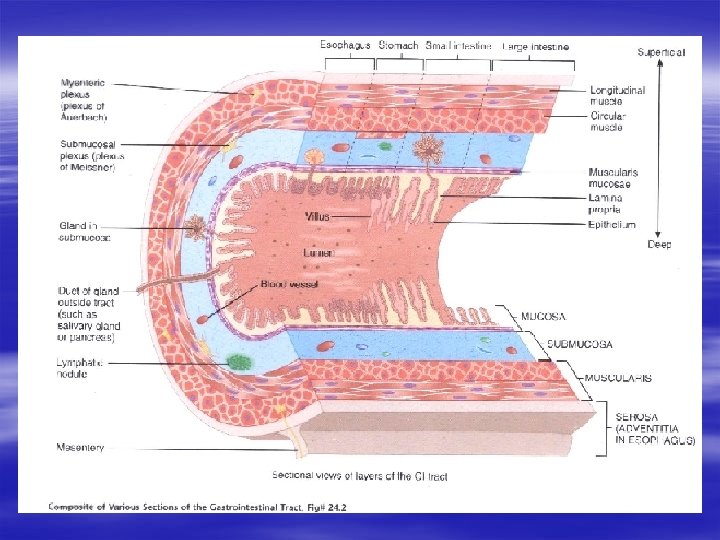
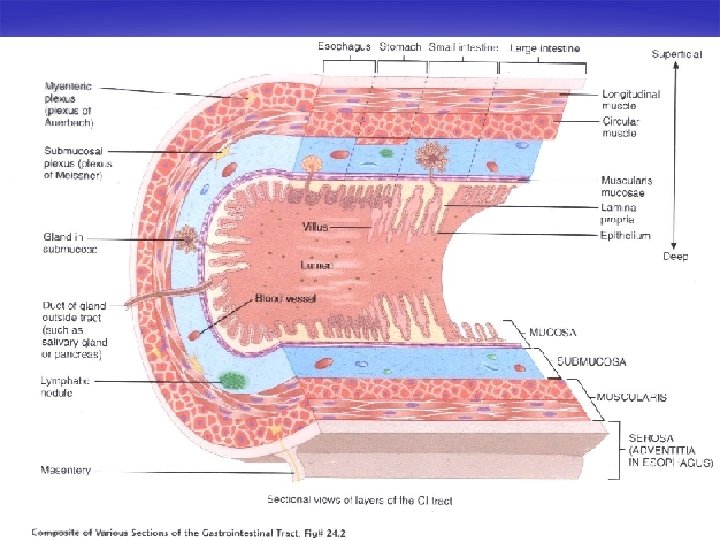
Functional structures in the gastrointestinal tract § Smooth muscle cells § Interstitial cells of Cajal § Secretory cells
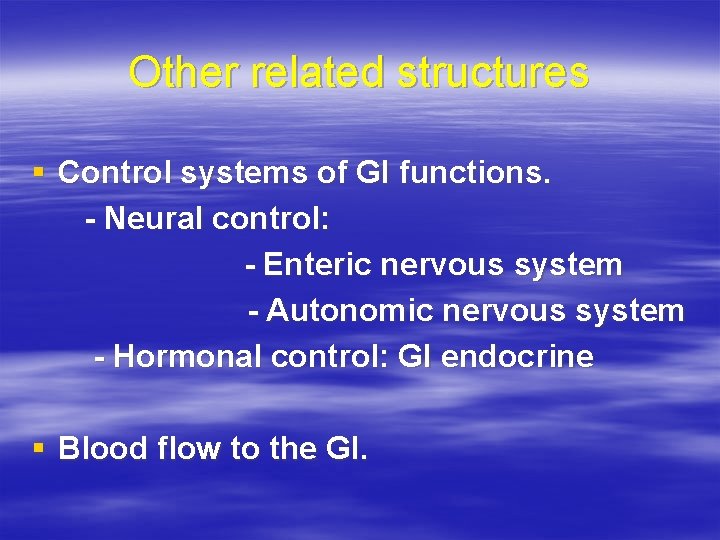
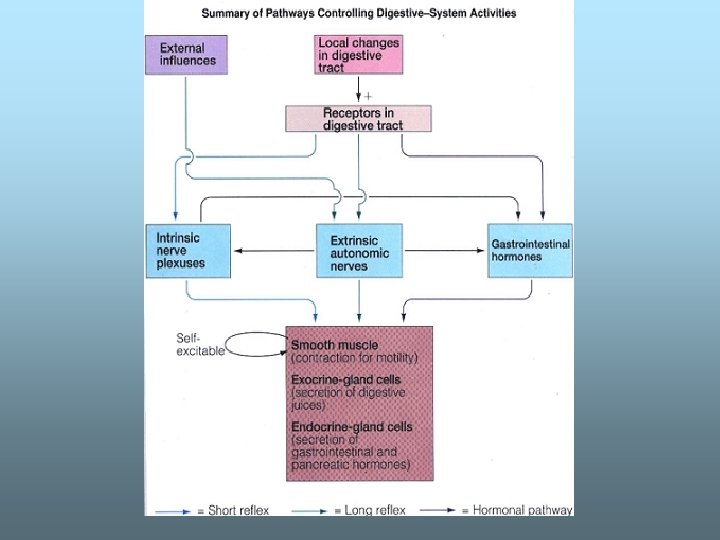
Other related structures § Control systems of GI functions. - Neural control: - Enteric nervous system - Autonomic nervous system - Hormonal control: GI endocrine § Blood flow to the GI.
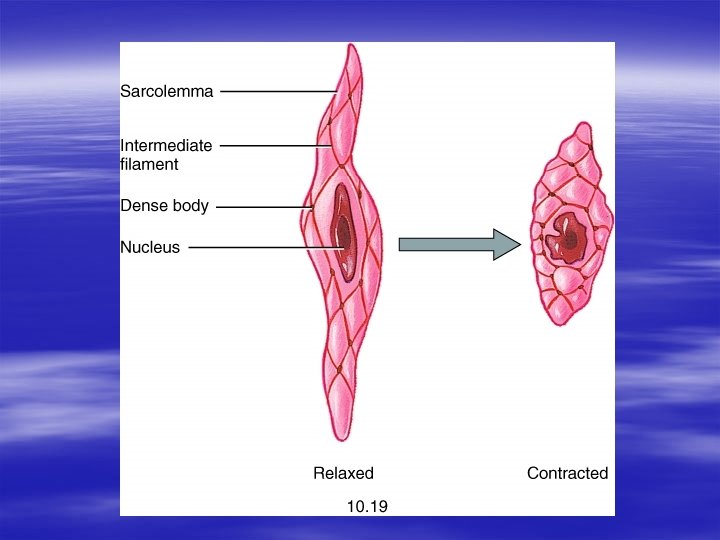
Functional structures in the gastrointestinal tract Smooth muscle cells (SMCs)
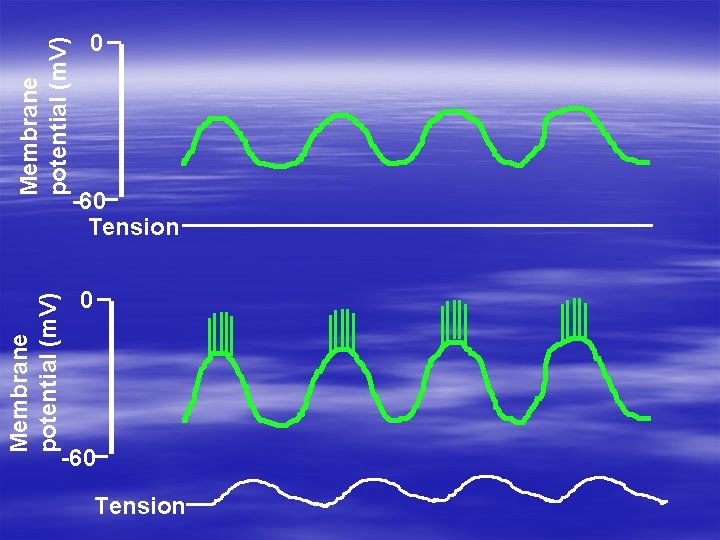
Smooth Muscle cells Characteristics § Electrical activity - Slow waves (basic electrical rhythm)
Membrane potential (m. V) 0 -60 Tension
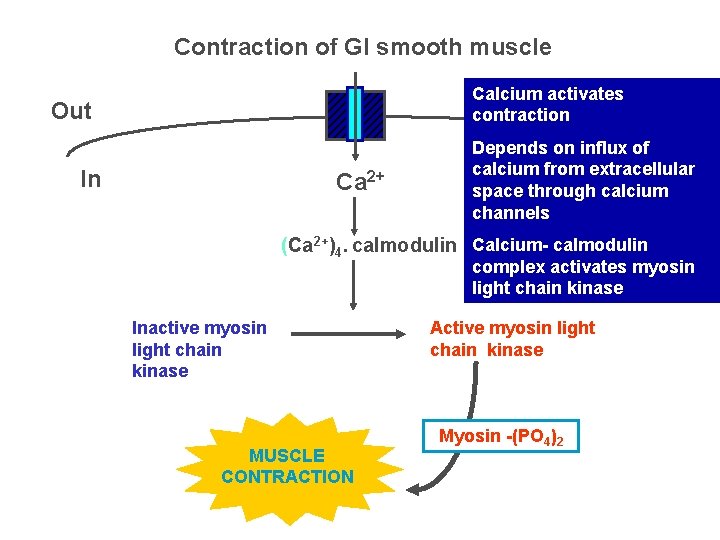
Contraction of GI smooth muscle Calcium activates contraction Out In Ca 2+ Depends on influx of calcium from extracellular space through calcium channels (Ca 2+)4. calmodulin Calcium- calmodulin complex activates myosin light chain kinase Inactive myosin light chain kinase MUSCLE CONTRACTION Active myosin light chain kinase Myosin -(PO 4)2
Smooth Muscle cells Characteristics § Gap junctions: Communication between cells Functional syncytium
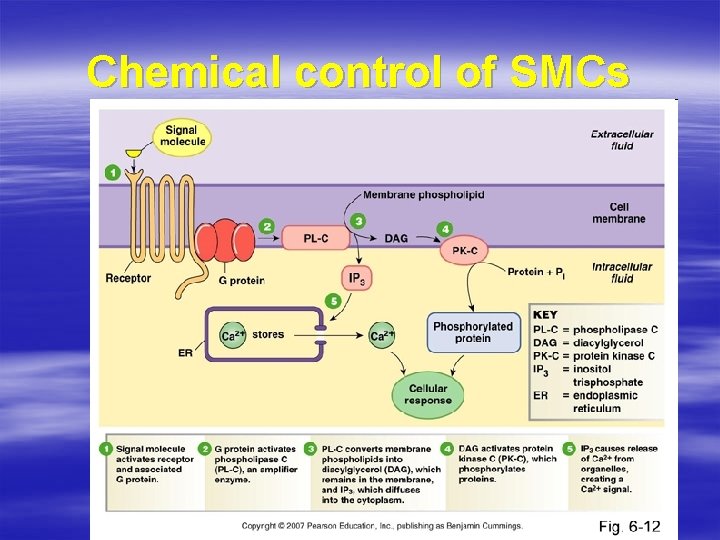
Chemical control of SMCs
Control of smooth muscle cells activity § Electrical control: - Rhythm or phasic contractions § Chemical control: - tonic contractions
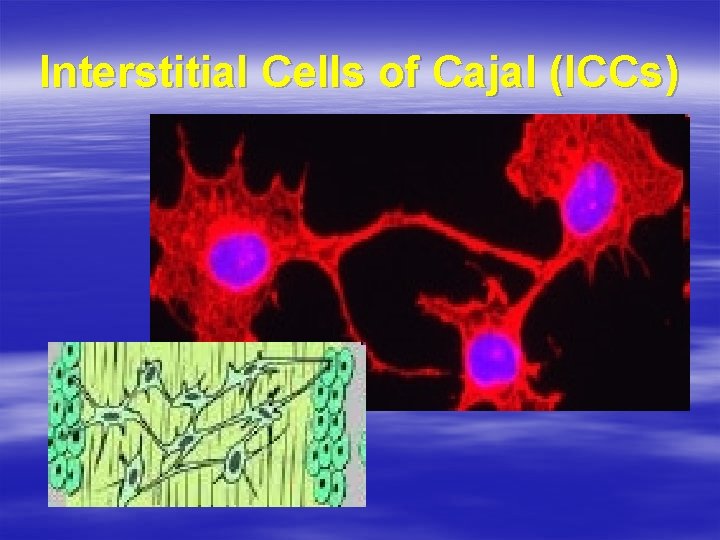
Interstitial Cells of Cajal (ICCs)
Function of ICCs § Communication Generation of action potentials: pacemaker cells of the GI tract
Secretory Cells § § Mucous secretion and serous secretion Solitary cells Pits Compound glands Secretory organs
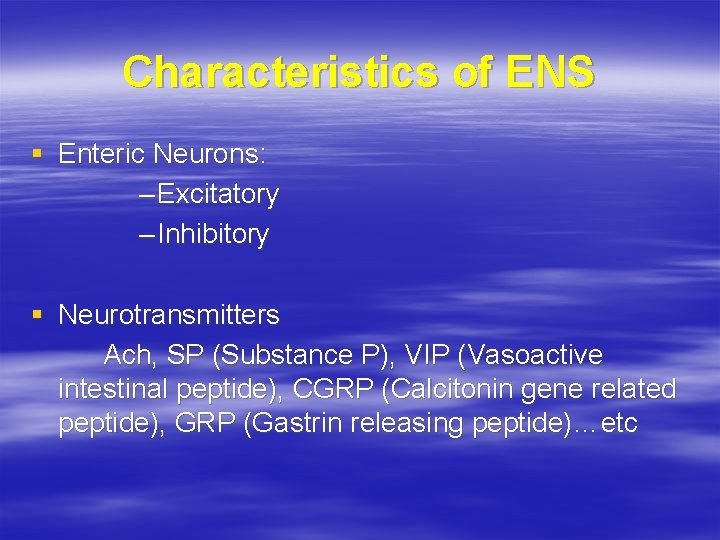
Characteristics of ENS § Enteric Neurons: – Excitatory – Inhibitory § Neurotransmitters Ach, SP (Substance P), VIP (Vasoactive intestinal peptide), CGRP (Calcitonin gene related peptide), GRP (Gastrin releasing peptide)…etc
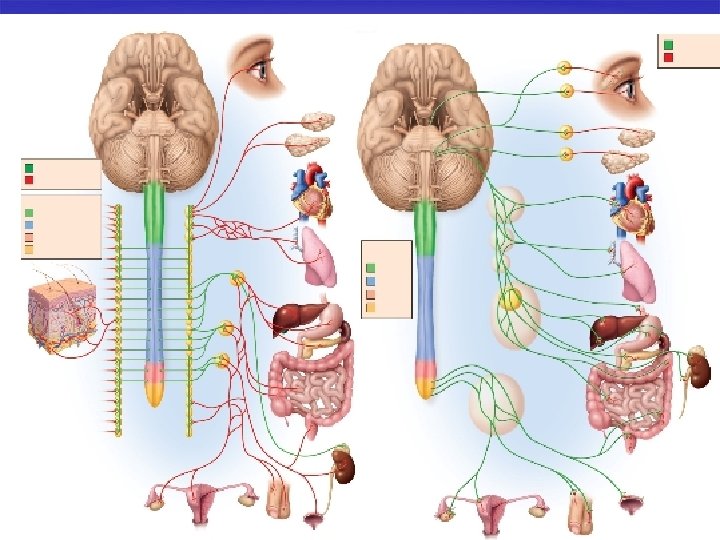
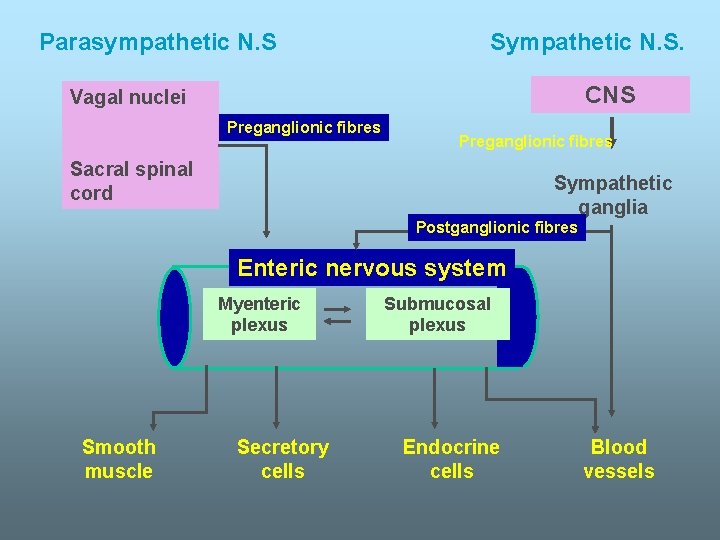
Autonomic Nervous System (ANS) § Sympathetic § Parasympathetic
Parasympathetic N. S Sympathetic N. S. CNS Vagal nuclei Preganglionic fibres Sacral spinal cord Sympathetic ganglia Postganglionic fibres Enteric nervous system Myenteric plexus Smooth muscle Secretory cells Submucosal plexus Endocrine cells Blood vessels
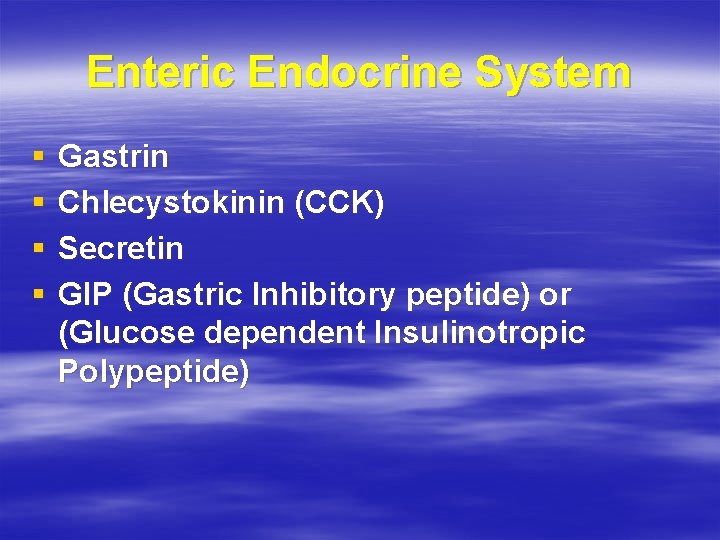
Enteric Endocrine System § § Gastrin Chlecystokinin (CCK) Secretin GIP (Gastric Inhibitory peptide) or (Glucose dependent Insulinotropic Polypeptide)
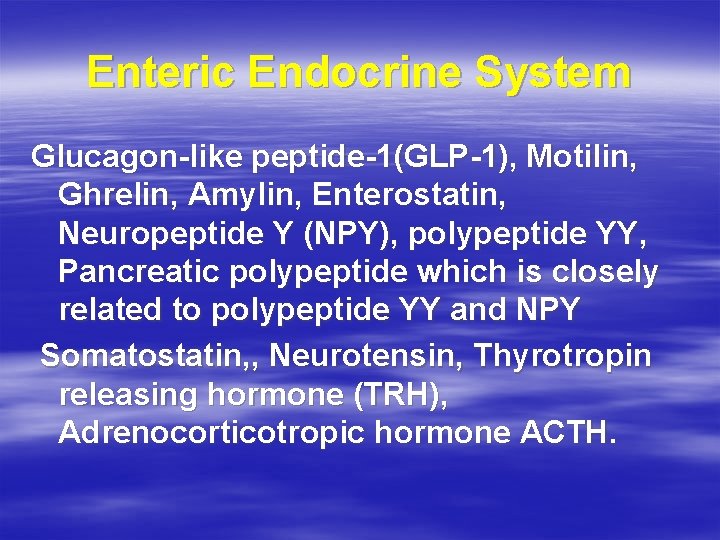
Enteric Endocrine System Glucagon-like peptide-1(GLP-1), Motilin, Ghrelin, Amylin, Enterostatin, Neuropeptide Y (NPY), polypeptide YY, Pancreatic polypeptide which is closely related to polypeptide YY and NPY Somatostatin, , Neurotensin, Thyrotropin releasing hormone (TRH), Adrenocorticotropic hormone ACTH.
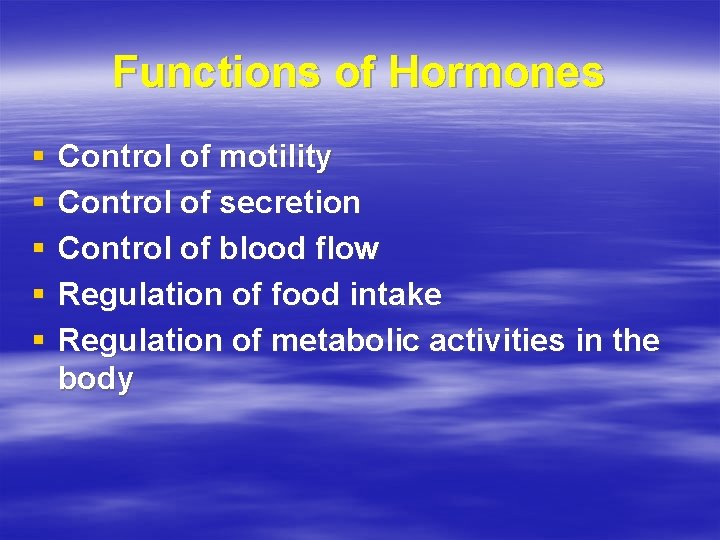
Functions of Hormones § § § Control of motility Control of secretion Control of blood flow Regulation of food intake Regulation of metabolic activities in the body
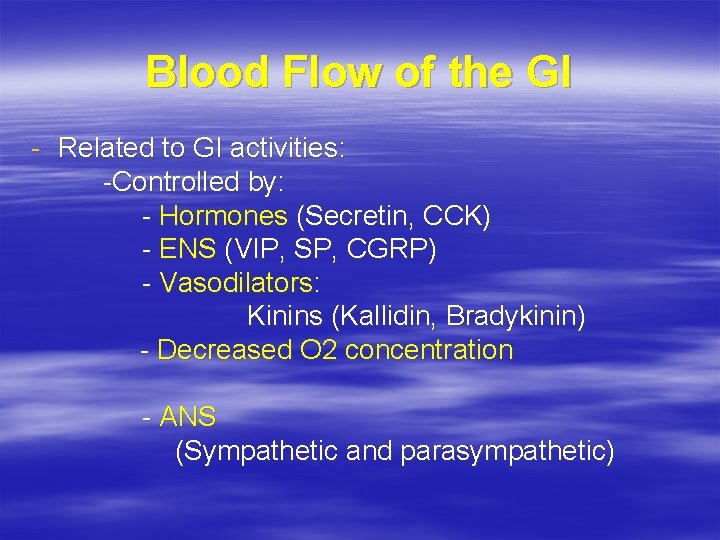
Blood Flow of the GI - Related to GI activities: -Controlled by: - Hormones (Secretin, CCK) - ENS (VIP, SP, CGRP) - Vasodilators: Kinins (Kallidin, Bradykinin) - Decreased O 2 concentration - ANS (Sympathetic and parasympathetic)