
Gastrointestinal Block Pathology lecture 2013 Diarrhea Dr Maha
Gastrointestinal Block Pathology lecture 2013 Diarrhea Dr. Maha Arafah Dr. Ahmed Al Humaidi
DIARREAHA Objectives 1. Define diarrhea 2. Describe the pathogenesis of different types of diarrhea 3. List the causes of chronic diarrhea
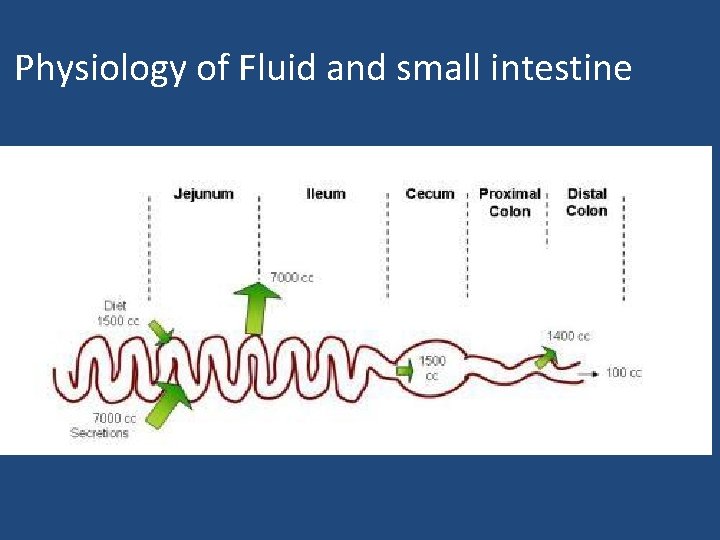
Physiology of Fluid and small intestine
DIARREAHA DEFINITION • World Health Organization Ø 3 or more loose or liquid stools per day • Abnormally high fluid content of stool Ø 200 -300 gm/day
Why important? • The loss of fluids through diarrhea can cause dehydration and electrolyte imbalances • Easy to treat but if untreated, may lead to death especially in children
Why important? More than 70 % of almost 11 million child deaths every year are attributable to 6 causes: 1. Diarrhea 2. Malaria 3. neonatal infection 4. Pneumonia 5. preterm delivery 6. lack of oxygen at birth. UNICEF
CLASSIFICATION 1. Acute ……………. if 2 weeks, 2. Persistent ……. if 2 to 4 weeks, 3. Chronic ………. . if 4 weeks in duration.
Pathophysiology Categories of diarrhea 1. 2. 3. 4. Secretory Osmotic Exudative (inflammatory ) Motility-related
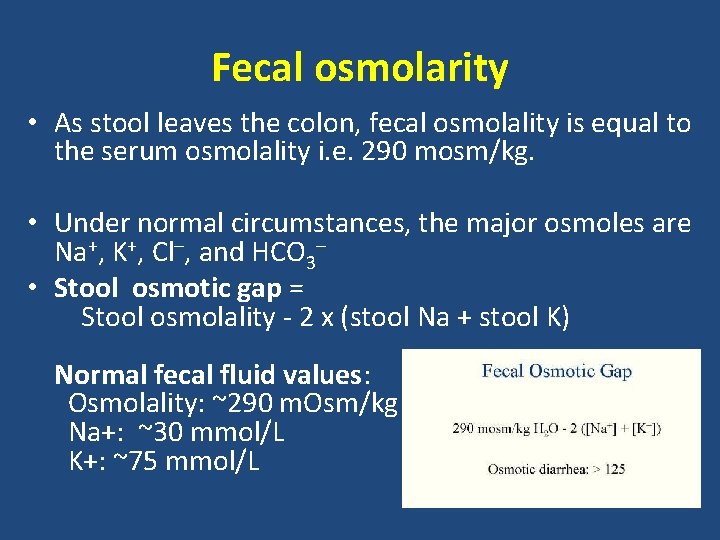
Fecal osmolarity • As stool leaves the colon, fecal osmolality is equal to the serum osmolality i. e. 290 mosm/kg. • Under normal circumstances, the major osmoles are Na+, K+, Cl–, and HCO 3– • Stool osmotic gap = Stool osmolality - 2 x (stool Na + stool K) Normal fecal fluid values: Osmolality: ~290 m. Osm/kg Na+: ~30 mmol/L K+: ~75 mmol/L
Osmotic • Excess amount of poorly absorbed substances that exert osmotic effect………water is drawn into the bowels……diarrhea • Stool output is usually not massive • Fasting improve the condition • Stool osmotic gap is high, > 125 m. Osm/kg (loss of hypotonic fluid) • Can be the result of 1. Malabsorption in which the nutrients are left in the lumen to pull in water e. g. lactose intolerance 2. osmotic laxatives. 3. Hexitols (poorly absorbed): sorbitol, mannitol, xylitol).
Secretory There is an increase in the active secretion of water High stool output Lack of response to fasting Stool osmotic gap < 100 m. Osm/kg The most common cause of this type of diarrhea is a bacterial toxin ( E. coli , cholera) that stimulates the secretion of anions. • Other causes: • • • – Enteropathogenic virus e. g. rotavirus and norwalk virus – Also seen in neuroendocrine tumours ( carcinoid tumor, gastrinomas) – Rectal villous adenoma
Exudative (inflammatory) • Results from the outpouring of blood protein, or mucus from an inflamed or ulcerated mucosa • Presence of blood and pus in the stool. • Persists on fasting • Occurs with inflammatory bowel diseases, and invasive infections e. g. E. coli, Clostridium difficile and Shigella
Exudative (inflammatory) • Some bacterial infections cause damage by invasion of the mucosa. Many cause diarrhea with blood and pus in the stool (bacterial dysentery). – The main organisms are: • Campylobacter invades mucosa in the jejunum, ileum and colon, causing ulceration and acute inflammation. • Salmonella typhi, S. paratyphi A, B, and C • Shigella infections are mainly seen in young children. • Enteroinvasive and enterohemorrhagic E. coli
Motility-related • Caused by the rapid movement of food through the intestines (hypermotility). • Irritable bowel syndrome (IBS) – a motor disorder that causes abdominal pain and altered bowel habits with diarrhea predominating

SUMMARY: TYPES OF DIARRHEA TYPE CHARACTERISTICS CAUSES SCREENING TESTS Invasive Pathogens invade enterocytes Low-volume diarrhea Shigella spp. Campylobacter jejuni Fecal smear for leukocytes: positive in most cases Diarrhea with blood and leukocytes (i. e. , dysentery) Entamoeba histolytica Order stool culture & for O&P Secretory Loss of isotonic fluid High-volume diarrhea Mechanisms: Laxatives Enterotoxins stimulate Cl- channels regulated by c. AMP and c. GMP Serotonin increases bowel motility No inflammation in bowel mucosa Laxatives: melanosis coli Stool osmotic gap with use of < 50 m. Osm/kg phenanthracene laxatives Production of enterotoxins: Fecal smear for Vibrio cholerae leukocytes: negative Enterotoxigenic E. coli Increased serotonin: Increased 5 -HIAA: carcinoid syndrome Osmotically active substance is drawing hypotonic salt solution out of bowel High-volume diarrhea No inflammation in bowel mucosa Disaccharidase def. Giardiasis, Celiac Dis. Ingestion of poorly absorbable solutes Motilityrelated Rapid movement of food through the intestines Irritable bowel syndrome (IBS) – a motor disorder Fecal smear for leukocytes: negative Stool osmotic gap > 100 m. Osm/kg
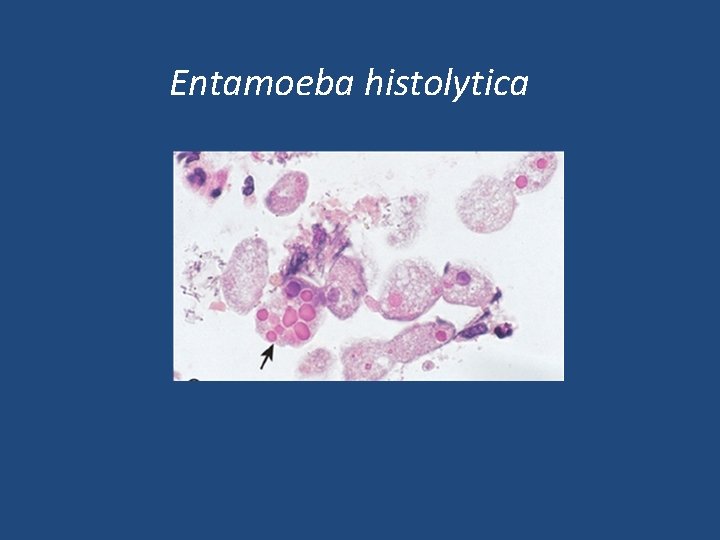
Entamoeba histolytica
Acute diarrhea
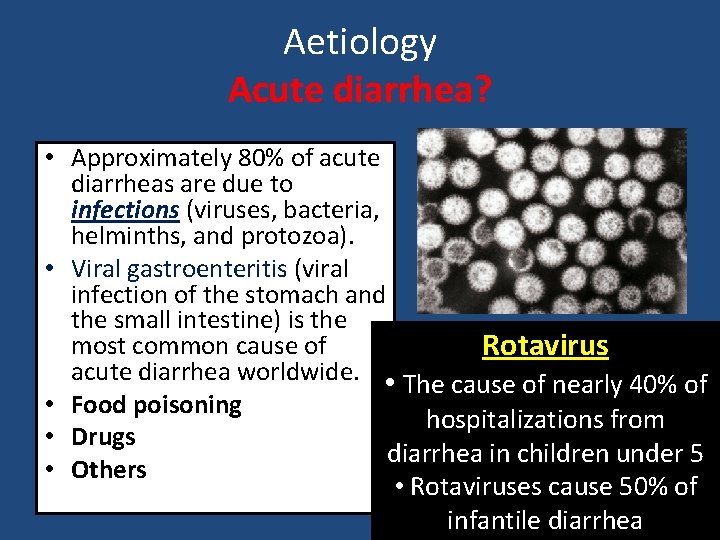
• • • Aetiology Acute diarrhea? Approximately 80% of acute diarrheas are due to infections (viruses, bacteria, helminths, and protozoa). Viral gastroenteritis (viral infection of the stomach and the small intestine) is the most common cause of Rotavirus acute diarrhea worldwide. • The cause of nearly 40% of Food poisoning hospitalizations from Drugs diarrhea in children under 5 Others • Rotaviruses cause 50% of infantile diarrhea
Antibiotic-Associated Diarrheas • Diarrhea occurs in 20% of patients receiving broad-spectrum antibiotics; about 20% of these diarrheas are due to Clostridium difficile • Leading to pseudomembranous colitis
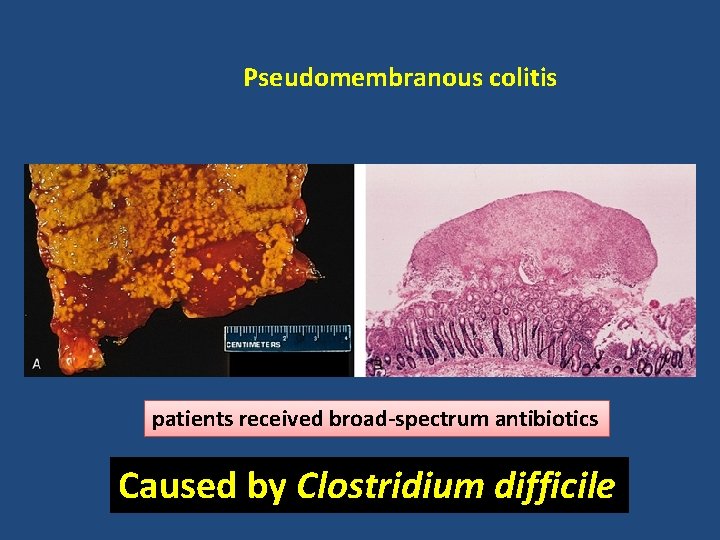
Pseudomembranous colitis patients received broad-spectrum antibiotics Caused by Clostridium difficile
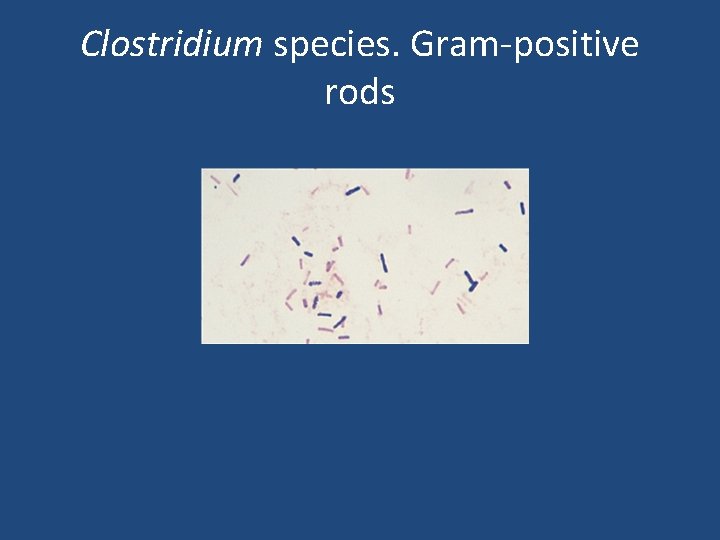
Clostridium species. Gram-positive rods
Chronic diarrhea
Chronic diarrhea Aetiology 1. Infection e. g. Giardia lamblia. AIDS often have chronic infections of their intestines that cause diarrhea. 2. Post-infectious Following acute viral, bacterial or parasitic infections 3. Malabsorption 4. Inflammatory bowel disease (IBD) 5. Endocrine diseases 6. Colon cancer 7. Irritable bowel syndrome
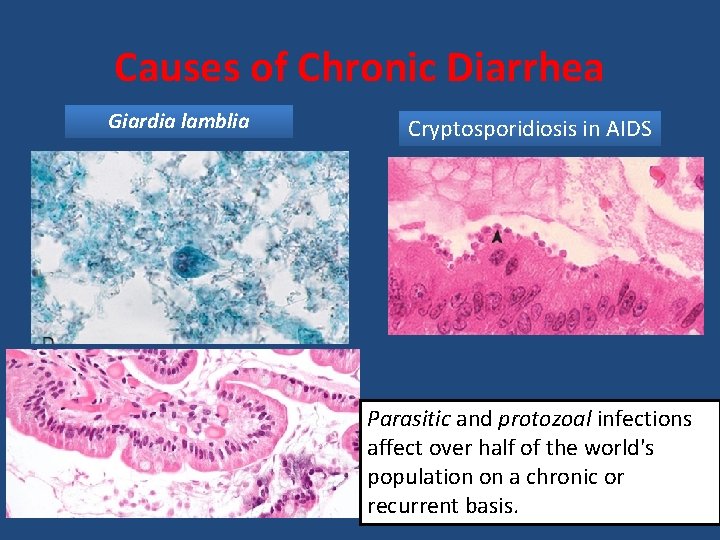
Causes of Chronic Diarrhea Giardia lamblia Cryptosporidiosis in AIDS Parasitic and protozoal infections affect over half of the world's population on a chronic or recurrent basis.
Complications 1. 2. 3. 4. Fluids ………………Dehydration Electrolytes ……………. . Electrolytes imbalance Sodium bicarbonate……. Metabolic acidosis If persistent ……Malnutrition
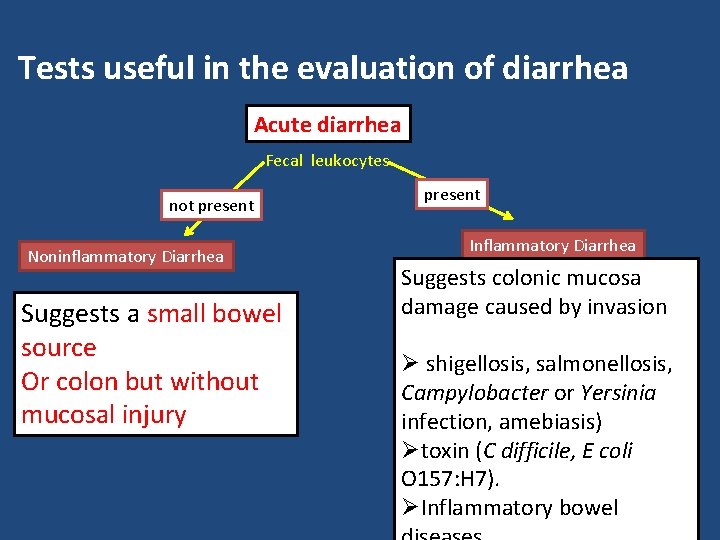
Tests useful in the evaluation of diarrhea Acute diarrhea Fecal leukocytes not present Noninflammatory Diarrhea Suggests a small bowel source Or colon but without mucosal injury present Inflammatory Diarrhea Suggests colonic mucosa damage caused by invasion Ø shigellosis, salmonellosis, Campylobacter or Yersinia infection, amebiasis) Øtoxin (C difficile, E coli O 157: H 7). ØInflammatory bowel
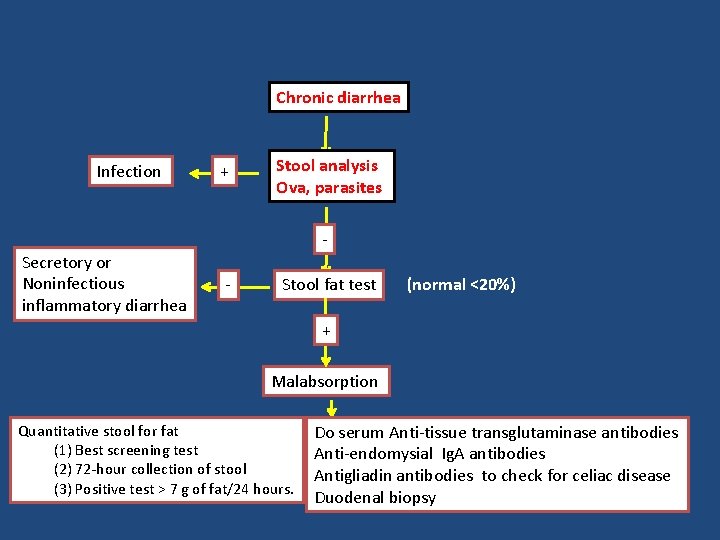
Chronic diarrhea Infection + Stool analysis Ova, parasites - Secretory or Noninfectious inflammatory diarrhea - Stool fat test (normal <20%) + Malabsorption Quantitative stool for fat (1) Best screening test (2) 72 -hour collection of stool (3) Positive test > 7 g of fat/24 hours. Do serum Anti-tissue transglutaminase antibodies Anti-endomysial Ig. A antibodies Antigliadin antibodies to check for celiac disease Duodenal biopsy
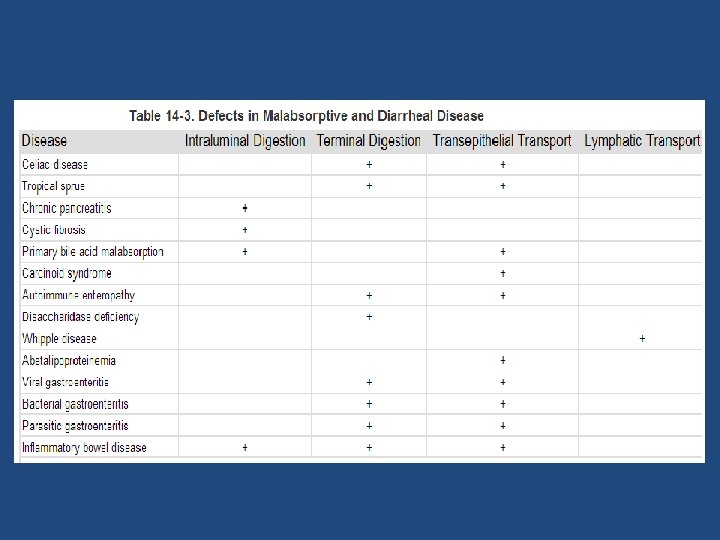
- Slides: 29