
Gastroesophageal Reflux Disease in Children By Karla Au

Gastroesophageal Reflux Disease in Children By Karla Au Yeung, MD MAJ, MC, USAR 11 April 2003
Objectives • Review physiology and pathophysiology • Discuss Differential Diagnosis • Discuss Complications and Extraesophageal manifestations of GERD • Indicate age related differences in disease manifestations • Discuss Treatment

Definition • Gastroesophageal Reflux: – Involuntary retrograde movement of stomach contents into the esophagus – Regurgitation when the stomach contents pass the lower and upper esophageal sphincters • Gastroesophageal Reflux Disease: – Symptoms of tissue damage caused by GER – Extraintestinal symptoms
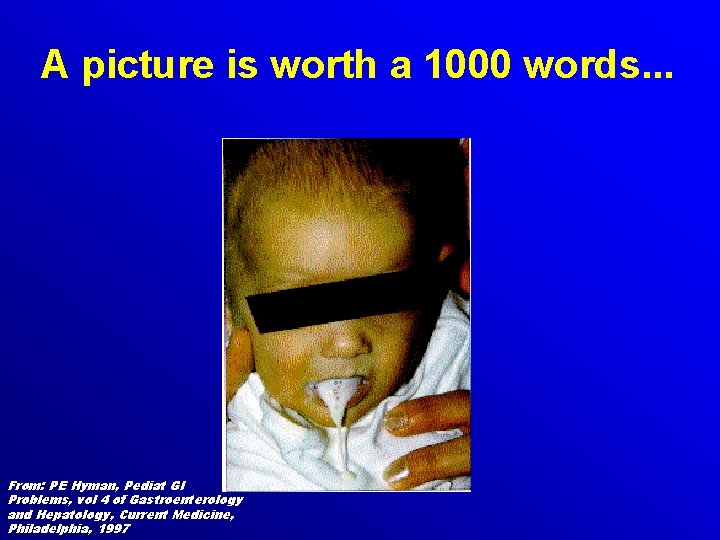
A picture is worth a 1000 words. . . From: PE Hyman, Pediat GI Problems, vol 4 of Gastroenterology and Hepatology, Current Medicine, Philadelphia, 1997
Epidemiology • Daily reflux: – 50% of children -- 0 -3 mos of age – 67% of children -- 4 mos of age – 5% of children --10 -12 mos of age • Premature infants may have more reflux • Reflux Index: % total time p. H <4 – 0 -11 mo 12% is normal – 1 -9 yo 5. 4% is normal – Adult 6% is normal JPGN 2001 Suppl 2
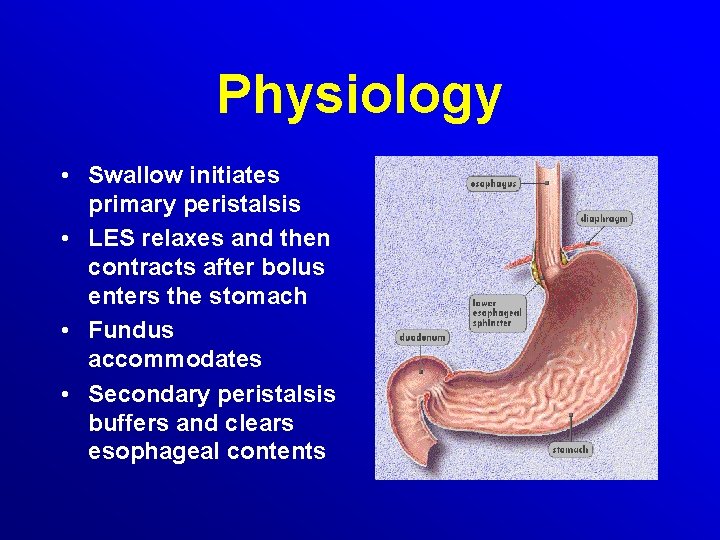
Physiology • Swallow initiates primary peristalsis • LES relaxes and then contracts after bolus enters the stomach • Fundus accommodates • Secondary peristalsis buffers and clears esophageal contents
Pathophysiology • Normal: Brief episodes 5 X hourly after a meal • Increased frequency/ duration of reflux: – Transient LES Relaxations • Increased noxiousness of refluxate – E. g. bile reflux • Non-esophageal effects of reflux • Does it occur during sleep/supine?
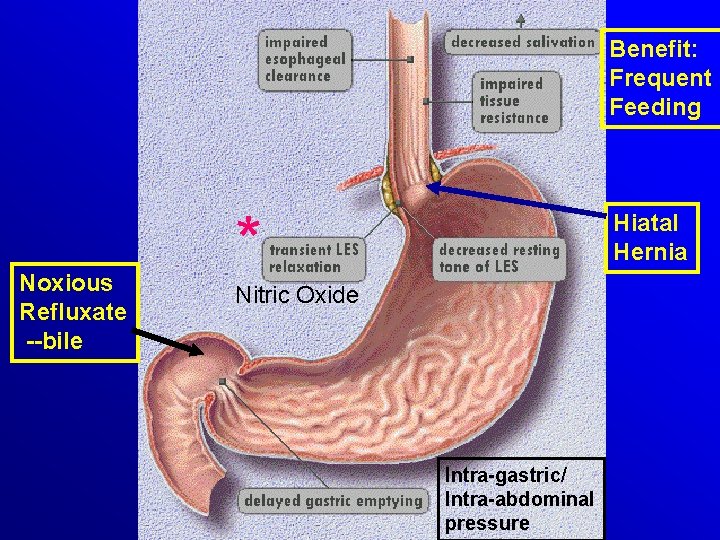
Benefit: Frequent Feeding Noxious Refluxate --bile * Hiatal Hernia Nitric Oxide Intra-gastric/ Intra-abdominal pressure
Sleep State • Normally, rarely have TLESR’s during sleep • Recumbence removes protection of gravitational clearance • Noxious materials at the cardia • More volume is able to reach the pharynx • Salivation/swallowing decreased during sleep • UES atonic during sleep allowing reflux access to airway
Clinical Presentations • Differences between adolescents & adults from infants/young children: – chronic relapsing vs resolution 1 -2 yo – intermittent vomiting vs heartburn – irritability, malnutrition, apnea in infants • Rumination, stridor, lower resp dz, neurobehavioral signs
Clinical Presentations • No evidence based data in children: • No studies comparing Hx/PE to diagnostic tests • No relationship between Sx and presence of esophagitis
Differential Diagnosis • Eosinophilic gastroenteritis vs Eosinophilic esophagitis • Esophagitis • Different causes for vomiting • Anatomic/ obstructive lesions • Neurobehavioral: – Rumination/sandifer’s vs seizure d/o • Achalasia / esophageal motility d/o’s
Esophagitis • Histologic esophagitis in 61 -83% of patients with clinically significant reflux • Heartburn, odynophagia – crying, irritability, sleep disturbance, colic, hungry until they start to swallow • Dysphagia--stricture vs dysmotility • Hematemesis/ iron deficiency
Esophagitis • Asymptomatic --may present w/complicated esophagitis • Complicated – Stricture – Barrett’s Esophagus
Peptic Stricture • • Long hx of GER sx or asymptomatic Dysphagia Esophageal Food impaction Regurgitate undigested food/liquids Drooling saliva: esp if foreign body Diagnosis: Barium swallow/UGI Located in lower 1/3 esophagus
Peptic Stricture: Treatment • • Dilation: balloon vs bougienage Stop the reflux Corticosteroid injection Complications: perforation, hemorrhage, infection
Barrett’s Esophagus • Metaplastic columnar epithelium replacing the normal squamous epithelium in the esophagus – Intestinal metaplasia / presence of Goblet cells – a premalignant condition • More common in pts with strictures • Regression of Barrett’s with antireflux therapy (med or surg) is controversial
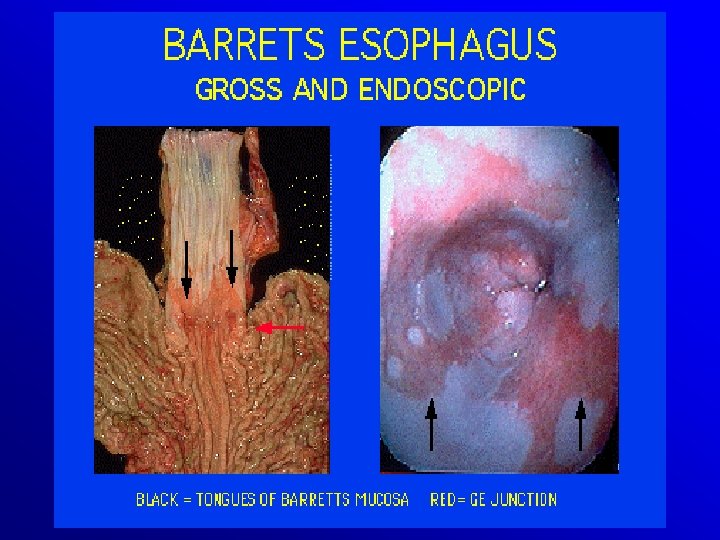
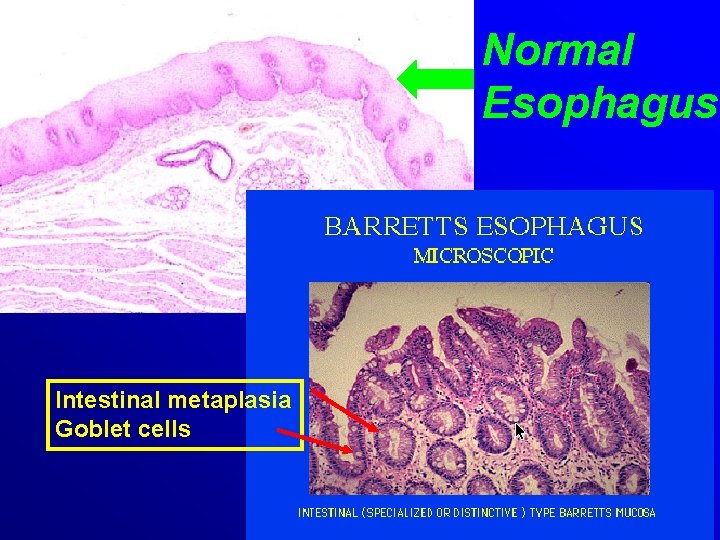
Normal Esophagus Intestinal metaplasia Goblet cells
Respiratory Symptoms • Physiologic: prevention of aspiration • Pathophysiology: – macroaspiration vs microaspiration – activation of vagal bronchoconstrictive reflexes – resp disease exacerbates reflux • Pneumonia, asthma, apnea, stridor, central apnea/bradycardia, hoarseness, sinus dz, otitis media
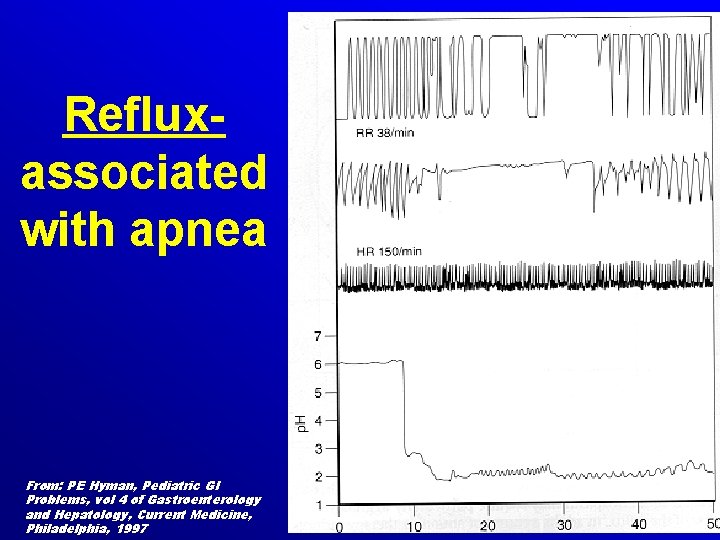
Refluxassociated with apnea From: PE Hyman, Pediatric GI Problems, vol 4 of Gastroenterology and Hepatology, Current Medicine, Philadelphia, 1997
Complex Respiratory Symptoms • Bronchopulmonary Disease • Cystic Fibrosis • Esophageal atresia and tracheoesophageal fistula
Respiratory Tract: Miscellaneous Sequelae • Belching • Hiccups • Cough • Hoarseness • Pharyngonasal regurgitation • Other
Neurobehavioral Symptoms • Rumination • Infants • Sandifer Syndrome: opisthotonic posture
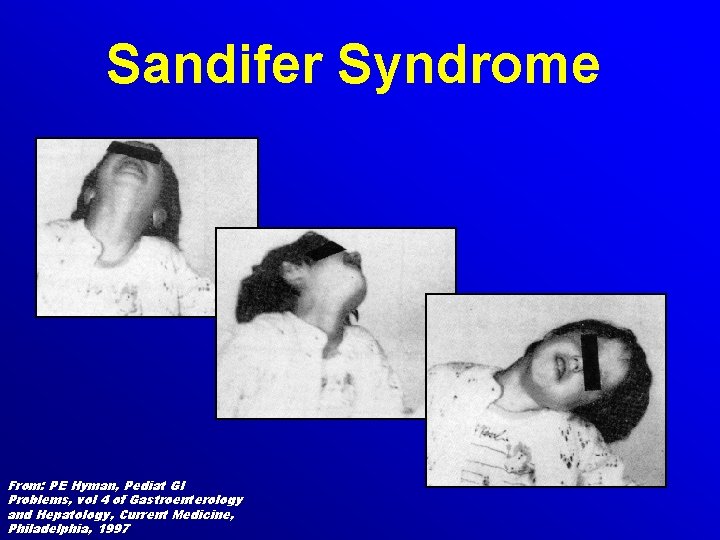
Sandifer Syndrome From: PE Hyman, Pediat GI Problems, vol 4 of Gastroenterology and Hepatology, Current Medicine, Philadelphia, 1997
Diagnosis • Separate pathologic vs physiologic reflux – based on age: ? empiric therapy • UGI – r/o structural causes for emesis – evaluate esophageal dysmotility – +/- diagnose ulcer (double-contrast) – Sens 31 -86%, Spec 21 -83%, PPV 80 -82%
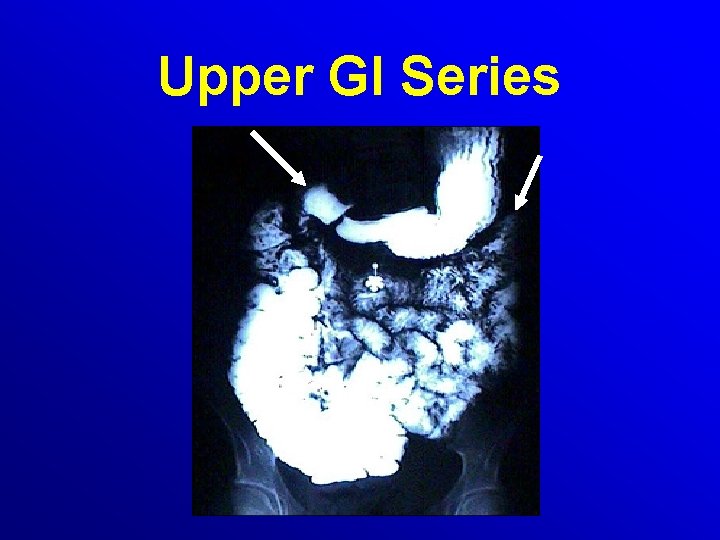
Upper GI Series
Diagnosis • Scintigraphy -- technitium – less sharp image, technique not well developed, ? role in kids – sensitivity 15 -59%, spec 83 -100% – Evaluate: GER, gastric emptying, esophageal clearance, aspiration – delayed images – Not a good study to evaluate swallowing
Diagnosis • Endoscopy and Biopsy: • Endoscopic and histologic evidence of disease do not always correlate • Histopathology: – increased basal cell thickness and papillary height, eosinophils and chronic inflammation – Barrett’s esophagus
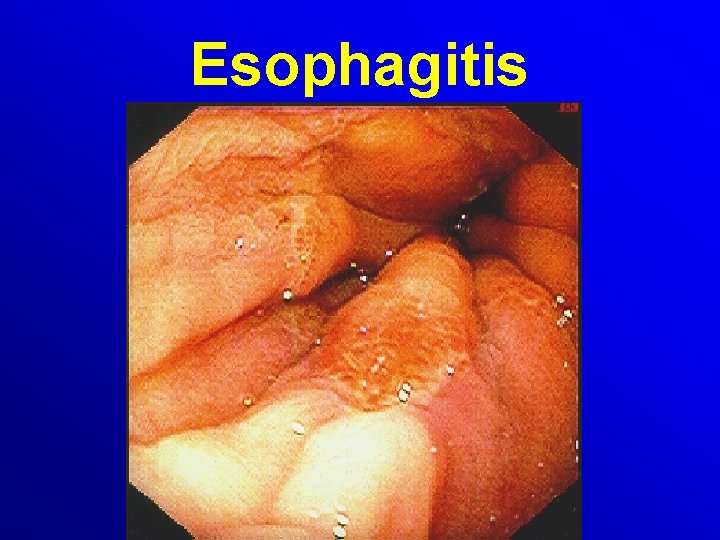
Esophagitis
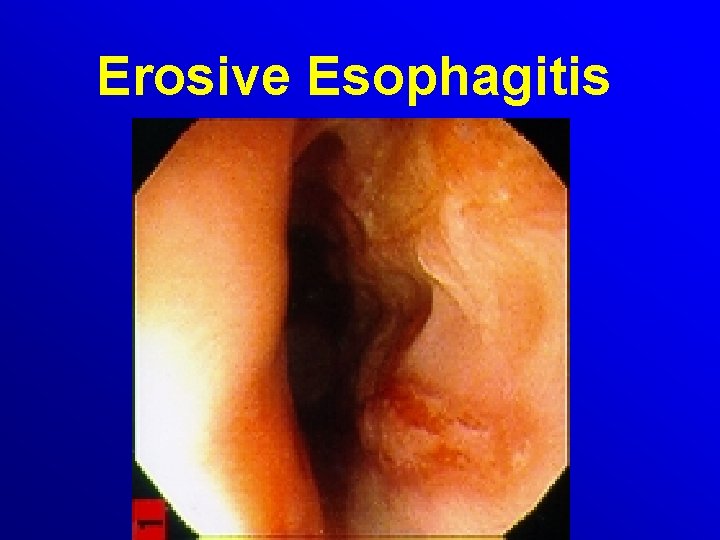
Erosive Esophagitis
Esophageal Manometry • If esophageal dysmotility suspected, – e. g. achalasia – UGI: “bird’s beak” at LES • If patient is considered for fundoplication • Tracheoesophageal Fistula patients
Esophageal p. H Monitoring • Reflux Index – Percentage of total time that the esophageal p. H is <4 • Associate GER with extra-esophageal symptoms • Cannot measure non-acid reflux • Problem: infants with frequent feedings have neutral refluxate • Future: ? Impedance monitoring
Therapy • Positioning: – infant: right-side down, prone, not sitting – child: prone, sitting (staying upright) – perform chest physiotherapy on empty stomach
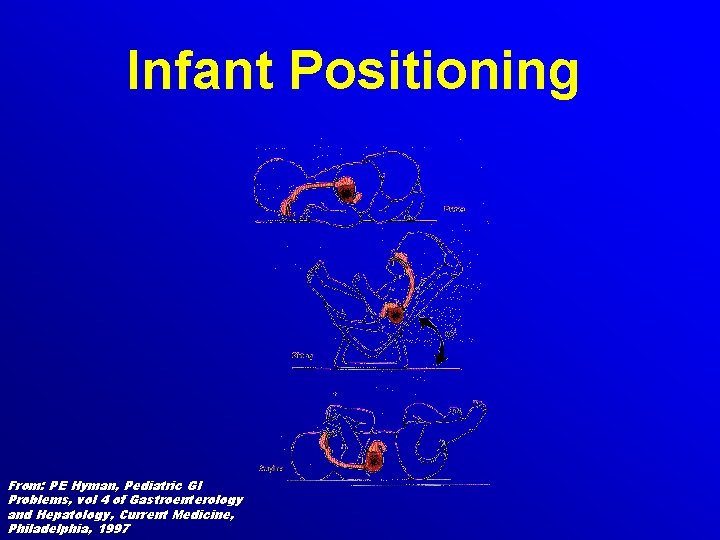
Infant Positioning From: PE Hyman, Pediatric GI Problems, vol 4 of Gastroenterology and Hepatology, Current Medicine, Philadelphia, 1997
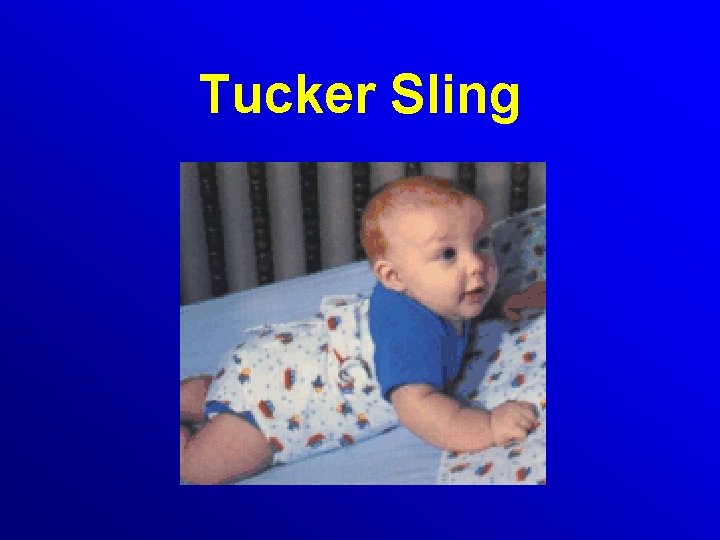
Tucker Sling
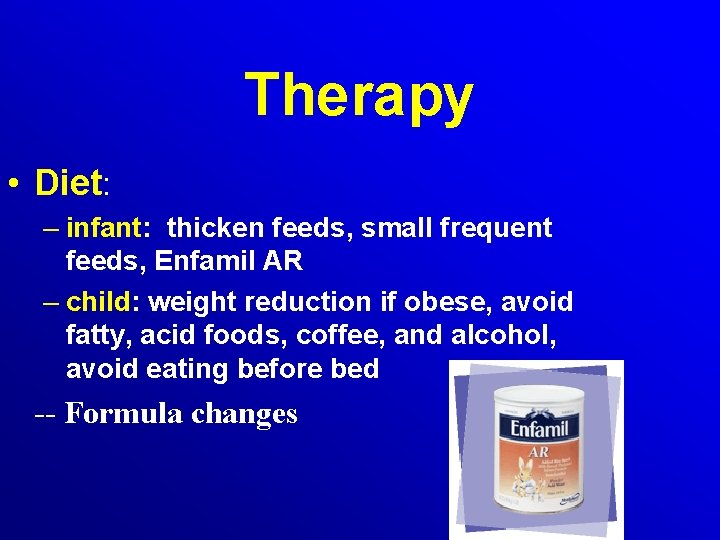
Therapy • Diet: – infant: thicken feeds, small frequent feeds, Enfamil AR – child: weight reduction if obese, avoid fatty, acid foods, coffee, and alcohol, avoid eating before bed -- Formula changes
Pharmacotherapy • Use in pathologic reflux or other provocative states • Prokinetic – inc. tonic LES pressure, improve esophageal clearance and gastric emptying – choices have mixed effects on patients
Pharmacotherapy • Metaclopramide: dopamine antagonist – inc. LES pressure, improve gastric emptying and esophageal peristalsis – Small therapeutic window before extrapyramidal side effects • Erythromycin: motilin receptor agonist – therefore, more effect on stomach – Not useful in neonates <32 wk EGA • Jadcherla et al. JPGN 2002
Pharmacotherapy • Cisapride: off the market; enhanced post-ganglionic acetylcholine release (5 HT 4) • Bethanechol: cholinergic agonist – Inc. LES pressure, esophageal peristaltic amplitude and duration(i. e. clearance), and salivary secretion – exacerbates bronchospasm
Acid-Reducing Agents • Anitsecretory: • Histamine (H 2) receptor antagonists • Proton Pump Inhibitors – omeprazole, lansoprazole, rabeprazole – block parietal cell proton pump • Acid-Neutralizing: – as effective as H 2 RA, but very frequent dosing – use for breakthrough symptoms, empiric trial • Mucosal Protection: sucralfate
Fundoplication: Indications • Resp dz worsened by reflux • Aspiration risks and gastrostomy tube feedings • Peptic strictures/Barrett’s esophagus when refractory to medical management
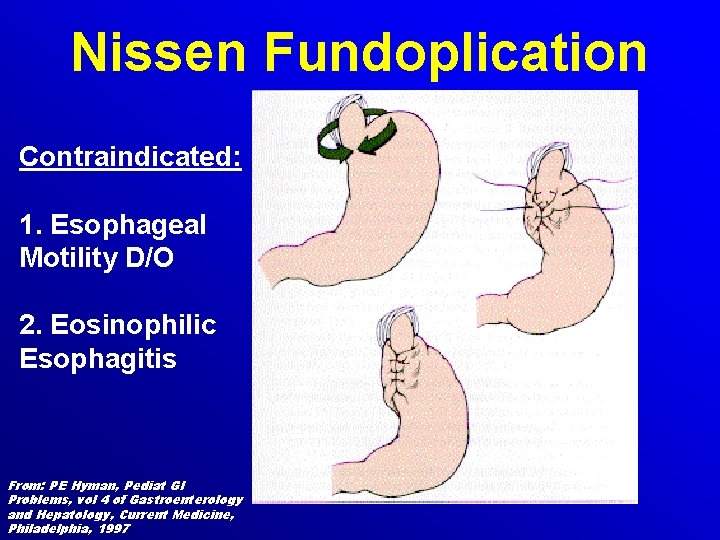
Nissen Fundoplication Contraindicated: 1. Esophageal Motility D/O 2. Eosinophilic Esophagitis From: PE Hyman, Pediat GI Problems, vol 4 of Gastroenterology and Hepatology, Current Medicine, Philadelphia, 1997
Fundoplication • The wrap functions as a valve as well as strengthening LES pressure • ? Longterm efficacy of wrap • 57 -92% success in peds depends on pt population and whether or not on meds • Complication 2. 2 -45%, mort 0 -4. 7%
Fundoplication • Complications: – Early: wrap herniation, SB adhesions/strictures, intraperitoneal leakage – Late: gas bloat, inability to belch/vomit, dysphagia, dumping syndrome, retching
Summary Points Ø GER is common in infants, but should “outgrow” it by 24 months of age Ø Eosinophilic esophagitis can mimic GERD in the infant/toddler, but presents as dysphagia in older children
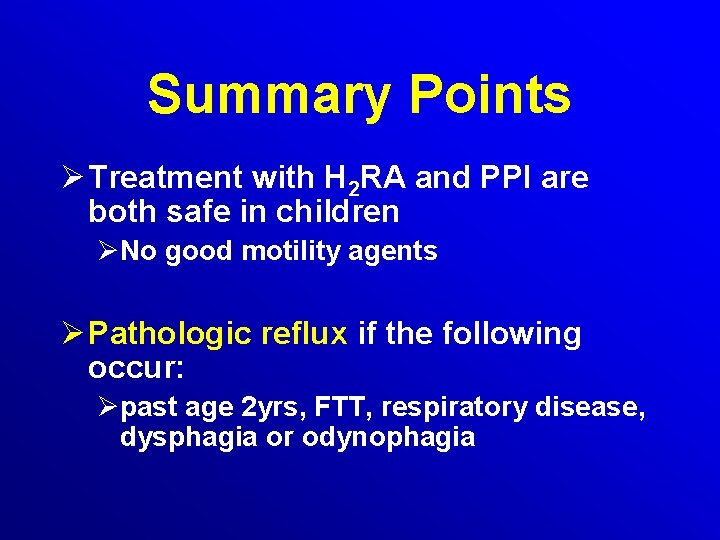
Summary Points Ø Treatment with H 2 RA and PPI are both safe in children ØNo good motility agents Ø Pathologic reflux if the following occur: Øpast age 2 yrs, FTT, respiratory disease, dysphagia or odynophagia
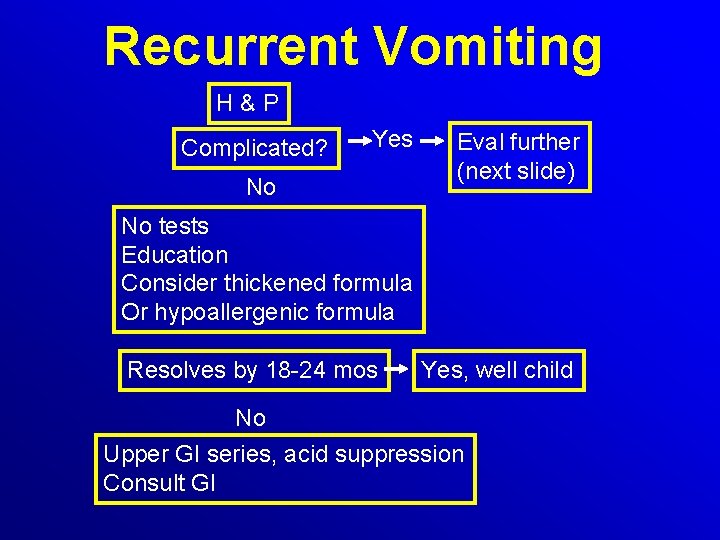
Recurrent Vomiting H&P Complicated? Yes No Eval further (next slide) No tests Education Consider thickened formula Or hypoallergenic formula Resolves by 18 -24 mos Yes, well child No Upper GI series, acid suppression Consult GI
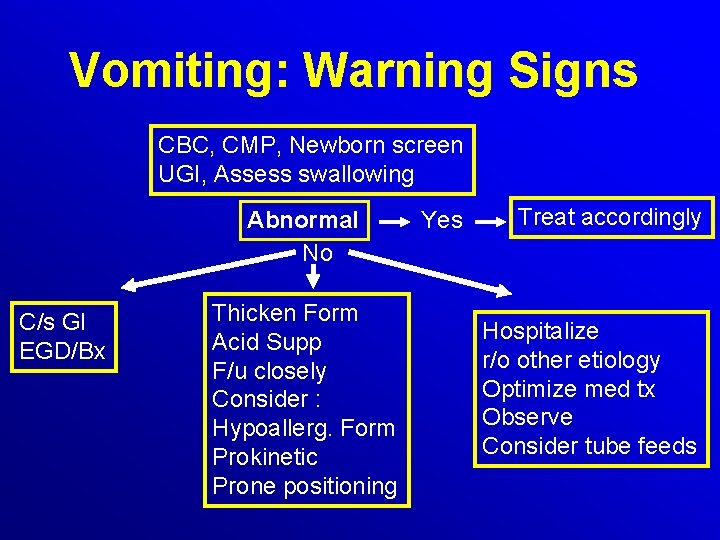
Vomiting: Warning Signs CBC, CMP, Newborn screen UGI, Assess swallowing Abnormal No C/s GI EGD/Bx Thicken Form Acid Supp F/u closely Consider : Hypoallerg. Form Prokinetic Prone positioning Yes Treat accordingly Hospitalize r/o other etiology Optimize med tx Observe Consider tube feeds

- Slides: 50