
Gastroenteritis Inflammation of stomach or intestines Inhibits nutrient
Gastroenteritis • Inflammation of stomach or intestines – Inhibits nutrient absorption and excessive H 2 O and electrolyte loss • • Bacterial Viral Parasites Poisoning by microbial toxins – food borne intoxication
• Signs and Symptoms: – General features: diarrhea, loss of appetite, abdominal cramps, nausea, vomiting and possibly fever – Dysentery – Typically self Limiting • Enteric fevers – Systemic with severe headache, high fever, abscesses, intestinal rupture, shock and death
• Epidemiology – Occurs worldwide – Oral to fecal route of transmission • Water common reservoir • Overcrowding & poor sanitation are risk factors • Animals may be source of infection
• Prevention – – – Hand washing Proper food handling and complete cooking Pasteurization of milk and juices Adequate sanitation Safe water supplies • Treatment – Rapid replacement of fluids and electrolytes – Anti-nausea medication – Antimicrobials may be used in severe cases
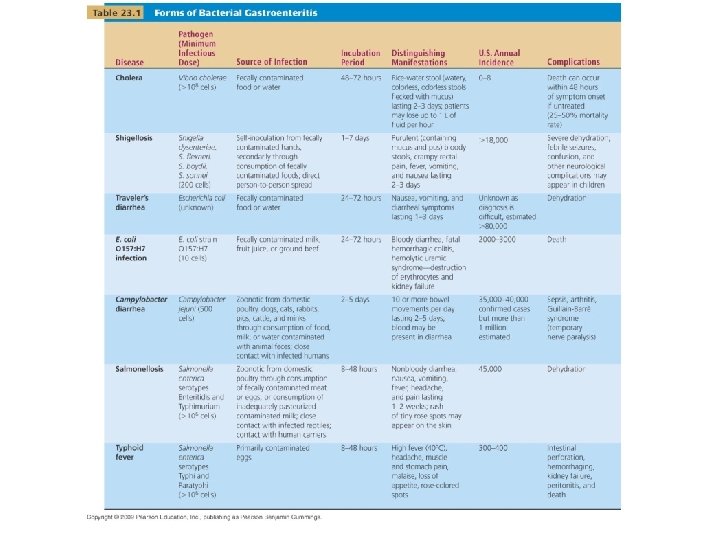
Bacterial Gastroenteritis • 3 groups of gram negative bacteria account for most bacterial intestinal infections: – Vibrio cholerae (Cholera) – Enterics (Salmonella, Shigella, E. coli) – Campylobacter jejuni
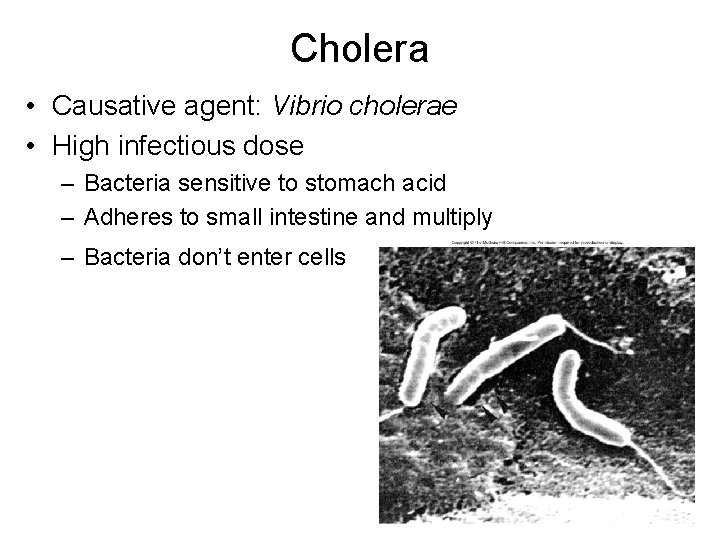
Cholera • Causative agent: Vibrio cholerae • High infectious dose – Bacteria sensitive to stomach acid – Adheres to small intestine and multiply – Bacteria don’t enter cells
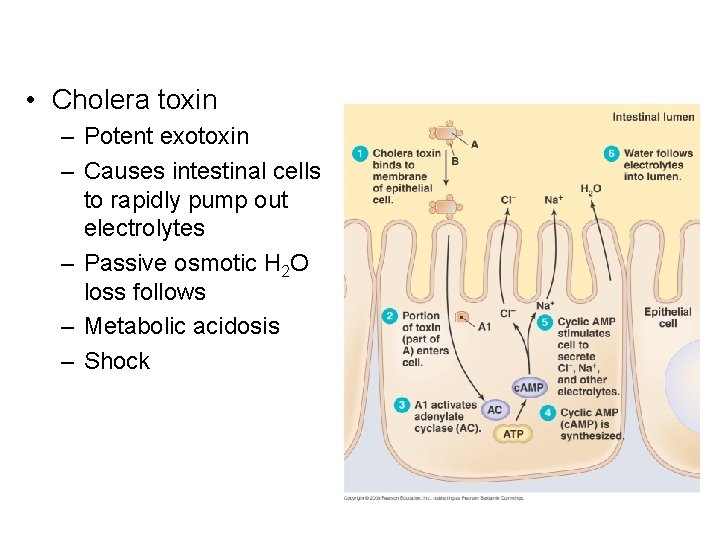
• Cholera toxin – Potent exotoxin – Causes intestinal cells to rapidly pump out electrolytes – Passive osmotic H 2 O loss follows – Metabolic acidosis – Shock
• Heavy loss of fluid – “rice-water stool” • Up to 20 L of fluids lost per day • May discharge 1 million bacteria per ml of feces • Untreated cases potentially fatal – Fluid/electrolyte replacement – Tetracycline reduces toxin production
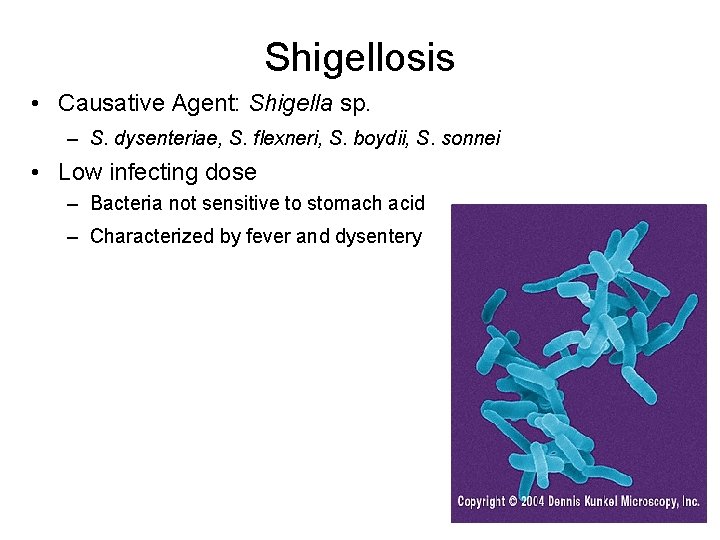
Shigellosis • Causative Agent: Shigella sp. – S. dysenteriae, S. flexneri, S. boydii, S. sonnei • Low infecting dose – Bacteria not sensitive to stomach acid – Characterized by fever and dysentery
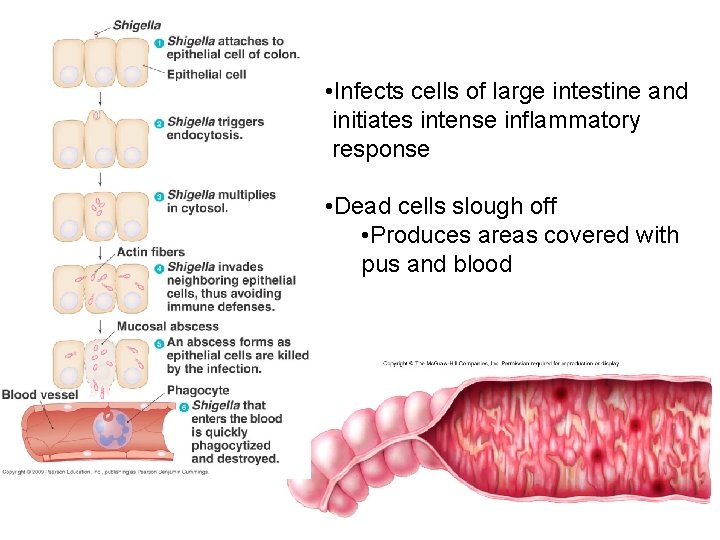
• Infects cells of large intestine and initiates intense inflammatory response • Dead cells slough off • Produces areas covered with pus and blood
• All species produce enterotoxin and type III secretion systems • S. dysenteriae produces powerful endotoxin – shiga-toxin • Ciprofloxacin, rifampin or azithromycin may reduce duration and infectivity
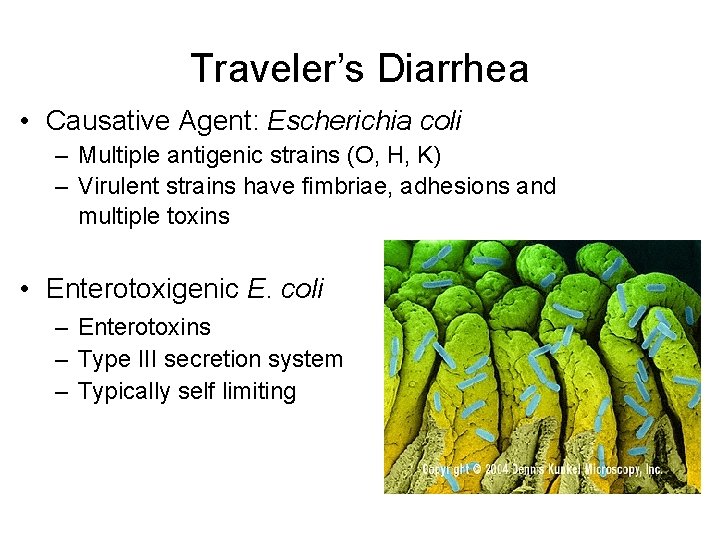
Traveler’s Diarrhea • Causative Agent: Escherichia coli – Multiple antigenic strains (O, H, K) – Virulent strains have fimbriae, adhesions and multiple toxins • Enterotoxigenic E. coli – Enterotoxins – Type III secretion system – Typically self limiting
• Enterohemorrhagic E. coli – O 157: H 7 – Produce potent Shiga-like toxins and type III secretion systems • Antimicrobials cause increase in toxin production
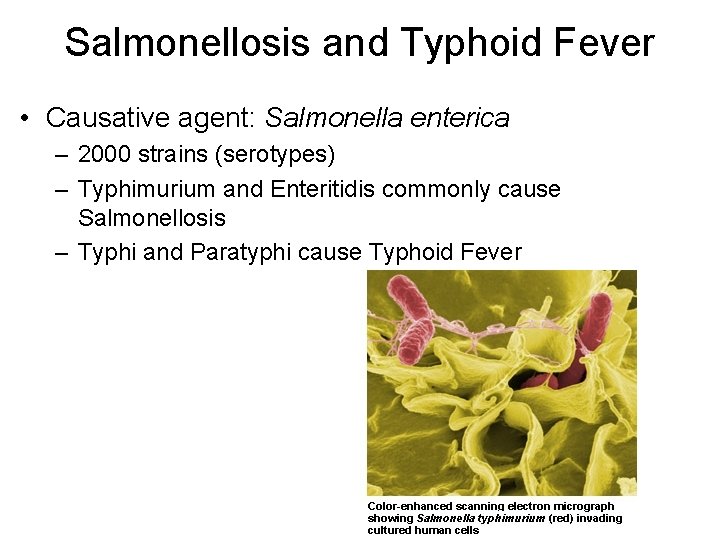
Salmonellosis and Typhoid Fever • Causative agent: Salmonella enterica – 2000 strains (serotypes) – Typhimurium and Enteritidis commonly cause Salmonellosis – Typhi and Paratyphi cause Typhoid Fever
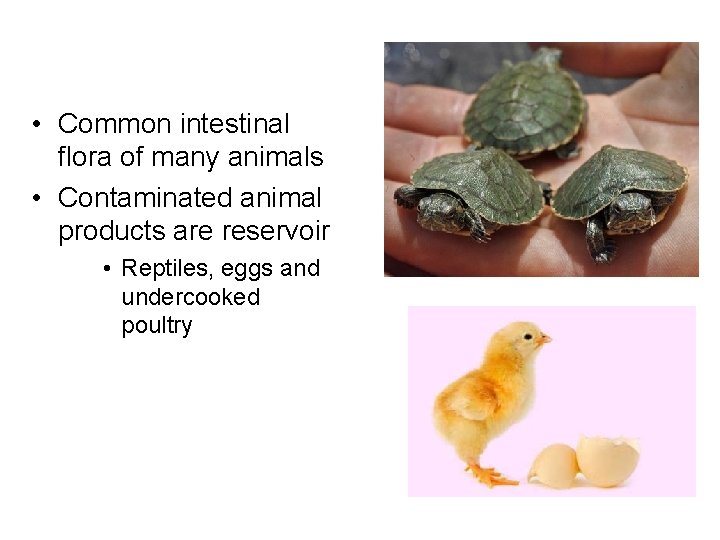
• Common intestinal flora of many animals • Contaminated animal products are reservoir • Reptiles, eggs and undercooked poultry
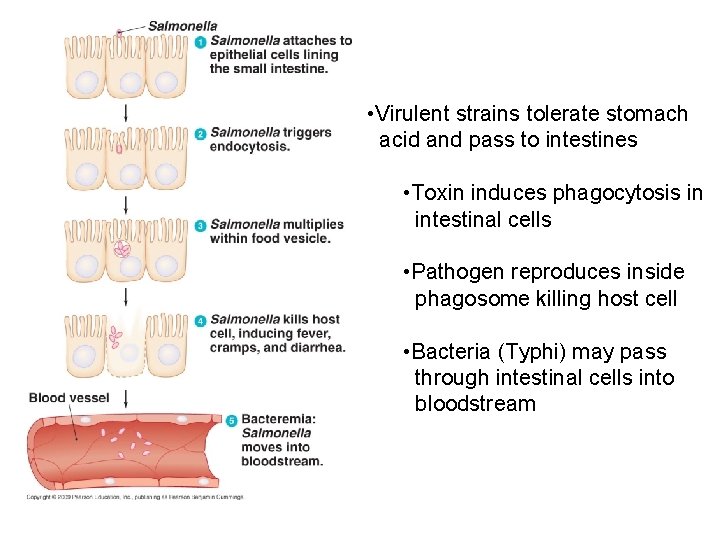
• Virulent strains tolerate stomach acid and pass to intestines • Toxin induces phagocytosis in intestinal cells • Pathogen reproduces inside phagosome killing host cell • Bacteria (Typhi) may pass through intestinal cells into bloodstream
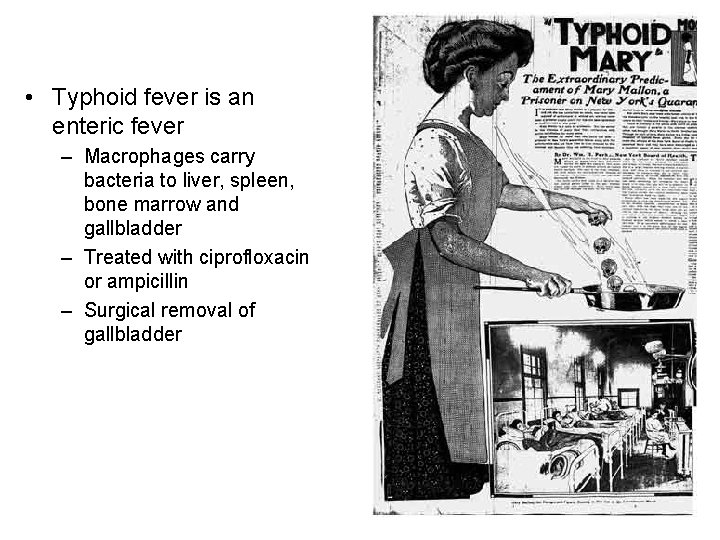
• Typhoid fever is an enteric fever – Macrophages carry bacteria to liver, spleen, bone marrow and gallbladder – Treated with ciprofloxacin or ampicillin – Surgical removal of gallbladder
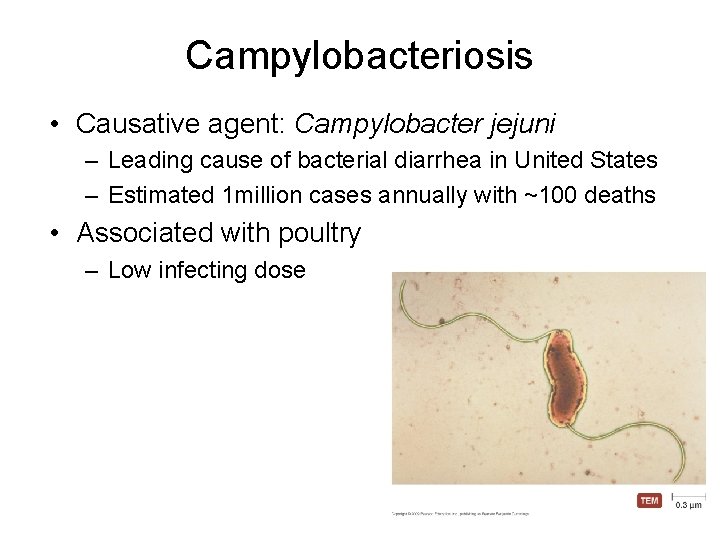
Campylobacteriosis • Causative agent: Campylobacter jejuni – Leading cause of bacterial diarrhea in United States – Estimated 1 million cases annually with ~100 deaths • Associated with poultry – Low infecting dose
• Virulent strains possess adhesions, cytotoxins and endotoxin – Induce endocytosis in cells of intestine and initiate inflammation and bleeding lesions • Non-motile mutants are avirulent • Severe cases treated with ciprofloxacin or azithromycin
• Guillain-Barré Syndrome – Tingling of the feet leads to progressive paralysis of the legs, arms and rest of the body – 40% of cases preceded by campylobacteriosis – May be associated with autoimmune response – 80% recover completely; 5% mortality with treatment
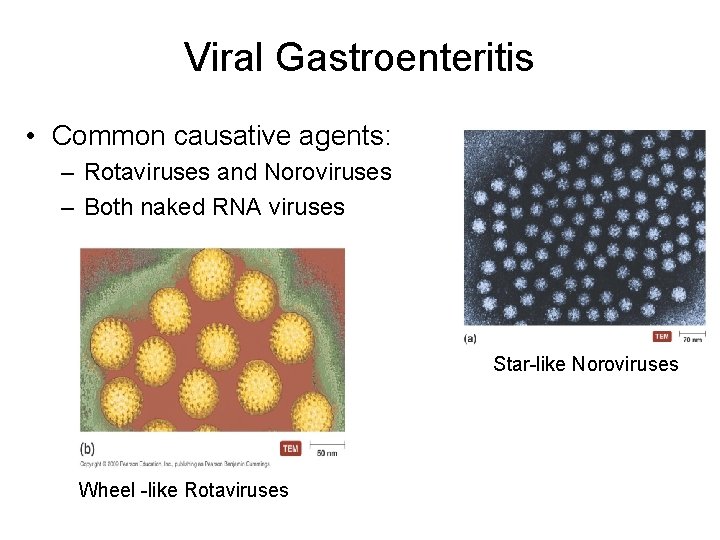
Viral Gastroenteritis • Common causative agents: – Rotaviruses and Noroviruses – Both naked RNA viruses Star-like Noroviruses Wheel -like Rotaviruses
• Epidemology – Infect intestinal cells causing cell death – Typically self-limiting – Norovirus epidemics cause 90% of cases – Rotaviruses responsible for 50% infant cases of serious diarrhea • 600, 000 worldwide annual fatalities • Oral vaccine available
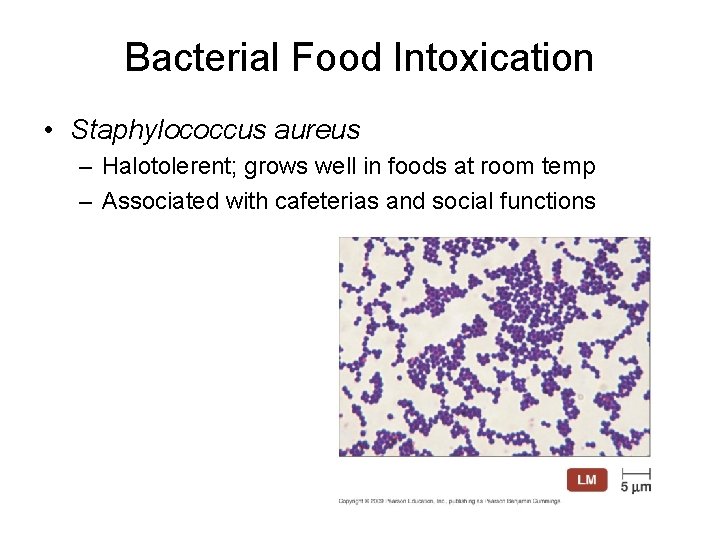
Bacterial Food Intoxication • Staphylococcus aureus – Halotolerent; grows well in foods at room temp – Associated with cafeterias and social functions
• 5 heat stable enterotoxins: – 1000 for up to 30 min – Stimulate muscle contractions, nausea and intense vomiting, diarrhea and cramping – Acute and self limiting • symptoms begin 4 -6 hrs after consumption and end within 24 hrs
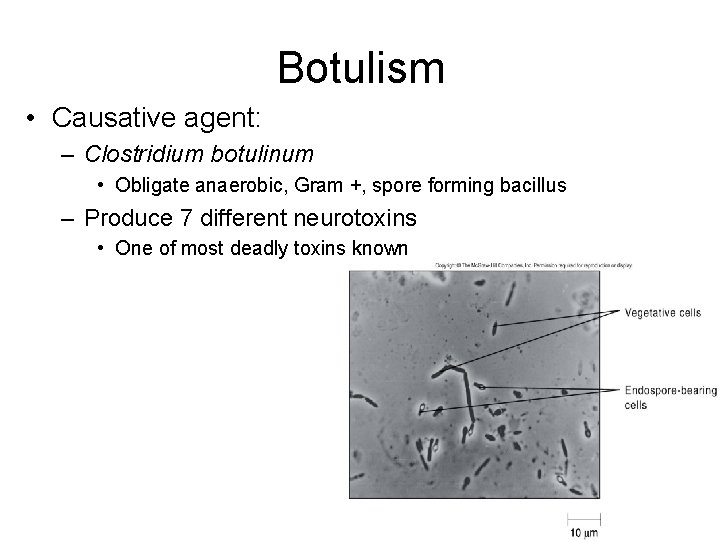
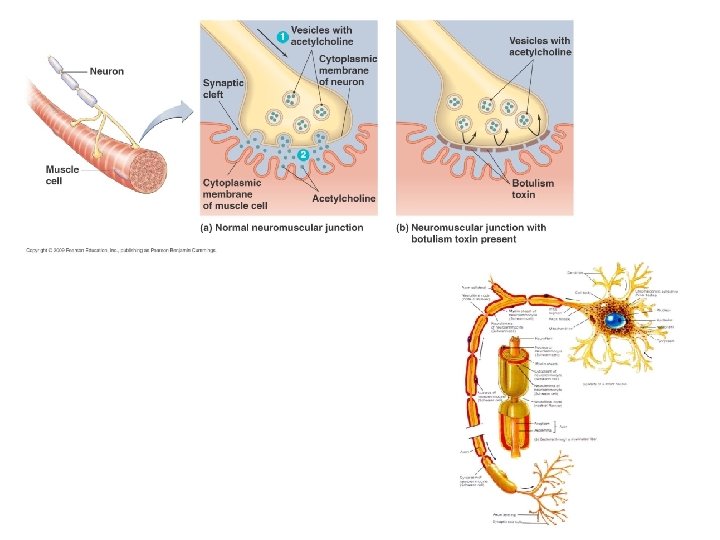
Botulism • Causative agent: – Clostridium botulinum • Obligate anaerobic, Gram +, spore forming bacillus – Produce 7 different neurotoxins • One of most deadly toxins known
• Signs & Symptoms – Dizziness, dry mouth, blurred vision – Abdominal symptoms include pain, nausea, vomiting and diarrhea or constipation – Progressive paralysis • Paralysis of respiratory muscles most common cause of death
• 3 forms of botulism: – Food-borne botulism – progressive paralysis of all voluntary muscles due to toxin production – Wound botulism – similar symptoms – Infant botulism – bacteria grow in the intestines, producing non-specific symptoms • “floppy baby syndrome”
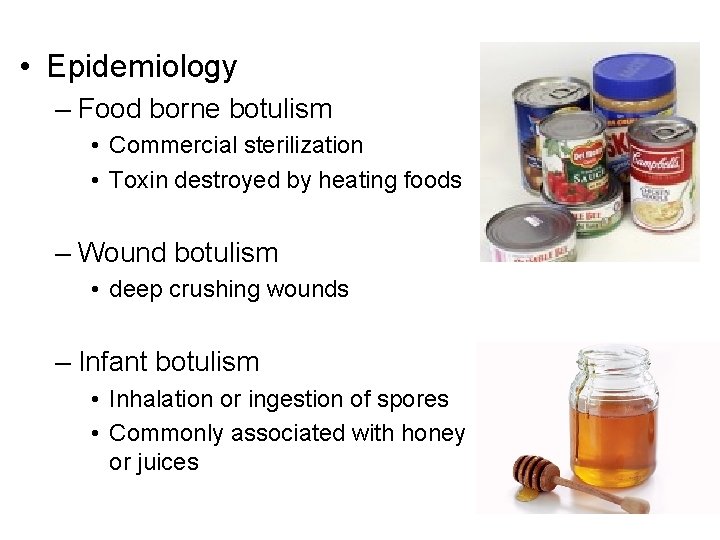
• Epidemiology – Food borne botulism • Commercial sterilization • Toxin destroyed by heating foods – Wound botulism • deep crushing wounds – Infant botulism • Inhalation or ingestion of spores • Commonly associated with honey or juices
• Prevention – Proper sterilization and sealing of canned food – No honey or unpasteurized juices for infants!! • Treatment – – Antitoxin Gastric washing and surgical removal of tissues Artificial respiration may be required Anti-microbials given to kill bacteria in infant and wound botulism
- Slides: 31