
GASTROENTERITIS BAHAR PEZKL NAZLI SEDA GKDEREL the term
GASTROENTERITIS BAHAR PEZÜKLİ NAZLI SEDA GÖKDERELİ
�the term gastroenteritis is applied to syndromes of diarrhea or vomiting that tend to involve noninflammatory infection in the upper small bowel or inflammatory infection in the colon.
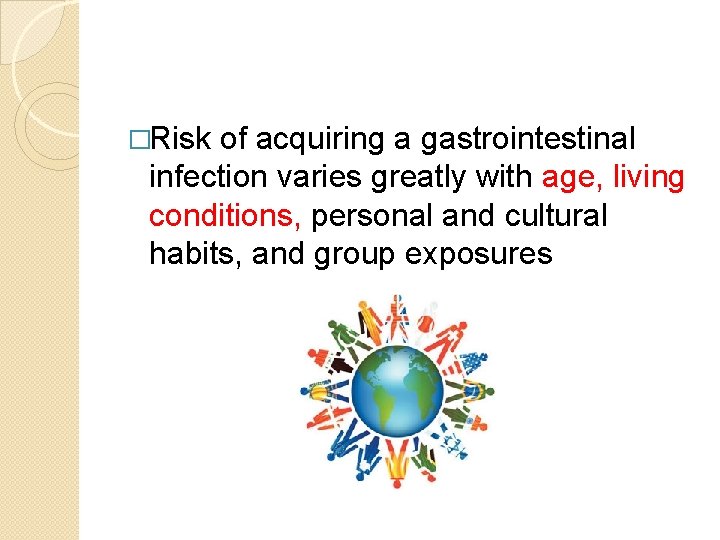
�Risk of acquiring a gastrointestinal infection varies greatly with age, living conditions, personal and cultural habits, and group exposures
Host defense factors �Gastric acidity �Intestinal motility �Intestinal microflora �Mucus �Systemic and local immune mechanisms �Others (e. g. breast feeding)
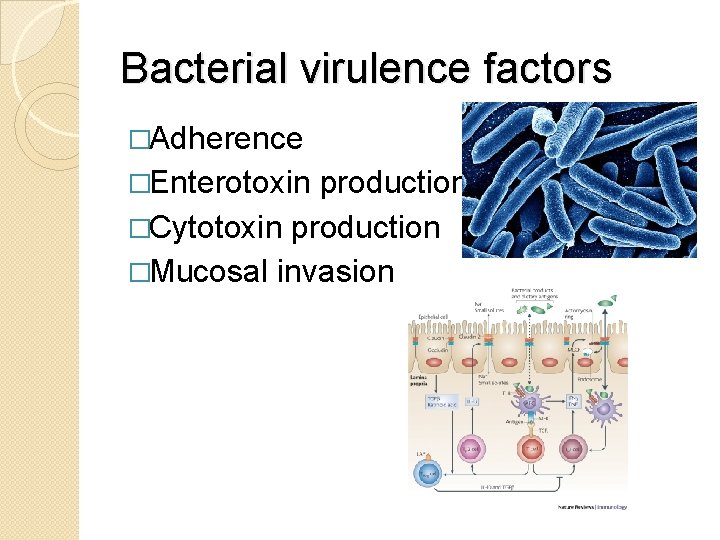
Bacterial virulence factors �Adherence �Enterotoxin production �Cytotoxin production �Mucosal invasion
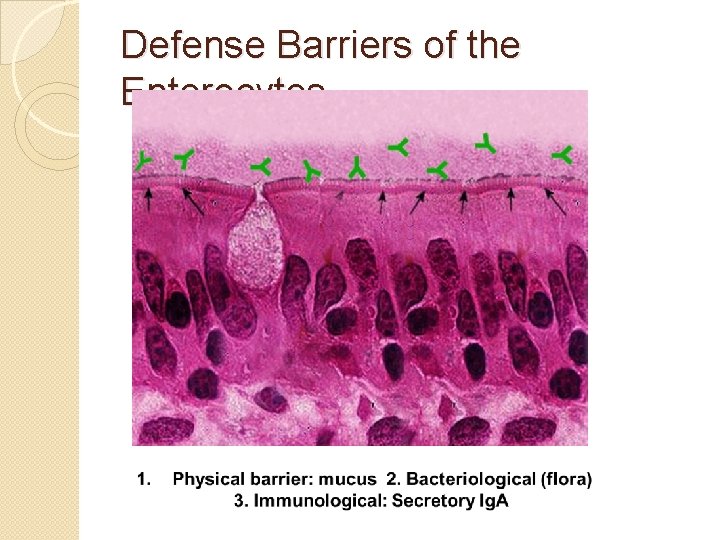
Defense Barriers of the Enterocytes
Mechanisms of infection �Ingestion of preformed toxin (food poisoning) �Fecal-oral contamination ◦ Food, flies, fingers, feces, and fomites ◦ Contaminated food �Animal reservoir �Fecal-oral contamination of food ◦ Infectious dose varies (~100 to 109)
DIARRHEA �Alteration in a normal bowel movement �Characterized by an increased in the water content, volume, or frequency of stools �>3 or more stools and at least 200 gr �Decrease in consistency (soft or liquid) and an increase in frequency of bowel movement to >3 stools per day
�Acute diarrhea is an episode of diarrhea of <14 days in duration �Persistent diarrhea is of >14 days in duration �Chronic diarrhea lasts >30 days
DIARRHEA �Non-inflammatory �Watery diarrhea, no blood or mucus or pus in stool, no fever or systemic signs �Secretory or osmotic mechanism �Dehydration may occur �Generally self-limited and more benign �Therapy generally supportive
�Inflammatory �Frequent lower volume stool, mucoid, bloody, or purulent. Often with fever or systemic signs, tenesmus, urgency �Exudative mechanism �Dehydration rare �Less benign
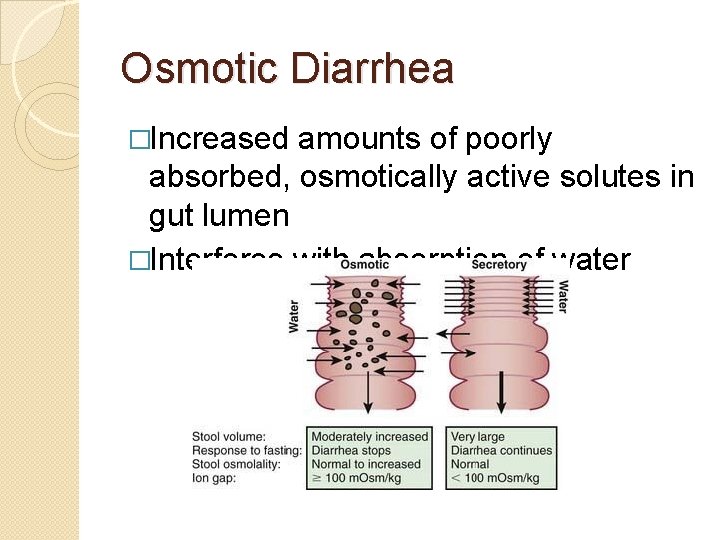
Osmotic Diarrhea �Increased amounts of poorly absorbed, osmotically active solutes in gut lumen �Interferes with absorption of water
Secretory Diarrhea �Excess secretion of electrolytes and water across mucosal surface �Bacterial or viral enterotoxins �Cholera, enterotoxigenic E. coli, B. cereus, S. aureus, Rotavirus, Norwalk virus
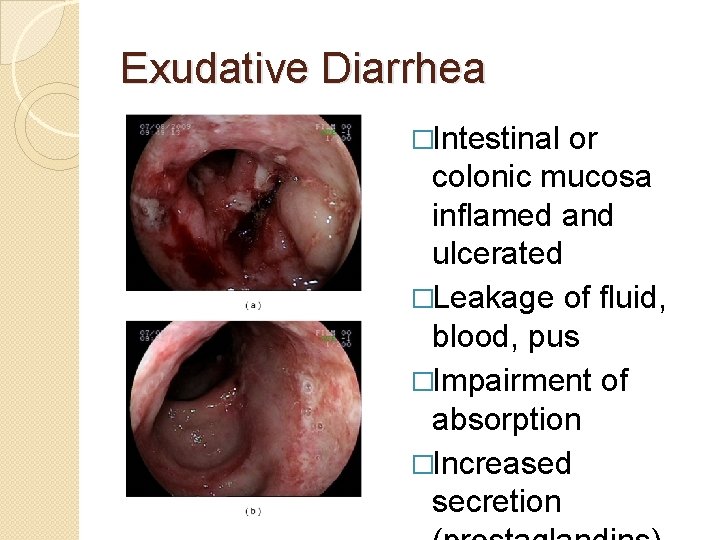
Exudative Diarrhea �Intestinal or colonic mucosa inflamed and ulcerated �Leakage of fluid, blood, pus �Impairment of absorption �Increased secretion
�Infectious, invasive organisms �Shigella, Campylobacter, Yersinia, E. histolytica, EHEC, C diff �Idiopathic inflammatory bowel disease �Crohns disease �Ulcerative Colitis �Ischemia
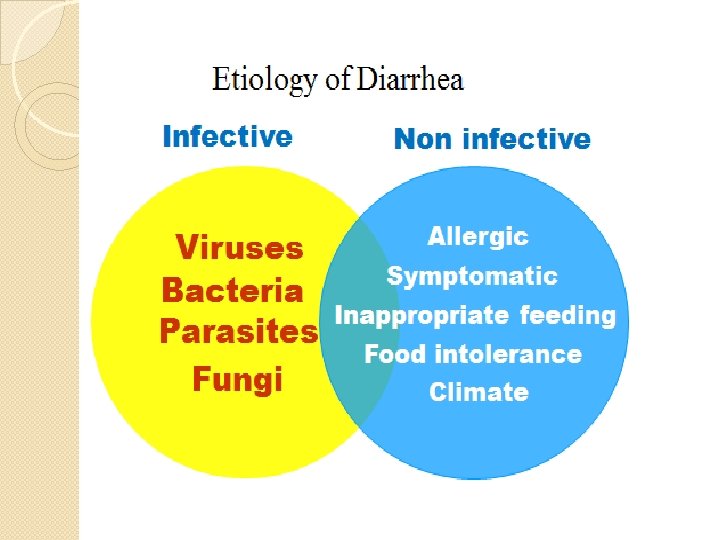
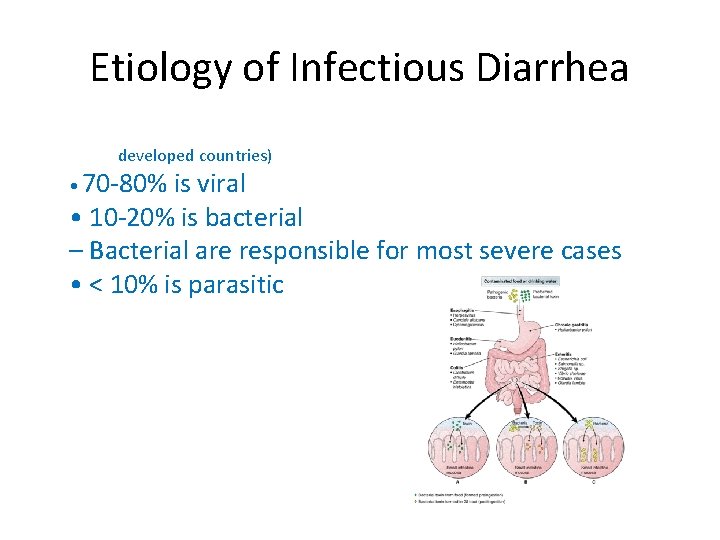
Etiology of Infectious Diarrhea (in (((8 developed countries) • 70 -80% is viral • 10 -20% is bacterial – Bacterial are responsible for most severe cases • < 10% is parasitic
Acute Diarrhea in Children • The most important infective causes of acute diarrhea in developing countries in children are: • Rotavirus • Enterotoxigenic escherichia coli • Shigella • Campylobacter jejuni • Salmonella typhimurium
Bacterial �Salmonella �Shiga-toxin producing Escherichia coli �Non-shiga-toxin E. coli �Campylobacter �Yersinia �Clostridium difficile �Vibrio cholerae
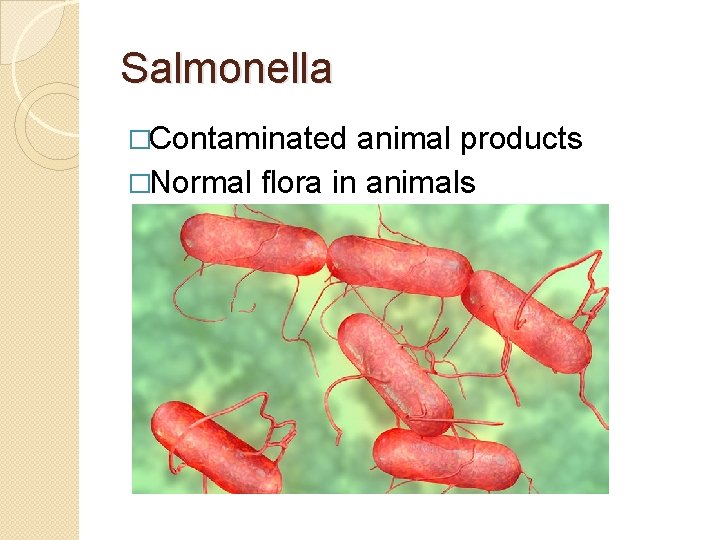
Salmonella �Contaminated animal products �Normal flora in animals
�Clinical Symptoms may evolve �Fever; general malaise �Sometimes no GI symptoms �If there are GI symptoms, will see: �Bloody diarrhea �Abdominal pain �Weight loss
Salmonellosis � Fever, cramping, abdominal pain, and diarrhea within 8 -48 hours after ingestion of infective dose (contaminated poultry, shell eggs, dairy products, beef, exotic pets such as reptiles) � Inflammatory (neutrophilic) enteritis most typically involving the small bowel mucosa, occasional cause of colitis with crypt abscesses and erosive ulceration of colonic mucosa (Salmonella serotype Typhimurium) � Moderate number of fecal neutrophils, usually fewer than in shigellosis except colitis with blood and pus in stool
Diagnosis �Stool culture �Salmonella bacilli may be found in stool/blood cultures �Serology: positive Widal test with increased titers
Treatment � TMP/SMX 960 mg bid or � Chloramphenicol 250 mg qid for 3 weeks � In case of sepsis, IV therapy is necessary � Shorter regimens are: • ciprofloxacin 500 mg bid or ofloxacin 400 mg bid or ceftriaxone 2 g IV for 710 days � Many patients often relapse after treatment and chronic maintenance therapy (TMP/SMX 1 DD daily) is sometimes necessary.
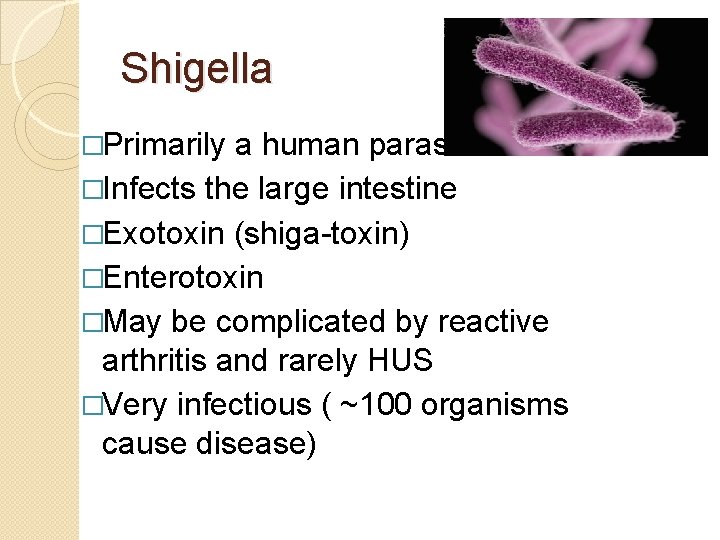
Shigella �Primarily a human parasite �Infects the large intestine �Exotoxin (shiga-toxin) �Enterotoxin �May be complicated by reactive arthritis and rarely HUS �Very infectious ( ~100 organisms cause disease)
�Clinical Symptoms may evolve �High fever �Abdominal pain �Bloody diarrhea
Diagnosis �Stool microscopy— fresh examination and after concentration �Multiple stool samples may be necessary �Shigella bacillus found in stool
Treatment �TMP/SMX 960 mg bid x 5 days or � amoxicillin 500 mg tid x 5 days �If resistant to the above, give or �norfloxacin 400 mg bid x 5 days or �nalidixic acid 1 g qid x 10 days �ciprofloxacin 500 mg bid
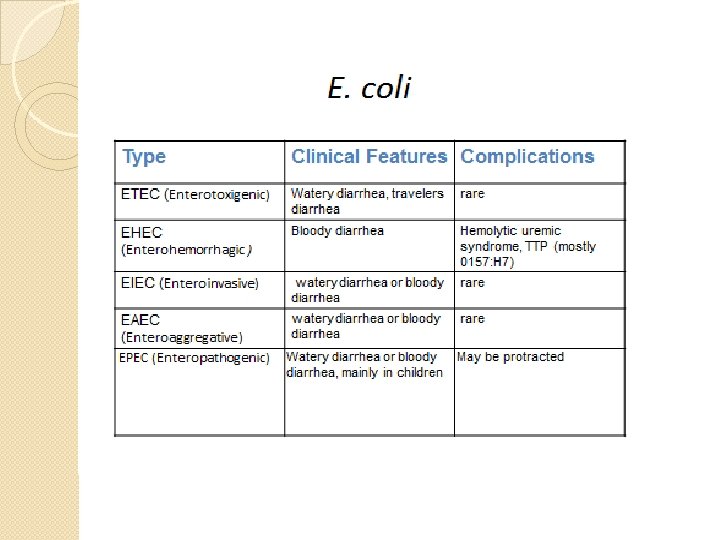
E. coli
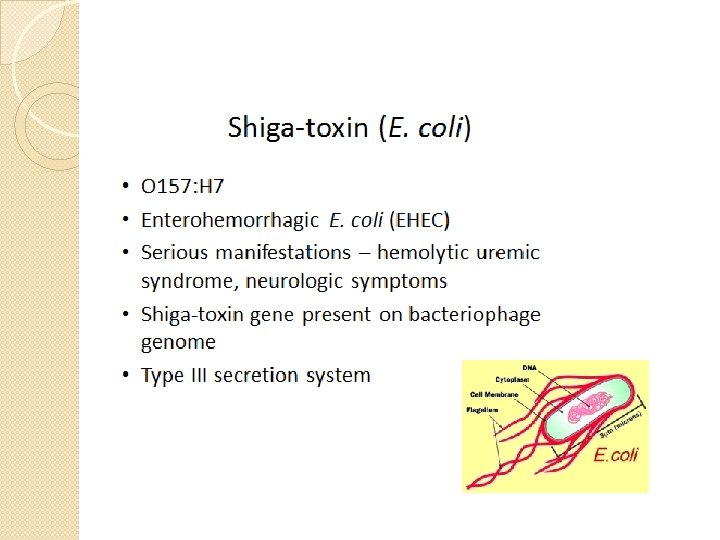
Enterohemorrhagic Escherichia coli �Abdominal cramps and watery diarrhea 3 to 8 days following ingestion of contaminated food (undercooked beef, raw milk, fresh produce) or water �Shiga toxin absorbed from intestine and damages vascular endothelial cells (intestinal mucosa and kidney) �Watery diarrhea followed by grossly bloody diarrhea �Uncomplicated illness lasts 1 to 12 days �Use of antibiotics contraindicated (phagemediated production of Shiga toxin enhanced by ampicillin, norfloxacin, and other antibiotics)
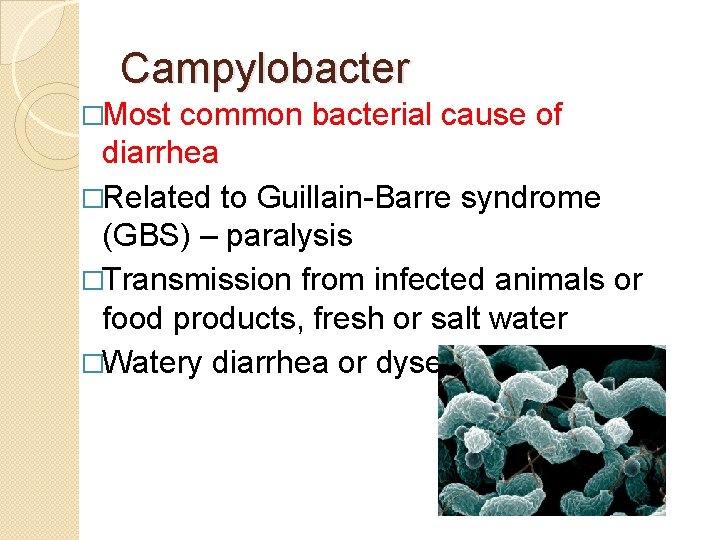
Campylobacter �Most common bacterial cause of diarrhea �Related to Guillain-Barre syndrome (GBS) – paralysis �Transmission from infected animals or food products, fresh or salt water �Watery diarrhea or dysentery
�Clinical Symptoms may evolve �Fever and general malaise, sometimes without GI symptoms �When present, GI symptoms include bloody diarrhea, abdominal pain and weight loss.
Treatment �Erythromycin 500 mg bid x 5 days (1 st choice) � �Fluoroquinolones are also effective, but resistance rates of 30 -50% have been reported in some developing countries
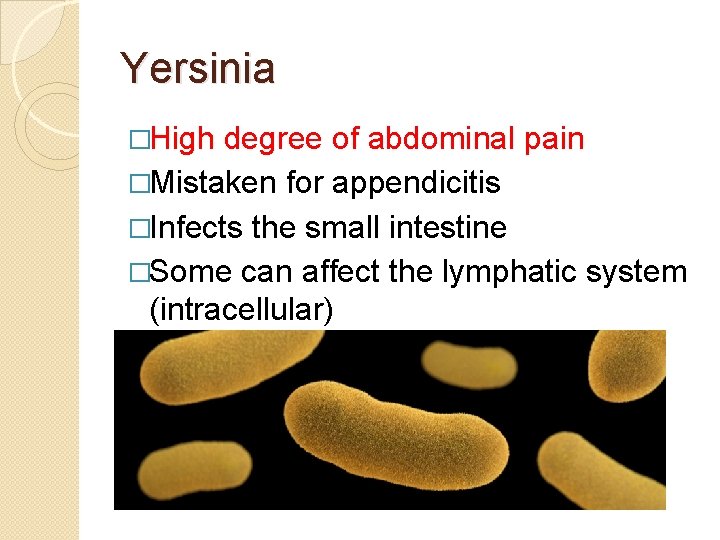
Yersinia �High degree of abdominal pain �Mistaken for appendicitis �Infects the small intestine �Some can affect the lymphatic system (intracellular)
Yersinosis �Febrile diarrhea with abdominal pain 16 to 48 hours following ingestion of an infectious inoculum �Duration of illness ranges from 1 day to a prolonged diarrhea of 4 weeks
Treatment �Safe food handling �Y. enterocolitica is suscestible to amg, chloram, tetra, TMP/SMZ, pip, cipro, �ß lactamase, resis to pen, ampi, 1. gen. ceph. �Patients with septicemia should receive antb. �Y. pseudotuberculosis usually not require antb, but with septicemia ampi

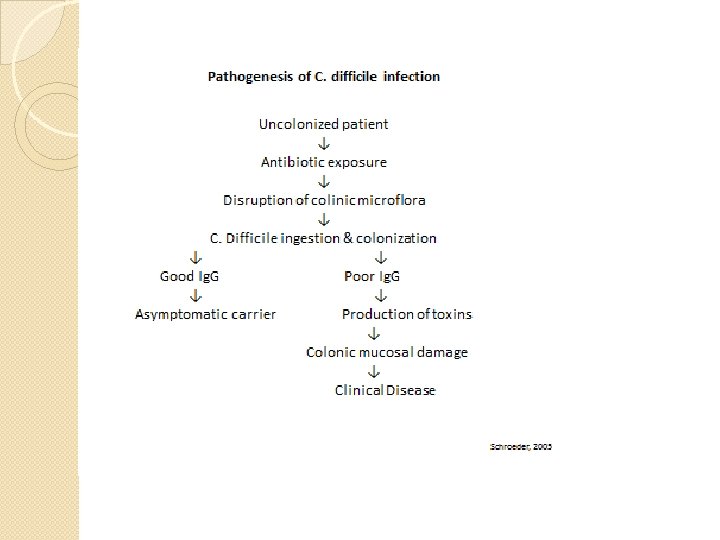
Clostridium difficile �Pseudomembranous colitis or antibiotic associated colitis �Capable of superinfecting the large intestine due to drug treatments �Enterotoxins
�Antibiotics – fluoroquinolones, cephalosporins, clindamycins, penicillins �Medications: �Proton pump inhibitor �Histamine-2 receptor blockers �Non-steroidal anti-inflammatories (except aspirin) �Laxatives �Narcotics �Antiperistaltic drugs �Advanced age ( ≥ 65 yrs. ) �Chemotherapy
� Medical/Surgical procedures � Gastrointestinal surgery � Enemas � Enteral tube feedings � Endoscopy � Underlying illness and its severity � Inflammatory bowel disease � Diabetes mellitus/Hyperthyroidism � Leukemia/Lymphoma � Liver/Renal failure � History of C. difficile associated diarrhea � Prolonged hospital stay/Nursing home resident
Treatment �Discontinue the offending agent �If unable: �Choose an antibiotic less frequently associated with antibiotic-associated diarrhea (aminoglycosides, sulfonamides, macrolides, vancomycin, tetracyclines) �Prescribe Metronidazole 500 mg PO TID throughout the needed course of antibiotic therapy and for 7 days after.
Vibrio cholerae �Heavy lost of fluid “rice-water stool” �Untreated cases can be fatal
VIRAL GASTROENTERITIS
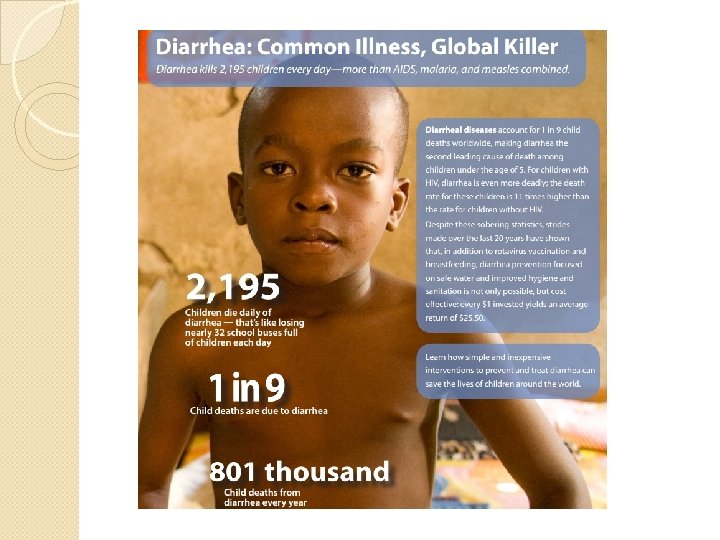

Background �Acute viral gastroenteritis is a common cause of morbidity and mortality worldwide. �Conservative estimates put diarrhea in the top 5 causes of deaths worldwide, with most occurring in young children in nonindustrialized countries. �In industrialized countries, diarrheal diseases are a significant cause for morbidity across all age groups.
�Viruses are responsible for a significant percentage of cases affecting patients of all ages. �Viral gastroenteritis ranges from a selflimited watery diarrheal illness (usually < 1 wk) associated with symptoms of nausea, vomiting, anorexia, malaise, or fever, �to severe dehydration resulting in hospitalization or even death.
The clinician encounters acute viral gastroenteritis in 3 settings. � The first is sporadic gastroenteritis in infants, which most frequently is caused by rotavirus. � The second is epidemic gastroenteritis, which occurs either in semiclosed communities (eg, families, institutions, ships, vacation spots) or as a result of classic food-borne or water-borne pathogens. Most of these infections are caused by caliciviruses. � The third is sporadic acute gastroenteritis of adults, which most likely is caused by caliciviruses, rotaviruses, astroviruses, or adenoviruses.
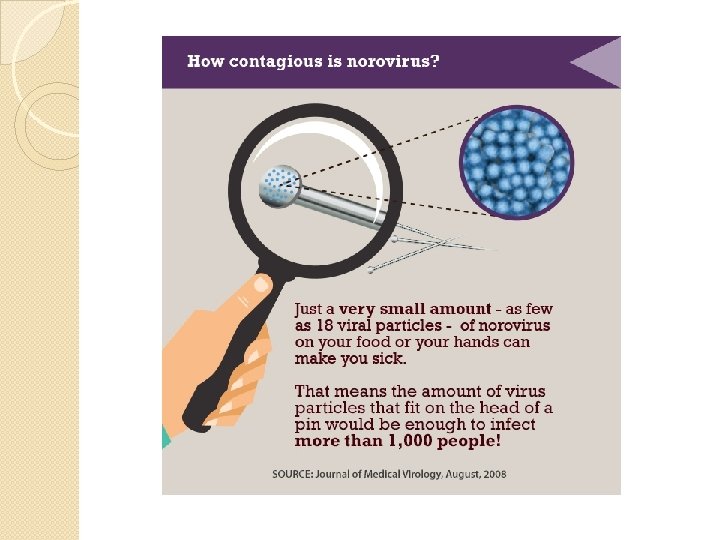
Norovirus �Noroviruses cause approximately 23 million cases of acute gastroenteritis each year and are the leading cause of outbreaks of gastroenteritis. �They are responsible for 68 -80% of all outbreaks in industrialized countries. �The genus Norovirus, formerly called the Norwalk-like virus, is a member of the family Caliciviridae. �Noroviruses are now recognized to be a common cause of gastroenteritis in new settings, including nursing homes and other health care settings, cruise ships, in other travelers, and in immunocompromised patients.
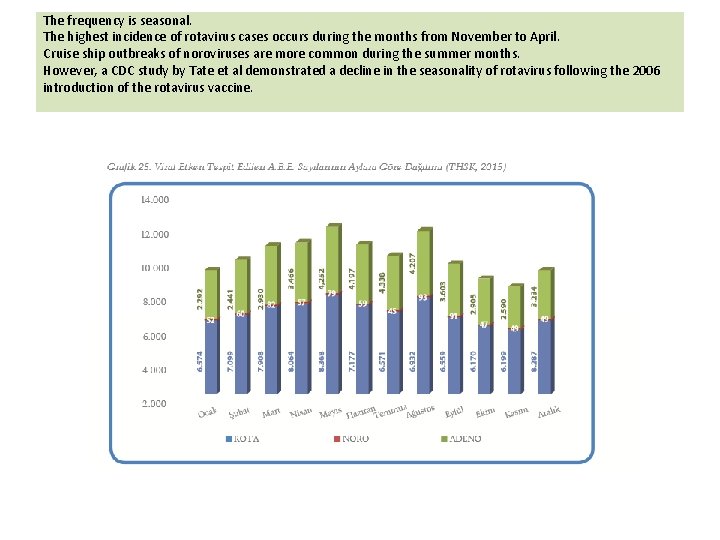
The frequency is seasonal. The highest incidence of rotavirus cases occurs during the months from November to April. Cruise ship outbreaks of noroviruses are more common during the summer months. However, a CDC study by Tate et al demonstrated a decline in the seasonality of rotavirus following the 2006 introduction of the rotavirus vaccine.
Rotavirus �Responsible for most morbidity and mortality from diarrhea �Babies lacking maternal antibodies are at risk �Unique morphological appearance
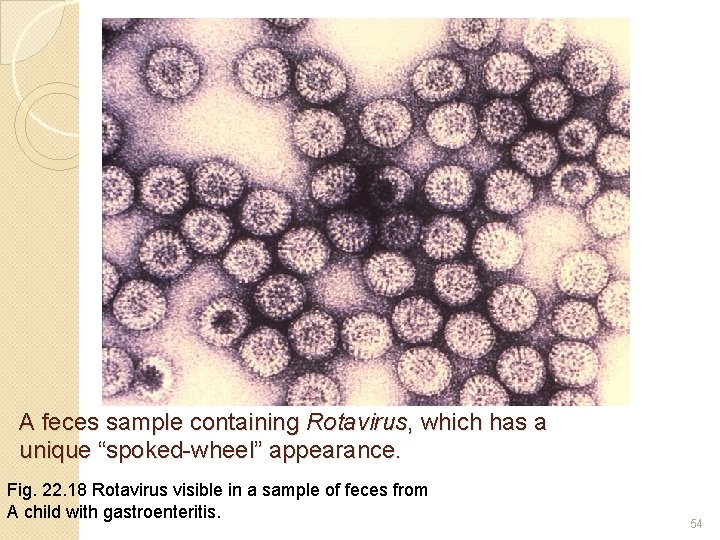
A feces sample containing Rotavirus, which has a unique “spoked-wheel” appearance. Fig. 22. 18 Rotavirus visible in a sample of feces from A child with gastroenteritis. 54
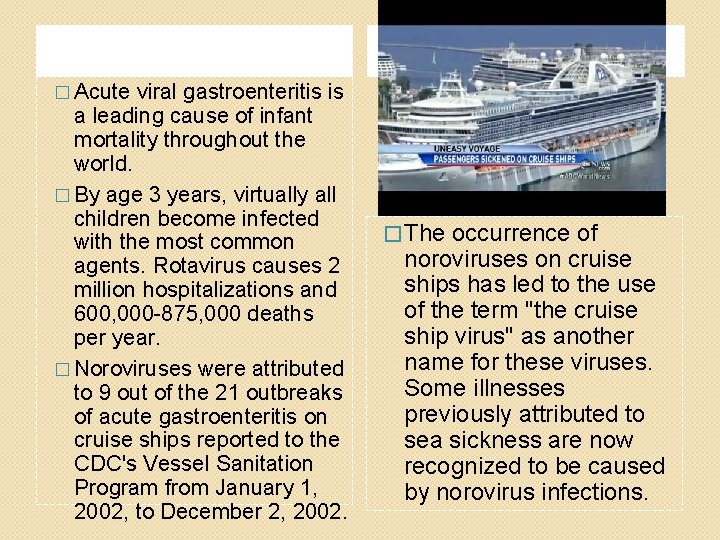
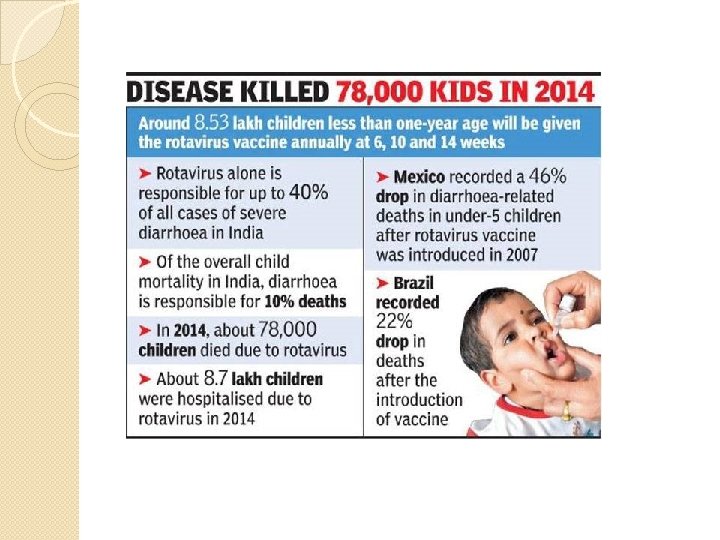
� Acute viral gastroenteritis is a leading cause of infant mortality throughout the world. � By age 3 years, virtually all children become infected with the most common agents. Rotavirus causes 2 million hospitalizations and 600, 000 -875, 000 deaths per year. � Noroviruses were attributed to 9 out of the 21 outbreaks of acute gastroenteritis on cruise ships reported to the CDC's Vessel Sanitation Program from January 1, 2002, to December 2, 2002. � The occurrence of noroviruses on cruise ships has led to the use of the term "the cruise ship virus" as another name for these viruses. Some illnesses previously attributed to sea sickness are now recognized to be caused by norovirus infections.
�Acute viral gastroenteritis occurs throughout life. Severe cases are seen in the very young and in the elderly. Etiology also varies with age. �In infants, most cases are due to rotavirus. �In adults, the most common cause is norovirus.
Acute diarrhea with vomiting �Food poisoning - toxin �Staphylococcus aureus �Bacillus cereus �Clostridium perfringens
Chronic diarrhea �Enteroaggregative (EAEC) E. coli �Cyclospora cayetanensis �Giardia lamblia �Entamoeba histolytica
MANAGING INFECTIOUS DIARRHEA �Initial rehidration �Perform thorough clinical and epidemiological evaluation �Perform selective fecal studies �Institute selective therapy for �Traveler’s diarrhea �Shigellosis � Campylobacter infection �Avoid administering antimotilty agents �Selectively administer available vaccines
�Treatment of specific etiology �Non-specific treatment �hydration �Absorptions (Kaopectate®) �Bismuth �Antiperistaltics/opiate derivatives �Fiber supplementation

�Thank you. .
sources �https: //www. cdc. gov/healthywater/pdf/ global/programs/globaldiarrhea 508 c. p df �http: //www. who. int/wer/2008/wer 8347. pdf �https: //www. cdc. gov/disasters/disease /diarrheaguidelines. html �https: //extranet. who. int/sree/Reports? op=vs&path=/WHO_HQ_Reports/G 36 /PROD/EXT/Foodborne. Disease. Burde
- Slides: 62