
Gases In the atmosphere Atoms and Molecules in

- Slides: 31
Gases… …In the atmosphere
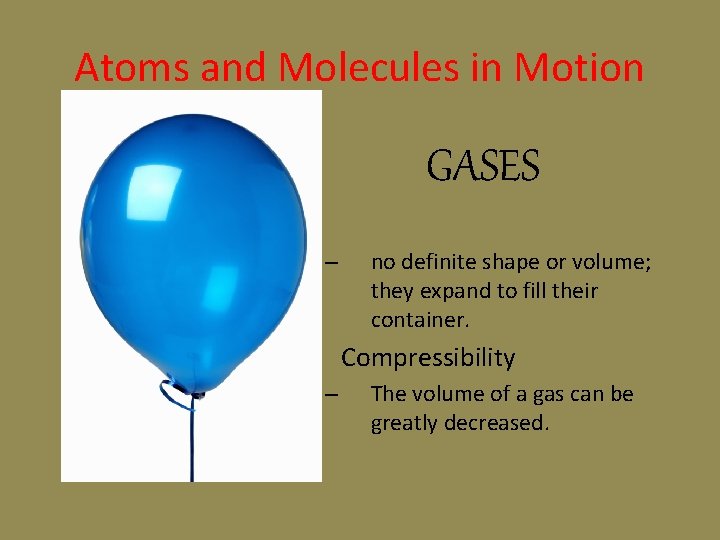
Atoms and Molecules in Motion GASES • – no definite shape or volume; they expand to fill their container. Compressibility • – The volume of a gas can be greatly decreased.
Properties Continued Due to the lack of attraction between particles, gases have the ability to flow like liquids. • Low Density – The density of a gas is about 1/1000 th that of a solid or liquid.
Ideal Gas • Ideal gas – an imaginary gas that perfectly fits the gas laws. • Based on assumptions of the kinetic molecular theory.
Assumptions of Kinetic Molecular Theory Ideal Gases: 1. Large numbers of tiny particles that are far apart. – Occupy 1000 times more space than a solid or liquid. – Most of its volume is empty space. 2. In continuous, rapid, random motion. 3. Particles have negligible volume.
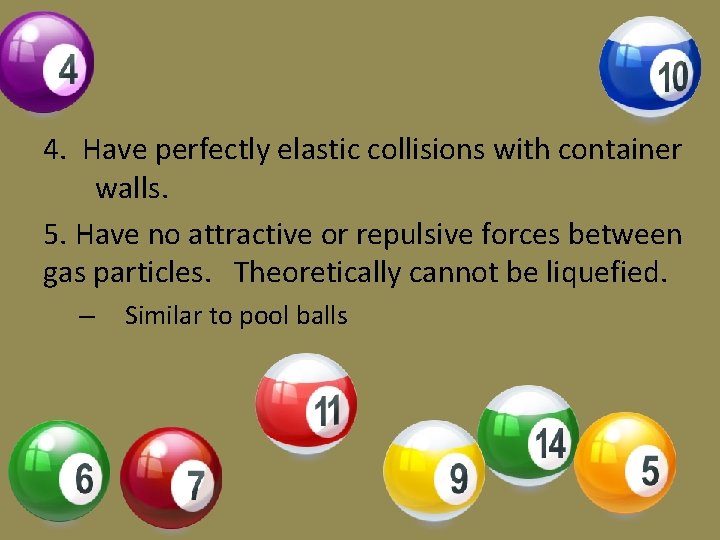
4. Have perfectly elastic collisions with container walls. 5. Have no attractive or repulsive forces between gas particles. Theoretically cannot be liquefied. – Similar to pool balls
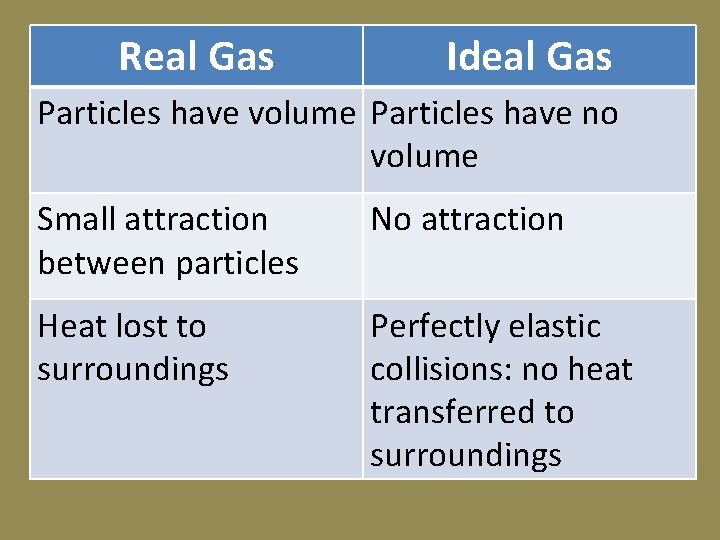
Kinetic Molecular Theory The kinetic molecular theory applies only to ideal gases which do not actually exist Real gases are most ideal if the pressure is low or temperature is high.
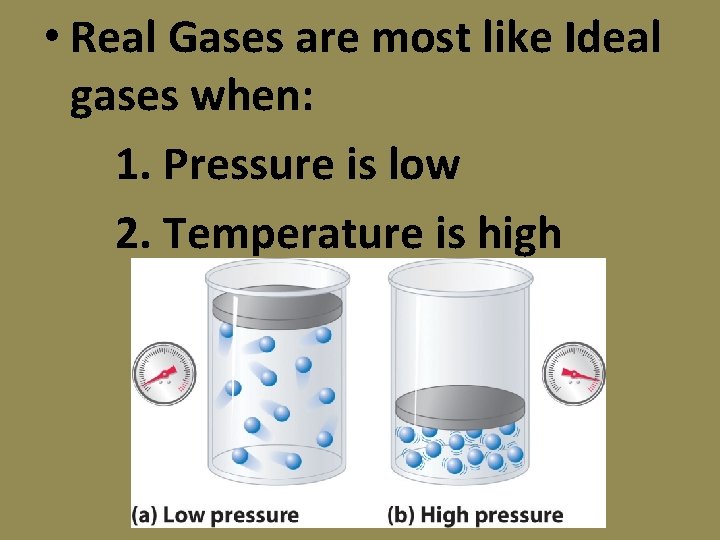
• Real Gases are most like Ideal gases when: 1. Pressure is low 2. Temperature is high
Real Gas Ideal Gas Particles have volume Particles have no volume Small attraction between particles No attraction Heat lost to surroundings Perfectly elastic collisions: no heat transferred to surroundings
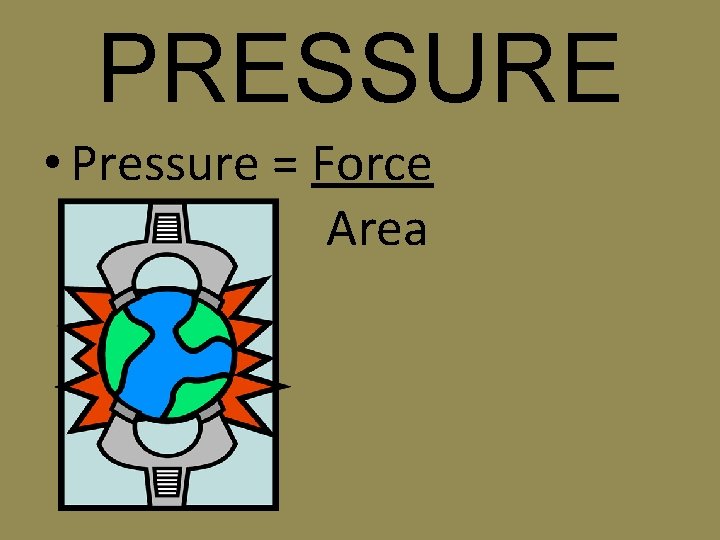
PRESSURE • Pressure = Force Area
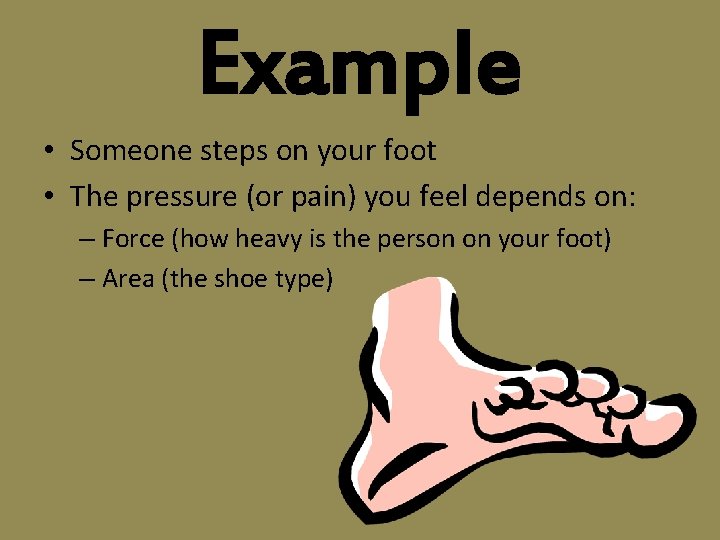
Example • Someone steps on your foot • The pressure (or pain) you feel depends on: – Force (how heavy is the person on your foot) – Area (the shoe type)
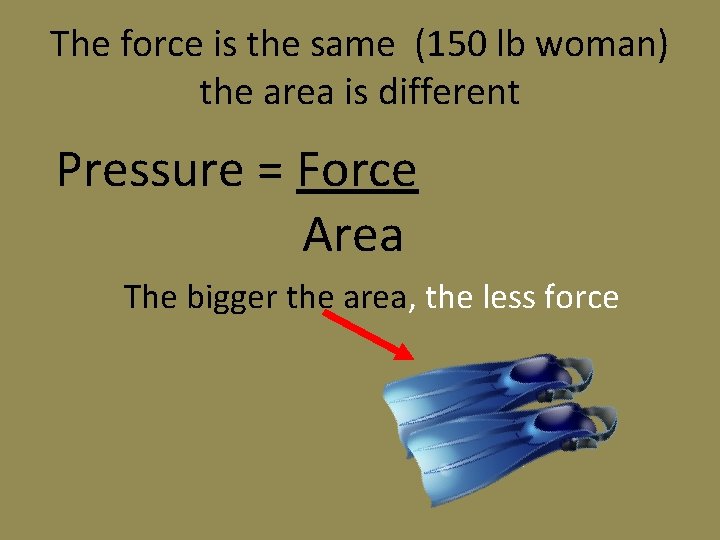
Which would you prefer? • 150 lb woman with high heels • 150 lb woman with roller blades • 150 lb woman with flippers
The force is the same (150 lb woman) the area is different Pressure = Force Area The bigger the area, the less force
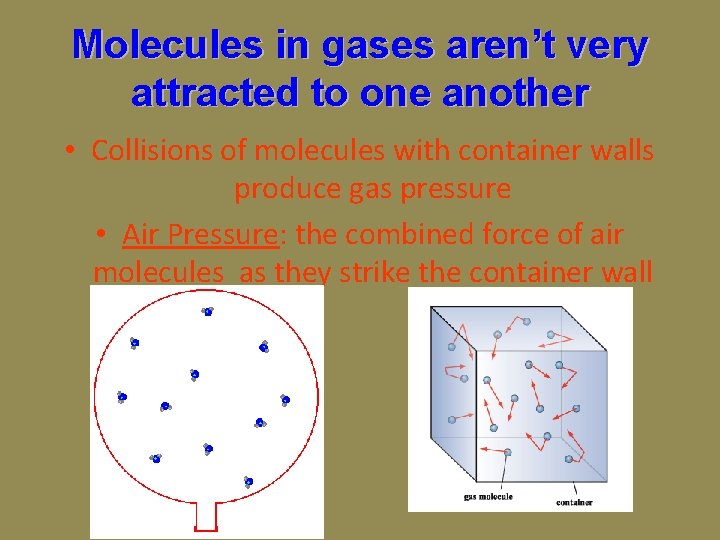
Molecules in gases aren’t very attracted to one another • Collisions of molecules with container walls produce gas pressure • Air Pressure: the combined force of air molecules as they strike the container wall
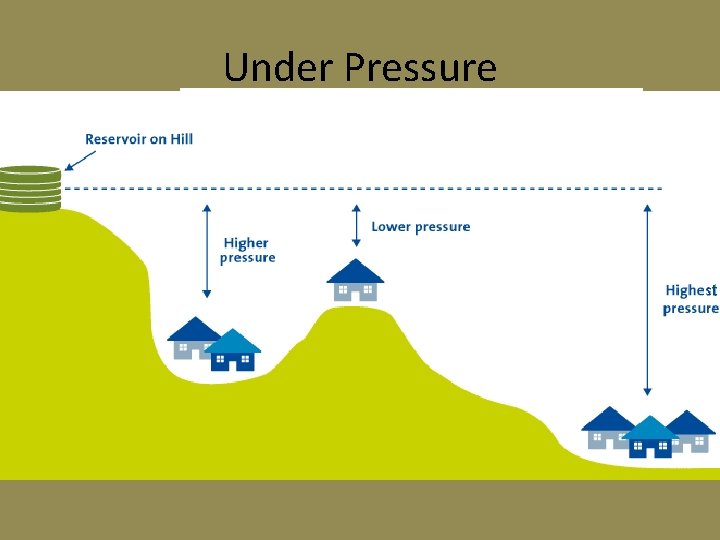
Under Pressure
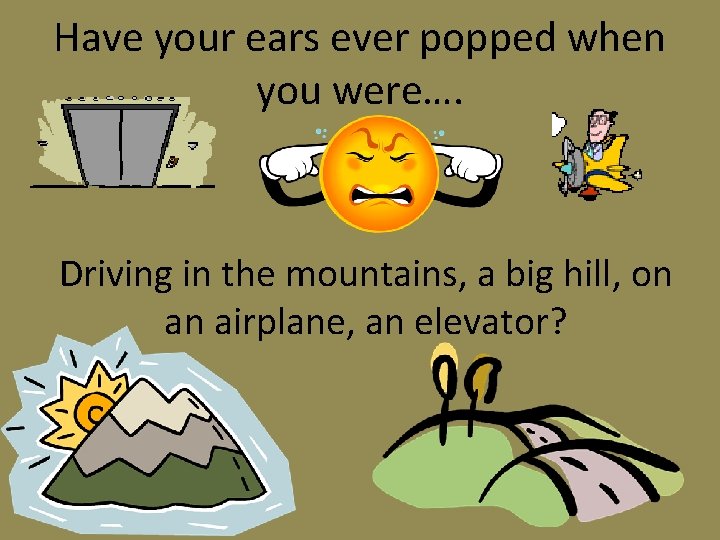
Have your ears ever popped when you were…. Driving in the mountains, a big hill, on an airplane, an elevator?
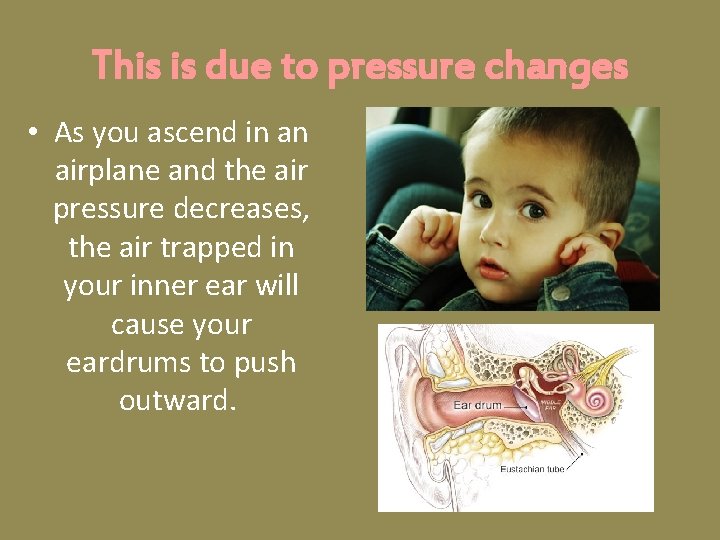
This is due to pressure changes • As you ascend in an airplane and the air pressure decreases, the air trapped in your inner ear will cause your eardrums to push outward.
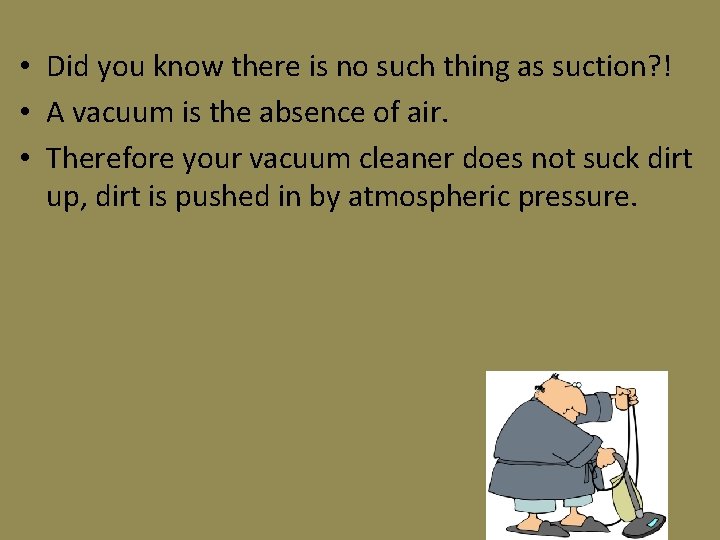
• Did you know there is no such thing as suction? ! • A vacuum is the absence of air. • Therefore your vacuum cleaner does not suck dirt up, dirt is pushed in by atmospheric pressure.
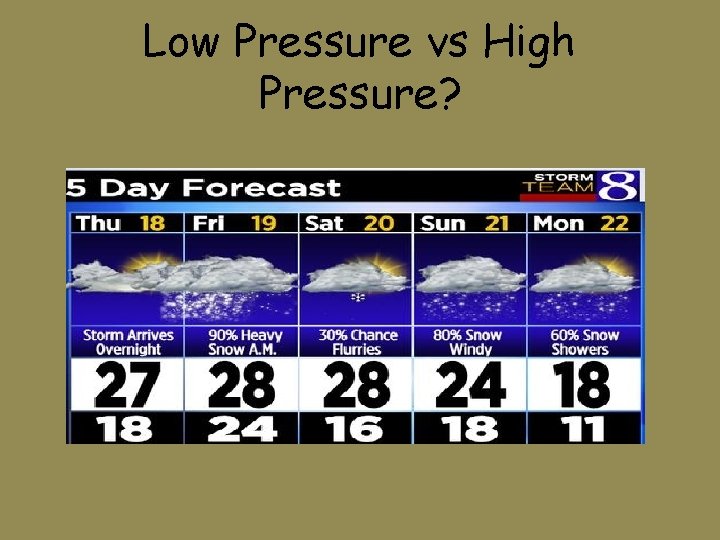
Low Pressure vs High Pressure?
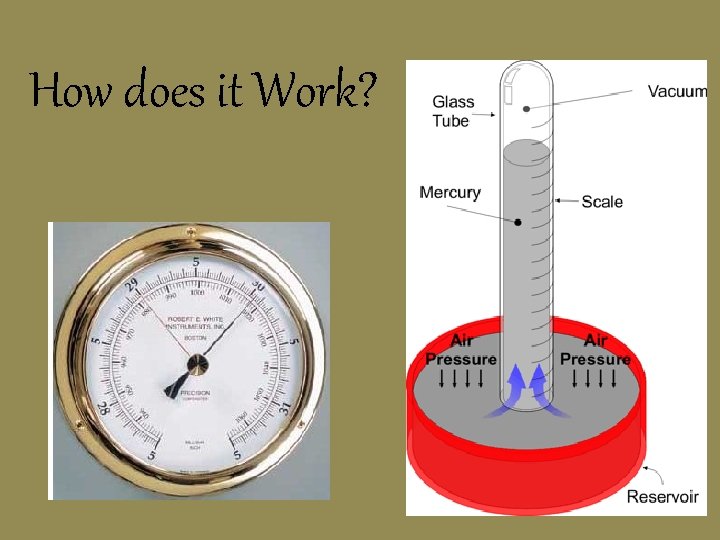
Measuring Air Pressure • Barometer: measures air pressure in millimeters of mercury (mm Hg): English is inches of Hg
How does it Work?
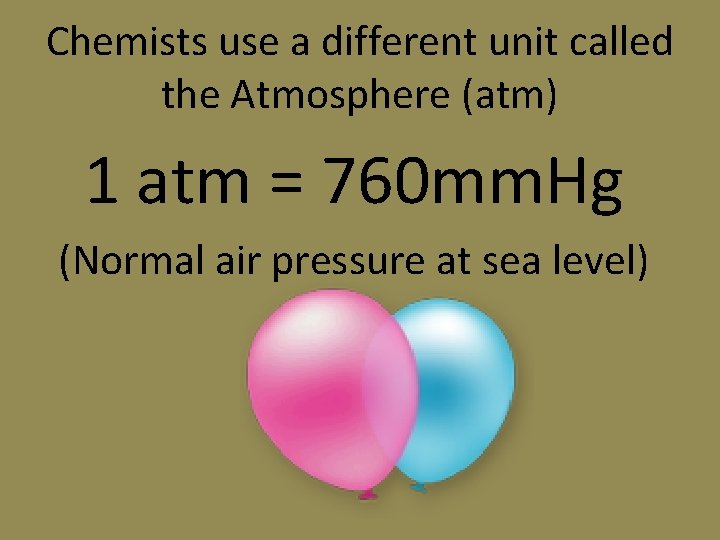
Chemists use a different unit called the Atmosphere (atm) 1 atm = 760 mm. Hg (Normal air pressure at sea level)
Other Units of Pressure • PSI-Pounds per square inch (bikes/car tires)
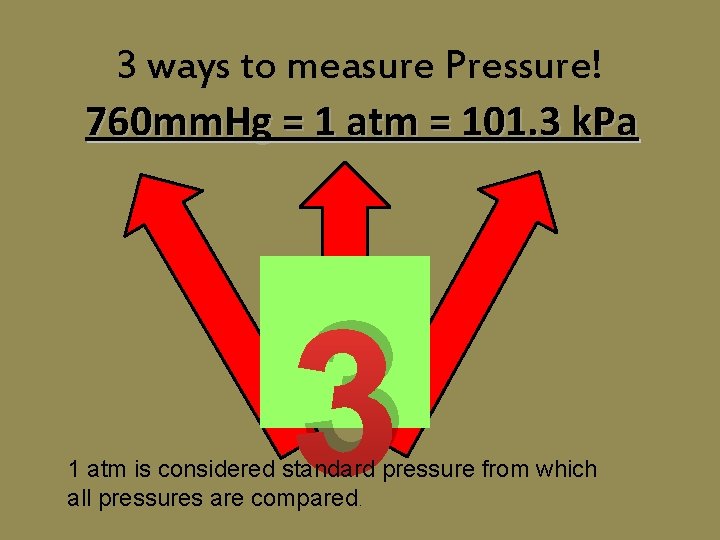
3 ways to measure Pressure! 760 mm. Hg = 1 atm = 101. 3 k. Pa 3 1 atm is considered standard pressure from which all pressures are compared.
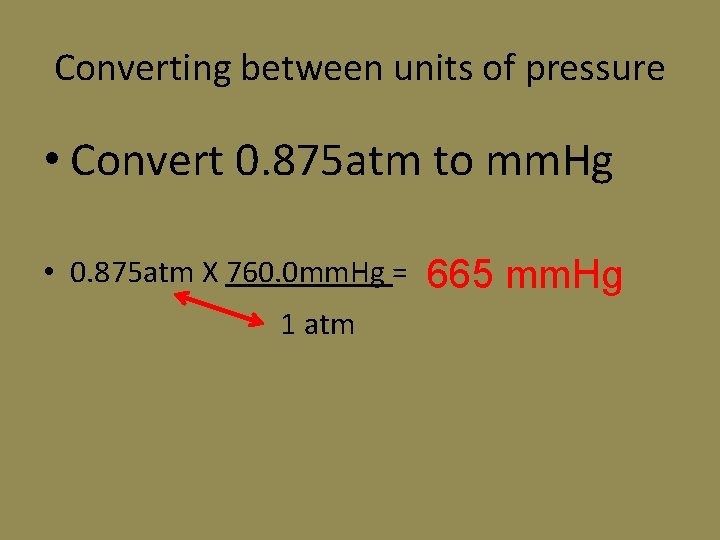
Converting between units of pressure • Convert 0. 875 atm to mm. Hg – We know we have 0. 875 mm. Hg – We use the ratio - there are 760 mm. Hg in one atm
Converting between units of pressure • Convert 0. 875 atm to mm. Hg • 0. 875 atm X 760. 0 mm. Hg = 1 atm 665 mm. Hg
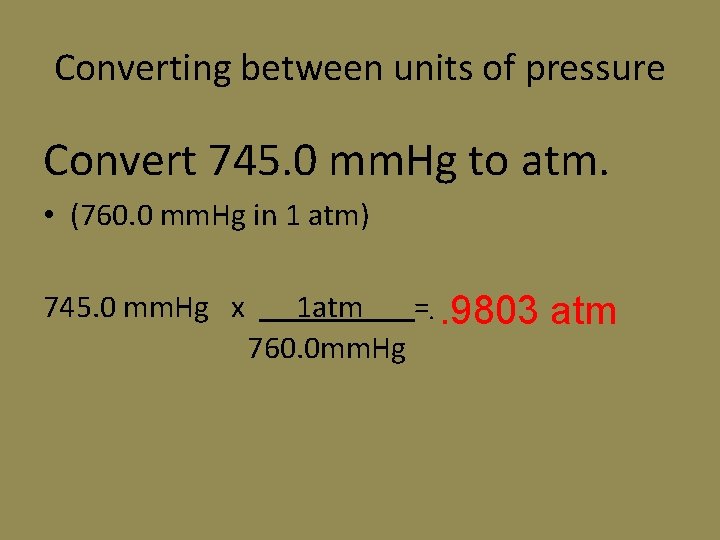
Converting between units of pressure Convert 745. 0 mm. Hg to atm. • (760. 0 mm. Hg in 1 atm) 745. 0 mm. Hg x 1 atm =. 9803 760. 0 mm. Hg. atm
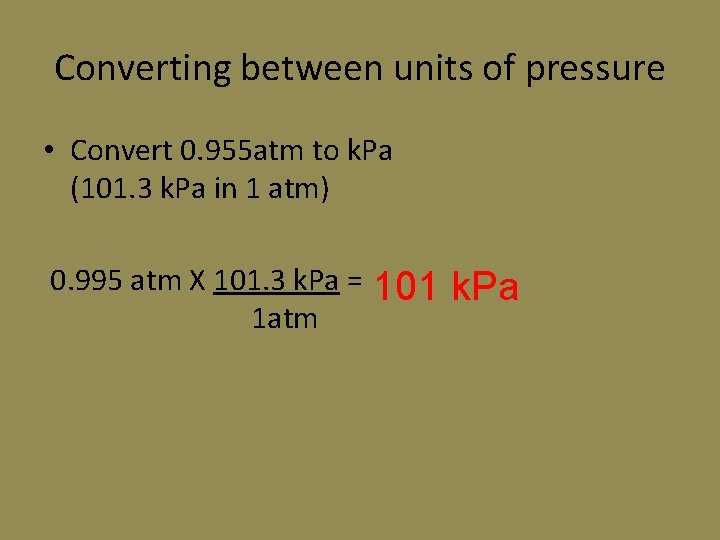
Converting between units of pressure • Convert 0. 955 atm to k. Pa (101. 3 k. Pa in 1 atm) 0. 995 atm X 101. 3 k. Pa = 1 atm 101 k. Pa
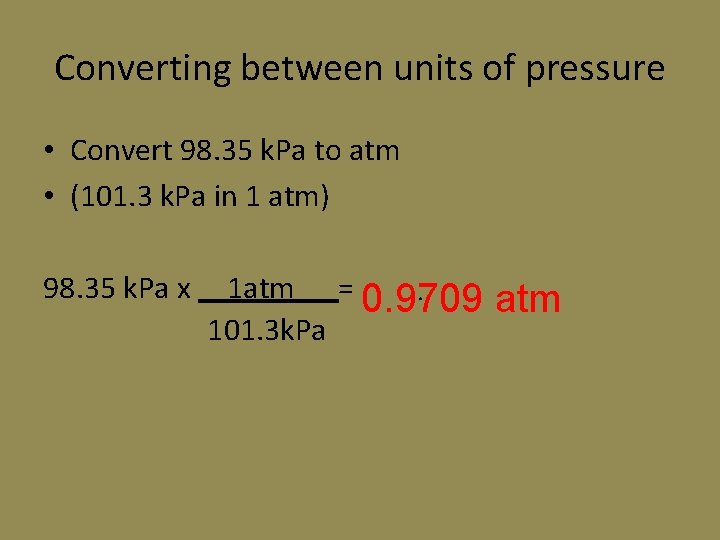
Converting between units of pressure • Convert 98. 35 k. Pa to atm • (101. 3 k. Pa in 1 atm) 98. 35 k. Pa x 1 atm = 0. 9709 101. 3 k. Pa. atm
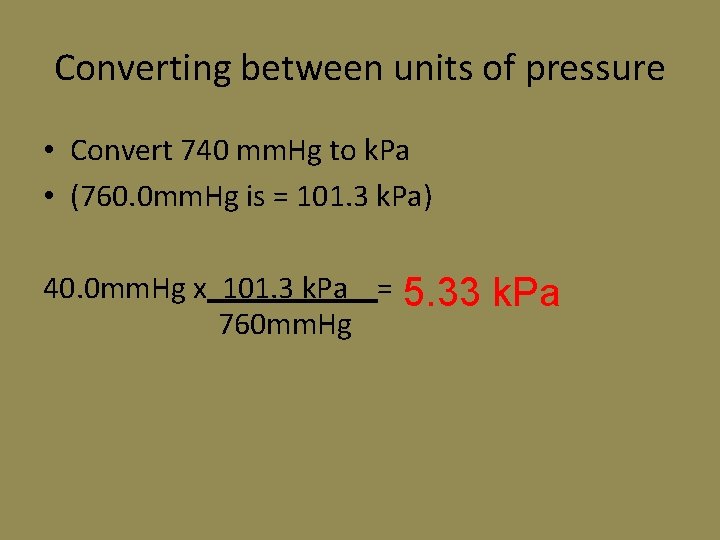
Converting between units of pressure • Convert 740 mm. Hg to k. Pa • (760. 0 mm. Hg is = 101. 3 k. Pa) 40. 0 mm. Hg x 101. 3 k. Pa = 760 mm. Hg 5. 33 k. Pa
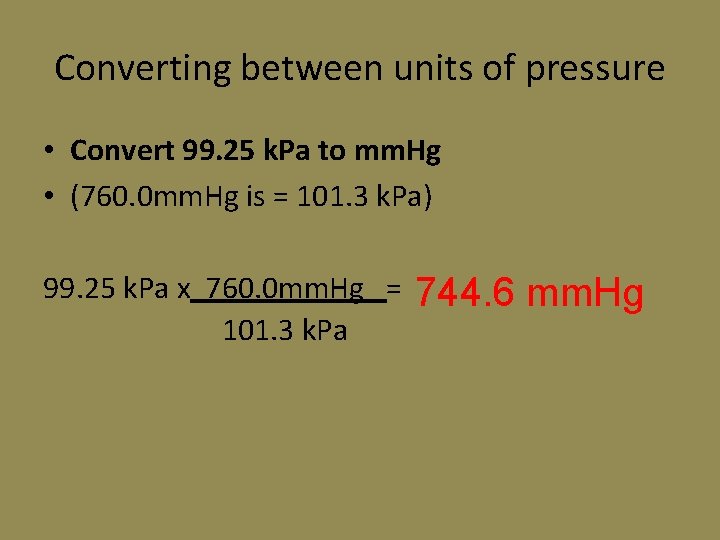
Converting between units of pressure • Convert 99. 25 k. Pa to mm. Hg • (760. 0 mm. Hg is = 101. 3 k. Pa) 99. 25 k. Pa x 760. 0 mm. Hg = 101. 3 k. Pa 744. 6 mm. Hg