
Gases Gases Intro Video Kinetic Theory n states


- Slides: 55
Gases
Gases – Intro Video
Kinetic Theory n states that particles in all forms of matter are in continuous motion
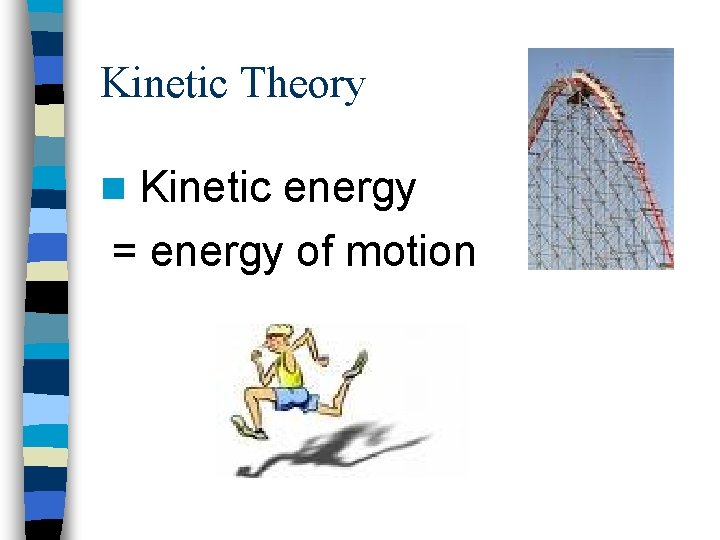
Kinetic Theory Kinetic energy = energy of motion n
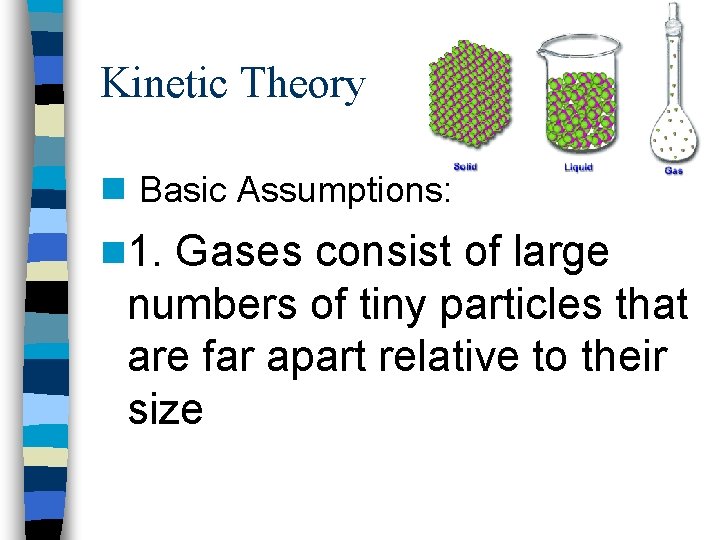
Kinetic Theory n Basic Assumptions: n 1. Gases consist of large numbers of tiny particles that are far apart relative to their size
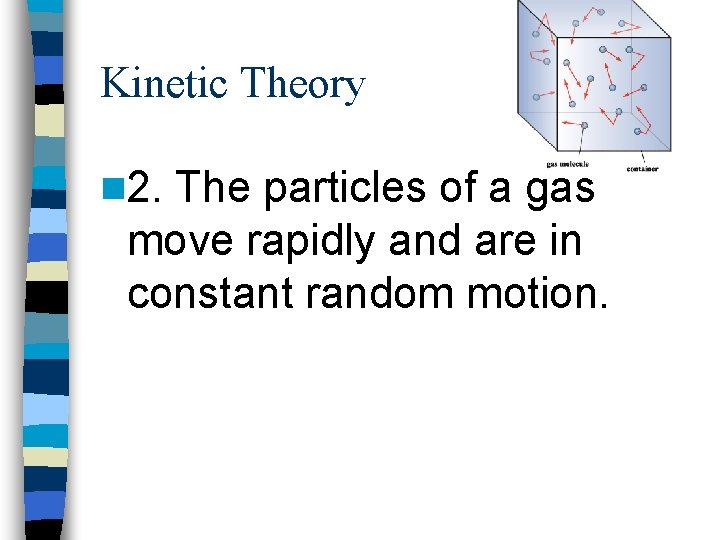
Kinetic Theory n 2. The particles of a gas move rapidly and are in constant random motion.
Kinetic Theory n 3. All collisions are elastic (kinetic energy is constant)
Kinetic Theory n 4. There are no forces of attraction or repulsion between gas particles
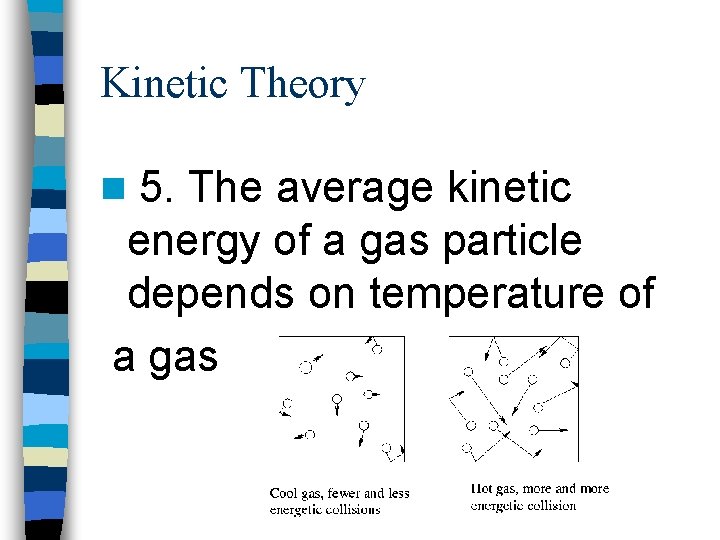
Kinetic Theory 5. The average kinetic energy of a gas particle depends on temperature of a gas n
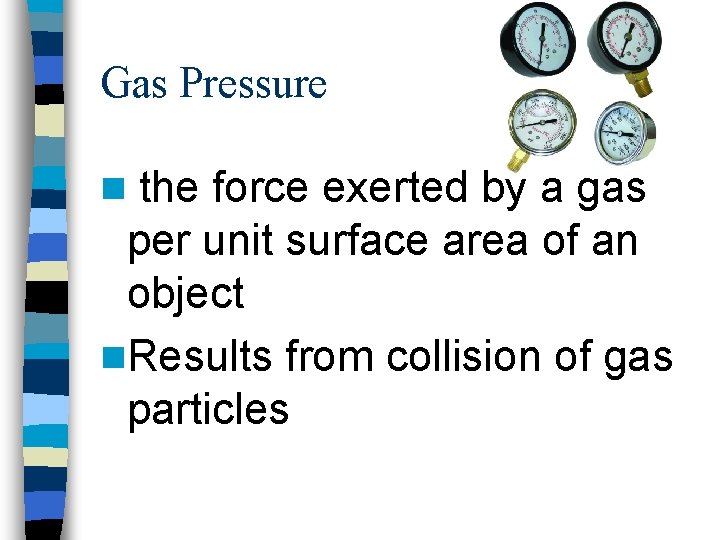
Gas Pressure the force exerted by a gas per unit surface area of an object n. Results from collision of gas particles n
Vacuum n Empty Space with no particles and no pressure
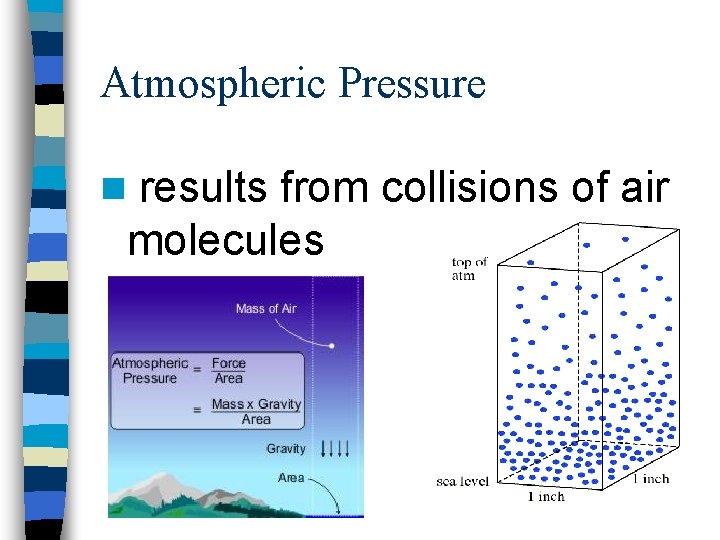
Atmospheric Pressure n results from collisions of air molecules
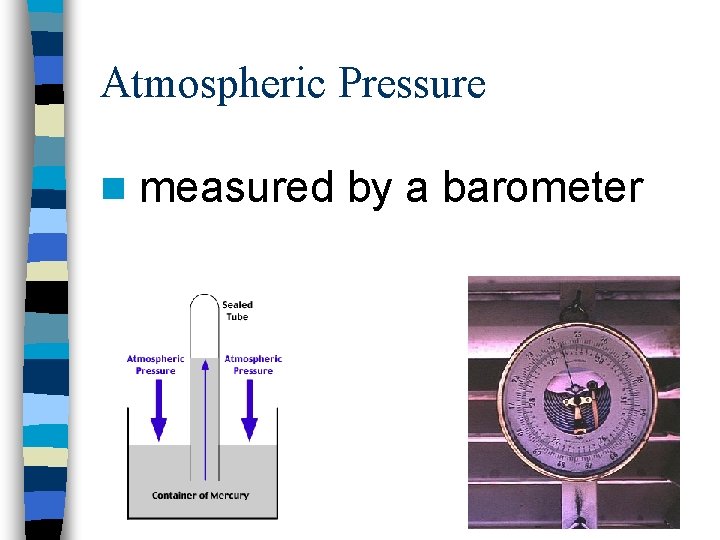
Atmospheric Pressure n measured by a barometer
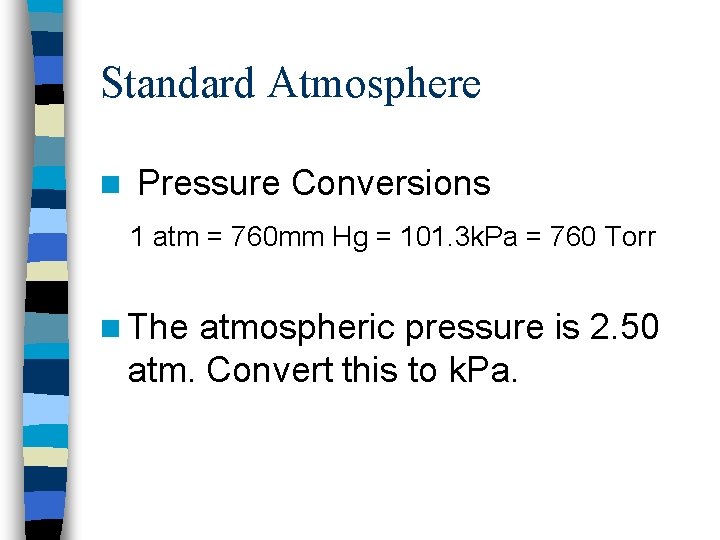
Standard Atmosphere n Pressure Conversions 1 atm = 760 mm Hg = 101. 3 k. Pa = 760 Torr n The atmospheric pressure is 2. 50 atm. Convert this to k. Pa.
STP n Standard Temperature and Pressure
Kinetic E and Kelvin T n when an object is heated, KE is increased, which results in an increase in T
Kinetic E and Kelvin T n Particles at absolute zero (0 Kelvin) have no kinetic energy
Kinetic E and Kelvin T average KE is directly proportional to Kelvin T n. Kelvin = o. C + 273 n
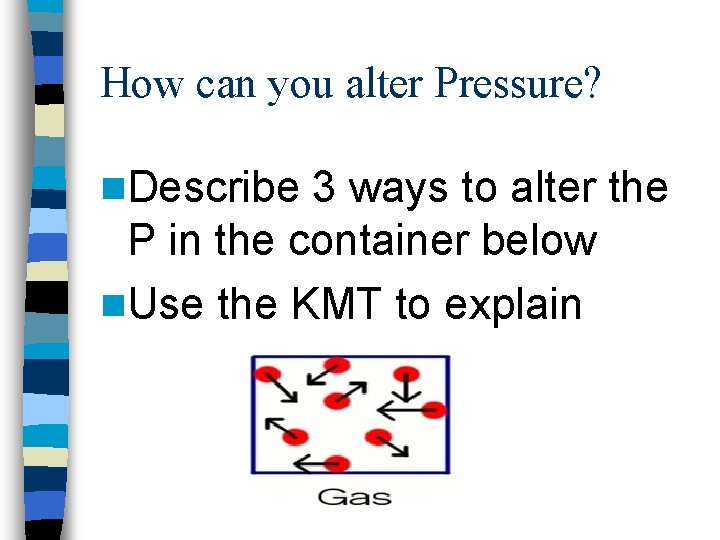
How can you alter Pressure? n. Describe 3 ways to alter the P in the container below n. Use the KMT to explain
3 ways to alter gas pressure 1. Change the size of the container n 2. Alter the temperature n 3. Adding or removing particles n
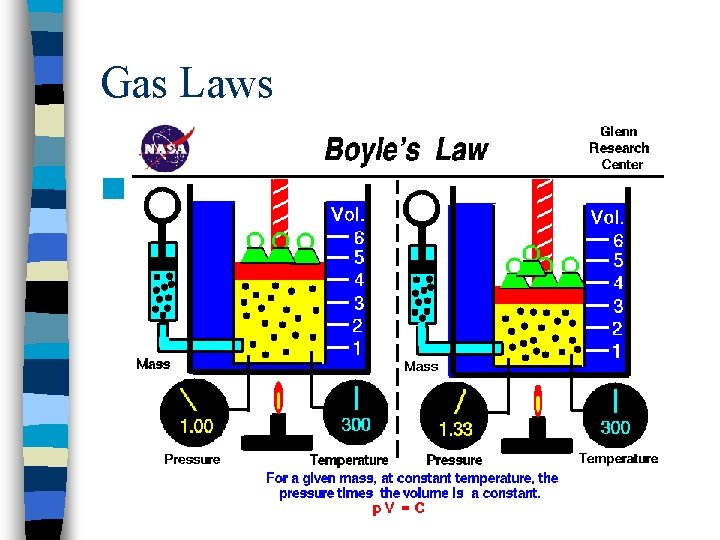
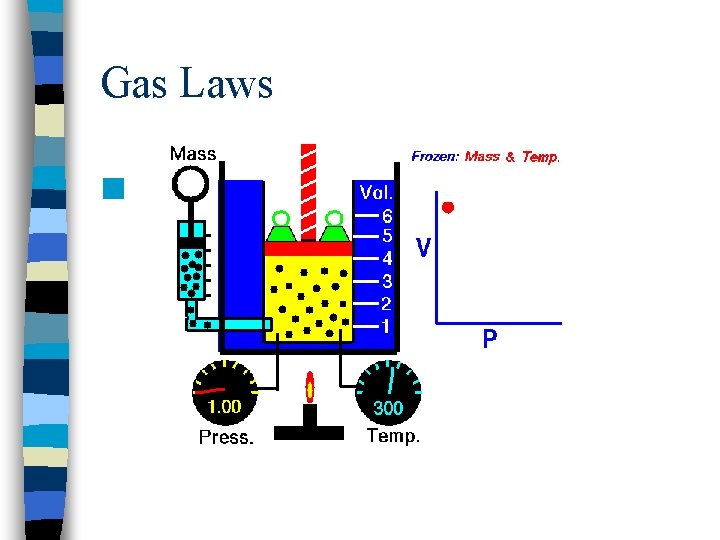
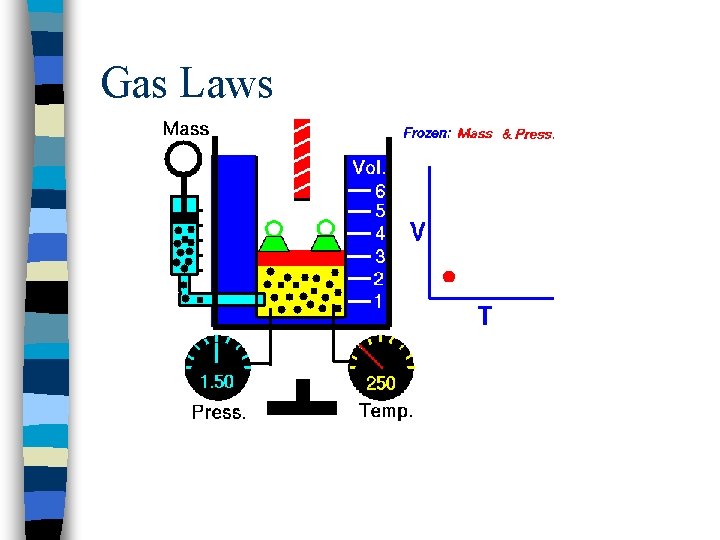
Gas Laws Boyle’s Law states that for a given mass at constant T, the volume of a gas varies inversely with pressure n
Gas Laws n
Gas Laws n
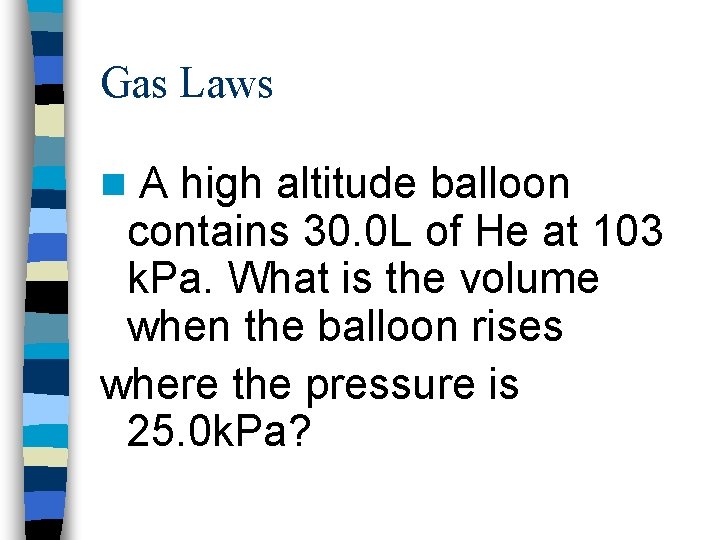
Gas Laws A high altitude balloon contains 30. 0 L of He at 103 k. Pa. What is the volume when the balloon rises where the pressure is 25. 0 k. Pa? n
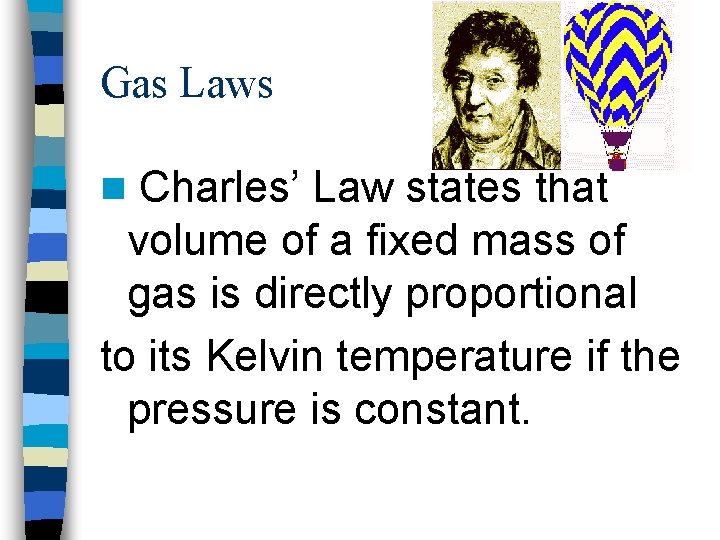
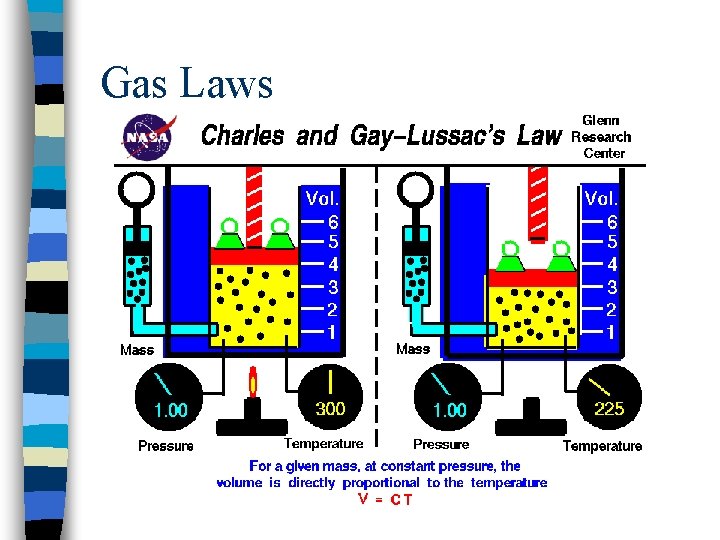
Gas Laws Charles’ Law states that volume of a fixed mass of gas is directly proportional to its Kelvin temperature if the pressure is constant. n
Gas Laws
Gas Laws
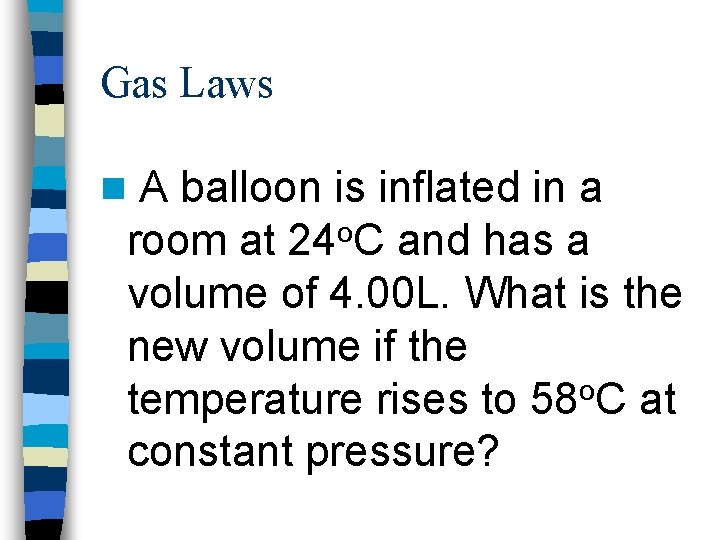
Gas Laws n A balloon is inflated in a room at 24 o. C and has a volume of 4. 00 L. What is the new volume if the temperature rises to 58 o. C at constant pressure?
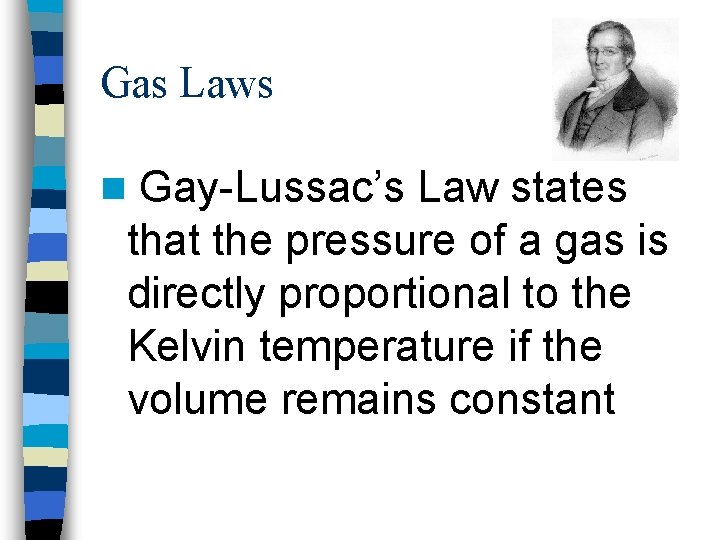
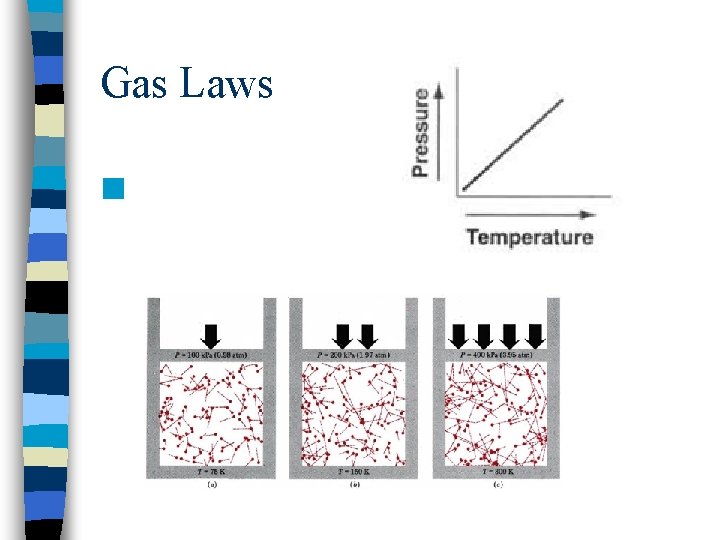
Gas Laws n Gay-Lussac’s Law states that the pressure of a gas is directly proportional to the Kelvin temperature if the volume remains constant
Gas Laws n
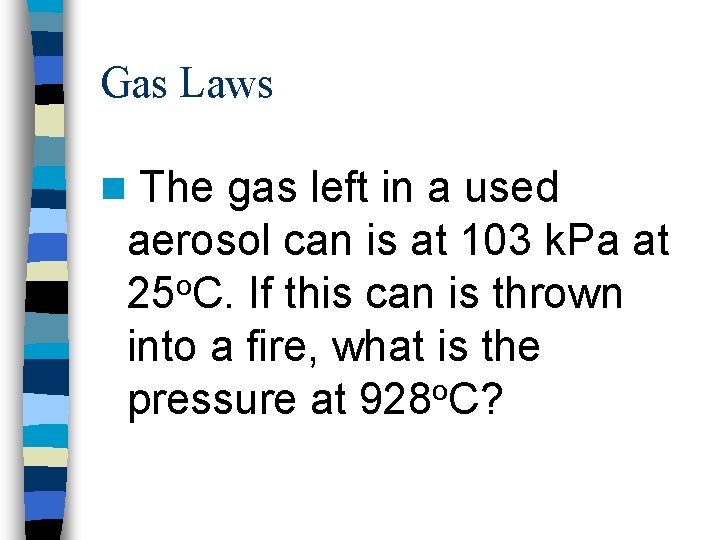
Gas Laws n The gas left in a used aerosol can is at 103 k. Pa at 25 o. C. If this can is thrown into a fire, what is the pressure at 928 o. C?
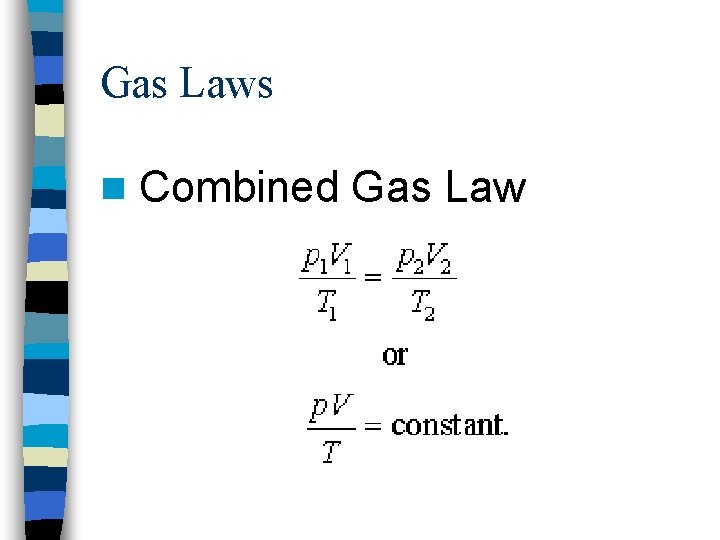
Gas Laws n Combined Gas Law
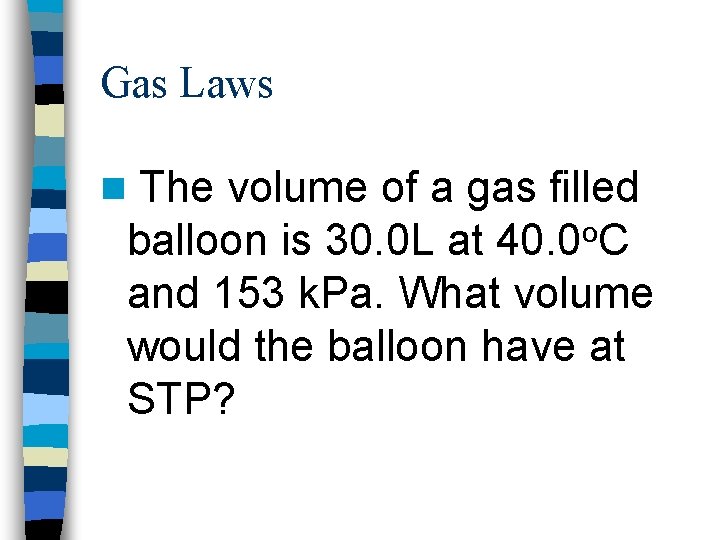
Gas Laws n The volume of a gas filled balloon is 30. 0 L at 40. 0 o. C and 153 k. Pa. What volume would the balloon have at STP?
Ideal Gas and Kinetic Theory a truly ideal gas conforms to gas laws at all conditions and conforms to kinetic theory n
Ideal Gas and Kinetic Theory n Real gases do have volume and forces of attraction
Ideal Gas and Kinetic Theory At high temperature and low pressures, real gases behave like ideal gases n. In our problems we assume we have ideal gases n
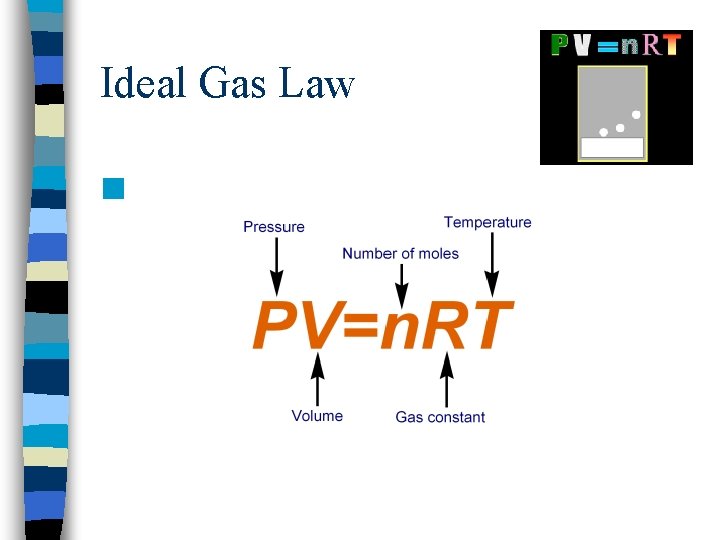
Ideal Gas Law n the number of moles of a gas are directly related to the number of particles in a gas, and directly proportional to the volume of a gas (proposed by Clapeyron)
Ideal Gas Law n
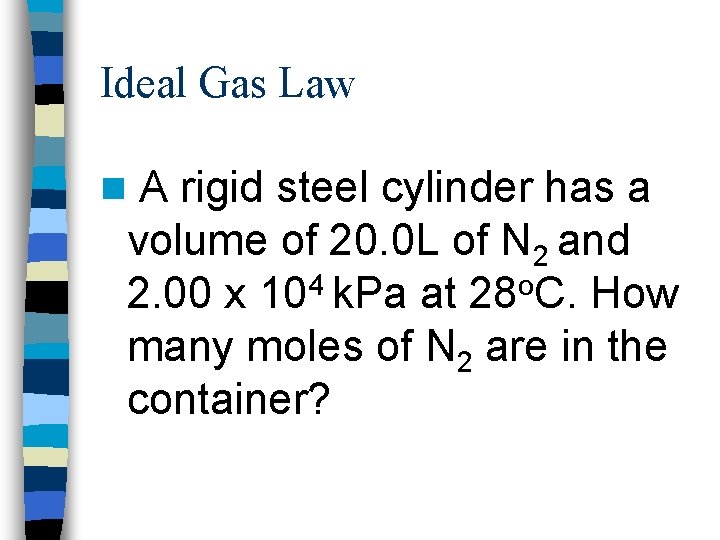
Ideal Gas Law n A rigid steel cylinder has a volume of 20. 0 L of N 2 and 2. 00 x 104 k. Pa at 28 o. C. How many moles of N 2 are in the container?
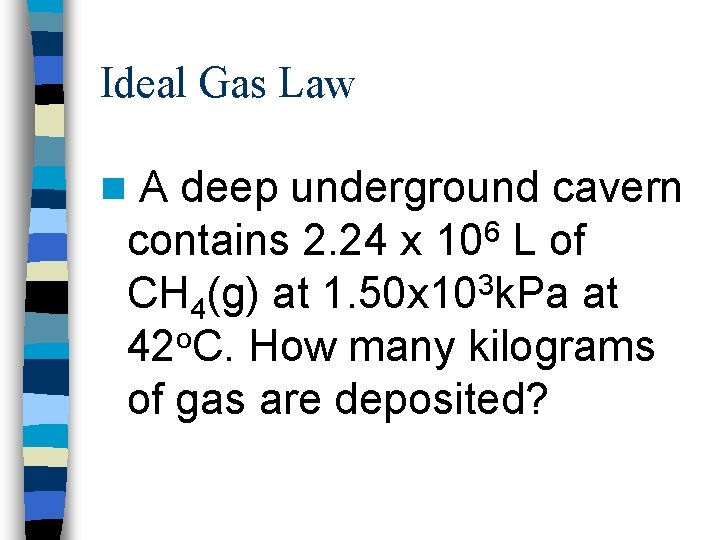
Ideal Gas Law n A deep underground cavern contains 2. 24 x 106 L of CH 4(g) at 1. 50 x 103 k. Pa at o 42 C. How many kilograms of gas are deposited?
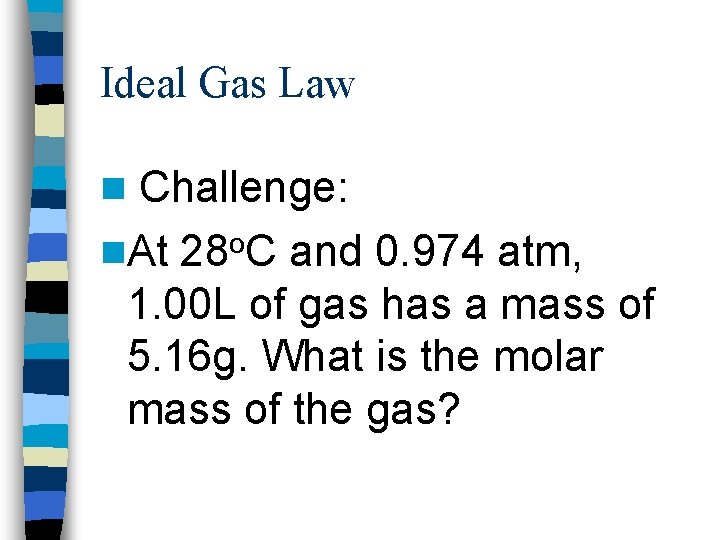
Ideal Gas Law Challenge: n. At 28 o. C and 0. 974 atm, 1. 00 L of gas has a mass of 5. 16 g. What is the molar mass of the gas? n
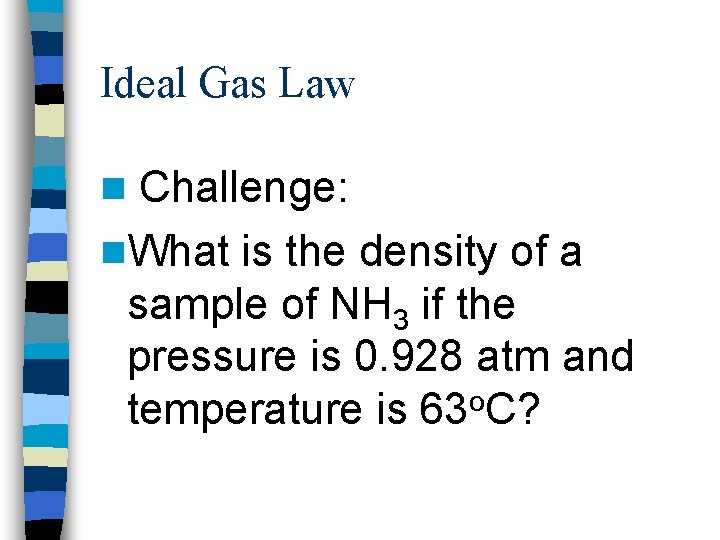
Ideal Gas Law Challenge: n. What is the density of a sample of NH 3 if the pressure is 0. 928 atm and o temperature is 63 C? n
Ideal Gas Law Challenge: n. What is the density of a Argon gas at a pressure of 551 Torr and is 25 o. C? n
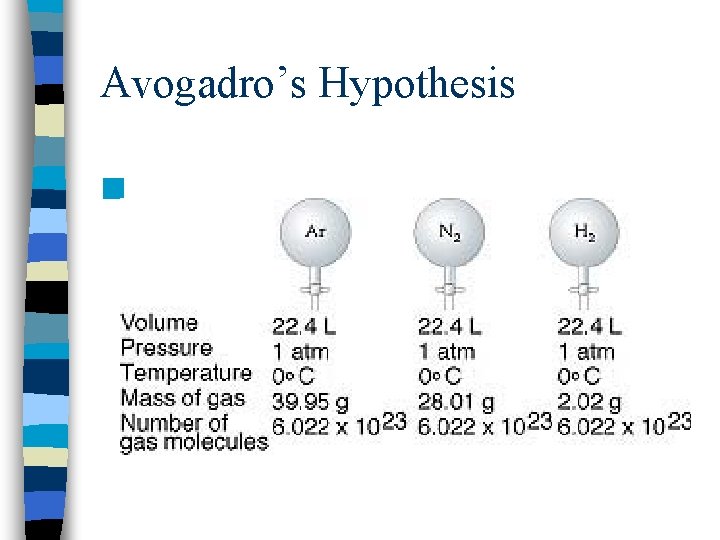
Avogadro’s Hypothesis states equal volumes of gases at the same T and P contain equal numbers of particles n 22. 4 L = 1 mol at STP n
Avogadro’s Hypothesis n
Avogadro’s Hypothesis n Determine the volume occupied by 0. 202 mole H 2 gas at STP.
Avogadro’s Hypothesis n Determine the volume occupied by 14. 0 g nitrogen gas at STP.
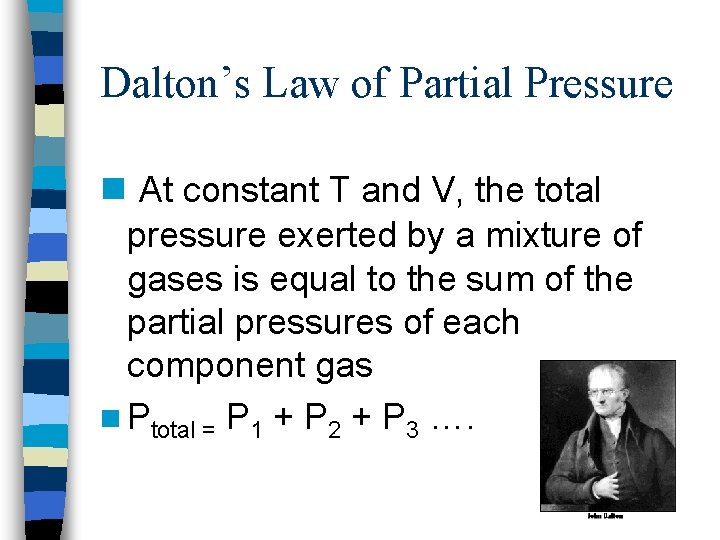
Dalton’s Law of Partial Pressure n At constant T and V, the total pressure exerted by a mixture of gases is equal to the sum of the partial pressures of each component gas n Ptotal = P 1 + P 2 + P 3 ….
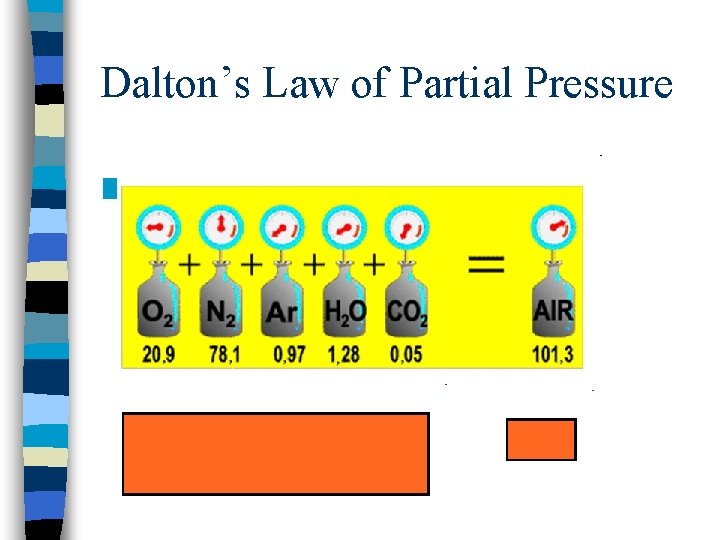
Dalton’s Law of Partial Pressure n
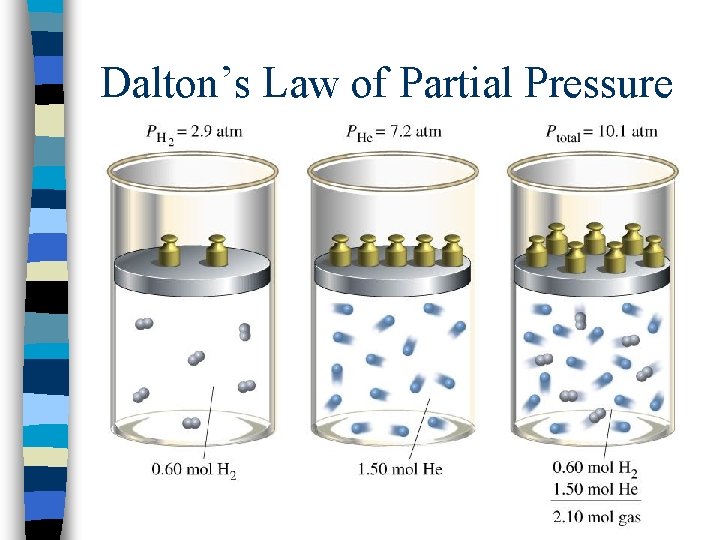
Dalton’s Law of Partial Pressure n
Graham’s Law of Effusion n. Diffusion = gradual mixing of 2 gases due to their spontaneous, random motion
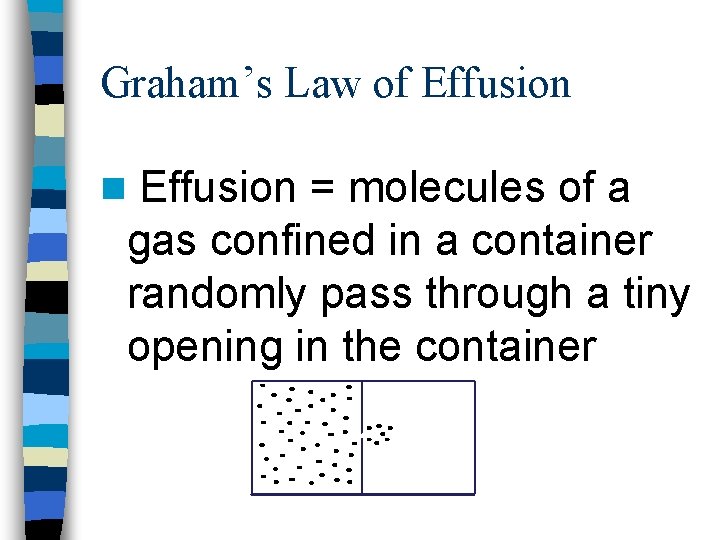
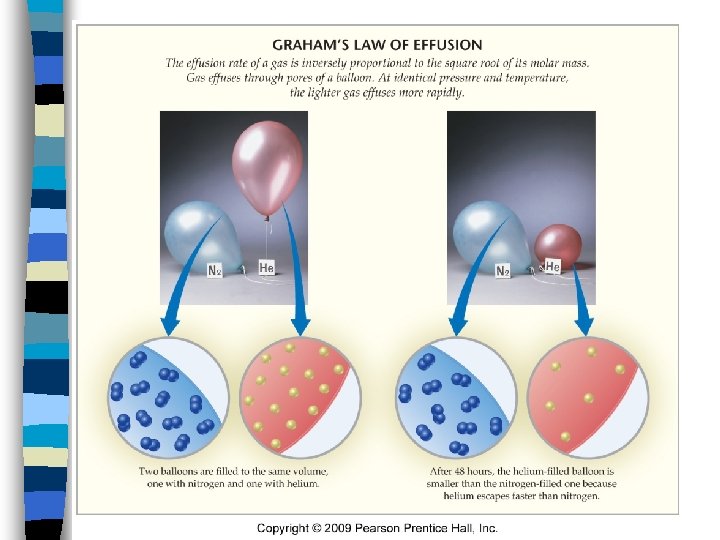
Graham’s Law of Effusion n Effusion = molecules of a gas confined in a container randomly pass through a tiny opening in the container
Graham’s Law of Effusion nlighter molecules move faster than heavier molecules at the same T
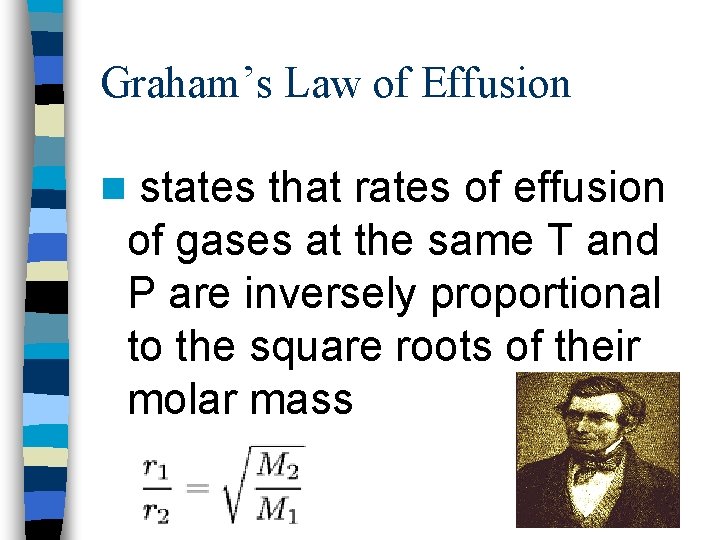
Graham’s Law of Effusion n states that rates of effusion of gases at the same T and P are inversely proportional to the square roots of their molar mass
Graham’s Law of Effusion n