
Gases Dr Ron Rusay TED Gas Properties https





- Slides: 32
Gases Dr. Ron Rusay TED: Gas Properties https: //www. youtube. com/watc? v=EHxd. Vtyg. P 1 g TED: Gas Laws https: //www. youtube. com/watch? v=BY 9 VGS 2 e. Xas
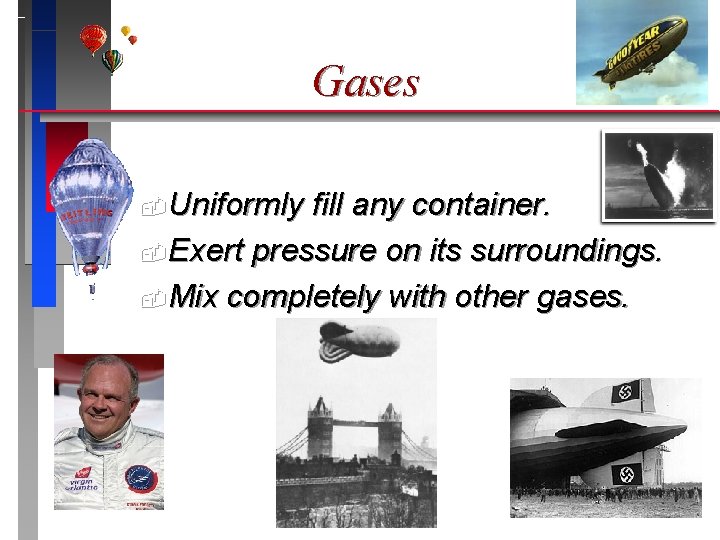
Gases Uniformly fill any container. Exert pressure on its surroundings. Mix completely with other gases.
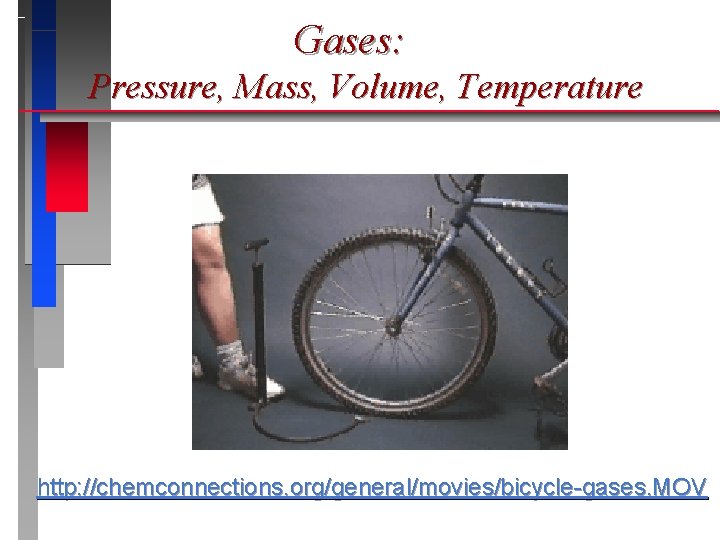
Gases: Pressure, Mass, Volume, Temperature http: //chemconnections. org/general/movies/bicycle-gases. MOV
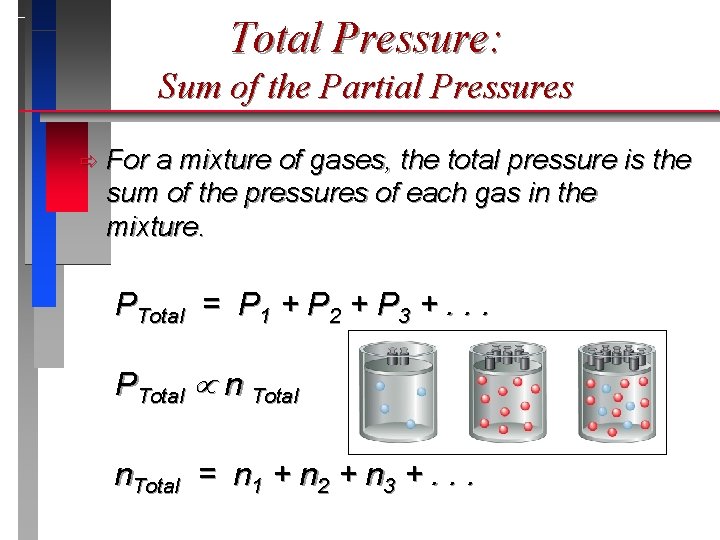
Total Pressure: Sum of the Partial Pressures ð For a mixture of gases, the total pressure is the sum of the pressures of each gas in the mixture. PTotal = P 1 + P 2 + P 3 +. . . PTotal n Total n. Total = n 1 + n 2 + n 3 +. . .
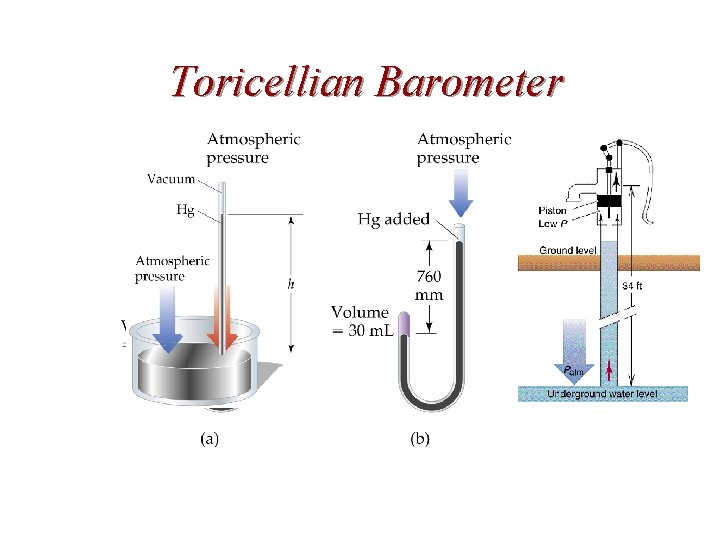
Toricellian Barometer
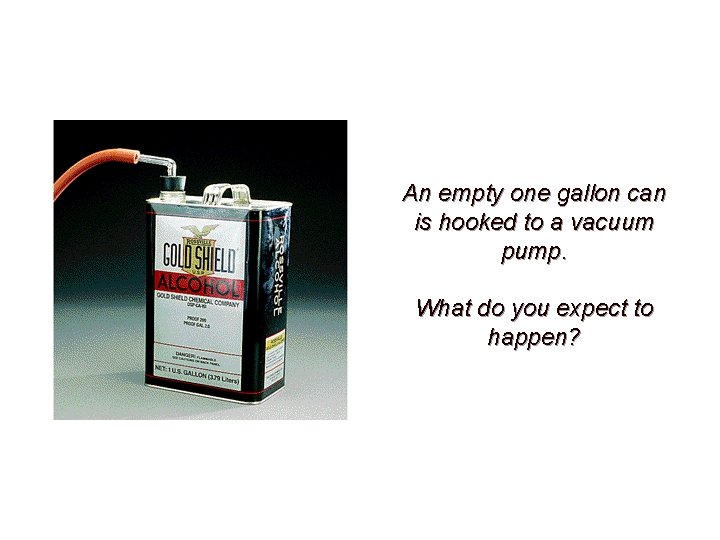
An empty one gallon can is hooked to a vacuum pump. What do you expect to happen?
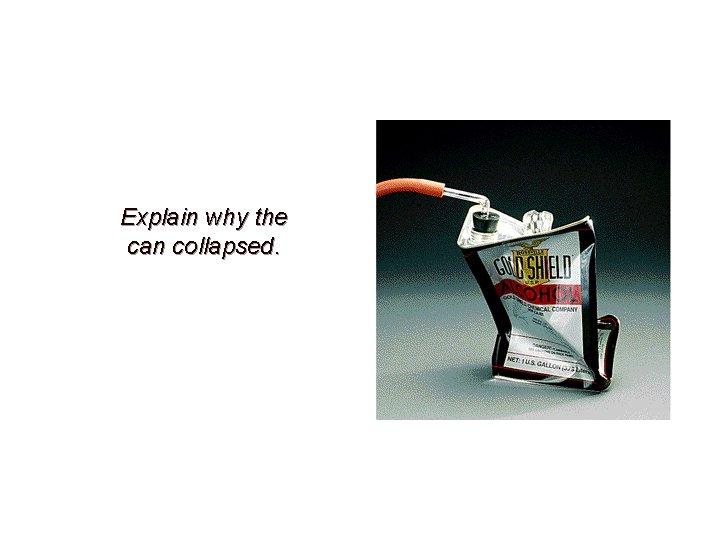
Explain why the can collapsed.
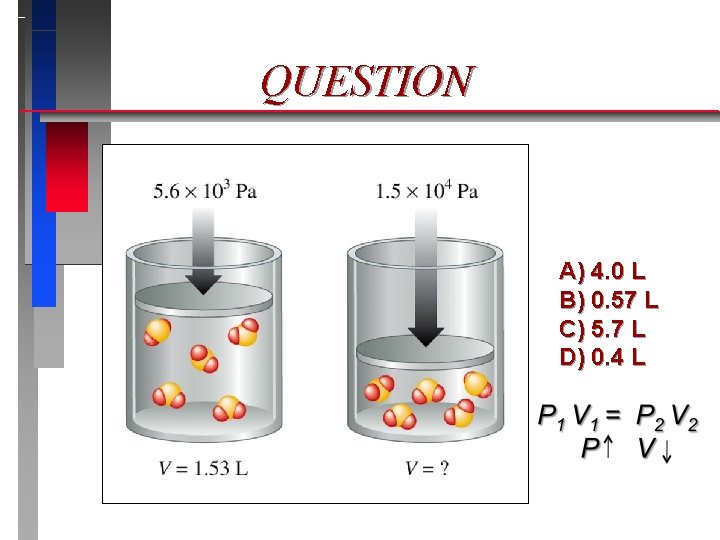
Boyle’s Law* ð Pressure Volume = Constant (T = constant) ð P 1 V 1 = P 2 V 2 (T = constant) ð V 1/ P (T = constant) ð (*Holds precisely only at very low pressures. )
Ideal Gases Real vs. “Ideal” Definition: A gas that strictly obeys Boyle’s Law is called an ideal gas.
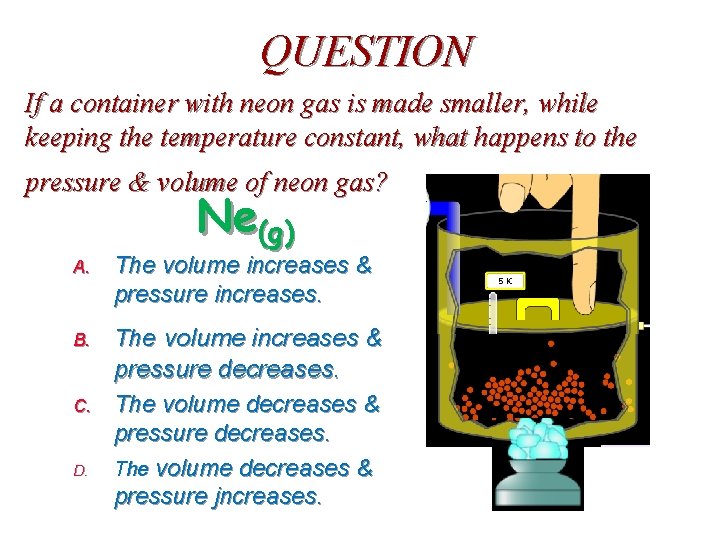
QUESTION If a container with neon gas is made smaller, while keeping the temperature constant, what happens to the pressure & volume of neon gas? Ne(g) A. The volume increases & pressure increases. B. The volume increases & pressure decreases. The volume decreases & pressure jncreases. C. D.
QUESTION A) 4. 0 L B) 0. 57 L C) 5. 7 L D) 0. 4 L
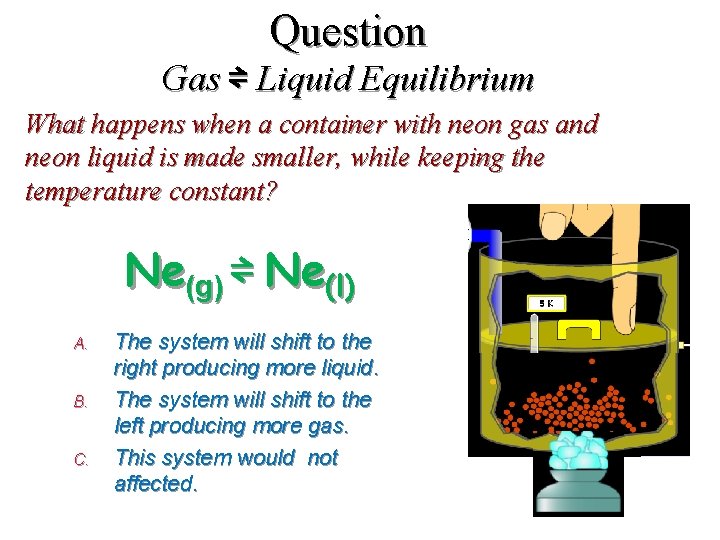
Question Gas ⇌ Liquid Equilibrium What happens when a container with neon gas and neon liquid is made smaller, while keeping the temperature constant? Ne(g) ⇌ Ne(l) A. B. C. The system will shift to the right producing more liquid. The system will shift to the left producing more gas. This system would not affected.
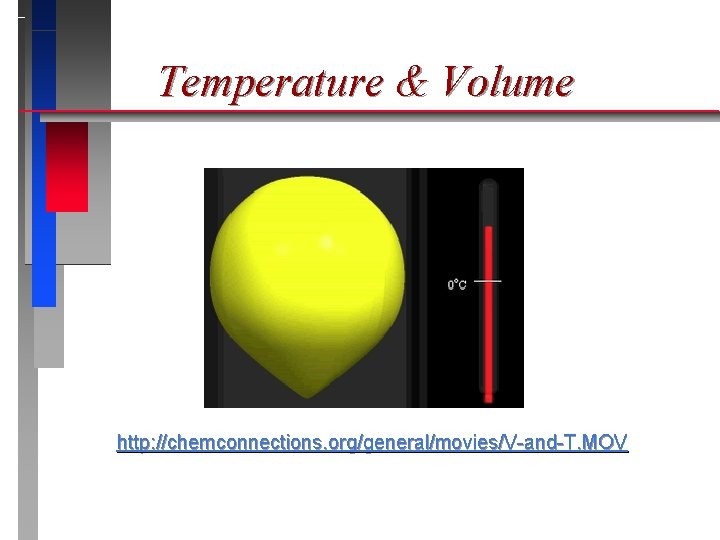
Temperature & Volume http: //chemconnections. org/general/movies/V-and-T. MOV
http: //chemconnections. org/general/movies/Vol-T-liq. N 2 HMVID 10. MOV Temperature & Volume N 2 (liq) b. p. = − 196 °C (77 K; − 321 °F) A cryogenic fluid which can cause rapid freezing on contact with living tissue, which may lead to frostbite.
Charles’s Law ð The volume of a gas is directly proportional to temperature, and extrapolates to zero at zero Kelvin. ð V = T (P = constant) = a proportionality constant
QUESTION If a 10. 0 L sample of an ideal gas at 300 K suddenly had its temperature doubled without changing its pressure, what would happen to its volume? A) The volume would decrease to 2. 0 L. B) The volume would triple. • The volume would not change since the pressure remains constant. • The new volume would be 20. 0 L.
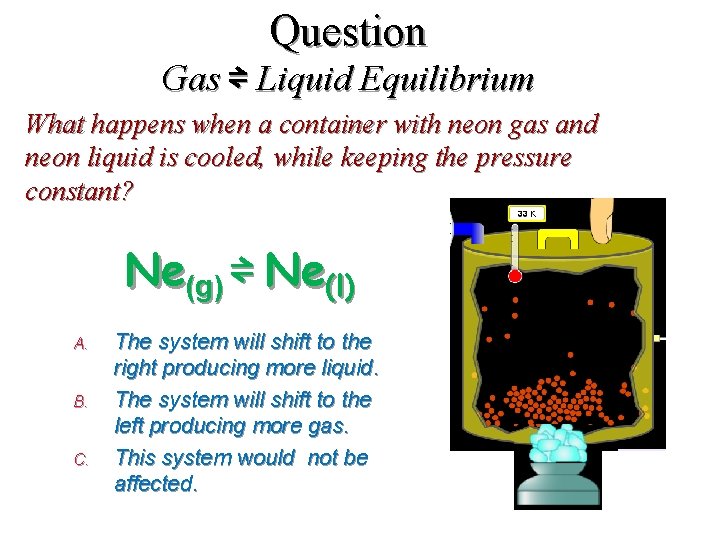
Question Gas ⇌ Liquid Equilibrium What happens when a container with neon gas and neon liquid is cooled, while keeping the pressure constant? Ne(g) ⇌ Ne(l) A. B. C. The system will shift to the right producing more liquid. The system will shift to the left producing more gas. This system would not be affected.
Molecular Motion & Energy Gases & the Meaning of Temperature (Kelvin) is an index of the random motions of gas particles (higher T means greater motion. ) https: //www. youtube. com/watch? v=EHxd. Vtyg. P 1 g&t=88 s
Molecular Motion & Energy The Meaning of Temperature (Kelvin) is an index of the random motions of gas particles (higher T means greater motion. ) http: //chemconnections. org/general/movies/KE%20 -gas. MOV
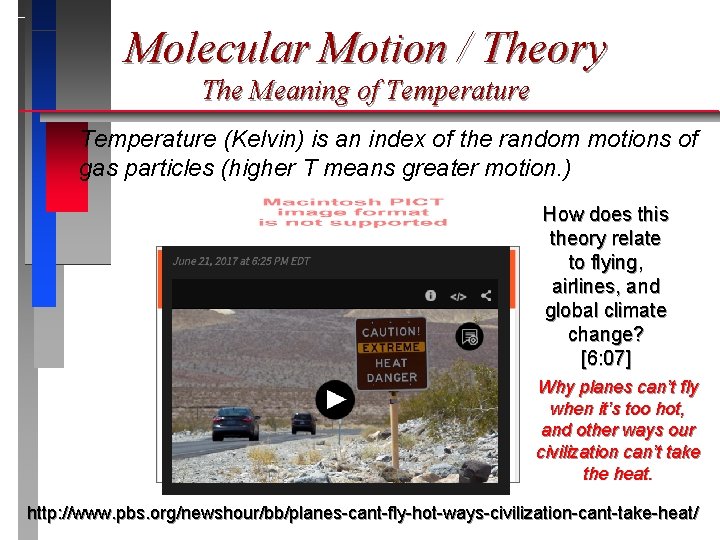
Molecular Motion / Theory The Meaning of Temperature (Kelvin) is an index of the random motions of gas particles (higher T means greater motion. ) How does this theory relate to flying, airlines, and global climate change? [6: 07] Why planes can’t fly when it’s too hot, and other ways our civilization can’t take the heat. http: //www. pbs. org/newshour/bb/planes-cant-fly-hot-ways-civilization-cant-take-heat/
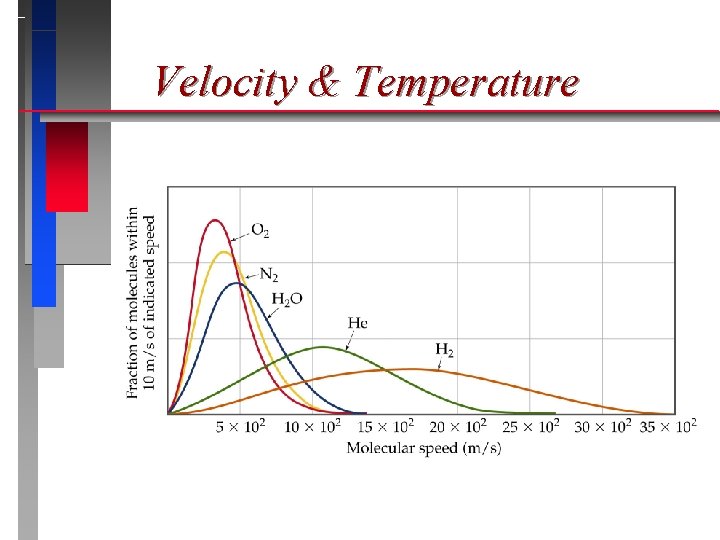
Velocity & Temperature
QUESTION As the temperature of a gas increases, which statement best correlates to information about molecular velocity? A) The average molecular velocity will increase, but the distribution of molecular velocities will stay the same. B) The average molecular velocity will stay the same, but the molecular velocity distribution will spread. C) The average molecular velocity will increase, and the distribution of the molecular velocities will spread. D) The average molecular velocity will stay the same, and the distribution of the molecular velocities will stay the same.
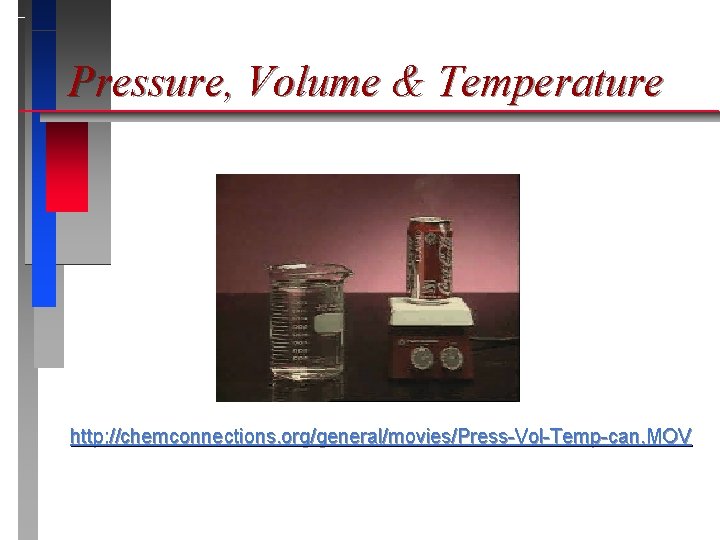
Pressure, Volume & Temperature http: //chemconnections. org/general/movies/Press-Vol-Temp-can. MOV
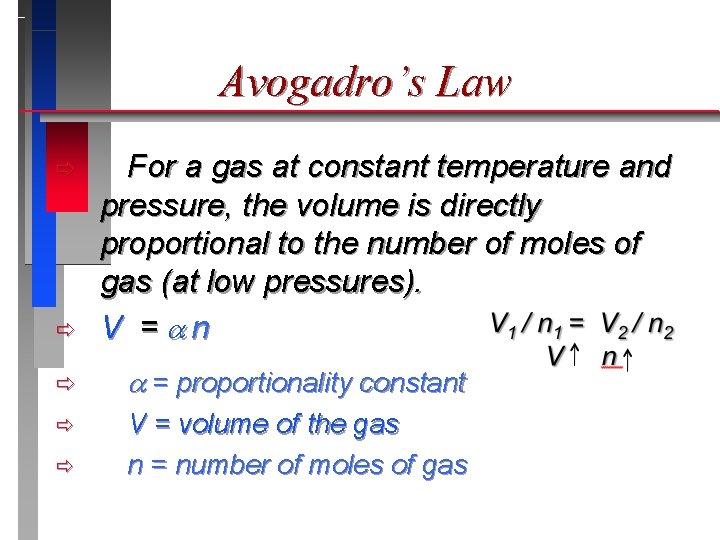
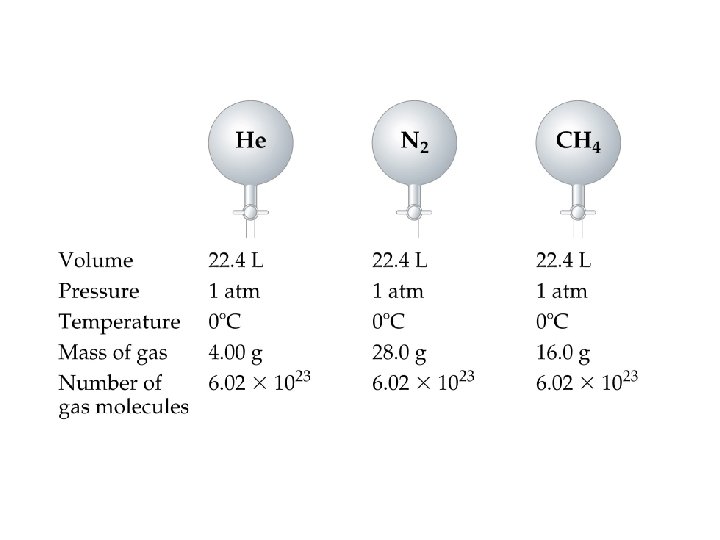
Avogadro’s Law ð ð For a gas at constant temperature and pressure, the volume is directly proportional to the number of moles of gas (at low pressures). V = n ð = proportionality constant ð V = volume of the gas n = number of moles of gas ð
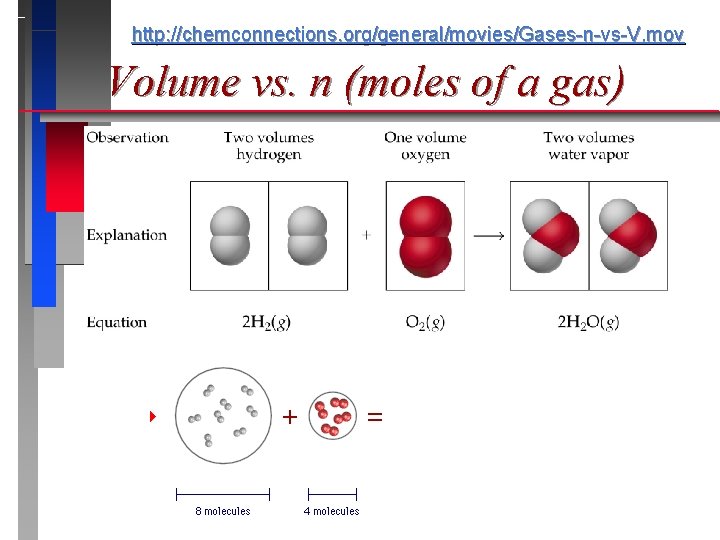
http: //chemconnections. org/general/movies/Gases-n-vs-V. mov Volume vs. n (moles of a gas)
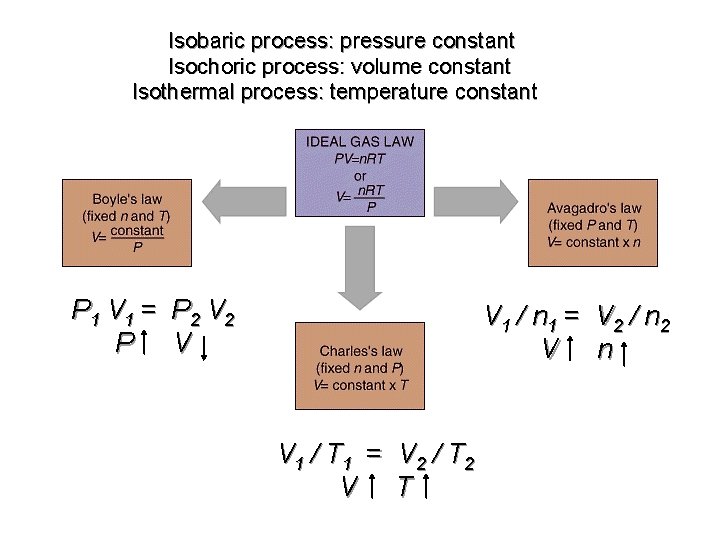
Isobaric process: pressure constant Isochoric process: volume constant Isothermal process: temperature constant P 1 V 1 = P 2 V 2 P V V 1 / n 1 = V 2 / n 2 V n V 1 / T 1 = V 2 / T 2 V T
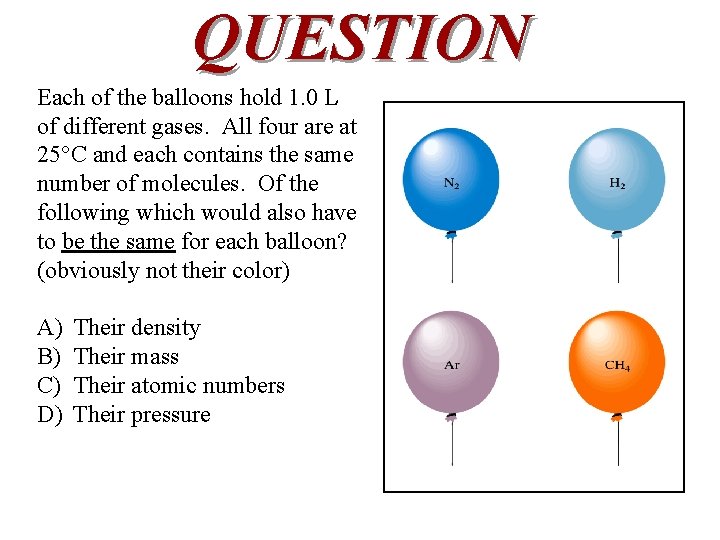
QUESTION Each of the balloons hold 1. 0 L of different gases. All four are at 25°C and each contains the same number of molecules. Of the following which would also have to be the same for each balloon? (obviously not their color) A) B) C) D) Their density Their mass Their atomic numbers Their pressure
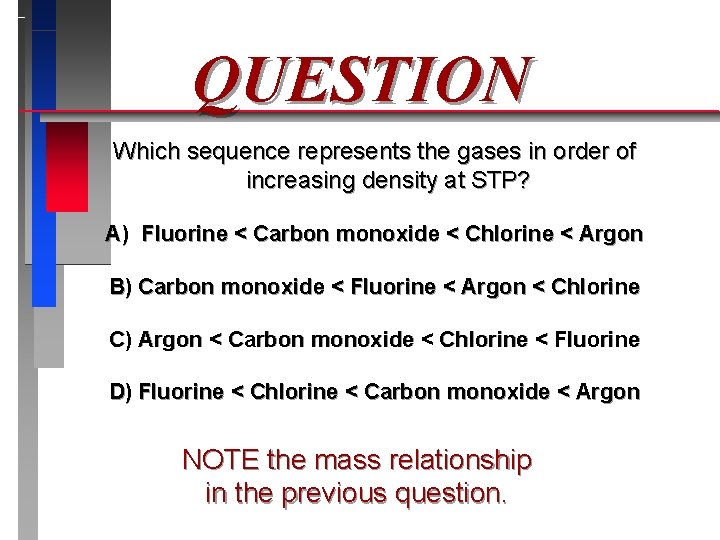
QUESTION Which sequence represents the gases in order of increasing density at STP? A) Fluorine < Carbon monoxide < Chlorine < Argon B) Carbon monoxide < Fluorine < Argon < Chlorine C) Argon < Carbon monoxide < Chlorine < Fluorine D) Fluorine < Chlorine < Carbon monoxide < Argon NOTE the mass relationship in the previous question.
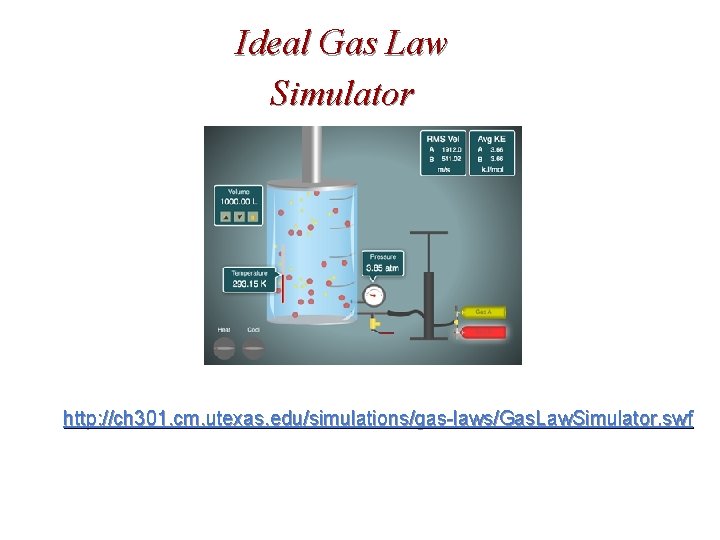
Ideal Gas Law Simulator http: //ch 301. cm. utexas. edu/simulations/gas-laws/Gas. Law. Simulator. swf
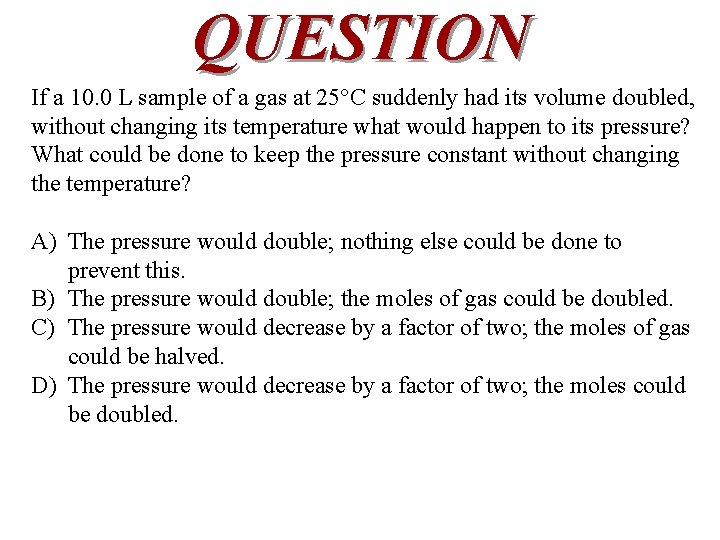
QUESTION If a 10. 0 L sample of a gas at 25°C suddenly had its volume doubled, without changing its temperature what would happen to its pressure? What could be done to keep the pressure constant without changing the temperature? A) The pressure would double; nothing else could be done to prevent this. B) The pressure would double; the moles of gas could be doubled. C) The pressure would decrease by a factor of two; the moles of gas could be halved. D) The pressure would decrease by a factor of two; the moles could be doubled.
Gases & Airbags Use of Chemical Reactions and Physical Properties http: //chemconnections. org/public_html/general/movies/airbags. MOV