
Gases 5 1 Copyright The Mc GrawHill Companies
- Slides: 35
Gases 5 -1 Copyright ©The Mc. Graw-Hill Companies, Inc. Permission required for reproduction or display.
An Overview of the Physical States of Matter The Distinction of Gases from Liquids and Solids 1. Gas volume changes greatly with pressure. 2. Gas volume changes greatly with temperature. 3. Gases have relatively low viscosity. 4. Most gases have relatively low densities under normal conditions. 5. Gases are miscible. 5 -2
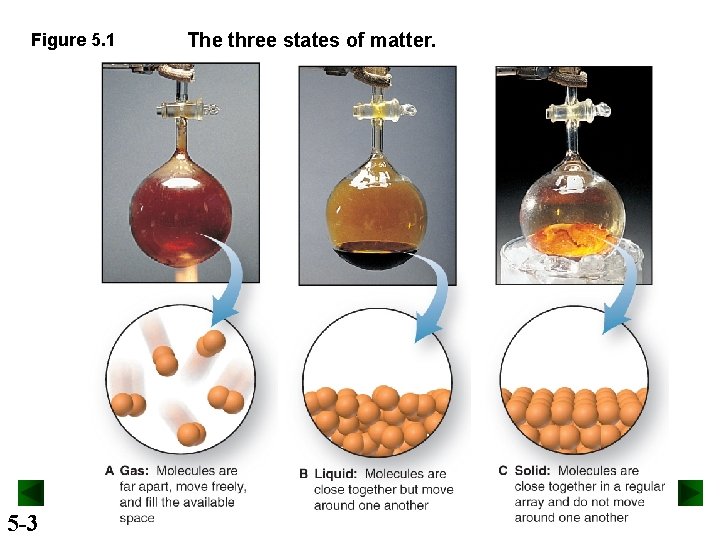
Figure 5. 1 5 -3 The three states of matter.
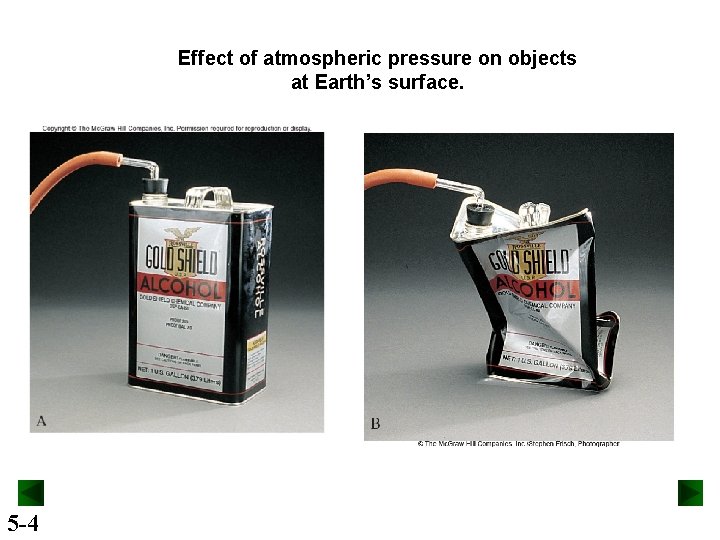
Effect of atmospheric pressure on objects at Earth’s surface. 5 -4
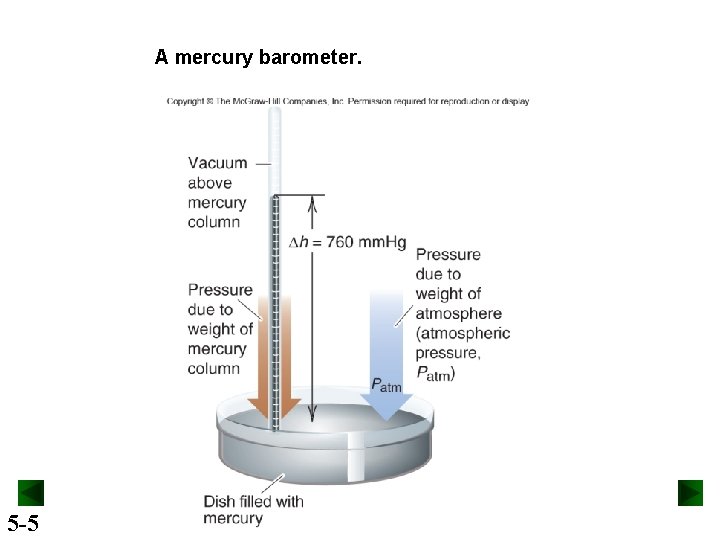
A mercury barometer. 5 -5
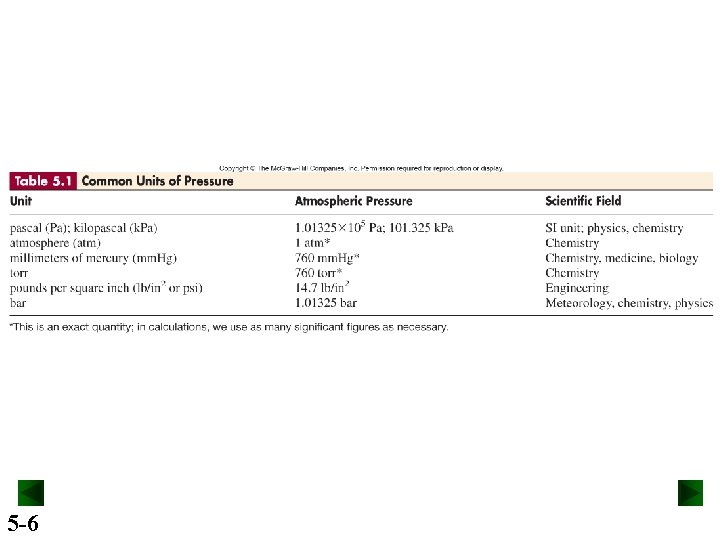
5 -6
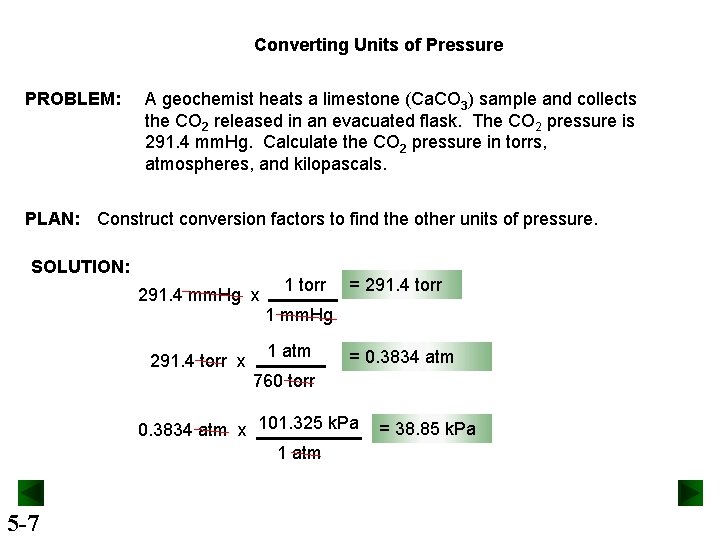
Converting Units of Pressure PROBLEM: A geochemist heats a limestone (Ca. CO 3) sample and collects the CO 2 released in an evacuated flask. The CO 2 pressure is 291. 4 mm. Hg. Calculate the CO 2 pressure in torrs, atmospheres, and kilopascals. PLAN: Construct conversion factors to find the other units of pressure. SOLUTION: 291. 4 mm. Hg x 291. 4 torr x 1 torr = 291. 4 torr 1 mm. Hg 1 atm = 0. 3834 atm 760 torr 0. 3834 atm x 101. 325 k. Pa 1 atm 5 -7 = 38. 85 k. Pa
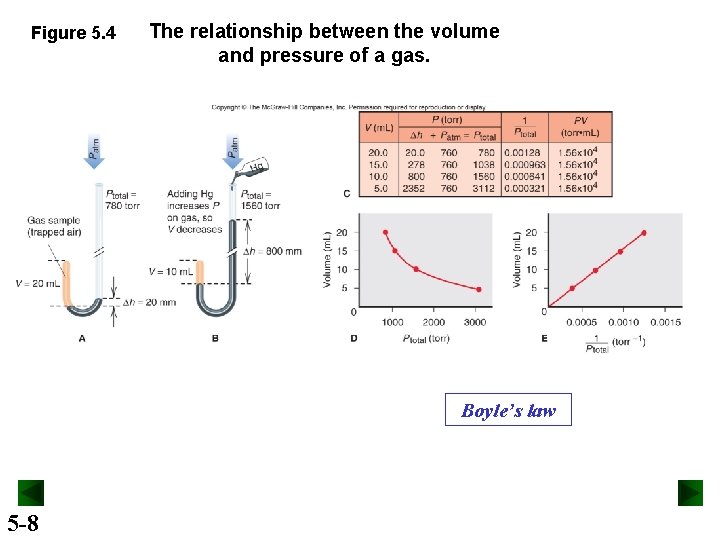
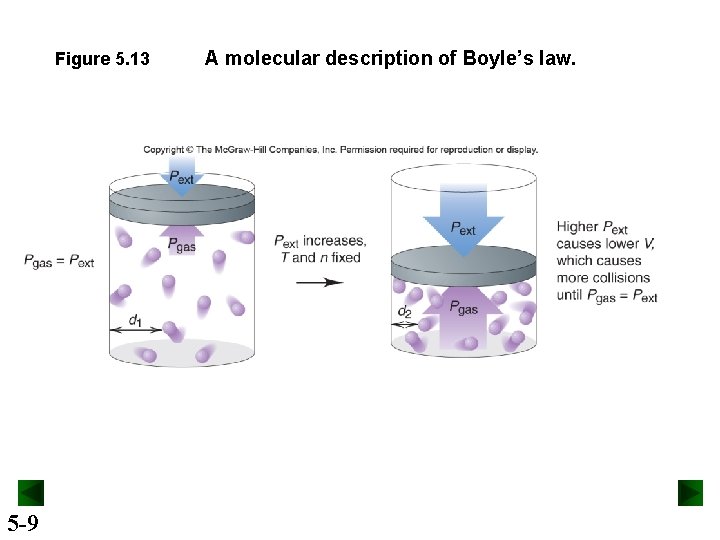
Figure 5. 4 The relationship between the volume and pressure of a gas. Boyle’s law 5 -8
Figure 5. 13 5 -9 A molecular description of Boyle’s law.
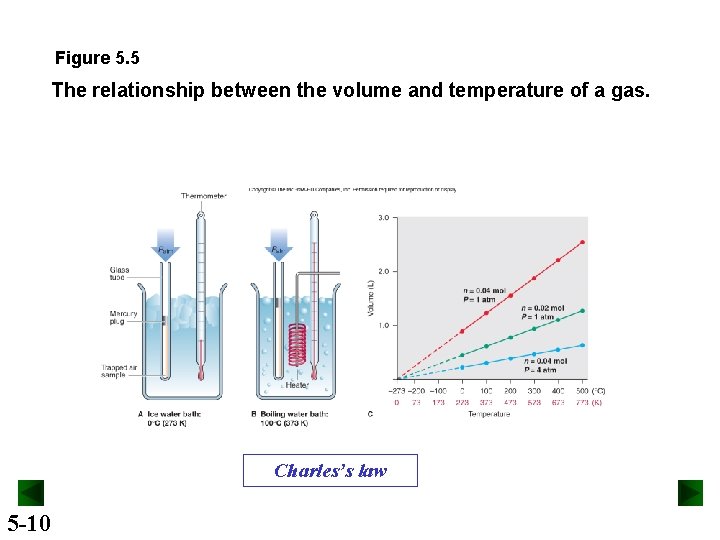
Figure 5. 5 The relationship between the volume and temperature of a gas. Charles’s law 5 -10
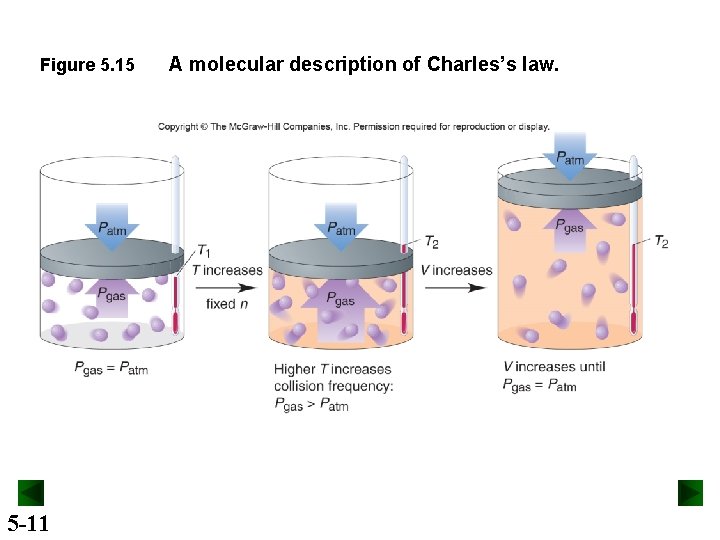
Figure 5. 15 5 -11 A molecular description of Charles’s law.
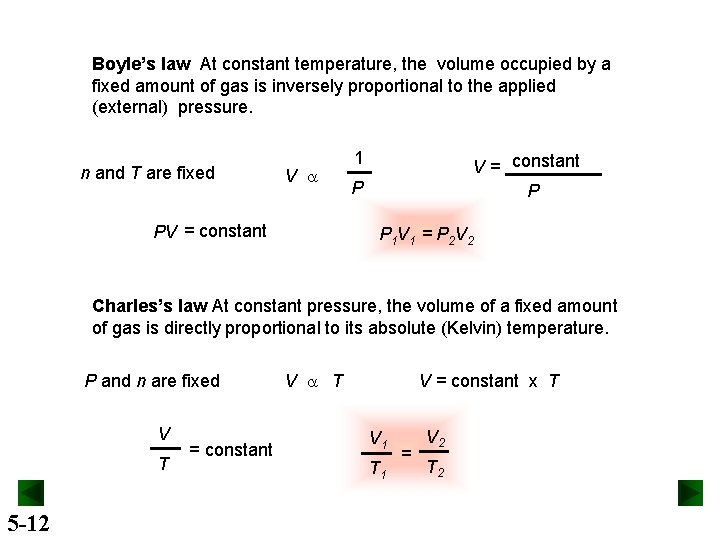
Boyle’s law At constant temperature, the volume occupied by a fixed amount of gas is inversely proportional to the applied (external) pressure. n and T are fixed V a PV = constant 1 V = constant P P P 1 V 1 = P 2 V 2 Charles’s law At constant pressure, the volume of a fixed amount of gas is directly proportional to its absolute (Kelvin) temperature. P and n are fixed V T 5 -12 = constant V a T V = constant x T V 1 T 1 = V 2 T 2
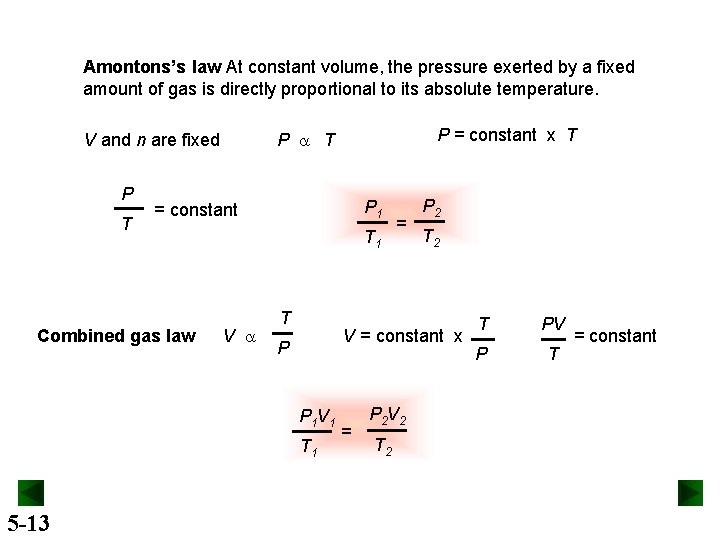
Amontons’s law At constant volume, the pressure exerted by a fixed amount of gas is directly proportional to its absolute temperature. P T P 1 = constant Combined gas law T 1 V a T = P 2 T 2 V = constant x P P 1 V 1 T 1 5 -13 P = constant x T P a T V and n are fixed = P 2 V 2 T PV P T = constant
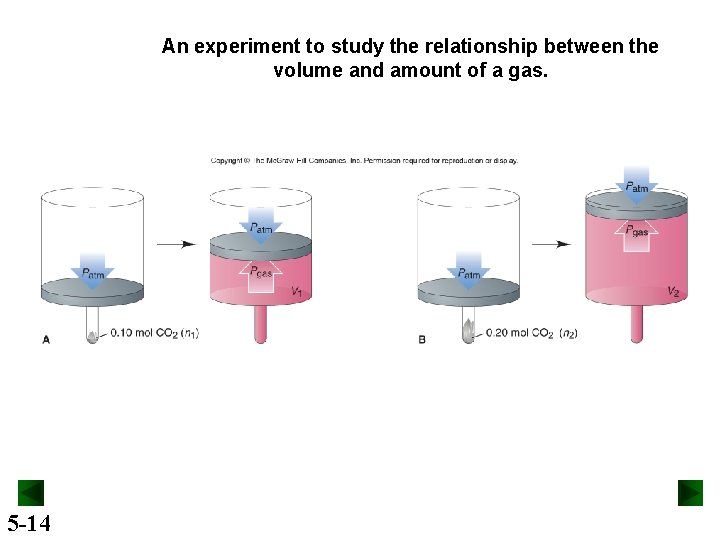
An experiment to study the relationship between the volume and amount of a gas. 5 -14
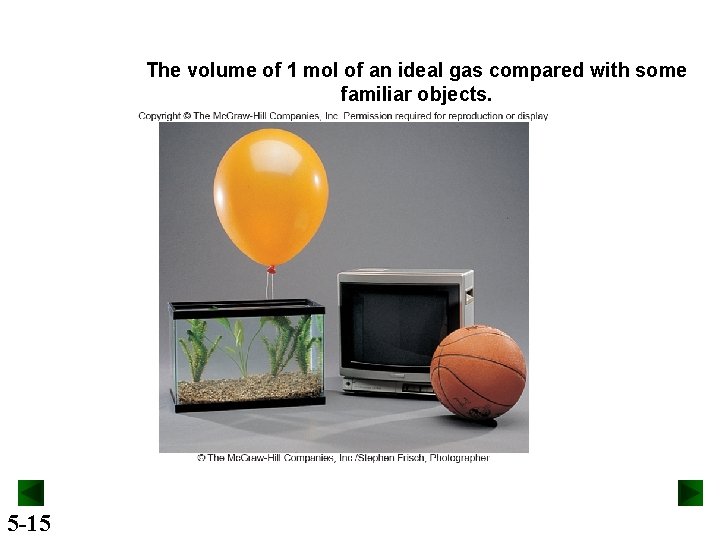
The volume of 1 mol of an ideal gas compared with some familiar objects. 5 -15
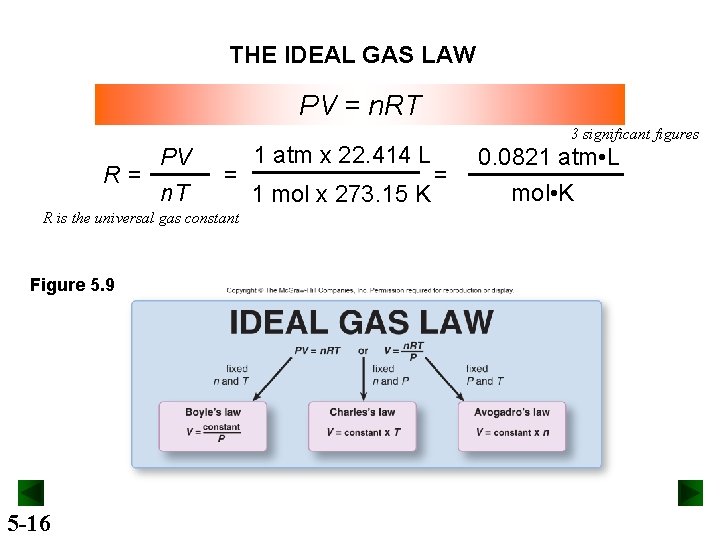
THE IDEAL GAS LAW PV = n. RT PV R= n. T = R is the universal gas constant Figure 5. 9 5 -16 1 atm x 22. 414 L 1 mol x 273. 15 K 3 significant figures = 0. 0821 atm • L mol • K
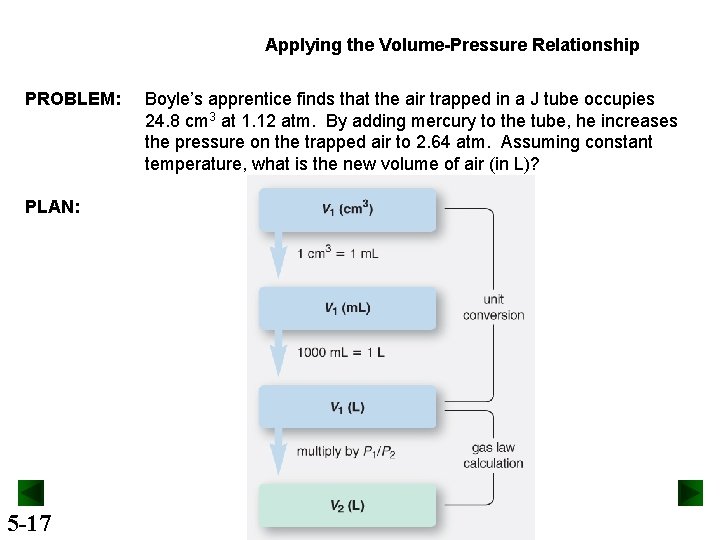
Applying the Volume-Pressure Relationship PROBLEM: PLAN: 5 -17 Boyle’s apprentice finds that the air trapped in a J tube occupies 24. 8 cm 3 at 1. 12 atm. By adding mercury to the tube, he increases the pressure on the trapped air to 2. 64 atm. Assuming constant temperature, what is the new volume of air (in L)?
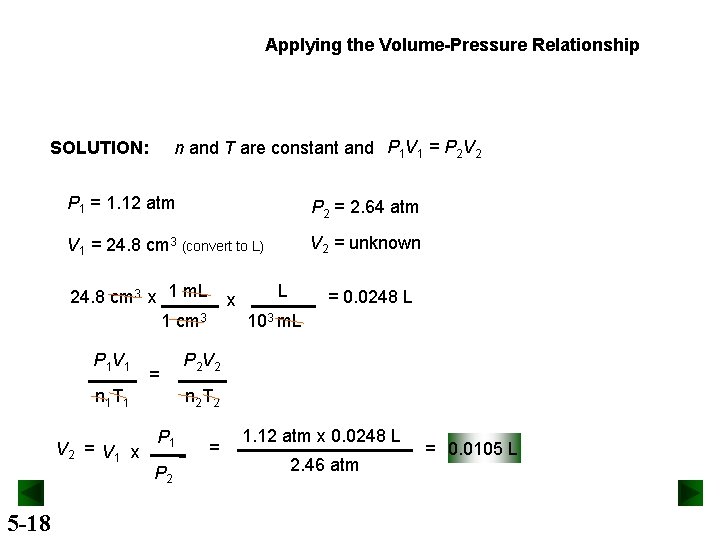
Applying the Volume-Pressure Relationship n and T are constant and P 1 V 1 = P 2 V 2 SOLUTION: P 1 = 1. 12 atm P 2 = 2. 64 atm V 1 = 24. 8 cm 3 (convert to L) V 2 = unknown 1 m. L x x 24. 8 cm 3 1 cm 3 P 1 V 1 = n 1 T 1 V 2 = V 1 x 5 -18 L = 0. 0248 L 103 m. L P 2 V 2 n 2 T 2 P 1 P 2 = 1. 12 atm x 0. 0248 L 2. 46 atm = 0. 0105 L
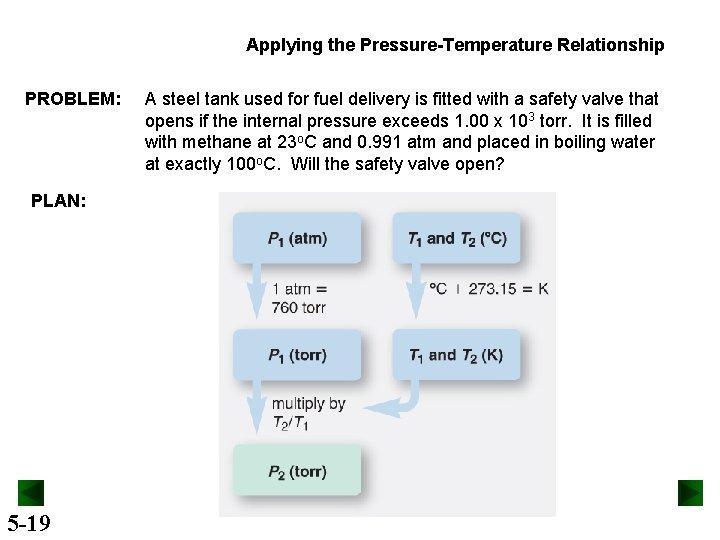
Applying the Pressure-Temperature Relationship PROBLEM: PLAN: 5 -19 A steel tank used for fuel delivery is fitted with a safety valve that opens if the internal pressure exceeds 1. 00 x 103 torr. It is filled with methane at 23 o. C and 0. 991 atm and placed in boiling water at exactly 100 o. C. Will the safety valve open?
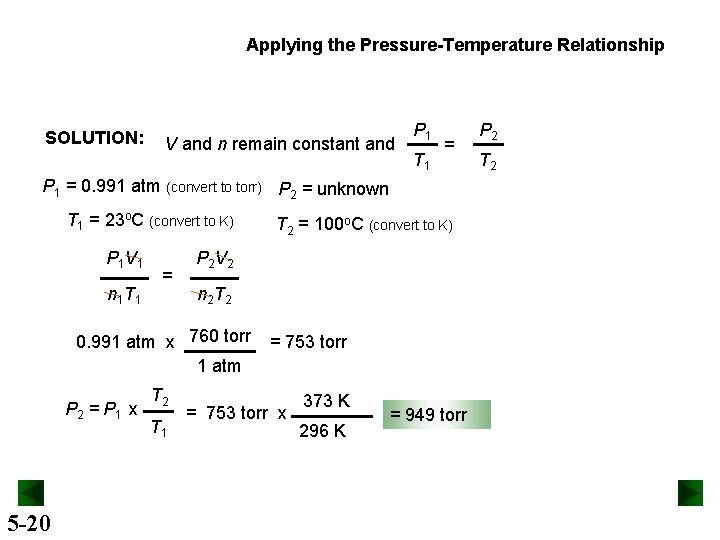
Applying the Pressure-Temperature Relationship SOLUTION: V and n remain constant and P 1 T 1 = P 1 = 0. 991 atm (convert to torr) P 2 = unknown T 1 = 23 o. C (convert to K) P 1 V 1 n 1 T 1 = P 2 V 2 n 2 T 2 0. 991 atm x 760 torr 1 atm P 2 = P 1 x 5 -20 T 2 T 1 T 2 = 100 o. C (convert to K) = 753 torr x 373 K 296 K = 949 torr P 2 T 2
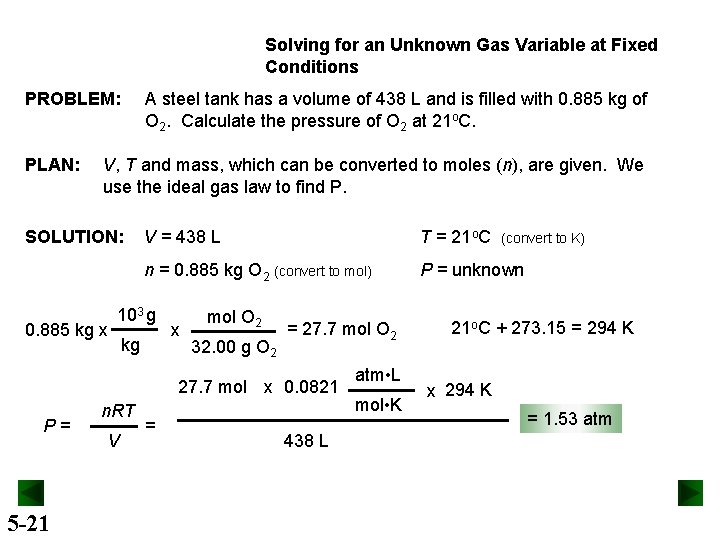
Solving for an Unknown Gas Variable at Fixed Conditions PROBLEM: PLAN: A steel tank has a volume of 438 L and is filled with 0. 885 kg of O 2. Calculate the pressure of O 2 at 21 o. C. V, T and mass, which can be converted to moles (n), are given. We use the ideal gas law to find P. SOLUTION: 0. 885 kg x V = 438 L T = 21 o. C n = 0. 885 kg O 2 (convert to mol) P = unknown 103 g kg x mol O 2 32. 00 g O 2 = 27. 7 mol O 2 27. 7 mol x 0. 0821 P= 5 -21 n. RT V = 438 L atm • L mol • K (convert to K) 21 o. C + 273. 15 = 294 K x 294 K = 1. 53 atm
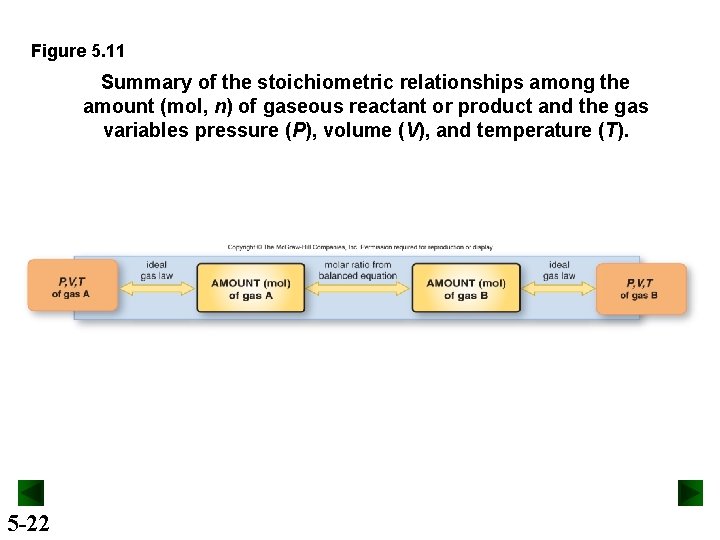
Figure 5. 11 Summary of the stoichiometric relationships among the amount (mol, n) of gaseous reactant or product and the gas variables pressure (P), volume (V), and temperature (T). 5 -22
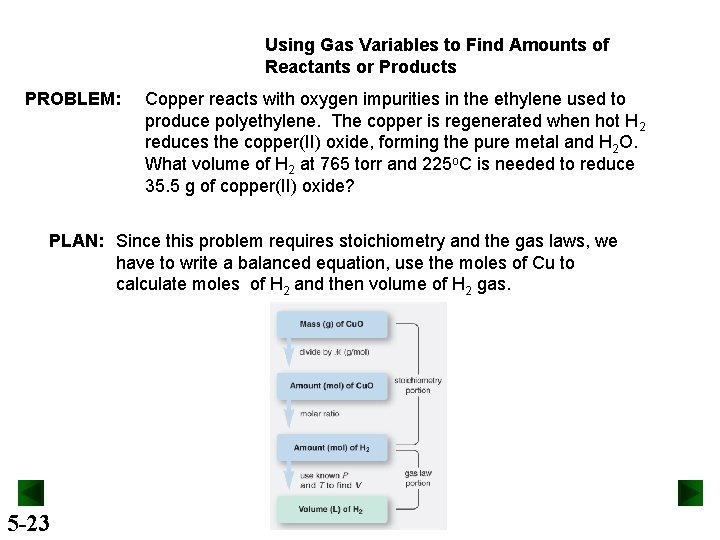
Using Gas Variables to Find Amounts of Reactants or Products PROBLEM: Copper reacts with oxygen impurities in the ethylene used to produce polyethylene. The copper is regenerated when hot H 2 reduces the copper(II) oxide, forming the pure metal and H 2 O. What volume of H 2 at 765 torr and 225 o. C is needed to reduce 35. 5 g of copper(II) oxide? PLAN: Since this problem requires stoichiometry and the gas laws, we have to write a balanced equation, use the moles of Cu to calculate moles of H 2 and then volume of H 2 gas. 5 -23
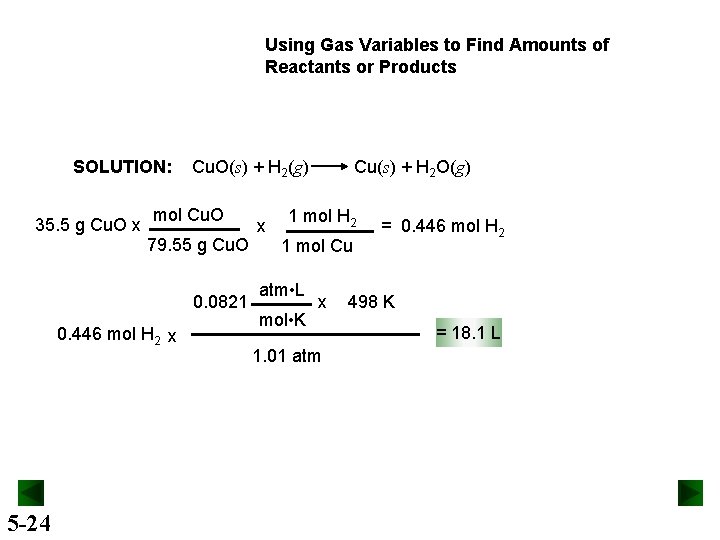
Using Gas Variables to Find Amounts of Reactants or Products SOLUTION: 35. 5 g Cu. O x Cu. O(s) + H 2(g) mol Cu. O 79. 55 g Cu. O 0. 0821 0. 446 mol H 2 x 5 -24 x Cu(s) + H 2 O(g) 1 mol H 2 1 mol Cu atm • L mol • K x 1. 01 atm = 0. 446 mol H 2 498 K = 18. 1 L
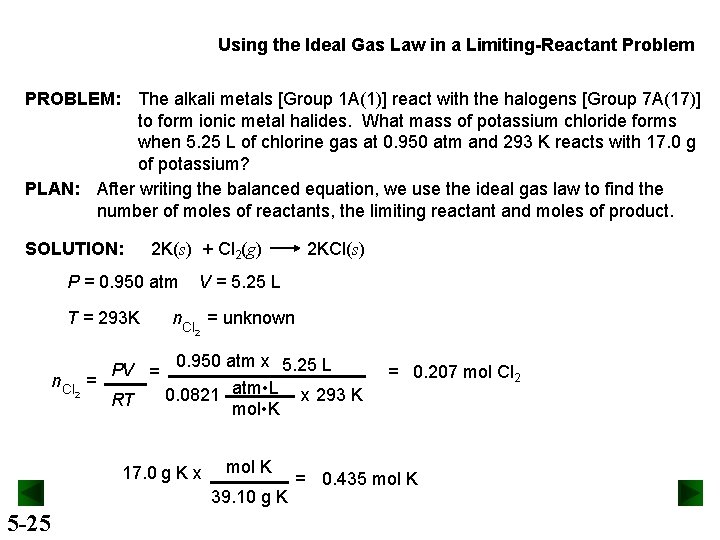
Using the Ideal Gas Law in a Limiting-Reactant Problem PROBLEM: The alkali metals [Group 1 A(1)] react with the halogens [Group 7 A(17)] to form ionic metal halides. What mass of potassium chloride forms when 5. 25 L of chlorine gas at 0. 950 atm and 293 K reacts with 17. 0 g of potassium? PLAN: After writing the balanced equation, we use the ideal gas law to find the number of moles of reactants, the limiting reactant and moles of product. SOLUTION: 2 K(s) + Cl 2(g) P = 0. 950 atm T = 293 K n Cl 2 V = 5. 25 L n. Cl = unknown 2 PV = 0. 950 atm x 5. 25 L = 0. 0821 atm • L x 293 K RT mol • K 17. 0 g K x mol K 39. 10 g K 5 -25 2 KCl(s) = 0. 207 mol Cl 2 = 0. 435 mol K
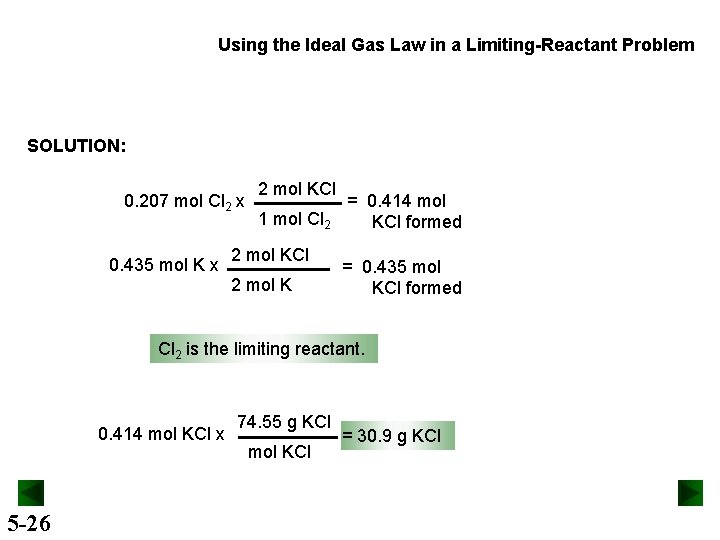
Using the Ideal Gas Law in a Limiting-Reactant Problem SOLUTION: 0. 207 mol Cl 2 x 0. 435 mol K x 2 mol KCl 1 mol Cl 2 2 mol KCl 2 mol K = 0. 414 mol KCl formed = 0. 435 mol KCl formed Cl 2 is the limiting reactant. 0. 414 mol KCl x 5 -26 74. 55 g KCl mol KCl = 30. 9 g KCl
Sample Problems 5 -27
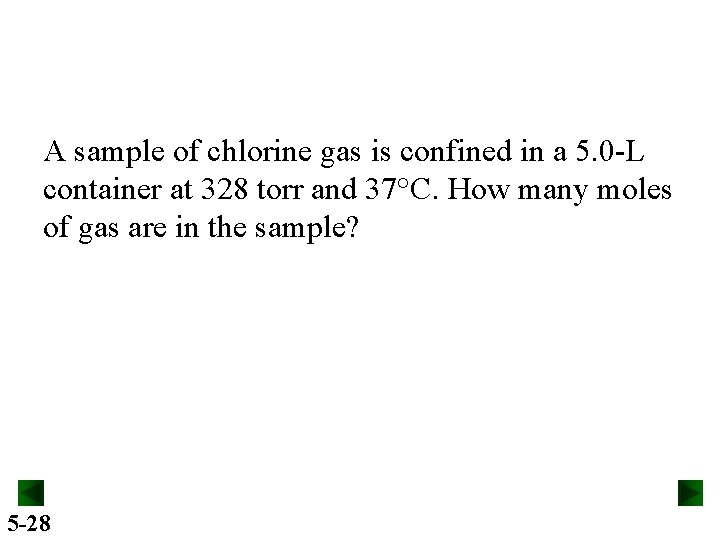
A sample of chlorine gas is confined in a 5. 0 -L container at 328 torr and 37°C. How many moles of gas are in the sample? 5 -28
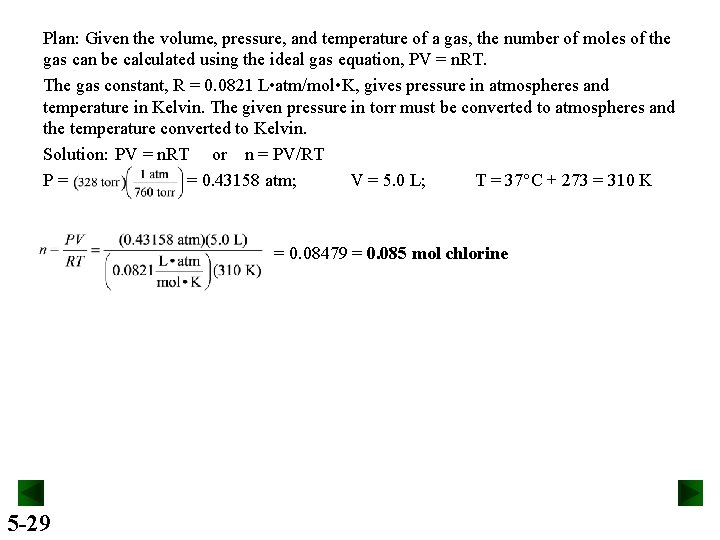
Plan: Given the volume, pressure, and temperature of a gas, the number of moles of the gas can be calculated using the ideal gas equation, PV = n. RT. The gas constant, R = 0. 0821 L • atm/mol • K, gives pressure in atmospheres and temperature in Kelvin. The given pressure in torr must be converted to atmospheres and the temperature converted to Kelvin. Solution: PV = n. RT or n = PV/RT P= = 0. 43158 atm; V = 5. 0 L; T = 37°C + 273 = 310 K = 0. 08479 = 0. 085 mol chlorine 5 -29
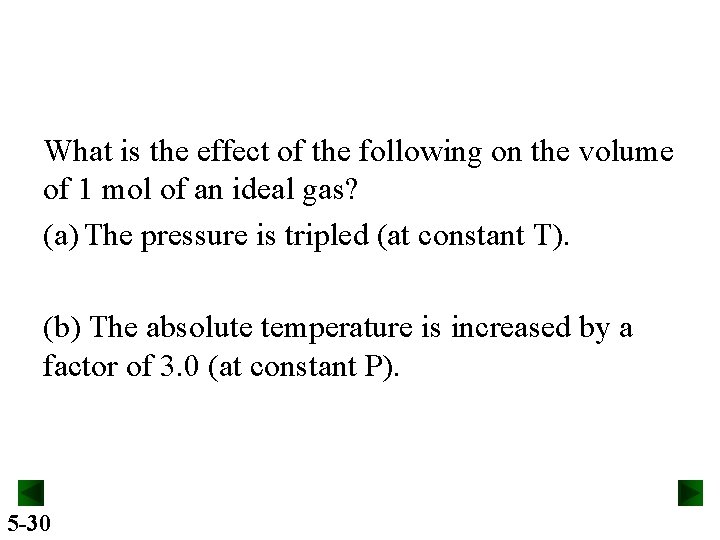
What is the effect of the following on the volume of 1 mol of an ideal gas? (a) The pressure is tripled (at constant T). (b) The absolute temperature is increased by a factor of 3. 0 (at constant P). 5 -30
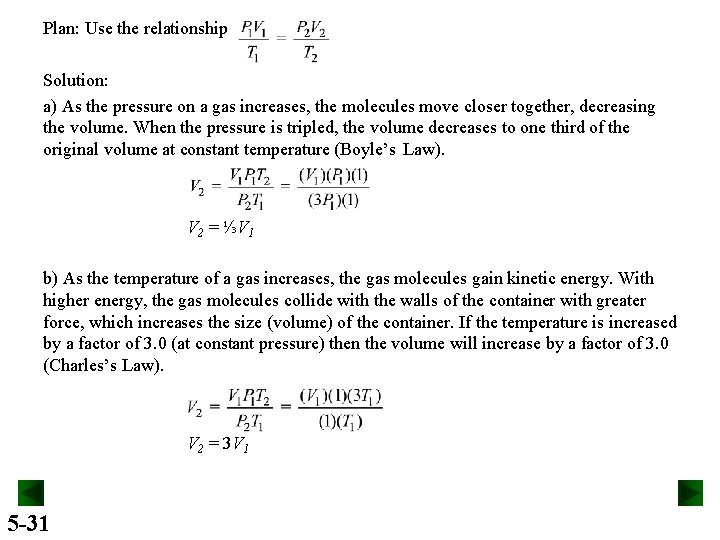
Plan: Use the relationship Solution: a) As the pressure on a gas increases, the molecules move closer together, decreasing the volume. When the pressure is tripled, the volume decreases to one third of the original volume at constant temperature (Boyle’s Law). V 2 = ⅓V 1 b) As the temperature of a gas increases, the gas molecules gain kinetic energy. With higher energy, the gas molecules collide with the walls of the container with greater force, which increases the size (volume) of the container. If the temperature is increased by a factor of 3. 0 (at constant pressure) then the volume will increase by a factor of 3. 0 (Charles’s Law). V 2 = 3 V 1 5 -31
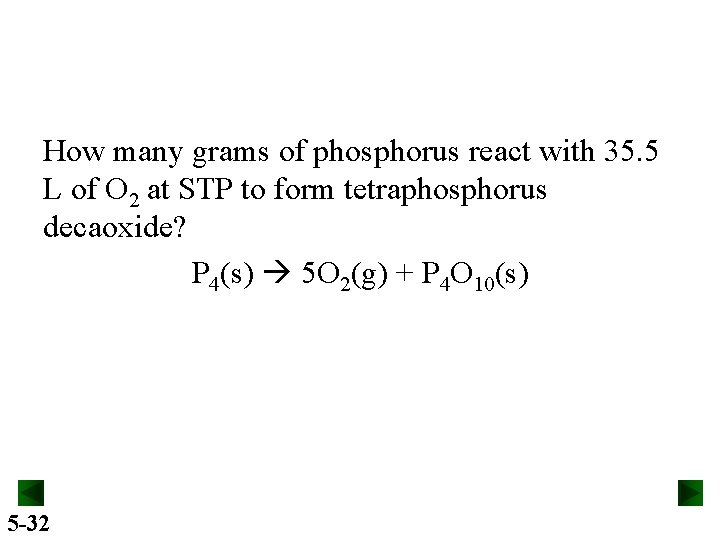
How many grams of phosphorus react with 35. 5 L of O 2 at STP to form tetraphosphorus decaoxide? P 4(s) 5 O 2(g) + P 4 O 10(s) 5 -32
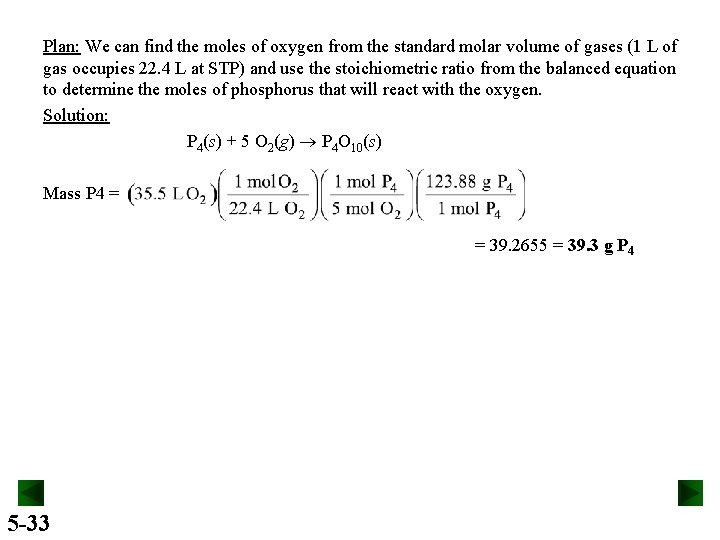
Plan: We can find the moles of oxygen from the standard molar volume of gases (1 L of gas occupies 22. 4 L at STP) and use the stoichiometric ratio from the balanced equation to determine the moles of phosphorus that will react with the oxygen. Solution: P 4(s) + 5 O 2(g) P 4 O 10(s) Mass P 4 = = 39. 2655 = 39. 3 g P 4 5 -33
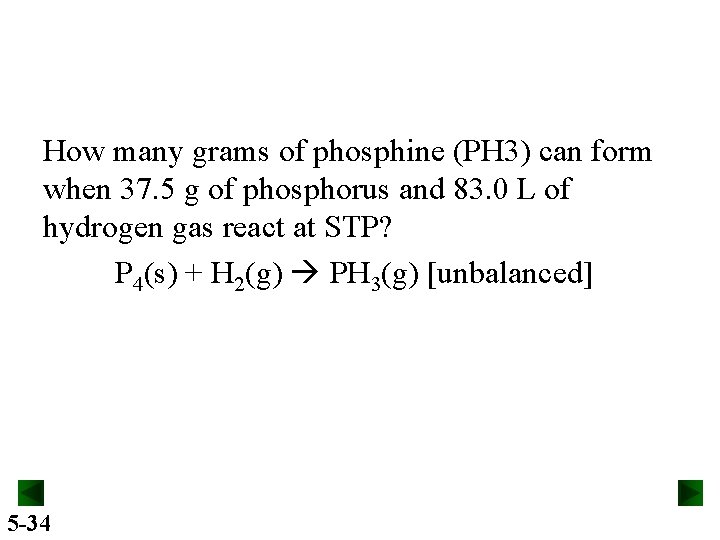
How many grams of phosphine (PH 3) can form when 37. 5 g of phosphorus and 83. 0 L of hydrogen gas react at STP? P 4(s) + H 2(g) PH 3(g) [unbalanced] 5 -34
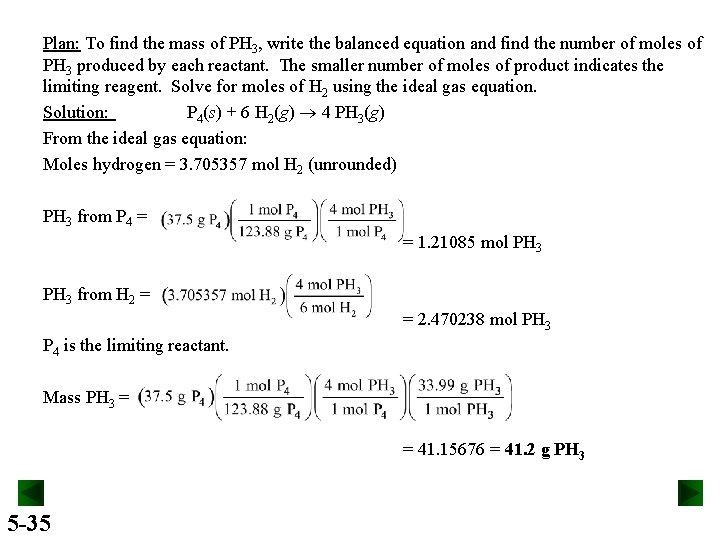
Plan: To find the mass of PH 3, write the balanced equation and find the number of moles of PH 3 produced by each reactant. The smaller number of moles of product indicates the limiting reagent. Solve for moles of H 2 using the ideal gas equation. Solution: P 4(s) + 6 H 2(g) 4 PH 3(g) From the ideal gas equation: Moles hydrogen = 3. 705357 mol H 2 (unrounded) PH 3 from P 4 = = 1. 21085 mol PH 3 from H 2 = = 2. 470238 mol PH 3 P 4 is the limiting reactant. Mass PH 3 = = 41. 15676 = 41. 2 g PH 3 5 -35