
Gas Well DeWatering Workshop Acoustically Determining Plungers Fall


- Slides: 31
Gas Well De-Watering Workshop Acoustically Determining Plungers Fall Velocity For Different Type Plungers O. Lynn Rowlan Echometer Company March 3 -5, 2003 Reference Papers: SPE 71083 and SWPSC 2001, 2003
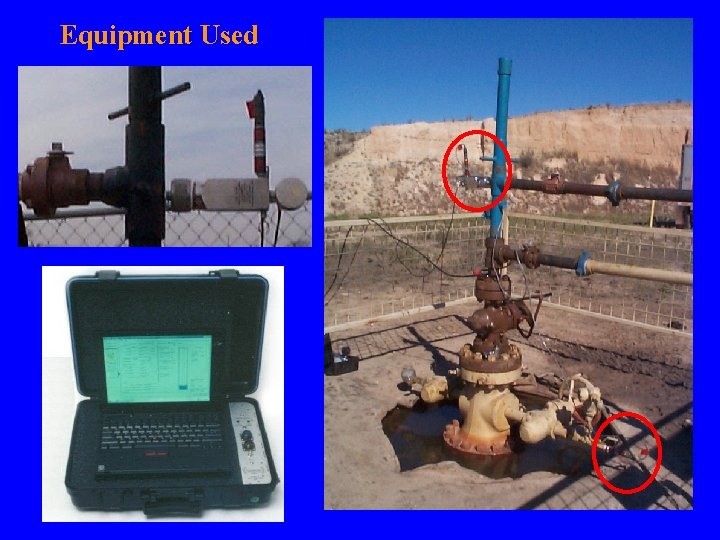
Equipment Used
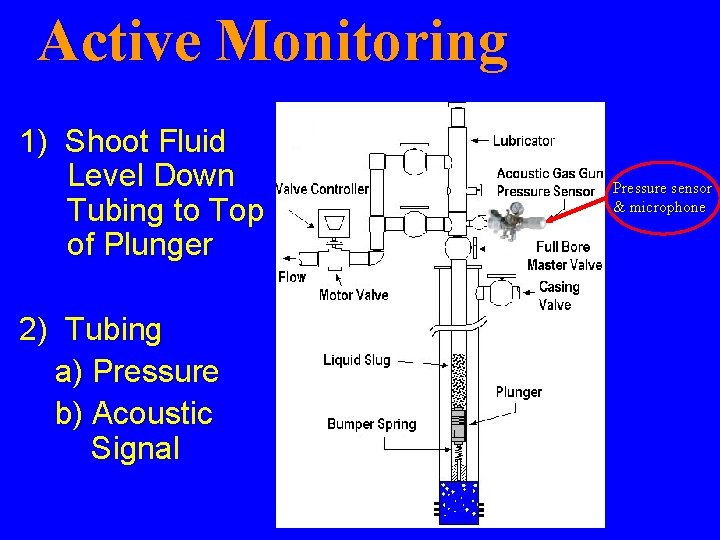
Active Monitoring 1) Shoot Fluid Level Down Tubing to Top of Plunger 2) Tubing a) Pressure b) Acoustic Signal Pressure sensor & microphone
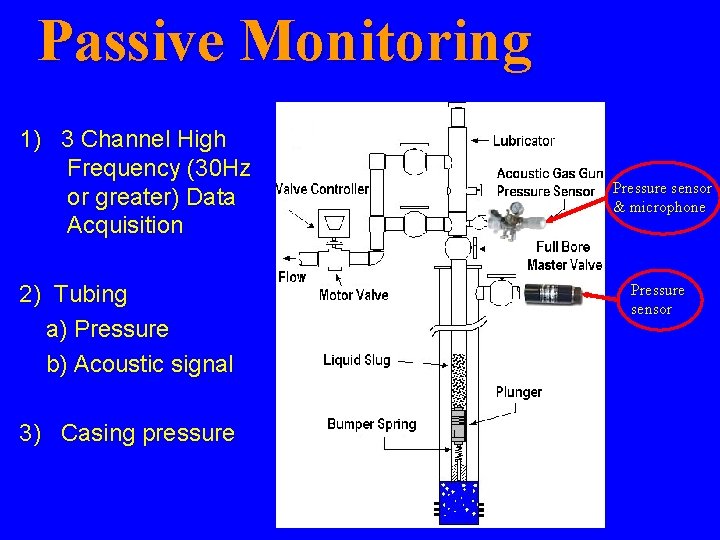
Passive Monitoring 1) 3 Channel High Frequency (30 Hz or greater) Data Acquisition 2) Tubing a) Pressure b) Acoustic signal 3) Casing pressure Pressure sensor & microphone Pressure sensor
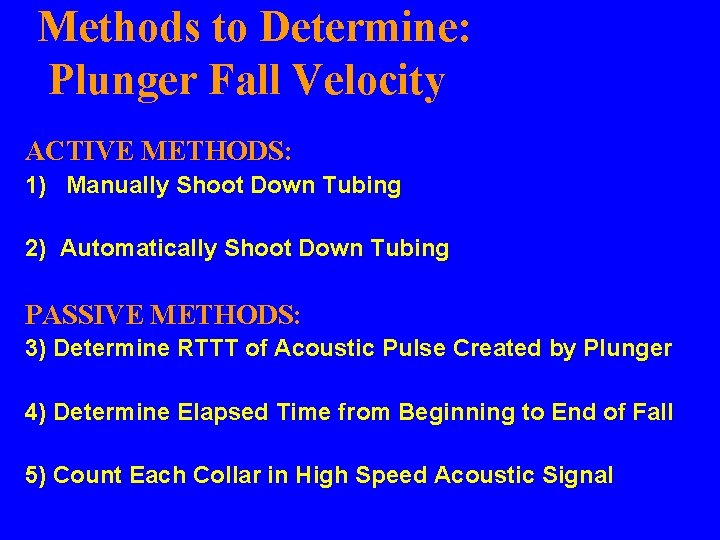
Methods to Determine: Plunger Fall Velocity ACTIVE METHODS: 1) Manually Shoot Down Tubing 2) Automatically Shoot Down Tubing PASSIVE METHODS: 3) Determine RTTT of Acoustic Pulse Created by Plunger 4) Determine Elapsed Time from Beginning to End of Fall 5) Count Each Collar in High Speed Acoustic Signal
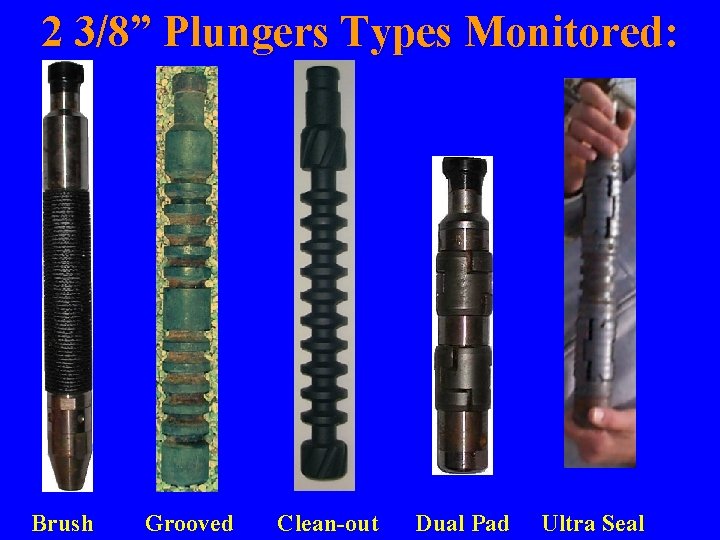
2 3/8” Plungers Types Monitored: Brush Grooved Clean-out Dual Pad Ultra Seal
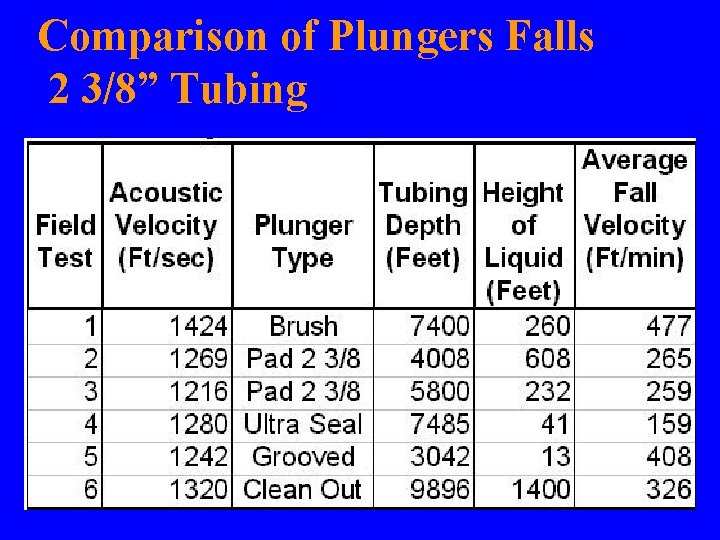
Comparison of Plungers Falls 2 3/8” Tubing
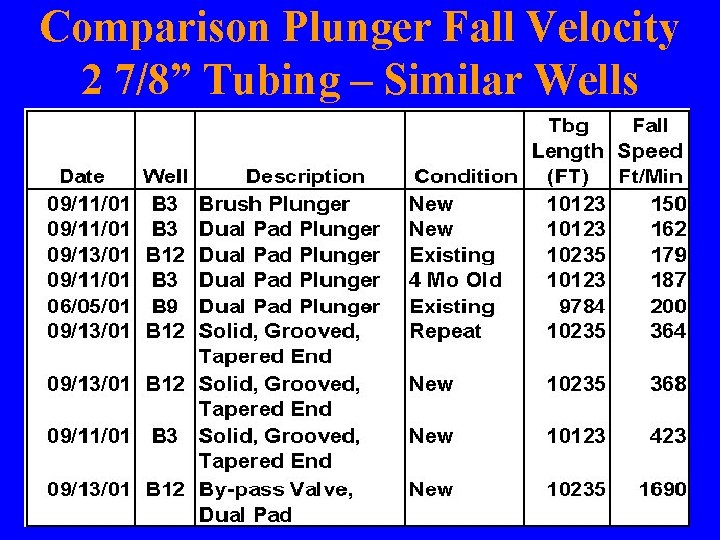
Comparison Plunger Fall Velocity 2 7/8” Tubing – Similar Wells
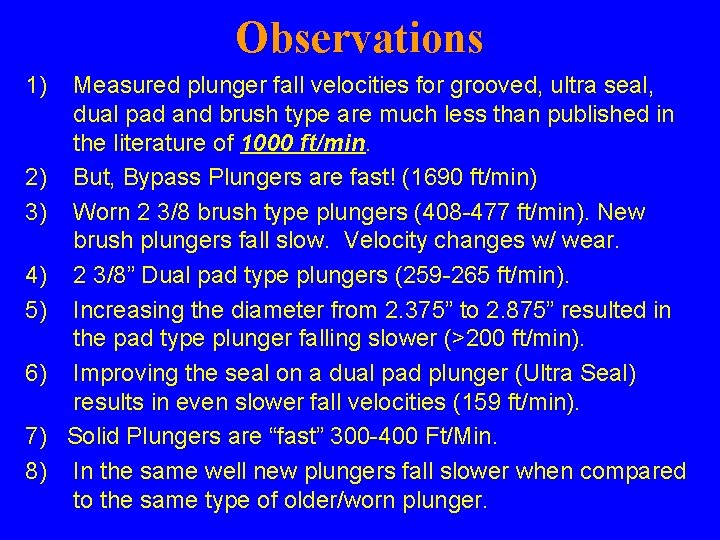
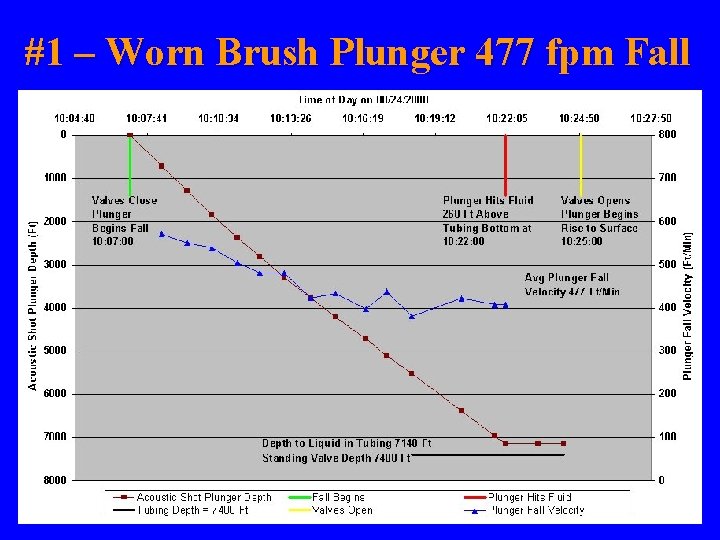
Observations 1) 2) 3) 4) 5) 6) 7) 8) Measured plunger fall velocities for grooved, ultra seal, dual pad and brush type are much less than published in the literature of 1000 ft/min. But, Bypass Plungers are fast! (1690 ft/min) Worn 2 3/8 brush type plungers (408 -477 ft/min). New brush plungers fall slow. Velocity changes w/ wear. 2 3/8” Dual pad type plungers (259 -265 ft/min). Increasing the diameter from 2. 375” to 2. 875” resulted in the pad type plunger falling slower (>200 ft/min). Improving the seal on a dual pad plunger (Ultra Seal) results in even slower fall velocities (159 ft/min). Solid Plungers are “fast” 300 -400 Ft/Min. In the same well new plungers fall slower when compared to the same type of older/worn plunger.
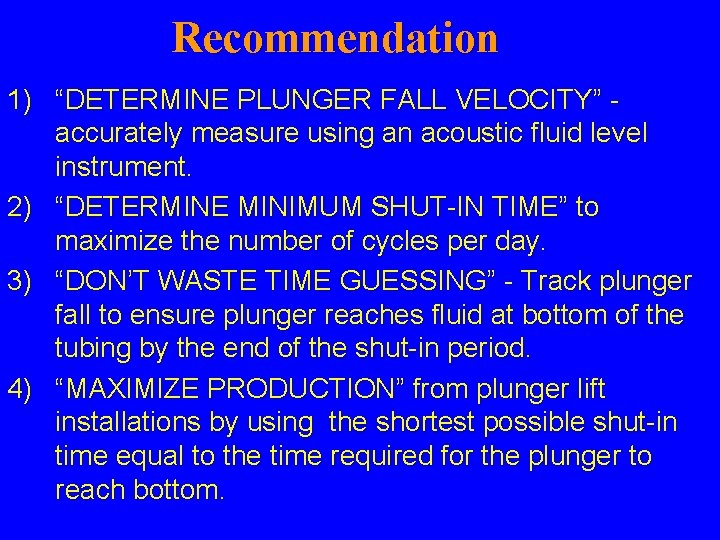
Recommendation 1) “DETERMINE PLUNGER FALL VELOCITY” accurately measure using an acoustic fluid level instrument. 2) “DETERMINE MINIMUM SHUT-IN TIME” to maximize the number of cycles per day. 3) “DON’T WASTE TIME GUESSING” - Track plunger fall to ensure plunger reaches fluid at bottom of the tubing by the end of the shut-in period. 4) “MAXIMIZE PRODUCTION” from plunger lift installations by using the shortest possible shut-in time equal to the time required for the plunger to reach bottom.
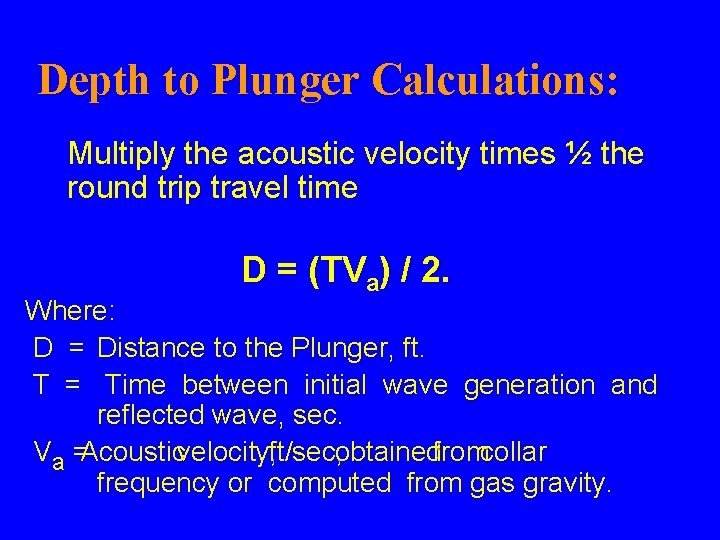
Depth to Plunger Calculations: Multiply the acoustic velocity times ½ the round trip travel time D = (TVa) / 2. Where: D = Distance to the Plunger, ft. T = Time between initial wave generation and reflected wave, sec. Va =Acousticvelocity, ft/sec, obtainedfromcollar frequency or computed from gas gravity.
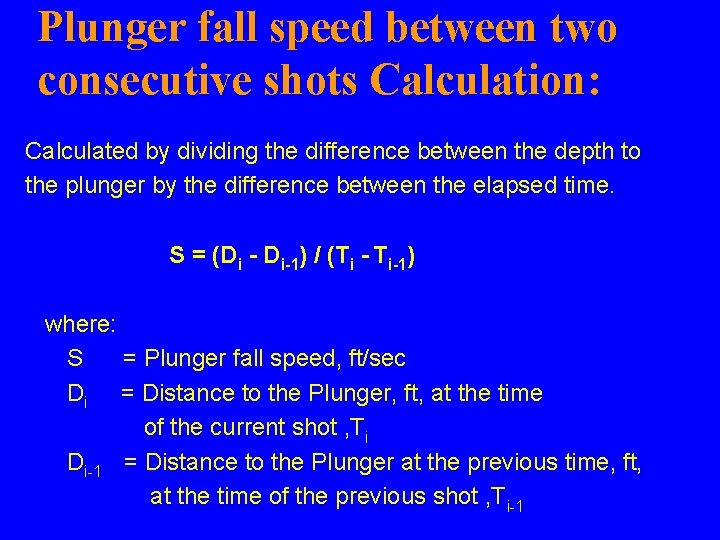
Plunger fall speed between two consecutive shots Calculation: Calculated by dividing the difference between the depth to the plunger by the difference between the elapsed time. S = (Di - Di-1) / (Ti - Ti-1) where: S = Plunger fall speed, ft/sec Di = Distance to the Plunger, ft, at the time of the current shot , Ti Di-1 = Distance to the Plunger at the previous time, ft, at the time of the previous shot , Ti-1
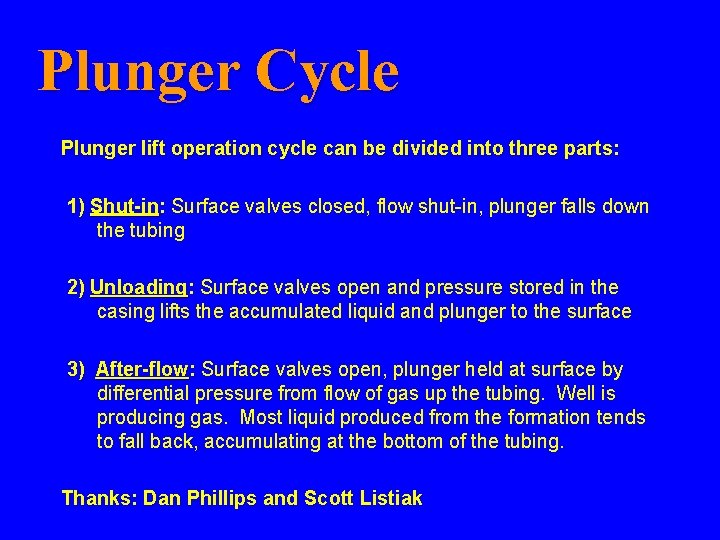
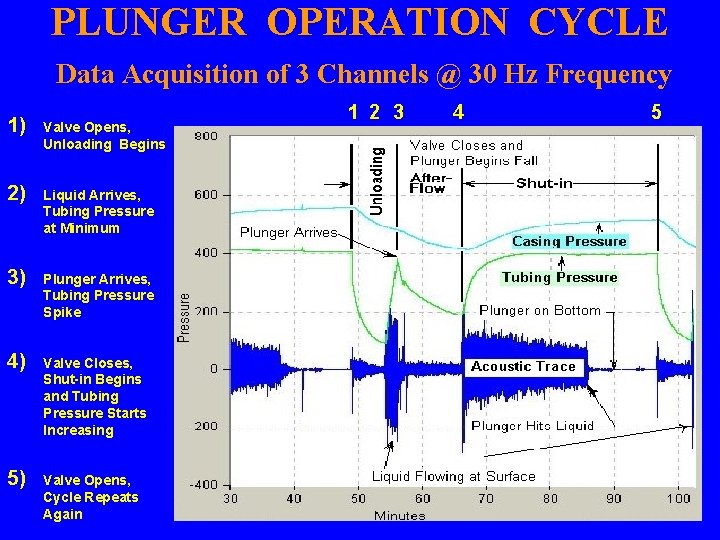
Plunger Cycle Plunger lift operation cycle can be divided into three parts: 1) Shut-in: Surface valves closed, flow shut-in, plunger falls down the tubing 2) Unloading: Surface valves open and pressure stored in the casing lifts the accumulated liquid and plunger to the surface 3) After-flow: Surface valves open, plunger held at surface by differential pressure from flow of gas up the tubing. Well is producing gas. Most liquid produced from the formation tends to fall back, accumulating at the bottom of the tubing. Thanks: Dan Phillips and Scott Listiak
PLUNGER OPERATION CYCLE Data Acquisition of 3 Channels @ 30 Hz Frequency 1) Valve Opens, Unloading Begins 2) Liquid Arrives, Tubing Pressure at Minimum 3) Plunger Arrives, Tubing Pressure Spike 4) Valve Closes, Shut-in Begins and Tubing Pressure Starts Increasing 5) Valve Opens, Cycle Repeats Again 1 2 3 4 5
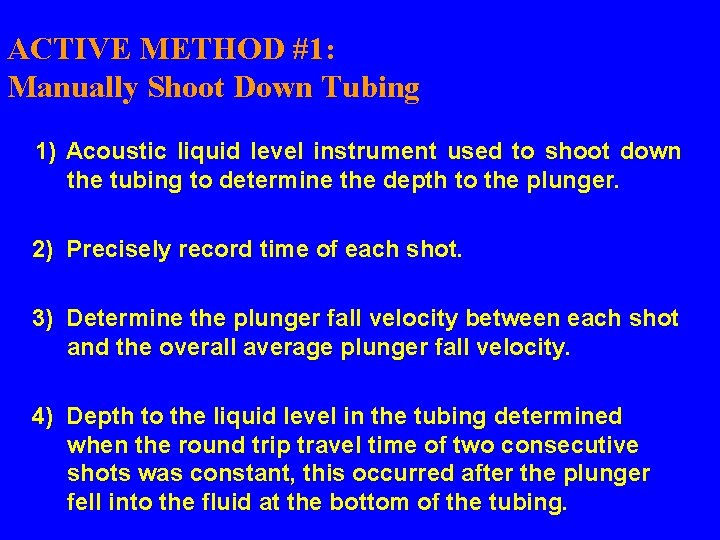
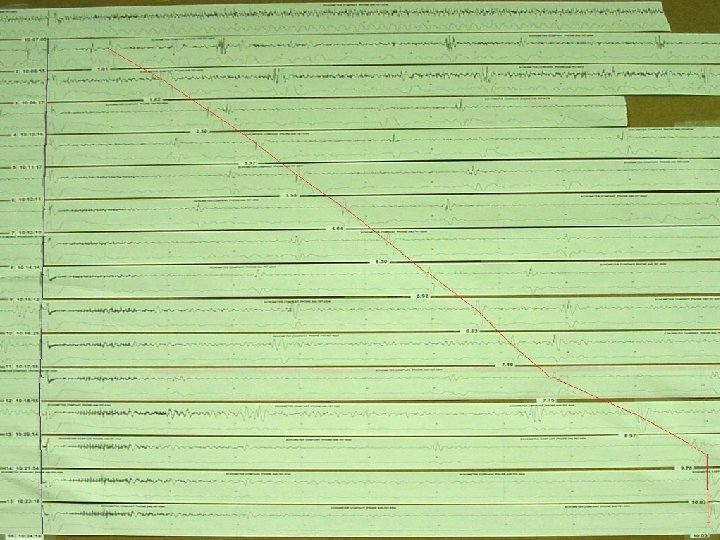
ACTIVE METHOD #1: Manually Shoot Down Tubing 1) Acoustic liquid level instrument used to shoot down the tubing to determine the depth to the plunger. 2) Precisely record time of each shot. 3) Determine the plunger fall velocity between each shot and the overall average plunger fall velocity. 4) Depth to the liquid level in the tubing determined when the round trip travel time of two consecutive shots was constant, this occurred after the plunger fell into the fluid at the bottom of the tubing.
#1 – Worn Brush Plunger 477 fpm Fall
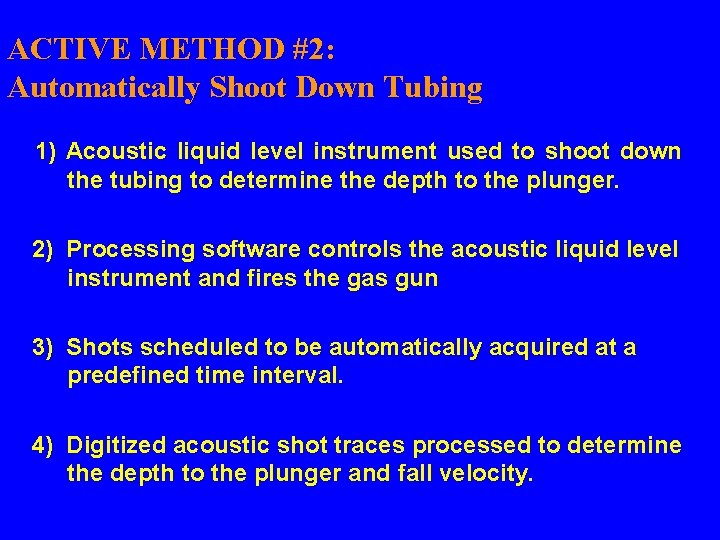
ACTIVE METHOD #2: Automatically Shoot Down Tubing 1) Acoustic liquid level instrument used to shoot down the tubing to determine the depth to the plunger. 2) Processing software controls the acoustic liquid level instrument and fires the gas gun 3) Shots scheduled to be automatically acquired at a predefined time interval. 4) Digitized acoustic shot traces processed to determine the depth to the plunger and fall velocity.
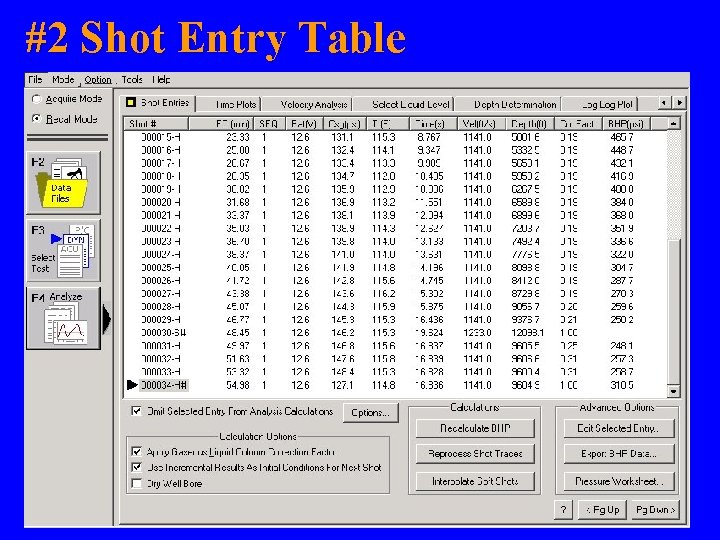
#2 Shot Entry Table
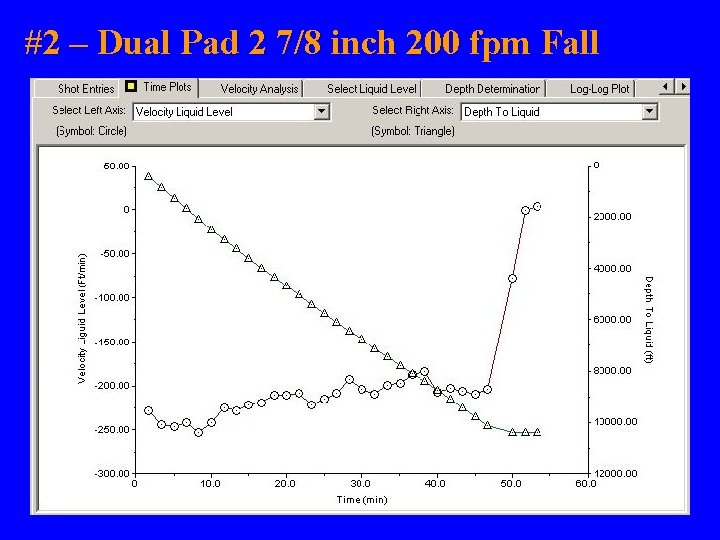
#2 – Dual Pad 2 7/8 inch 200 fpm Fall
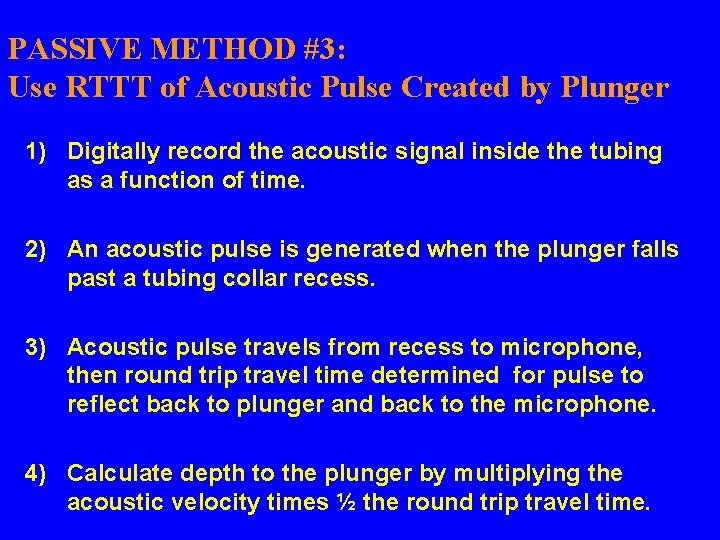
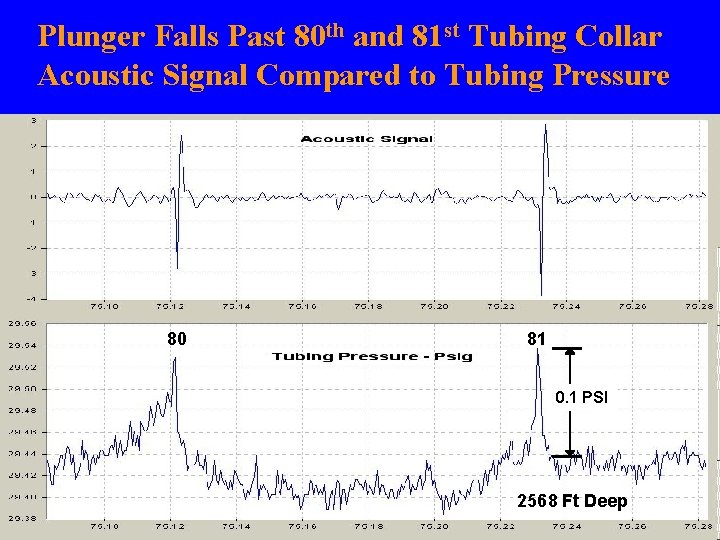
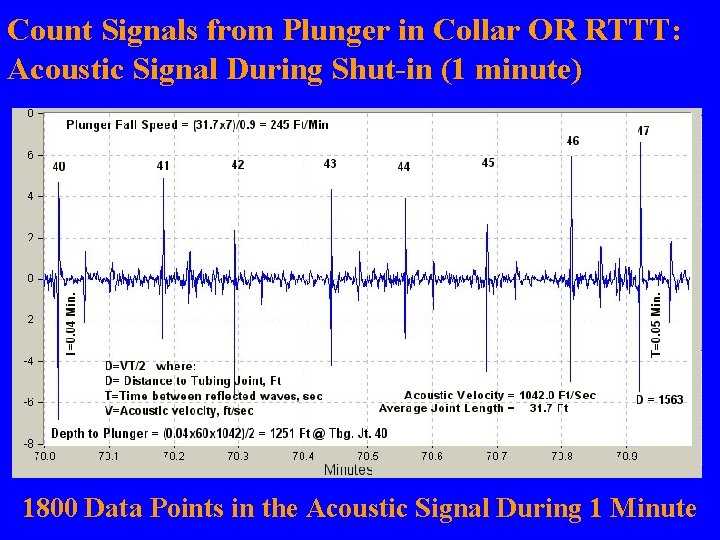
PASSIVE METHOD #3: Use RTTT of Acoustic Pulse Created by Plunger 1) Digitally record the acoustic signal inside the tubing as a function of time. 2) An acoustic pulse is generated when the plunger falls past a tubing collar recess. 3) Acoustic pulse travels from recess to microphone, then round trip travel time determined for pulse to reflect back to plunger and back to the microphone. 4) Calculate depth to the plunger by multiplying the acoustic velocity times ½ the round trip travel time.
Plunger Falls Past 80 th and 81 st Tubing Collar Acoustic Signal Compared to Tubing Pressure 80 81 0. 1 PSI 2568 Ft Deep
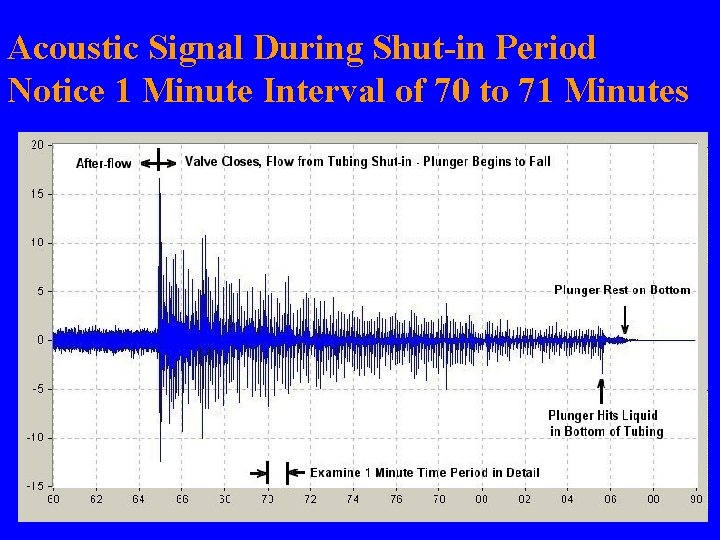
Acoustic Signal During Shut-in Period Notice 1 Minute Interval of 70 to 71 Minutes
Count Signals from Plunger in Collar OR RTTT: Acoustic Signal During Shut-in (1 minute) 1800 Data Points in the Acoustic Signal During 1 Minute
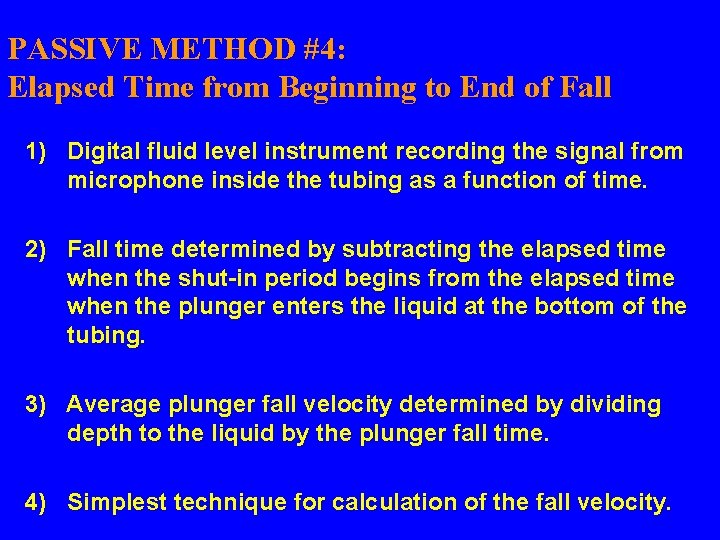
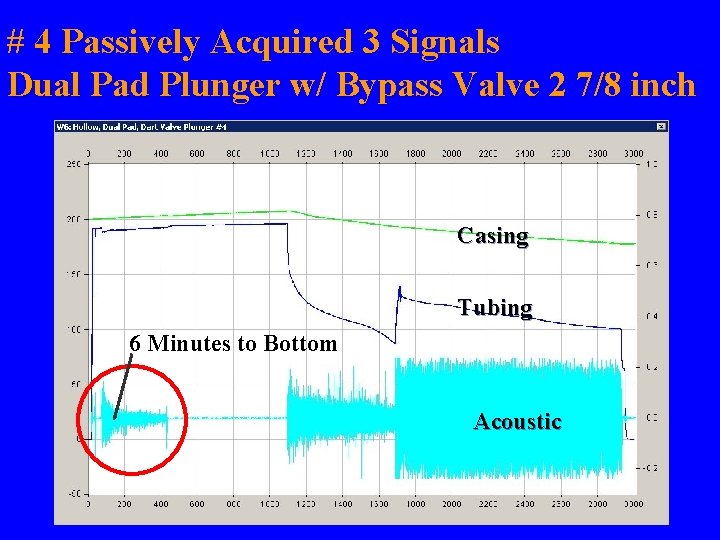
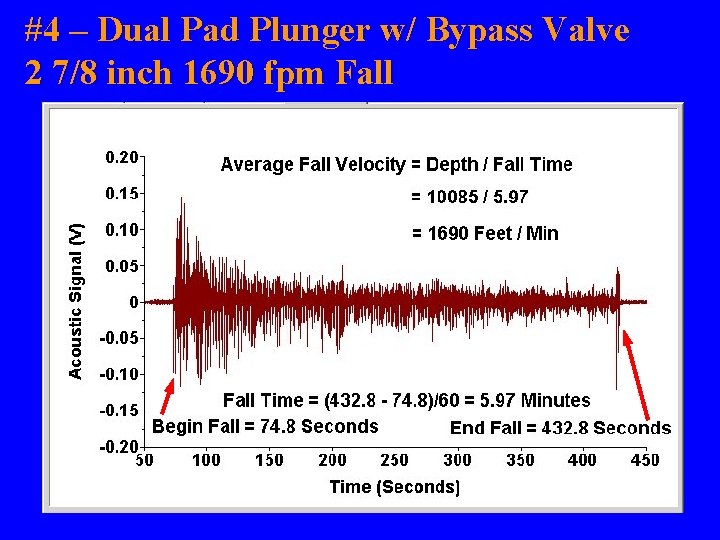
PASSIVE METHOD #4: Elapsed Time from Beginning to End of Fall 1) Digital fluid level instrument recording the signal from microphone inside the tubing as a function of time. 2) Fall time determined by subtracting the elapsed time when the shut-in period begins from the elapsed time when the plunger enters the liquid at the bottom of the tubing. 3) Average plunger fall velocity determined by dividing depth to the liquid by the plunger fall time. 4) Simplest technique for calculation of the fall velocity.
# 4 Passively Acquired 3 Signals Dual Pad Plunger w/ Bypass Valve 2 7/8 inch Casing Tubing 6 Minutes to Bottom Acoustic
#4 – Dual Pad Plunger w/ Bypass Valve 2 7/8 inch 1690 fpm Fall
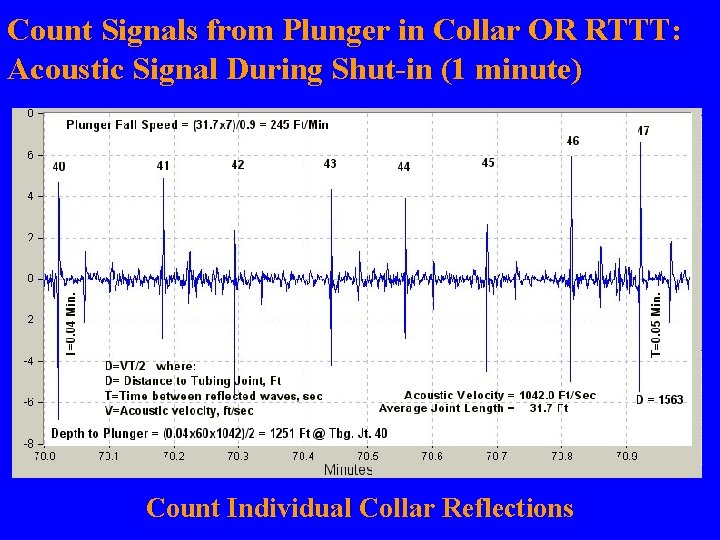
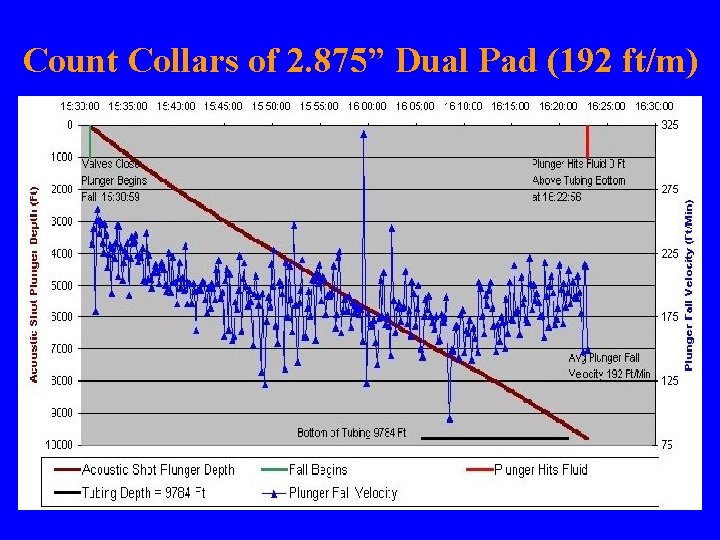
PASSIVE METHOD #5: Count Each Collar in High Speed Acoustic Signal 1) acoustic signal as plunger falls during shut-in. 2) Manually count each acoustic pulse created by the plunger passing a tubing collar recess 3) Depth to the collar reflection by multiplying the average tubing joint length times the count of each tubing collar recess’s acoustic pulse. 4) Method is best suited for computer processing of the acoustic data.
Count Signals from Plunger in Collar OR RTTT: Acoustic Signal During Shut-in (1 minute) Count Individual Collar Reflections
Count Collars of 2. 875” Dual Pad (192 ft/m)
Questions?