
Gas Exchange Metabolic Pathways Glycolysis Glucose Lactate Pyruvate
Gas Exchange
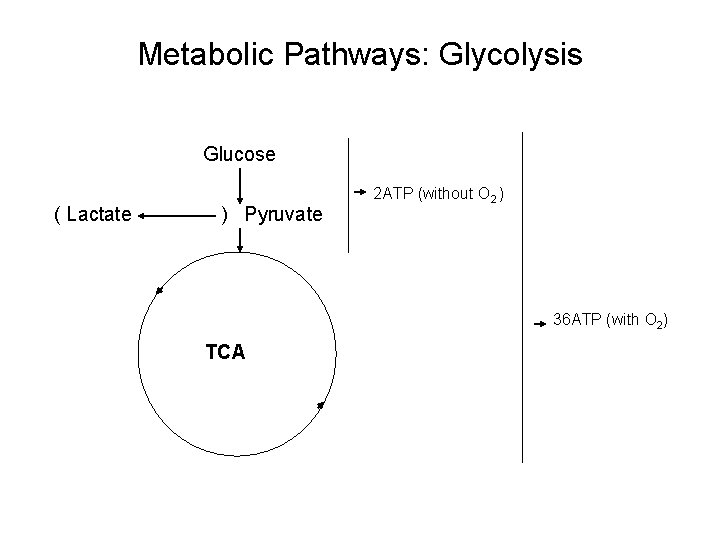
Metabolic Pathways: Glycolysis Glucose ( Lactate ) Pyruvate TCA 2 ATP (without O 2 ) 36 ATP (with O 2)

Metabolic Pathways: anaerobic • Lactate pathway – rapid but inefficient conversion of pyruvate to lactate – used for burst work (muscle tissue temporarily. out of O 2) 3 ATP/pyruvate • Opine pathway – rapid but inefficient – used for burst work 3 ATP/glucose (Opine is a class of amino acid derivitives, slightly different ones in different organisms e. g. Octopine in Octopoids, Strombine in some bivalves) • Succinate pathway – slower but more efficient than above – used in animals living in anoxic environments (e. g. bivalves in anoxic mud flats, endoparasites in anoxic parts of hosts) 4 -6 ATP/glucose • Phosphogens – not a pathway but a class of phosphoamino acids that can store energy from ATP during periods of relaxation and deliver it under conditions of anoxia or exhaustion (phosphoarginine in invertes. phosphocreatine in verts. , echinoderms have both, annelids have 4 others)
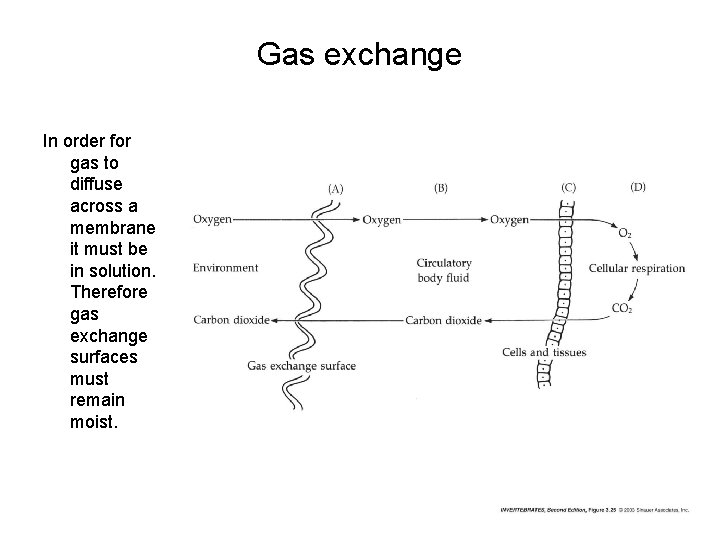
Gas exchange In order for gas to diffuse across a membrane it must be in solution. Therefore gas exchange surfaces must remain moist.
Oxygen Diffusion • Organisms that live in aquatic, marine, or even moist terrestrial environments and which have all tissues within 1 mm of the moist integument, do not have specialized gas exchange structures nor do they require a circulatory system to transport oxygen. In some, such as nemertean worms a circulatory system exists that functions to carry nutrients from the gut to other tissues. • Larger organisms and organisms living in low oxygen environments have evolved such structures and circulatory systems. The diffusion of O 2 across such surfaces is most efficient where the medium is in motion and the underlying circulatory fluid is also in motion especially if it is moving in the opposite direction
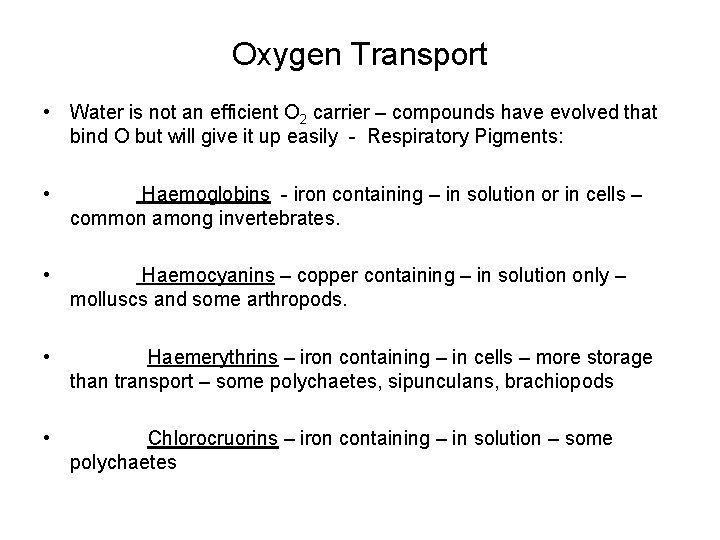
Oxygen Transport • Water is not an efficient O 2 carrier – compounds have evolved that bind O but will give it up easily - Respiratory Pigments: • Haemoglobins - iron containing – in solution or in cells – common among invertebrates. • Haemocyanins – copper containing – in solution only – molluscs and some arthropods. • Haemerythrins – iron containing – in cells – more storage than transport – some polychaetes, sipunculans, brachiopods • Chlorocruorins – iron containing – in solution – some polychaetes
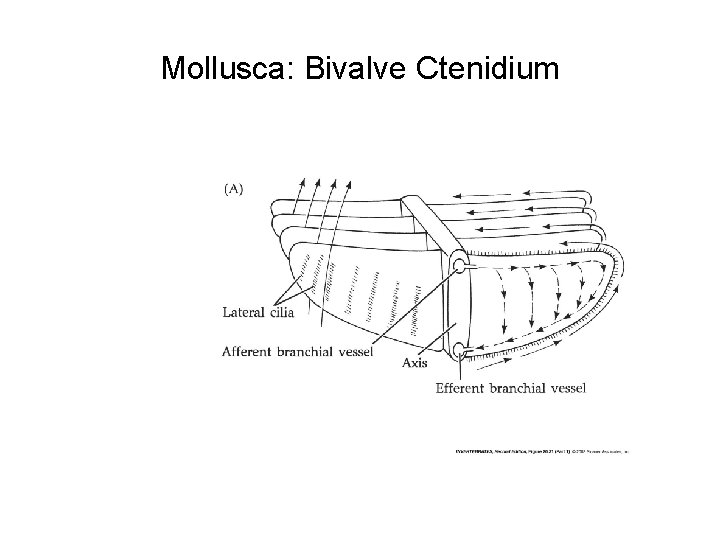
Mollusca: Bivalve Ctenidium
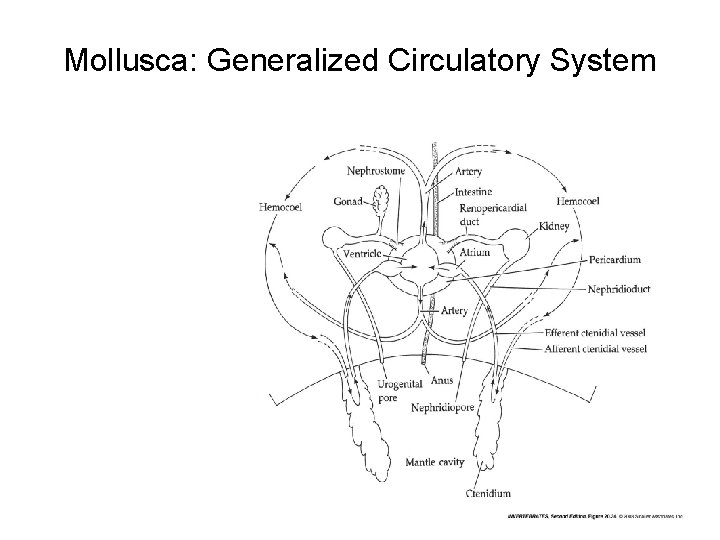
Mollusca: Generalized Circulatory System
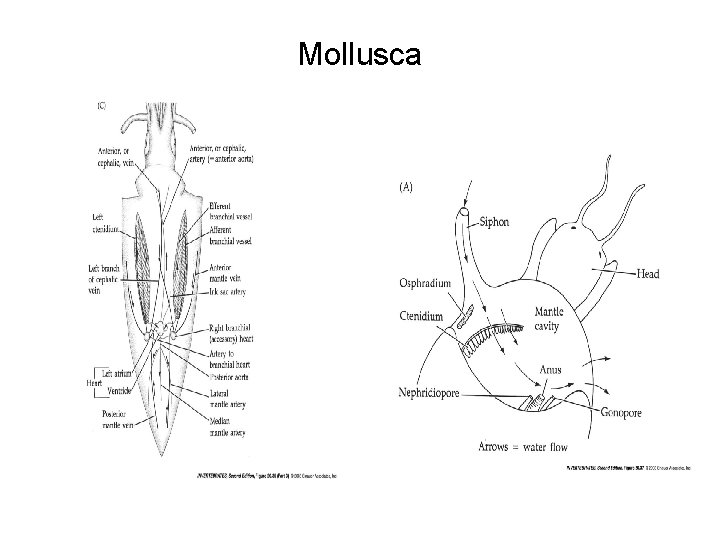
Mollusca
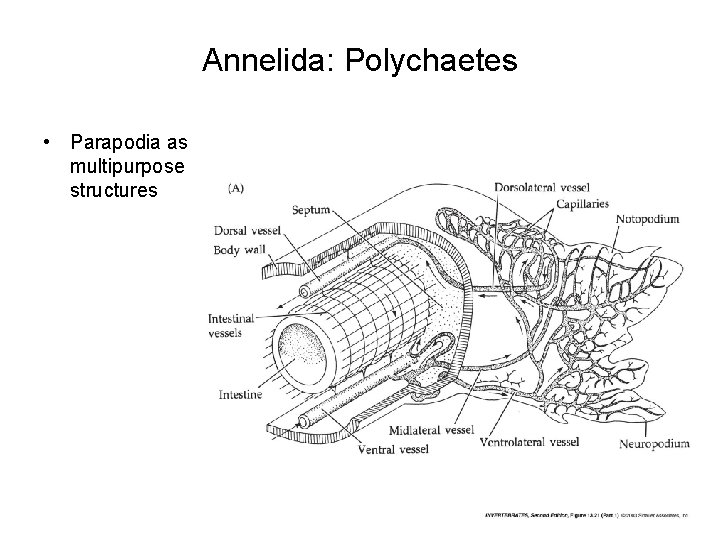
Annelida: Polychaetes • Parapodia as multipurpose structures
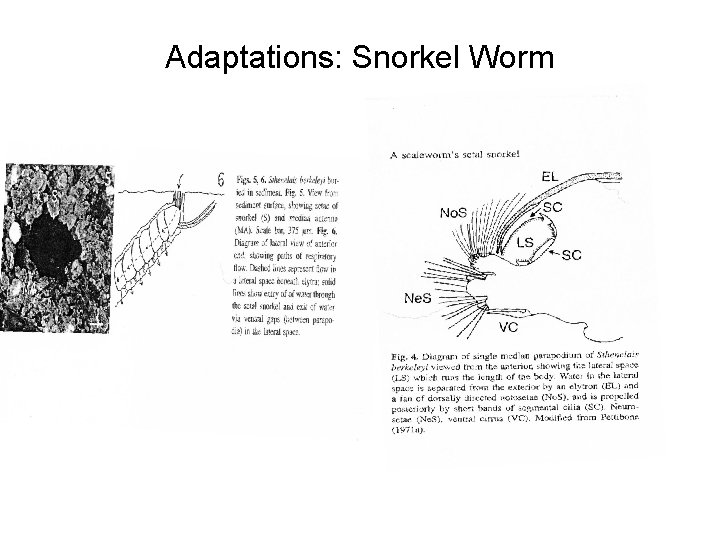
Adaptations: Snorkel Worm
Annelida: Oligochaetes, the Earthworm
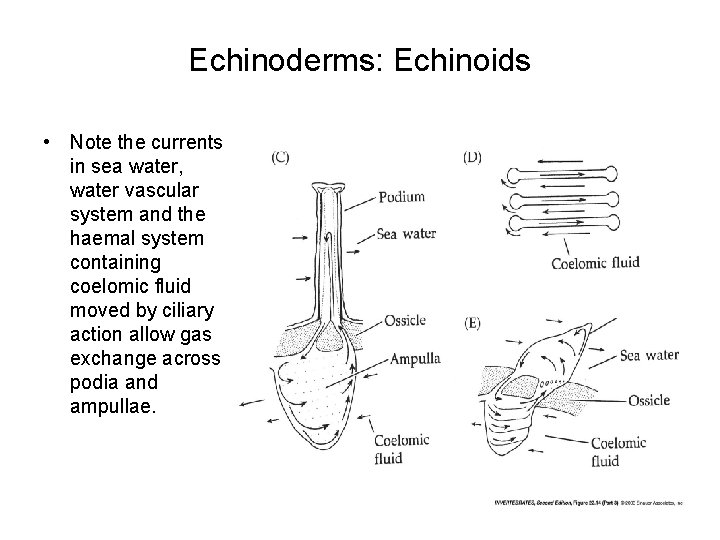
Echinoderms: Echinoids • Note the currents in sea water, water vascular system and the haemal system containing coelomic fluid moved by ciliary action allow gas exchange across podia and ampullae.

Crustacea
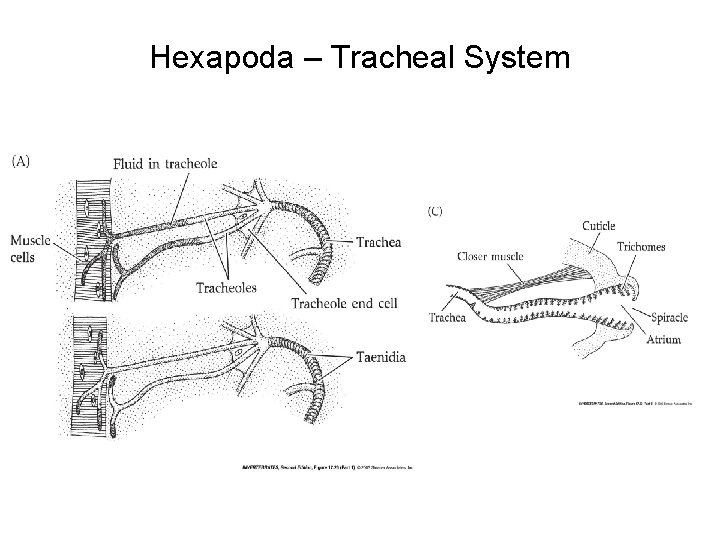
Hexapoda – Tracheal System
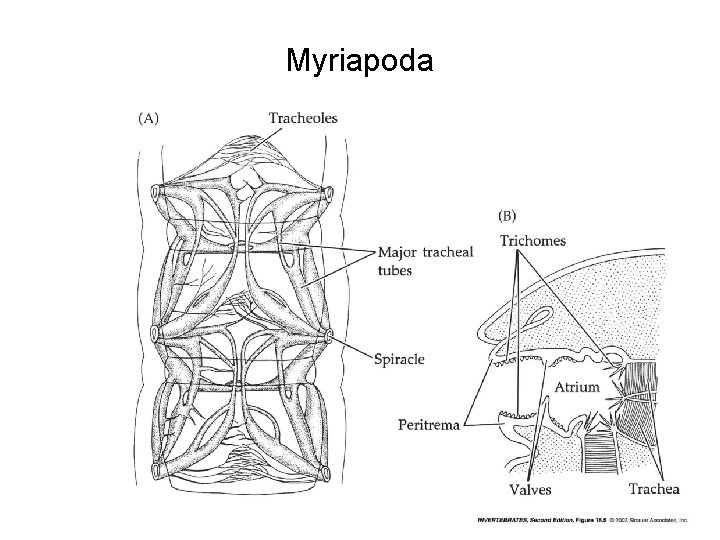
Myriapoda
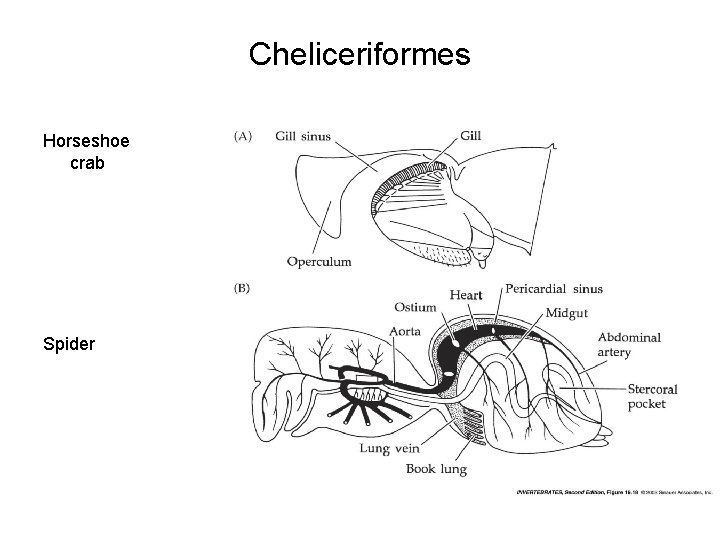
Cheliceriformes Horseshoe crab Spider
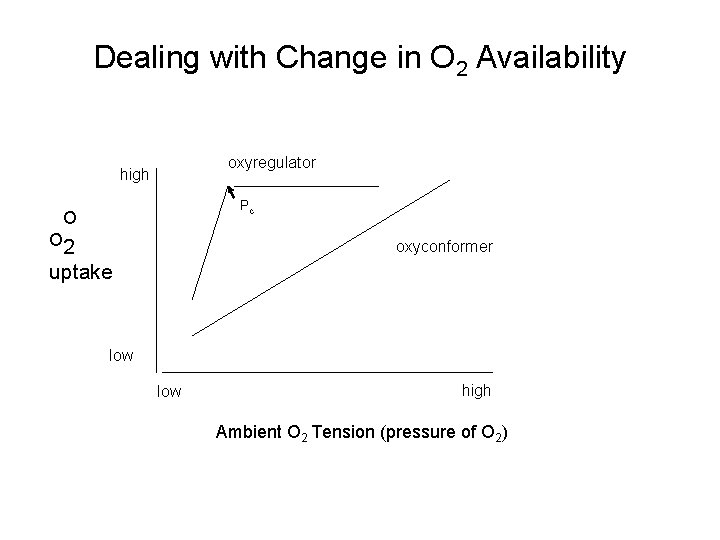
Dealing with Change in O 2 Availability oxyregulator high Pc O O 2 oxyconformer uptake low high Ambient O 2 Tension (pressure of O 2)
Dealing with Changes in O 2 Availability • Oxyconformer – reduces or increase uptake to match availability can chnage metabolic activity and/or switch to succinate pathway – usually found in organisms living in environments that seldom fall very low in O 2 tension or do so in a regular predictable way. • Oxyregulators – maintain uptake despite changes in availability may change ventilation of gas exchange structures, change blood flow and volume, change synthesis of respiratory pigments – usually found in organisms living in environments which experience occasional and unpredictable changes in O 2 tension. • Organisms vary in their ability to conform or regulate – thus react differently to human induced changes in O 2 tension. E. g. Tubifex sp. and Asellus sp increase ventillation and respiratory pigment and survive in polluted freshwaters where Hydra, and some crustaceans can’t survive.
SOD • Too much O in tissues can be harmful by forming superoxide radicals that denature macromolecules. This a potentially serious problem for organisms that harbor symbiotic algae in their cells. • Many cnidarians and giant clams have evolved a system whereby they synthesize superoxide dismutase (SOD) an enzyme that eliminates superoxide radicals
- Slides: 20