
Gas exchange internal and external respiration Know how

- Slides: 26
Gas exchange internal and external respiration. Know how 02 and C 02 transfer from the atmosphere to the working muscles.
DTA
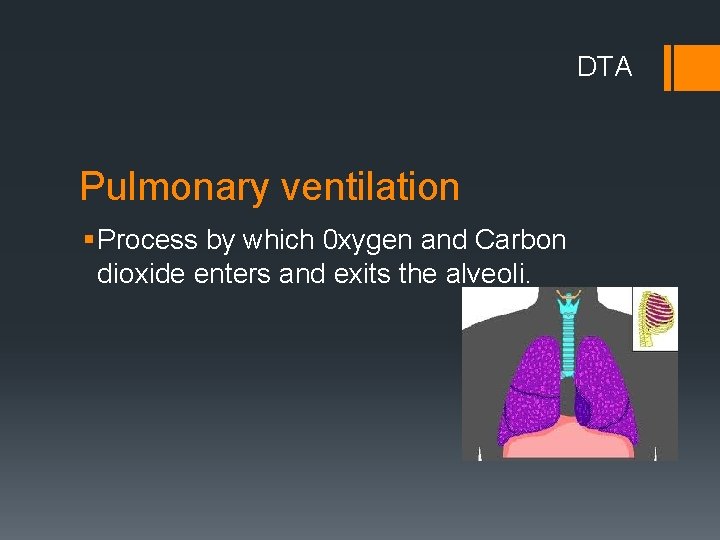
DTA Pulmonary ventilation § Process by which 0 xygen and Carbon dioxide enters and exits the alveoli.
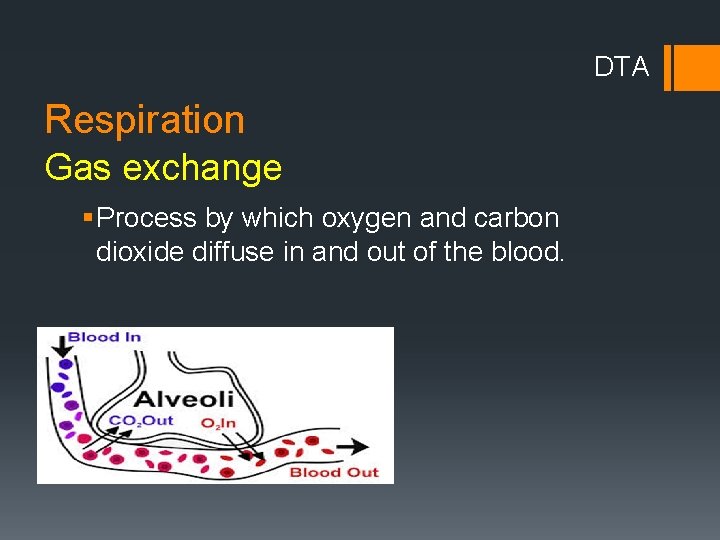
DTA Respiration Gas exchange § Process by which oxygen and carbon dioxide diffuse in and out of the blood.
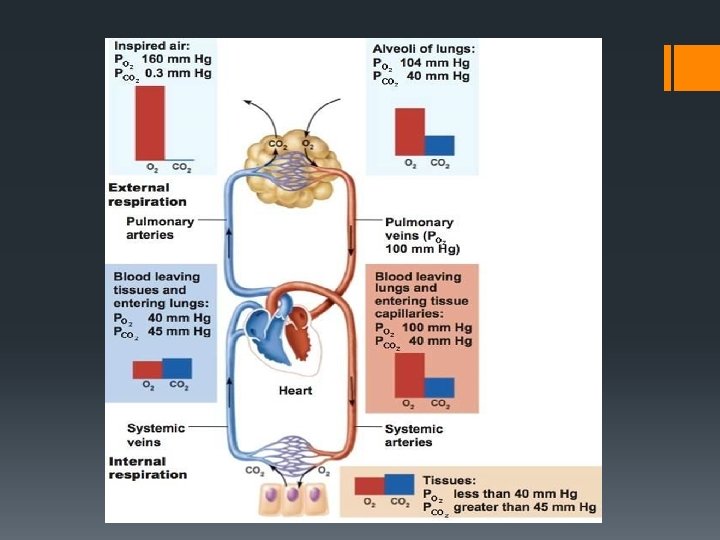
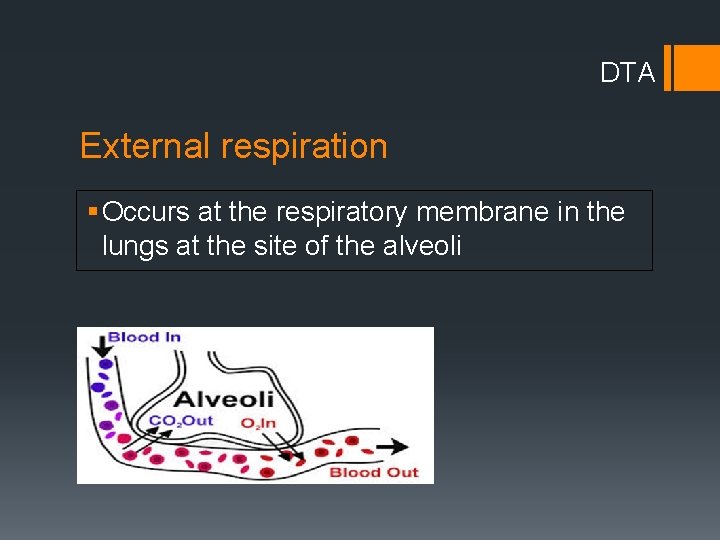
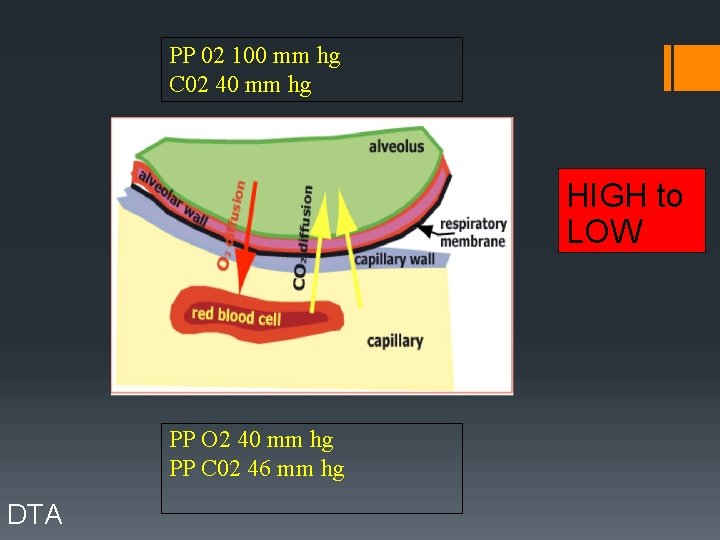
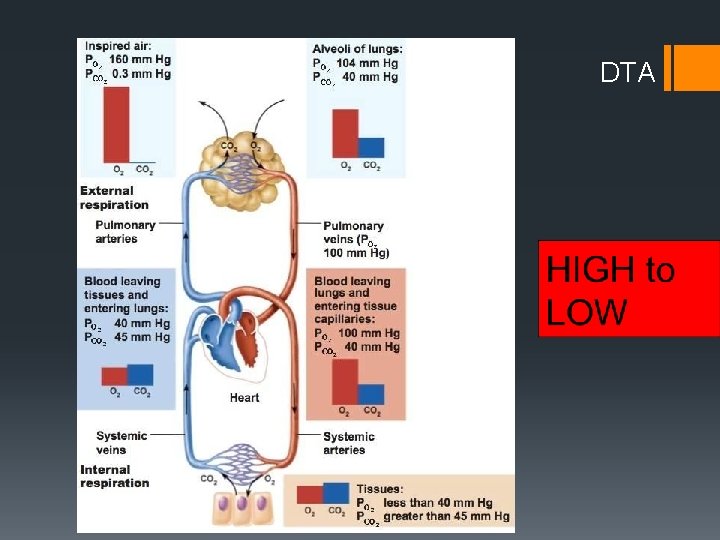
DTA External respiration § Occurs at the respiratory membrane in the lungs at the site of the alveoli
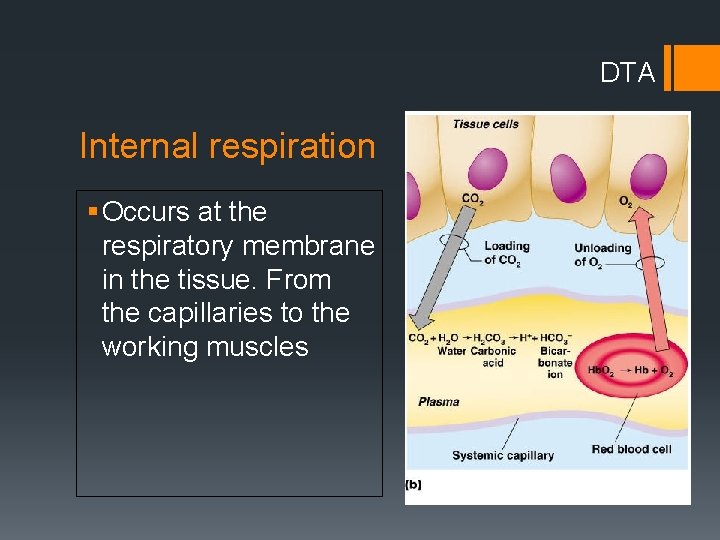
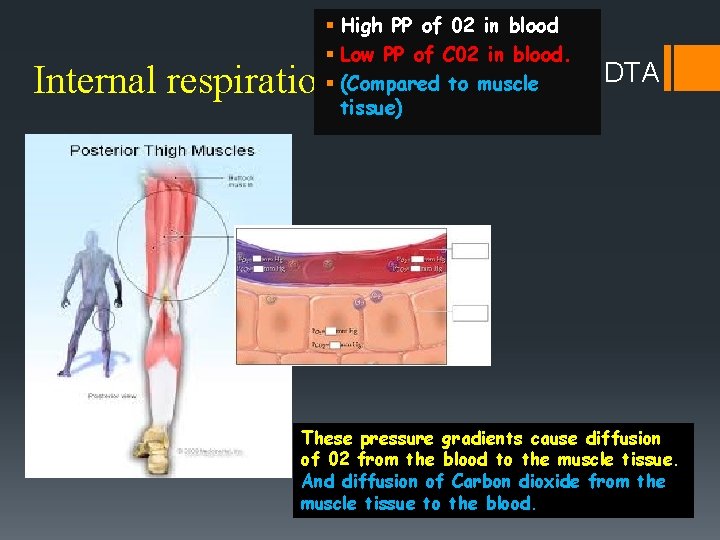
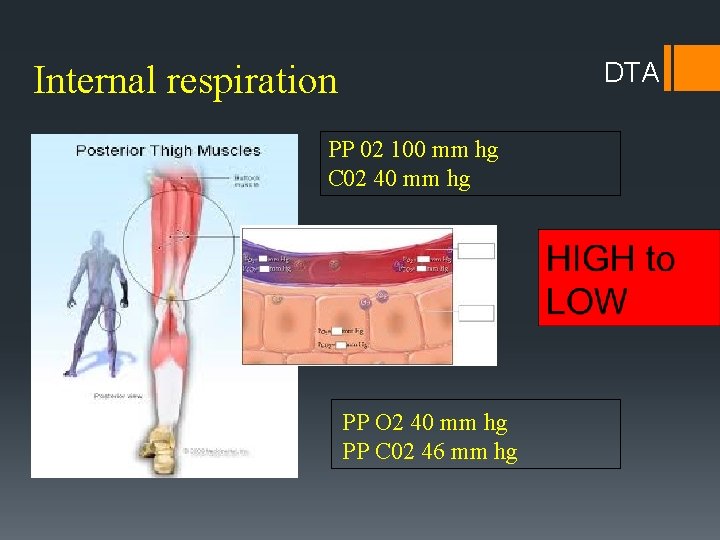
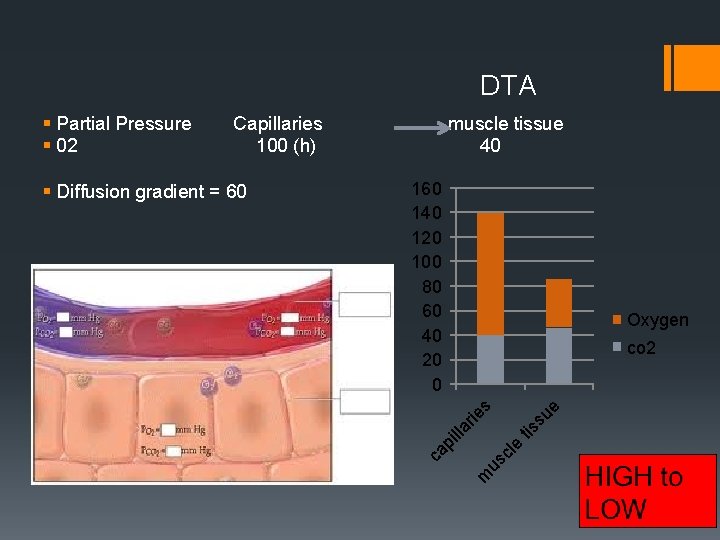
DTA Internal respiration § Occurs at the respiratory membrane in the tissue. From the capillaries to the working muscles
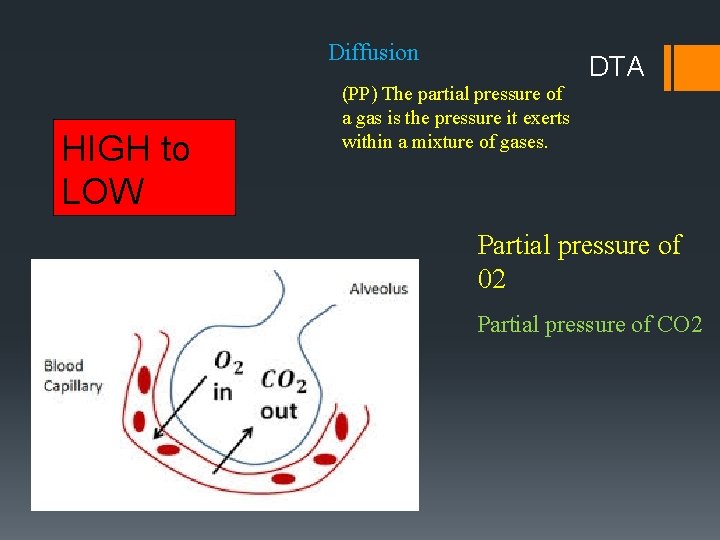
Diffusion HIGH to LOW DTA (PP) The partial pressure of a gas is the pressure it exerts within a mixture of gases. Partial pressure of 02 Partial pressure of CO 2
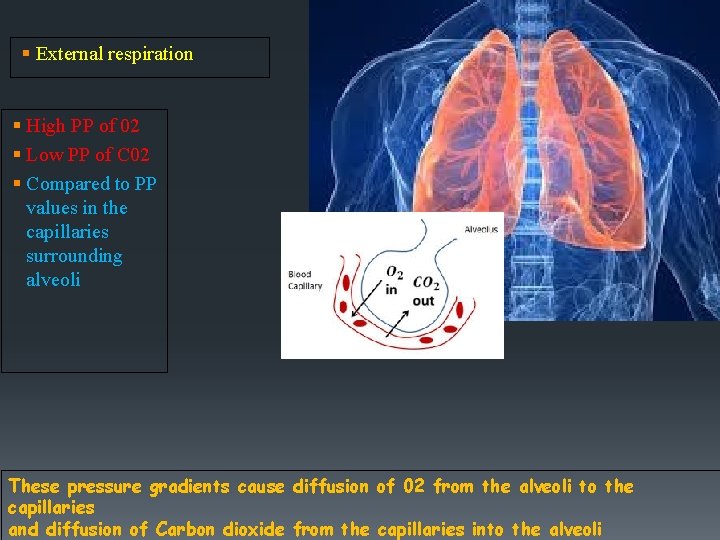
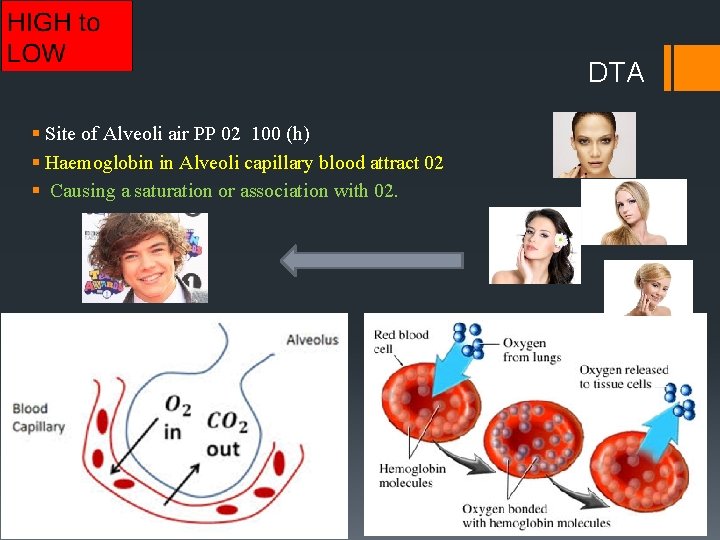
§ External respiration DTA § High PP of 02 § Low PP of C 02 § Compared to PP values in the capillaries surrounding alveoli These pressure gradients cause diffusion of 02 from the alveoli to the capillaries and diffusion of Carbon dioxide from the capillaries into the alveoli
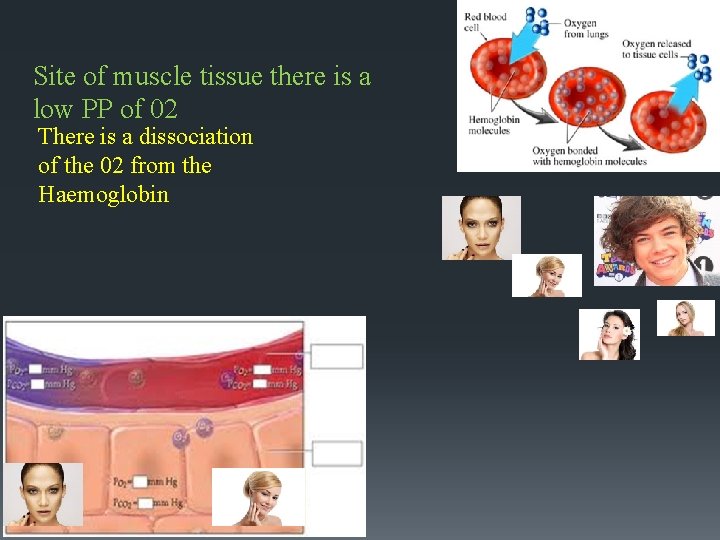
§ High PP of 02 in blood § Low PP of C 02 in blood. § (Compared to muscle tissue) Internal respiration DTA These pressure gradients cause diffusion of 02 from the blood to the muscle tissue. And diffusion of Carbon dioxide from the muscle tissue to the blood.
PP 02 100 mm hg C 02 40 mm hg HIGH to LOW PP O 2 40 mm hg PP C 02 46 mm hg DTA
DTA Internal respiration PP 02 100 mm hg C 02 40 mm hg PP O 2 40 mm hg PP C 02 46 mm hg
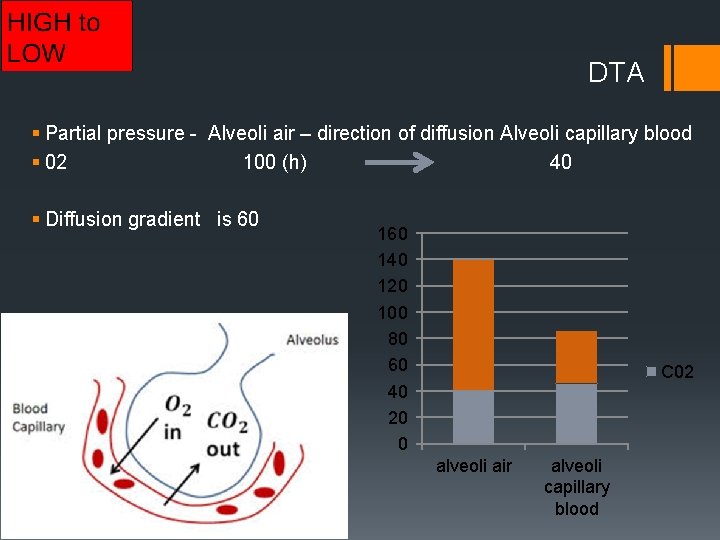
DTA § Partial pressure - Alveoli air – direction of diffusion Alveoli capillary blood § 02 100 (h) 40 § Diffusion gradient is 60 140 120 100 80 60 40 20 0 C 02 alveoli air alveoli capillary blood
DTA Capillaries 100 (h) 160 140 120 100 80 60 40 20 0 Oxygen m us c le tis su e co 2 lla rie s § Diffusion gradient = 60 muscle tissue 40 ca pi § Partial Pressure § 02
DTA
DTA End
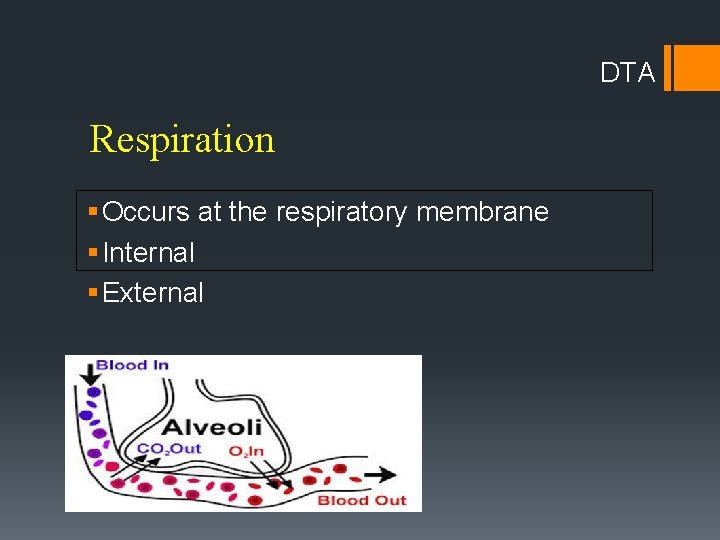
DTA Respiration § Occurs at the respiratory membrane § Internal § External
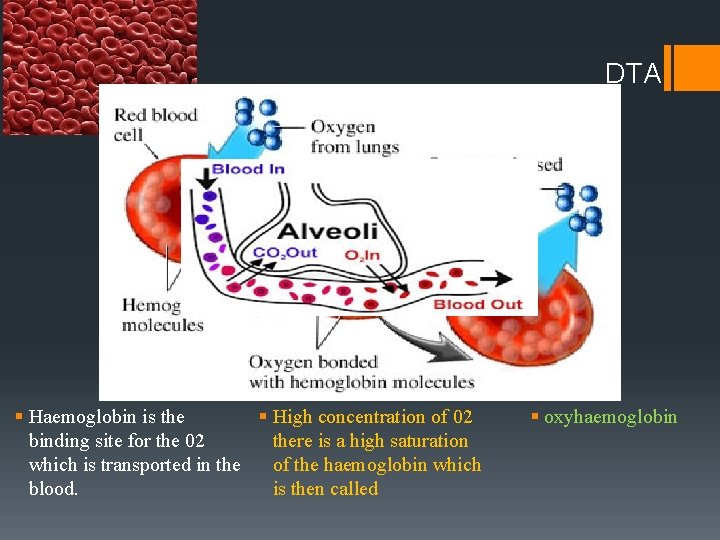
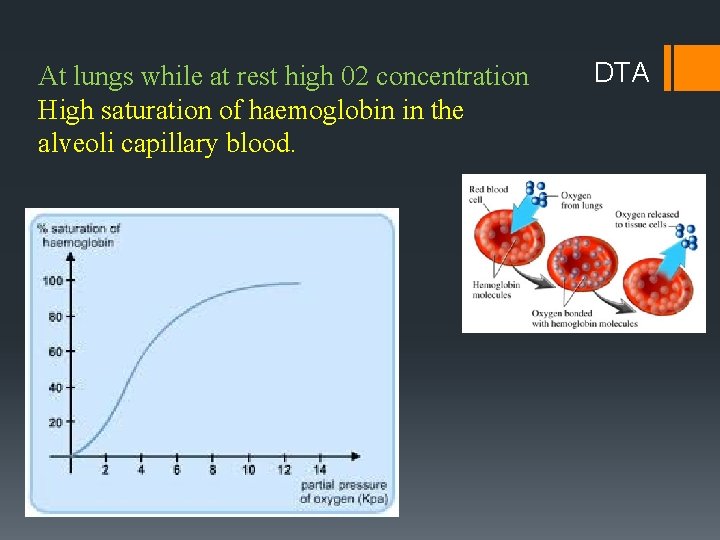
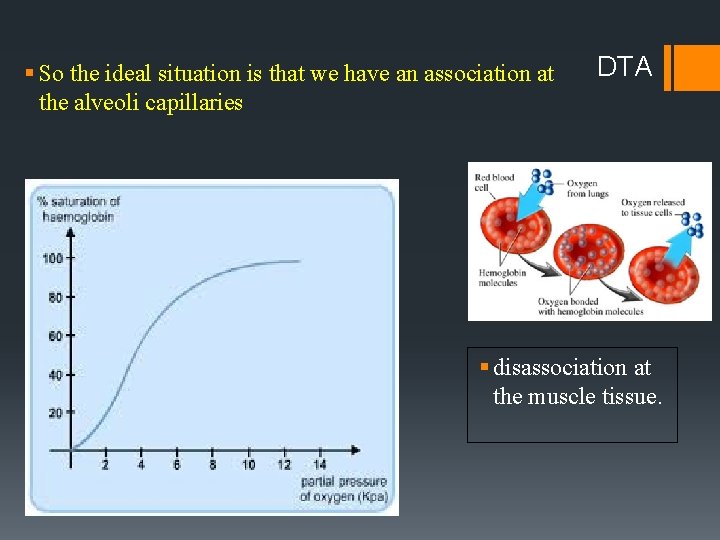
DTA § Haemoglobin is the § High concentration of 02 binding site for the 02 there is a high saturation which is transported in the of the haemoglobin which blood. is then called § oxyhaemoglobin
DTA § Site of Alveoli air PP 02 100 (h) § Haemoglobin in Alveoli capillary blood attract 02 § Causing a saturation or association with 02.
Site of muscle tissue there is a low PP of 02 There is a dissociation of the 02 from the Haemoglobin DTA
At lungs while at rest high 02 concentration High saturation of haemoglobin in the alveoli capillary blood. DTA
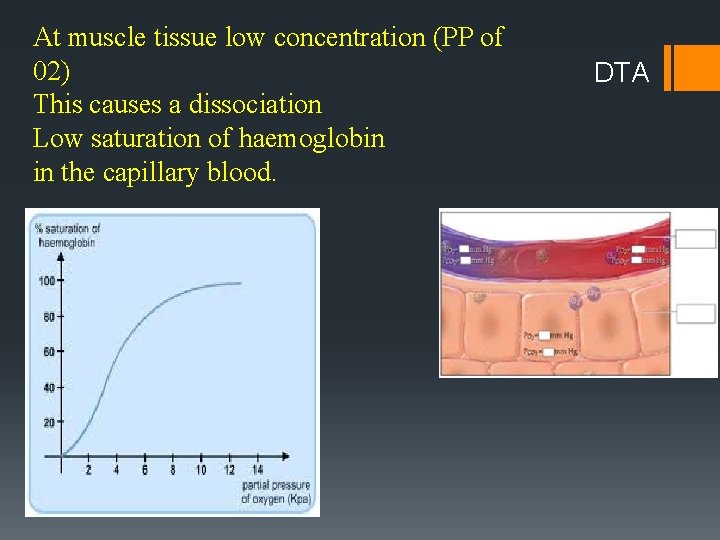
At muscle tissue low concentration (PP of 02) This causes a dissociation Low saturation of haemoglobin in the capillary blood. DTA
§ So the ideal situation is that we have an association at the alveoli capillaries DTA § disassociation at the muscle tissue.
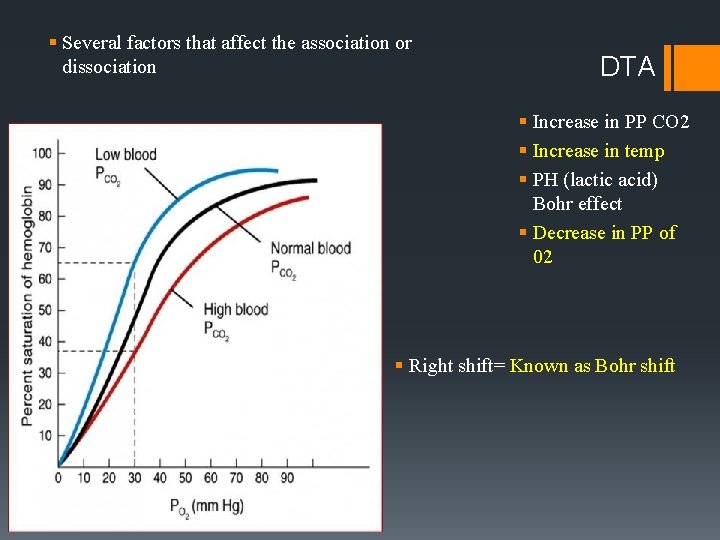
§ Several factors that affect the association or dissociation DTA § Increase in PP CO 2 § Increase in temp § PH (lactic acid) Bohr effect § Decrease in PP of 02 § Right shift= Known as Bohr shift
DTA Describe the effect of smoking on the transport of oxygen in the blood. § Key term: Carbon monoxide.
DTA Describe the effect of smoking on the transport of oxygen in the blood. § Give two ways in which oxygen is transported in the blood. Describe the effect of smoking on the transport of oxygen in the blood.
DTA § § § § 2. 2 marks for first part of question, 1 mark per point. 1(Combines) with or in haemoglobin / as oxyhaemoglobin or Hb. O 2 Do not accept carried in red blood cells = Vg 2(Dissolved) in blood plasma 3 marks for second part of question, 1 mark per point. 3(CO) Smoking produces (high levels of) carbon monoxide Do not accept cigarettes contain carbon monoxide 4(gas ex) less efficient gaseous exchange / decreased diffusion gradient of O 2 or between O 2 in alveoli and O 2 in blood Do not accept build up of tar in alveoli = less gaseous exchange 5(affinity) haemoglobin has a greater affinity for CO than O 2 / carbon monoxide has a greater affinity for haemoglobin than oxygen Accept Hb for haemoglobin 6(less O 2) Less O 2 is transported in the blood / Less O 2 is absorbed or carried (by the haemoglobin) / haemoglobin is not fully saturated with O 2 / PO 2 (PPO 2) decreases in the blood Do not accept less room for O 2 in Hb [5]