
Gas exchange in Insects What is the surface




- Slides: 16
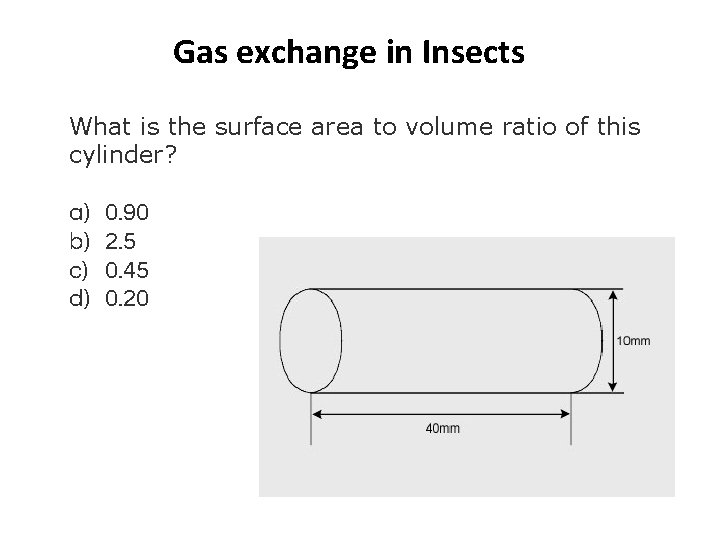
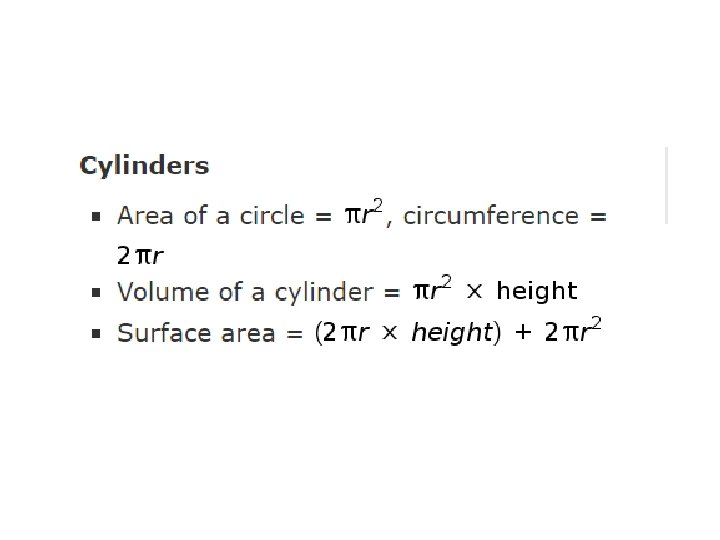
Gas exchange in Insects What is the surface area to volume ratio of this cylinder? a) b) c) d) 0. 90 2. 5 0. 45 0. 20
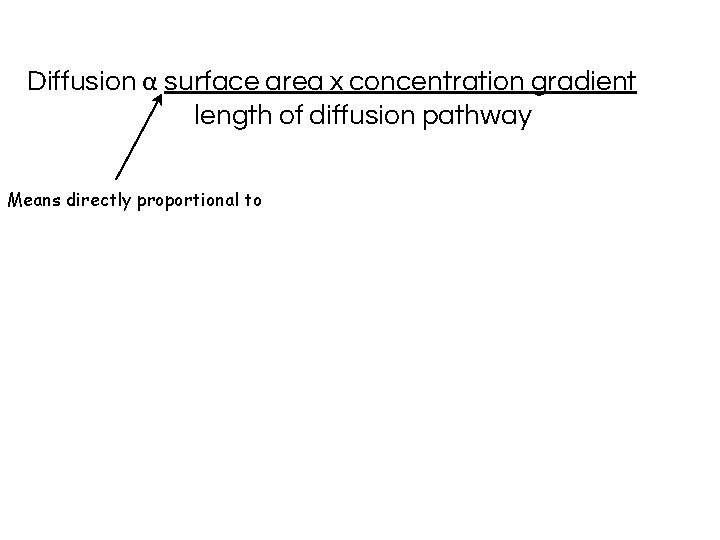
Diffusion α surface area x concentration gradient length of diffusion pathway Means directly proportional to
Single-celled organism Large surface area to volume ratio Oxygen and carbon dioxide diffuse across membrane Insect Could easily lose water so have: -Small surface area to volume ratio -Waterproof covering of chitin So how do they exchange gases?
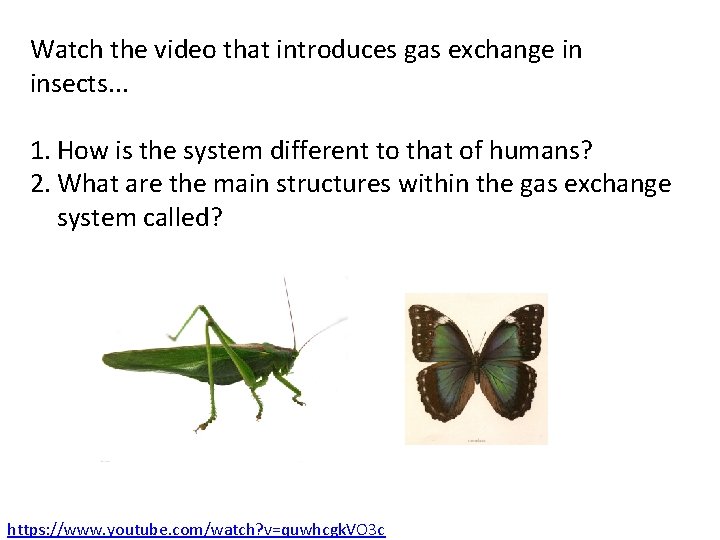
Watch the video that introduces gas exchange in insects. . . 1. How is the system different to that of humans? 2. What are the main structures within the gas exchange system called? https: //www. youtube. com/watch? v=quwhcgk. VO 3 c
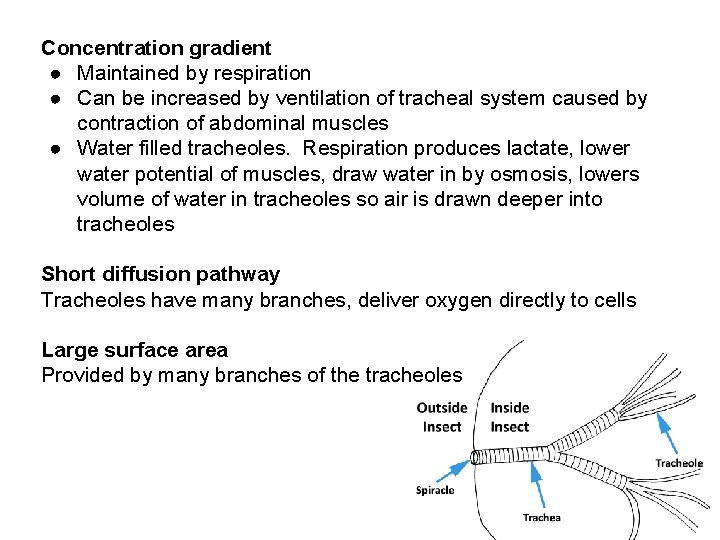
Concentration gradient ● Maintained by respiration ● Can be increased by ventilation of tracheal system caused by contraction of abdominal muscles ● Water filled tracheoles. Respiration produces lactate, lower water potential of muscles, draw water in by osmosis, lowers volume of water in tracheoles so air is drawn deeper into tracheoles Short diffusion pathway Tracheoles have many branches, deliver oxygen directly to cells Large surface area Provided by many branches of the tracheoles
The problem of water loss… • Insects must have gas exchange to obtain oxygen and remove carbon dioxide • BUT… because they live in air on the land (terrestrial) they are likely to dry out • The spiracles/ tracheoles which let gases in and out, will also let water out • Problem→ getting oxygen = losing water → saving water = not getting oxygen • Insects have to compromise between the two
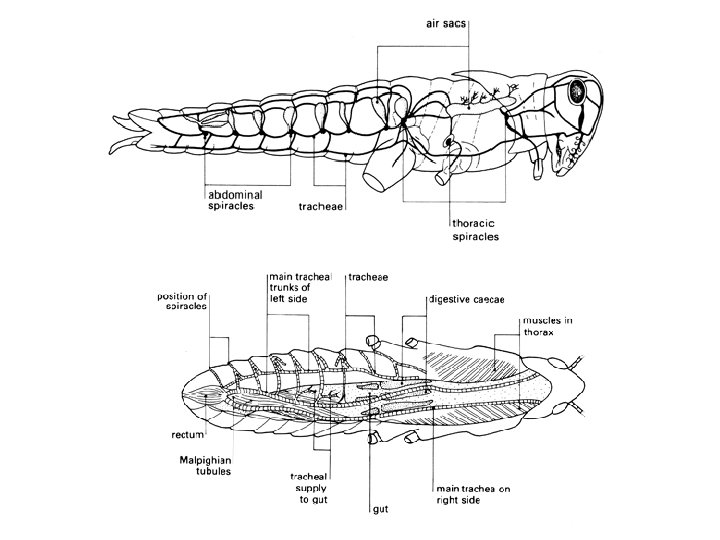
● Waterproof exoskeleton ● Spiracles (pores) on body surface ● Valve to open/ close spiracle ● Sometimes hairs around spiracles to trap moist air Muscle Spiracle Tracheoles Trachea
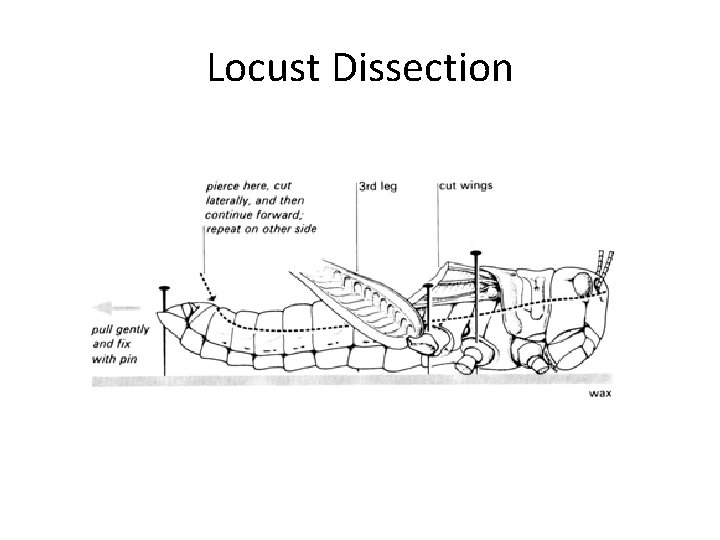
Locust Dissection
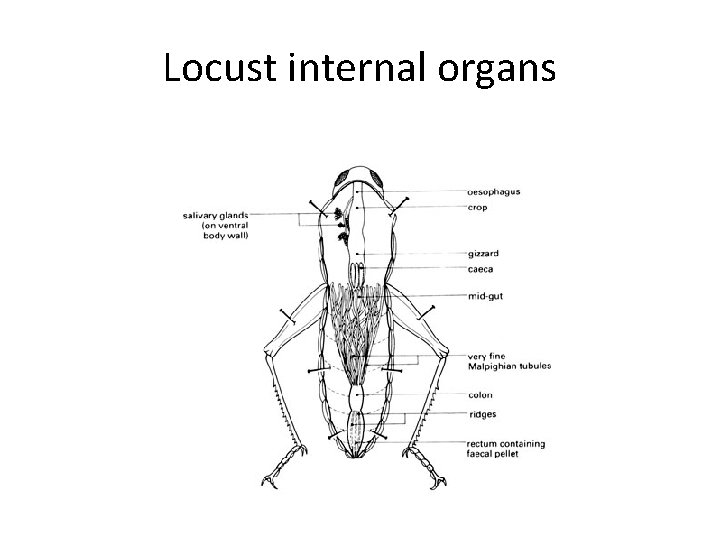
Locust internal organs
• With scissors, remove a small portion (2. 5 mm long) of the mid-gut or hind-gut together with some tracheae. Place it in a watchglass containing a little water. • Cut the portion of gut longitudinally, open it out flat, wash away all trace of the gut contents and mount the specimen in water on a slide beneath a coverslip. • Observe it under low power and high power. The tracheae will stand out clearly because they contain air and so appear dark grey or silver in transmitted light. • Remove the coverslip and put a drop of aqueous methylene blue on the tissue. • Leave for a few minutes then wash away the excess stain and mount in water. Look for nuclei and other details of a cellular structure surrounding the tracheae.
Exam Question An insect lives in air. Describe how the insect is able to obtain oxygen and limit water loss. [6]
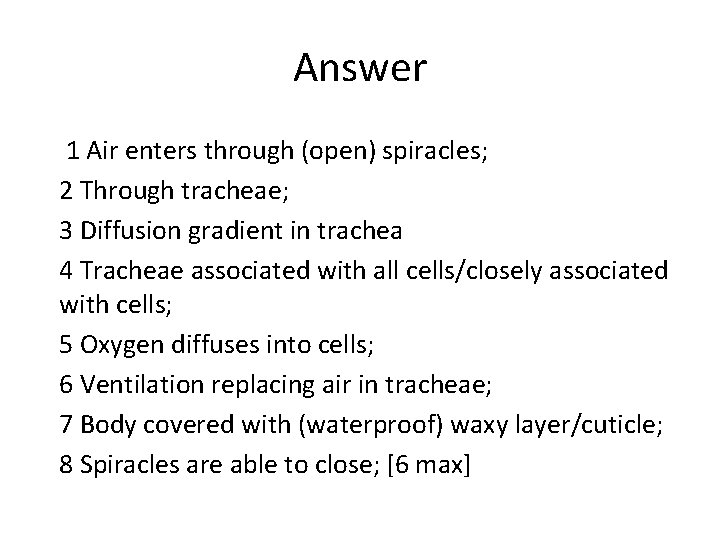
Answer 1 Air enters through (open) spiracles; 2 Through tracheae; 3 Diffusion gradient in trachea 4 Tracheae associated with all cells/closely associated with cells; 5 Oxygen diffuses into cells; 6 Ventilation replacing air in tracheae; 7 Body covered with (waterproof) waxy layer/cuticle; 8 Spiracles are able to close; [6 max]
Complete the worksheet then answer these two questions: 1. Why is there a maximum size for insects? (i. e. why don’t you find insects that are as big as an elephant? !) 2. Flying causes ventilation of the tracheoles. Why is this especially useful?
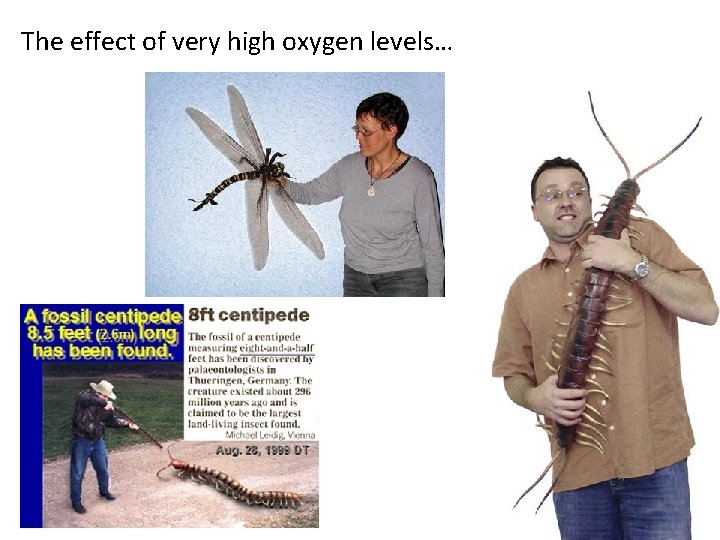
The effect of very high oxygen levels…