
Gas Exchange Chapter 27 Pathway of Inhaled Air
- Slides: 33
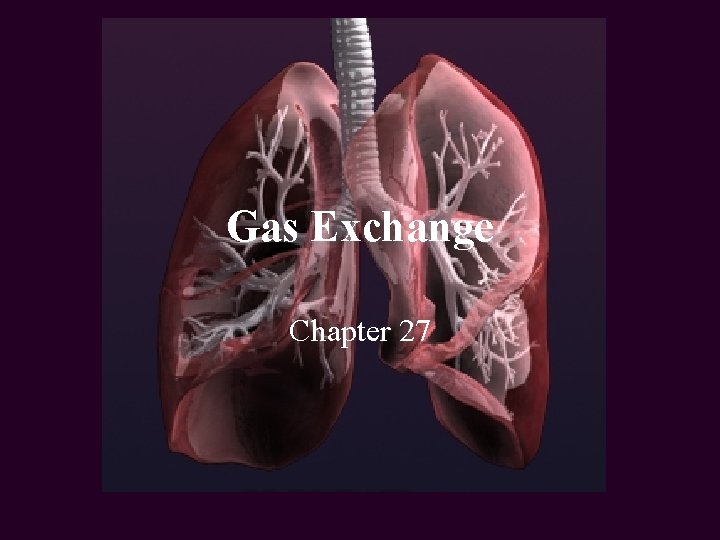
Gas Exchange Chapter 27
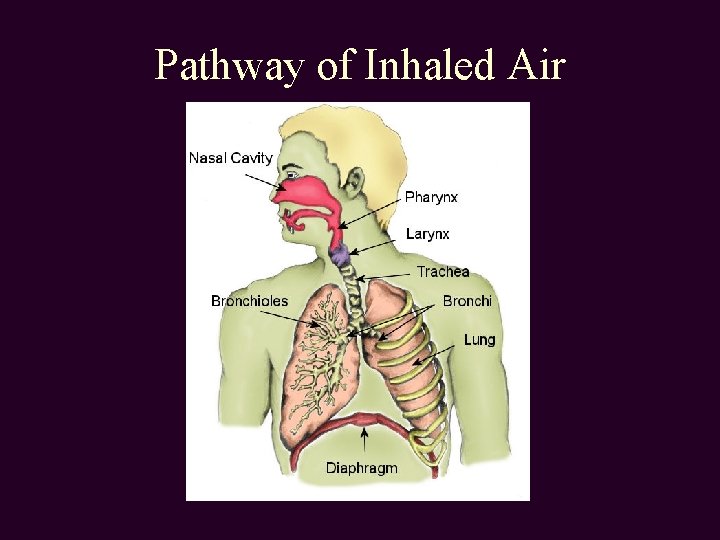
Pathway of Inhaled Air
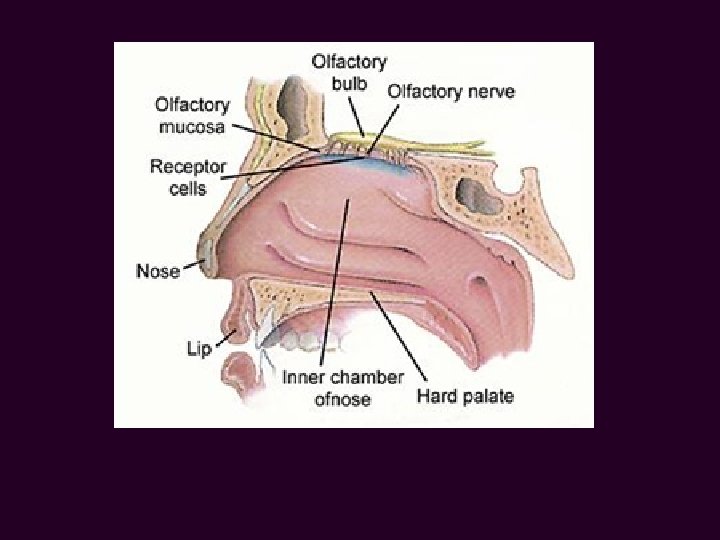
Nasal Cavity • The cavity is lined with mucus and cilia to trap and remove particles from the air • The moist surface of the nasal cavity moistens the air • Blood in capillaries heat the air to body temperature • Olfactory nerves detect odors in the inhaled air
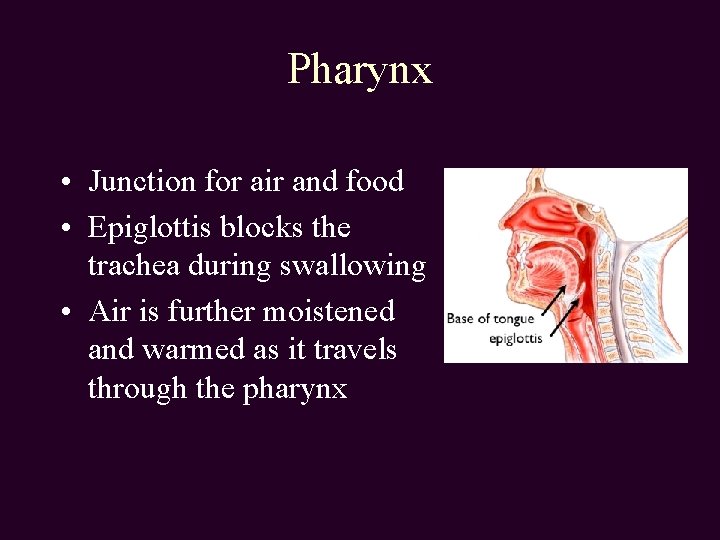
Pharynx • Junction for air and food • Epiglottis blocks the trachea during swallowing • Air is further moistened and warmed as it travels through the pharynx
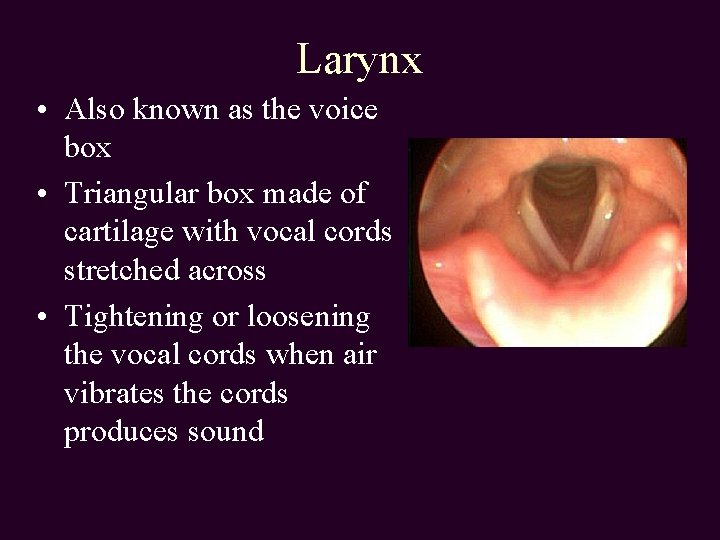
Larynx • Also known as the voice box • Triangular box made of cartilage with vocal cords stretched across • Tightening or loosening the vocal cords when air vibrates the cords produces sound
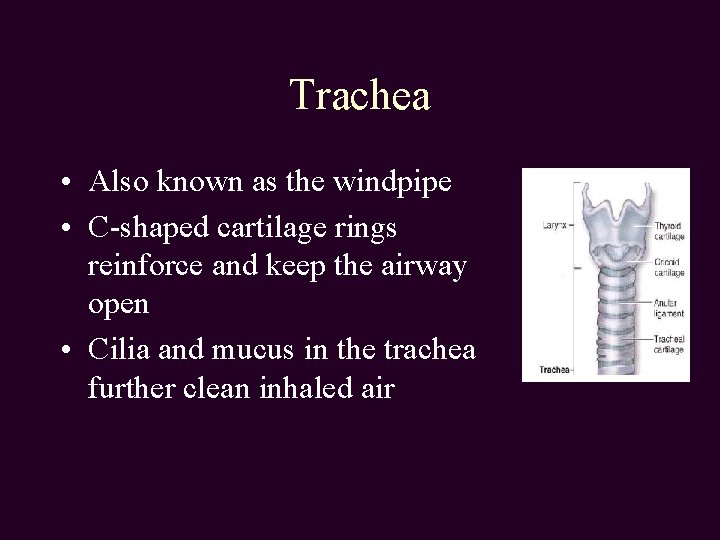
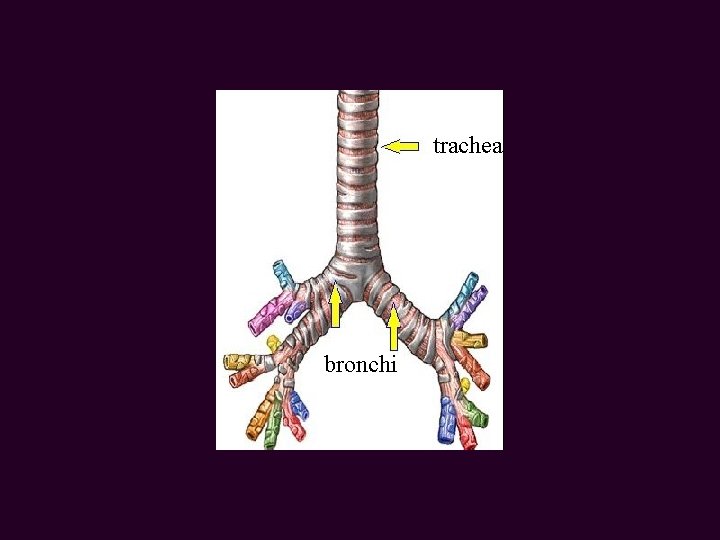
Trachea • Also known as the windpipe • C-shaped cartilage rings reinforce and keep the airway open • Cilia and mucus in the trachea further clean inhaled air
Bronchi • Branches from trachea to the right and left lung • Also lined with cilia and mucus, and contains cartilage rings • Branches further into smaller tubes called bronchioles (no cartilage or cilia) inside the lungs
trachea bronchi
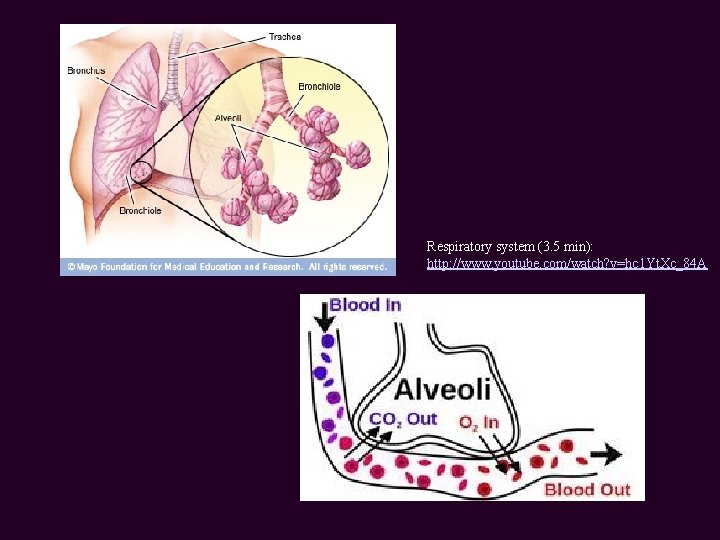
Lungs • Contain 300 x 106 small air sacs called alveoli (100 m 2) • Alveoli are surrounded by capillaries • Alveolar walls are thin and moist for gas exchange • Surfactants also prevent alveolar walls from collapsing
Respiratory system (3. 5 min): http: //www. youtube. com/watch? v=hc 1 Yt. Xc_84 A
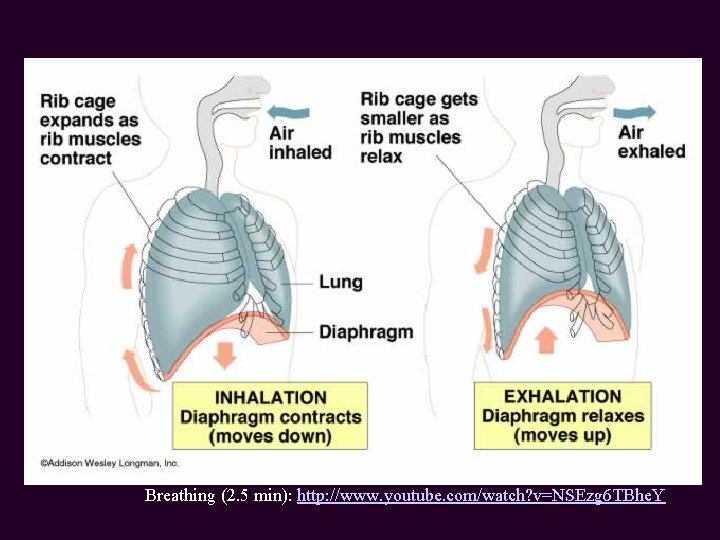
Breathing • Inhalation brings O 2 rich air into the body • Exhalation removes CO 2 filled air from the body
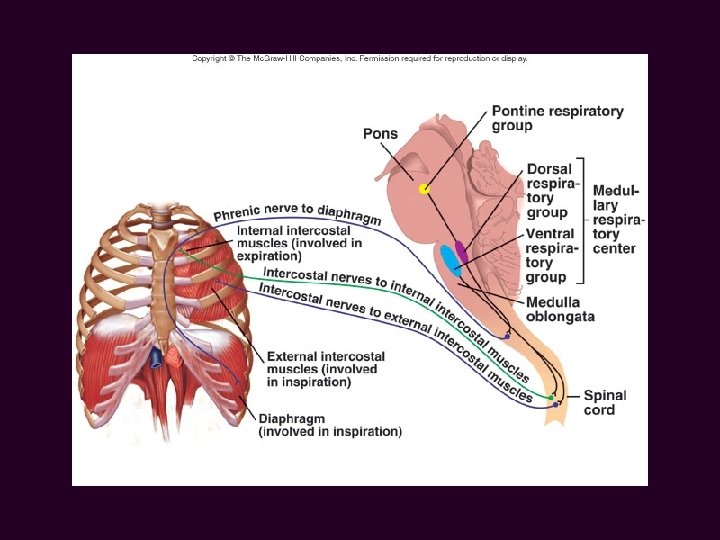
Control of breathing rate • Breathing is controlled by the respiratory center in the medulla oblongata • Breathing rate increases when there is increased [CO 2] or [H+] in the blood • Chemoreceptors in the carotid arteries and aorta also monitor [CO 2] and [O 2] • Inhalation is actively controlled by the brain while exhalation is passively controlled.
Inhalation • Stimulation of the intercostal muscles between the rib cage and the diaphragm causes them to contract • The ribs move upwards and outwards while the diaphragm contracts downward • The increased volume creates negative air pressure which sucks air into the lungs
Exhalation • Stretch receptors on the alveolar walls detect the expansion of the alveoli • Intercostal muscles and diaphragm relax • Ribs move downward and inward while the diaphragm moves up • The decreased volume creates positive air pressure which forces air out of the lungs
Breathing (2. 5 min): http: //www. youtube. com/watch? v=NSEzg 6 TBhe. Y
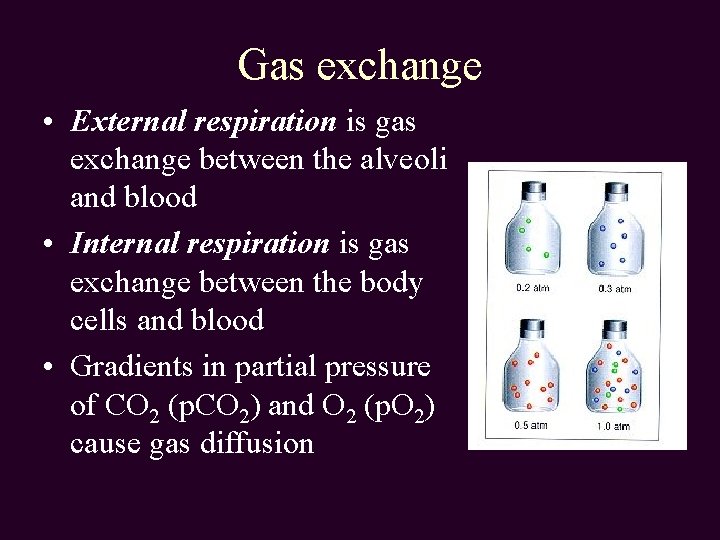
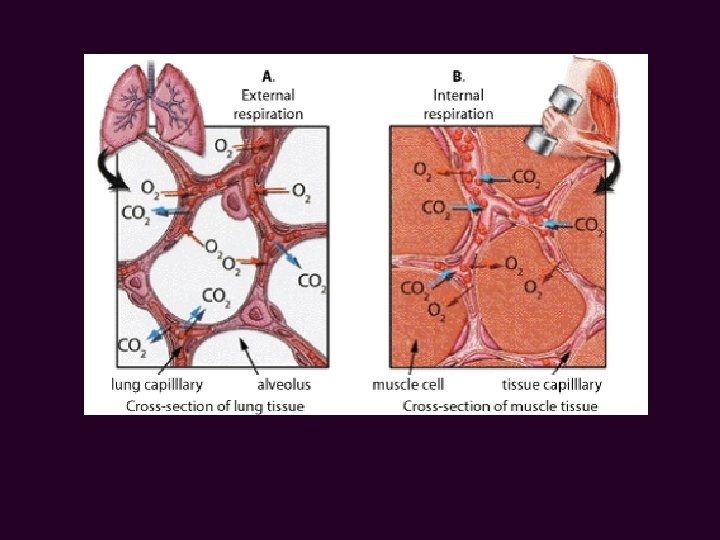
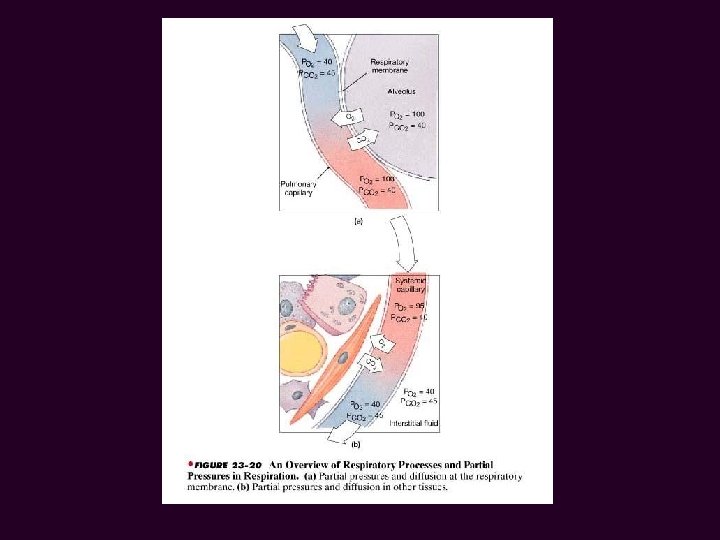
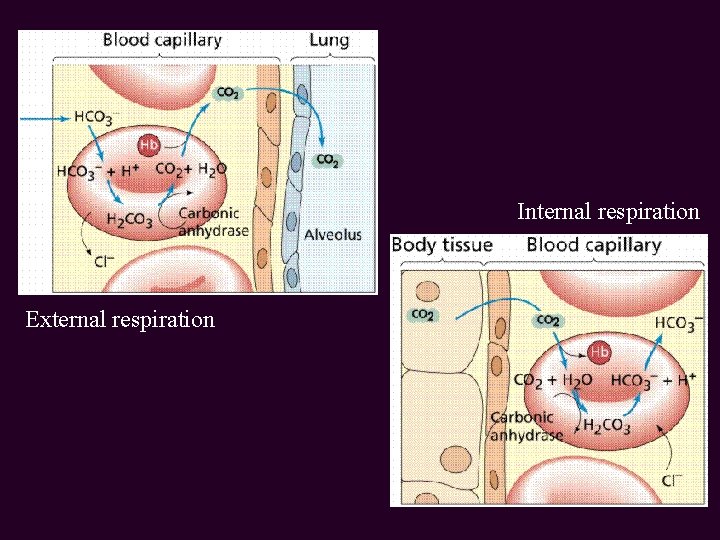
Gas exchange • External respiration is gas exchange between the alveoli and blood • Internal respiration is gas exchange between the body cells and blood • Gradients in partial pressure of CO 2 (p. CO 2) and O 2 (p. O 2) cause gas diffusion
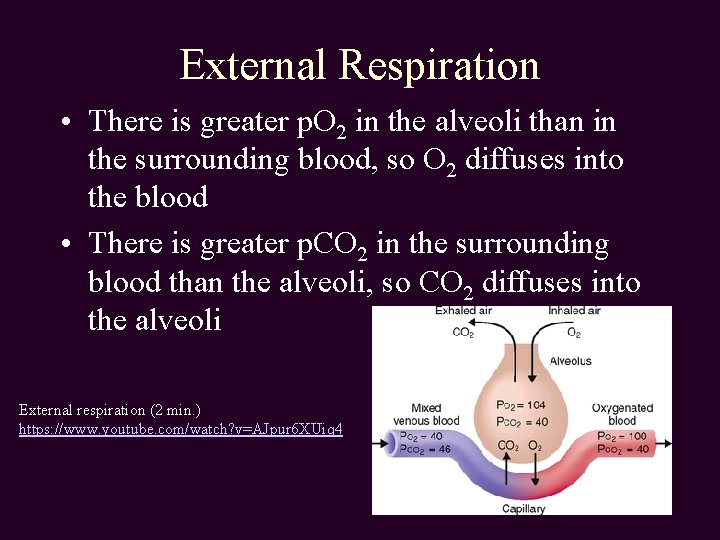
External Respiration • There is greater p. O 2 in the alveoli than in the surrounding blood, so O 2 diffuses into the blood • There is greater p. CO 2 in the surrounding blood than the alveoli, so CO 2 diffuses into the alveoli External respiration (2 min. ) https: //www. youtube. com/watch? v=AJpur 6 XUiq 4
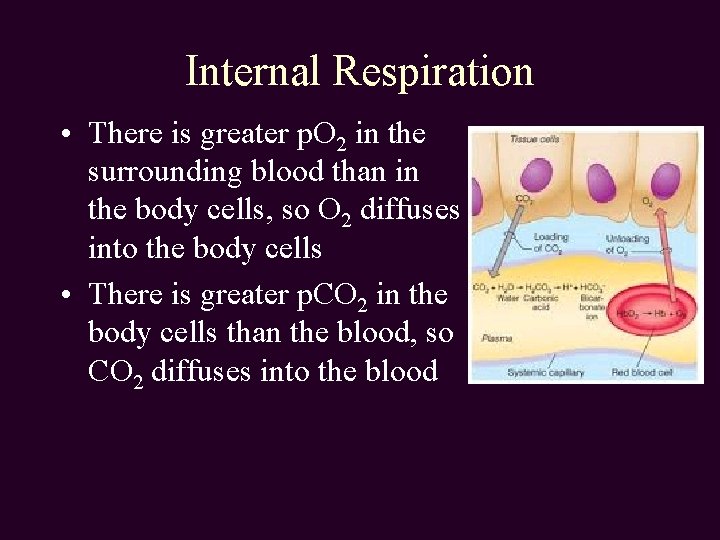
Internal Respiration • There is greater p. O 2 in the surrounding blood than in the body cells, so O 2 diffuses into the body cells • There is greater p. CO 2 in the body cells than the blood, so CO 2 diffuses into the blood
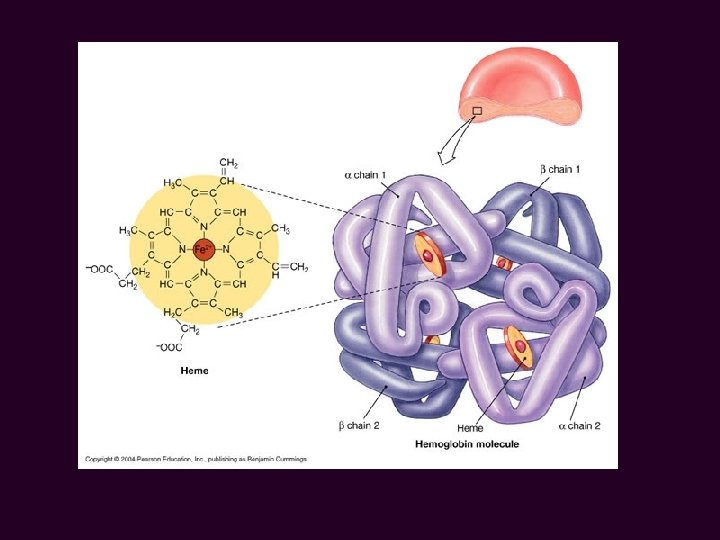
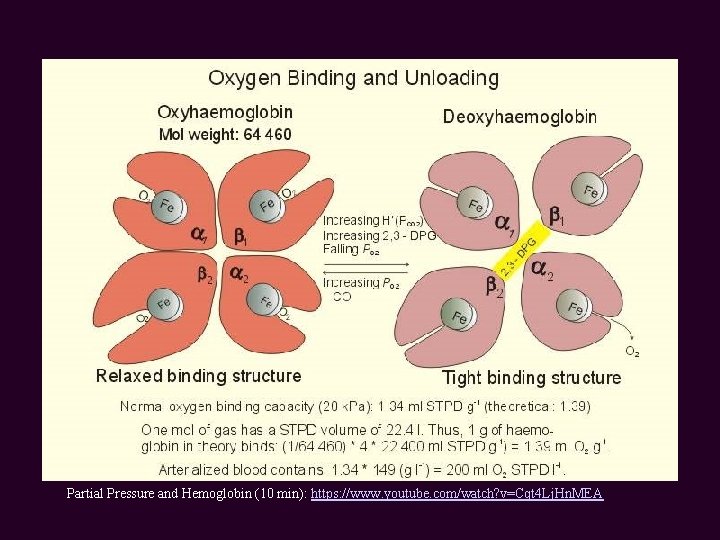
Hemoglobin • Globular pigmented protein containing 4 heme groups with Fe 2+ in the center • Transports O 2, CO 2 or H+ • Its affinity for O 2 is affected by p. O 2, temperature and p. H
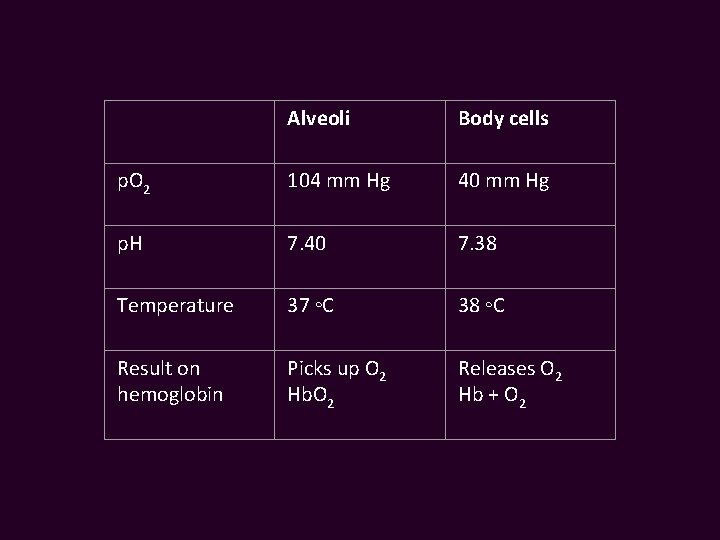
Alveoli Body cells p. O 2 104 mm Hg 40 mm Hg p. H 7. 40 7. 38 Temperature 37 ◦C 38 ◦C Result on hemoglobin Picks up O 2 Hb. O 2 Releases O 2 Hb + O 2
Partial Pressure and Hemoglobin (10 min): https: //www. youtube. com/watch? v=Cqt 4 Lj. Hn. MEA
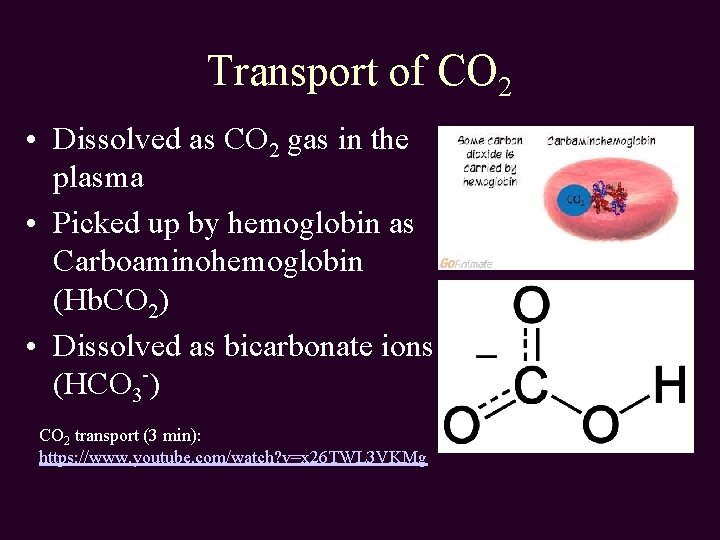
Transport of CO 2 • Dissolved as CO 2 gas in the plasma • Picked up by hemoglobin as Carboaminohemoglobin (Hb. CO 2) • Dissolved as bicarbonate ions (HCO 3 -) CO 2 transport (3 min): https: //www. youtube. com/watch? v=x 26 TWL 3 VKMg
Internal respiration External respiration
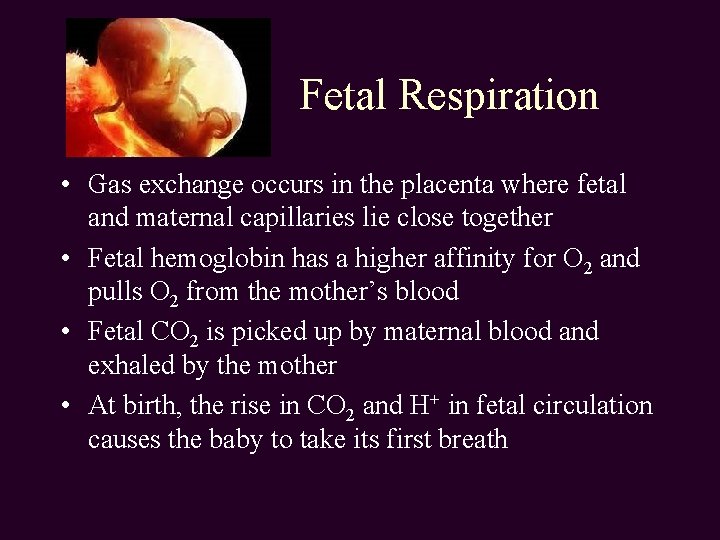
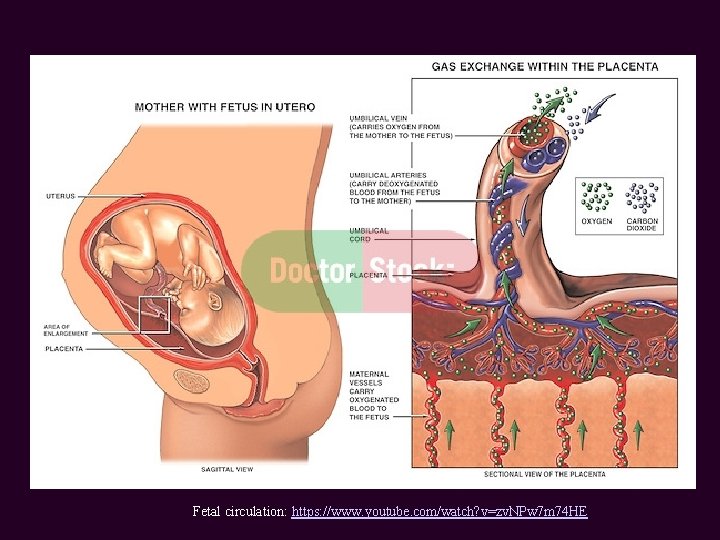
Fetal Respiration • Gas exchange occurs in the placenta where fetal and maternal capillaries lie close together • Fetal hemoglobin has a higher affinity for O 2 and pulls O 2 from the mother’s blood • Fetal CO 2 is picked up by maternal blood and exhaled by the mother • At birth, the rise in CO 2 and H+ in fetal circulation causes the baby to take its first breath
Fetal circulation: https: //www. youtube. com/watch? v=zv. NPw 7 m 74 HE
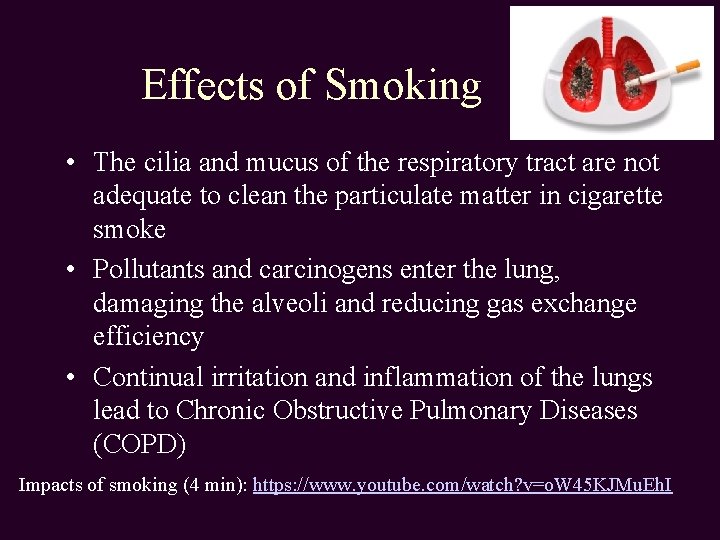
Effects of Smoking • The cilia and mucus of the respiratory tract are not adequate to clean the particulate matter in cigarette smoke • Pollutants and carcinogens enter the lung, damaging the alveoli and reducing gas exchange efficiency • Continual irritation and inflammation of the lungs lead to Chronic Obstructive Pulmonary Diseases (COPD) Impacts of smoking (4 min): https: //www. youtube. com/watch? v=o. W 45 KJMu. Eh. I
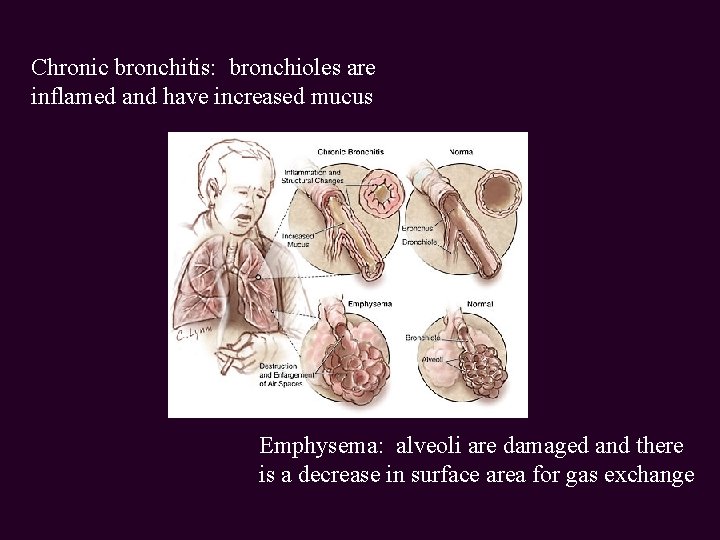
Chronic bronchitis: bronchioles are inflamed and have increased mucus Emphysema: alveoli are damaged and there is a decrease in surface area for gas exchange
COPD Symptoms • a cough that lasts a long time, or coughing up "stuff" (mucus) • feeling short of breath, especially when you are making an effort (climbing stairs, exercising) • many lung infections that last a long time (the flu, acute bronchitis, pneumonia, etc. ) • wheezing (a whistling sound when you breathe) • feeling tired (fatigue) • losing weight without trying COPD (3 min): https: //www. youtube. com/watch? v=akt. IMBQSXMo