
Gas Compression and Flow Dynamics NGT 150 Natural
- Slides: 24
Gas Compression and Flow Dynamics NGT 150 Natural Gas Production Chapter 2 Field Handling of Natural Gas “This product was funded by a grant awarded by the U. S. Department of Labor’s Employment and Training Administration. The product was created by the grantee and does not necessarily reflect the official position of the U. S. Department of Labor. The Department of Labor makes no guarantees, warranties, or assurances of any kind, express or implied, with respect to such information, including any information on linked sites and including, but not limited to, accuracy of the information or its completeness, timeliness, usefulness, adequacy, continued availability, or ownership. ” Unless otherwise specified, this work by Shale. NET U. S. is licensed under a Creative Commons Attribution 4. 0 International License.
Fracking and shale gas – Marathon Oil https: //www. youtube. com/watch? v=VY 34 PQUiw. OQ Shale. Net http: //www. shalenet. org/
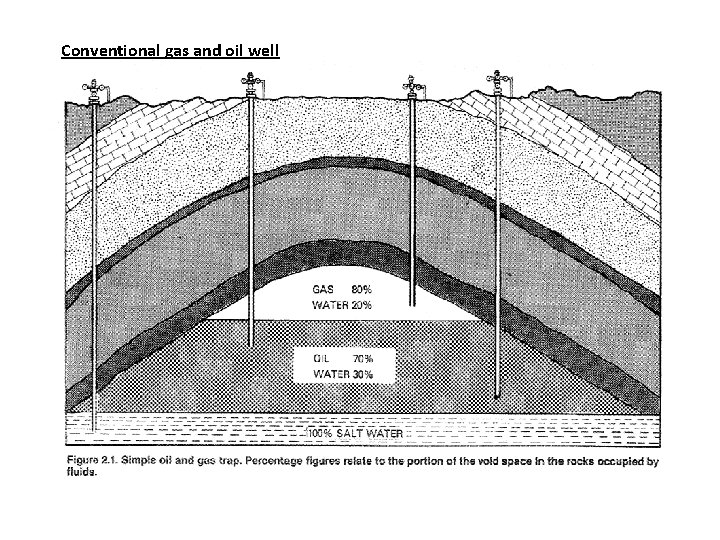
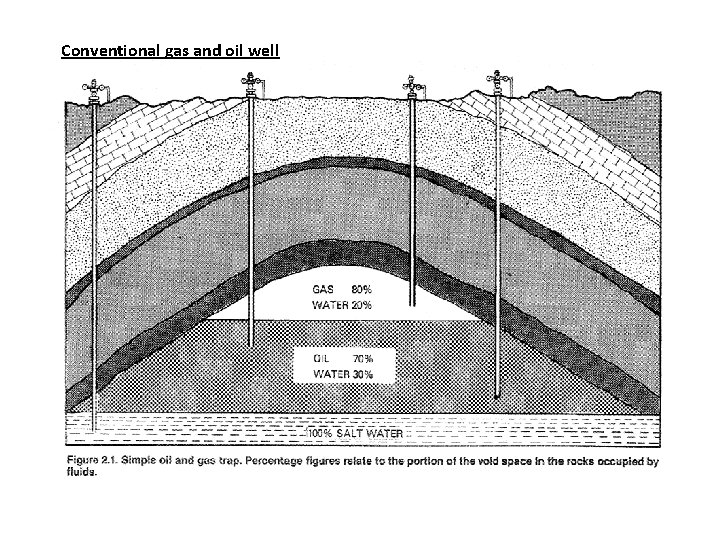
Conventional gas and oil well
Accumulation of oil and gas into requires: 1. A reservoir to contain the oil and gas with water, and 2. A trap which retains the oil and gas in the reservoir. 3. The reservoir rock capable of containing oil, gas, and water. 4. The rock must have sufficient thickness, area, and pore space to contain the hydrocarbons. 5. Sandstone and carbonates are the most common reservoir rocks.
A Trap 1. Is a set of conditions that stopped the migration of oil and gas, and 2. Caused them to be retained in a porous reservoir.
Conventional gas and oil well
Reservoir Pressure • Is a controlling factor in the ability of a gas well to produce • A decrease in pressure of a gas well reflects a drop in productivity • Ultimately the consideration in determining a gas reservoir depleted.
Well Equipment Casing: • Large diameter pipe that lines the borehole • Functions include: 1. Prevents contamination of fresh water 2. Prevents cave-ins 3. Provides smooth bore for installing production equipment.
Well Equipment Safety shutoff equipment; 1. Typically operate on flow velocity. 2. Mandatory by government regulations. 3. High rates of flow can damage tubing and wellhead equipment.
Note • Corrosion due to chemical action can damage equipment as well. • Corrosion in deep wells is further aggravated by high gas flow temperatures and organic acids, hydrogen sulfide, and carbon dioxide.
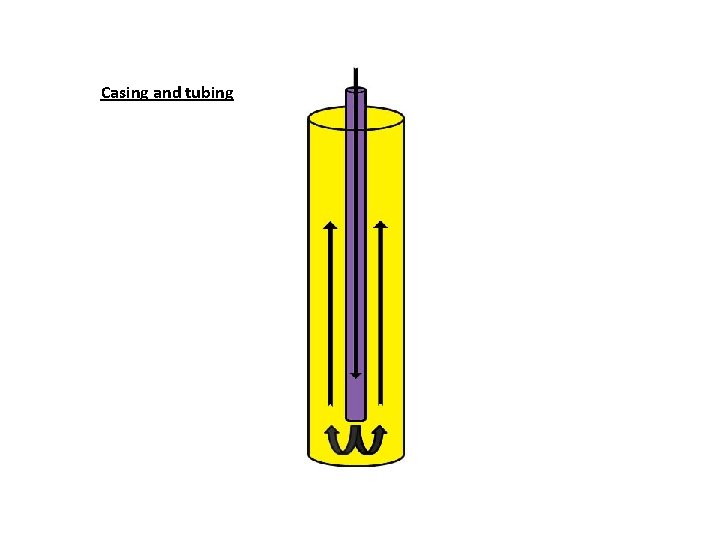
Tubing • The final string of pipe run in a well. • Its small diameter permits more efficient production compared to just using casing. • The space between the casing and tubing makes it possible to remove undesirable fluids. • This space is eventually sealed with concrete to keep well pressure and fluid away from the casing.
Casing and tubing
Corrosion Inhibitors • Chemical inhibitors to counter the chemical reaction between acid solutions in the gas and iron of the tubing. • Accomplished by injection or batch treatments.
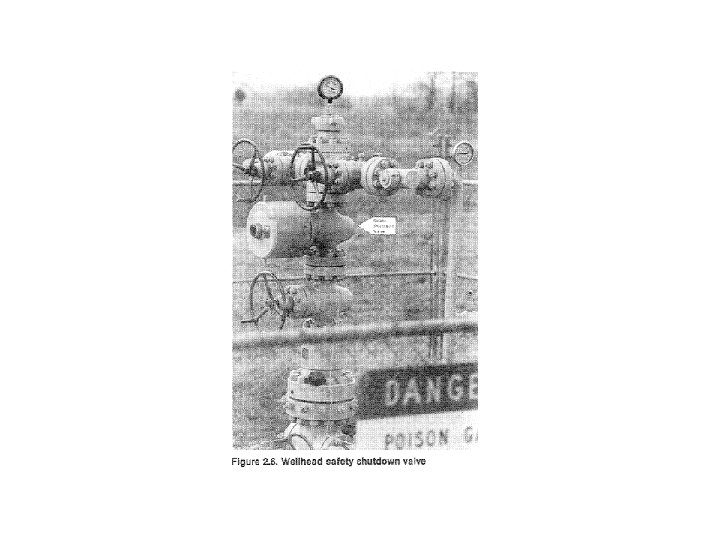
Wellhead Equipment • An assembly of valves and fittings called a Christmas tree is installed at the wellhead to enable shutoff and regulate flow from the well. • A choke is a restriction used in the Christmas tree for the purpose of regulating flow. • Computerized flow regulators are used on occasion to obtain precise rates of flow.
Gathering Systems • Equipment with which gas is collected from wells, controlled and conditioned as required and transported to its primary destination. • Designed to function reliably, safely, and economically. • Four categories 1. Single trunk with laterals 2. Loop around a field 3. Multiple trunk – several main lines from a central point. 4. Combination of the above
Surface Considerations • Agriculture use of land • Noisy equipment • Safety Devices
Climate and Location • Cold climates present issues with hydrates • Location issues: Ø Mountains Ø Swamps Ø Water Ø Rock terrain Ø Remote locations
Production Equipment • To transport the gas Ø Flow – start, stop and measure Ø Control and measure gas pressure and temperature • To condition the gas Ø So that it will flow safely and reliably
Basic Equipment Ø Pipe • Welded steel • Diameter determined by amount of gas to be transported • Thickness of pipe wall determined by the pressure of the gas
Basic Equipment Ø Valves • Block valves to stop flow • Throttling valves to regulate flow.
Basic Equipment Ø Instruments to measure condition of the gas • Liquid level, temperature, pressure and flow • Measure information to adjust control devices – for example gas burners temperature and valve positions • Safety devices – pressure, temperature and flow. • Automation
Gas Condition Equipment • Separators – vapors and solids from liquids • Heaters – heat gas • Dehydrators – prevent hydrate formation • Compressors – increase gas pressure • Gas liquid extraction – remove the heavier or easily liquefied hydrocarbons
Compressors Ø Reciprocating piston • Most often used • Smaller high speed units for small volumes • Larger low speed integral units for large volumes Ø Centrifugal units are becoming more common particularly for main transmission lines.