
Gardners Art Through the Ages 12 e Chapter
- Slides: 16
Gardner’s Art Through the Ages, 12 e Chapter 9 Italy Before the Romans: The Art of the Etruscans 1
Italy in Etruscan Times 2
Goals • Identify the geographic area of the Etruscan people. • Examine the possible origins of Etruscan art and culture. • Understand how and why the architecture and art of the Etruscans is different from that of the Greeks. • Understand the funerary customs of the Etruscans. 3
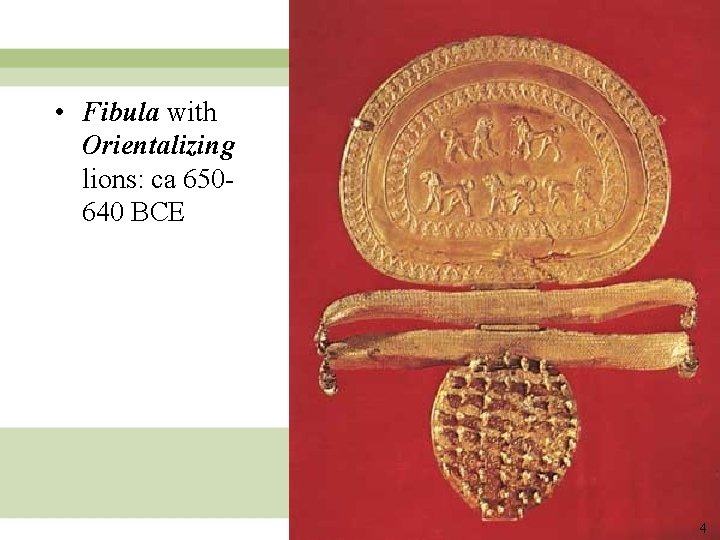
• Fibula with Orientalizing lions: ca 650640 BCE 4
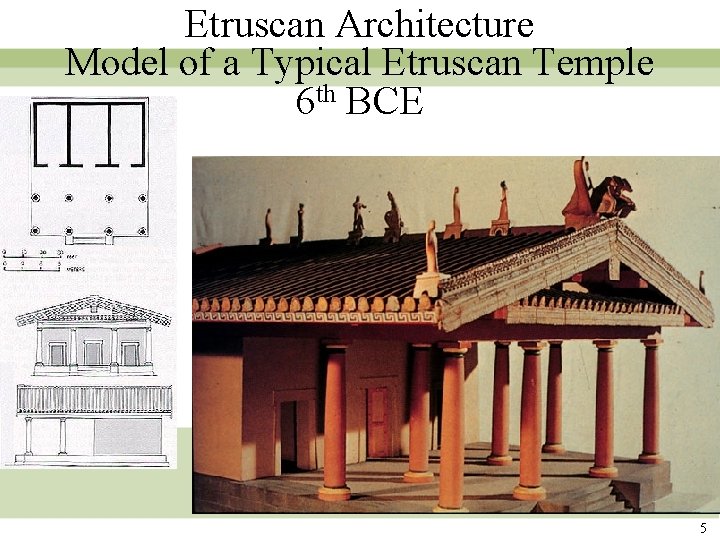
Etruscan Architecture Model of a Typical Etruscan Temple 6 th BCE 5
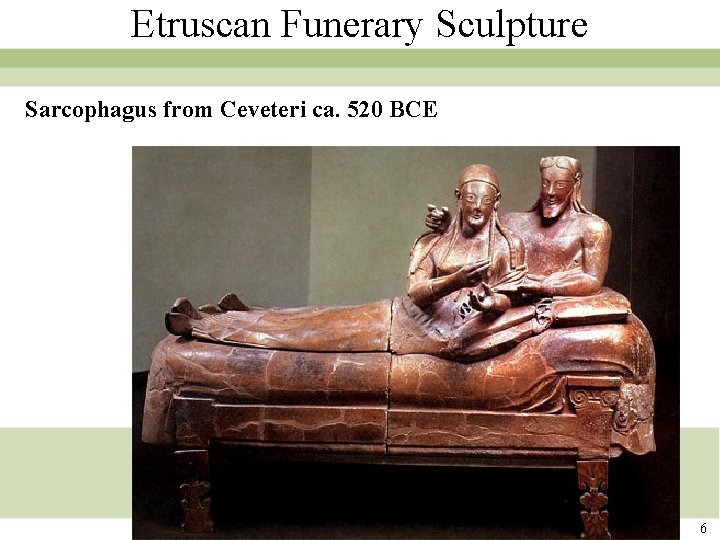
Etruscan Funerary Sculpture Sarcophagus from Ceveteri ca. 520 BCE 6
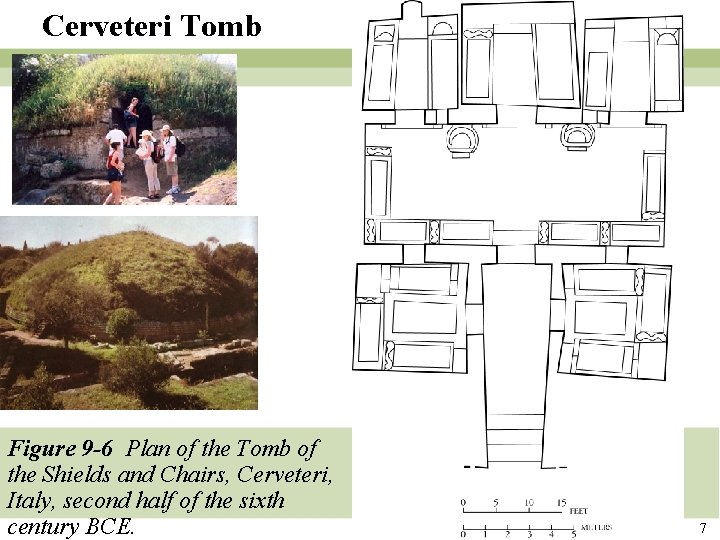
Cerveteri Tomb Figure 9 -6 Plan of the Tomb of the Shields and Chairs, Cerveteri, Italy, second half of the sixth century BCE. 7
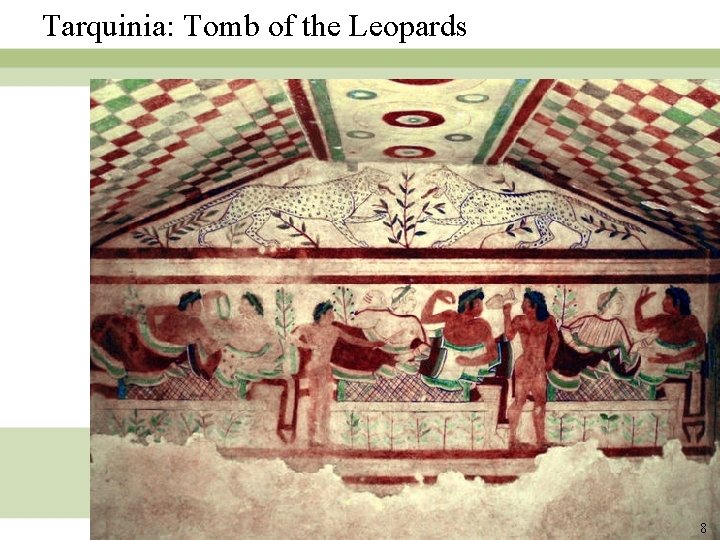
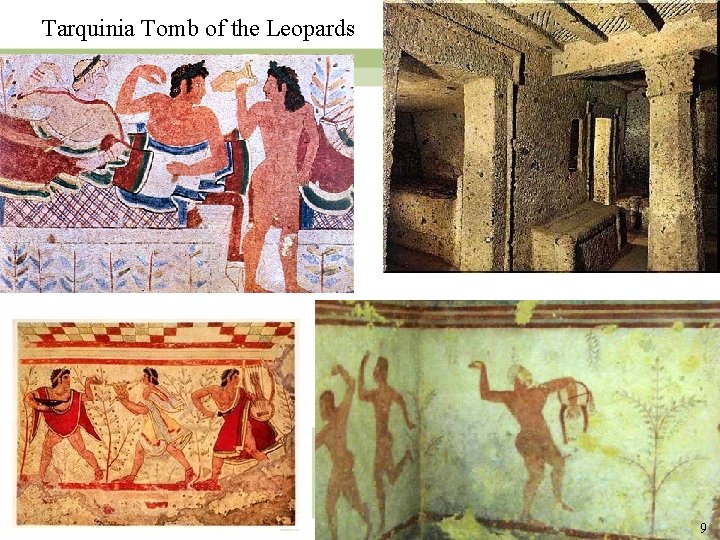
Tarquinia: Tomb of the Leopards 8
Tarquinia Tomb of the Leopards 9
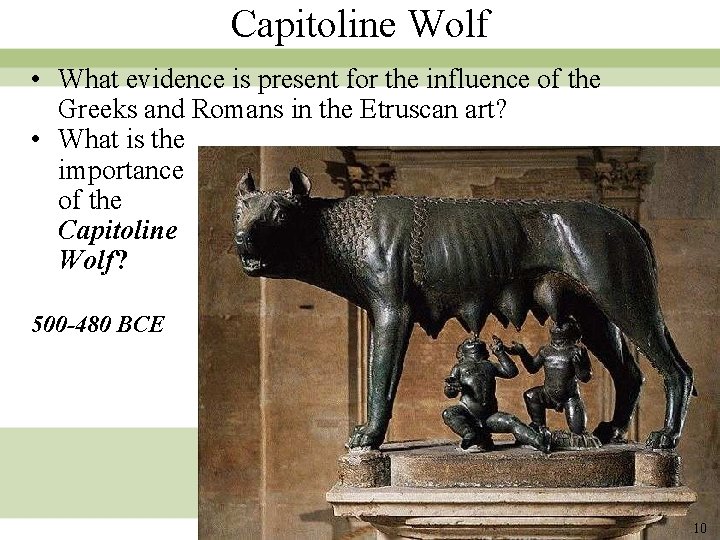
Capitoline Wolf • What evidence is present for the influence of the Greeks and Romans in the Etruscan art? • What is the importance of the Capitoline Wolf? 500 -480 BCE 10
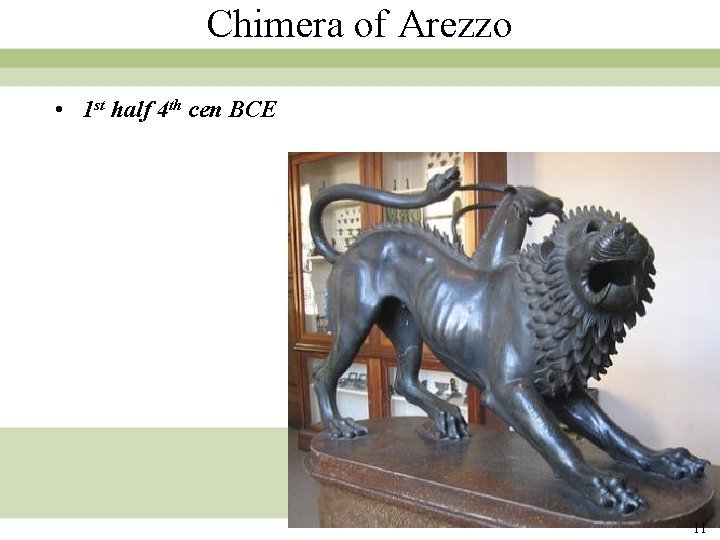
Chimera of Arezzo • 1 st half 4 th cen BCE 11
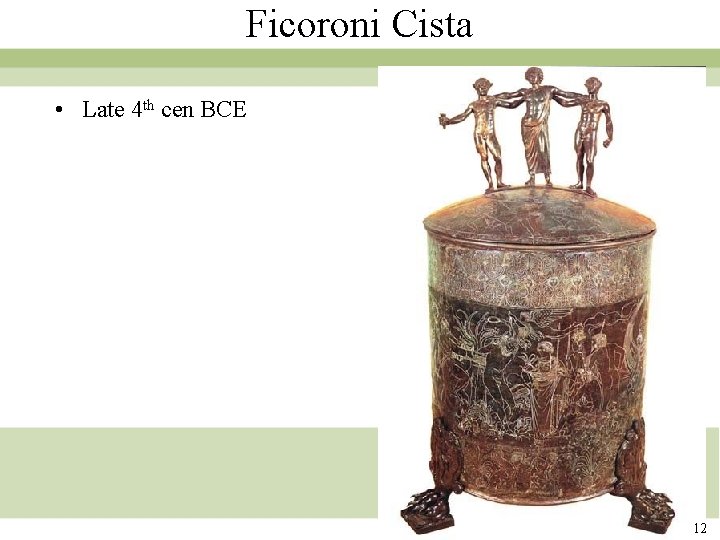
Ficoroni Cista • Late 4 th cen BCE 12
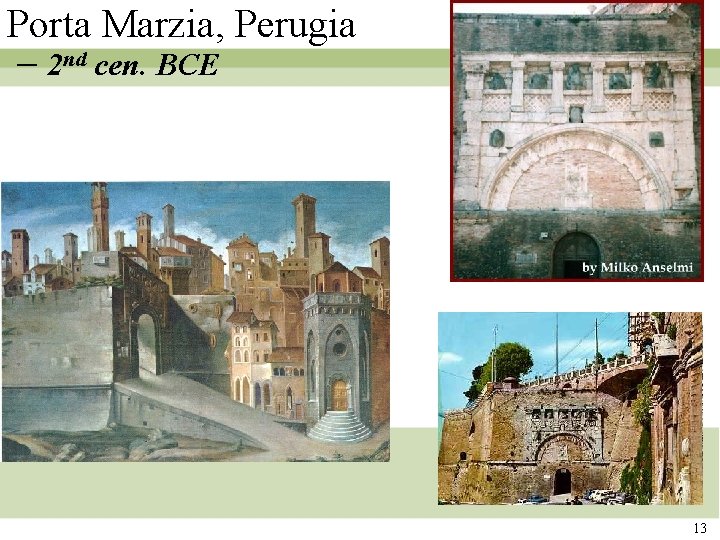
Porta Marzia, Perugia – 2 nd cen. BCE 13
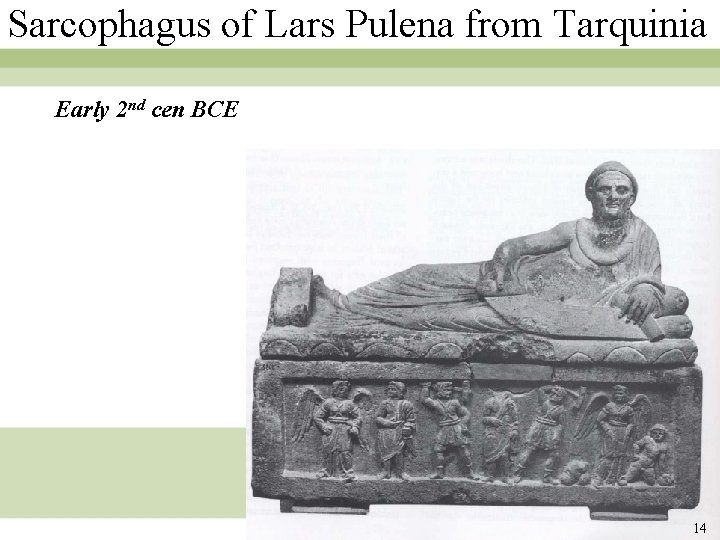
Sarcophagus of Lars Pulena from Tarquinia Early 2 nd cen BCE 14
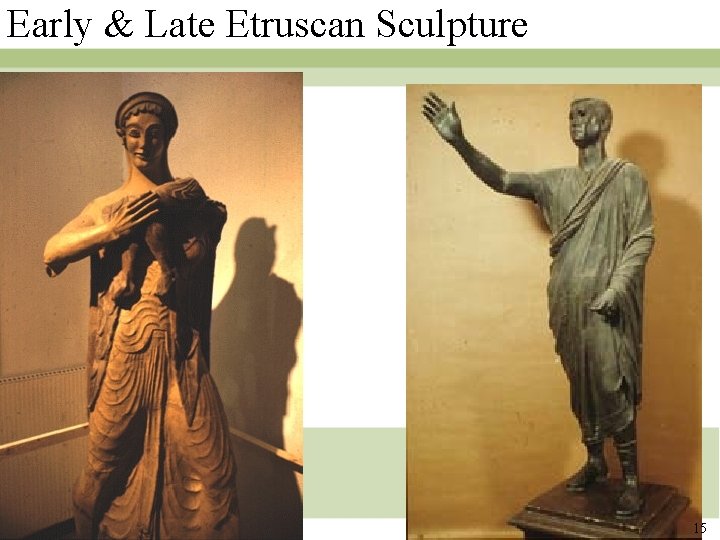
Early & Late Etruscan Sculpture 15
Discussion Questions v Where do you believe the Etruscans originated? Why is their origin not known? v What does Etruscan wall painting tell us about Etruscan life? How is this different from the wall paintings of the Egyptians? of the Aegean cultures? v What aspects of Etruscan art and architecture is unique to them? 16